SACHIN DAS
ZOOSPHERE
7797462253
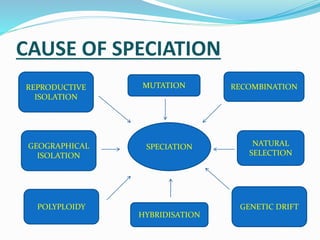
CAUSE OF SPECIATION
SPECIATION
REPRODUCTIVE
ISOLATION
GEOGRAPHICAL
ISOLATION
POLYPLOIDY
MUTATION
HYBRIDISATION
RECOMBINATION
NATURAL
SELECTION
GENETIC DRIFT
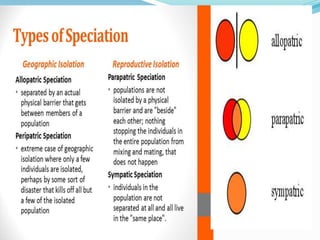
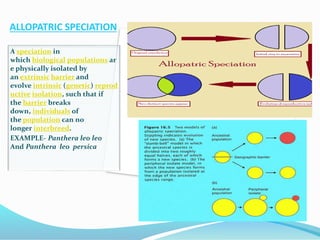
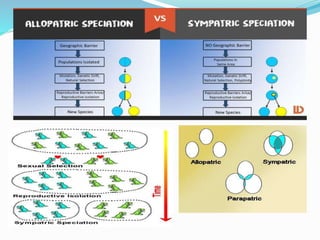
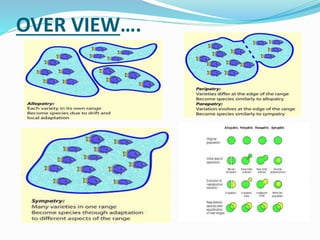
ALLOPATRIC SPECIATION
A speciation in
which biological populations ar
e physically isolated by
an extrinsic barrier and
evolve intrinsic (genetic) reprod
uctive isolation, such that if
the barrier breaks
down, individuals of
the population can no
longer interbreed.
EXAMPLE- Panthera leo leo
And Panthera leo persica
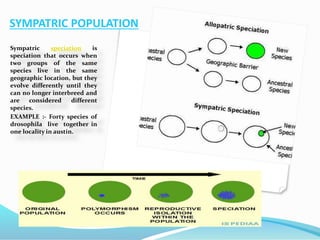
SYMPATRIC POPULATION
Sympatric speciation is
speciation that occurs when
two groups of the same
species live in the same
geographic location, but they
evolve differently until they
can no longer interbreed and
are considered different
species.
EXAMPLE :- Forty species of
drosophila live together in
one locality in austin.
PARAPATRIC SPECIATION
‘Parapatric’ derives from ‘para’
meaning ‘near’ and ‘patria’
meaning ‘country.’ Parapatric
speciation thus occurs when a
smaller population is isolated,
usually at the periphery of a larger
group, and becomes differentiated
to the point of becoming a new
species. Gene flow may remain
possible between the two
populations during the speciation
process, and hybrid zones may be
observed at the interface between
the two populations as a result.
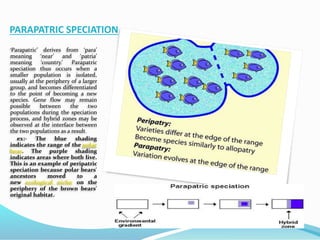
ex:- The blue shading
indicates the range of the polar
bear. The purple shading
indicates areas where both live.
This is an example of peripatric
speciation because polar bears'
ancestors moved to a
new ecological niche on the
periphery of the brown bears'
original habitat.
OTHER TYPES…..
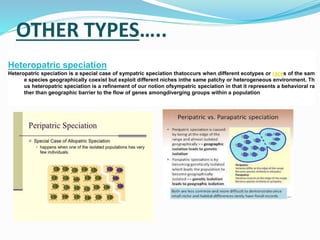
Heteropatric speciation
Heteropatric speciation is a special case of sympatric speciation thatoccurs when different ecotypes or races of the sam
e species geographically coexist but exploit different niches inthe same patchy or heterogeneous environment. Th
us heteropatric speciation is a refinement of our notion ofsympatric speciation in that it represents a behavioral ra
ther than geographic barrier to the flow of genes amongdiverging groups within a population
OVER VIEW….
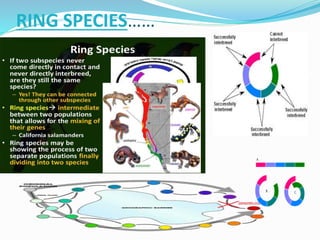
RING SPECIES……
Speciation   copy

Speciation copy

  • 1.
  • 2.
  • 4.
    ALLOPATRIC SPECIATION A speciationin which biological populations ar e physically isolated by an extrinsic barrier and evolve intrinsic (genetic) reprod uctive isolation, such that if the barrier breaks down, individuals of the population can no longer interbreed. EXAMPLE- Panthera leo leo And Panthera leo persica
  • 5.
    SYMPATRIC POPULATION Sympatric speciationis speciation that occurs when two groups of the same species live in the same geographic location, but they evolve differently until they can no longer interbreed and are considered different species. EXAMPLE :- Forty species of drosophila live together in one locality in austin.
  • 7.
    PARAPATRIC SPECIATION ‘Parapatric’ derivesfrom ‘para’ meaning ‘near’ and ‘patria’ meaning ‘country.’ Parapatric speciation thus occurs when a smaller population is isolated, usually at the periphery of a larger group, and becomes differentiated to the point of becoming a new species. Gene flow may remain possible between the two populations during the speciation process, and hybrid zones may be observed at the interface between the two populations as a result. ex:- The blue shading indicates the range of the polar bear. The purple shading indicates areas where both live. This is an example of peripatric speciation because polar bears' ancestors moved to a new ecological niche on the periphery of the brown bears' original habitat.
  • 8.
    OTHER TYPES….. Heteropatric speciation Heteropatricspeciation is a special case of sympatric speciation thatoccurs when different ecotypes or races of the sam e species geographically coexist but exploit different niches inthe same patchy or heterogeneous environment. Th us heteropatric speciation is a refinement of our notion ofsympatric speciation in that it represents a behavioral ra ther than geographic barrier to the flow of genes amongdiverging groups within a population
  • 9.
  • 10.