 He was the first evolutionist to believe that
organisms change over time.
 Using fossil records as a guide, Lamarck was
able to develop three theories ;
1. The Theory of Need
 which states that organisms change in response to
their environment.
Their ability to survive helped them develop characteristics
necessary for them to adapt in a given environment.
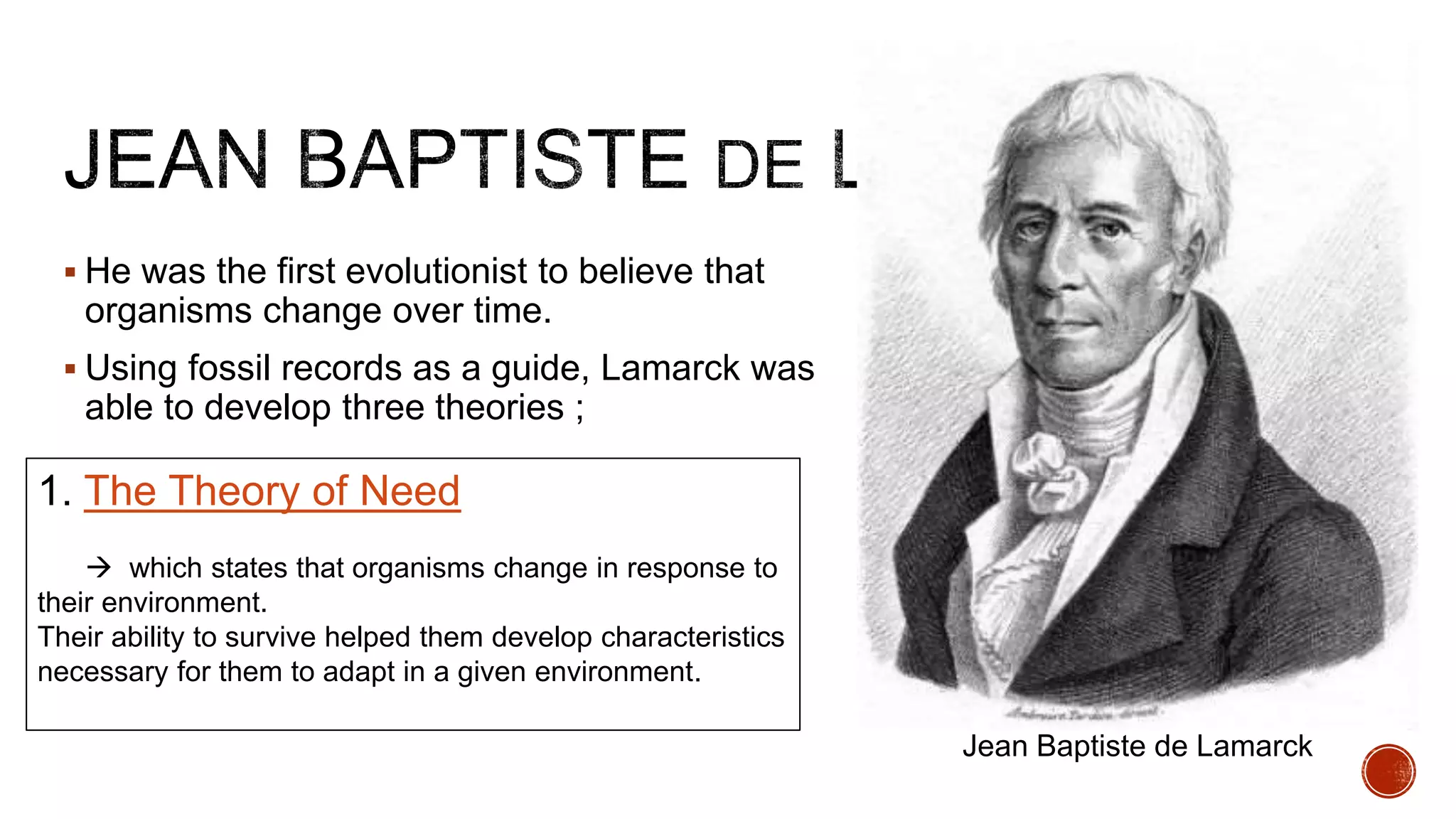
Jean Baptiste de Lamarck
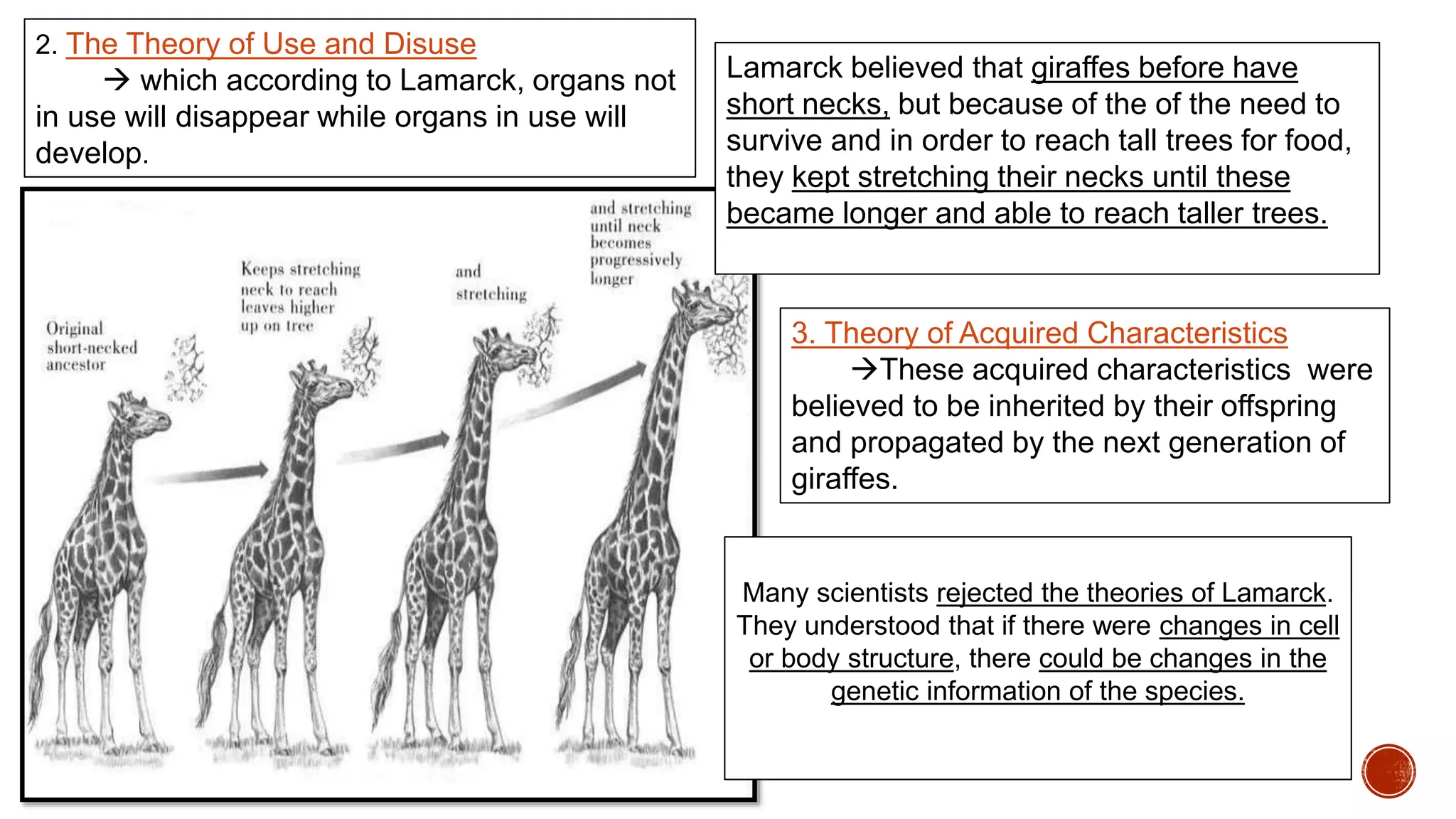
Lamarck believed that giraffes before have
short necks, but because of the of the need to
survive and in order to reach tall trees for food,
they kept stretching their necks until these
became longer and able to reach taller trees.
2. The Theory of Use and Disuse
 which according to Lamarck, organs not
in use will disappear while organs in use will
develop.
3. Theory of Acquired Characteristics
These acquired characteristics were
believed to be inherited by their offspring
and propagated by the next generation of
giraffes.
Many scientists rejected the theories of Lamarck.
They understood that if there were changes in cell
or body structure, there could be changes in the
genetic information of the species.
 The more popular “Theory of Evolution” proposed
by Charles Darwin based on natural selection is
different from the theories of Lamarck.
 According to Darwin, giraffe species originally had
varying neck lengths but natural selection favored
the survival of giraffes with longer necks that could
feed on taller trees that were available. Giraffes
with short neck were eliminated due to lack of
accessible food supply.
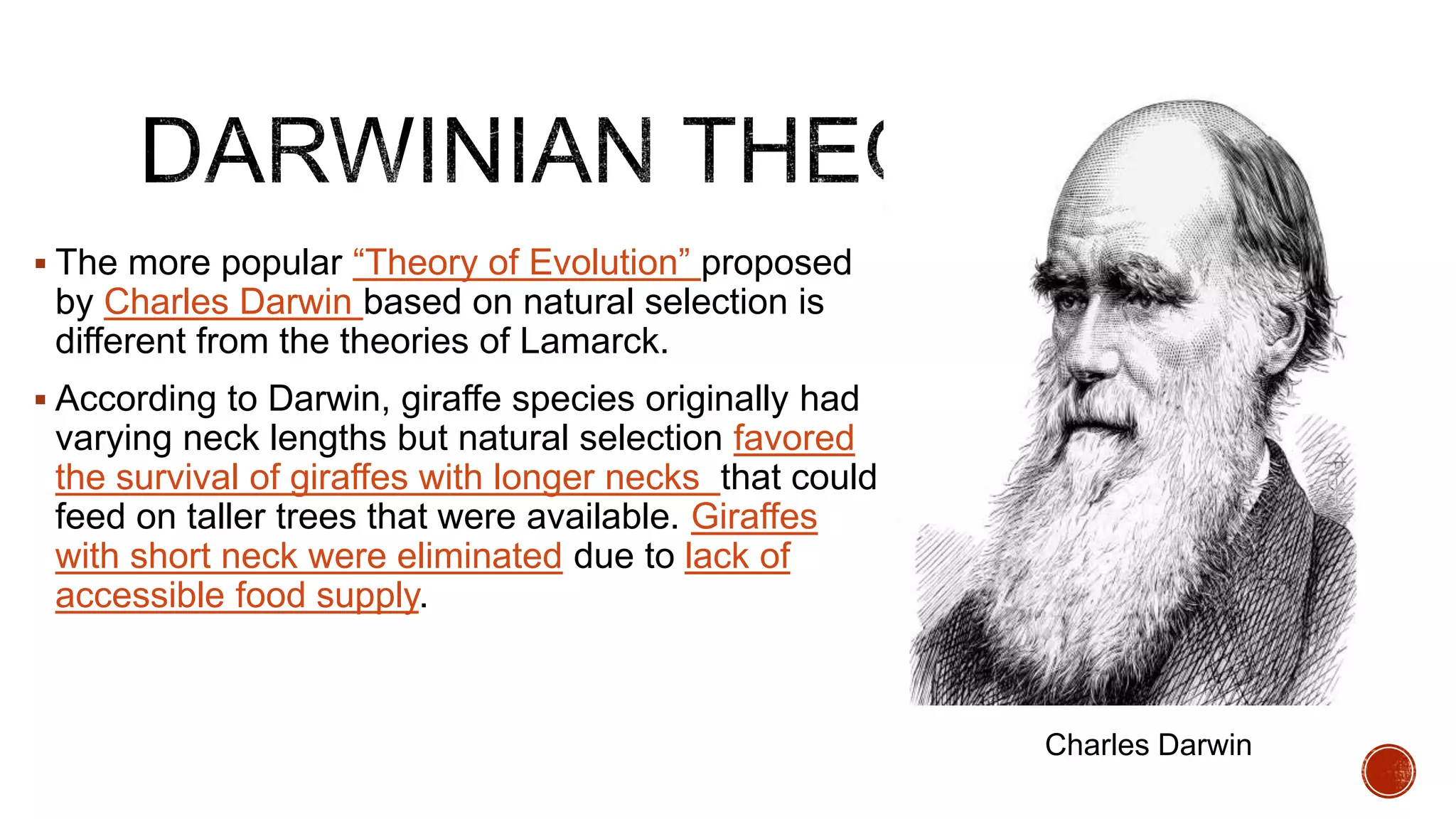
Charles Darwin
 Fifty years after Lamarck’s Theory of Use and Disuse. Charles Darwin suggested this
theory after his voyage to the Galapagos Island in HMS Beagle. He was fascinated by
the diversity of organisms he found along in the journey.
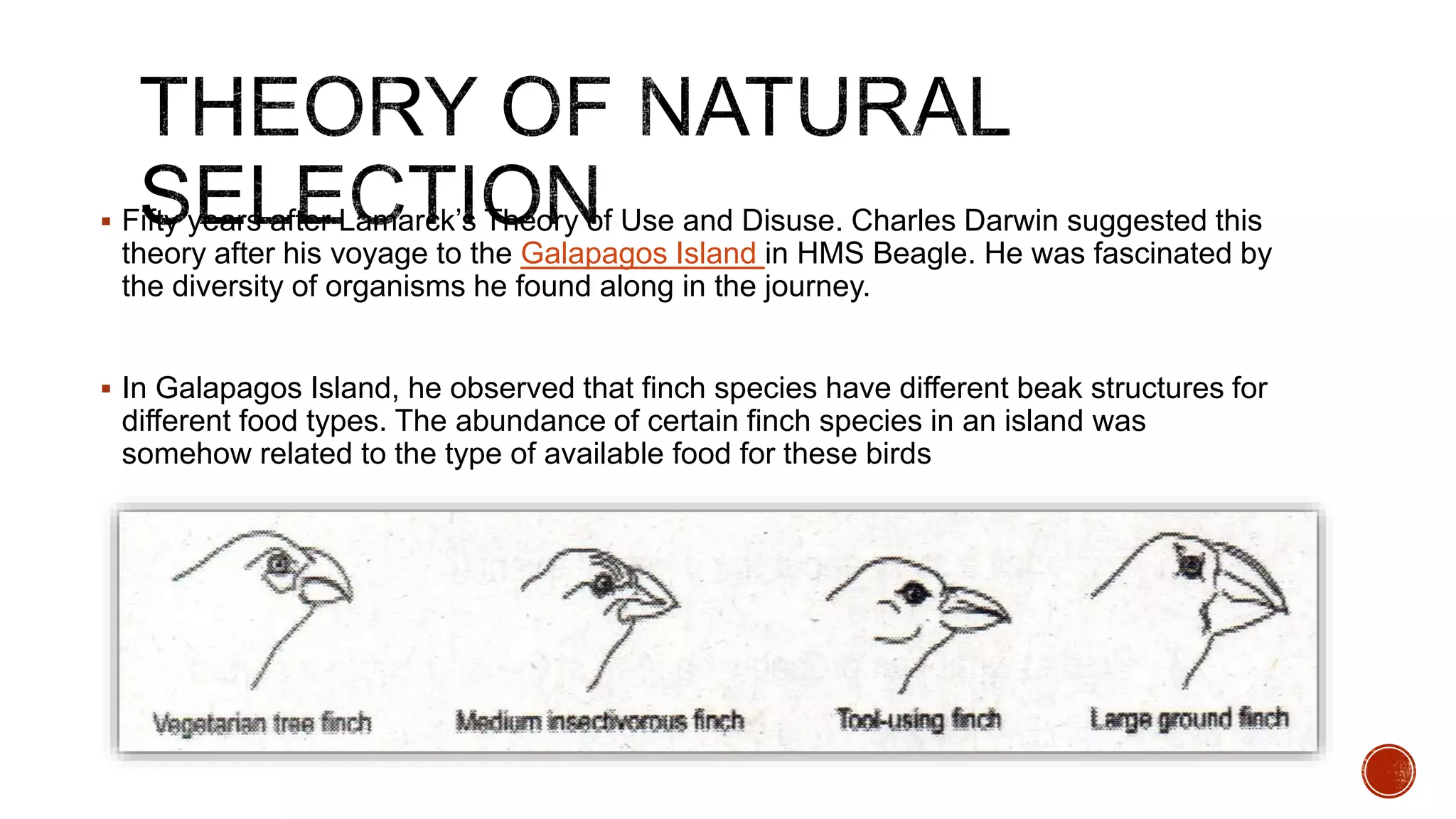
 In Galapagos Island, he observed that finch species have different beak structures for
different food types. The abundance of certain finch species in an island was
somehow related to the type of available food for these birds
 Darwin suggested that selection also takes place in nature. In selective breeding,
farmer identifies and selects the best and desirable trait to propagate. In natural
selection, environmental factors promote the survival of the fittest and eliminates
the less fit.

Theories of evolution

  • 2.
     He wasthe first evolutionist to believe that organisms change over time.  Using fossil records as a guide, Lamarck was able to develop three theories ; 1. The Theory of Need  which states that organisms change in response to their environment. Their ability to survive helped them develop characteristics necessary for them to adapt in a given environment. Jean Baptiste de Lamarck
  • 3.
    Lamarck believed thatgiraffes before have short necks, but because of the of the need to survive and in order to reach tall trees for food, they kept stretching their necks until these became longer and able to reach taller trees. 2. The Theory of Use and Disuse  which according to Lamarck, organs not in use will disappear while organs in use will develop. 3. Theory of Acquired Characteristics These acquired characteristics were believed to be inherited by their offspring and propagated by the next generation of giraffes. Many scientists rejected the theories of Lamarck. They understood that if there were changes in cell or body structure, there could be changes in the genetic information of the species.
  • 4.
     The morepopular “Theory of Evolution” proposed by Charles Darwin based on natural selection is different from the theories of Lamarck.  According to Darwin, giraffe species originally had varying neck lengths but natural selection favored the survival of giraffes with longer necks that could feed on taller trees that were available. Giraffes with short neck were eliminated due to lack of accessible food supply. Charles Darwin
  • 5.
     Fifty yearsafter Lamarck’s Theory of Use and Disuse. Charles Darwin suggested this theory after his voyage to the Galapagos Island in HMS Beagle. He was fascinated by the diversity of organisms he found along in the journey.  In Galapagos Island, he observed that finch species have different beak structures for different food types. The abundance of certain finch species in an island was somehow related to the type of available food for these birds
  • 6.
     Darwin suggestedthat selection also takes place in nature. In selective breeding, farmer identifies and selects the best and desirable trait to propagate. In natural selection, environmental factors promote the survival of the fittest and eliminates the less fit.