Hemolytic Anemia:
A Comparison of Two Cases
JP Flores, MD with thanks to Meaghan O’Malley, MD
Division of Hematology-Oncology
Virginia Mason Noon Conference
March 26, 2019
Case #1: Patient JA
• HPI – 49 yo M w/ history of ETOH cirrhosis admitted with AKI, anemia,
thrombocytopenia, & hyperbilirubinemia
• Reason for consult: Hgb 6.7, hapto <10, weakly positive DAT
• Transfusion of 3 units PRBCs: Hgb 6.9  7.9
• PMHx:
• EtOH cirrhosis c/b ascites. No known varices. Recently on liver txp list, but put
on hold due to recent bacteremia
• HTN
• Rheumatic fever
• Obesity
• Anemia - thought to be secondary to Zieve’s syndrome
• FamHx – M, F, bro with EtOH abuse. Mother died of cirrhosis from EtOH and breast
cancer
• SocHx – Lives with sister and nephew. Prior heavy EtOH for 25 years, stopped in
7/09. Denies IVDA.
• Home Meds – Propanolol, Aldactone, Lasix, folic acid, Cefuroxime, lactulose,
sertraline
• ROS - +fatigue, abdominal discomfort
Case #1: Patient JA
• Physical Exam:
VS: T 36.4, AF, BP 105/53, HR 56, RR 18, 100% RA
GEN: Caucasian man lying in bed in no apparent distress.
HEENT: Icteric sclera. MMM. +Subglossal jaundice.
NECK: Supple, no LAD
LUNGS: CTA b/l
CHEST: Brady, nml S1/S2. III/VI SEM in RUSB.
ABDOMEN: Soft, distended, +fluid wave, +splenomegaly. Nontender.
SKIN/EXT: 3+ pitting edema in bilateral lower extremities up to knees.
Ecchymotic patches in flexor surface of forearms b/l, scattered
petechiae on extensor surfaces of arms.
NEURO: A&Ox3. Asterixis present.
Case #1: Patient JA
• Labs
• WBC 11.4, Hgb 7.1, plts 20
• MCV 93.7, RDW 21.2
• INR 2.1, PT 20.6, PTT 52.9
• AST 61, ALT 46, alk phos 98, tbili 21.9, direct bili 14.8
• BUN 100, Cr 2.9
• fibrinogen 171, LDH 231
• DAT: IgG weakly positive, C3 direct negative
• Haptoglobin <10
• Differential diagnosis for anemia?
• Hemolysis
• Anemia of chronic disease
• Blood loss
• Splenic sequestration
What is the next step?
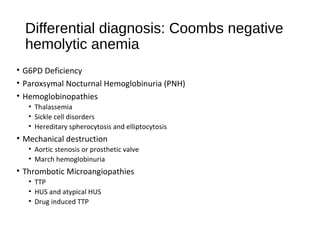
Differential diagnosis: Coombs negative
hemolytic anemia
• G6PD Deficiency
• Paroxsymal Nocturnal Hemoglobinuria (PNH)
• Hemoglobinopathies
• Thalassemia
• Sickle cell disorders
• Hereditary spherocytosis and elliptocytosis
• Mechanical destruction
• Aortic stenosis or prosthetic valve
• March hemoglobinuria
• Thrombotic Microangiopathies
• TTP
• HUS and atypical HUS
• Drug induced TTP
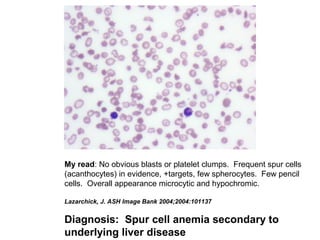
My read: No obvious blasts or platelet clumps. Frequent spur cells
(acanthocytes) in evidence, +targets, few spherocytes. Few pencil
cells. Overall appearance microcytic and hypochromic.
Lazarchick, J. ASH Image Bank 2004;2004:101137
Diagnosis: Spur cell anemia secondary to
underlying liver disease
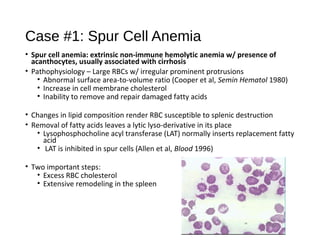
Case #1: Spur Cell Anemia
• Spur cell anemia: extrinsic non-immune hemolytic anemia w/ presence of
acanthocytes, usually associated with cirrhosis
• Pathophysiology – Large RBCs w/ irregular prominent protrusions
• Abnormal surface area-to-volume ratio (Cooper et al, Semin Hematol 1980)
• Increase in cell membrane cholesterol
• Inability to remove and repair damaged fatty acids
• Changes in lipid composition render RBC susceptible to splenic destruction
• Removal of fatty acids leaves a lytic lyso-derivative in its place
• Lysophosphocholine acyl transferase (LAT) normally inserts replacement fatty
acid
• LAT is inhibited in spur cells (Allen et al, Blood 1996)
• Two important steps:
• Excess RBC cholesterol
• Extensive remodeling in the spleen
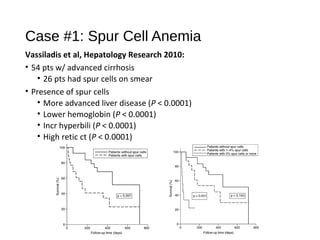
Case #1: Spur Cell Anemia
Vassiladis et al, Hepatology Research 2010:
• 54 pts w/ advanced cirrhosis
• 26 pts had spur cells on smear
• Presence of spur cells
• More advanced liver disease (P < 0.0001)
• Lower hemoglobin (P < 0.0001)
• Incr hyperbili (P < 0.0001)
• High retic ct (P < 0.0001)
Case #1: Spur Cell Anemia
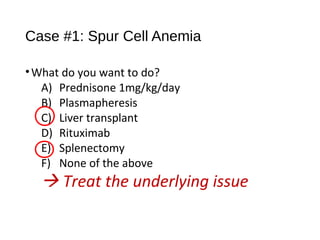
•What do you want to do?
A) Prednisone 1mg/kg/day
B) Plasmapheresis
C) Liver transplant
D) Rituximab
E) Splenectomy
F) None of the above
 Treat the underlying issue
Case #2: Patient LS
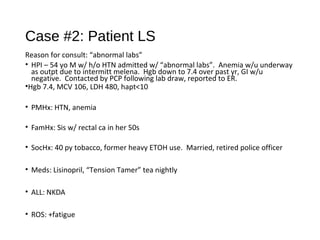
Reason for consult: “abnormal labs”
• HPI – 54 yo M w/ h/o HTN admitted w/ “abnormal labs”. Anemia w/u underway
as outpt due to intermitt melena. Hgb down to 7.4 over past yr, GI w/u
negative. Contacted by PCP following lab draw, reported to ER.
•Hgb 7.4, MCV 106, LDH 480, hapt<10
• PMHx: HTN, anemia
• FamHx: Sis w/ rectal ca in her 50s
• SocHx: 40 py tobacco, former heavy ETOH use. Married, retired police officer
• Meds: Lisinopril, “Tension Tamer” tea nightly
• ALL: NKDA
• ROS: +fatigue
Case #2: Patient LS
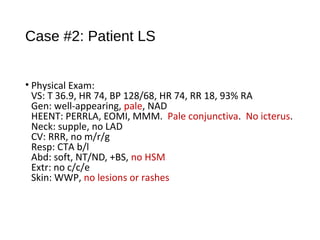
• Physical Exam:
VS: T 36.9, HR 74, BP 128/68, HR 74, RR 18, 93% RA
Gen: well-appearing, pale, NAD
HEENT: PERRLA, EOMI, MMM. Pale conjunctiva. No icterus.
Neck: supple, no LAD
CV: RRR, no m/r/g
Resp: CTA b/l
Abd: soft, NT/ND, +BS, no HSM
Extr: no c/c/e
Skin: WWP, no lesions or rashes
Case #2: Patient LS
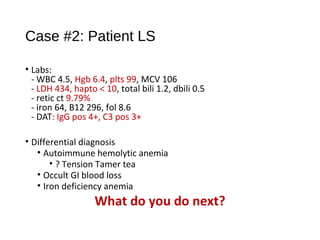
• Labs:
- WBC 4.5, Hgb 6.4, plts 99, MCV 106
- LDH 434, hapto < 10, total bili 1.2, dbili 0.5
- retic ct 9.79%
- iron 64, B12 296, fol 8.6
- DAT: IgG pos 4+, C3 pos 3+
• Differential diagnosis
• Autoimmune hemolytic anemia
• ? Tension Tamer tea
• Occult GI blood loss
• Iron deficiency anemia
What do you do next?
My read: Many microspherocytes indicated of hemolytic anemia, no
clumping. Normal WBC morphology with some atypical
lymphocytes, occasional large plts indicative of peripheral
destruction. No schistocytes or microangiopathic cells.
+Polychromatophilic cells present.
Maslak, P. et al. ASH Image Bank 2009;2009:9-00085
Diagnosis: Warm autoimmune hemolytic anemia
Case #2: Warm autoimmune
hemolytic anemia (AIHA)
• Definition – increased RBC destruction in the presence of anti-RBC autoantibodies.
+Anemia, indirect bili, LDH, ↓hapto, +spherocytes
• Incidence & Types – 1-3 per 100,000 individuals (Barros et al, Transf Med Reviews, 2010)
Warm AIHA (80%) Cold agglutinin AIHA Mixed-type PNH
• Mechanism
• Immunoadherence – IgG binds to RBC and Fc receptor on cytotoxic cell
• Phagocytosis engulfs RBC  partial ingestion  spherocyte
• Spherocytes then destroyed in the spleen
• Complement mediated – causes direct lysis of RBCs
• Causes
• Idiopathic
• Viral causes
• SLE – up to 10% of SLE pts in cohort studies (Jeffries et al, Lupus 2008)
• Malignancies (estimated at 11% in CLL) (Diehl et al, Semin Oncol 1998)
• Drugs
• Antibody detection – the direct Coombs test
Case #2: Management of AIHA
• Steroids 1mg/kg daily – 1st
line therapy
• Decreases synthesis of anti-RBC antibodies (Packman et al, Blood Rev
2008)
• Suppresses sequestration of RBCs by splenic
macrophages
• Approx 80% of warm AIHA will respond to steroids
• Splenectomy - 2nd
line therapy
• Never been compared head-to-head
• Variable results; 38-70% response rate
• Removes the primary site of RBC sequestration
• Other Rx – danazol, IVIG, alemtuzumab, cytoxan,
azathioprine
AIHA – Use of Rituximab
Mechanism in AIHA
1) B cell depletion - produce anti-RBC antibodies
2) Immune complex decoy hypothesis
• Rituxan-opsonized B cells attract monocytes and macrophages away
from auto-Ab complexes (Taylor et al, Nature Clin Pract, 2007)
Dosing and Use
• Doses of 375 mg/m^2 x 4 wks  CR in 87-100% of pediatric patients
• In adults, rates of CR range from 25-100% (Barros et al, Transf Med
Reviews, 2010)
Rituxan used successfully in variety of AIHA
• Idiopathic AIHA
• Secondary AIHA (BMT, autoimmune d/o, CLL)
• Pts who had previously rec’d steroids or other treatments
• Has been used in relapsed patients as well
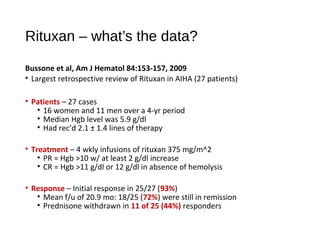
Rituxan – what’s the data?
Bussone et al, Am J Hematol 84:153-157, 2009
• Largest retrospective review of Rituxan in AIHA (27 patients)
• Patients – 27 cases
• 16 women and 11 men over a 4-yr period
• Median Hgb level was 5.9 g/dl
• Had rec’d 2.1 ± 1.4 lines of therapy
• Treatment – 4 wkly infusions of rituxan 375 mg/m^2
• PR = Hgb >10 w/ at least 2 g/dl increase
• CR = Hgb >11 g/dl or 12 g/dl in absence of hemolysis
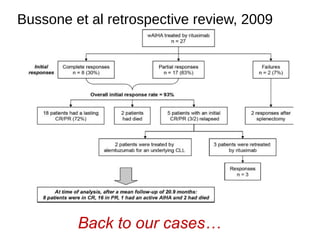
• Response – Initial response in 25/27 (93%)
• Mean f/u of 20.9 mo: 18/25 (72%) were still in remission
• Prednisone withdrawn in 11 of 25 (44%) responders
Bussone et al retrospective review, 2009
Back to our cases…
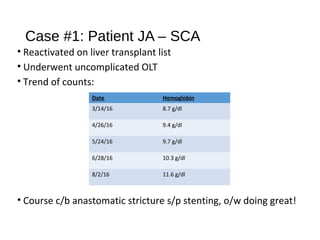
Case #1: Patient JA – SCA
• Reactivated on liver transplant list
• Underwent uncomplicated OLT
• Trend of counts:
• Course c/b anastomatic stricture s/p stenting, o/w doing great!
Date Hemoglobin
3/14/16 8.7 g/dl
4/26/16 9.4 g/dl
5/24/16 9.7 g/dl
6/28/16 10.3 g/dl
8/2/16 11.6 g/dl
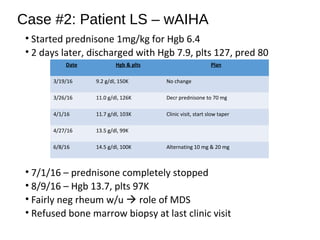
Case #2: Patient LS – wAIHA
• Started prednisone 1mg/kg for Hgb 6.4
• 2 days later, discharged with Hgb 7.9, plts 127, pred 80
• 7/1/16 – prednisone completely stopped
• 8/9/16 – Hgb 13.7, plts 97K
• Fairly neg rheum w/u  role of MDS
• Refused bone marrow biopsy at last clinic visit
Date Hgb & plts Plan
3/19/16 9.2 g/dl, 150K No change
3/26/16 11.0 g/dl, 126K Decr prednisone to 70 mg
4/1/16 11.7 g/dl, 103K Clinic visit, start slow taper
4/27/16 13.5 g/dl, 99K
6/8/16 14.5 g/dl, 100K Alternating 10 mg & 20 mg
Questions?
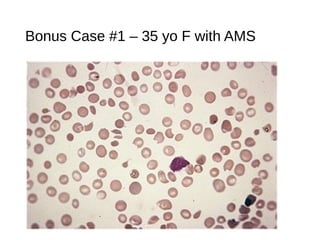
Bonus Case #1 – 35 yo F with AMS
Questions
• Diagnosis?
• Management?
• Need more information?
More Information
• 35 year old woman presents to the ER with altered mental status
• T: 39.2 HR: 103, BP 100/60, RR: 16
• Exam shows petechial rash
• WBC: 10 Hgb 8, Plt 12, Cr 2.5, LDH 495
• Diagnosis?
• Management?
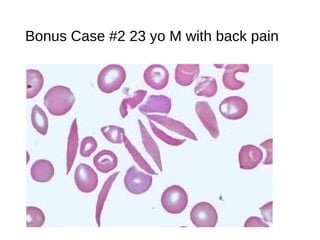
Bonus Case #2 23 yo M with back pain

Specialist presentation 3 26 hemolytic anemia

  • 1.
    Hemolytic Anemia: A Comparisonof Two Cases JP Flores, MD with thanks to Meaghan O’Malley, MD Division of Hematology-Oncology Virginia Mason Noon Conference March 26, 2019
  • 2.
    Case #1: PatientJA • HPI – 49 yo M w/ history of ETOH cirrhosis admitted with AKI, anemia, thrombocytopenia, & hyperbilirubinemia • Reason for consult: Hgb 6.7, hapto <10, weakly positive DAT • Transfusion of 3 units PRBCs: Hgb 6.9  7.9 • PMHx: • EtOH cirrhosis c/b ascites. No known varices. Recently on liver txp list, but put on hold due to recent bacteremia • HTN • Rheumatic fever • Obesity • Anemia - thought to be secondary to Zieve’s syndrome • FamHx – M, F, bro with EtOH abuse. Mother died of cirrhosis from EtOH and breast cancer • SocHx – Lives with sister and nephew. Prior heavy EtOH for 25 years, stopped in 7/09. Denies IVDA. • Home Meds – Propanolol, Aldactone, Lasix, folic acid, Cefuroxime, lactulose, sertraline • ROS - +fatigue, abdominal discomfort
  • 3.
    Case #1: PatientJA • Physical Exam: VS: T 36.4, AF, BP 105/53, HR 56, RR 18, 100% RA GEN: Caucasian man lying in bed in no apparent distress. HEENT: Icteric sclera. MMM. +Subglossal jaundice. NECK: Supple, no LAD LUNGS: CTA b/l CHEST: Brady, nml S1/S2. III/VI SEM in RUSB. ABDOMEN: Soft, distended, +fluid wave, +splenomegaly. Nontender. SKIN/EXT: 3+ pitting edema in bilateral lower extremities up to knees. Ecchymotic patches in flexor surface of forearms b/l, scattered petechiae on extensor surfaces of arms. NEURO: A&Ox3. Asterixis present.
  • 4.
    Case #1: PatientJA • Labs • WBC 11.4, Hgb 7.1, plts 20 • MCV 93.7, RDW 21.2 • INR 2.1, PT 20.6, PTT 52.9 • AST 61, ALT 46, alk phos 98, tbili 21.9, direct bili 14.8 • BUN 100, Cr 2.9 • fibrinogen 171, LDH 231 • DAT: IgG weakly positive, C3 direct negative • Haptoglobin <10 • Differential diagnosis for anemia? • Hemolysis • Anemia of chronic disease • Blood loss • Splenic sequestration What is the next step?
  • 5.
    Differential diagnosis: Coombsnegative hemolytic anemia • G6PD Deficiency • Paroxsymal Nocturnal Hemoglobinuria (PNH) • Hemoglobinopathies • Thalassemia • Sickle cell disorders • Hereditary spherocytosis and elliptocytosis • Mechanical destruction • Aortic stenosis or prosthetic valve • March hemoglobinuria • Thrombotic Microangiopathies • TTP • HUS and atypical HUS • Drug induced TTP
  • 6.
    My read: Noobvious blasts or platelet clumps. Frequent spur cells (acanthocytes) in evidence, +targets, few spherocytes. Few pencil cells. Overall appearance microcytic and hypochromic. Lazarchick, J. ASH Image Bank 2004;2004:101137 Diagnosis: Spur cell anemia secondary to underlying liver disease
  • 7.
    Case #1: SpurCell Anemia • Spur cell anemia: extrinsic non-immune hemolytic anemia w/ presence of acanthocytes, usually associated with cirrhosis • Pathophysiology – Large RBCs w/ irregular prominent protrusions • Abnormal surface area-to-volume ratio (Cooper et al, Semin Hematol 1980) • Increase in cell membrane cholesterol • Inability to remove and repair damaged fatty acids • Changes in lipid composition render RBC susceptible to splenic destruction • Removal of fatty acids leaves a lytic lyso-derivative in its place • Lysophosphocholine acyl transferase (LAT) normally inserts replacement fatty acid • LAT is inhibited in spur cells (Allen et al, Blood 1996) • Two important steps: • Excess RBC cholesterol • Extensive remodeling in the spleen
  • 8.
    Case #1: SpurCell Anemia Vassiladis et al, Hepatology Research 2010: • 54 pts w/ advanced cirrhosis • 26 pts had spur cells on smear • Presence of spur cells • More advanced liver disease (P < 0.0001) • Lower hemoglobin (P < 0.0001) • Incr hyperbili (P < 0.0001) • High retic ct (P < 0.0001)
  • 9.
    Case #1: SpurCell Anemia •What do you want to do? A) Prednisone 1mg/kg/day B) Plasmapheresis C) Liver transplant D) Rituximab E) Splenectomy F) None of the above  Treat the underlying issue
  • 10.
    Case #2: PatientLS Reason for consult: “abnormal labs” • HPI – 54 yo M w/ h/o HTN admitted w/ “abnormal labs”. Anemia w/u underway as outpt due to intermitt melena. Hgb down to 7.4 over past yr, GI w/u negative. Contacted by PCP following lab draw, reported to ER. •Hgb 7.4, MCV 106, LDH 480, hapt<10 • PMHx: HTN, anemia • FamHx: Sis w/ rectal ca in her 50s • SocHx: 40 py tobacco, former heavy ETOH use. Married, retired police officer • Meds: Lisinopril, “Tension Tamer” tea nightly • ALL: NKDA • ROS: +fatigue
  • 11.
    Case #2: PatientLS • Physical Exam: VS: T 36.9, HR 74, BP 128/68, HR 74, RR 18, 93% RA Gen: well-appearing, pale, NAD HEENT: PERRLA, EOMI, MMM. Pale conjunctiva. No icterus. Neck: supple, no LAD CV: RRR, no m/r/g Resp: CTA b/l Abd: soft, NT/ND, +BS, no HSM Extr: no c/c/e Skin: WWP, no lesions or rashes
  • 12.
    Case #2: PatientLS • Labs: - WBC 4.5, Hgb 6.4, plts 99, MCV 106 - LDH 434, hapto < 10, total bili 1.2, dbili 0.5 - retic ct 9.79% - iron 64, B12 296, fol 8.6 - DAT: IgG pos 4+, C3 pos 3+ • Differential diagnosis • Autoimmune hemolytic anemia • ? Tension Tamer tea • Occult GI blood loss • Iron deficiency anemia What do you do next?
  • 13.
    My read: Manymicrospherocytes indicated of hemolytic anemia, no clumping. Normal WBC morphology with some atypical lymphocytes, occasional large plts indicative of peripheral destruction. No schistocytes or microangiopathic cells. +Polychromatophilic cells present. Maslak, P. et al. ASH Image Bank 2009;2009:9-00085 Diagnosis: Warm autoimmune hemolytic anemia
  • 14.
    Case #2: Warmautoimmune hemolytic anemia (AIHA) • Definition – increased RBC destruction in the presence of anti-RBC autoantibodies. +Anemia, indirect bili, LDH, ↓hapto, +spherocytes • Incidence & Types – 1-3 per 100,000 individuals (Barros et al, Transf Med Reviews, 2010) Warm AIHA (80%) Cold agglutinin AIHA Mixed-type PNH • Mechanism • Immunoadherence – IgG binds to RBC and Fc receptor on cytotoxic cell • Phagocytosis engulfs RBC  partial ingestion  spherocyte • Spherocytes then destroyed in the spleen • Complement mediated – causes direct lysis of RBCs • Causes • Idiopathic • Viral causes • SLE – up to 10% of SLE pts in cohort studies (Jeffries et al, Lupus 2008) • Malignancies (estimated at 11% in CLL) (Diehl et al, Semin Oncol 1998) • Drugs • Antibody detection – the direct Coombs test
  • 15.
    Case #2: Managementof AIHA • Steroids 1mg/kg daily – 1st line therapy • Decreases synthesis of anti-RBC antibodies (Packman et al, Blood Rev 2008) • Suppresses sequestration of RBCs by splenic macrophages • Approx 80% of warm AIHA will respond to steroids • Splenectomy - 2nd line therapy • Never been compared head-to-head • Variable results; 38-70% response rate • Removes the primary site of RBC sequestration • Other Rx – danazol, IVIG, alemtuzumab, cytoxan, azathioprine
  • 16.
    AIHA – Useof Rituximab Mechanism in AIHA 1) B cell depletion - produce anti-RBC antibodies 2) Immune complex decoy hypothesis • Rituxan-opsonized B cells attract monocytes and macrophages away from auto-Ab complexes (Taylor et al, Nature Clin Pract, 2007) Dosing and Use • Doses of 375 mg/m^2 x 4 wks  CR in 87-100% of pediatric patients • In adults, rates of CR range from 25-100% (Barros et al, Transf Med Reviews, 2010) Rituxan used successfully in variety of AIHA • Idiopathic AIHA • Secondary AIHA (BMT, autoimmune d/o, CLL) • Pts who had previously rec’d steroids or other treatments • Has been used in relapsed patients as well
  • 17.
    Rituxan – what’sthe data? Bussone et al, Am J Hematol 84:153-157, 2009 • Largest retrospective review of Rituxan in AIHA (27 patients) • Patients – 27 cases • 16 women and 11 men over a 4-yr period • Median Hgb level was 5.9 g/dl • Had rec’d 2.1 ± 1.4 lines of therapy • Treatment – 4 wkly infusions of rituxan 375 mg/m^2 • PR = Hgb >10 w/ at least 2 g/dl increase • CR = Hgb >11 g/dl or 12 g/dl in absence of hemolysis • Response – Initial response in 25/27 (93%) • Mean f/u of 20.9 mo: 18/25 (72%) were still in remission • Prednisone withdrawn in 11 of 25 (44%) responders
  • 18.
    Bussone et alretrospective review, 2009 Back to our cases…
  • 19.
    Case #1: PatientJA – SCA • Reactivated on liver transplant list • Underwent uncomplicated OLT • Trend of counts: • Course c/b anastomatic stricture s/p stenting, o/w doing great! Date Hemoglobin 3/14/16 8.7 g/dl 4/26/16 9.4 g/dl 5/24/16 9.7 g/dl 6/28/16 10.3 g/dl 8/2/16 11.6 g/dl
  • 20.
    Case #2: PatientLS – wAIHA • Started prednisone 1mg/kg for Hgb 6.4 • 2 days later, discharged with Hgb 7.9, plts 127, pred 80 • 7/1/16 – prednisone completely stopped • 8/9/16 – Hgb 13.7, plts 97K • Fairly neg rheum w/u  role of MDS • Refused bone marrow biopsy at last clinic visit Date Hgb & plts Plan 3/19/16 9.2 g/dl, 150K No change 3/26/16 11.0 g/dl, 126K Decr prednisone to 70 mg 4/1/16 11.7 g/dl, 103K Clinic visit, start slow taper 4/27/16 13.5 g/dl, 99K 6/8/16 14.5 g/dl, 100K Alternating 10 mg & 20 mg
  • 21.
  • 22.
    Bonus Case #1– 35 yo F with AMS
  • 23.
  • 24.
    More Information • 35year old woman presents to the ER with altered mental status • T: 39.2 HR: 103, BP 100/60, RR: 16 • Exam shows petechial rash • WBC: 10 Hgb 8, Plt 12, Cr 2.5, LDH 495 • Diagnosis? • Management?
  • 25.
    Bonus Case #223 yo M with back pain

Editor's Notes

  • #2 Goal – compare and contrast 2 differing cases of hemolytic anemia, highlighting differences in etiology and management - Goal is to develop critical thinking skills, as well as review the data for management of hemolytic anemia
  • #3 - First case – seen on consults back in March – interesting findings - Zieve’s syndrome – hemolytic anemia, jaundice, HLD, steatosis assoc w/ heavy ETOH
  • #5 What jumps out at you with the labs?
  • #7 Someone to interpret the smear
  • #8 Origin of acanthocyte – acantho = thorn Several mechanisms of hemolysis associated with liver disease LAT can also be inhibited by heavily loading RBCs w/ cholesterol in vitro Extensive remodeling in spleen makes cells susceptible to destruction  extrinsic non-immune mediated hemolytic anemia
  • #9 Graph on the left – survival over time is different for pts with and without spur cells Clearly, patients without spur cells have improved survival Similarly, on the right – number of spur cells is an indicator for survival
  • #10 Quiz for management As you might expect, a somewhat unsatisfying solution but very realistic is to treat the underlying issue. Splenectomy has been successfully in some cases, but many of these patients are too unstable to consider a surgery
  • #11 Let’s switch gears – contrast to another case that we will quickly review Reason for consult – the bane of every 1st year fellow’s existence “abnormal labs”
  • #15 Mechanism – 2 leading postulates as to why this happens leads to changes in surface area-to-volume ratio leading to spherocyte Warm AIHA – IgG antibody able to react with antigen at core body temp Coombs test – RBCs washed free of adherent proteins, reacted with antiserum of monoclonal antibodies prepared against the various immunoglobulins. If either antibodies are present, agglutination or other endpoint will be detected
  • #17 - Autoantibody levels not always significantly associated with rituxan treatment
  • #18 Paucity of prospective controlled trials Safety – transfusion-related reactions, severe neutropenia, infections
  • #19 No prospective controlled trials…