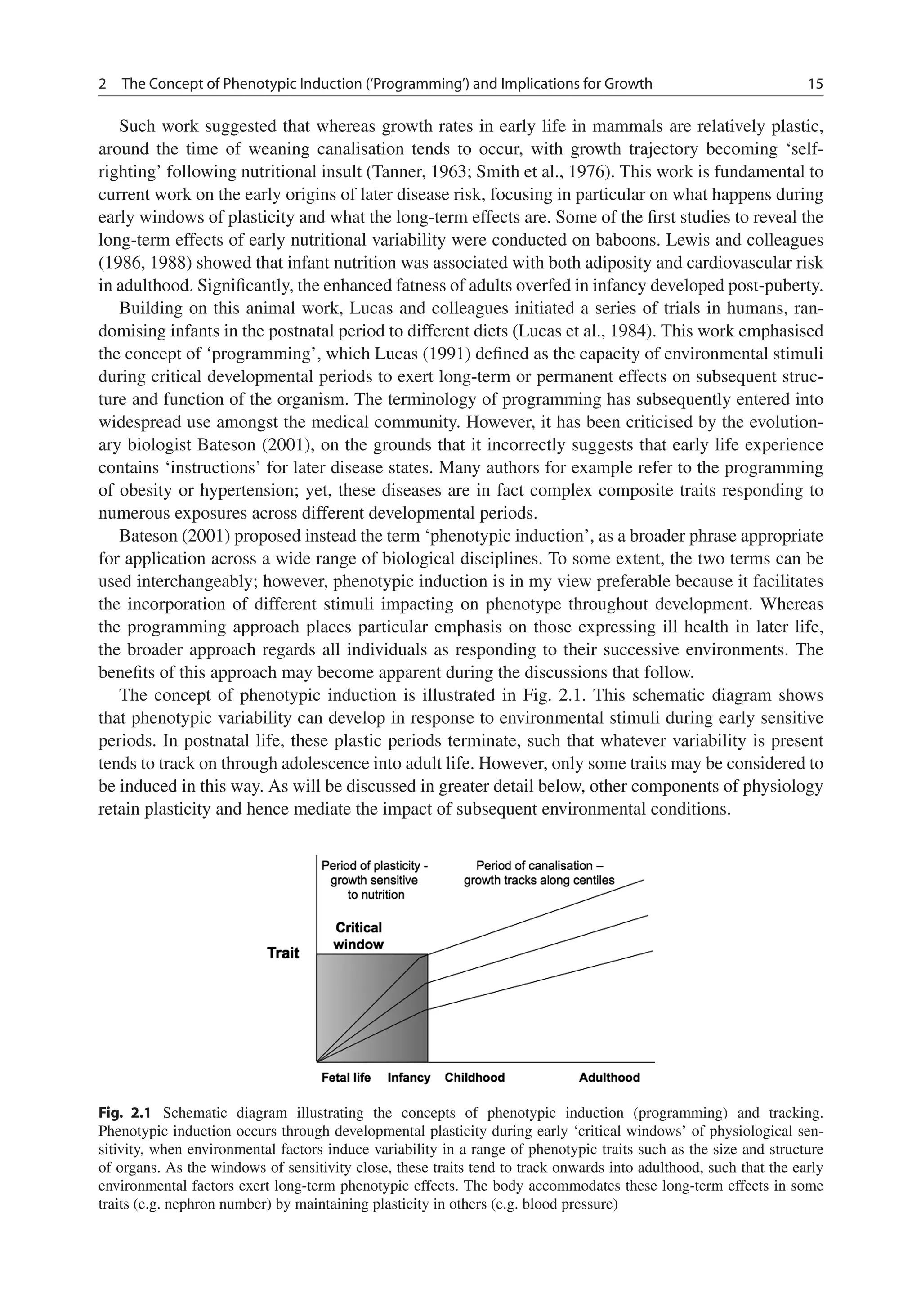
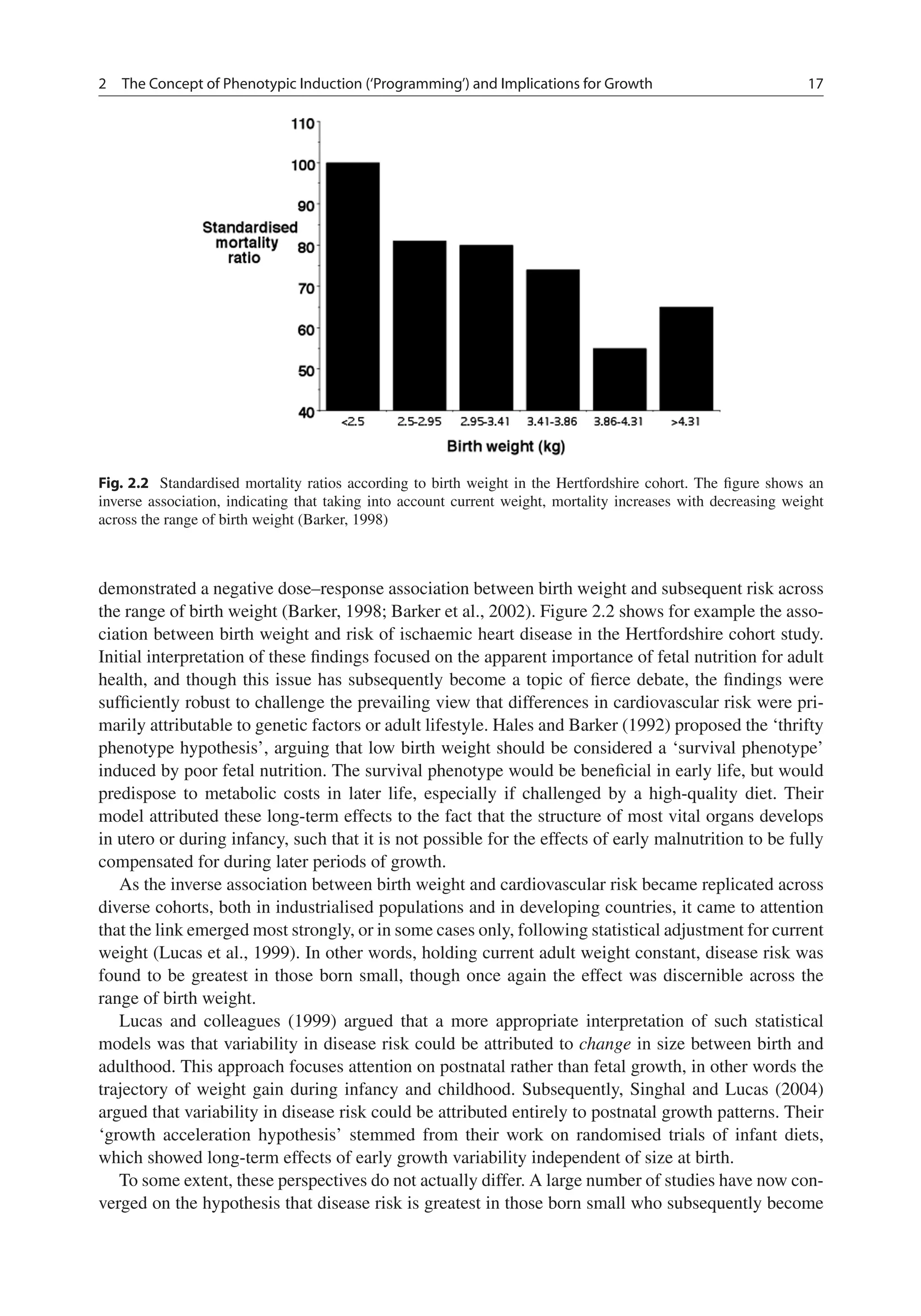
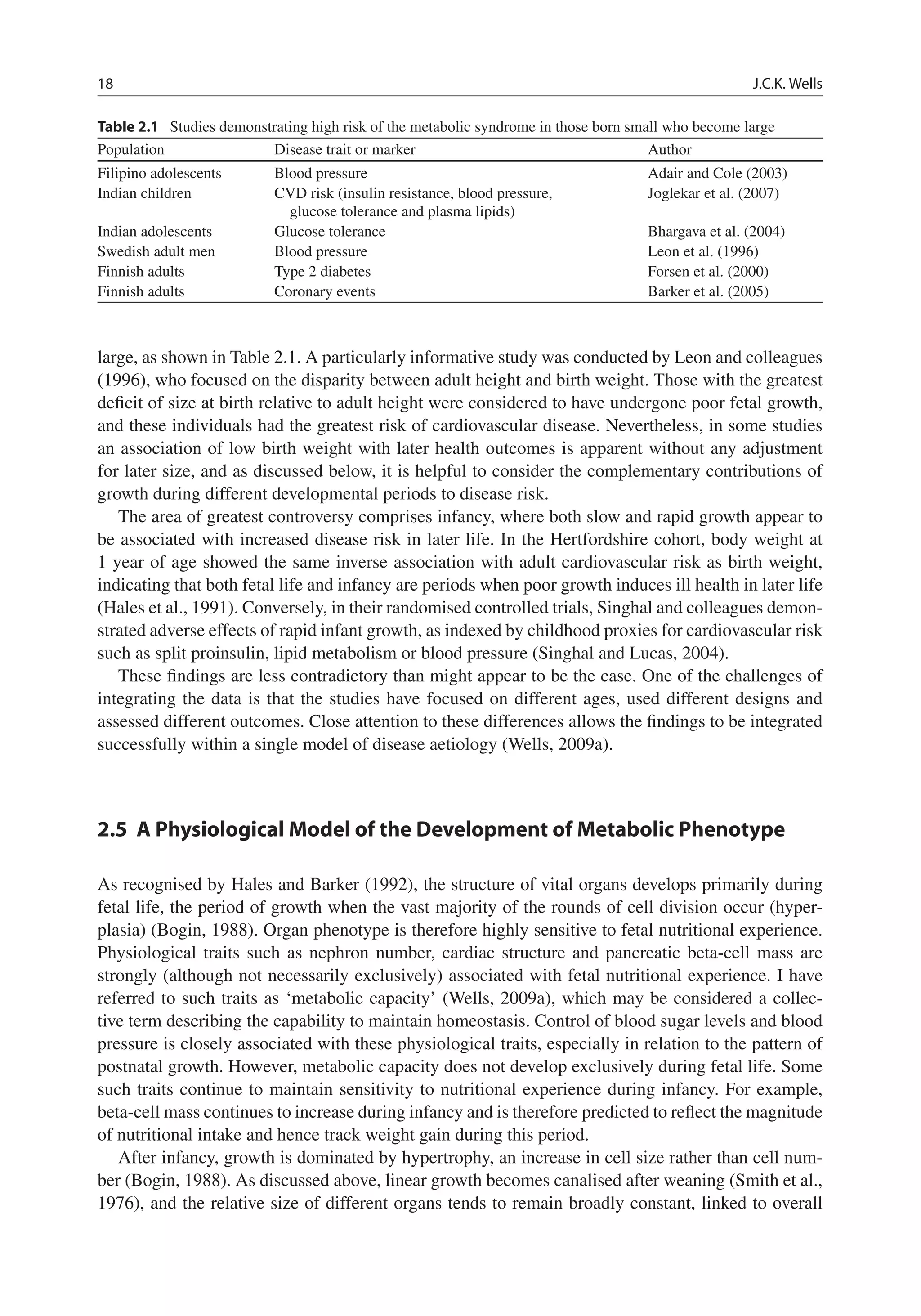
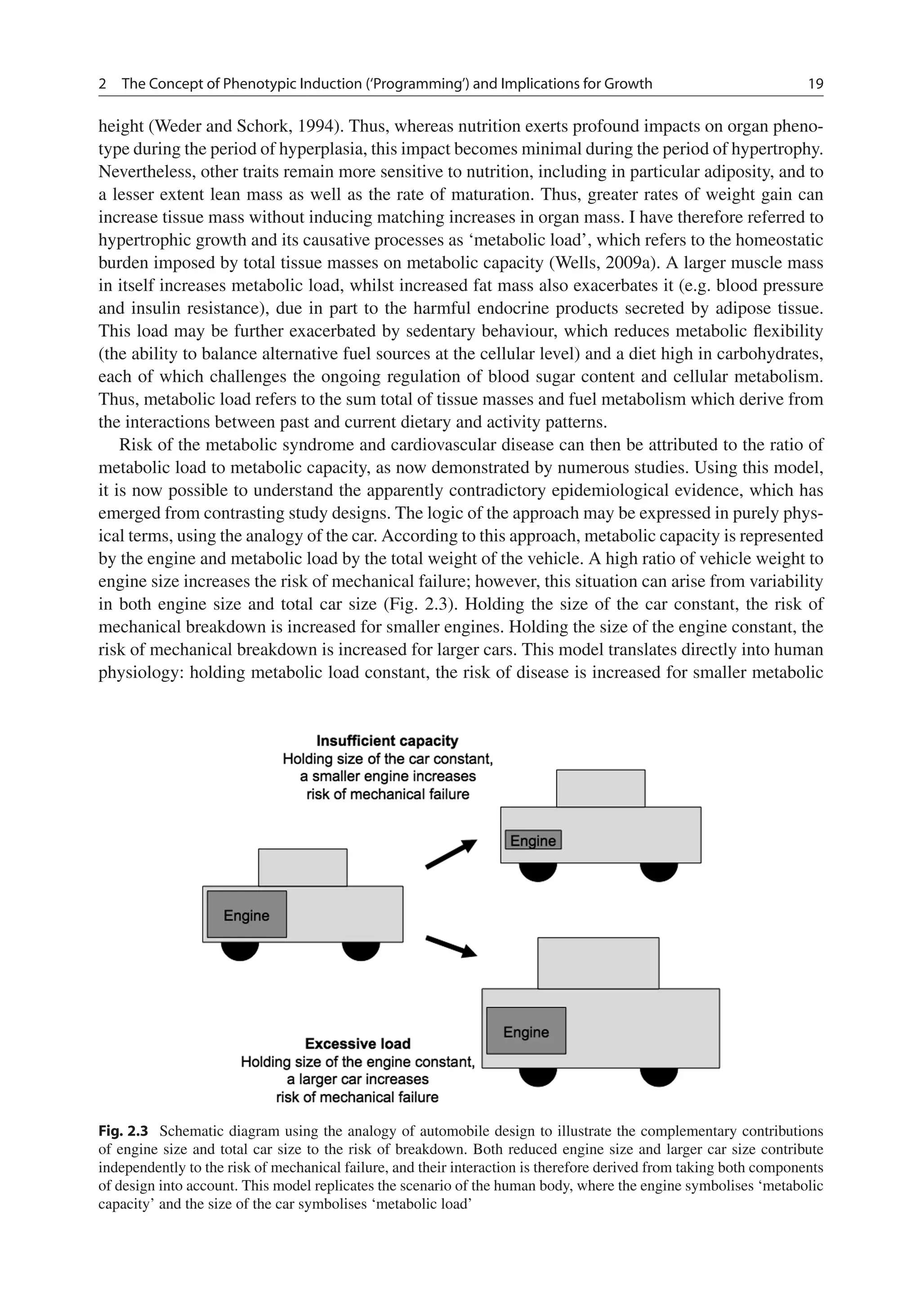
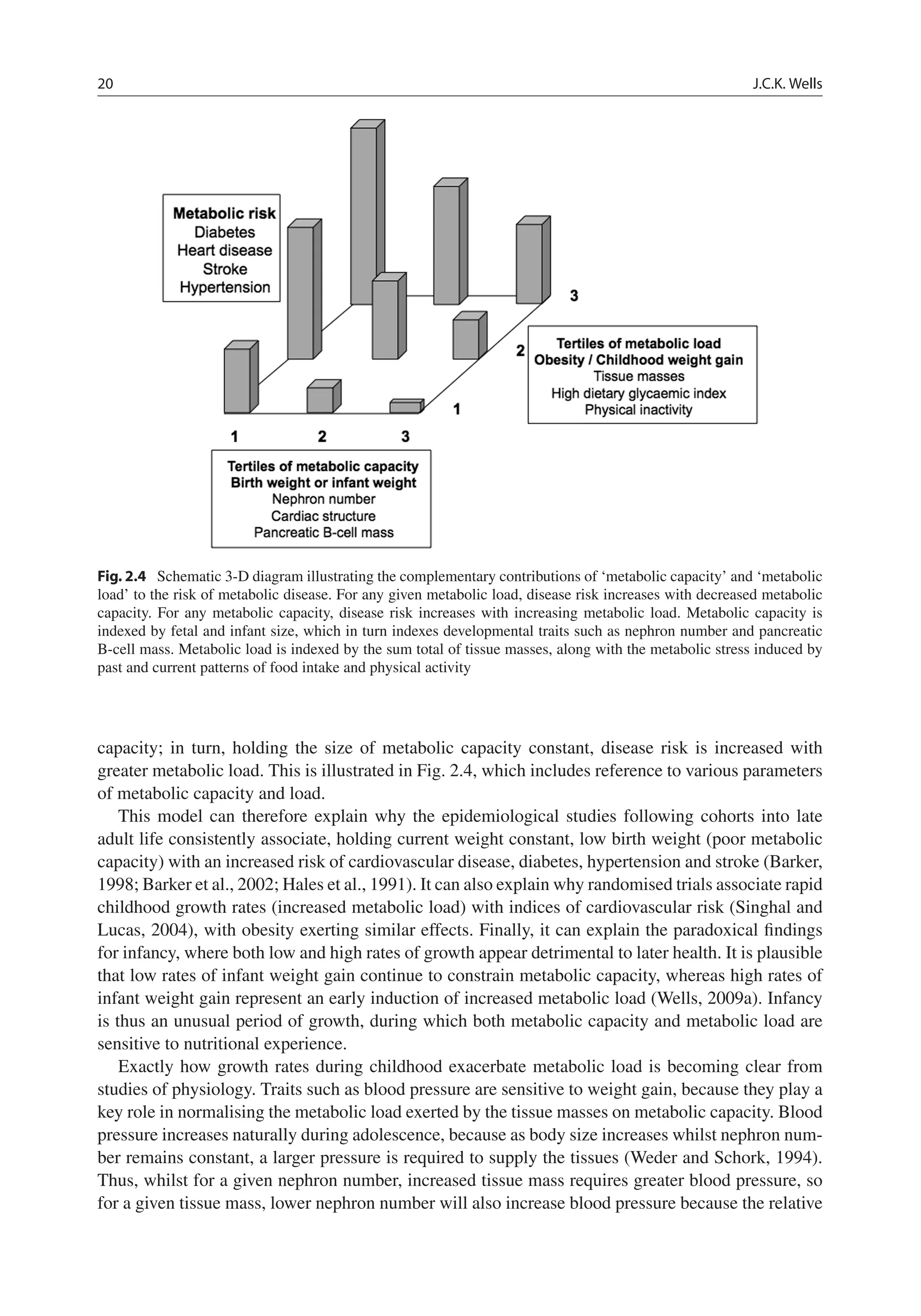


This chapter discusses the concepts of phenotypic induction and programming, which refer to the long-term effects of environmental stimuli during early life periods of development. The chapter presents a model showing how metabolic capacity develops during fetal life and infancy through critical windows, while metabolic load emerges from childhood onwards from traits like tissue mass and diet. A high ratio of metabolic load to capacity increases risk of diseases by altering blood pressure, insulin, and lipid metabolism. Studies show individuals born small who become large as adults have highest risk. Overall growth patterns, not any single period, determine later disease risk as load interacts with capacity throughout life.


![Apporach to lung biopsy [Auto-saved].pptx latest](https://cdn.slidesharecdn.com/ss_thumbnails/apporachtolungbiopsyauto-saved-251211225655-93258539-thumbnail.jpg?width=640&height=640&fit=bounds)


