Bienvenidos!
Live Class- Semana 23
El Plan- Español I:
1. Preguntas de semana 22 (gramática/vocabulario)
2. Recording in Zoom (send to me- demo)- missing one group
3. Cognates (repaso)
4. Affirmative and Negative words in Spanish (repaso)
5. El Huipil
6. Spring Break- April 19-26
7. Moodle this week (personal “a”)- video
8. Preguntas
Contact: njwiemann@gmail.com
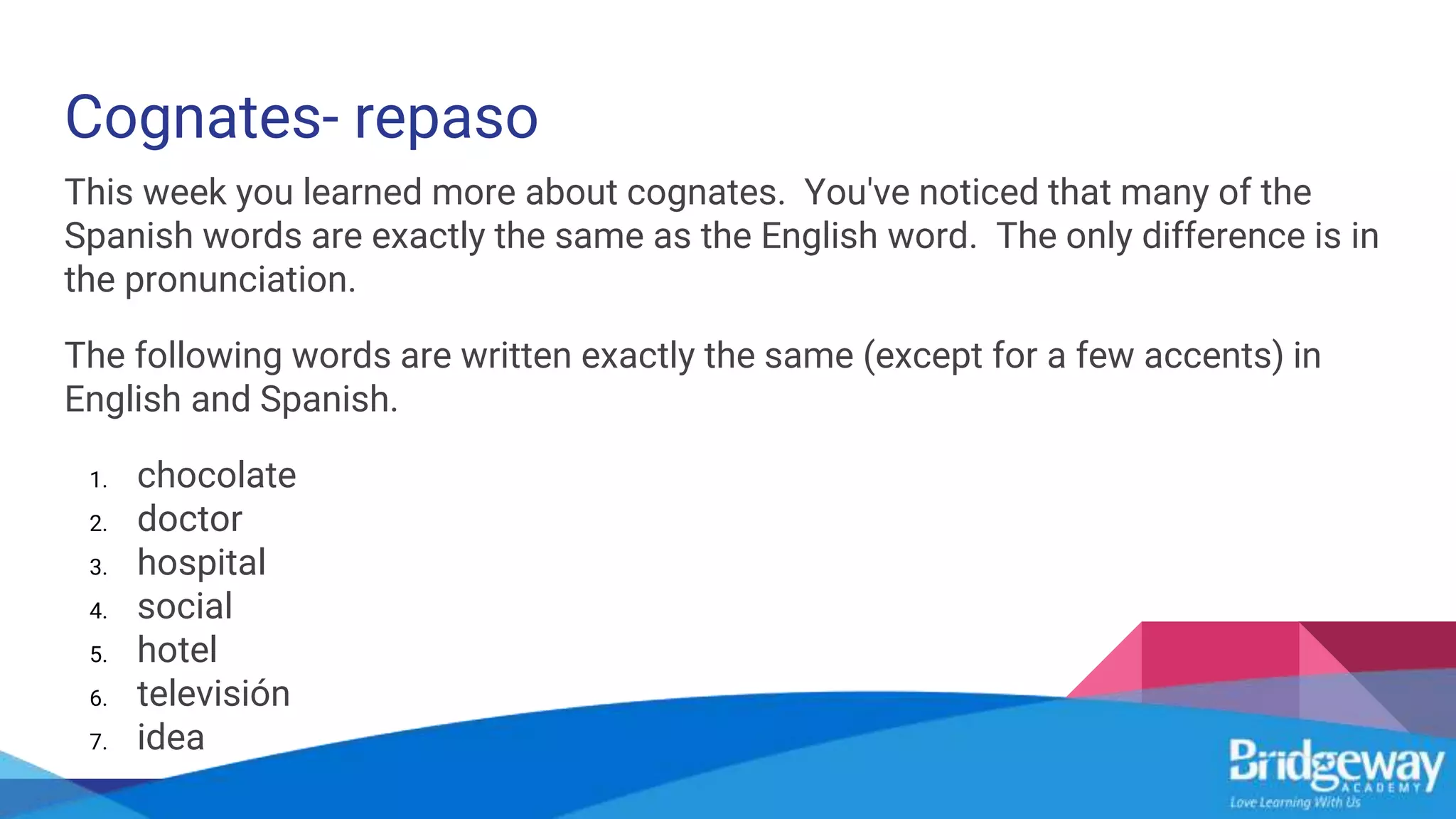
Cognates- repaso
This week you learned more about cognates. You've noticed that many of the
Spanish words are exactly the same as the English word. The only difference is in
the pronunciation.
The following words are written exactly the same (except for a few accents) in
English and Spanish.
1. chocolate
2. doctor
3. hospital
4. social
5. hotel
6. televisión
7. idea
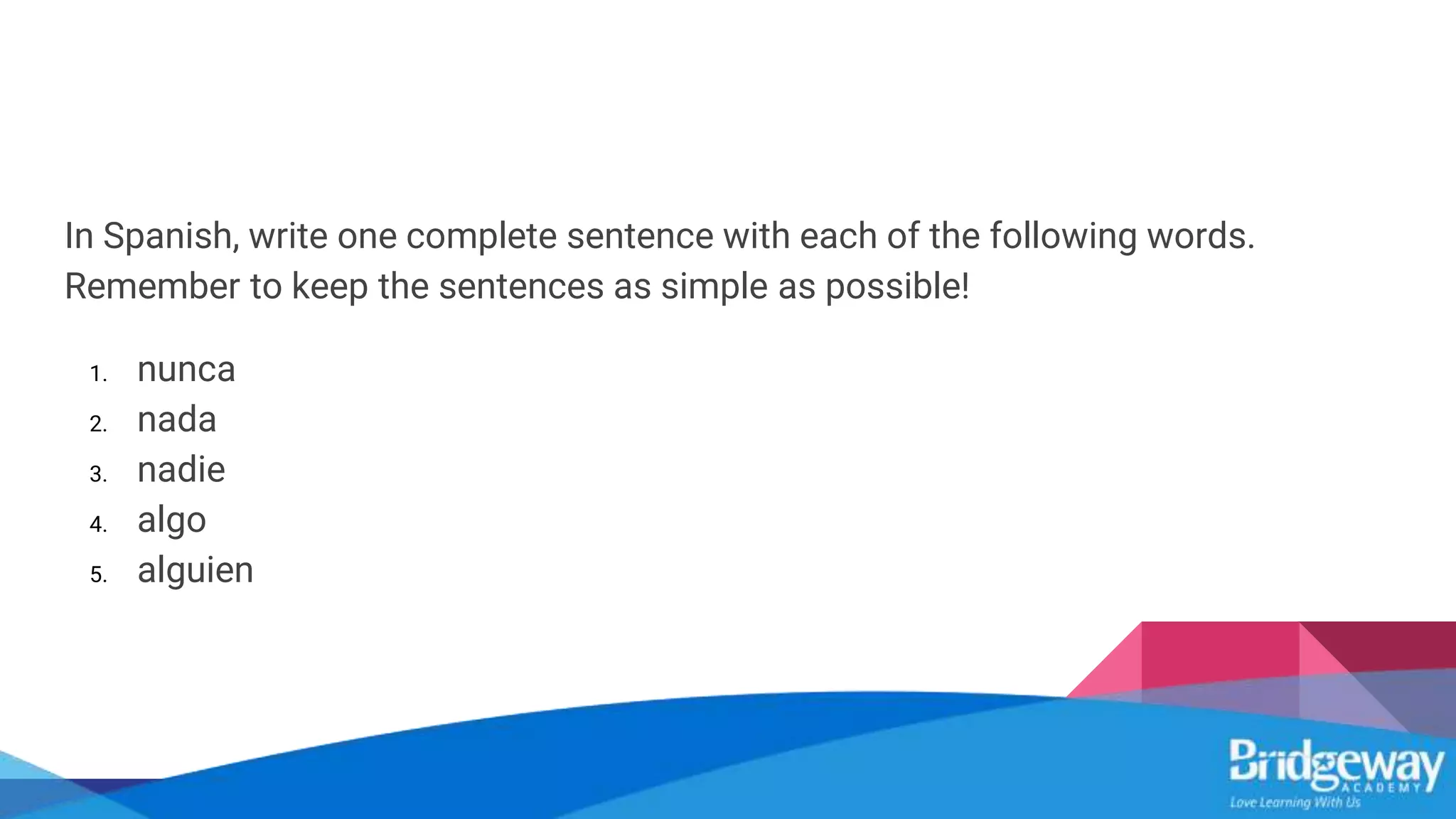
In Spanish, write one complete sentence with each of the following words.
Remember to keep the sentences as simple as possible!
1. nunca
2. nada
3. nadie
4. algo
5. alguien
El Huipil
Read through the following description of what a huipil is and what it represents. Although it is in Spanish,
try to get the main idea of the paragraph. Finally, answer the questions in English.
You will be graded on (1) appropriateness of response, (2) and overall quality of your response. (20 pts.)
“Huipil” es el nombre de la blusa tradicional de la mujer maya. Es usualmente usado con un corte (la
falda tradicional). Estas piezas de ropa tradicional son usadas típicamente por las mujeres indígenas
mayas de Guatemala. El huipil y el corte son artículos de ropa muy coloridos y decorativos. El huipil
está hecho a mano y es muy importante para la mujer porque representa su pueblo y su estatus
social. Un huipil puede variar en su tamaño, decoración y calidad dependiendo del propósito para el
que se use. Algunos son creados para el uso diario, mientras que otros son hechos para ocasiones
especiales.
Questions:
What is your opinion of the huipil? Why do you think it is important to these
women to still wear such traditional clothing nowadays? Do you know of any
traditional clothing still worn by people in your country or culture? What does it look
like and what does it represent (the traditional clothing worn by people in your
country/culture)?
Números 10-1.000
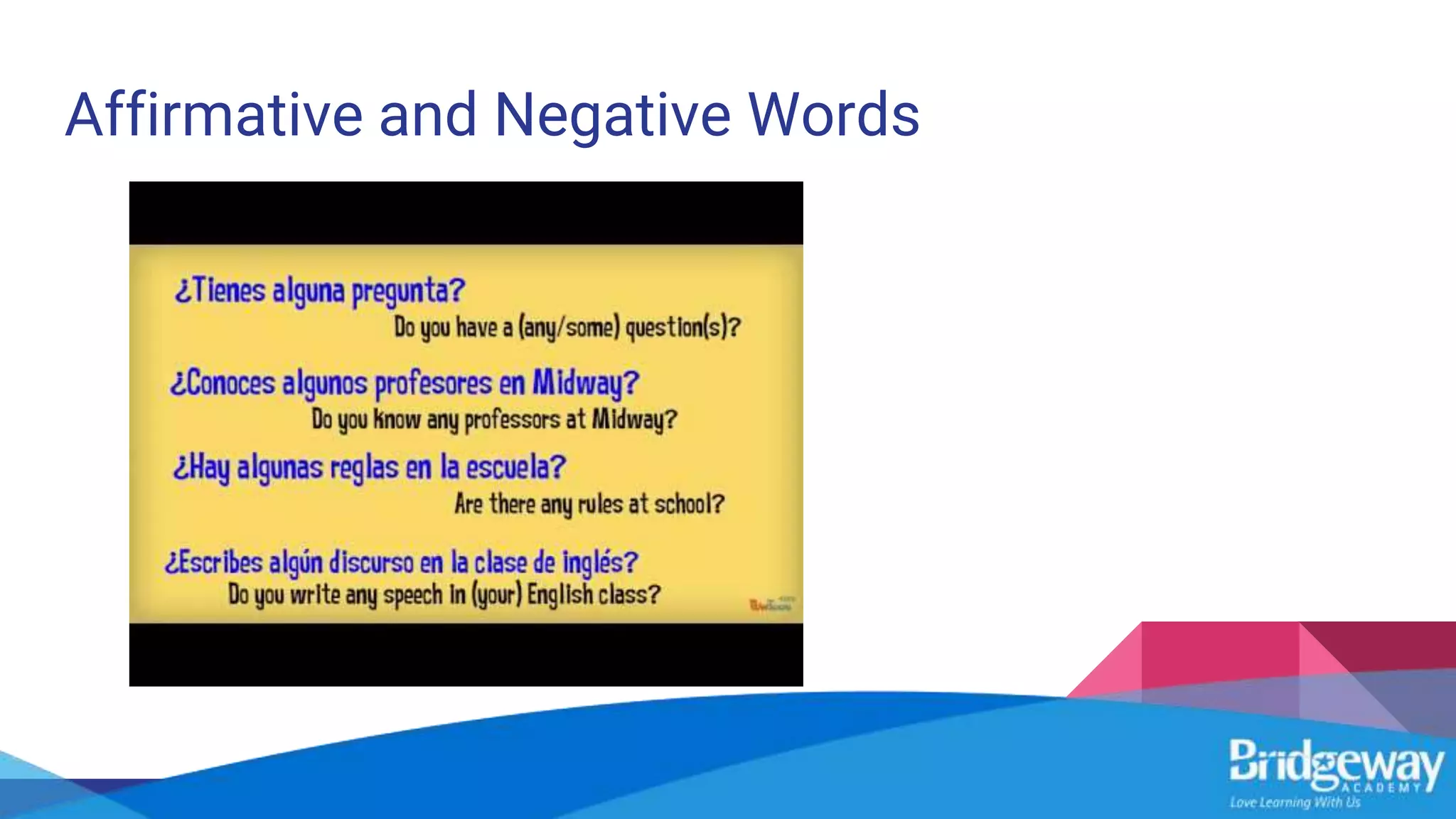
Affirmative and Negative Words
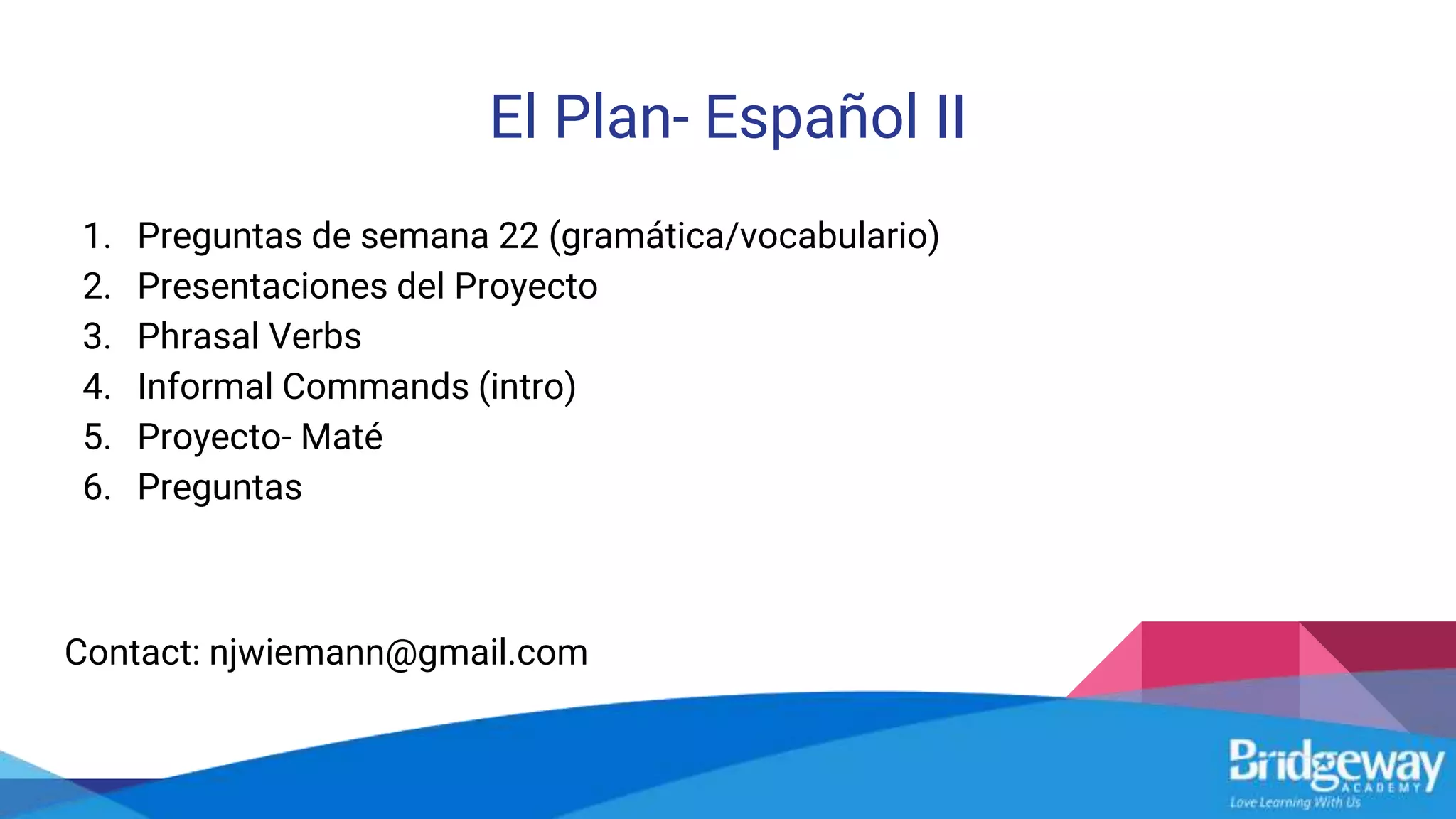
El Plan- Español II
1. Preguntas de semana 22 (gramática/vocabulario)
2. Presentaciones del Proyecto
3. Phrasal Verbs
4. Informal Commands (intro)
5. Proyecto- Maté
6. Preguntas
Contact: njwiemann@gmail.com
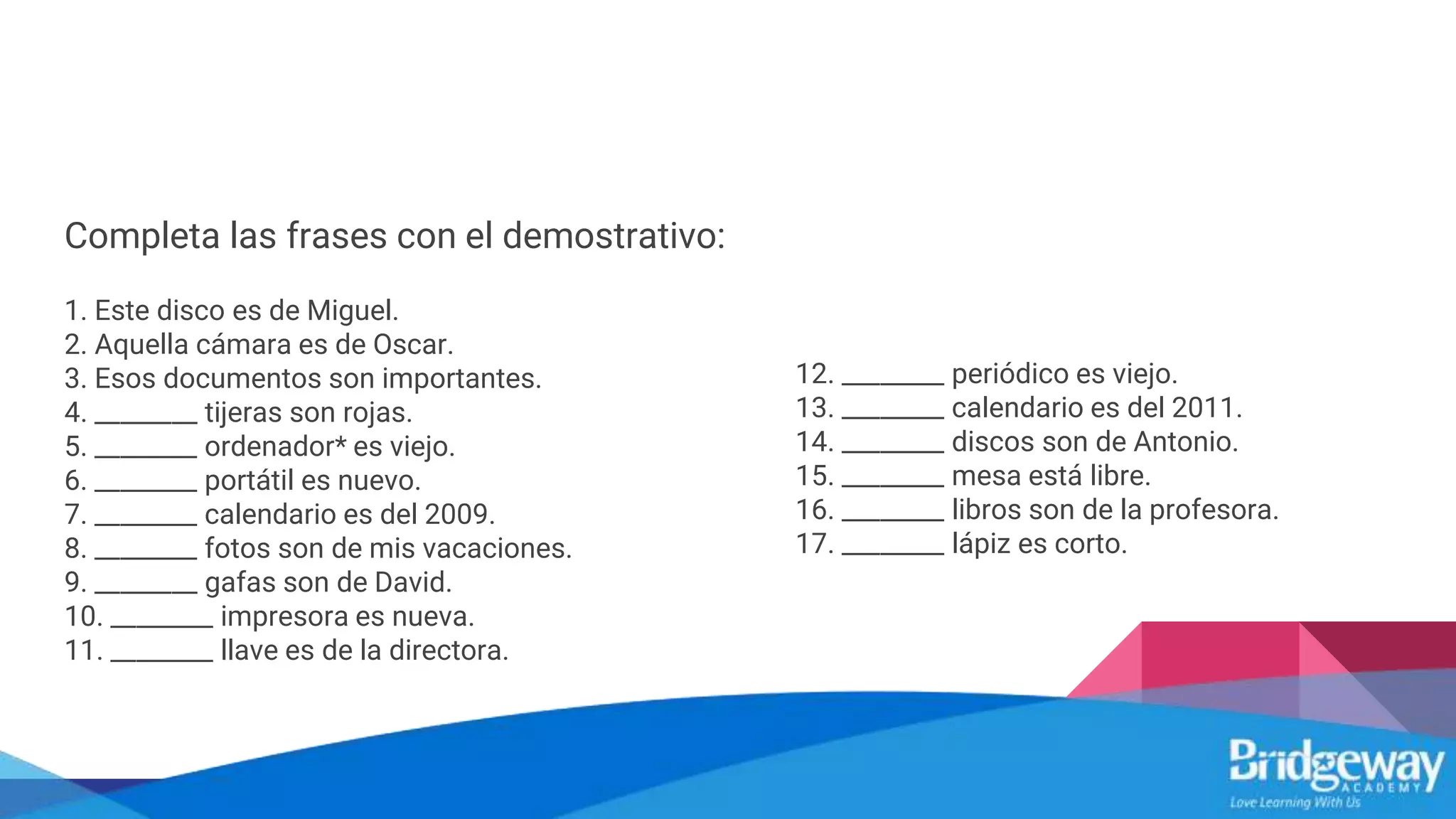
Completa las frases con el demostrativo:
1. Este disco es de Miguel.
2. Aquella cámara es de Oscar.
3. Esos documentos son importantes.
4. ________ tijeras son rojas.
5. ________ ordenador* es viejo.
6. ________ portátil es nuevo.
7. ________ calendario es del 2009.
8. ________ fotos son de mis vacaciones.
9. ________ gafas son de David.
10. ________ impresora es nueva.
11. ________ llave es de la directora.
12. ________ periódico es viejo.
13. ________ calendario es del 2011.
14. ________ discos son de Antonio.
15. ________ mesa está libre.
16. ________ libros son de la profesora.
17. ________ lápiz es corto.
Phrasal Verbs
PHRASAL VERBS
English often uses phrasal verbs (verbs followed by prepositions) when Spanish does not. Other times, Spanish uses a different
phrasal verb (or simply a different preposition) to say the same thing. The following list represents some of the most common English
phrasal verbs and their equivalents in Spanish.
Examples:
¿Vas a devolverme mi diccionario? -- Are you going to give me back my dictionary?
Estoy buscando mi anillo. -- I am looking for my ring. (Note that it is not "Estoy buscando por mi anillo.")
to agree with estar de acuerdo con
to come back regresar
to come in entrar
to give back devolver
to go away irse
to go out salir
to hang up (a telephone) colgar
to look after cuidar
to look for buscar
to ask for pedir
to throw away tirar
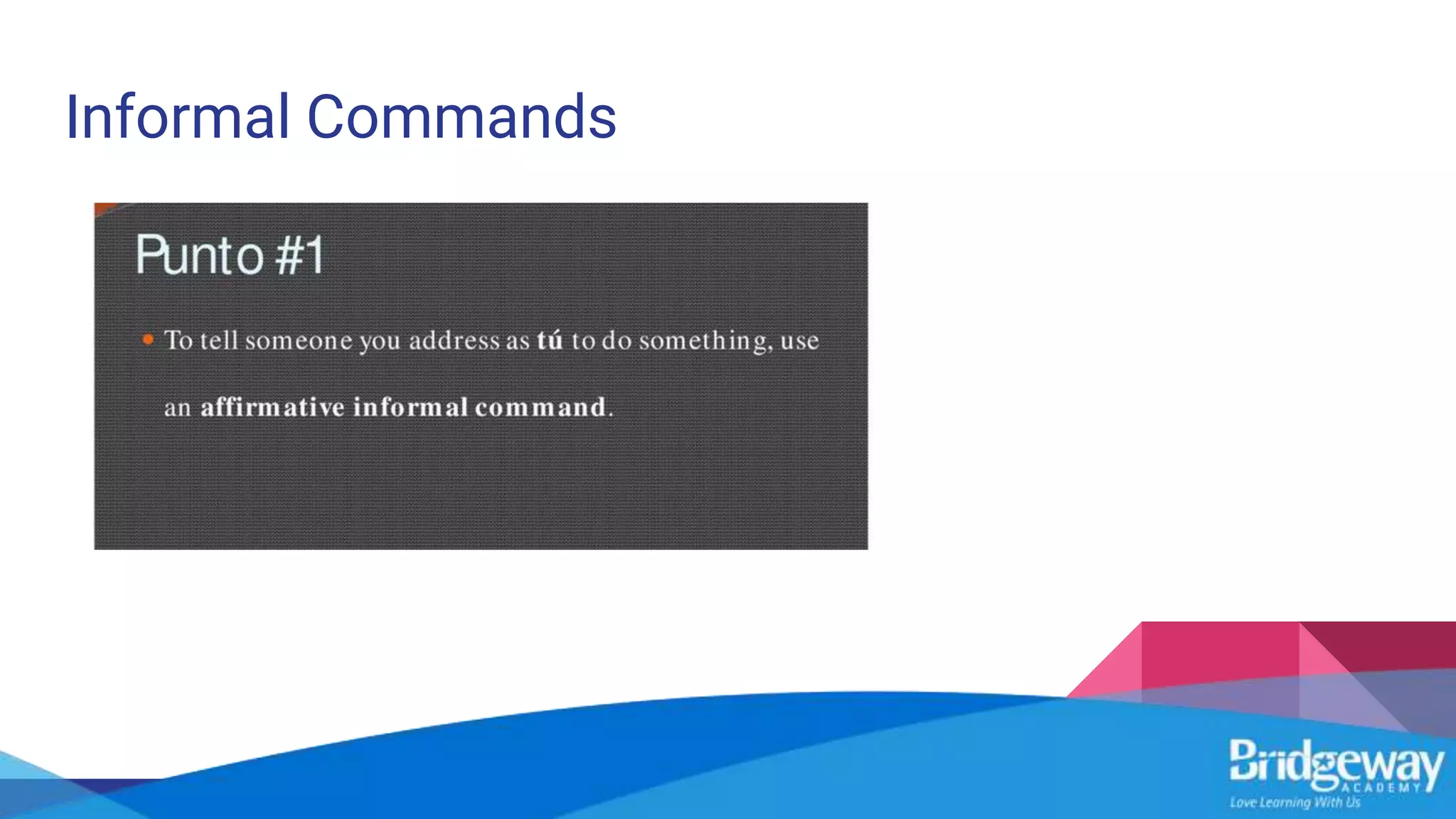
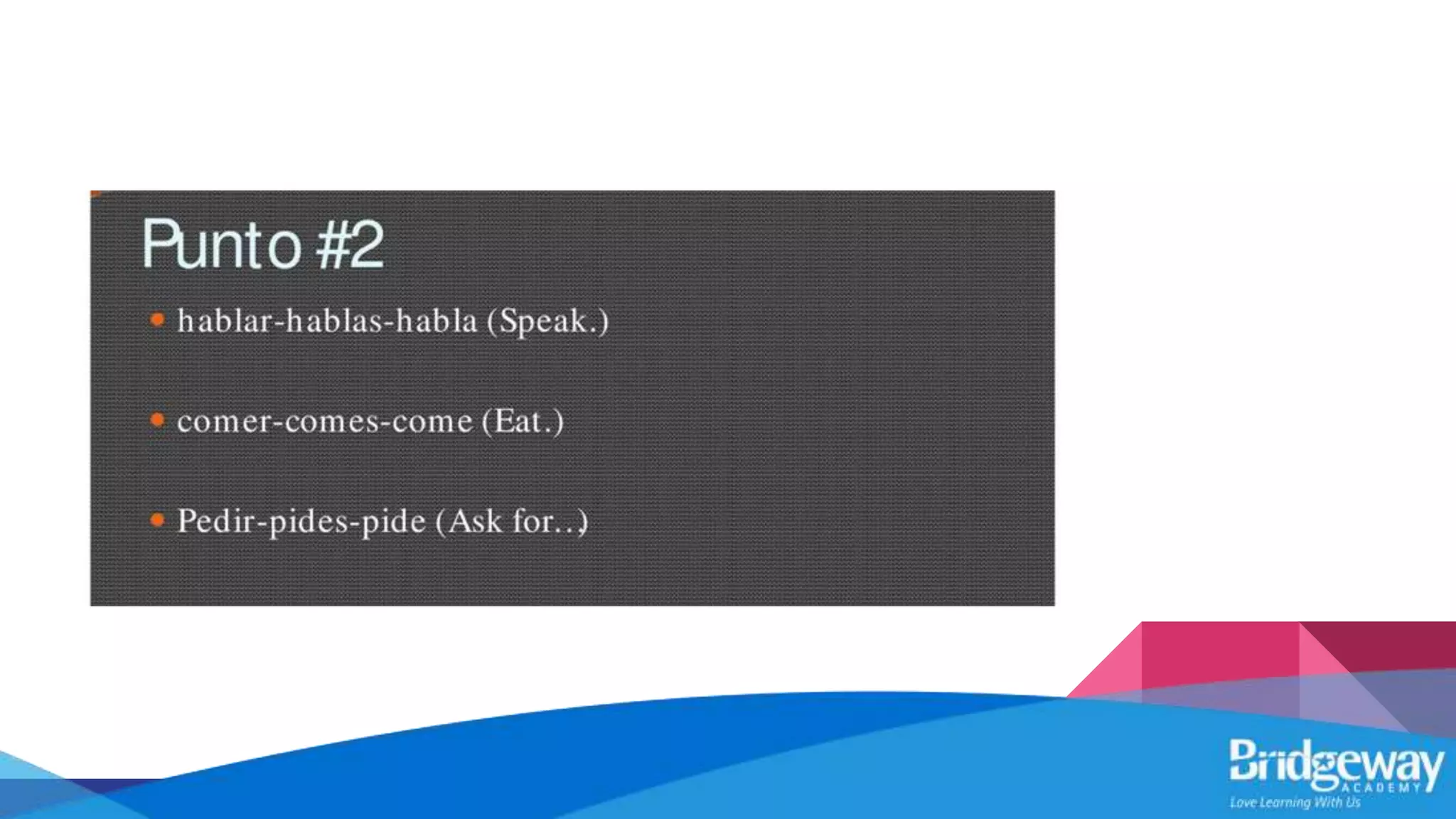
Informal Commands
Practica
Think of two more commands using 2 of the following verbs:
*comer, limpiar, estudiar, escuchar, hablar
Irregular Informal Commands Tenses
Proyecto
You will have one week to complete this assignment. You will present your work in
our next live class (week 24) and also submit it in Moodle (day 5).
Maté is a very common and traditional drink in several South American countries. Using
the internet or other sources, research information about maté. What countries have this
traditional drink? What is it made out of? When is it common to have this drink? Why is
this drink important to the people who drink it? Do you think you would like the taste of
this drink? In Spanish, write one paragraph answering these questions about maté.
You will be graded on (1) use of Spanish, (2) appropriateness of response, and (3) overall
quality of your response. (50 points)
Remember: You may use outside sources (Internet, books, magazines, etc.) to gather
information for this assignment. However, be sure not to copy the information directly
from those sources. Copying information and presenting it as your own work is
considered plagiarism and will result in a failing grade. You will need to rephrase the
information into your own words and cite the sources of the information you used.

Spanish 1 Class 23

  • 1.
  • 2.
    El Plan- EspañolI: 1. Preguntas de semana 22 (gramática/vocabulario) 2. Recording in Zoom (send to me- demo)- missing one group 3. Cognates (repaso) 4. Affirmative and Negative words in Spanish (repaso) 5. El Huipil 6. Spring Break- April 19-26 7. Moodle this week (personal “a”)- video 8. Preguntas Contact: njwiemann@gmail.com
  • 3.
    Cognates- repaso This weekyou learned more about cognates. You've noticed that many of the Spanish words are exactly the same as the English word. The only difference is in the pronunciation. The following words are written exactly the same (except for a few accents) in English and Spanish. 1. chocolate 2. doctor 3. hospital 4. social 5. hotel 6. televisión 7. idea
  • 4.
    In Spanish, writeone complete sentence with each of the following words. Remember to keep the sentences as simple as possible! 1. nunca 2. nada 3. nadie 4. algo 5. alguien
  • 5.
    El Huipil Read throughthe following description of what a huipil is and what it represents. Although it is in Spanish, try to get the main idea of the paragraph. Finally, answer the questions in English. You will be graded on (1) appropriateness of response, (2) and overall quality of your response. (20 pts.) “Huipil” es el nombre de la blusa tradicional de la mujer maya. Es usualmente usado con un corte (la falda tradicional). Estas piezas de ropa tradicional son usadas típicamente por las mujeres indígenas mayas de Guatemala. El huipil y el corte son artículos de ropa muy coloridos y decorativos. El huipil está hecho a mano y es muy importante para la mujer porque representa su pueblo y su estatus social. Un huipil puede variar en su tamaño, decoración y calidad dependiendo del propósito para el que se use. Algunos son creados para el uso diario, mientras que otros son hechos para ocasiones especiales. Questions: What is your opinion of the huipil? Why do you think it is important to these women to still wear such traditional clothing nowadays? Do you know of any traditional clothing still worn by people in your country or culture? What does it look like and what does it represent (the traditional clothing worn by people in your country/culture)?
  • 6.
  • 7.
  • 8.
    El Plan- EspañolII 1. Preguntas de semana 22 (gramática/vocabulario) 2. Presentaciones del Proyecto 3. Phrasal Verbs 4. Informal Commands (intro) 5. Proyecto- Maté 6. Preguntas Contact: njwiemann@gmail.com
  • 9.
    Completa las frasescon el demostrativo: 1. Este disco es de Miguel. 2. Aquella cámara es de Oscar. 3. Esos documentos son importantes. 4. ________ tijeras son rojas. 5. ________ ordenador* es viejo. 6. ________ portátil es nuevo. 7. ________ calendario es del 2009. 8. ________ fotos son de mis vacaciones. 9. ________ gafas son de David. 10. ________ impresora es nueva. 11. ________ llave es de la directora. 12. ________ periódico es viejo. 13. ________ calendario es del 2011. 14. ________ discos son de Antonio. 15. ________ mesa está libre. 16. ________ libros son de la profesora. 17. ________ lápiz es corto.
  • 10.
    Phrasal Verbs PHRASAL VERBS Englishoften uses phrasal verbs (verbs followed by prepositions) when Spanish does not. Other times, Spanish uses a different phrasal verb (or simply a different preposition) to say the same thing. The following list represents some of the most common English phrasal verbs and their equivalents in Spanish. Examples: ¿Vas a devolverme mi diccionario? -- Are you going to give me back my dictionary? Estoy buscando mi anillo. -- I am looking for my ring. (Note that it is not "Estoy buscando por mi anillo.") to agree with estar de acuerdo con to come back regresar to come in entrar to give back devolver to go away irse to go out salir to hang up (a telephone) colgar to look after cuidar to look for buscar to ask for pedir to throw away tirar
  • 11.
  • 14.
    Practica Think of twomore commands using 2 of the following verbs: *comer, limpiar, estudiar, escuchar, hablar
  • 15.
  • 16.
    Proyecto You will haveone week to complete this assignment. You will present your work in our next live class (week 24) and also submit it in Moodle (day 5). Maté is a very common and traditional drink in several South American countries. Using the internet or other sources, research information about maté. What countries have this traditional drink? What is it made out of? When is it common to have this drink? Why is this drink important to the people who drink it? Do you think you would like the taste of this drink? In Spanish, write one paragraph answering these questions about maté. You will be graded on (1) use of Spanish, (2) appropriateness of response, and (3) overall quality of your response. (50 points) Remember: You may use outside sources (Internet, books, magazines, etc.) to gather information for this assignment. However, be sure not to copy the information directly from those sources. Copying information and presenting it as your own work is considered plagiarism and will result in a failing grade. You will need to rephrase the information into your own words and cite the sources of the information you used.

Editor's Notes