Southern Africa in 1750
Grade: 10
Term: 3
Topic: 4 – TRANSFORMATIONS IN SOUTHERN AFRICA
AFTER 1750
Sub-Topic: SOUTHERN AFRICA IN 1750
1M.N.SPIES
Southern Africa in 1750
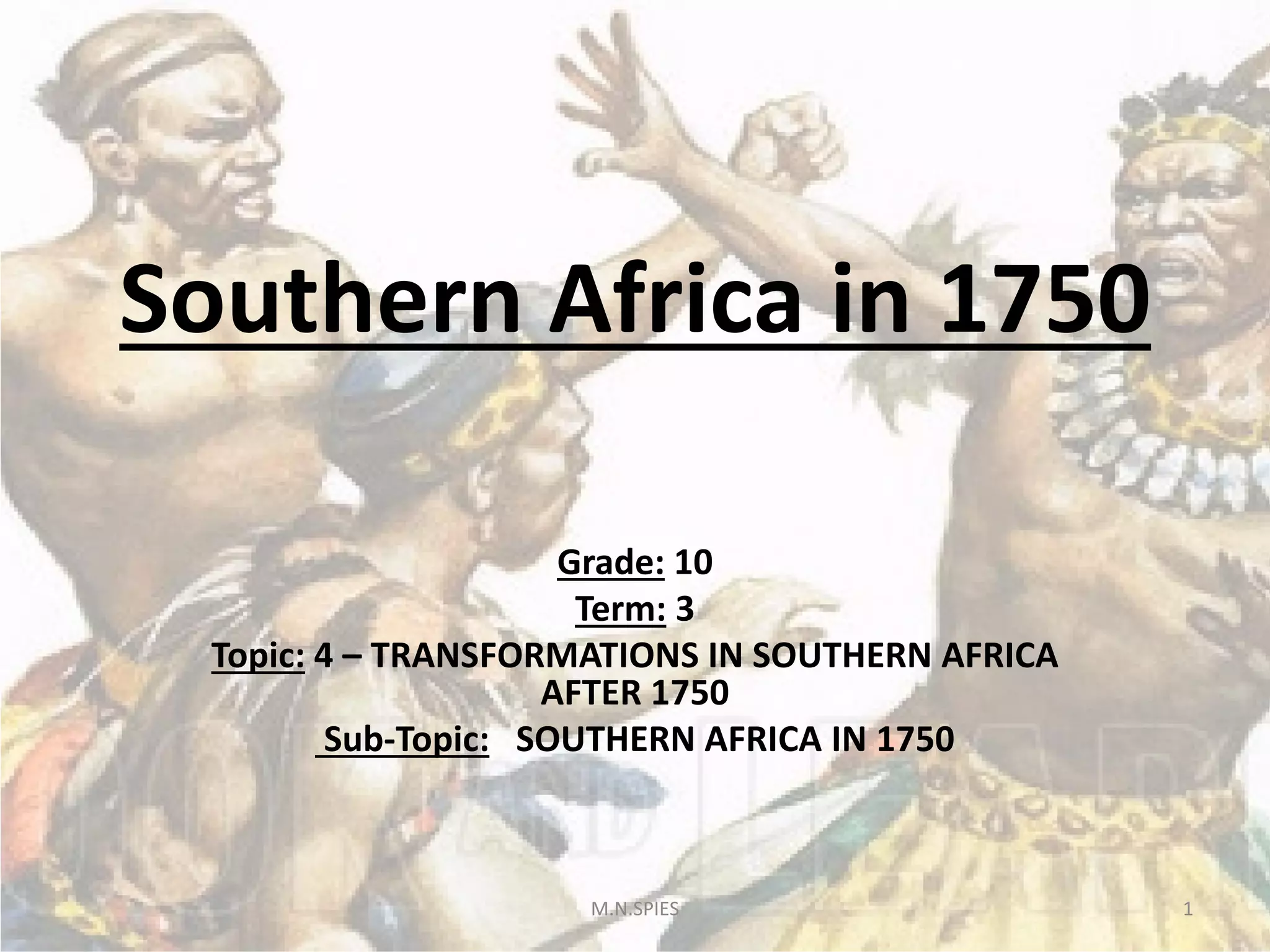
• By 1750, most of the people in southern Africa
lived in small chiefdoms ruled by a chief.
• Chiefdoms were not isolated from one
another.another.
• They traded and interacted with one another,
and with the nomadic Khoisan.
• From time to time, chiefdoms went to war
with one another.
M.N.SPIES 2
TERMINOLOGY
• Nomad: A member of a people that travel from
place to place to find fresh pasture for its animals
and have no permanent home.
• Nomadic: Living the life of a nomad; wandering
Transformation: Periods of substantial change.• Transformation: Periods of substantial change.
• Debate: A discussion in which reasons are given
for or against an idea.
• State: A politically organized body of people
under a single government.
M.N.SPIES 3
AFRICAN FARMERS
• African farmers made tools out of iron; they grew
crops and kept livestock.
• They chose to settle in regions with a warm climate,
fertile soil and reliable rainfall in summer.
• African farming societies were highly flexible and• African farming societies were highly flexible and
full of changes.
• People could move and join another chiefdom if
they wished.
• Chiefdoms came and went, and political power
changed constantly.
M.N.SPIES 4
THE MID-18TH CENTURY
• In the mid-18th century, the southern part of
Africa had not yet been very affected by
European colonialism.
• Only some parts of the Cape had been• Only some parts of the Cape had been
colonized by the Dutch and there was a small
Portuguese presence in Delagoa Bay (modern-
day Maputo in Mozambique).
M.N.SPIES 5
M.N.SPIES 6
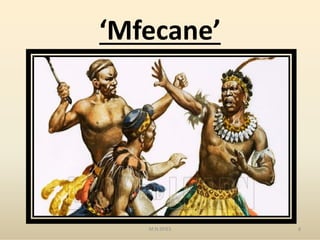
Transformation in southern Africa:
Political changes, 1750 - 1820
• From about 1750, southern African societies
underwent a period of transformation.
• Transformation refers to periods of substantial
change.change.
• Historians used to refer to this period of
transformation in southern Africa as the
'Mfecane' or the 'Difaqane'.
M.N.SPIES 7
‘Mfecane’
M.N.SPIES 8
M.N.SPIES 9
M.N.SPIES 10
TIME OF TROUBLE
• Many historians now use the term 'the time of
troubles' when referring to this period of
southern African history.
• The 'time of troubles' could be described as a• The 'time of troubles' could be described as a
period in which a series of major political and
social upheavals, wars and migrations took
place.
• During this time, new chiefdoms or states
were created.
M.N.SPIES 11
Historical debates on the 'time of
troubles'
• The series of wars that occurred during the 'time
of troubles' used to be blamed on the Zulu
kingdom under Shaka.
• This suggested that Shaka and the Zulu Kingdom
were the only ones responsible for causing thewere the only ones responsible for causing the
wars and the subsequent changes that
dominated this period.
• This has been debated, though, and more recent
research suggests that the causes of the 'time of
troubles' are far more complex.
M.N.SPIES 12
Some of the causes now given for the time of
troubles include the impact of the following
two developments on African societies in the
interior and eastern regions of southern Africa:
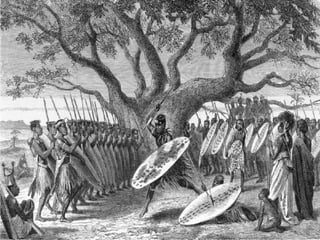
1. Some chiefdoms grew more powerful
(including the Zulu kingdom under Shaka, but
also including other kingdoms).also including other kingdoms).
Some kingdoms began to rule over other
kingdoms and new states began to emerge.
This increased tension among chiefdoms and
spurred wars.
M.N.SPIES 13
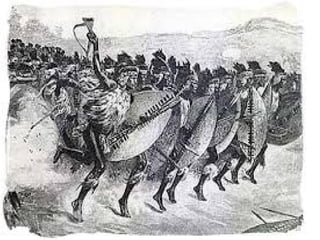
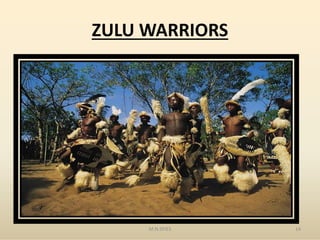
ZULU WARRIORS
M.N.SPIES 14
2. The frontiers of European colonial
settlement and trade from the Cape Colony
in the south began to expand and the
Portuguese trading post at Delagoa Bay in
the east extended its economic activities.
M.N.SPIES 15
the east extended its economic activities.
This placed pressure on indigenous
populations who now had increasing
competition for resources.

Southern Africa 1750

  • 1.
    Southern Africa in1750 Grade: 10 Term: 3 Topic: 4 – TRANSFORMATIONS IN SOUTHERN AFRICA AFTER 1750 Sub-Topic: SOUTHERN AFRICA IN 1750 1M.N.SPIES
  • 2.
    Southern Africa in1750 • By 1750, most of the people in southern Africa lived in small chiefdoms ruled by a chief. • Chiefdoms were not isolated from one another.another. • They traded and interacted with one another, and with the nomadic Khoisan. • From time to time, chiefdoms went to war with one another. M.N.SPIES 2
  • 3.
    TERMINOLOGY • Nomad: Amember of a people that travel from place to place to find fresh pasture for its animals and have no permanent home. • Nomadic: Living the life of a nomad; wandering Transformation: Periods of substantial change.• Transformation: Periods of substantial change. • Debate: A discussion in which reasons are given for or against an idea. • State: A politically organized body of people under a single government. M.N.SPIES 3
  • 4.
    AFRICAN FARMERS • Africanfarmers made tools out of iron; they grew crops and kept livestock. • They chose to settle in regions with a warm climate, fertile soil and reliable rainfall in summer. • African farming societies were highly flexible and• African farming societies were highly flexible and full of changes. • People could move and join another chiefdom if they wished. • Chiefdoms came and went, and political power changed constantly. M.N.SPIES 4
  • 5.
    THE MID-18TH CENTURY •In the mid-18th century, the southern part of Africa had not yet been very affected by European colonialism. • Only some parts of the Cape had been• Only some parts of the Cape had been colonized by the Dutch and there was a small Portuguese presence in Delagoa Bay (modern- day Maputo in Mozambique). M.N.SPIES 5
  • 6.
  • 7.
    Transformation in southernAfrica: Political changes, 1750 - 1820 • From about 1750, southern African societies underwent a period of transformation. • Transformation refers to periods of substantial change.change. • Historians used to refer to this period of transformation in southern Africa as the 'Mfecane' or the 'Difaqane'. M.N.SPIES 7
  • 8.
  • 9.
  • 10.
  • 11.
    TIME OF TROUBLE •Many historians now use the term 'the time of troubles' when referring to this period of southern African history. • The 'time of troubles' could be described as a• The 'time of troubles' could be described as a period in which a series of major political and social upheavals, wars and migrations took place. • During this time, new chiefdoms or states were created. M.N.SPIES 11
  • 12.
    Historical debates onthe 'time of troubles' • The series of wars that occurred during the 'time of troubles' used to be blamed on the Zulu kingdom under Shaka. • This suggested that Shaka and the Zulu Kingdom were the only ones responsible for causing thewere the only ones responsible for causing the wars and the subsequent changes that dominated this period. • This has been debated, though, and more recent research suggests that the causes of the 'time of troubles' are far more complex. M.N.SPIES 12
  • 13.
    Some of thecauses now given for the time of troubles include the impact of the following two developments on African societies in the interior and eastern regions of southern Africa: 1. Some chiefdoms grew more powerful (including the Zulu kingdom under Shaka, but also including other kingdoms).also including other kingdoms). Some kingdoms began to rule over other kingdoms and new states began to emerge. This increased tension among chiefdoms and spurred wars. M.N.SPIES 13
  • 14.
  • 15.
    2. The frontiersof European colonial settlement and trade from the Cape Colony in the south began to expand and the Portuguese trading post at Delagoa Bay in the east extended its economic activities. M.N.SPIES 15 the east extended its economic activities. This placed pressure on indigenous populations who now had increasing competition for resources.