8L                Summary Sheets
             Sound vibrations and waves
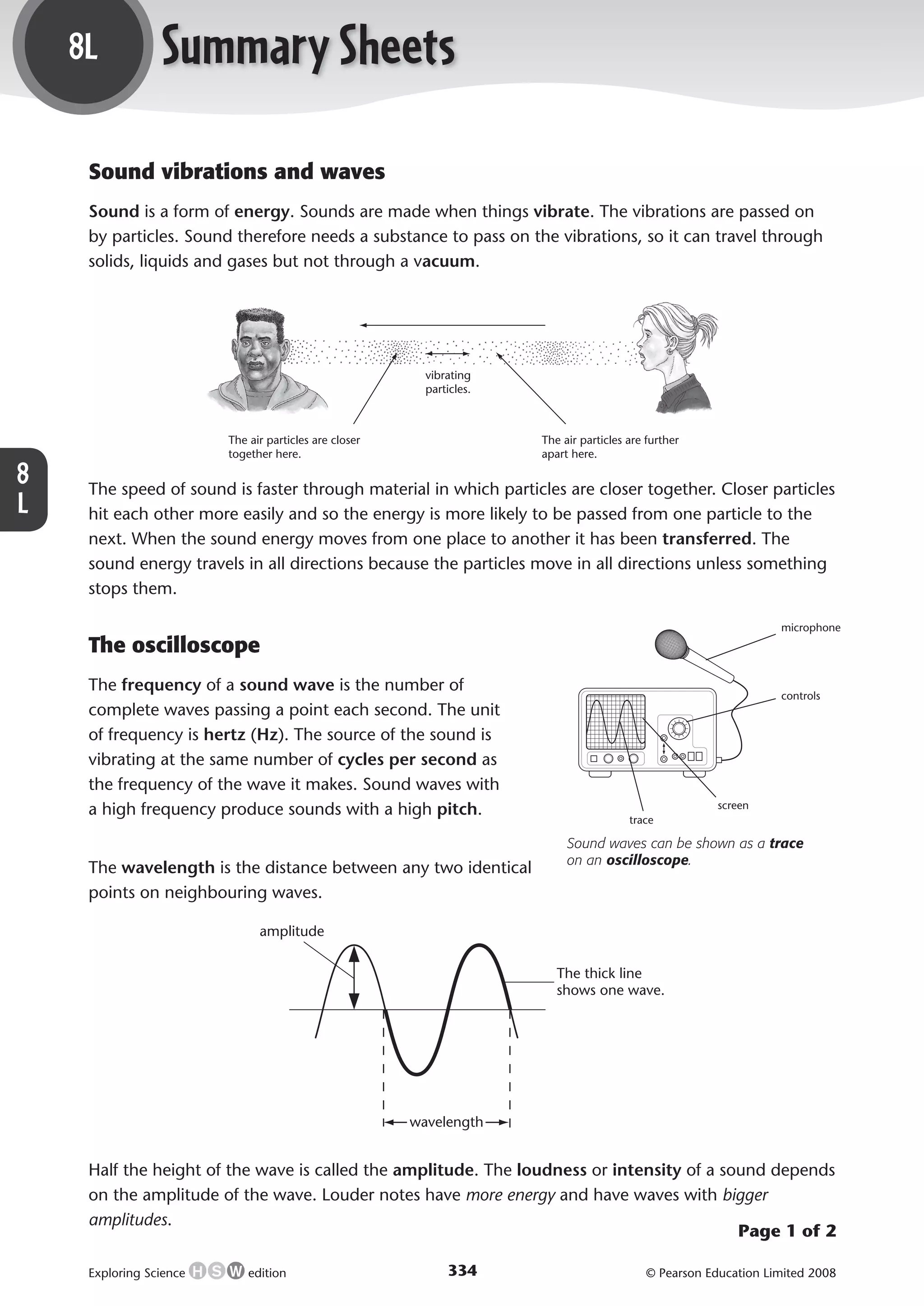
             Sound is a form of energy. Sounds are made when things vibrate. The vibrations are passed on
             by particles. Sound therefore needs a substance to pass on the vibrations, so it can travel through
             solids, liquids and gases but not through a vacuum.


                                                                   vibrating
                                                                   particles.


                                  The air particles are closer                  The air particles are further
                                  together here.                                apart here.

8            The speed of sound is faster through material in which particles are closer together. Closer particles
L            hit each other more easily and so the energy is more likely to be passed from one particle to the
             next. When the sound energy moves from one place to another it has been transferred. The
             sound energy travels in all directions because the particles move in all directions unless something
             stops them.

                                                                                                                            microphone
             The oscilloscope
             The frequency of a sound wave is the number of
                                                                                                                            controls
             complete waves passing a point each second. The unit
             of frequency is hertz (Hz). The source of the sound is
             vibrating at the same number of cycles per second as
             the frequency of the wave it makes. Sound waves with
             a high frequency produce sounds with a high pitch.                                                   screen
                                                                                                  trace

                                                                                     Sound waves can be shown as a trace
                                                                                     on an oscilloscope.
             The wavelength is the distance between any two identical
             points on neighbouring waves.

                                        amplitude

                                                                                   The thick line
                                                                                   shows one wave.


                                                                 wavelength


             Half the height of the wave is called the amplitude. The loudness or intensity of a sound depends
             on the amplitude of the wave. Louder notes have more energy and have waves with bigger
             amplitudes.
                                                                                                   Page 1 of 2

             Exploring Science        edition                          334                            © Pearson Education Limited 2008


M012_ES_AB_Y8_5415_U8L.indd 334                                                                                                          28/8/08 13:43:05
8L                Summary Sheets (continued)

             Hearing and the ear
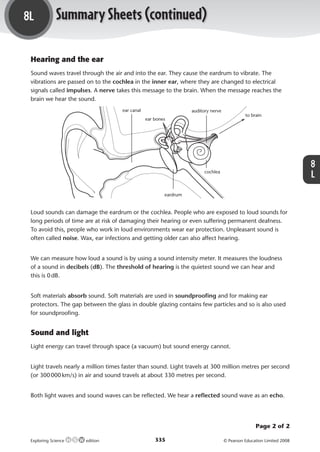
             Sound waves travel through the air and into the ear. They cause the eardrum to vibrate. The
             vibrations are passed on to the cochlea in the inner ear, where they are changed to electrical
             signals called impulses. A nerve takes this message to the brain. When the message reaches the
             brain we hear the sound.


                                                                                                                                        8
                                                                                                                                        L


             Loud sounds can damage the eardrum or the cochlea. People who are exposed to loud sounds for
             long periods of time are at risk of damaging their hearing or even suffering permanent deafness.
             To avoid this, people who work in loud environments wear ear protection. Unpleasant sound is
             often called noise. Wax, ear infections and getting older can also affect hearing.


             We can measure how loud a sound is by using a sound intensity meter. It measures the loudness
             of a sound in decibels (dB). The threshold of hearing is the quietest sound we can hear and
             this is 0 dB.


             Soft materials absorb sound. Soft materials are used in soundproofing and for making ear
             protectors. The gap between the glass in double glazing contains few particles and so is also used
             for soundproofing.


             Sound and light
             Light energy can travel through space (a vacuum) but sound energy cannot.


             Light travels nearly a million times faster than sound. Light travels at 300 million metres per second
             (or 300 000 km/s) in air and sound travels at about 330 metres per second.


             Both light waves and sound waves can be reflected. We hear a reflected sound wave as an echo.


                                                                                                        Page 2 of 2

             Exploring Science    edition                     335                        © Pearson Education Limited 2008


M012_ES_AB_Y8_5415_U8L.indd 335                                                                                             28/8/08 13:43:07

Sound and hearing

  • 1.
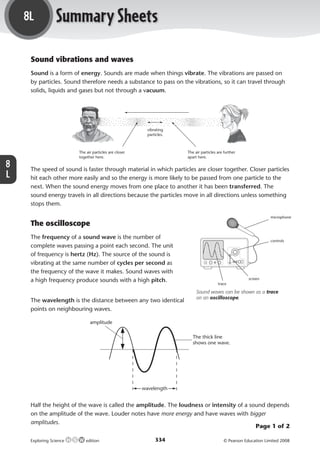
    8L Summary Sheets Sound vibrations and waves Sound is a form of energy. Sounds are made when things vibrate. The vibrations are passed on by particles. Sound therefore needs a substance to pass on the vibrations, so it can travel through solids, liquids and gases but not through a vacuum. vibrating particles. The air particles are closer The air particles are further together here. apart here. 8 The speed of sound is faster through material in which particles are closer together. Closer particles L hit each other more easily and so the energy is more likely to be passed from one particle to the next. When the sound energy moves from one place to another it has been transferred. The sound energy travels in all directions because the particles move in all directions unless something stops them. microphone The oscilloscope The frequency of a sound wave is the number of controls complete waves passing a point each second. The unit of frequency is hertz (Hz). The source of the sound is vibrating at the same number of cycles per second as the frequency of the wave it makes. Sound waves with a high frequency produce sounds with a high pitch. screen trace Sound waves can be shown as a trace on an oscilloscope. The wavelength is the distance between any two identical points on neighbouring waves. amplitude The thick line shows one wave. wavelength Half the height of the wave is called the amplitude. The loudness or intensity of a sound depends on the amplitude of the wave. Louder notes have more energy and have waves with bigger amplitudes. Page 1 of 2 Exploring Science edition 334 © Pearson Education Limited 2008 M012_ES_AB_Y8_5415_U8L.indd 334 28/8/08 13:43:05
  • 2.
    8L Summary Sheets (continued) Hearing and the ear Sound waves travel through the air and into the ear. They cause the eardrum to vibrate. The vibrations are passed on to the cochlea in the inner ear, where they are changed to electrical signals called impulses. A nerve takes this message to the brain. When the message reaches the brain we hear the sound. 8 L Loud sounds can damage the eardrum or the cochlea. People who are exposed to loud sounds for long periods of time are at risk of damaging their hearing or even suffering permanent deafness. To avoid this, people who work in loud environments wear ear protection. Unpleasant sound is often called noise. Wax, ear infections and getting older can also affect hearing. We can measure how loud a sound is by using a sound intensity meter. It measures the loudness of a sound in decibels (dB). The threshold of hearing is the quietest sound we can hear and this is 0 dB. Soft materials absorb sound. Soft materials are used in soundproofing and for making ear protectors. The gap between the glass in double glazing contains few particles and so is also used for soundproofing. Sound and light Light energy can travel through space (a vacuum) but sound energy cannot. Light travels nearly a million times faster than sound. Light travels at 300 million metres per second (or 300 000 km/s) in air and sound travels at about 330 metres per second. Both light waves and sound waves can be reflected. We hear a reflected sound wave as an echo. Page 2 of 2 Exploring Science edition 335 © Pearson Education Limited 2008 M012_ES_AB_Y8_5415_U8L.indd 335 28/8/08 13:43:07