

Dr. Nilesh Kulkarni
Associate Professor In Pharmaceutics
PES Modern college of Pharmacy For Ladies Moshi Pune
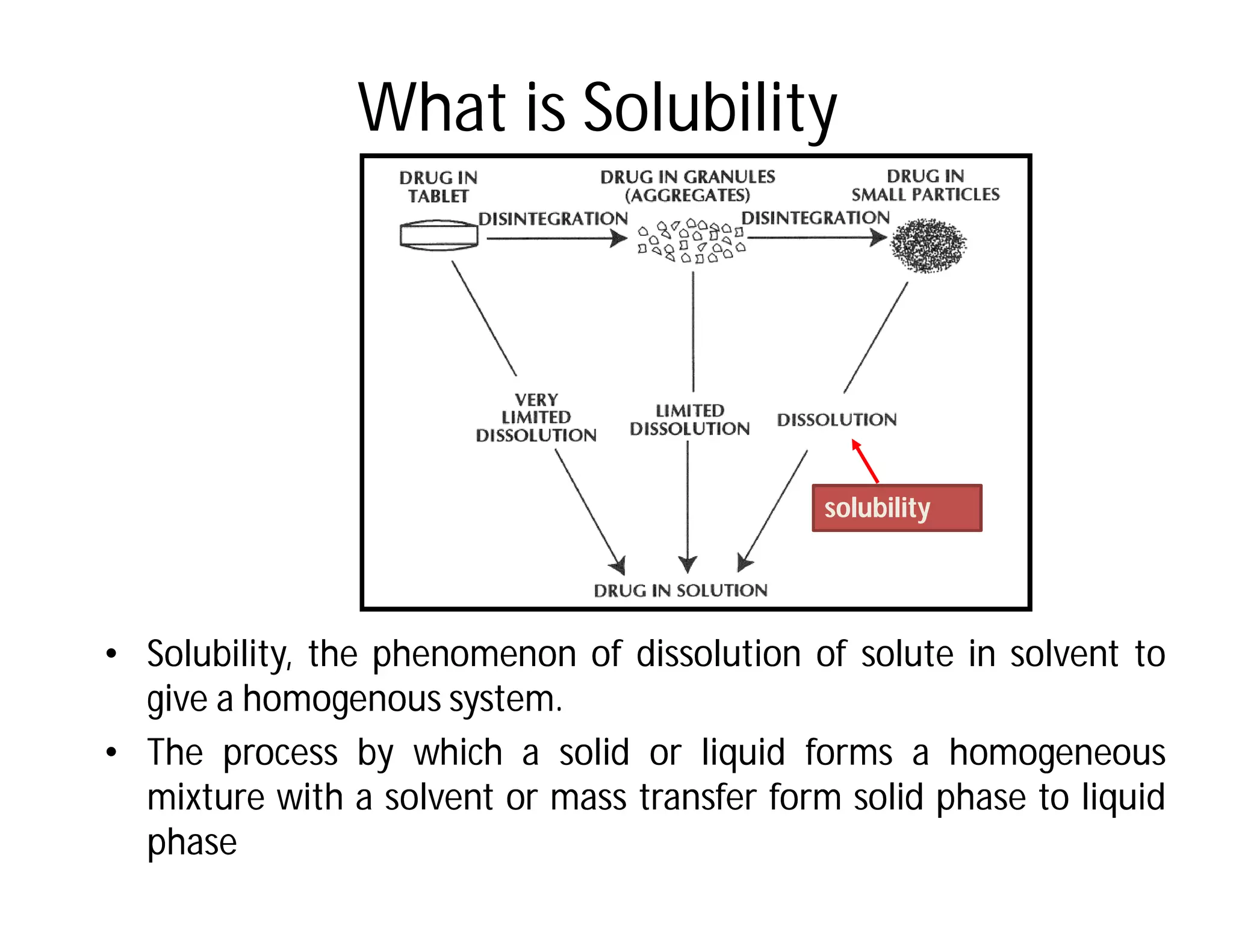
What is Solubility
•
• Solubility,
Solubility, the
the phenomenon
phenomenon of
of dissolution
dissolution of
of solute
solute in
in solvent
solvent to
to
give
give a
a homogenous
homogenous system
system.
.
•
• The
The process
process by
by which
which a
a solid
solid or
or liquid
liquid forms
forms a
a homogeneous
homogeneous
mixture
mixture with
with a
a solvent
solvent or
or mass
mass transfer
transfer form
form solid
solid phase
phase to
to liquid
liquid
phase
phase
solubility
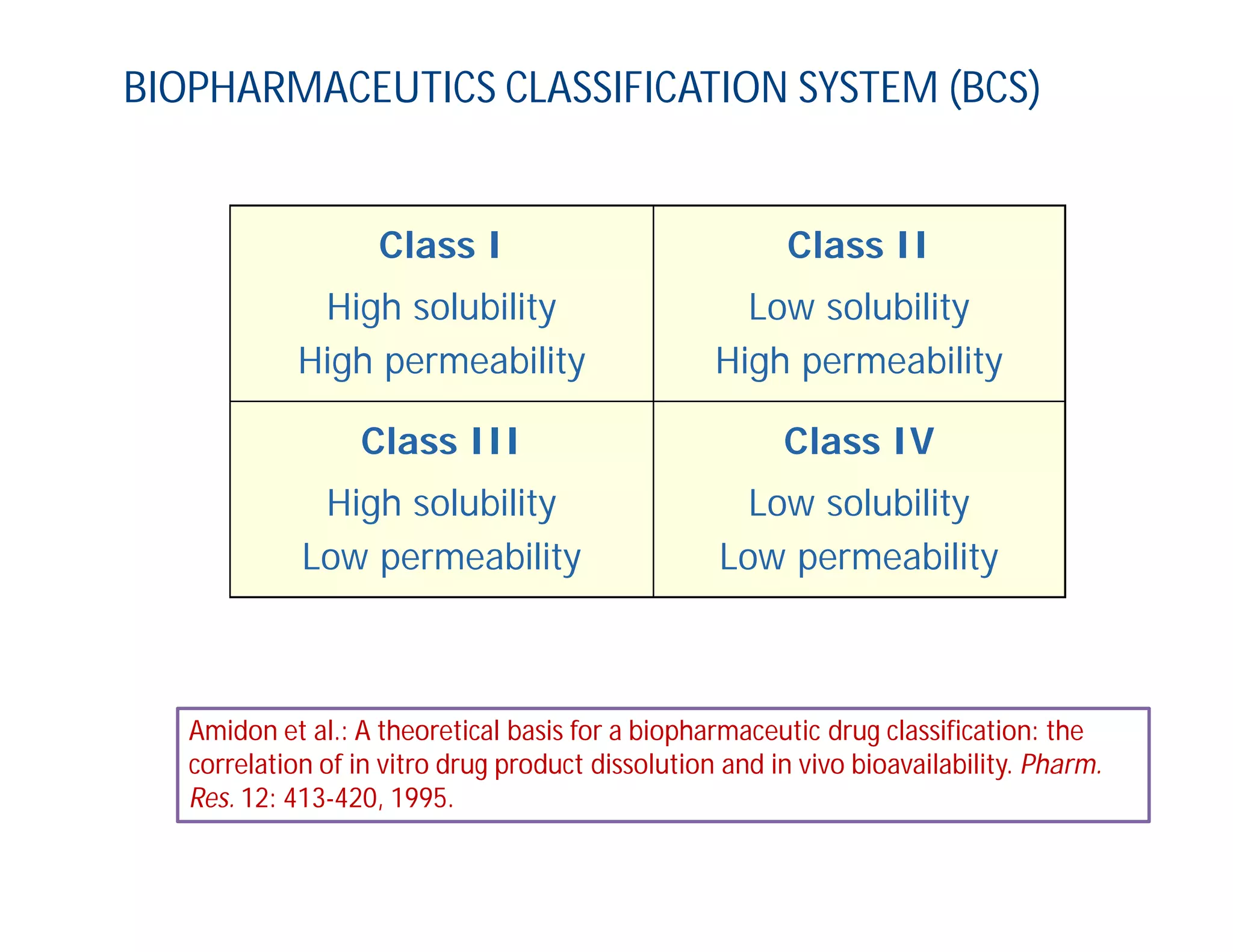
BIOPHARMACEUTICS CLASSIFICATION SYSTEM (BCS)
Class I
High solubility
High permeability
Class II
Low solubility
High permeability
Class III
High solubility
Low permeability
Class IV
Low solubility
Low permeability
Amidon et al.: A theoretical basis for a biopharmaceutic drug classification: the
correlation of in vitro drug product dissolution and in vivo bioavailability. Pharm.
Res. 12: 413-420, 1995.
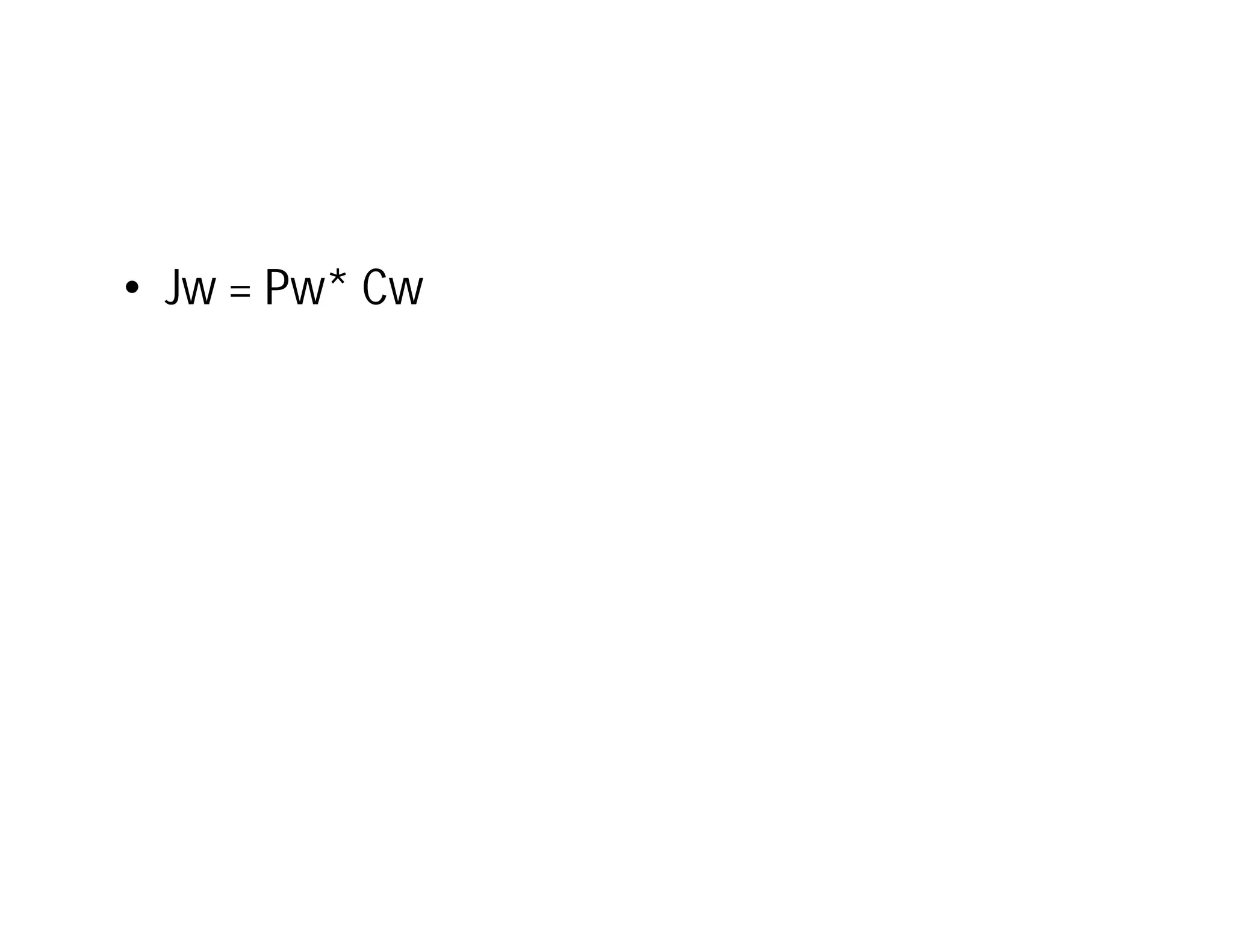
• Jw = Pw* Cw
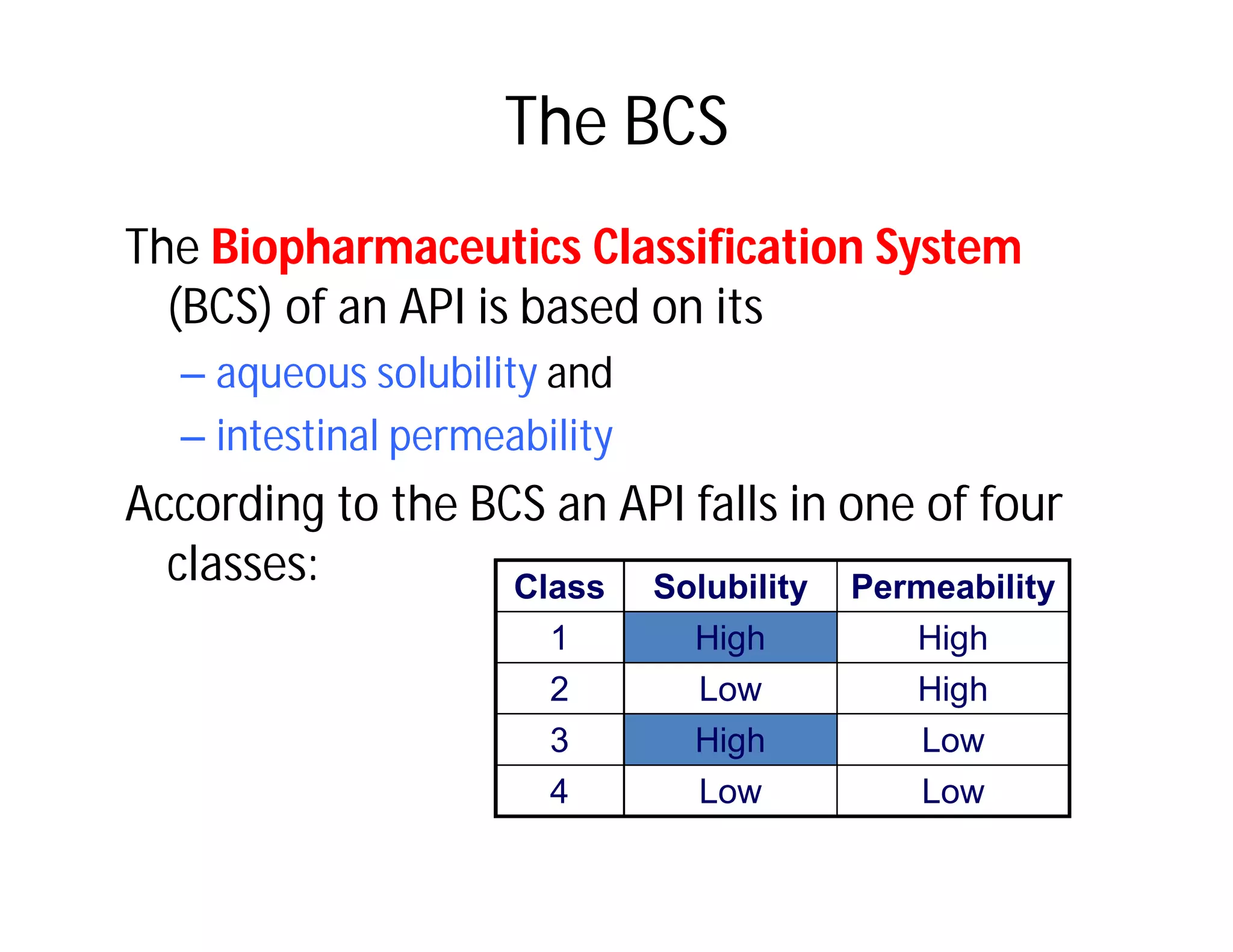
The BCS
The Biopharmaceutics Classification System
(BCS) of an API is based on its
– aqueous solubility and
– intestinal permeability
According to the BCS an API falls in one of four
classes: Permeability
Solubility
Class
High
High
1
High
Low
2
Low
High
3
Low
Low
4
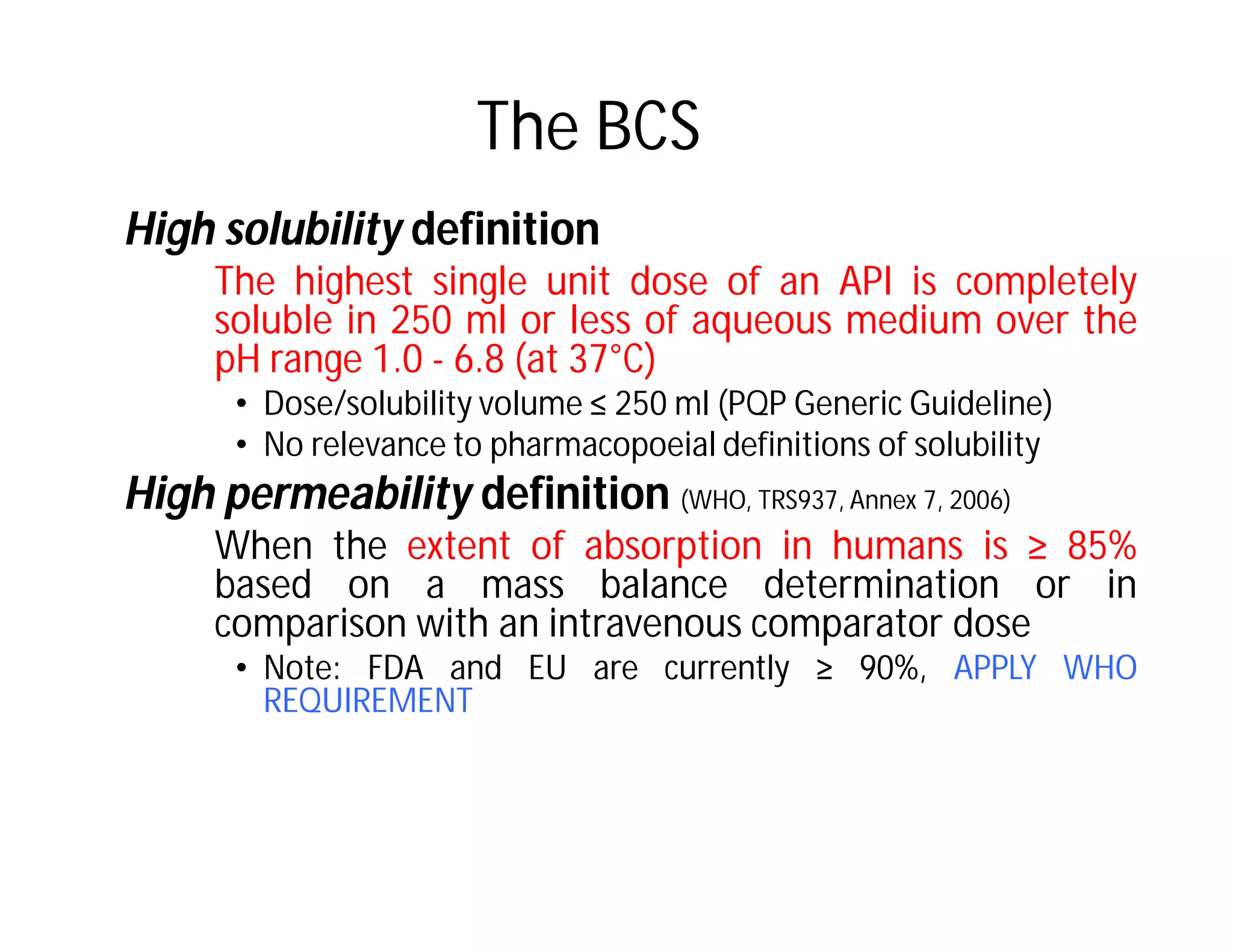
The BCS
High solubility definition
The highest single unit dose of an API is completely
soluble in 250 ml or less of aqueous medium over the
pH range 1.0 - 6.8 (at 37°C)
• Dose/solubility volume ≤ 250 ml (PQP Generic Guideline)
• No relevance to pharmacopoeial definitions of solubility
High permeability definition (WHO, TRS937, Annex 7, 2006)
When the extent of absorption in humans is ≥ 85%
based on a mass balance determination or in
comparison with an intravenous comparator dose
• Note: FDA and EU are currently ≥ 90%, APPLY WHO
REQUIREMENT
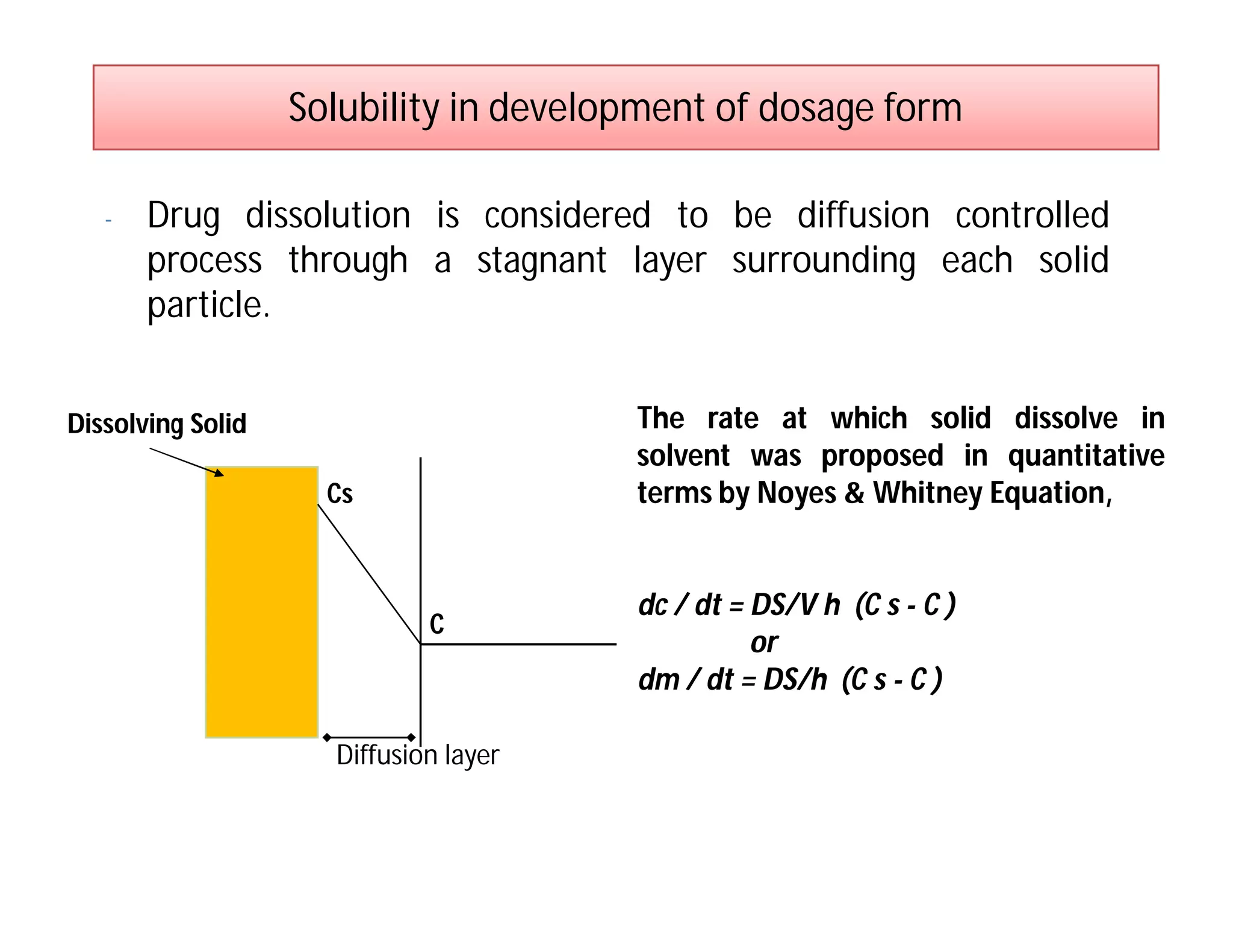
Solubility in development of dosage form
- Drug dissolution is considered to be diffusion controlled
process through a stagnant layer surrounding each solid
particle.
Dissolving Solid
Cs
C
Diffusion layer
The rate at which solid dissolve in
solvent was proposed in quantitative
terms by Noyes & Whitney Equation,
dc / dt = DS/V h (C s - C )
or
dm / dt = DS/h (C s - C )
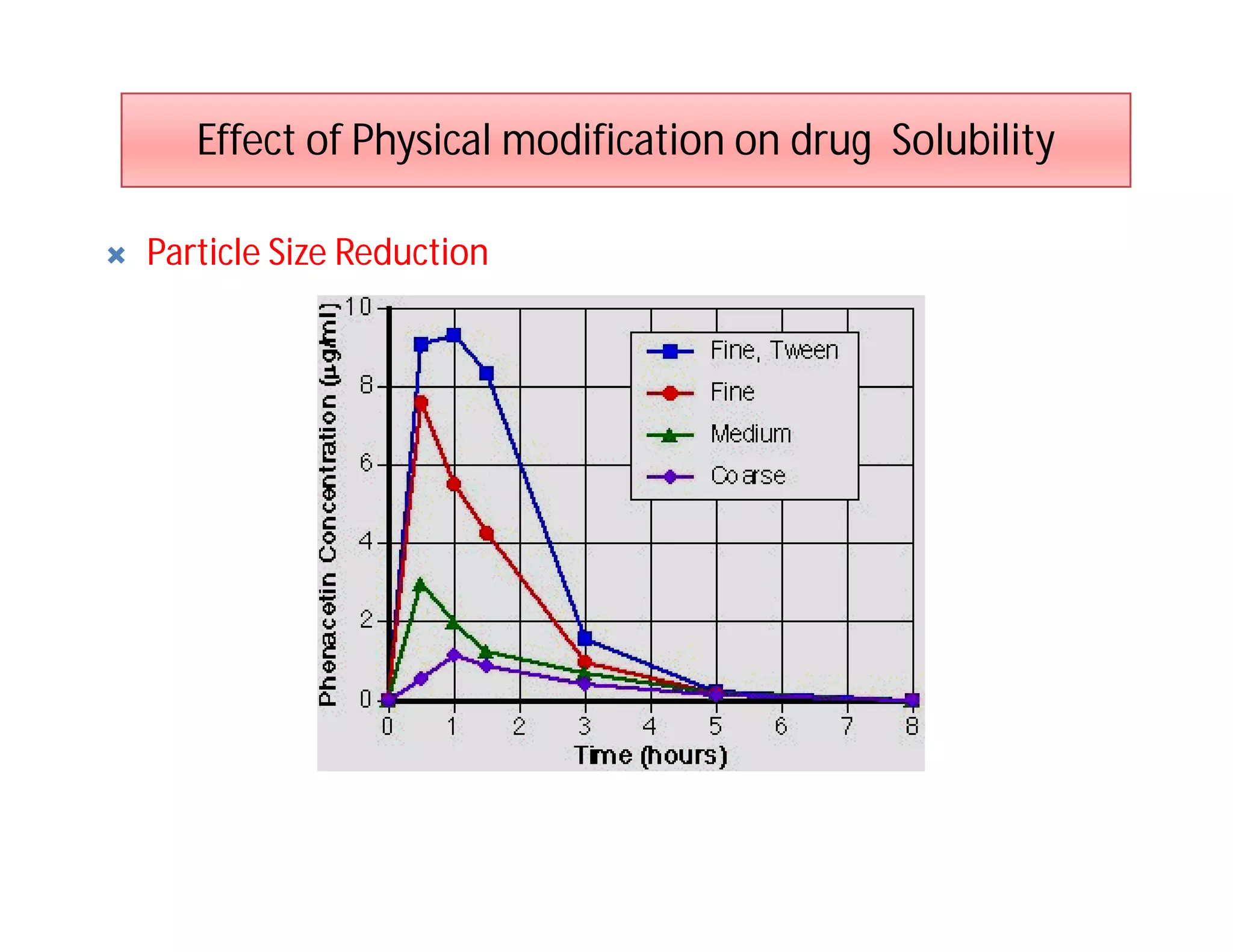
Effect of Physical modification on drug Solubility

 Particle
Particle Size
Size Reduction
Reduction
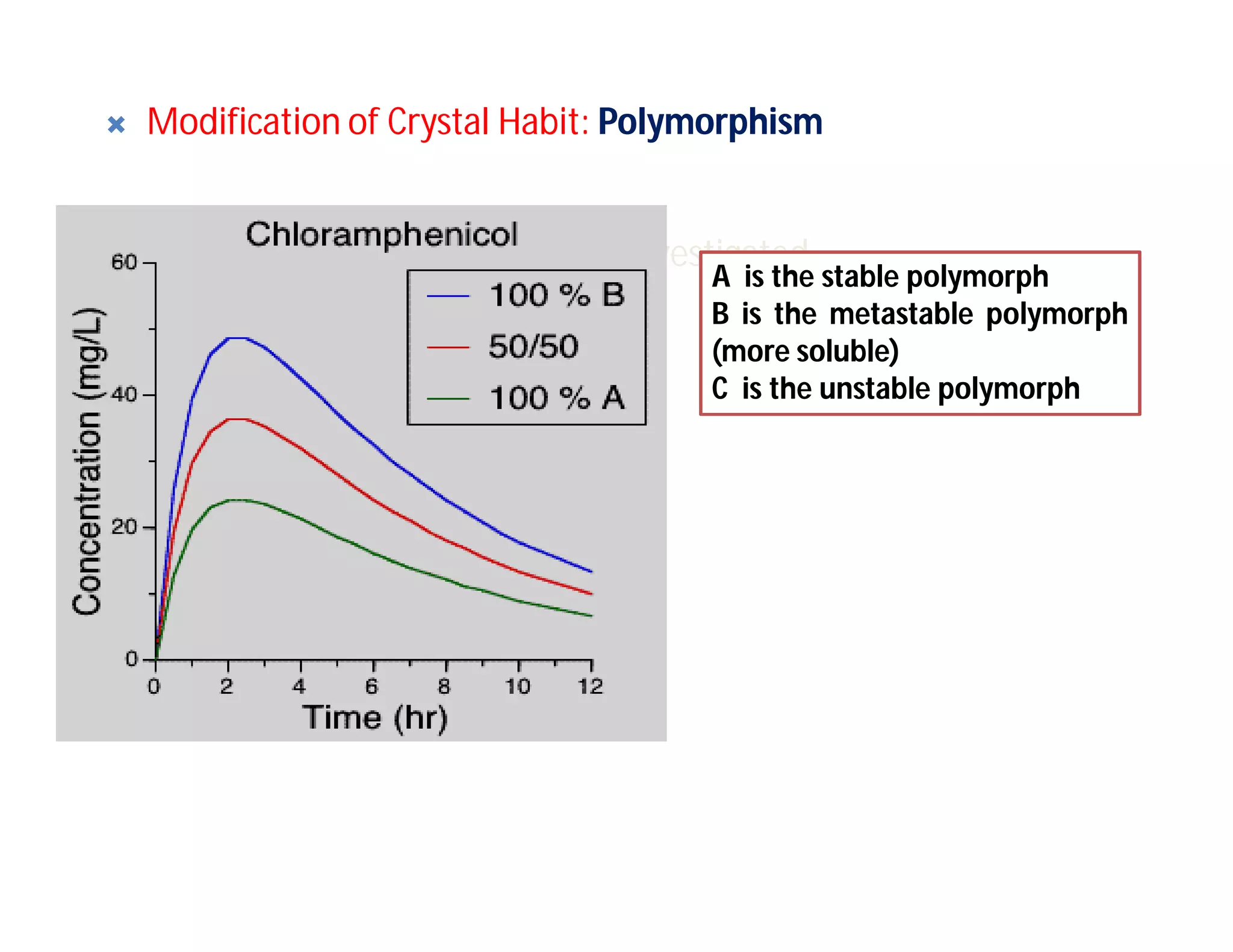
Polymorphic forms A and B were investigated.
-The extent of absorption of
Chloramphnicol increases as the
Proportion of the polymorphic form
B is increased in each suspension.
This is attributed to the more rapid
Dissolution of the metastable
Polymorphic form B.
A is the stable polymorph
B is the metastable polymorph
(more soluble)
C is the unstable polymorph

 Modification
Modification of
of Crystal
Crystal Habit
Habit:
: Polymorphism
Polymorphism
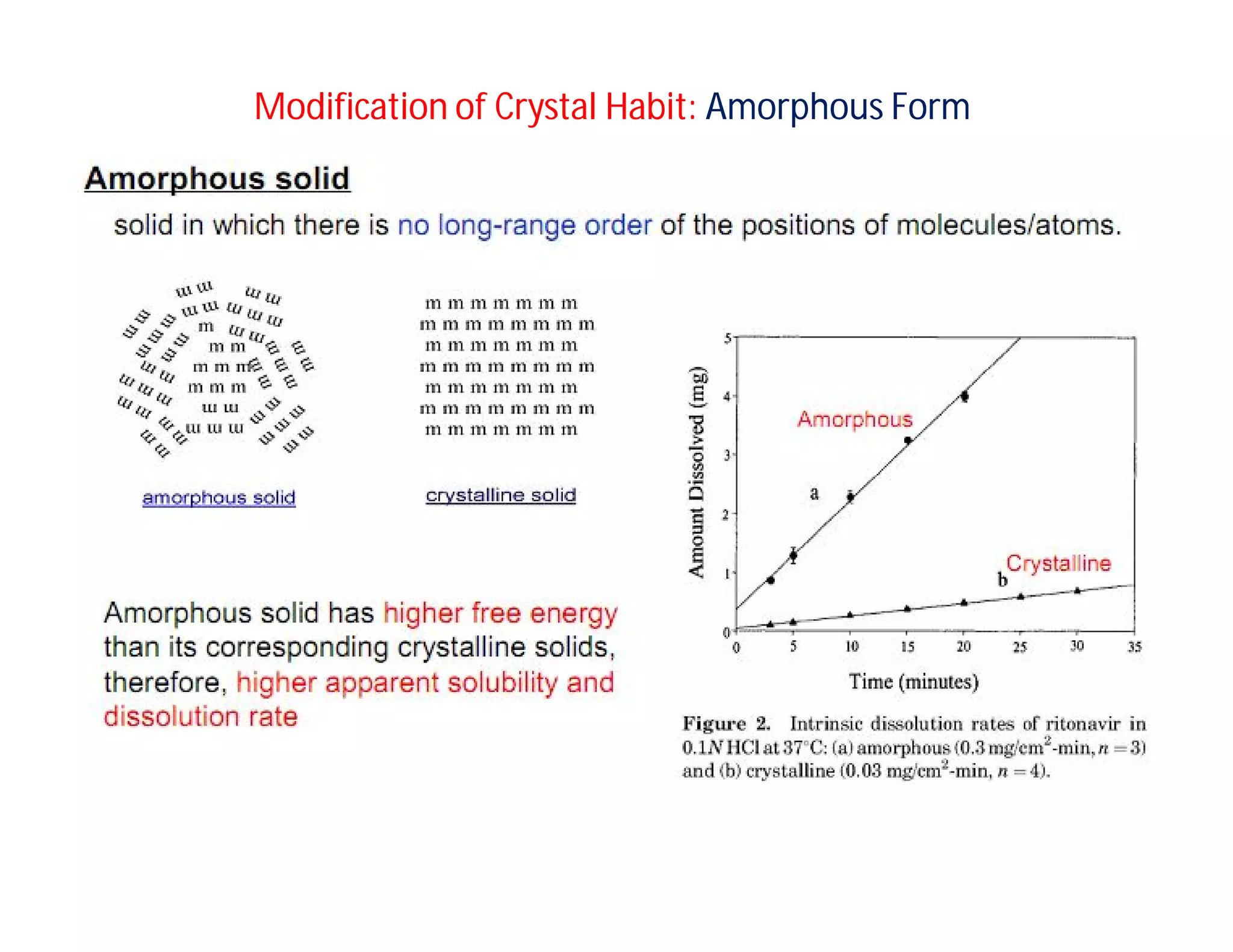
Modification
Modification of
of Crystal
Crystal Habit
Habit:
: Amorphous
Amorphous Form
Form
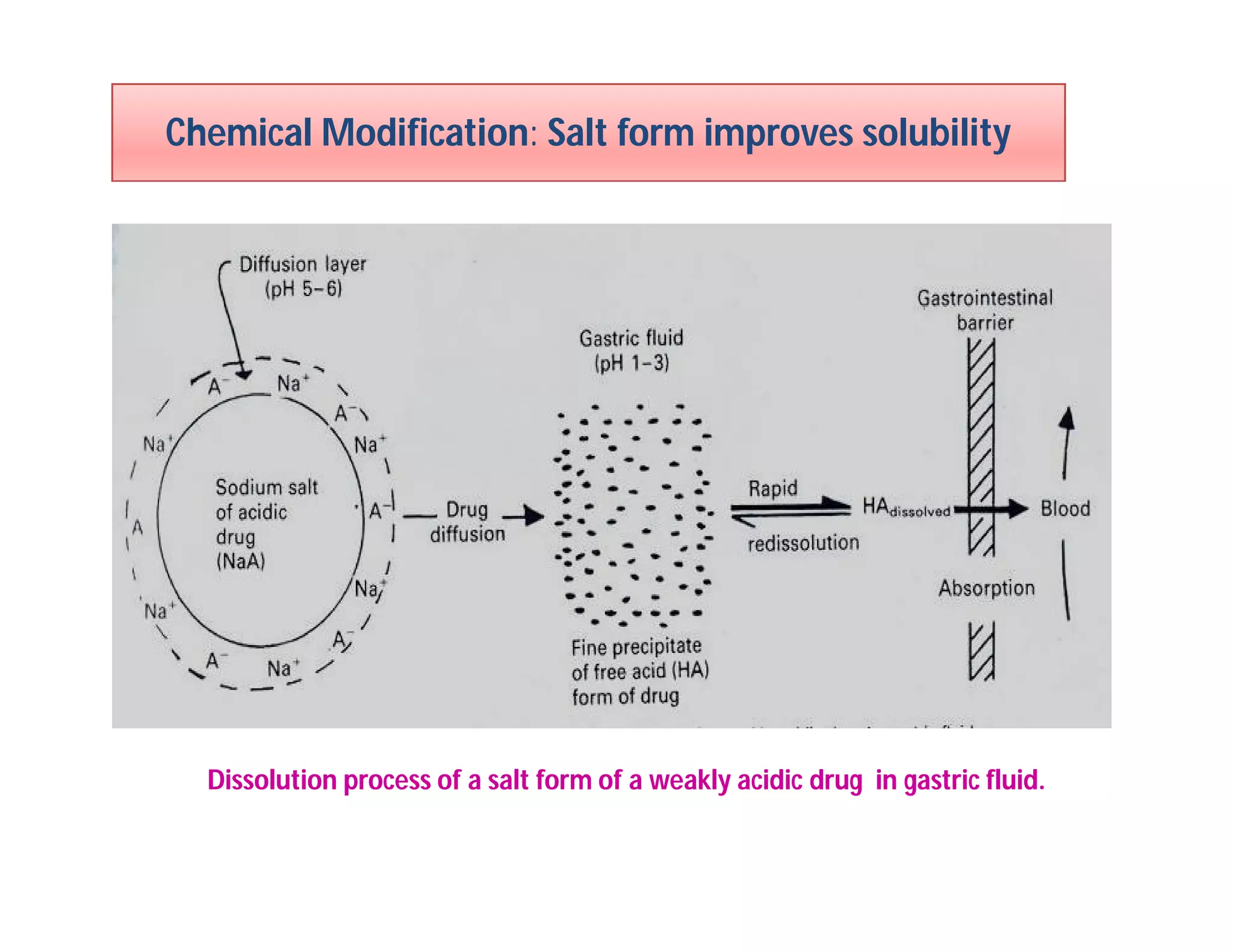
Chemical Modification: Salt form improves solubility
Dissolution process of a salt form of a weakly acidic drug in gastric fluid.
- One example is the dissolution and bioavailability profiles of Benzathine
and various salts.
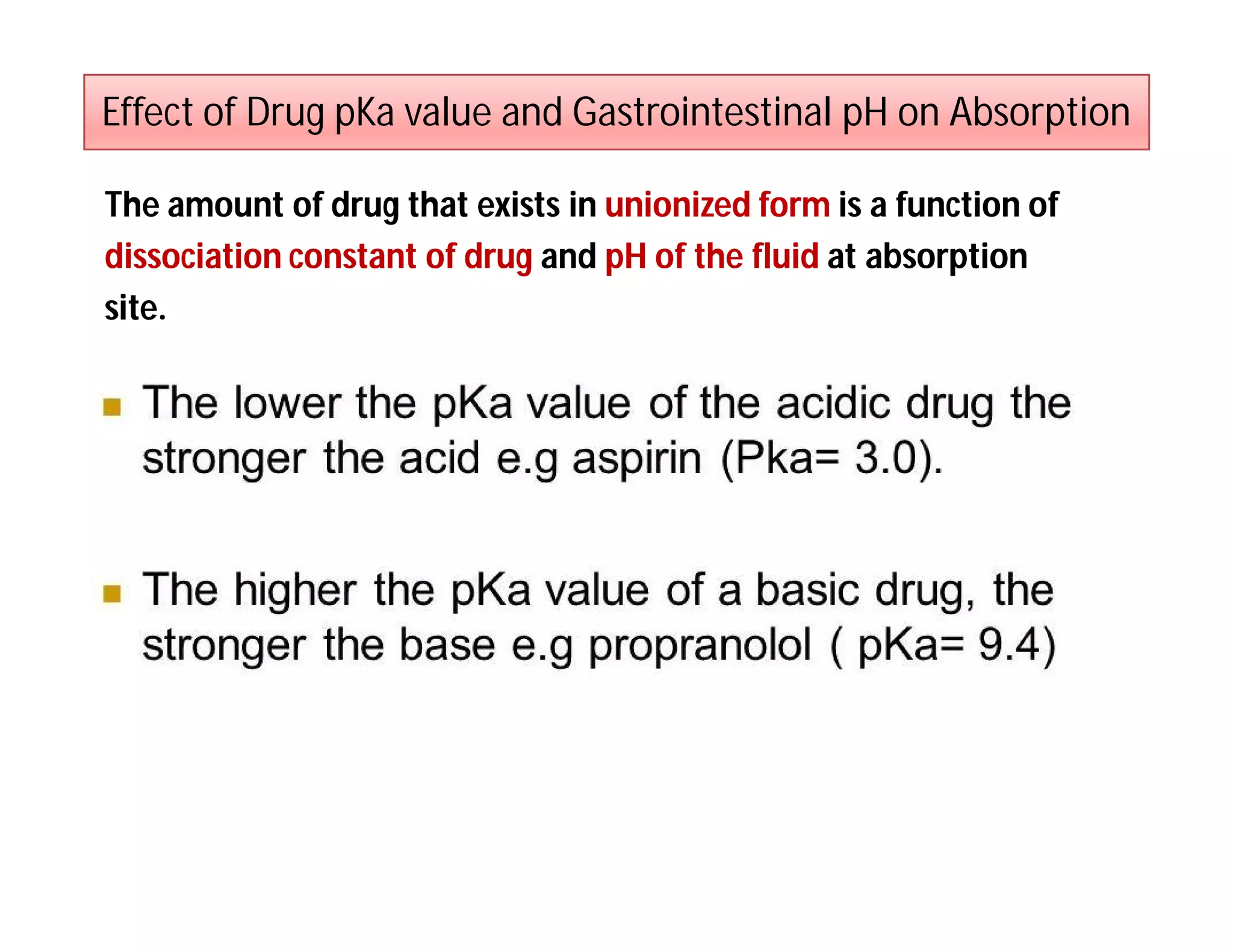
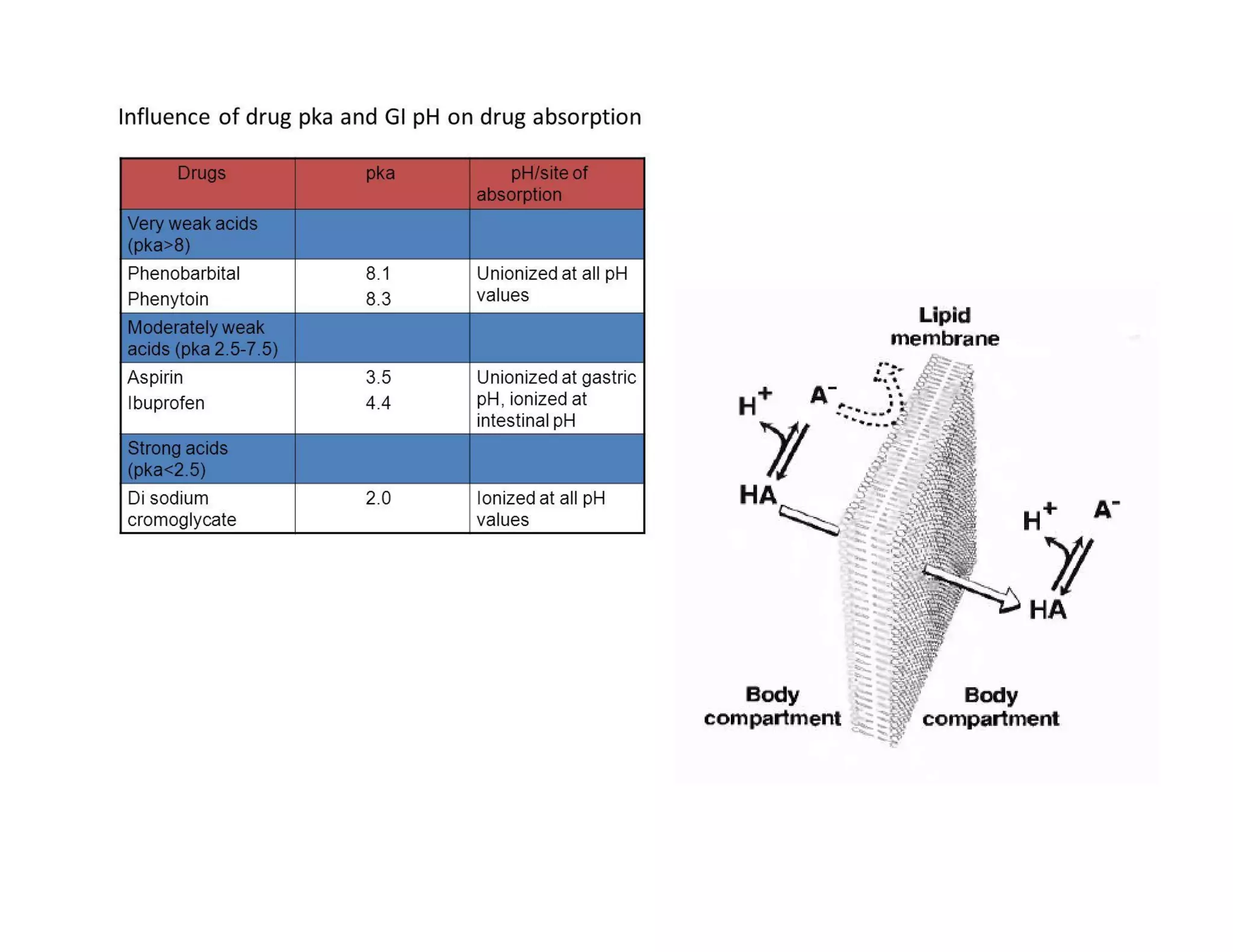
Effect of Drug pKa value and Gastrointestinal pH on Absorption
The amount of drug that exists in unionized form is a function of
dissociation constant of drug and pH of the fluid at absorption
site.
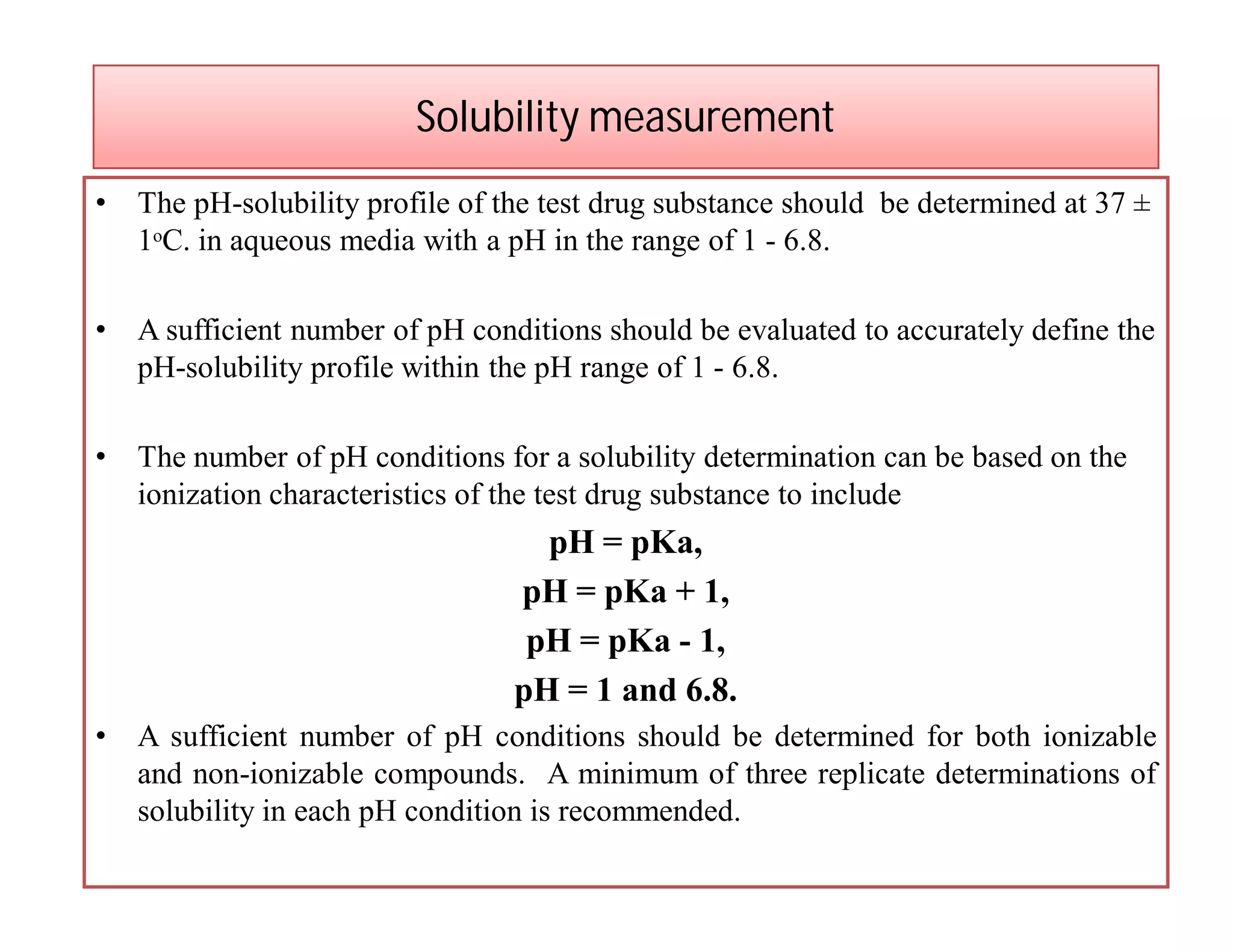
Solubility measurement
• The pH-solubility profile of the test drug substance should be determined at 37 ±
1ᵒC. in aqueous media with a pH in the range of 1 - 6.8.
• A sufficient number of pH conditions should be evaluated to accurately define the
pH-solubility profile within the pH range of 1 - 6.8.
• The number of pH conditions for a solubility determination can be based on the
ionization characteristics of the test drug substance to include
pH = pKa,
pH = pKa + 1,
pH = pKa - 1,
pH = 1 and 6.8.
• A sufficient number of pH conditions should be determined for both ionizable
and non-ionizable compounds. A minimum of three replicate determinations of
solubility in each pH condition is recommended.
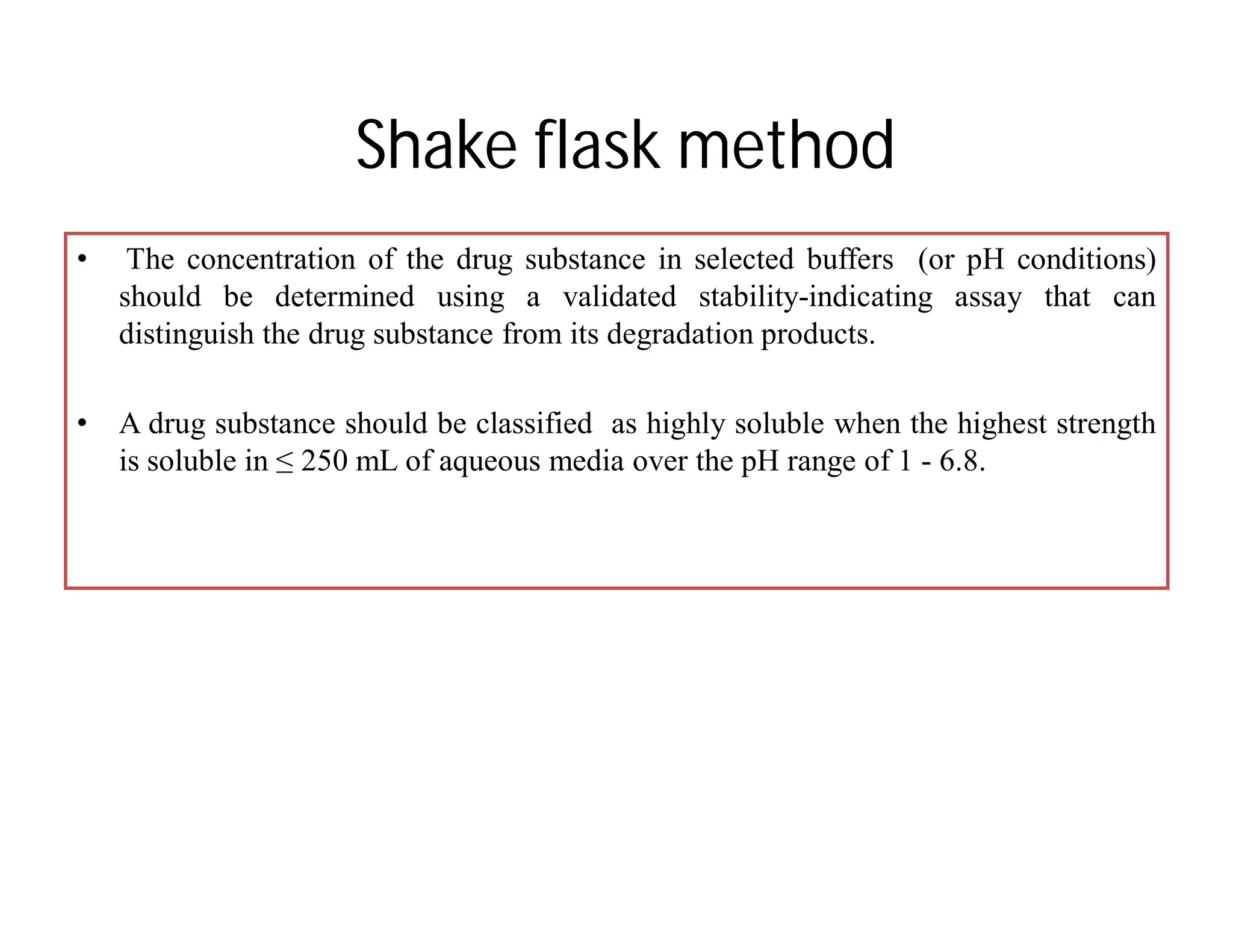
Shake flask method
• The concentration of the drug substance in selected buffers (or pH conditions)
should be determined using a validated stability-indicating assay that can
distinguish the drug substance from its degradation products.
• A drug substance should be classified as highly soluble when the highest strength
is soluble in ≤ 250 mL of aqueous media over the pH range of 1 - 6.8.
Solubility estimation

Solubility estimation

  • 1.
    Dr. Nilesh Kulkarni AssociateProfessor In Pharmaceutics PES Modern college of Pharmacy For Ladies Moshi Pune
  • 2.
    What is Solubility • •Solubility, Solubility, the the phenomenon phenomenon of of dissolution dissolution of of solute solute in in solvent solvent to to give give a a homogenous homogenous system system. . • • The The process process by by which which a a solid solid or or liquid liquid forms forms a a homogeneous homogeneous mixture mixture with with a a solvent solvent or or mass mass transfer transfer form form solid solid phase phase to to liquid liquid phase phase solubility
  • 4.
    BIOPHARMACEUTICS CLASSIFICATION SYSTEM(BCS) Class I High solubility High permeability Class II Low solubility High permeability Class III High solubility Low permeability Class IV Low solubility Low permeability Amidon et al.: A theoretical basis for a biopharmaceutic drug classification: the correlation of in vitro drug product dissolution and in vivo bioavailability. Pharm. Res. 12: 413-420, 1995.
  • 5.
    • Jw =Pw* Cw
  • 6.
    The BCS The BiopharmaceuticsClassification System (BCS) of an API is based on its – aqueous solubility and – intestinal permeability According to the BCS an API falls in one of four classes: Permeability Solubility Class High High 1 High Low 2 Low High 3 Low Low 4
  • 7.
    The BCS High solubilitydefinition The highest single unit dose of an API is completely soluble in 250 ml or less of aqueous medium over the pH range 1.0 - 6.8 (at 37°C) • Dose/solubility volume ≤ 250 ml (PQP Generic Guideline) • No relevance to pharmacopoeial definitions of solubility High permeability definition (WHO, TRS937, Annex 7, 2006) When the extent of absorption in humans is ≥ 85% based on a mass balance determination or in comparison with an intravenous comparator dose • Note: FDA and EU are currently ≥ 90%, APPLY WHO REQUIREMENT
  • 9.
    Solubility in developmentof dosage form - Drug dissolution is considered to be diffusion controlled process through a stagnant layer surrounding each solid particle. Dissolving Solid Cs C Diffusion layer The rate at which solid dissolve in solvent was proposed in quantitative terms by Noyes & Whitney Equation, dc / dt = DS/V h (C s - C ) or dm / dt = DS/h (C s - C )
  • 10.
    Effect of Physicalmodification on drug Solubility   Particle Particle Size Size Reduction Reduction
  • 11.
    Polymorphic forms Aand B were investigated. -The extent of absorption of Chloramphnicol increases as the Proportion of the polymorphic form B is increased in each suspension. This is attributed to the more rapid Dissolution of the metastable Polymorphic form B. A is the stable polymorph B is the metastable polymorph (more soluble) C is the unstable polymorph   Modification Modification of of Crystal Crystal Habit Habit: : Polymorphism Polymorphism
  • 12.
    Modification Modification of of Crystal CrystalHabit Habit: : Amorphous Amorphous Form Form
  • 13.
    Chemical Modification: Saltform improves solubility Dissolution process of a salt form of a weakly acidic drug in gastric fluid.
  • 14.
    - One exampleis the dissolution and bioavailability profiles of Benzathine and various salts.
  • 15.
    Effect of DrugpKa value and Gastrointestinal pH on Absorption The amount of drug that exists in unionized form is a function of dissociation constant of drug and pH of the fluid at absorption site.
  • 17.
    Solubility measurement • ThepH-solubility profile of the test drug substance should be determined at 37 ± 1ᵒC. in aqueous media with a pH in the range of 1 - 6.8. • A sufficient number of pH conditions should be evaluated to accurately define the pH-solubility profile within the pH range of 1 - 6.8. • The number of pH conditions for a solubility determination can be based on the ionization characteristics of the test drug substance to include pH = pKa, pH = pKa + 1, pH = pKa - 1, pH = 1 and 6.8. • A sufficient number of pH conditions should be determined for both ionizable and non-ionizable compounds. A minimum of three replicate determinations of solubility in each pH condition is recommended.
  • 18.
    Shake flask method •The concentration of the drug substance in selected buffers (or pH conditions) should be determined using a validated stability-indicating assay that can distinguish the drug substance from its degradation products. • A drug substance should be classified as highly soluble when the highest strength is soluble in ≤ 250 mL of aqueous media over the pH range of 1 - 6.8.