THE SOLAR
SYESTEM
pPLANETS
Inner and OuterInner and Outer
PlanetsPlanets
• Inner Planets:
– Mercury
– Venus
– Earth
– Mars
• Outer Planets
– Jupiter
– Saturn
– Uranus
– Neptune
– Pluto
The Relative Size of the
Planets in the Solar System
The Sun
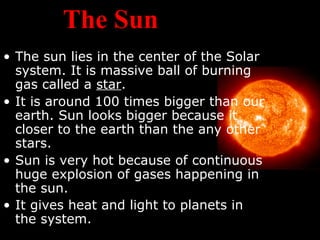
• The sun lies in the center of the Solar
system. It is massive ball of burning
gas called a star.
• It is around 100 times bigger than our
earth. Sun looks bigger because it
closer to the earth than the any other
stars.
• Sun is very hot because of continuous
huge explosion of gases happening in
the sun.
• It gives heat and light to planets in
the system. and light to planets in the system.
Jupiter
• Jupiter is the largest and
most massive planet.
• It’s diameter is 11 times
bigger than that of the
Earth’s.
• It takes about 12 years for
Jupiter to orbit the sun.
• Jupiter has 16 known
moons.
Mercury
The closest planet to the sun is
Mercury.
• It has rocky surface with
large holes called craters.
• Mercury has no atmosphere.
• Life is not possible on
mercury because it is either
too hot or too cold. Mercury
has no moon
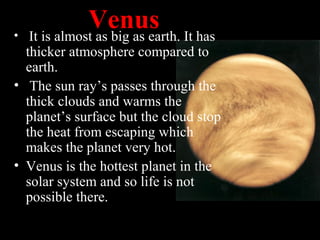
Venus• It is almost as big as earth. It has
thicker atmosphere compared to
earth.
• The sun ray’s passes through the
thick clouds and warms the
planet’s surface but the cloud stop
the heat from escaping which
makes the planet very hot.
• Venus is the hottest planet in the
solar system and so life is not
possible there.
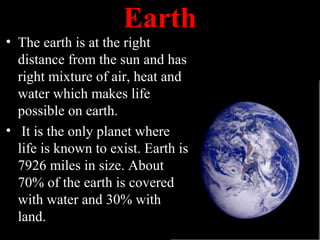
Earth
• The earth is at the right
distance from the sun and has
right mixture of air, heat and
water which makes life
possible on earth.
• It is the only planet where
life is known to exist. Earth is
7926 miles in size. About
70% of the earth is covered
with water and 30% with
land.
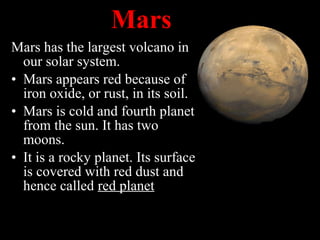
Mars has the largest volcano in
our solar system.
• Mars appears red because of
iron oxide, or rust, in its soil.
• Mars is cold and fourth planet
from the sun. It has two
moons.
• It is a rocky planet. Its surface
is covered with red dust and
hence called red planet
Mars
Saturn• Saturn is the second largest planet
in the solar system.
• It is sixth planet from the sun. It
is made mostly of gases. It has
millions of pieces of rock and ice
moving around it. These look like
solid rings.
• Jupiter, Uranus and Neptune also
have rings. From far away, these
look like solid rings. It has 62
moons.
Uranus
• Uranus is the seventh planet from
the sun.
• Uranus is a gas giant. Uranus spins
differently. It spins on its side. It is
an extremely cold planet and hence
been called the “ice giant”.
• It has faint rings around it which
made of millions of specks of dust.
It has 27 moons.
Pluto
• Pluto has only one moon and takes
about 249 years to orbit the sun.
• Part of Pluto’s orbit passes inside that
of Neptune, so at times Neptune is the
planet farthest from the sun.
• Pluto was located and named in 1930,
but today Pluto is no longer considered
a planet.
Neptune
• Neptune is the eighth planet
from the sun
• It is very cold planet like
Uranus. There is dark blue
swirl of storm raging on the
planet which makes it
look blue in color.
• It has 14 moons.
Solar system

Solar system

  • 1.
  • 2.
  • 3.
    Inner and OuterInnerand Outer PlanetsPlanets • Inner Planets: – Mercury – Venus – Earth – Mars • Outer Planets – Jupiter – Saturn – Uranus – Neptune – Pluto
  • 4.
    The Relative Sizeof the Planets in the Solar System
  • 5.
    The Sun • Thesun lies in the center of the Solar system. It is massive ball of burning gas called a star. • It is around 100 times bigger than our earth. Sun looks bigger because it closer to the earth than the any other stars. • Sun is very hot because of continuous huge explosion of gases happening in the sun. • It gives heat and light to planets in the system. and light to planets in the system.
  • 6.
    Jupiter • Jupiter isthe largest and most massive planet. • It’s diameter is 11 times bigger than that of the Earth’s. • It takes about 12 years for Jupiter to orbit the sun. • Jupiter has 16 known moons.
  • 7.
    Mercury The closest planetto the sun is Mercury. • It has rocky surface with large holes called craters. • Mercury has no atmosphere. • Life is not possible on mercury because it is either too hot or too cold. Mercury has no moon
  • 8.
    Venus• It isalmost as big as earth. It has thicker atmosphere compared to earth. • The sun ray’s passes through the thick clouds and warms the planet’s surface but the cloud stop the heat from escaping which makes the planet very hot. • Venus is the hottest planet in the solar system and so life is not possible there.
  • 9.
    Earth • The earthis at the right distance from the sun and has right mixture of air, heat and water which makes life possible on earth. • It is the only planet where life is known to exist. Earth is 7926 miles in size. About 70% of the earth is covered with water and 30% with land.
  • 10.
    Mars has thelargest volcano in our solar system. • Mars appears red because of iron oxide, or rust, in its soil. • Mars is cold and fourth planet from the sun. It has two moons. • It is a rocky planet. Its surface is covered with red dust and hence called red planet Mars
  • 11.
    Saturn• Saturn isthe second largest planet in the solar system. • It is sixth planet from the sun. It is made mostly of gases. It has millions of pieces of rock and ice moving around it. These look like solid rings. • Jupiter, Uranus and Neptune also have rings. From far away, these look like solid rings. It has 62 moons.
  • 12.
    Uranus • Uranus isthe seventh planet from the sun. • Uranus is a gas giant. Uranus spins differently. It spins on its side. It is an extremely cold planet and hence been called the “ice giant”. • It has faint rings around it which made of millions of specks of dust. It has 27 moons.
  • 13.
    Pluto • Pluto hasonly one moon and takes about 249 years to orbit the sun. • Part of Pluto’s orbit passes inside that of Neptune, so at times Neptune is the planet farthest from the sun. • Pluto was located and named in 1930, but today Pluto is no longer considered a planet.
  • 14.
    Neptune • Neptune isthe eighth planet from the sun • It is very cold planet like Uranus. There is dark blue swirl of storm raging on the planet which makes it look blue in color. • It has 14 moons.