Module – 5 (Part - II)
Soil Pollution
Soil is a thin covering over the land consisting of a mixture of minerals,
organic material, living organisms, air and water that together support the
growth of plant life.
Sources of soil pollution:
•Dumping of domestic and industrial waste on soil surface results into soil
pollution. Domestic waste include garbage, rubbish material like glass, plastic,
metallic can, paper, fibers etc.
•Industrial wastes are effluent discharged from industries and type of
contaminant are dependent upon the type of Industry present. For example:
paper and pulp industry mostly generate organic waste, Thermal power plant
generate fly ash, or precipitate forms during treatment of pollutant gas
produced due to combustion processes.
•Application of fertilizers and Insecticides into agricultural land are other
important category of soil pollution. Persistent pesticides once applied are
effective for a long time. However as they do not break down easily they tend
to accumulate in the soil and in the bodies of animals in the food chain.
•Soil also receive excreta from animals and humans. The sewage sludge
contain many pathogenic organism, bacteria, viruses and intestinal worm
which cause pollution in the soil.
•The source of radioactive substances in soil are explosion of radioactive
devices, radioactive waste discharged from industries and laboratories, aerial
fall out etc. The main isotopes are radium, uranium, thorium, strontium etc.
Effects of soil pollution:
•Sewage and industrial effluents which pollute the soil ultimately affect human
health. One example is Itai-Itai disease which occurs due to consumption of
Cd containing rice. The chemical discharge on soil such as acid and alkali
also affects the soil fertility.
•Some of the persistent toxic chemicals target the non-target organisms,
soil flora and fauna and reduced soil fertility. These chemical accumulates in
food chain and ultimately affect human health.
•Radioactive fallout on soil are source of radio-isotopes which enter the food
chain. Some of these replace essential elements in the body and cause
abnormalities. Example: strontium-90 instead of calcium gets deposited in the
bones and tissue.
• Nitrogen and phosphorous from fertilizers in soil reach nearby water bodies
with agricultural run-off and cause eutrophication.
Control of Soil Pollution:
1) Effluent should be properly treated before discharging them on the soil.
2) Solid waste should be properly collected and disposed off by appropriate
method.
3) Biodegradable organic waste( cattle waste, human faeces) should be used
for generation of biogas.
4) Microbial degradation of biodegradable substances is also employed for
reducing soil pollution.
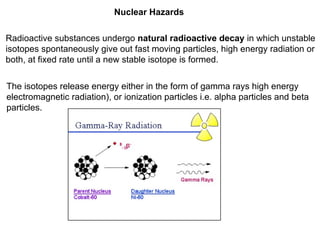
Nuclear Hazards
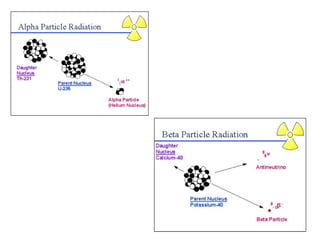
Radioactive substances undergo natural radioactive decay in which unstable
isotopes spontaneously give out fast moving particles, high energy radiation or
both, at fixed rate until a new stable isotope is formed.
The isotopes release energy either in the form of gamma rays high energy
electromagnetic radiation), or ionization particles i.e. alpha particles and beta
particles.
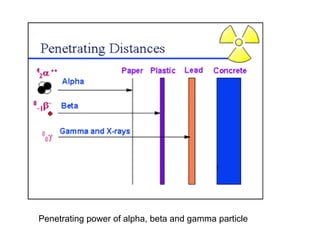
Penetrating power of alpha, beta and gamma particle
Sources of Radioactivity: It can be both natural or man made sources:
1) Natural sources: It includes cosmic rays from outer space, radioactive
radon-222, soil, rocks, air, water and food , which contain one or more
radioactive substances.
2) Anthropogenic sources: It includes nuclear power plants, nuclear
accidents, nuclear weapon testing, X-rays, diagnostic kits, research
laboratories etc.
Effect of Radiations: Ionization radiations can affect living organisms by
causing harmful changes in body cells and also damage at genetic level.
1) Genetic damage: It includes mutation in the DNA, thereby affecting genes
and chromosome. The damage can be transmitted up to several
generation.
2) Somatic damage: it includes burns, miscarriage, eye cataract and cancer
of bone, thyroid, lungs and skin. Example: Radioactive iodine (I131
)
accumulates in thyroid gland and causes cancer. Strontium-90 accumulates
in the bones and causes leukemia or cancer of bone marrow.
The damage cause by different type of radiation depends on the penetration
power. The Alpha particles cannot penetrate the skin to reach internal
organs whereas beta particles can damage the internal organs.
Greater threat is posed by radioisotopes with intermediate half-lives as they
have long time to find entry inside the human body.
The radioactive material present in the earth crust or fall down as dry
deposition from atmosphere enters the crop grown there and ultimately in
Human beings. Radionuclide enters the water bodies such as ground
water by coming in contact with the radionuclide bearing rocks.
Control of Nuclear Pollution:
1) Siting of nuclear power plants should be carefully done after studying long
term and short term effects.
2) Proper disposal of wastes from research laboratory and hospital involving
in the use of radioisotopes should be done.
3) Complete ban on Nuclear weapon testing should be imposed.
Solid waste management
Change in the standard of living of ever increasing population has resulted in
an increase in the quantity and variety of waste generated. Management
of solid waste has, therefore become very important in order to minimize
the adverse effect of solid wastes. Solid waste( waste other than liquid
and gaseous) can be classified as municipal (MSW), industrial,
agricultural, mining waste and sewage sludge.
Sources of solid waste:
1) Waste from homes( Domestic waste) : It can contain food waste such as
vegetable and meat material, left over food, egg shells, etc which is
classified as wet garbage as well as paper, plastic, tetrapacks, plastic
cans, newspaper, glass bottles, cardboard boxes, aluminum foil, metal
items, wood pieces, etc. which is classified as dry garbage.
2) Biomedical waste: It includes anatomical wastes, pathological wastes,
infectious waste etc.
3) Construction/ demolition waste: includes debris and rubbles, wood,
concrete etc.
4) Horticulture waste and waste from slaughter houses: include vegetable
part, residual and remains of slaughtered animals, respectively.
The MSW can be divided into biodegradable wastes( that
can be degraded by micro-organism) and non-biodegradable wastes( can
not degrade).
5) Industrial waste: The type of waste generated varies depending upon the
type of industry for example: Mining industry solid waste will contain loose
earth material, Thermal power plant will produce solid waste in form of fly ash
and slurry produce during the treatment of flue gas.
In Europe and North America the environmental laws are
very strict regarding solid waste disposal, thereby these countries started
exporting their solid waste to less developed countries like Asian and
African countries for dumping.
Effects of Solid waste:
Municipal solid wastes heap up on the road due to improper disposal
system. These type of dumping allows biodegradable materials to decompose
under uncontrolled and unhygienic conditions. This produces foul smell and
breeds various types of insects and infectious organisms besides spoiling
the aesthetics of the site.
Industrial solid wastes are sources of toxic metals and hazardous wastes,
which may spread on land and can cause changes in physico-chemical and
biological characteristics thereby affecting productivity of soils. Toxic metals
can also leach or percolate to contaminate the ground water.
If MSW get mixed with industrial waste , this make segregation and disposal
of waste very difficult. Burning of some of the solid material produce dioxins,
furans and polychlorinated biphenyls, which have the potential to cause
various type of ailments including cancer.
Management of solid waste: An integrated waste management strategy
includes three main components. For waste management stress is on three
R’S’- Reduce, reuse and recycle before destruction and safe disposal of
solid waste.
1) Source reduction: is one of the fundamental ways to reduce waste. This
can be done by using less material when making a product, reuse of
products on site, designing products or packaging to reduce their
quantity. On an individual level we can reduce the use of unnecessary items
while shopping, buy items with minimal packaging, avoid buying disposable
items and also avoid asking for plastic carry bags.
2) Recycling of materials: is reusing some components of the waste that
may have some economic value. Metal, paper, glass and plastics are
recyclable. Mining of new aluminum is expensive and hence recycled
aluminum has a strong market and plays a significant role in the aluminum
industry. Paper recycling can also help preserve forests as it takes about 17
trees to make one ton of paper. Crushed glass (cullet) reduces the energy
required to manufacture new glass by 50 percent. The problems associated
with recycling are either technical or economical.
Collection, sorting and transport account for about 90 percent of the cost of
paper recycling. The processes of pulping, deinking and screening wastepaper
are generally more expensive than making paper from virgin wood or
cellulose fibers.
3) Disposal: It is done most commonly through a sanitary landfill or through
incineration.
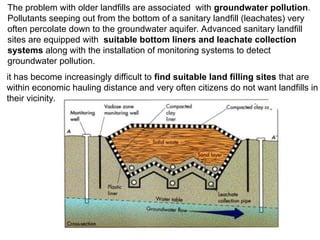
a) Sanitary landfill: is a depression in an impermeable soil layer that is
lined with an impermeable membrane. The three key characteristics of a
municipal sanitary landfill that distinguish it from an open dump are:
• Solid waste is placed in a suitably selected and prepared landfill site in
a carefully prescribed manner.
• The waste material is spread out and compacted with appropriate heavy
machinery.
• The waste is covered each day with a layer of compacted soil.
The problem with older landfills are associated with groundwater pollution.
Pollutants seeping out from the bottom of a sanitary landfill (leachates) very
often percolate down to the groundwater aquifer. Advanced sanitary landfill
sites are equipped with suitable bottom liners and leachate collection
systems along with the installation of monitoring systems to detect
groundwater pollution.
it has become increasingly difficult to find suitable land filling sites that are
within economic hauling distance and very often citizens do not want landfills in
their vicinity.
Incineration: is the process of burning municipal solid waste in a properly
designed furnace under suitable temperature and operating conditions. For
complete oxidation the waste must be mixed with appropriate volumes of air at
a temperature of about 815o
C for about one hour. Incineration can reduce the
municipal solid waste by about 90 percent in volume and 75 percent in
weight.
The risks of incineration however involve air quality problems and toxicity
and disposal of the fly and bottom ash produced during the incineration
process.
Vermicomposting:
Vermicomposting is a simple biotechnological process of composting, in
which certain species of earthworms are used to enhance the process of
waste conversion and produce a better end product. It is a mesophilic
process, utilizing microorganisms and earthworms that are active at 10–
32°C. The process is faster than composting; because the material passes
through the earthworm gut, a significant transformation takes place, whereby
the resulting earthworm castings (worm manure) are rich in microbial activity
and plant growth regulators, and fortified with pest repellence attributes as
well!
Noise pollution
Sound is a form of energy which is emitted by a vibrating body and on
reaching the ear causes the sensation of hearing through nerves. Sounds
produced by all vibrating bodies are not audible. The frequency limits of
audibility are from 20 HZ to 20,000 HZ.
A type of sound may be pleasant to someone and at the same time unpleasant
to others. The unpleasant and unwanted sound is called noise.
The discrimination and differentiation between sound and noise also depends
upon the habit and interest of the person/species receiving it, the ambient
conditions and impact of the sound generated during that particular
duration of time. There could be instances that, excellently rendered musical
concert for example, may be felt as noise and exceptional music as well during
the course of the concert!
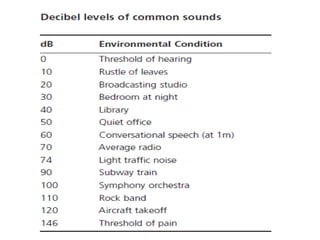
The intensity of sound is measured in sound pressure levels (SPL) and
common unit of measurement is decibel, dB. The SPL is logarithmic ratio of
the sound pressure to a reference pressure. If the sound levels are measured
in terms of pressure, then, sound pressure level, LP is given by,
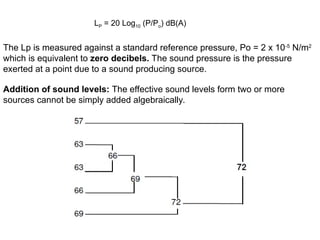
LP = 20 Log10 (P/Po) dB(A)
The Lp is measured against a standard reference pressure, Po = 2 x 10⁻⁵
N/m2
which is equivalent to zero decibels. The sound pressure is the pressure
exerted at a point due to a sound producing source.
Addition of sound levels: The effective sound levels form two or more
sources cannot be simply added algebraically.
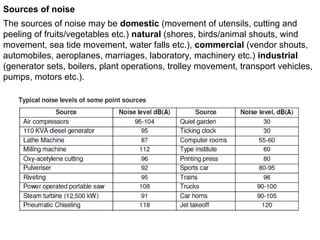
Sources of noise
The sources of noise may be domestic (movement of utensils, cutting and
peeling of fruits/vegetables etc.) natural (shores, birds/animal shouts, wind
movement, sea tide movement, water falls etc.), commercial (vendor shouts,
automobiles, aeroplanes, marriages, laboratory, machinery etc.) industrial
(generator sets, boilers, plant operations, trolley movement, transport vehicles,
pumps, motors etc.).
Effects of noise pollution on physical health
The most direct harmful effect of excessive noise is physical damage to the
ear and the temporary or permanent hearing loss often called a temporary
threshold shift (TTS). Permanent loss, usually called noise induced permanent
threshold shift (NIPTS) represents a loss of hearing ability from which there is
no recovery. Some of the adverse effects are summarized below:
Annoyance: It creates annoyance to the receptors due to sound level
fluctuations. The aperiodic sound due to its irregular occurrences causes
displeasure to hearing and causes annoyance.
Physiological effects: The physiological features like breathing amplitude,
blood pressure, heart-beat rate, pulse rate, blood cholesterol are effected.
Loss of hearing: Long exposure to high sound levels cause loss of hearing.
This is mostly unnoticed, but has an adverse impact on hearing function.
Human performance: The working performance of workers/human will be
affected as they'll be losing their concentration.
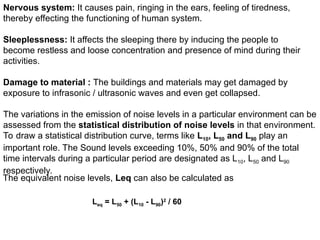
Nervous system: It causes pain, ringing in the ears, feeling of tiredness,
thereby effecting the functioning of human system.
Sleeplessness: It affects the sleeping there by inducing the people to
become restless and loose concentration and presence of mind during their
activities.
Damage to material : The buildings and materials may get damaged by
exposure to infrasonic / ultrasonic waves and even get collapsed.
The variations in the emission of noise levels in a particular environment can be
assessed from the statistical distribution of noise levels in that environment.
To draw a statistical distribution curve, terms like L10, L50 and L90 play an
important role. The Sound levels exceeding 10%, 50% and 90% of the total
time intervals during a particular period are designated as L10, L50 and L90
respectively.
The equivalent noise levels, Leq can also be calculated as
Leq = L50 + (L10 - L90)2
/ 60
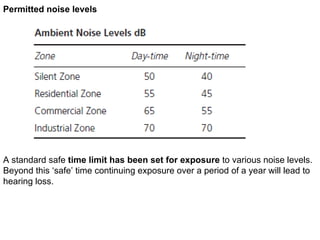
Permitted noise levels
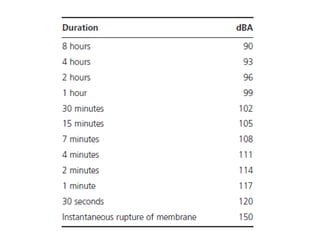
A standard safe time limit has been set for exposure to various noise levels.
Beyond this ā€˜safe’ time continuing exposure over a period of a year will lead to
hearing loss.
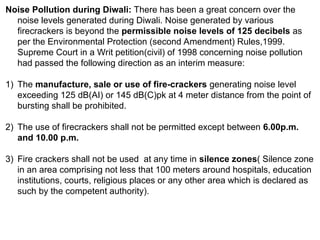
Noise Pollution during Diwali: There has been a great concern over the
noise levels generated during Diwali. Noise generated by various
firecrackers is beyond the permissible noise levels of 125 decibels as
per the Environmental Protection (second Amendment) Rules,1999.
Supreme Court in a Writ petition(civil) of 1998 concerning noise pollution
had passed the following direction as an interim measure:
1) The manufacture, sale or use of fire-crackers generating noise level
exceeding 125 dB(AI) or 145 dB(C)pk at 4 meter distance from the point of
bursting shall be prohibited.
2) The use of firecrackers shall not be permitted except between 6.00p.m.
and 10.00 p.m.
3) Fire crackers shall not be used at any time in silence zones( Silence zone
in an area comprising not less that 100 meters around hospitals, education
institutions, courts, religious places or any other area which is declared as
such by the competent authority).
Noise Control techniques
There are four fundamental ways in which noise can be controlled:
• Reduce noise at the source,
• Block the path of noise,
• Increase the path length
• Protect the recipient.
In general, the best control method is to reduce noise levels at the
source.
Noise Control at Source: The noise pollution can be controlled at the source
of generation itself by employing techniques like-
Reducing the noise levels from domestic sectors: The domestic noise
coming from radio, tape recorders, television sets, mixers, washing machines,
cooking operations can be minimized by their selective and judicious operation.
Maintenance of automobiles: Regular servicing and tuning of vehicles will
reduce the noise levels. Fixing of silencers to automobiles, two wheelers etc.,
will reduce the noise levels.
Control over vibrations: The vibrations of materials may be controlled using
proper foundations, rubber padding etc. to reduce the noise levels caused by
vibrations.
Prohibition on usage of loud speakers: By not permitting the usage of
loudspeakers in the habitant zones except for important meetings / functions.
Now-a-days, the urban administration of the metro cities in India, is becoming
stringent on usage of loudspeakers.
Maintenance of machines: Proper lubrication and maintenance of machines,
vehicles etc. will reduce noise levels. Similarly is the case of machines. Proper
handling and regular maintenance is essential not only for noise control but
also to improve the life of machine.
Control in the transmission path
The change in the transmission path will increase the length of travel for the
wave and get absorbed/refracted/radiated in the surrounding environment.
The available techniques are briefly discussed below.
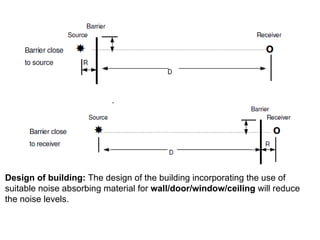
Installation of barriers: Installation of barriers between noise source and
receiver can attenuate the noise levels. For a barrier to be effective, its lateral
width should extend beyond the line-of-sight at least as much as the height.
The barrier may be either close to the source or receiver, subject to the
condition that, R <<D or in other words, to increase the traverse length for the
sound wave.
Design of building: The design of the building incorporating the use of
suitable noise absorbing material for wall/door/window/ceiling will reduce
the noise levels.
Green belt development: Green belt development can attenuate the sound
levels. The degree of attenuation varies with species of greenbelt. The statutory
regulations direct the industry to develop greenbelt four times the built-up area
for attenuation of various atmospheric pollutants, including noise.
Using protection equipment: The usage of protective equipment and the
worker's exposure to the high noise levels can be minimised by –
Job rotation: By rotating the job between the workers working at a particular
noise source or isolating a person, the adverse impacts can be reduced.
Exposure reduction: Regulations prescribe that, noise level of 90 dB (A) for
more than 8 hr continuous exposure is prohibited. Persons who are working
under such conditions will be exposed to occupational health hazards.
Hearing protection: Equipment like earmuffs, ear plugs etc. are the commonly
used devices for hearing protection. Attenuation provided by ear-muffs vary
widely in respect to their size, shape, seal material etc. Literature survey shows
that, an average noise attenuation up to 32 dB can be achieved using earmuffs.
Hazardous wastes
Hazardous wastes are those that can cause harm to humans or the
environment. Wastes are normally classified as hazardous waste when they
cause or significantly contribute to an increase in mortality or an increase
in serious irreversible or incapacitating reversible illness or pose a
substantial present or potential hazard to human health or the environment
when improperly treated, stored, transported or disposed of.
A waste is classified as a hazardous waste if it exhibits any of the four primary
characteristics based on the physical or chemical properties of toxicity,
reactivity, ignitability and corrosivity.
1) Toxic wastes: are those substances that are poisonous even in very
small or trace amounts. Some may have an acute or immediate effect on
humans or animals causing death or violent illness. Others may have a
chronic or long term effect slowly causing irreparable harm to exposed
persons.
2) Reactive wastes: are those that have a tendency to react vigorously with
air or water, are unstable to shock or heat, generate toxic gases or explode
during routine management. For example, gunpowder, nitroglycerine, etc.
3) Ignitable wastes: are those that burn at relatively low temperatures (less
than 60° C) and are capable of spontaneous combustion during storage,
transport or disposal. For example, gasoline, paint thinners, and alcohol.
4) Corrosive wastes: are those that destroy materials and living tissue by
chemical reaction. For example, acids and bases.
5) Infectious wastes: include human tissue from surgery, used bandages and
hypodermic needles, microbiological materials, etc.
6) Radioactive waste: is basically an output from the nuclear power plants
and can persist in the environment for thousands of years before it decays
appreciably.
Environmental problems and health risks caused by hazardous wastes:
•As most of the hazardous wastes are disposed of on or in land the most
serious environmental effect is contaminated groundwater.
•Pesticides are used increasingly to protect and increase food production.
Today we have an alternative to the excess use of pesticides through the use
of Integrated Pest Management (IPM).
•Lead, mercury and arsenic are hazardous substances which are often
referred to as heavy metals. Most of the lead taken up by people and wildlife is
stored in bones. Lead can affect red blood cells by reducing their ability to carry
oxygen and shortening their life span. Lead may also damage nerve tissue
which can result in brain disease.
•PCBs (Polychlorinated biphenyls) are resistant to fire and do not conduct
electricity very well which makes them excellent materials for several industrial
purposes. PCBs are concentrated in the kidneys and liver and thus cause
damage. They cause reproductive failure in birds and mammals.
•Vinyl chloride is a chemical that is widely used in the manufacture of
plastic. After a long continuous exposure (one to three years) in humans, vinyl
chloride can cause deafness, vision problems, circulation disorders and
bone deformities. Vinyl chloride can also cause birth defects.
•Today the most common methods for disposing off hazardous wastes are land
disposal and incineration. Although toxic wastes cannot be entirely
eliminated, technologies are available for minimizing, recycling and treating
wastes.
ROLE OF AN INDIVIDUAL IN PREVENTION OF POLLUTION
A small effort made by each individual at his own place will have pronounced
effect at the global level. It is aptly said, ā€˜ Think globally act locally’. Each
individual should change his or her lifestyle in such a way as to reduce
environmental pollution. Few of the suggestion are as follows:
•Lay greater emphasis on pollution prevention than pollution control.
•Use ecofriendly products. example: use CFC free refrigerators, use the
chemical derived from peaches and plums to clean computer chips and circuit
board instead of CFCs.
• Reduce the dependency on fossil fuel especially coal or oil, promote the
use of non-conventional source of energy such as solar energy, biomass
energy etc.
•Promote Reuse and Recycling wherever possible and reduce the
production of waste. Improve energy efficiency to reduce the amount of
waste energy.
•Save electricity by not wasting it. Shut off the lights and fans when not
needed.
•Do not litter the roads and surroundings just because the sweeper from the
Municipal Corporation will clean it up. Take care to put trash into dustbins or
bring it back home with you where it can be appropriately disposed.
•Try to avoid asking for plastic carry bags when you buy groceries or
vegetables or any other items. Use your own cloth bag instead.
•Try to lobby and push for setting up garbage separation and recycling
programs in your localities.
•Advocate organic farming by asking your grocery store to stock vegetables
and fruits grown by an organic method. This will automatically help to reduce
the use of pesticides.
•Reduce the use of wood and paper products wherever possible.
Manufacturing paper leads to pollution and loss of forests which releases
oxygen and takes up carbon dioxide. Try to recycle paper products and use
recycled paper wherever possible.
•Set up a compost bin in your garden or terrace and use it to produce manure
for your plants to reduce use of fertilizers.
Questions
1. Define pollution. Name various atmospheric pollutants.
2. What are the natural and man made pollutants that cause air
pollution
3. Give an account of indoor air pollution.
4. Give an account of the adverse effects of air pollution.
5. Enumerate various methods for control of air pollution.
6. Differentiate between
(i) Sound and noise
(ii) Loudness and pitch of noise
(iii) Threshold of pain and threshold of hearing for a human ear.
7. Briefly describe the sources, effects and control of noise pollution.
8. Give an account of noise generated during diwali. What would
you suggest to reduce this menace ?
9. Enumerate with examples the major sources of surface water pollution and ground water pollution.
10. Write short notes on
(a) Minamata disease
(b) Biomagnification
(c) Itai-itai disease
(d) Blue baby syndrome
(e) B.O.D.
Questions
11. Discuss adverse effects and control of water pollution.
12. What do you understand by the term thermal pollution ? Discuss
various effects and control measures of thermal pollution.
13. Discuss various sources of marine pollution. How can you prevent pollution of our oceans ?
14. What are the major sources of soil pollution ? How does soil pollution affect soil productivity ? What measures
can be taken to
prevent soil pollution.
15. Define radioactivity. Mention the sources of radioactivity.
16. What type of the damage ionisation radiations can cause ?
17. Classify solid waste. What are the sources of urban and industrial
solid wastes ?
18. What adverse effects can solid wastes cause ? How can the solid
waste be managed ?
19. How can you, as an individual, prevent environmental pollution ?
Why such an effort at individual level is important ?
20. Write short notes on :
(a) Donora air pollution episode
(b) Bhopal gas tragedy
(c) Love canal tragedy
(d) Chernobyl nuclear disaster.
Questions
21. Why do earthquakes occur ? Explain the case of any earthquake
that occurred in India.
22. Write notes on.
(a) Floods
(b) Landslides
(c) Cyclones.

Soil & Nuclear Pollution, Solid Waste, Noise pollution, Hazardous Waste

  • 1.
    Module – 5(Part - II)
  • 2.
    Soil Pollution Soil isa thin covering over the land consisting of a mixture of minerals, organic material, living organisms, air and water that together support the growth of plant life. Sources of soil pollution: •Dumping of domestic and industrial waste on soil surface results into soil pollution. Domestic waste include garbage, rubbish material like glass, plastic, metallic can, paper, fibers etc. •Industrial wastes are effluent discharged from industries and type of contaminant are dependent upon the type of Industry present. For example: paper and pulp industry mostly generate organic waste, Thermal power plant generate fly ash, or precipitate forms during treatment of pollutant gas produced due to combustion processes. •Application of fertilizers and Insecticides into agricultural land are other important category of soil pollution. Persistent pesticides once applied are effective for a long time. However as they do not break down easily they tend to accumulate in the soil and in the bodies of animals in the food chain.
  • 3.
    •Soil also receiveexcreta from animals and humans. The sewage sludge contain many pathogenic organism, bacteria, viruses and intestinal worm which cause pollution in the soil. •The source of radioactive substances in soil are explosion of radioactive devices, radioactive waste discharged from industries and laboratories, aerial fall out etc. The main isotopes are radium, uranium, thorium, strontium etc. Effects of soil pollution: •Sewage and industrial effluents which pollute the soil ultimately affect human health. One example is Itai-Itai disease which occurs due to consumption of Cd containing rice. The chemical discharge on soil such as acid and alkali also affects the soil fertility. •Some of the persistent toxic chemicals target the non-target organisms, soil flora and fauna and reduced soil fertility. These chemical accumulates in food chain and ultimately affect human health. •Radioactive fallout on soil are source of radio-isotopes which enter the food chain. Some of these replace essential elements in the body and cause abnormalities. Example: strontium-90 instead of calcium gets deposited in the bones and tissue.
  • 4.
    • Nitrogen andphosphorous from fertilizers in soil reach nearby water bodies with agricultural run-off and cause eutrophication. Control of Soil Pollution: 1) Effluent should be properly treated before discharging them on the soil. 2) Solid waste should be properly collected and disposed off by appropriate method. 3) Biodegradable organic waste( cattle waste, human faeces) should be used for generation of biogas. 4) Microbial degradation of biodegradable substances is also employed for reducing soil pollution.
  • 5.
    Nuclear Hazards Radioactive substancesundergo natural radioactive decay in which unstable isotopes spontaneously give out fast moving particles, high energy radiation or both, at fixed rate until a new stable isotope is formed. The isotopes release energy either in the form of gamma rays high energy electromagnetic radiation), or ionization particles i.e. alpha particles and beta particles.
  • 7.
    Penetrating power ofalpha, beta and gamma particle
  • 8.
    Sources of Radioactivity:It can be both natural or man made sources: 1) Natural sources: It includes cosmic rays from outer space, radioactive radon-222, soil, rocks, air, water and food , which contain one or more radioactive substances. 2) Anthropogenic sources: It includes nuclear power plants, nuclear accidents, nuclear weapon testing, X-rays, diagnostic kits, research laboratories etc. Effect of Radiations: Ionization radiations can affect living organisms by causing harmful changes in body cells and also damage at genetic level. 1) Genetic damage: It includes mutation in the DNA, thereby affecting genes and chromosome. The damage can be transmitted up to several generation. 2) Somatic damage: it includes burns, miscarriage, eye cataract and cancer of bone, thyroid, lungs and skin. Example: Radioactive iodine (I131 ) accumulates in thyroid gland and causes cancer. Strontium-90 accumulates in the bones and causes leukemia or cancer of bone marrow.
  • 9.
    The damage causeby different type of radiation depends on the penetration power. The Alpha particles cannot penetrate the skin to reach internal organs whereas beta particles can damage the internal organs. Greater threat is posed by radioisotopes with intermediate half-lives as they have long time to find entry inside the human body. The radioactive material present in the earth crust or fall down as dry deposition from atmosphere enters the crop grown there and ultimately in Human beings. Radionuclide enters the water bodies such as ground water by coming in contact with the radionuclide bearing rocks. Control of Nuclear Pollution: 1) Siting of nuclear power plants should be carefully done after studying long term and short term effects. 2) Proper disposal of wastes from research laboratory and hospital involving in the use of radioisotopes should be done. 3) Complete ban on Nuclear weapon testing should be imposed.
  • 10.
    Solid waste management Changein the standard of living of ever increasing population has resulted in an increase in the quantity and variety of waste generated. Management of solid waste has, therefore become very important in order to minimize the adverse effect of solid wastes. Solid waste( waste other than liquid and gaseous) can be classified as municipal (MSW), industrial, agricultural, mining waste and sewage sludge. Sources of solid waste: 1) Waste from homes( Domestic waste) : It can contain food waste such as vegetable and meat material, left over food, egg shells, etc which is classified as wet garbage as well as paper, plastic, tetrapacks, plastic cans, newspaper, glass bottles, cardboard boxes, aluminum foil, metal items, wood pieces, etc. which is classified as dry garbage. 2) Biomedical waste: It includes anatomical wastes, pathological wastes, infectious waste etc.
  • 11.
    3) Construction/ demolitionwaste: includes debris and rubbles, wood, concrete etc. 4) Horticulture waste and waste from slaughter houses: include vegetable part, residual and remains of slaughtered animals, respectively. The MSW can be divided into biodegradable wastes( that can be degraded by micro-organism) and non-biodegradable wastes( can not degrade). 5) Industrial waste: The type of waste generated varies depending upon the type of industry for example: Mining industry solid waste will contain loose earth material, Thermal power plant will produce solid waste in form of fly ash and slurry produce during the treatment of flue gas. In Europe and North America the environmental laws are very strict regarding solid waste disposal, thereby these countries started exporting their solid waste to less developed countries like Asian and African countries for dumping.
  • 12.
    Effects of Solidwaste: Municipal solid wastes heap up on the road due to improper disposal system. These type of dumping allows biodegradable materials to decompose under uncontrolled and unhygienic conditions. This produces foul smell and breeds various types of insects and infectious organisms besides spoiling the aesthetics of the site. Industrial solid wastes are sources of toxic metals and hazardous wastes, which may spread on land and can cause changes in physico-chemical and biological characteristics thereby affecting productivity of soils. Toxic metals can also leach or percolate to contaminate the ground water. If MSW get mixed with industrial waste , this make segregation and disposal of waste very difficult. Burning of some of the solid material produce dioxins, furans and polychlorinated biphenyls, which have the potential to cause various type of ailments including cancer.
  • 13.
    Management of solidwaste: An integrated waste management strategy includes three main components. For waste management stress is on three R’S’- Reduce, reuse and recycle before destruction and safe disposal of solid waste. 1) Source reduction: is one of the fundamental ways to reduce waste. This can be done by using less material when making a product, reuse of products on site, designing products or packaging to reduce their quantity. On an individual level we can reduce the use of unnecessary items while shopping, buy items with minimal packaging, avoid buying disposable items and also avoid asking for plastic carry bags. 2) Recycling of materials: is reusing some components of the waste that may have some economic value. Metal, paper, glass and plastics are recyclable. Mining of new aluminum is expensive and hence recycled aluminum has a strong market and plays a significant role in the aluminum industry. Paper recycling can also help preserve forests as it takes about 17 trees to make one ton of paper. Crushed glass (cullet) reduces the energy required to manufacture new glass by 50 percent. The problems associated with recycling are either technical or economical.
  • 14.
    Collection, sorting andtransport account for about 90 percent of the cost of paper recycling. The processes of pulping, deinking and screening wastepaper are generally more expensive than making paper from virgin wood or cellulose fibers. 3) Disposal: It is done most commonly through a sanitary landfill or through incineration. a) Sanitary landfill: is a depression in an impermeable soil layer that is lined with an impermeable membrane. The three key characteristics of a municipal sanitary landfill that distinguish it from an open dump are: • Solid waste is placed in a suitably selected and prepared landfill site in a carefully prescribed manner. • The waste material is spread out and compacted with appropriate heavy machinery. • The waste is covered each day with a layer of compacted soil.
  • 15.
    The problem witholder landfills are associated with groundwater pollution. Pollutants seeping out from the bottom of a sanitary landfill (leachates) very often percolate down to the groundwater aquifer. Advanced sanitary landfill sites are equipped with suitable bottom liners and leachate collection systems along with the installation of monitoring systems to detect groundwater pollution. it has become increasingly difficult to find suitable land filling sites that are within economic hauling distance and very often citizens do not want landfills in their vicinity.
  • 16.
    Incineration: is theprocess of burning municipal solid waste in a properly designed furnace under suitable temperature and operating conditions. For complete oxidation the waste must be mixed with appropriate volumes of air at a temperature of about 815o C for about one hour. Incineration can reduce the municipal solid waste by about 90 percent in volume and 75 percent in weight. The risks of incineration however involve air quality problems and toxicity and disposal of the fly and bottom ash produced during the incineration process. Vermicomposting: Vermicomposting is a simple biotechnological process of composting, in which certain species of earthworms are used to enhance the process of waste conversion and produce a better end product. It is a mesophilic process, utilizing microorganisms and earthworms that are active at 10– 32°C. The process is faster than composting; because the material passes through the earthworm gut, a significant transformation takes place, whereby the resulting earthworm castings (worm manure) are rich in microbial activity and plant growth regulators, and fortified with pest repellence attributes as well!
  • 17.
    Noise pollution Sound isa form of energy which is emitted by a vibrating body and on reaching the ear causes the sensation of hearing through nerves. Sounds produced by all vibrating bodies are not audible. The frequency limits of audibility are from 20 HZ to 20,000 HZ. A type of sound may be pleasant to someone and at the same time unpleasant to others. The unpleasant and unwanted sound is called noise. The discrimination and differentiation between sound and noise also depends upon the habit and interest of the person/species receiving it, the ambient conditions and impact of the sound generated during that particular duration of time. There could be instances that, excellently rendered musical concert for example, may be felt as noise and exceptional music as well during the course of the concert! The intensity of sound is measured in sound pressure levels (SPL) and common unit of measurement is decibel, dB. The SPL is logarithmic ratio of the sound pressure to a reference pressure. If the sound levels are measured in terms of pressure, then, sound pressure level, LP is given by,
  • 18.
    LP = 20Log10 (P/Po) dB(A) The Lp is measured against a standard reference pressure, Po = 2 x 10⁻⁵ N/m2 which is equivalent to zero decibels. The sound pressure is the pressure exerted at a point due to a sound producing source. Addition of sound levels: The effective sound levels form two or more sources cannot be simply added algebraically.
  • 20.
    Sources of noise Thesources of noise may be domestic (movement of utensils, cutting and peeling of fruits/vegetables etc.) natural (shores, birds/animal shouts, wind movement, sea tide movement, water falls etc.), commercial (vendor shouts, automobiles, aeroplanes, marriages, laboratory, machinery etc.) industrial (generator sets, boilers, plant operations, trolley movement, transport vehicles, pumps, motors etc.).
  • 21.
    Effects of noisepollution on physical health The most direct harmful effect of excessive noise is physical damage to the ear and the temporary or permanent hearing loss often called a temporary threshold shift (TTS). Permanent loss, usually called noise induced permanent threshold shift (NIPTS) represents a loss of hearing ability from which there is no recovery. Some of the adverse effects are summarized below: Annoyance: It creates annoyance to the receptors due to sound level fluctuations. The aperiodic sound due to its irregular occurrences causes displeasure to hearing and causes annoyance. Physiological effects: The physiological features like breathing amplitude, blood pressure, heart-beat rate, pulse rate, blood cholesterol are effected. Loss of hearing: Long exposure to high sound levels cause loss of hearing. This is mostly unnoticed, but has an adverse impact on hearing function. Human performance: The working performance of workers/human will be affected as they'll be losing their concentration.
  • 22.
    Nervous system: Itcauses pain, ringing in the ears, feeling of tiredness, thereby effecting the functioning of human system. Sleeplessness: It affects the sleeping there by inducing the people to become restless and loose concentration and presence of mind during their activities. Damage to material : The buildings and materials may get damaged by exposure to infrasonic / ultrasonic waves and even get collapsed. The variations in the emission of noise levels in a particular environment can be assessed from the statistical distribution of noise levels in that environment. To draw a statistical distribution curve, terms like L10, L50 and L90 play an important role. The Sound levels exceeding 10%, 50% and 90% of the total time intervals during a particular period are designated as L10, L50 and L90 respectively. The equivalent noise levels, Leq can also be calculated as Leq = L50 + (L10 - L90)2 / 60
  • 23.
    Permitted noise levels Astandard safe time limit has been set for exposure to various noise levels. Beyond this ā€˜safe’ time continuing exposure over a period of a year will lead to hearing loss.
  • 25.
    Noise Pollution duringDiwali: There has been a great concern over the noise levels generated during Diwali. Noise generated by various firecrackers is beyond the permissible noise levels of 125 decibels as per the Environmental Protection (second Amendment) Rules,1999. Supreme Court in a Writ petition(civil) of 1998 concerning noise pollution had passed the following direction as an interim measure: 1) The manufacture, sale or use of fire-crackers generating noise level exceeding 125 dB(AI) or 145 dB(C)pk at 4 meter distance from the point of bursting shall be prohibited. 2) The use of firecrackers shall not be permitted except between 6.00p.m. and 10.00 p.m. 3) Fire crackers shall not be used at any time in silence zones( Silence zone in an area comprising not less that 100 meters around hospitals, education institutions, courts, religious places or any other area which is declared as such by the competent authority).
  • 26.
    Noise Control techniques Thereare four fundamental ways in which noise can be controlled: • Reduce noise at the source, • Block the path of noise, • Increase the path length • Protect the recipient. In general, the best control method is to reduce noise levels at the source. Noise Control at Source: The noise pollution can be controlled at the source of generation itself by employing techniques like- Reducing the noise levels from domestic sectors: The domestic noise coming from radio, tape recorders, television sets, mixers, washing machines, cooking operations can be minimized by their selective and judicious operation. Maintenance of automobiles: Regular servicing and tuning of vehicles will reduce the noise levels. Fixing of silencers to automobiles, two wheelers etc., will reduce the noise levels. Control over vibrations: The vibrations of materials may be controlled using proper foundations, rubber padding etc. to reduce the noise levels caused by vibrations.
  • 27.
    Prohibition on usageof loud speakers: By not permitting the usage of loudspeakers in the habitant zones except for important meetings / functions. Now-a-days, the urban administration of the metro cities in India, is becoming stringent on usage of loudspeakers. Maintenance of machines: Proper lubrication and maintenance of machines, vehicles etc. will reduce noise levels. Similarly is the case of machines. Proper handling and regular maintenance is essential not only for noise control but also to improve the life of machine. Control in the transmission path The change in the transmission path will increase the length of travel for the wave and get absorbed/refracted/radiated in the surrounding environment. The available techniques are briefly discussed below. Installation of barriers: Installation of barriers between noise source and receiver can attenuate the noise levels. For a barrier to be effective, its lateral width should extend beyond the line-of-sight at least as much as the height. The barrier may be either close to the source or receiver, subject to the condition that, R <<D or in other words, to increase the traverse length for the sound wave.
  • 28.
    Design of building:The design of the building incorporating the use of suitable noise absorbing material for wall/door/window/ceiling will reduce the noise levels.
  • 29.
    Green belt development:Green belt development can attenuate the sound levels. The degree of attenuation varies with species of greenbelt. The statutory regulations direct the industry to develop greenbelt four times the built-up area for attenuation of various atmospheric pollutants, including noise. Using protection equipment: The usage of protective equipment and the worker's exposure to the high noise levels can be minimised by – Job rotation: By rotating the job between the workers working at a particular noise source or isolating a person, the adverse impacts can be reduced. Exposure reduction: Regulations prescribe that, noise level of 90 dB (A) for more than 8 hr continuous exposure is prohibited. Persons who are working under such conditions will be exposed to occupational health hazards. Hearing protection: Equipment like earmuffs, ear plugs etc. are the commonly used devices for hearing protection. Attenuation provided by ear-muffs vary widely in respect to their size, shape, seal material etc. Literature survey shows that, an average noise attenuation up to 32 dB can be achieved using earmuffs.
  • 30.
    Hazardous wastes Hazardous wastesare those that can cause harm to humans or the environment. Wastes are normally classified as hazardous waste when they cause or significantly contribute to an increase in mortality or an increase in serious irreversible or incapacitating reversible illness or pose a substantial present or potential hazard to human health or the environment when improperly treated, stored, transported or disposed of. A waste is classified as a hazardous waste if it exhibits any of the four primary characteristics based on the physical or chemical properties of toxicity, reactivity, ignitability and corrosivity. 1) Toxic wastes: are those substances that are poisonous even in very small or trace amounts. Some may have an acute or immediate effect on humans or animals causing death or violent illness. Others may have a chronic or long term effect slowly causing irreparable harm to exposed persons. 2) Reactive wastes: are those that have a tendency to react vigorously with air or water, are unstable to shock or heat, generate toxic gases or explode during routine management. For example, gunpowder, nitroglycerine, etc.
  • 31.
    3) Ignitable wastes:are those that burn at relatively low temperatures (less than 60° C) and are capable of spontaneous combustion during storage, transport or disposal. For example, gasoline, paint thinners, and alcohol. 4) Corrosive wastes: are those that destroy materials and living tissue by chemical reaction. For example, acids and bases. 5) Infectious wastes: include human tissue from surgery, used bandages and hypodermic needles, microbiological materials, etc. 6) Radioactive waste: is basically an output from the nuclear power plants and can persist in the environment for thousands of years before it decays appreciably. Environmental problems and health risks caused by hazardous wastes: •As most of the hazardous wastes are disposed of on or in land the most serious environmental effect is contaminated groundwater. •Pesticides are used increasingly to protect and increase food production. Today we have an alternative to the excess use of pesticides through the use of Integrated Pest Management (IPM).
  • 32.
    •Lead, mercury andarsenic are hazardous substances which are often referred to as heavy metals. Most of the lead taken up by people and wildlife is stored in bones. Lead can affect red blood cells by reducing their ability to carry oxygen and shortening their life span. Lead may also damage nerve tissue which can result in brain disease. •PCBs (Polychlorinated biphenyls) are resistant to fire and do not conduct electricity very well which makes them excellent materials for several industrial purposes. PCBs are concentrated in the kidneys and liver and thus cause damage. They cause reproductive failure in birds and mammals. •Vinyl chloride is a chemical that is widely used in the manufacture of plastic. After a long continuous exposure (one to three years) in humans, vinyl chloride can cause deafness, vision problems, circulation disorders and bone deformities. Vinyl chloride can also cause birth defects. •Today the most common methods for disposing off hazardous wastes are land disposal and incineration. Although toxic wastes cannot be entirely eliminated, technologies are available for minimizing, recycling and treating wastes.
  • 33.
    ROLE OF ANINDIVIDUAL IN PREVENTION OF POLLUTION A small effort made by each individual at his own place will have pronounced effect at the global level. It is aptly said, ā€˜ Think globally act locally’. Each individual should change his or her lifestyle in such a way as to reduce environmental pollution. Few of the suggestion are as follows: •Lay greater emphasis on pollution prevention than pollution control. •Use ecofriendly products. example: use CFC free refrigerators, use the chemical derived from peaches and plums to clean computer chips and circuit board instead of CFCs. • Reduce the dependency on fossil fuel especially coal or oil, promote the use of non-conventional source of energy such as solar energy, biomass energy etc. •Promote Reuse and Recycling wherever possible and reduce the production of waste. Improve energy efficiency to reduce the amount of waste energy. •Save electricity by not wasting it. Shut off the lights and fans when not needed.
  • 34.
    •Do not litterthe roads and surroundings just because the sweeper from the Municipal Corporation will clean it up. Take care to put trash into dustbins or bring it back home with you where it can be appropriately disposed. •Try to avoid asking for plastic carry bags when you buy groceries or vegetables or any other items. Use your own cloth bag instead. •Try to lobby and push for setting up garbage separation and recycling programs in your localities. •Advocate organic farming by asking your grocery store to stock vegetables and fruits grown by an organic method. This will automatically help to reduce the use of pesticides. •Reduce the use of wood and paper products wherever possible. Manufacturing paper leads to pollution and loss of forests which releases oxygen and takes up carbon dioxide. Try to recycle paper products and use recycled paper wherever possible. •Set up a compost bin in your garden or terrace and use it to produce manure for your plants to reduce use of fertilizers.
  • 35.
    Questions 1. Define pollution.Name various atmospheric pollutants. 2. What are the natural and man made pollutants that cause air pollution 3. Give an account of indoor air pollution. 4. Give an account of the adverse effects of air pollution. 5. Enumerate various methods for control of air pollution. 6. Differentiate between (i) Sound and noise (ii) Loudness and pitch of noise (iii) Threshold of pain and threshold of hearing for a human ear. 7. Briefly describe the sources, effects and control of noise pollution. 8. Give an account of noise generated during diwali. What would you suggest to reduce this menace ? 9. Enumerate with examples the major sources of surface water pollution and ground water pollution. 10. Write short notes on (a) Minamata disease (b) Biomagnification (c) Itai-itai disease (d) Blue baby syndrome (e) B.O.D.
  • 36.
    Questions 11. Discuss adverseeffects and control of water pollution. 12. What do you understand by the term thermal pollution ? Discuss various effects and control measures of thermal pollution. 13. Discuss various sources of marine pollution. How can you prevent pollution of our oceans ? 14. What are the major sources of soil pollution ? How does soil pollution affect soil productivity ? What measures can be taken to prevent soil pollution. 15. Define radioactivity. Mention the sources of radioactivity. 16. What type of the damage ionisation radiations can cause ? 17. Classify solid waste. What are the sources of urban and industrial solid wastes ? 18. What adverse effects can solid wastes cause ? How can the solid waste be managed ? 19. How can you, as an individual, prevent environmental pollution ? Why such an effort at individual level is important ? 20. Write short notes on : (a) Donora air pollution episode (b) Bhopal gas tragedy (c) Love canal tragedy (d) Chernobyl nuclear disaster.
  • 37.
    Questions 21. Why doearthquakes occur ? Explain the case of any earthquake that occurred in India. 22. Write notes on. (a) Floods (b) Landslides (c) Cyclones.