Human Activities and
Environment
Environment
• It refers to everything that surrounds a living organism
• It includes:
• Physical factors - air, water, and soil
• Biological factors - flora and fauna
Ecosystem
• It is a community of organisms interacting with each other and with
abiotic or nonliving components of the environment
• This dynamic interaction results in the exchange of energy and the
cycling of important nutrients
• A healthy ecosystem is essential in sustaining life on Earth because it
provides services.
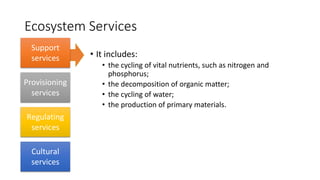
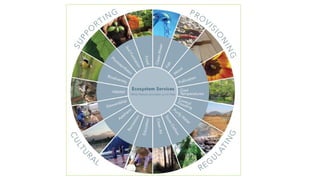
Ecosystem Services
• It includes:
• the cycling of vital nutrients, such as nitrogen and
phosphorus;
• the decomposition of organic matter;
• the cycling of water;
• the production of primary materials.
Support
services
Provisioning
services
Regulating
services
Cultural
services
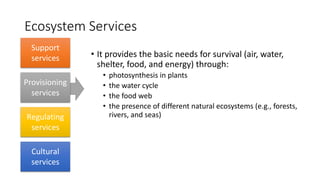
Ecosystem Services
• It provides the basic needs for survival (air, water,
shelter, food, and energy) through:
• photosynthesis in plants
• the water cycle
• the food web
• the presence of different natural ecosystems (e.g., forests,
rivers, and seas)
Support
services
Provisioning
services
Regulating
services
Cultural
services
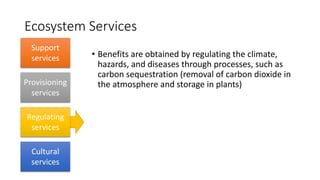
Ecosystem Services
• Benefits are obtained by regulating the climate,
hazards, and diseases through processes, such as
carbon sequestration (removal of carbon dioxide in
the atmosphere and storage in plants)
Support
services
Provisioning
services
Regulating
services
Cultural
services
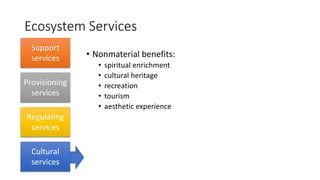
Ecosystem Services
• Nonmaterial benefits:
• spiritual enrichment
• cultural heritage
• recreation
• tourism
• aesthetic experience
Support
services
Provisioning
services
Regulating
services
Cultural
services
Human Activities, Waste, and
Waste Management
Solid Waste
• It is made up of objects or particles that accumulate on the site where
they are produced
• National Solid Waste Management Commission
• A single Metro Manila resident generates 0.7 kg of solid waste, which is more
than twice the global average (0.3 kg per person per day)
Types of Solid Waste
1. Municipal Waste
• Includes materials that people in a community no longer wants
because they are broken, spoiled, or no longer useful
• This type of waste comes from households, commercial
establishments, institutions, and some industrial sources
Types of Solid Waste
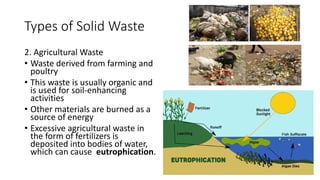
2. Agricultural Waste
• Waste derived from farming and
poultry
• This waste is usually organic and
is used for soil-enhancing
activities
• Other materials are burned as a
source of energy
• Excessive agricultural waste in
the form of fertilizers is
deposited into bodies of water,
which can cause eutrophication.
Types of Solid Waste
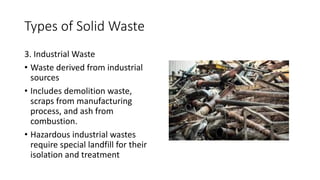
3. Industrial Waste
• Waste derived from industrial
sources
• Includes demolition waste,
scraps from manufacturing
process, and ash from
combustion.
• Hazardous industrial wastes
require special landfill for their
isolation and treatment
Types of Solid Waste
4. Mining Waste
• Generated in 3 ways:
• mining operations - large amounts of rocks
and soil are removed to extract valuable
ores, and the waste materials are left
outside the mining site
• milling operations - the grinding and
sorting of materials produce solid waste
called tailings, which are dumped and
stored in ponds near the milling site
• water pumped from mines flows piles of
waste rock or tailings that contain
hazardous materials
Methods of Waste Disposal
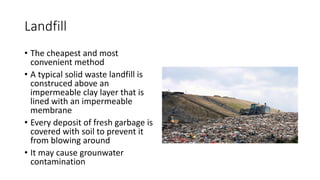
Landfill
• The cheapest and most
convenient method
• A typical solid waste landfill is
construced above an
impermeable clay layer that is
lined with an impermeable
membrane
• Every deposit of fresh garbage is
covered with soil to prevent it
from blowing around
• It may cause grounwater
contamination
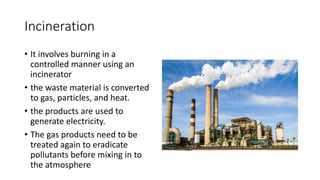
Incineration
• It involves burning in a
controlled manner using an
incinerator
• the waste material is converted
to gas, particles, and heat.
• the products are used to
generate electricity.
• The gas products need to be
treated again to eradicate
pollutants before mixing in to
the atmosphere
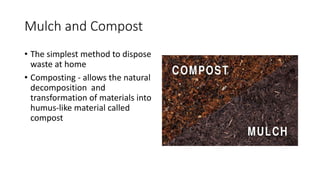
Mulch and Compost
• The simplest method to dispose
waste at home
• Composting - allows the natural
decomposition and
transformation of materials into
humus-like material called
compost
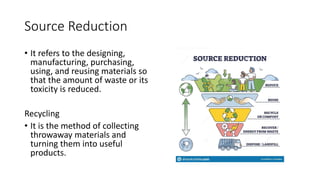
Source Reduction
• It refers to the designing,
manufacturing, purchasing,
using, and reusing materials so
that the amount of waste or its
toxicity is reduced.
Recycling
• It is the method of collecting
throwaway materials and
turning them into useful
products.
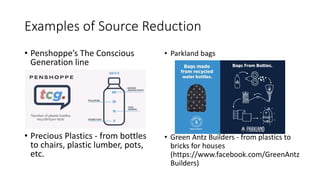
Examples of Source Reduction
• Penshoppe’s The Conscious
Generation line
• Precious Plastics - from bottles
to chairs, plastic lumber, pots,
etc.
• Parkland bags
• Green Antz Builders - from plastics to
bricks for houses
(https://www.facebook.com/GreenAntz
Builders)

Q2 LESSON 3 HUMAN ACTIVITIES AND ENVIRONMENT.pdf

  • 1.
  • 2.
    Environment • It refersto everything that surrounds a living organism • It includes: • Physical factors - air, water, and soil • Biological factors - flora and fauna
  • 3.
    Ecosystem • It isa community of organisms interacting with each other and with abiotic or nonliving components of the environment • This dynamic interaction results in the exchange of energy and the cycling of important nutrients • A healthy ecosystem is essential in sustaining life on Earth because it provides services.
  • 4.
    Ecosystem Services • Itincludes: • the cycling of vital nutrients, such as nitrogen and phosphorus; • the decomposition of organic matter; • the cycling of water; • the production of primary materials. Support services Provisioning services Regulating services Cultural services
  • 5.
    Ecosystem Services • Itprovides the basic needs for survival (air, water, shelter, food, and energy) through: • photosynthesis in plants • the water cycle • the food web • the presence of different natural ecosystems (e.g., forests, rivers, and seas) Support services Provisioning services Regulating services Cultural services
  • 6.
    Ecosystem Services • Benefitsare obtained by regulating the climate, hazards, and diseases through processes, such as carbon sequestration (removal of carbon dioxide in the atmosphere and storage in plants) Support services Provisioning services Regulating services Cultural services
  • 7.
    Ecosystem Services • Nonmaterialbenefits: • spiritual enrichment • cultural heritage • recreation • tourism • aesthetic experience Support services Provisioning services Regulating services Cultural services
  • 9.
    Human Activities, Waste,and Waste Management
  • 10.
    Solid Waste • Itis made up of objects or particles that accumulate on the site where they are produced • National Solid Waste Management Commission • A single Metro Manila resident generates 0.7 kg of solid waste, which is more than twice the global average (0.3 kg per person per day)
  • 11.
    Types of SolidWaste 1. Municipal Waste • Includes materials that people in a community no longer wants because they are broken, spoiled, or no longer useful • This type of waste comes from households, commercial establishments, institutions, and some industrial sources
  • 12.
    Types of SolidWaste 2. Agricultural Waste • Waste derived from farming and poultry • This waste is usually organic and is used for soil-enhancing activities • Other materials are burned as a source of energy • Excessive agricultural waste in the form of fertilizers is deposited into bodies of water, which can cause eutrophication.
  • 13.
    Types of SolidWaste 3. Industrial Waste • Waste derived from industrial sources • Includes demolition waste, scraps from manufacturing process, and ash from combustion. • Hazardous industrial wastes require special landfill for their isolation and treatment
  • 14.
    Types of SolidWaste 4. Mining Waste • Generated in 3 ways: • mining operations - large amounts of rocks and soil are removed to extract valuable ores, and the waste materials are left outside the mining site • milling operations - the grinding and sorting of materials produce solid waste called tailings, which are dumped and stored in ponds near the milling site • water pumped from mines flows piles of waste rock or tailings that contain hazardous materials
  • 15.
  • 16.
    Landfill • The cheapestand most convenient method • A typical solid waste landfill is construced above an impermeable clay layer that is lined with an impermeable membrane • Every deposit of fresh garbage is covered with soil to prevent it from blowing around • It may cause grounwater contamination
  • 17.
    Incineration • It involvesburning in a controlled manner using an incinerator • the waste material is converted to gas, particles, and heat. • the products are used to generate electricity. • The gas products need to be treated again to eradicate pollutants before mixing in to the atmosphere
  • 18.
    Mulch and Compost •The simplest method to dispose waste at home • Composting - allows the natural decomposition and transformation of materials into humus-like material called compost
  • 19.
    Source Reduction • Itrefers to the designing, manufacturing, purchasing, using, and reusing materials so that the amount of waste or its toxicity is reduced. Recycling • It is the method of collecting throwaway materials and turning them into useful products.
  • 20.
    Examples of SourceReduction • Penshoppe’s The Conscious Generation line • Precious Plastics - from bottles to chairs, plastic lumber, pots, etc. • Parkland bags • Green Antz Builders - from plastics to bricks for houses (https://www.facebook.com/GreenAntz Builders)