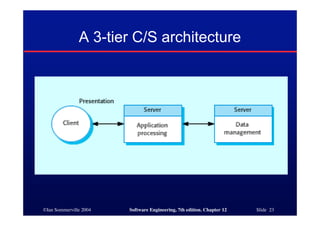
This document discusses different architectures for distributed systems, including client-server architectures, distributed object architectures, and middleware. It describes the characteristics and advantages of distributed systems as well as challenges like complexity, security, and unpredictability. Specific architectures covered include multiprocessor systems, thin and fat client models, and three-tier client-server approaches. Distributed object architectures are also introduced where any object can provide or use services.
In this document
Powered by AI
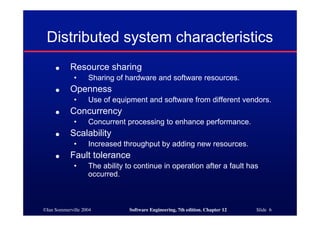
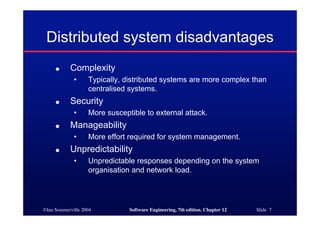
Explores advantages/disadvantages of distributed systems, types, and includes key characteristics.
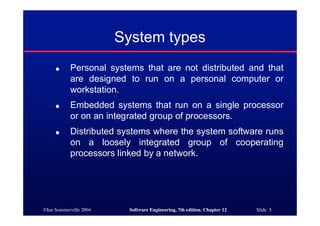
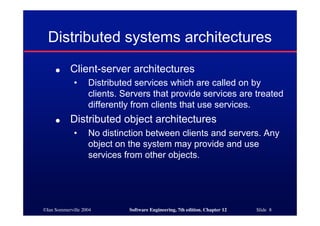
Personal, embedded, and distributed systems explained, alongside advantages of client-server and object architectures.
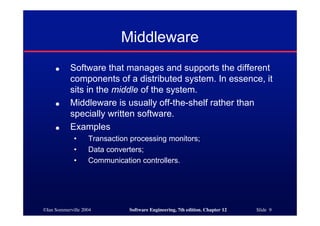
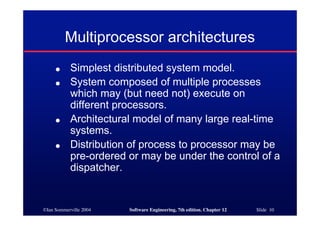
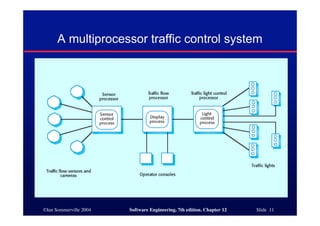
Defines middleware as software facilitating component management in distributed systems and the multiprocessor model.
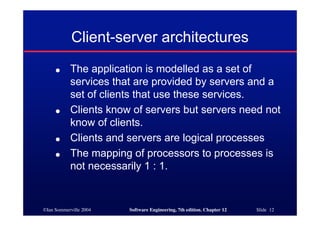
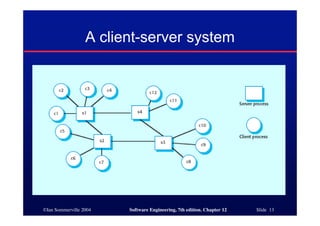
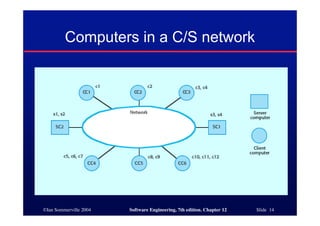
Describes client-server systems, their processing model, and role of logical processes.
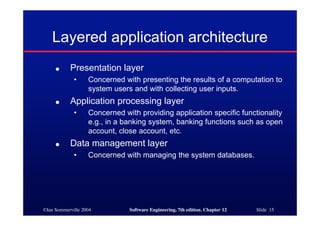
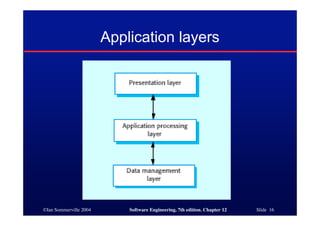
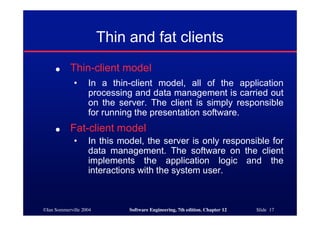
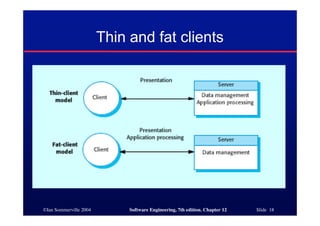
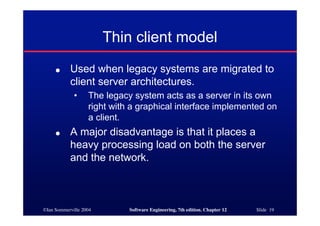
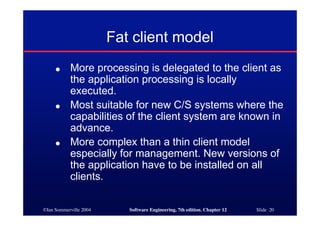
Characterizes layered application architecture as well as thin and fat client models with examples.
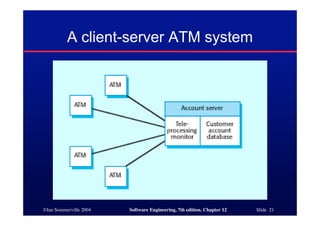
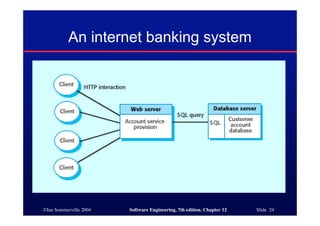
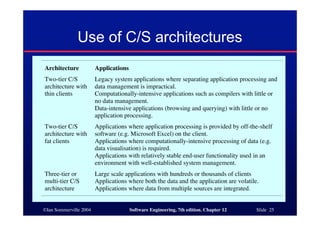
Discusses uses of client-server architectures in banking, legacy systems, and scalable applications.
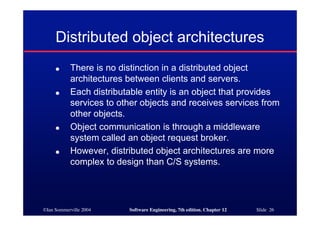
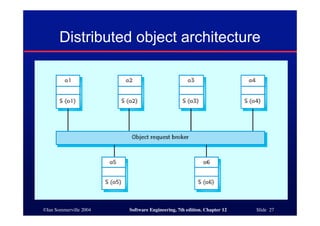
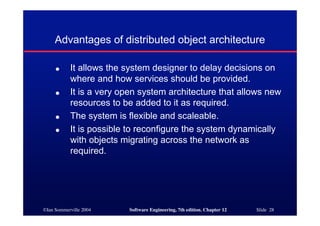
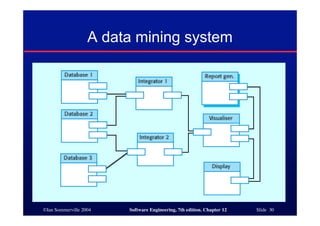
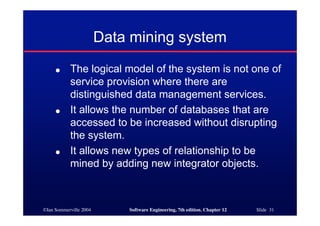
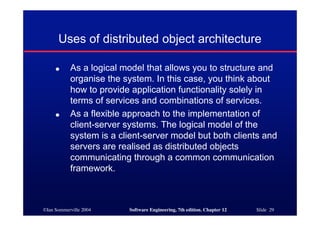
Covers the concept of distributed object systems, their flexibility, and application in data mining.
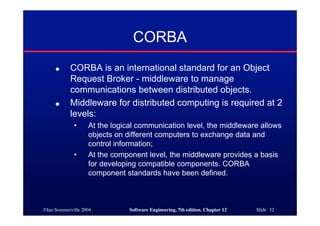
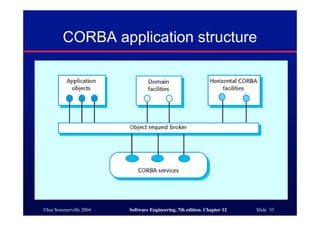
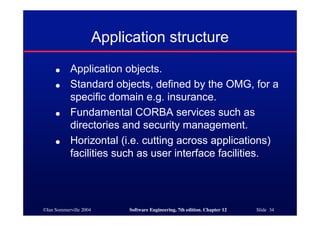
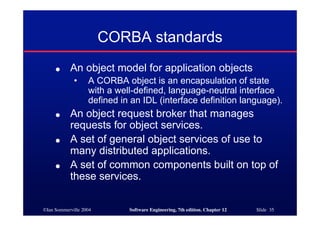
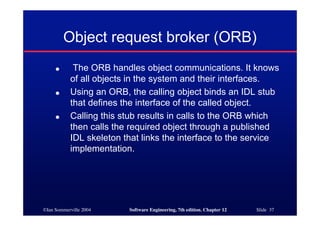
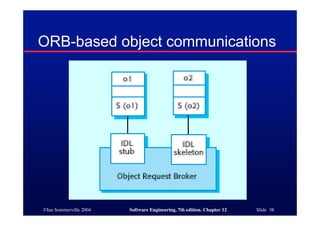
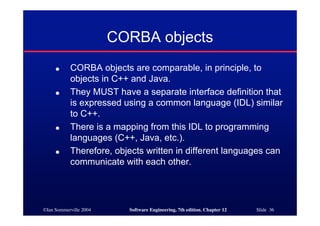
Introduces CORBA for object request brokers, communications between distributed objects, and related services.
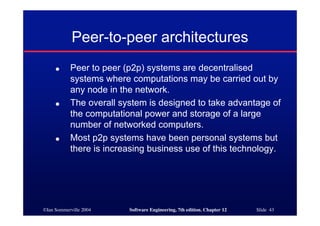
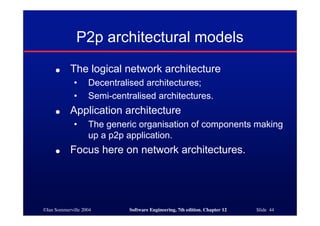
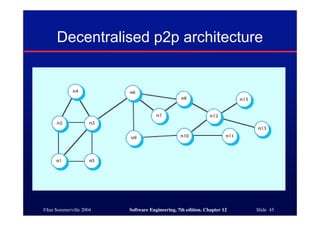
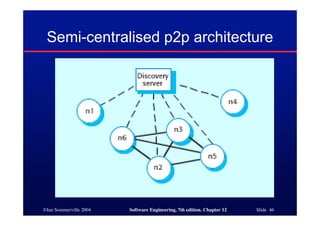
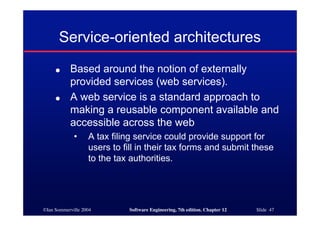
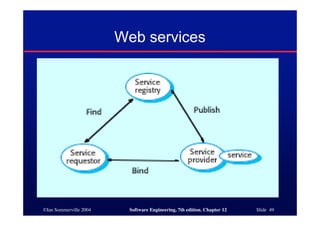
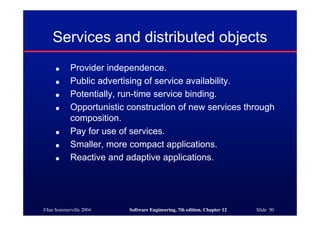
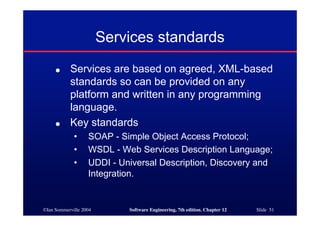
Explains peer-to-peer systems and service-oriented architectures, highlighting web services and their structures.
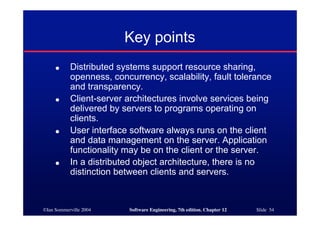
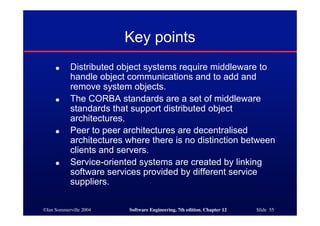
Summarizes key points on resource sharing, architecture distinctions, and importance of CORBA and service-oriented systems.