Software Engineering: 16
Systems Concepts in Software
Design
Prof Neeraj Bhargava
Vaibhav Khanna
Department of Computer Science
School of Engineering and Systems Sciences
Maharshi Dayanand Saraswati University Ajmer
What is a system?
• A system is a collection of entities or things (animate
or inanimate) which receives certain inputs and is
constrained to act upon them to produce certain
outputs, with the objective of maximizing some
functions of inputs and outputs.
• Others define system as a complexity of elements in
mutual interaction in such a way as to constrain action
toward the accomplishment of the purposes for which
the system exists.
• Simply stated, a system is a set of interrelated
elements that functions as a unit for a specific purpose.
•
Input Process Output View
• Within a system are inputs, process outputs.
• Inputs are the human, materials, financial, or
information resources used to produce a product or a
service.
• Through technology and administrative functions the
inputs undergo a transformation process.
• For Example :In school, the interaction between the
students and teachers is part of the transformation or
learning process by which students become educated
citizens.
• Process is what transforms input into output. It is also
called throughput.
Outputs and Feedback
• Outputs include the organization’s products and services.
Graduates as educated citizens are examples of outputs.
• In the interrelationship between the input and output, feedback
plays a very important function.
• Feedback is the information concerning the outputs or the process
of the organization may lead to changes both in the process and the
future outputs.
• Feedback is like a reaction a performer gets from the audience.
• Similarly, the school system gents information from the
environment or society as to how it has performed / Feedback tells
whether a certain plan should be continued or not. For this reason,
all educational development plans are made on a rolling basis,
meaning, they are subject to modifications, revision, or changes
depending on the feedback after some time of operation.
Subsystem
• In the study of a system, we can come across with the
terms subsystem, and suprasystem
• Subsystem is a small system within the big system.
• It has its own purpose and is there for the purpose of
the system.
• It has its own parts and components which are
determined by the overall purpose of the system for
which it is a part.
• The components of a subsystem work in an integrated
or interrelated manner.
• Subsystem is also called microsystem.
Supra System
• Supra system is the largest system that
includes both the system and its subsystem.
• The supra system has its subsystem such as
the political system, educational system,
cultural system and economic system.
• Supra system is also called macro system.
System Boundaries
• When we analyze a specific system, we have to
consider what we call System Boundaries.
• System Boundaries determine what is to be included
or excluded from the system.
• For example, the educational system may be defined
by levels, that is, elementary, secondary, and tertiary
level.
• Any kind of system is always situated in a environment.
Environment is what surrounds the organization which
includes the social, political, and economic factors that
impinge on the organization.
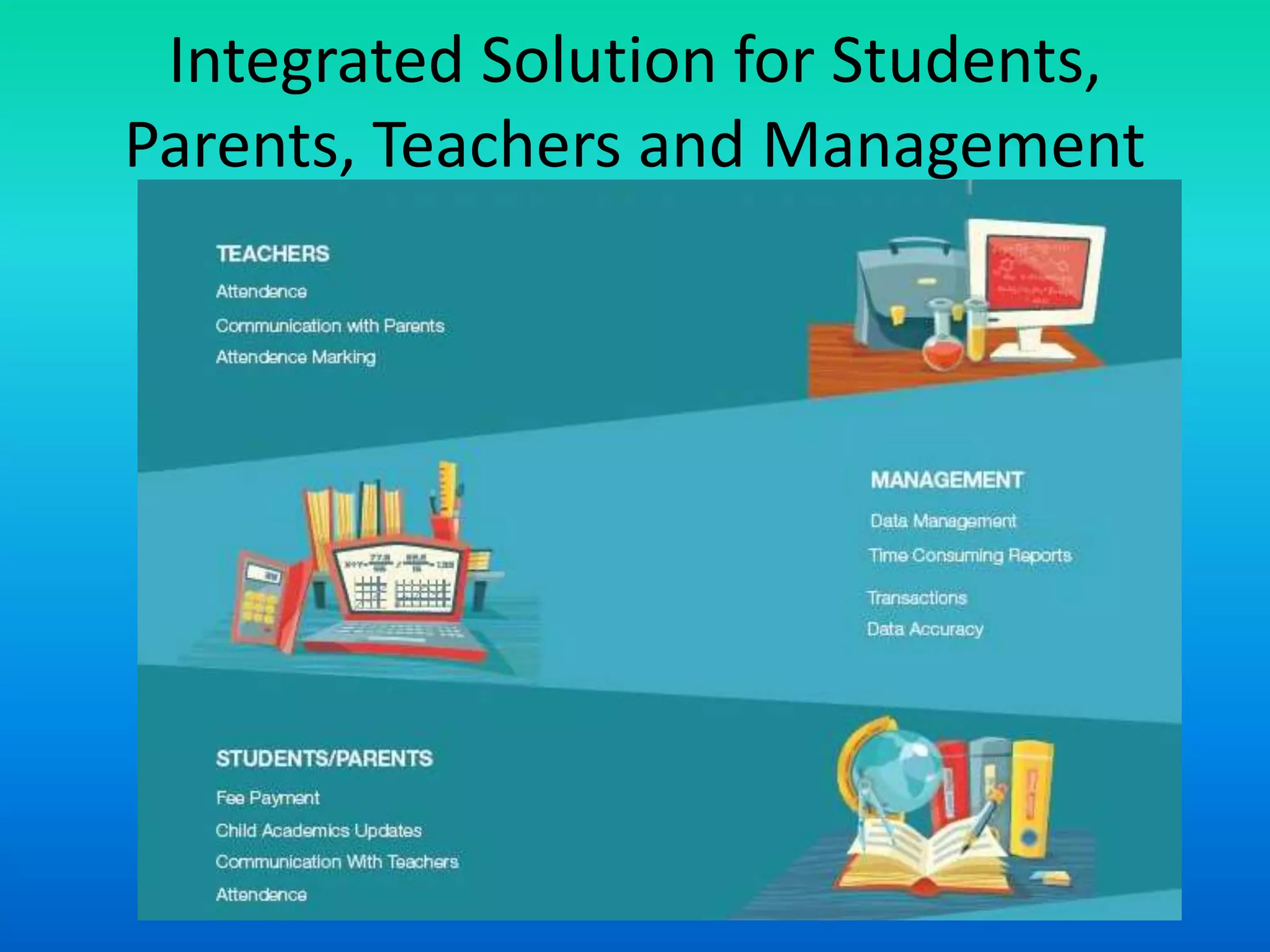
Integrated Solution for Students,
Parents, Teachers and Management
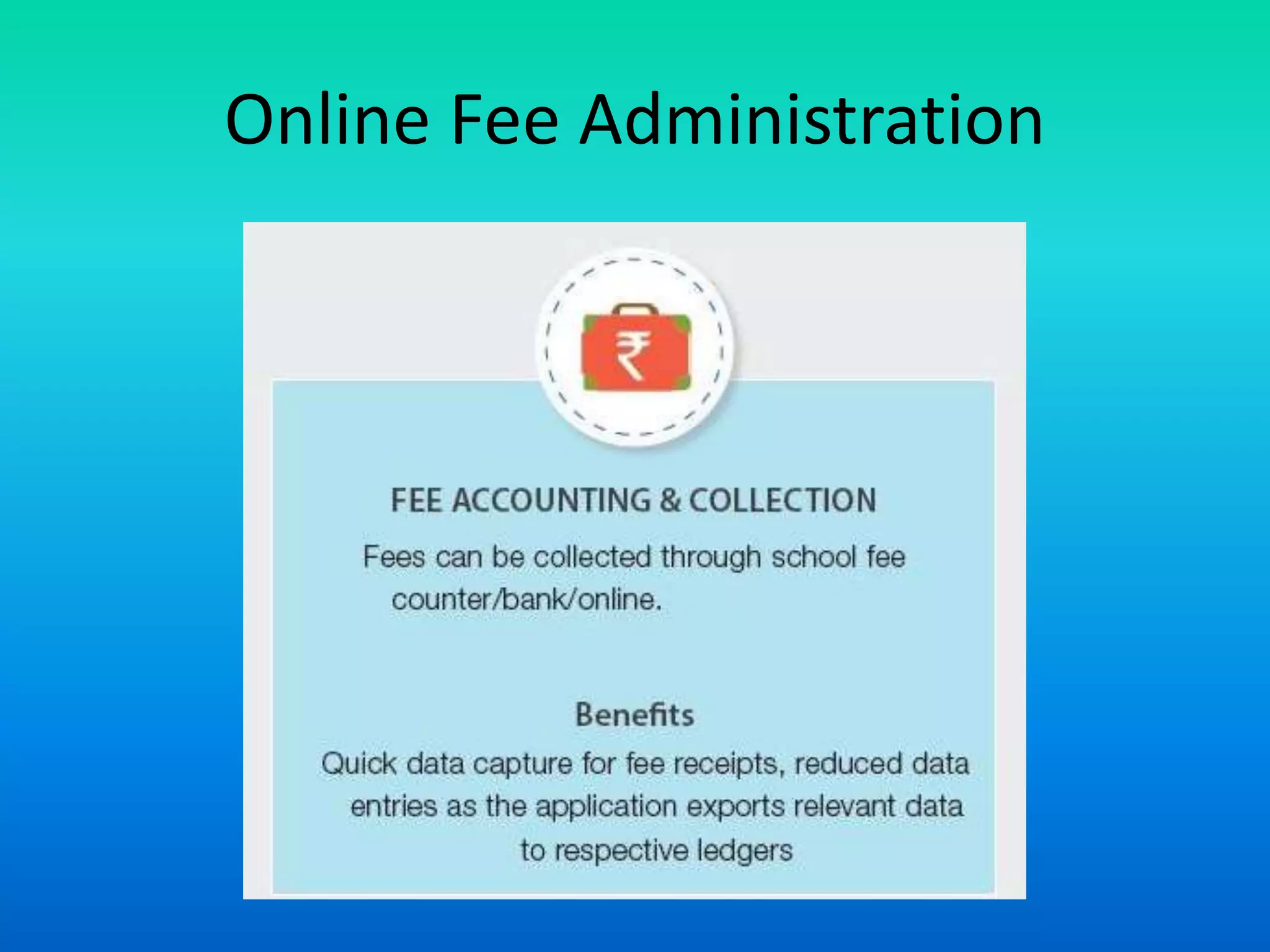
Online Fee Administration
Online Fee Collection
• Key Features of Online Fee Module
– Very Secure Double Authorization Accounting
– Online Fee Collection using payment gateway
– Offline Fee Collection is also available
– Complete Fee Management
– Partial Payment and Auto Calculation of Amount
Outstanding.
– Cheque Bounce charges management
– Several other unique fee management features
Other … (Fee Waivers) Management
• RTE / Staff Ward fee Waivers management
• Fine Collection / Fine Waiver
• Fee defaulter management
• Transport fee customization
• Automated defaulter tracking
• Automated alert to parents for non receipt of fee
• It will help parents by saving both time and cost
of travelling to school for payment.
• The school management gains by having a regular
and on time payment of fees
Assignment
• Explain the systems concept and its usage in
Software Development and Design
• Thank You

Software engineering 16 systems concepts in software design

  • 1.
    Software Engineering: 16 SystemsConcepts in Software Design Prof Neeraj Bhargava Vaibhav Khanna Department of Computer Science School of Engineering and Systems Sciences Maharshi Dayanand Saraswati University Ajmer
  • 2.
    What is asystem? • A system is a collection of entities or things (animate or inanimate) which receives certain inputs and is constrained to act upon them to produce certain outputs, with the objective of maximizing some functions of inputs and outputs. • Others define system as a complexity of elements in mutual interaction in such a way as to constrain action toward the accomplishment of the purposes for which the system exists. • Simply stated, a system is a set of interrelated elements that functions as a unit for a specific purpose. •
  • 3.
    Input Process OutputView • Within a system are inputs, process outputs. • Inputs are the human, materials, financial, or information resources used to produce a product or a service. • Through technology and administrative functions the inputs undergo a transformation process. • For Example :In school, the interaction between the students and teachers is part of the transformation or learning process by which students become educated citizens. • Process is what transforms input into output. It is also called throughput.
  • 4.
    Outputs and Feedback •Outputs include the organization’s products and services. Graduates as educated citizens are examples of outputs. • In the interrelationship between the input and output, feedback plays a very important function. • Feedback is the information concerning the outputs or the process of the organization may lead to changes both in the process and the future outputs. • Feedback is like a reaction a performer gets from the audience. • Similarly, the school system gents information from the environment or society as to how it has performed / Feedback tells whether a certain plan should be continued or not. For this reason, all educational development plans are made on a rolling basis, meaning, they are subject to modifications, revision, or changes depending on the feedback after some time of operation.
  • 5.
    Subsystem • In thestudy of a system, we can come across with the terms subsystem, and suprasystem • Subsystem is a small system within the big system. • It has its own purpose and is there for the purpose of the system. • It has its own parts and components which are determined by the overall purpose of the system for which it is a part. • The components of a subsystem work in an integrated or interrelated manner. • Subsystem is also called microsystem.
  • 6.
    Supra System • Suprasystem is the largest system that includes both the system and its subsystem. • The supra system has its subsystem such as the political system, educational system, cultural system and economic system. • Supra system is also called macro system.
  • 7.
    System Boundaries • Whenwe analyze a specific system, we have to consider what we call System Boundaries. • System Boundaries determine what is to be included or excluded from the system. • For example, the educational system may be defined by levels, that is, elementary, secondary, and tertiary level. • Any kind of system is always situated in a environment. Environment is what surrounds the organization which includes the social, political, and economic factors that impinge on the organization.
  • 8.
    Integrated Solution forStudents, Parents, Teachers and Management
  • 9.
  • 10.
    Online Fee Collection •Key Features of Online Fee Module – Very Secure Double Authorization Accounting – Online Fee Collection using payment gateway – Offline Fee Collection is also available – Complete Fee Management – Partial Payment and Auto Calculation of Amount Outstanding. – Cheque Bounce charges management – Several other unique fee management features
  • 11.
    Other … (FeeWaivers) Management • RTE / Staff Ward fee Waivers management • Fine Collection / Fine Waiver • Fee defaulter management • Transport fee customization • Automated defaulter tracking • Automated alert to parents for non receipt of fee • It will help parents by saving both time and cost of travelling to school for payment. • The school management gains by having a regular and on time payment of fees
  • 12.
    Assignment • Explain thesystems concept and its usage in Software Development and Design • Thank You