Clear View
• Soft Skills Are:
Skills, abilities and traits that
pertain to personality,
attitude, and behavior
• Soft Skills Are Not:
Formal or technical
knowledge
What Industry Wants
 Skill sets that include:



Oral and written
communication skill

Critical thinking
ability

Problem-solving
resourcefulness

Ability to work
productively on a team
Soft skill for successful career
• Soft skill is the ability
required and expected
from persons for finding
a suitable job, its
maintenance and
promotion
Importance of soft skill
• Soft skill are very important
 To handle interpersonal
relations
 To take appropriate decisions
 To communicate effectively
 To have good impression and
impact to gain professional
development
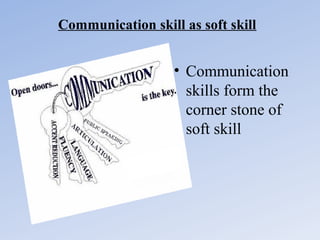
Communication skill as soft skill

• Communication
skills form the
corner stone of
soft skill
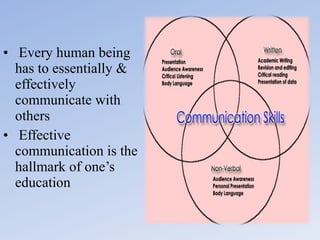
• Every human being
has to essentially &
effectively
communicate with
others
• Effective
communication is the
hallmark of one’s
education
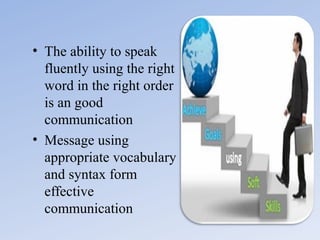
• The ability to speak
fluently using the right
word in the right order
is an good
communication
• Message using
appropriate vocabulary
and syntax form
effective
communication
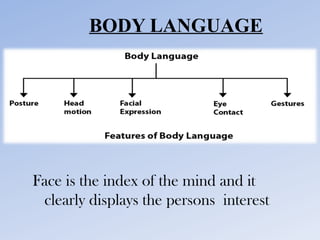
BODY LANGUAGE

Face is the index of the mind and it
clearly displays the persons interest
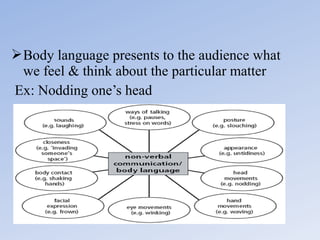
 Body language presents to the audience what
we feel & think about the particular matter
Ex: Nodding one’s head
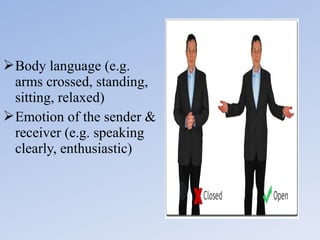
 Body language (e.g.
arms crossed, standing,
sitting, relaxed)
 Emotion of the sender &
receiver (e.g. speaking
clearly, enthusiastic)
Written communication Skill
 Writing evaluates a person’s
proficiency indications, spelling
grammar etc…
 Errors committed while writing
circulars, reports & agenda
considerably spoil the image of
the writer
 Good visual
presentation using
graphics, color, balanced
design layout- adds so
much to written
communication.
 Keep handouts and
other written materials
for your presentation.
Presentation Skills
 Presentation skills include
planning, preparation &
delivery of the message
 Making a formal speech is
one form of presentation
 Presentation skills can be
broadly categorized into
physical oral, & electronic
 Success in life depends on
presenting ideas in an
appropriate manners
 Look at the eyes of
audience & speak in a
natural, conversational
voice
 Appropriate voice will
make the presentation
effective and interesting.
 Ask for feed back from your
audience about your
presentation & change
accordingly
 In presentation especially,
stop occasionally to ask the
audience understand what
you have said
TEAM WORK
People of either gender, different age groups,
qualification, status & skills work as a team
with a common objective of accomplishing the
task
 The success of any organization largely
depends on in the coordinated efforts of its
employees
 It mainly refers to the agreeableness & cooperation among the team members
Professional ethics
Professional ethics is the need of the hour in
India
 When a person is at the work spot, he must
think of his work only
 He must put his heart & soul into the work
 Each employee is a organic part of the
organization & must strive to contribute his mite
to the successful functioning of the organization
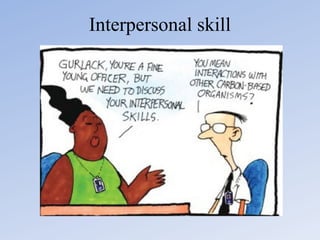
Interpersonal skill
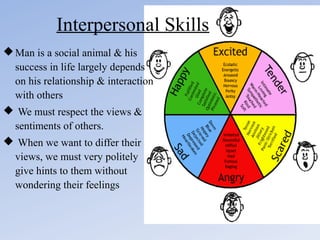
Interpersonal Skills
 Man is a social animal & his
success in life largely depends
on his relationship & interaction
with others
 We must respect the views &
sentiments of others.
 When we want to differ their
views, we must very politely
give hints to them without
wondering their feelings
Time Management
 Prioritize the work &
schedule your time
accordingly
 Impotent work should
be allotted more time &
taken up first
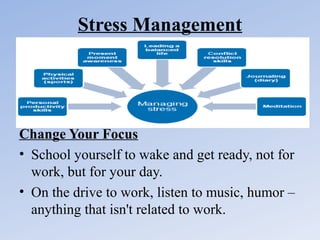
Stress Management

Change Your Focus
• School yourself to wake and get ready, not for
work, but for your day.
• On the drive to work, listen to music, humor –
anything that isn't related to work.
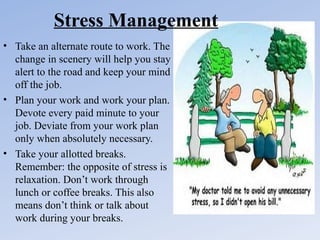
Stress Management
• Take an alternate route to work. The
change in scenery will help you stay
alert to the road and keep your mind
off the job.
• Plan your work and work your plan.
Devote every paid minute to your
job. Deviate from your work plan
only when absolutely necessary.
• Take your allotted breaks.
Remember: the opposite of stress is
relaxation. Don’t work through
lunch or coffee breaks. This also
means don’t think or talk about
work during your breaks.
Stress Management
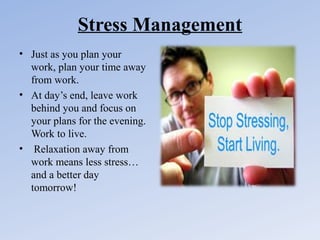
• Just as you plan your
work, plan your time away
from work.
• At day’s end, leave work
behind you and focus on
your plans for the evening.
Work to live.
• Relaxation away from
work means less stress…
and a better day
tomorrow!
Stress Management
 Instead of coffee, drink
water, juice, or electrolyte
infused drinks.
Dehydration often is the
cause of fatigue.
 Coffee and soft drinks
that contain caffeine may
seem to “keep you
going”, but in reality they
add to stress and don’t
keep your body hydrated.

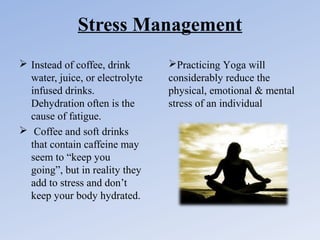
Practicing Yoga will
considerably reduce the
physical, emotional & mental
stress of an individual
Leadership
skills
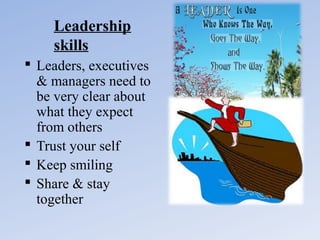
 Leaders, executives
& managers need to
be very clear about
what they expect
from others
 Trust your self
 Keep smiling
 Share & stay
together
Leadership skills
 Always learn new things
 Accept responsibility for
your self & your actions
 Look at problems &
challenges
 Be grateful always

Men make history and not the other way around. In
periods where there is no leadership, society stands still.
Progress occurs when courageous, skillful leaders seize the
opportunity to change things for the better.
Thank You

Softskill

  • 2.
    Clear View • SoftSkills Are: Skills, abilities and traits that pertain to personality, attitude, and behavior • Soft Skills Are Not: Formal or technical knowledge
  • 3.
    What Industry Wants Skill sets that include:  Oral and written communication skill  Critical thinking ability  Problem-solving resourcefulness  Ability to work productively on a team
  • 4.
    Soft skill forsuccessful career • Soft skill is the ability required and expected from persons for finding a suitable job, its maintenance and promotion
  • 5.
    Importance of softskill • Soft skill are very important  To handle interpersonal relations  To take appropriate decisions  To communicate effectively  To have good impression and impact to gain professional development
  • 6.
    Communication skill assoft skill • Communication skills form the corner stone of soft skill
  • 7.
    • Every humanbeing has to essentially & effectively communicate with others • Effective communication is the hallmark of one’s education
  • 9.
    • The abilityto speak fluently using the right word in the right order is an good communication • Message using appropriate vocabulary and syntax form effective communication
  • 10.
    BODY LANGUAGE Face isthe index of the mind and it clearly displays the persons interest
  • 11.
     Body languagepresents to the audience what we feel & think about the particular matter Ex: Nodding one’s head
  • 12.
     Body language(e.g. arms crossed, standing, sitting, relaxed)  Emotion of the sender & receiver (e.g. speaking clearly, enthusiastic)
  • 13.
    Written communication Skill Writing evaluates a person’s proficiency indications, spelling grammar etc…  Errors committed while writing circulars, reports & agenda considerably spoil the image of the writer
  • 14.
     Good visual presentationusing graphics, color, balanced design layout- adds so much to written communication.  Keep handouts and other written materials for your presentation.
  • 15.
    Presentation Skills  Presentationskills include planning, preparation & delivery of the message  Making a formal speech is one form of presentation  Presentation skills can be broadly categorized into physical oral, & electronic
  • 16.
     Success inlife depends on presenting ideas in an appropriate manners  Look at the eyes of audience & speak in a natural, conversational voice  Appropriate voice will make the presentation effective and interesting.
  • 17.
     Ask forfeed back from your audience about your presentation & change accordingly  In presentation especially, stop occasionally to ask the audience understand what you have said
  • 18.
    TEAM WORK People ofeither gender, different age groups, qualification, status & skills work as a team with a common objective of accomplishing the task  The success of any organization largely depends on in the coordinated efforts of its employees  It mainly refers to the agreeableness & cooperation among the team members
  • 19.
    Professional ethics Professional ethicsis the need of the hour in India  When a person is at the work spot, he must think of his work only  He must put his heart & soul into the work  Each employee is a organic part of the organization & must strive to contribute his mite to the successful functioning of the organization
  • 20.
  • 21.
    Interpersonal Skills  Manis a social animal & his success in life largely depends on his relationship & interaction with others  We must respect the views & sentiments of others.  When we want to differ their views, we must very politely give hints to them without wondering their feelings
  • 22.
    Time Management  Prioritizethe work & schedule your time accordingly  Impotent work should be allotted more time & taken up first
  • 23.
    Stress Management Change YourFocus • School yourself to wake and get ready, not for work, but for your day. • On the drive to work, listen to music, humor – anything that isn't related to work.
  • 24.
    Stress Management • Takean alternate route to work. The change in scenery will help you stay alert to the road and keep your mind off the job. • Plan your work and work your plan. Devote every paid minute to your job. Deviate from your work plan only when absolutely necessary. • Take your allotted breaks. Remember: the opposite of stress is relaxation. Don’t work through lunch or coffee breaks. This also means don’t think or talk about work during your breaks.
  • 25.
    Stress Management • Justas you plan your work, plan your time away from work. • At day’s end, leave work behind you and focus on your plans for the evening. Work to live. • Relaxation away from work means less stress… and a better day tomorrow!
  • 26.
    Stress Management  Insteadof coffee, drink water, juice, or electrolyte infused drinks. Dehydration often is the cause of fatigue.  Coffee and soft drinks that contain caffeine may seem to “keep you going”, but in reality they add to stress and don’t keep your body hydrated. Practicing Yoga will considerably reduce the physical, emotional & mental stress of an individual
  • 27.
    Leadership skills  Leaders, executives &managers need to be very clear about what they expect from others  Trust your self  Keep smiling  Share & stay together
  • 28.
    Leadership skills  Alwayslearn new things  Accept responsibility for your self & your actions  Look at problems & challenges  Be grateful always Men make history and not the other way around. In periods where there is no leadership, society stands still. Progress occurs when courageous, skillful leaders seize the opportunity to change things for the better.
  • 29.