Topic 2 Labelling theory
THE SOCIAL CONSTRUCTION OF
CRIME
JIMMY SAVILLE
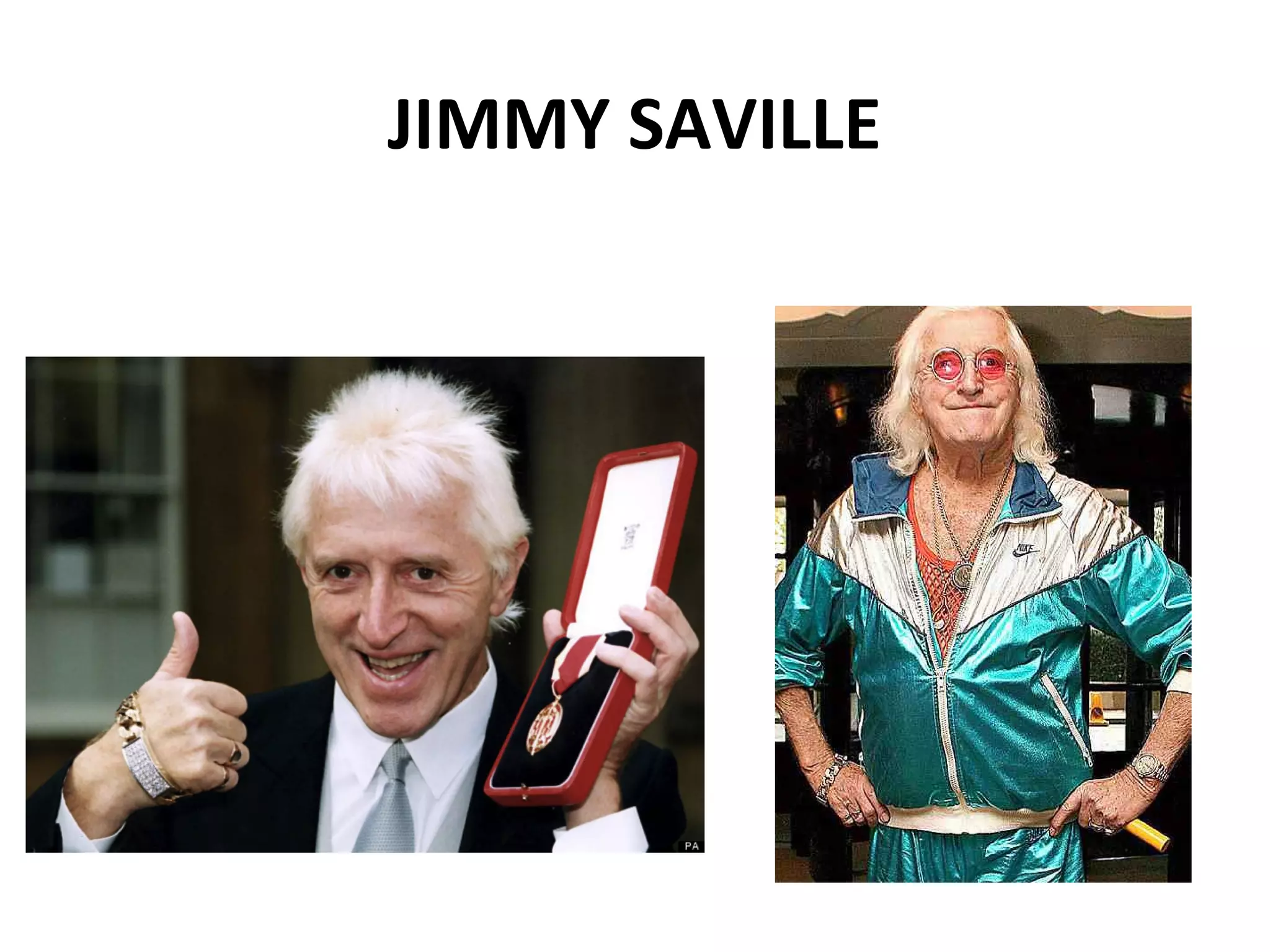
Gary Glitter
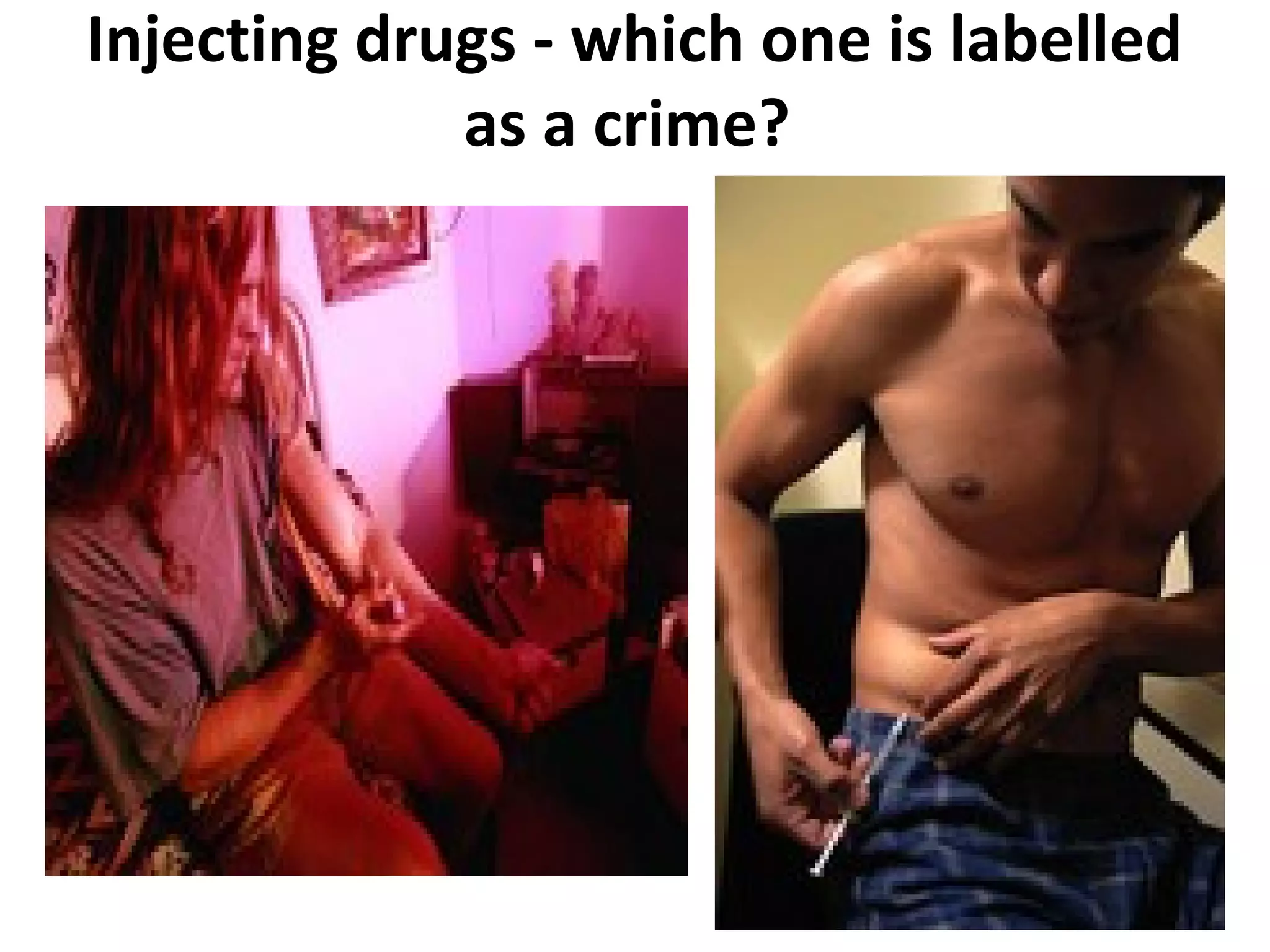
Injecting drugs - which one is labelled
as a crime?
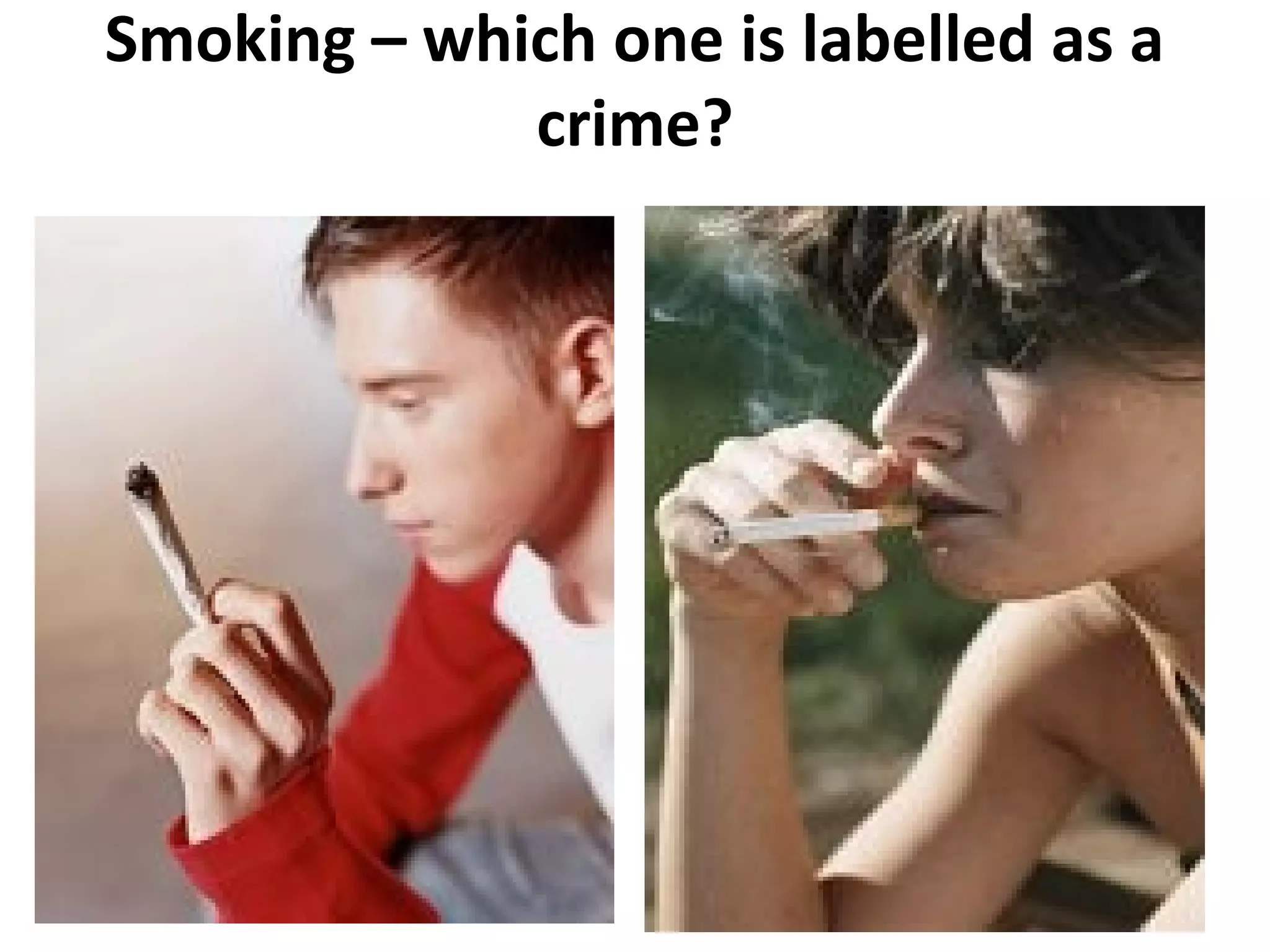
Smoking – which one is labelled as a
crime?
LABELLING THEORY Problem
Takers• The theories we have looked at so far are
‘problem takers’ – they take the official
definitions of crime and criminals for granted
• People are either criminal or not, crimes are
acts which break the law, criminals are people
who do not obey the law
• There is one theory we have looked at so far
which questions this, which one is it?
• The theories we have looked at look for the
causes of crime – why do people resort to
crime?
LABELLING THEORY
Takes a different approach – ask how and why
certain acts and certain people come to be
labelled as criminal or deviant, and what
effects this has on those who are so labelled
Crime and deviance are social
constructions
To the criminologists we have looked at so far
( Merton and others) crime is mainly the
result of wider external social forces such as
blocked opportunity structures
Labelling theorists take a different or social
constructionist approach (interactionism and
phenomenology) – crime and deviance is the
result of interactions between individuals and
groups in society
LABELLING THEORY
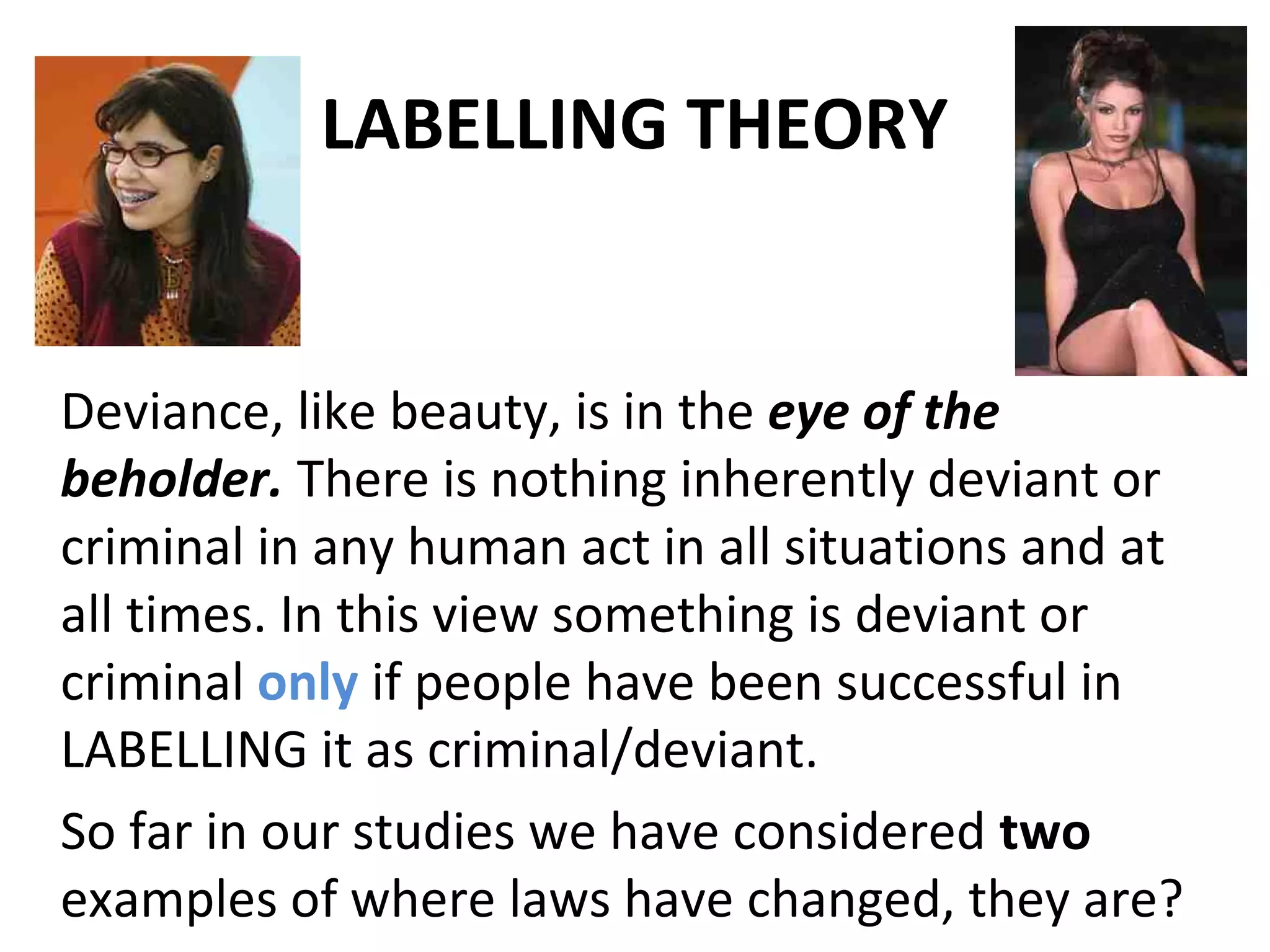
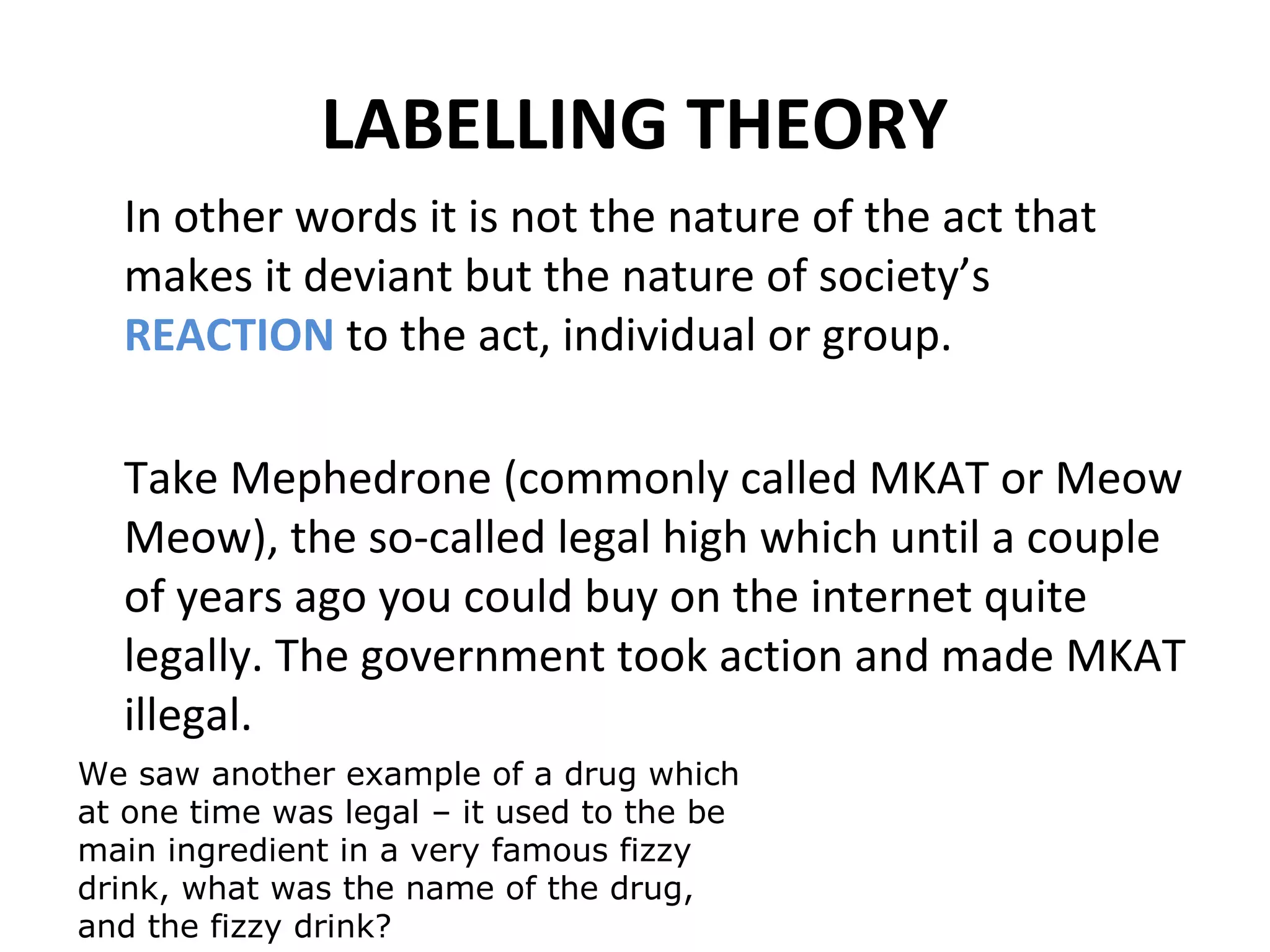
Deviance, like beauty, is in the eye of the
beholder. There is nothing inherently deviant or
criminal in any human act in all situations and at
all times. In this view something is deviant or
criminal only if people have been successful in
LABELLING it as criminal/deviant.
So far in our studies we have considered two
examples of where laws have changed, they are?
LABELLING THEORY
In other words it is not the nature of the act that
makes it deviant but the nature of society’s
REACTION to the act, individual or group.
Take Mephedrone (commonly called MKAT or Meow
Meow), the so-called legal high which until a couple
of years ago you could buy on the internet quite
legally. The government took action and made MKAT
illegal.
We saw another example of a drug which
at one time was legal – it used to the be
main ingredient in a very famous fizzy
drink, what was the name of the drug,
and the fizzy drink?
LABELLING THEORY
Another good example is the criminalisation of
marijuana use in 1937 in America. Becker argues that
this was only done to increase the power of the
Federal Bureau of Narcotics who campaigned for the
law change. Although they claimed that the law
change was needed because of the harmful effects
on young people of marijuana use it was really done
to further the power and influence of the Bureau of
Narcotics. Therefore rather than the inherent
harmfulness of the act the law originated from the
power of a group to redefine that behaviour as
unacceptable
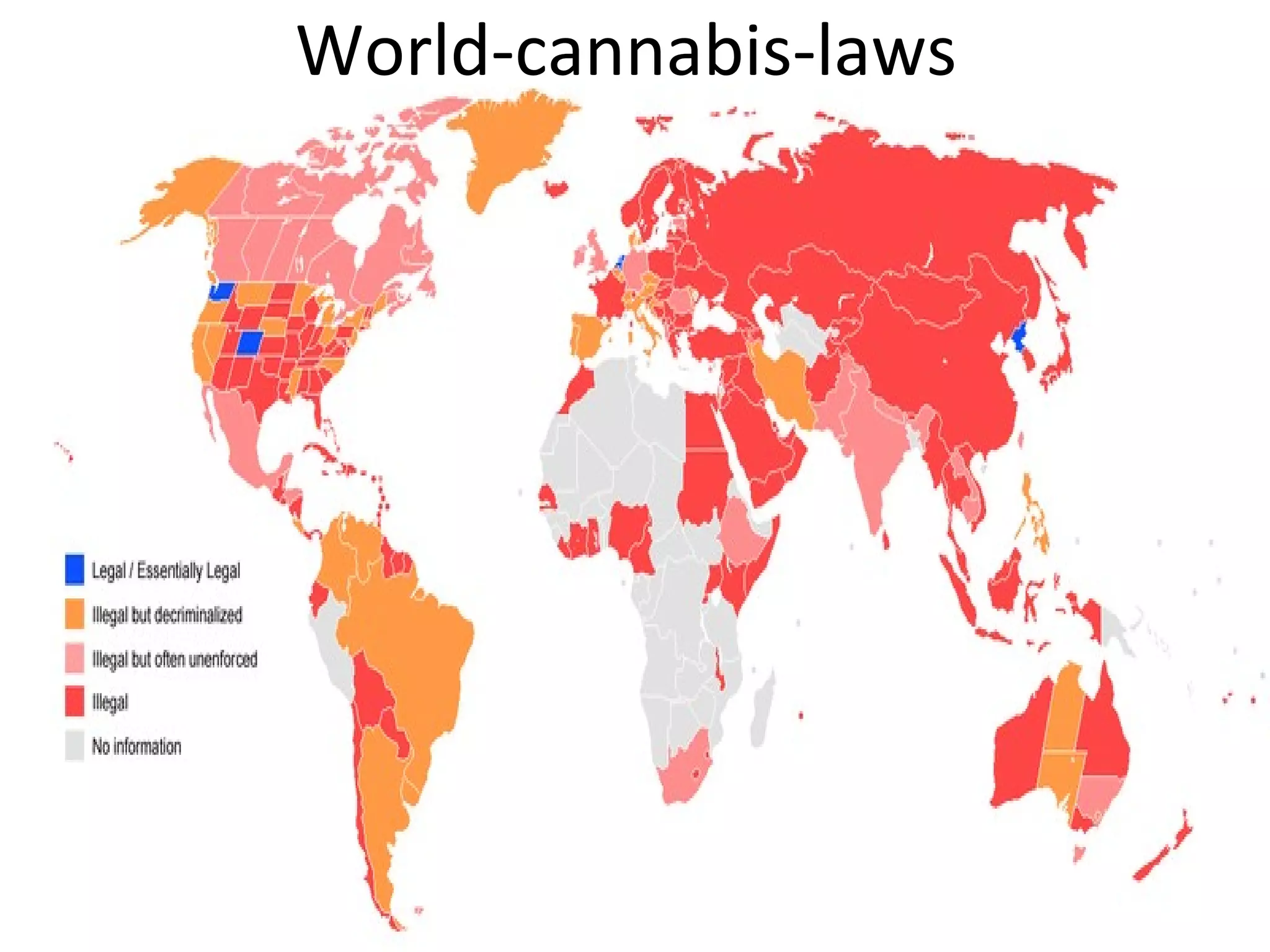
When was marijuana made illegal in the UK?
World-cannabis-laws
The founder of Labelling theory
was Howard Becker – he wrote a
famous book called The Outsiders
‘Social groups create deviance by making the
rules whose infraction constitutes deviance
and by applying those rules to particular
people and labelling them as outsiders’
(Howard Becker 1963)
Becker
There is nothing intrinsically criminal about
any act, it only becomes so when the label is
tagged to it.
‘deviant behaviour is behaviour that people
so label’
Injecting heroin into an arm is not inherently
deviant. It just depends on how this act has
come to be defined by the agencies of social
control. In fact it was legal, even celebrated by
some in Britain, till what date?
How and why rules and laws get
made
Moral entrepreneurs may lead moral ‘crusades’
to change the law, or to criminalise certain
activities
Becker argues that this invariably has two
effects:
1 The creation of a new group of ‘outsiders’ –
outlaws/folk devils/deviants who break the law
2 The creation of expansion of a social control
agency (such as the police) to enforce the law
and impose labels on offenders
Platt (1969)
• Argues that the idea of ‘juvenile delinquency’
was originally created as a result of a
campaign by upper class Victorian moral
entrepreneurs aimed at protecting young
people at risk
• This established ‘juveniles’ as a separate
category of offender with their own courts
• This enabled the state to extend its powers
beyond criminal offences involving the young
into so-called ‘status offences’ like truancy
Who gets labelled?
• Not everyone who commits an offence is punished
for it. Whether a person is arrested, charged and
convicted depends on factors like:
• Their interactions with agencies of social control
(police, courts etc)
• Appearance and background
• Situation and circumstances of the offence
• This led to labelling theorists investigating how the
laws are applied and enforced...and their studies
showed that agencies of social control like the police
are more likely to label certain groups as deviant or
criminal. Can you think which groups they might be?
Piliavin & Briar (1964)
• Found that police decisions to arrest a youth were
mainly based on physical cues (appearance) like
dress and manner from which they made
judgements about the youth’s character
• What do we call this process?
• Decisions were also based on gender, class and
ethnicity, as well as time and place e.g. Those
stopped late at night in ‘rough’ areas were more
likely to be arrested
• Also a study of ASBOs found they were
disproportionately used against ethnic minorities
Cicourel
• Answer the questions on your sheet by
reading the section on page 81-2:
• Cicourel – the negotiation of justice (page 81)
SUMMARY
Labelling Theory challenges traditional theories
by turning traditional ideas on their head and
considering three questions:
Q1 Why is some behaviour defined as criminal
or deviant in some contexts but not in others?
Q2 Why are some individuals or groups more
likely to be defined as deviant?
Q3 How do the responses of the agencies of
social control effect individuals future actions?
In response to Q3 How do the responses of the agencies
of social control effect individuals future actions?
• See if you can order Becker’s 5 stage process –
a process in which labelling can lead to MORE
crime and deviance because of the responses
of the social control agencies
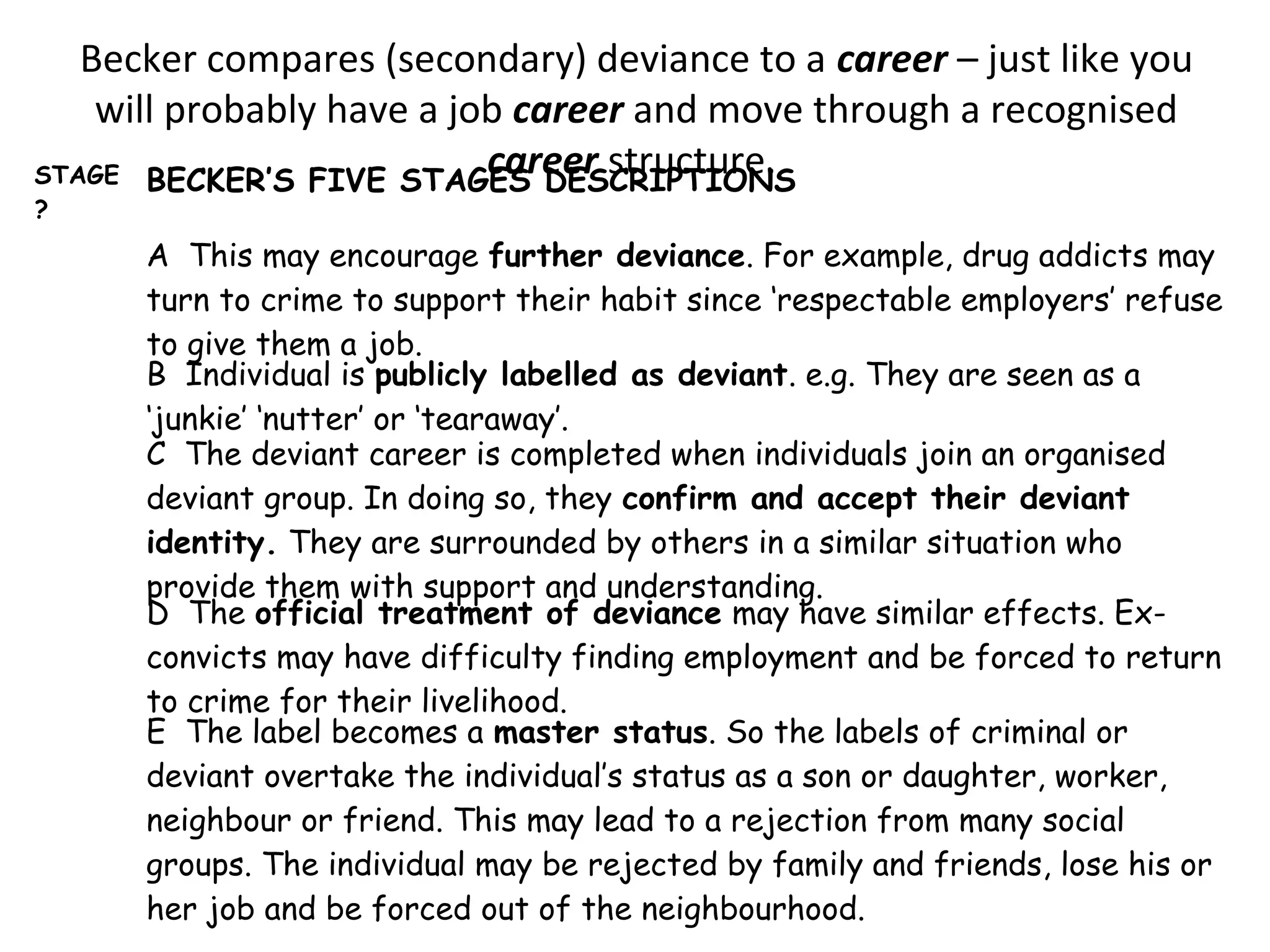
Becker compares (secondary) deviance to a career – just like you
will probably have a job career and move through a recognised
career structure.STAGE
?
BECKER’S FIVE STAGES DESCRIPTIONS
A This may encourage further deviance. For example, drug addicts may
turn to crime to support their habit since ‘respectable employers’ refuse
to give them a job.
B Individual is publicly labelled as deviant. e.g. They are seen as a
‘junkie’ ‘nutter’ or ‘tearaway’.
C The deviant career is completed when individuals join an organised
deviant group. In doing so, they confirm and accept their deviant
identity. They are surrounded by others in a similar situation who
provide them with support and understanding.
D The official treatment of deviance may have similar effects. Ex-
convicts may have difficulty finding employment and be forced to return
to crime for their livelihood.
E The label becomes a master status. So the labels of criminal or
deviant overtake the individual’s status as a son or daughter, worker,
neighbour or friend. This may lead to a rejection from many social
groups. The individual may be rejected by family and friends, lose his or
her job and be forced out of the neighbourhood.
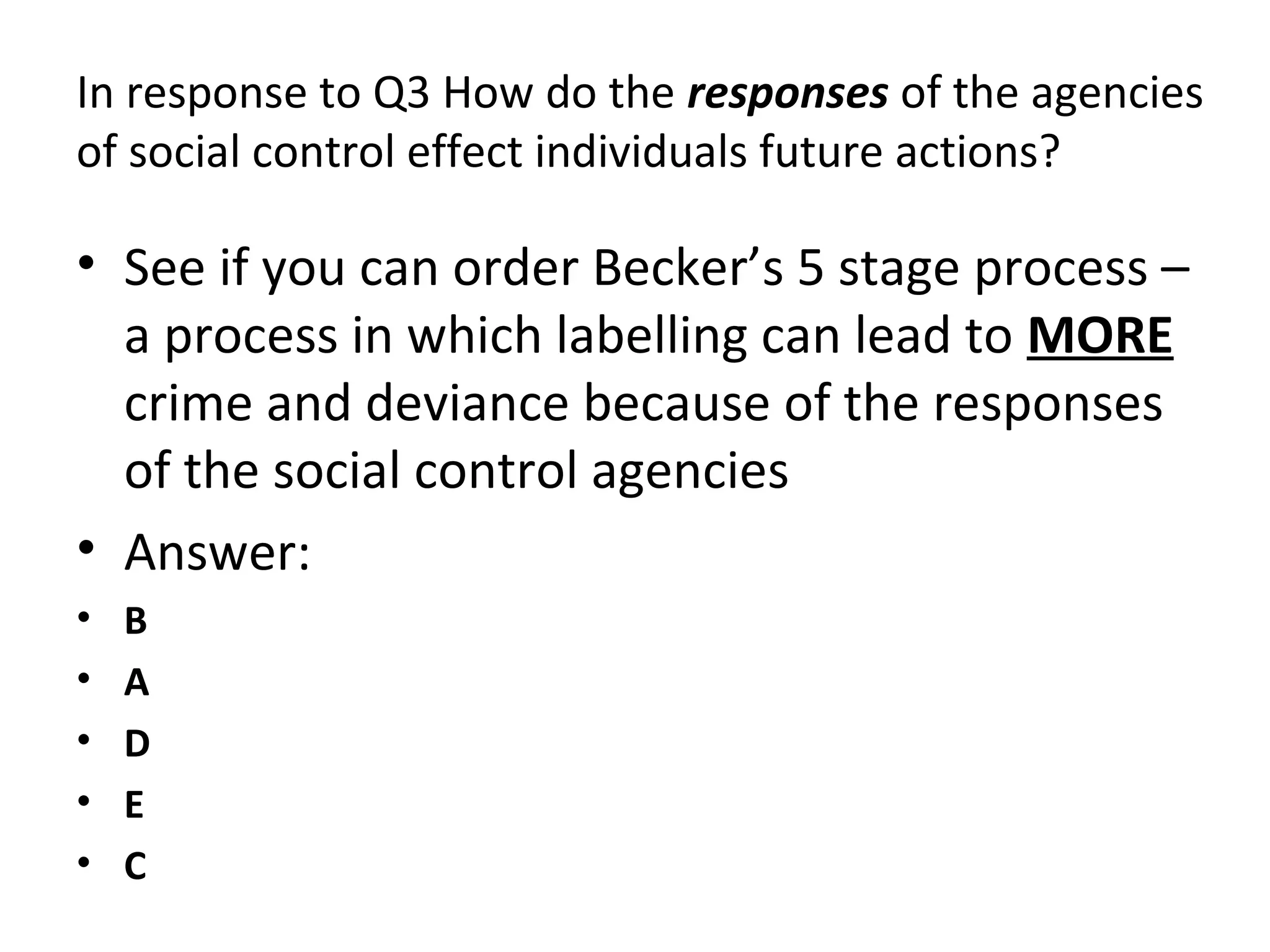
In response to Q3 How do the responses of the agencies
of social control effect individuals future actions?
• See if you can order Becker’s 5 stage process –
a process in which labelling can lead to MORE
crime and deviance because of the responses
of the social control agencies
• Answer:
• B
• A
• D
• E
• C

Sociology labelling theory 1

  • 1.
    Topic 2 Labellingtheory THE SOCIAL CONSTRUCTION OF CRIME
  • 2.
  • 3.
  • 4.
    Injecting drugs -which one is labelled as a crime?
  • 5.
    Smoking – whichone is labelled as a crime?
  • 6.
    LABELLING THEORY Problem Takers•The theories we have looked at so far are ‘problem takers’ – they take the official definitions of crime and criminals for granted • People are either criminal or not, crimes are acts which break the law, criminals are people who do not obey the law • There is one theory we have looked at so far which questions this, which one is it? • The theories we have looked at look for the causes of crime – why do people resort to crime?
  • 7.
    LABELLING THEORY Takes adifferent approach – ask how and why certain acts and certain people come to be labelled as criminal or deviant, and what effects this has on those who are so labelled
  • 8.
    Crime and devianceare social constructions To the criminologists we have looked at so far ( Merton and others) crime is mainly the result of wider external social forces such as blocked opportunity structures Labelling theorists take a different or social constructionist approach (interactionism and phenomenology) – crime and deviance is the result of interactions between individuals and groups in society
  • 9.
    LABELLING THEORY Deviance, likebeauty, is in the eye of the beholder. There is nothing inherently deviant or criminal in any human act in all situations and at all times. In this view something is deviant or criminal only if people have been successful in LABELLING it as criminal/deviant. So far in our studies we have considered two examples of where laws have changed, they are?
  • 10.
    LABELLING THEORY In otherwords it is not the nature of the act that makes it deviant but the nature of society’s REACTION to the act, individual or group. Take Mephedrone (commonly called MKAT or Meow Meow), the so-called legal high which until a couple of years ago you could buy on the internet quite legally. The government took action and made MKAT illegal. We saw another example of a drug which at one time was legal – it used to the be main ingredient in a very famous fizzy drink, what was the name of the drug, and the fizzy drink?
  • 11.
    LABELLING THEORY Another goodexample is the criminalisation of marijuana use in 1937 in America. Becker argues that this was only done to increase the power of the Federal Bureau of Narcotics who campaigned for the law change. Although they claimed that the law change was needed because of the harmful effects on young people of marijuana use it was really done to further the power and influence of the Bureau of Narcotics. Therefore rather than the inherent harmfulness of the act the law originated from the power of a group to redefine that behaviour as unacceptable When was marijuana made illegal in the UK?
  • 12.
  • 13.
    The founder ofLabelling theory was Howard Becker – he wrote a famous book called The Outsiders ‘Social groups create deviance by making the rules whose infraction constitutes deviance and by applying those rules to particular people and labelling them as outsiders’ (Howard Becker 1963)
  • 14.
    Becker There is nothingintrinsically criminal about any act, it only becomes so when the label is tagged to it. ‘deviant behaviour is behaviour that people so label’ Injecting heroin into an arm is not inherently deviant. It just depends on how this act has come to be defined by the agencies of social control. In fact it was legal, even celebrated by some in Britain, till what date?
  • 15.
    How and whyrules and laws get made Moral entrepreneurs may lead moral ‘crusades’ to change the law, or to criminalise certain activities Becker argues that this invariably has two effects: 1 The creation of a new group of ‘outsiders’ – outlaws/folk devils/deviants who break the law 2 The creation of expansion of a social control agency (such as the police) to enforce the law and impose labels on offenders
  • 16.
    Platt (1969) • Arguesthat the idea of ‘juvenile delinquency’ was originally created as a result of a campaign by upper class Victorian moral entrepreneurs aimed at protecting young people at risk • This established ‘juveniles’ as a separate category of offender with their own courts • This enabled the state to extend its powers beyond criminal offences involving the young into so-called ‘status offences’ like truancy
  • 17.
    Who gets labelled? •Not everyone who commits an offence is punished for it. Whether a person is arrested, charged and convicted depends on factors like: • Their interactions with agencies of social control (police, courts etc) • Appearance and background • Situation and circumstances of the offence • This led to labelling theorists investigating how the laws are applied and enforced...and their studies showed that agencies of social control like the police are more likely to label certain groups as deviant or criminal. Can you think which groups they might be?
  • 18.
    Piliavin & Briar(1964) • Found that police decisions to arrest a youth were mainly based on physical cues (appearance) like dress and manner from which they made judgements about the youth’s character • What do we call this process? • Decisions were also based on gender, class and ethnicity, as well as time and place e.g. Those stopped late at night in ‘rough’ areas were more likely to be arrested • Also a study of ASBOs found they were disproportionately used against ethnic minorities
  • 19.
    Cicourel • Answer thequestions on your sheet by reading the section on page 81-2: • Cicourel – the negotiation of justice (page 81)
  • 20.
    SUMMARY Labelling Theory challengestraditional theories by turning traditional ideas on their head and considering three questions: Q1 Why is some behaviour defined as criminal or deviant in some contexts but not in others? Q2 Why are some individuals or groups more likely to be defined as deviant? Q3 How do the responses of the agencies of social control effect individuals future actions?
  • 21.
    In response toQ3 How do the responses of the agencies of social control effect individuals future actions? • See if you can order Becker’s 5 stage process – a process in which labelling can lead to MORE crime and deviance because of the responses of the social control agencies
  • 22.
    Becker compares (secondary)deviance to a career – just like you will probably have a job career and move through a recognised career structure.STAGE ? BECKER’S FIVE STAGES DESCRIPTIONS A This may encourage further deviance. For example, drug addicts may turn to crime to support their habit since ‘respectable employers’ refuse to give them a job. B Individual is publicly labelled as deviant. e.g. They are seen as a ‘junkie’ ‘nutter’ or ‘tearaway’. C The deviant career is completed when individuals join an organised deviant group. In doing so, they confirm and accept their deviant identity. They are surrounded by others in a similar situation who provide them with support and understanding. D The official treatment of deviance may have similar effects. Ex- convicts may have difficulty finding employment and be forced to return to crime for their livelihood. E The label becomes a master status. So the labels of criminal or deviant overtake the individual’s status as a son or daughter, worker, neighbour or friend. This may lead to a rejection from many social groups. The individual may be rejected by family and friends, lose his or her job and be forced out of the neighbourhood.
  • 23.
    In response toQ3 How do the responses of the agencies of social control effect individuals future actions? • See if you can order Becker’s 5 stage process – a process in which labelling can lead to MORE crime and deviance because of the responses of the social control agencies • Answer: • B • A • D • E • C