Community based Approach of
curriculum
Prepared by
Priti Kalsia
Assistant Professor
Malwa Central college of education, Ludhiana
Meaning
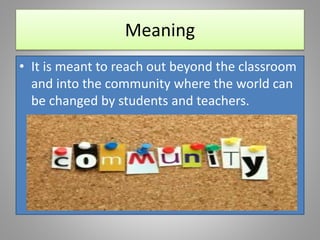
• It is meant to reach out beyond the classroom
and into the community where the world can
be changed by students and teachers.
The goal of the curriculum
• The curriculum is based on societal issues
• and the goal of the curriculum is to explore
and solve those issues.
• “Young people are at a formative, idealistic
stage of their life, and they need to learn that
they can and should make a difference in the
world” (Ellis, 74).
Activist model
• This is very much an activist model, where
students are encouraged to be leading
activists in their community where life
problems, community affairs, and real-world
problems exist.
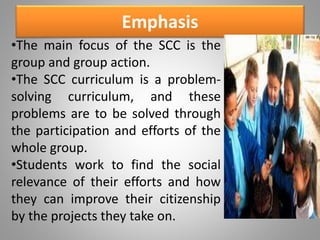
Emphasis
•The main focus of the SCC is the
group and group action.
•The SCC curriculum is a problem-
solving curriculum, and these
problems are to be solved through
the participation and efforts of the
whole group.
•Students work to find the social
relevance of their efforts and how
they can improve their citizenship
by the projects they take on.
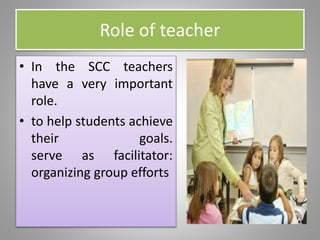
Role of teacher
• In the SCC teachers
have a very important
role.
• to help students achieve
their goals.
serve as facilitator:
organizing group efforts
Role of teacher
• helps children develop their social skills
• In creating a climate for collaboration and
team building.
• responsible for turning their class into a
problem-solving unit.
• responsible for making connections with
community members
Student’s role in the Society-Centered
Curriculum
• Students are responsible for being aware of
the world around them
• issues that impact their life.
• Cooperation
• Team work
• Active participation
• To make the community a better place
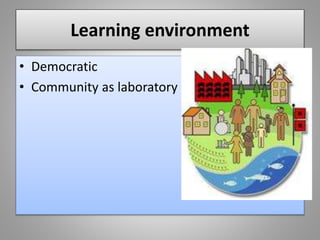
Learning environment
• Democratic
• Community as laboratory
Assessments in the Society-Centered
Curriculum
• focus around the students’ efforts and
outcomes
• on their ability to apply their knowledge and
skills
• Types of SCC assessment include: written work,
observations, presentations, informal discussions
and questions, project designs, and final products.
• Teachers are not the only ones involved in the
assessment process, students and peers are also
actively involved.
• Students are given the chance to create their own
rubric which the teacher can use to assess their
learning.
Benefits
• Increases students awareness of social issues
and current events
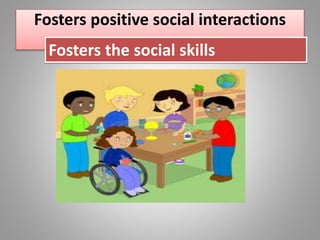
Fosters positive social interactions
Fosters the social skills
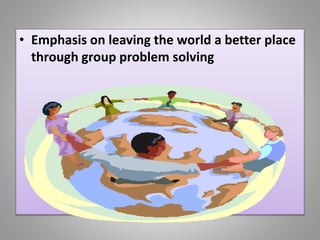
• Emphasis on leaving the world a better place
through group problem solving
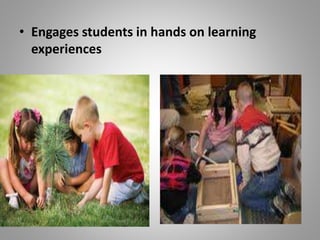
• Engages students in hands on learning
experiences
Society centered approach in curriculum

Society centered approach in curriculum

  • 1.
    Community based Approachof curriculum Prepared by Priti Kalsia Assistant Professor Malwa Central college of education, Ludhiana
  • 2.
    Meaning • It ismeant to reach out beyond the classroom and into the community where the world can be changed by students and teachers.
  • 3.
    The goal ofthe curriculum • The curriculum is based on societal issues • and the goal of the curriculum is to explore and solve those issues. • “Young people are at a formative, idealistic stage of their life, and they need to learn that they can and should make a difference in the world” (Ellis, 74).
  • 4.
    Activist model • Thisis very much an activist model, where students are encouraged to be leading activists in their community where life problems, community affairs, and real-world problems exist.
  • 5.
    Emphasis •The main focusof the SCC is the group and group action. •The SCC curriculum is a problem- solving curriculum, and these problems are to be solved through the participation and efforts of the whole group. •Students work to find the social relevance of their efforts and how they can improve their citizenship by the projects they take on.
  • 6.
    Role of teacher •In the SCC teachers have a very important role. • to help students achieve their goals. serve as facilitator: organizing group efforts
  • 7.
    Role of teacher •helps children develop their social skills • In creating a climate for collaboration and team building. • responsible for turning their class into a problem-solving unit. • responsible for making connections with community members
  • 8.
    Student’s role inthe Society-Centered Curriculum • Students are responsible for being aware of the world around them • issues that impact their life. • Cooperation • Team work • Active participation • To make the community a better place
  • 9.
  • 10.
    Assessments in theSociety-Centered Curriculum • focus around the students’ efforts and outcomes • on their ability to apply their knowledge and skills
  • 11.
    • Types ofSCC assessment include: written work, observations, presentations, informal discussions and questions, project designs, and final products. • Teachers are not the only ones involved in the assessment process, students and peers are also actively involved. • Students are given the chance to create their own rubric which the teacher can use to assess their learning.
  • 12.
    Benefits • Increases studentsawareness of social issues and current events
  • 13.
    Fosters positive socialinteractions Fosters the social skills
  • 14.
    • Emphasis onleaving the world a better place through group problem solving
  • 15.
    • Engages studentsin hands on learning experiences