COHERE 2012

     A 21st Century Learning
          Environment?
                 -
Digital Engagement for the “New”
           Millennials?


                                   1
Net Generation?
                   Millenial?
 Digital Native?
        Grown Up Digital?

21st Century Learner?
                                2
Questioning the cliché…
     Are students “connected”?


Are they “connected” to their learning?


Are their classes “connected” to them?
                                    3
Evolution …

  The “Student Learning Environment
               Survey”
Genesis:
    ECAR
   (Educause Center for Applied Research)
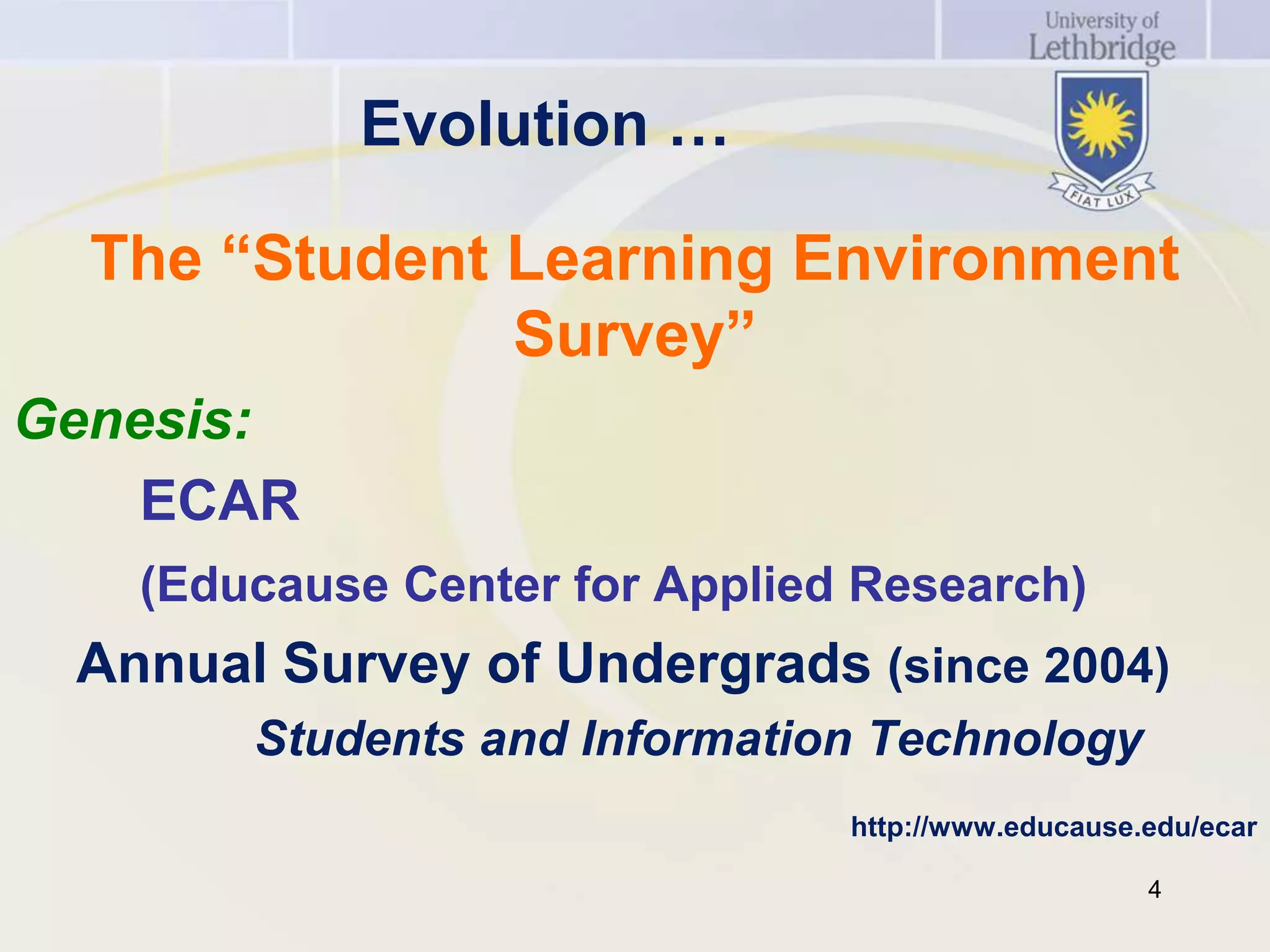
 Annual Survey of Undergrads (since 2004)
       Students and Information Technology
                               http://www.educause.edu/ecar

                                                   4
Evolution …

  The “Student Learning Environment
               Survey”
Adaptation:
    University of Lethbridge
    (Curriculum Re-Development Centre)
  Annual Survey of Undergrads (since 2009)
    … about the “Learning” not the “Technology”

                                            5
Evolution …

Contingency

   Context

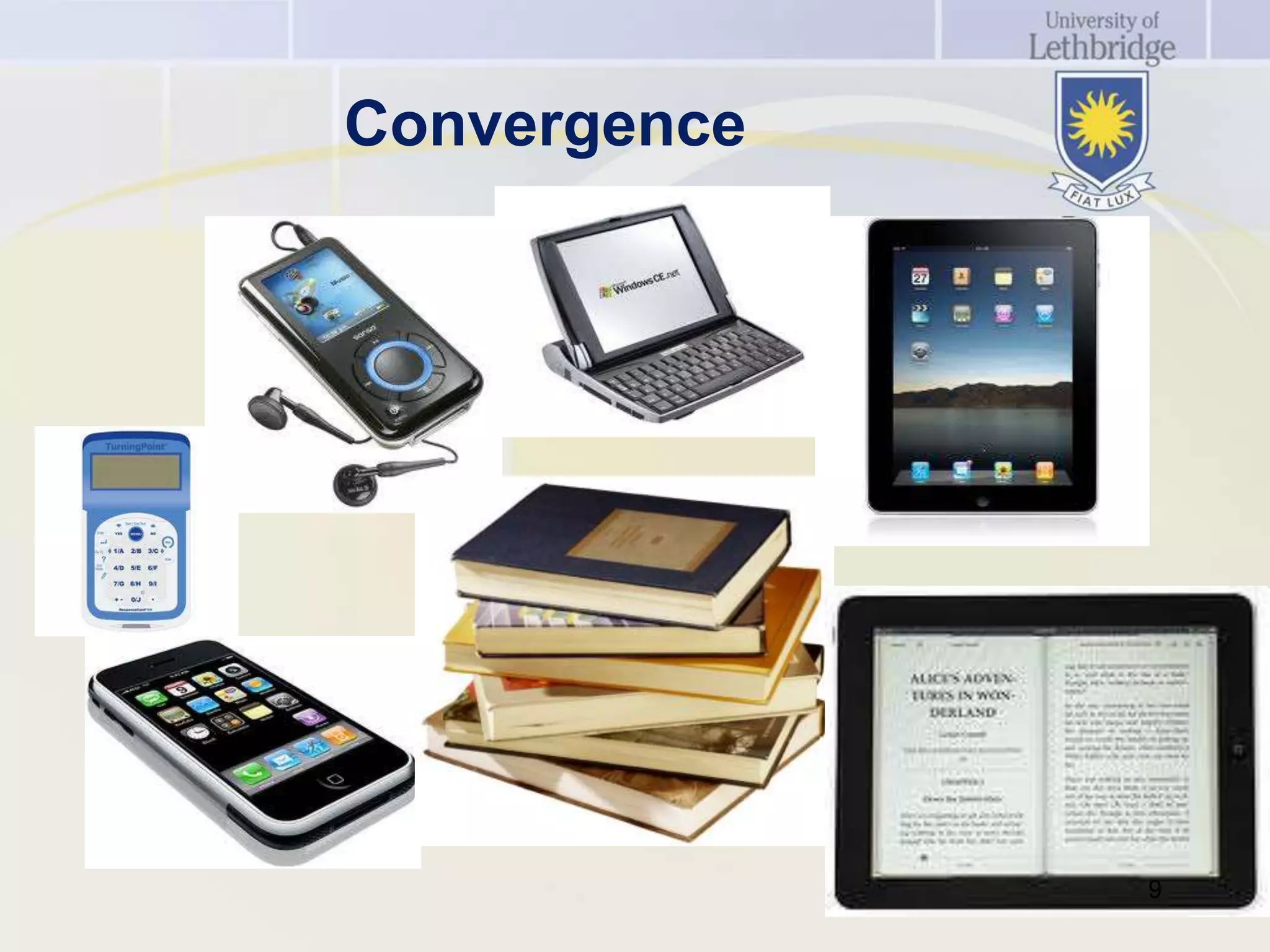
Convergence

              6
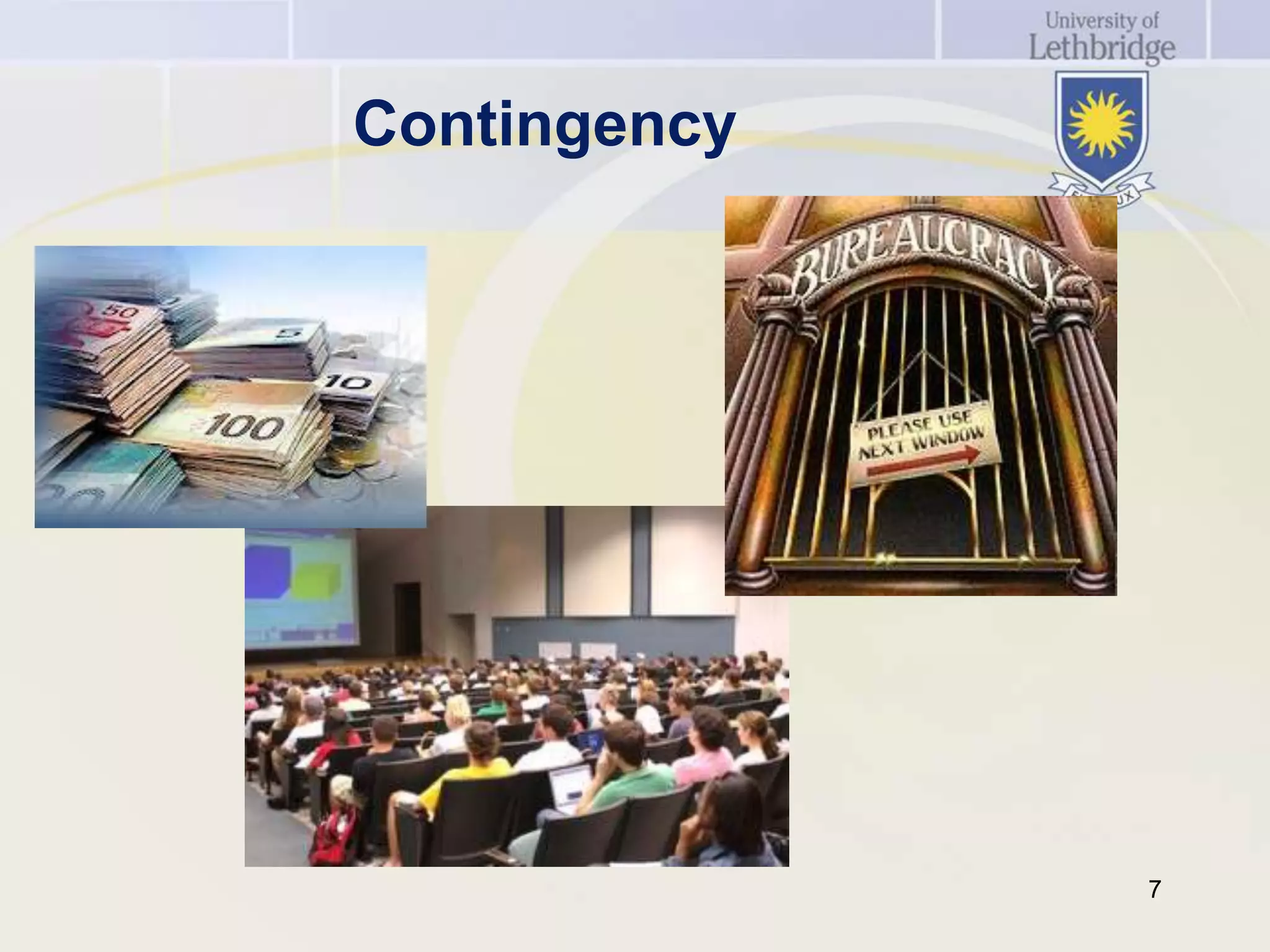
Contingency


              7
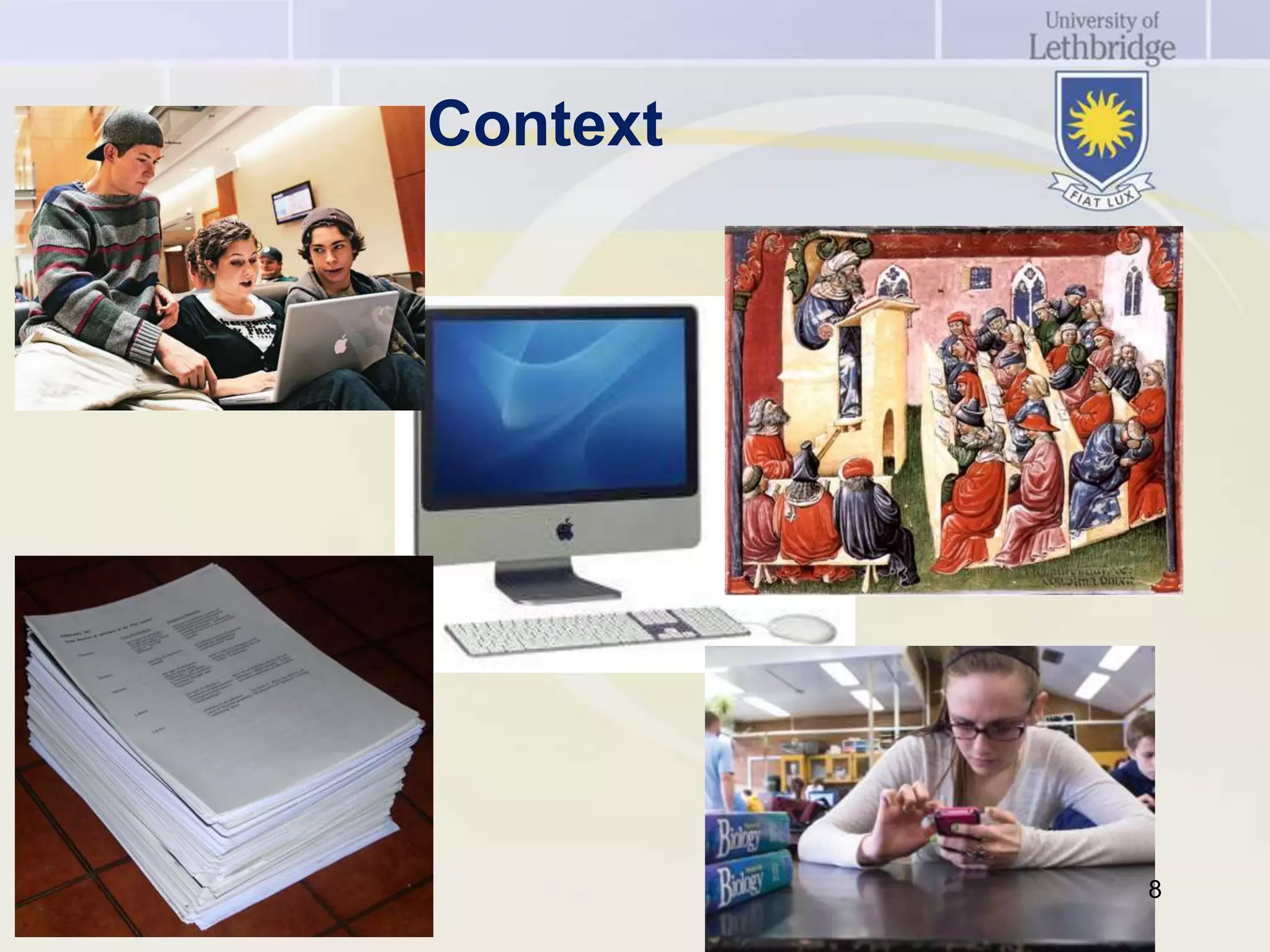
Context


          8
Convergence


              9
Evolving Foci …

2009                      2010
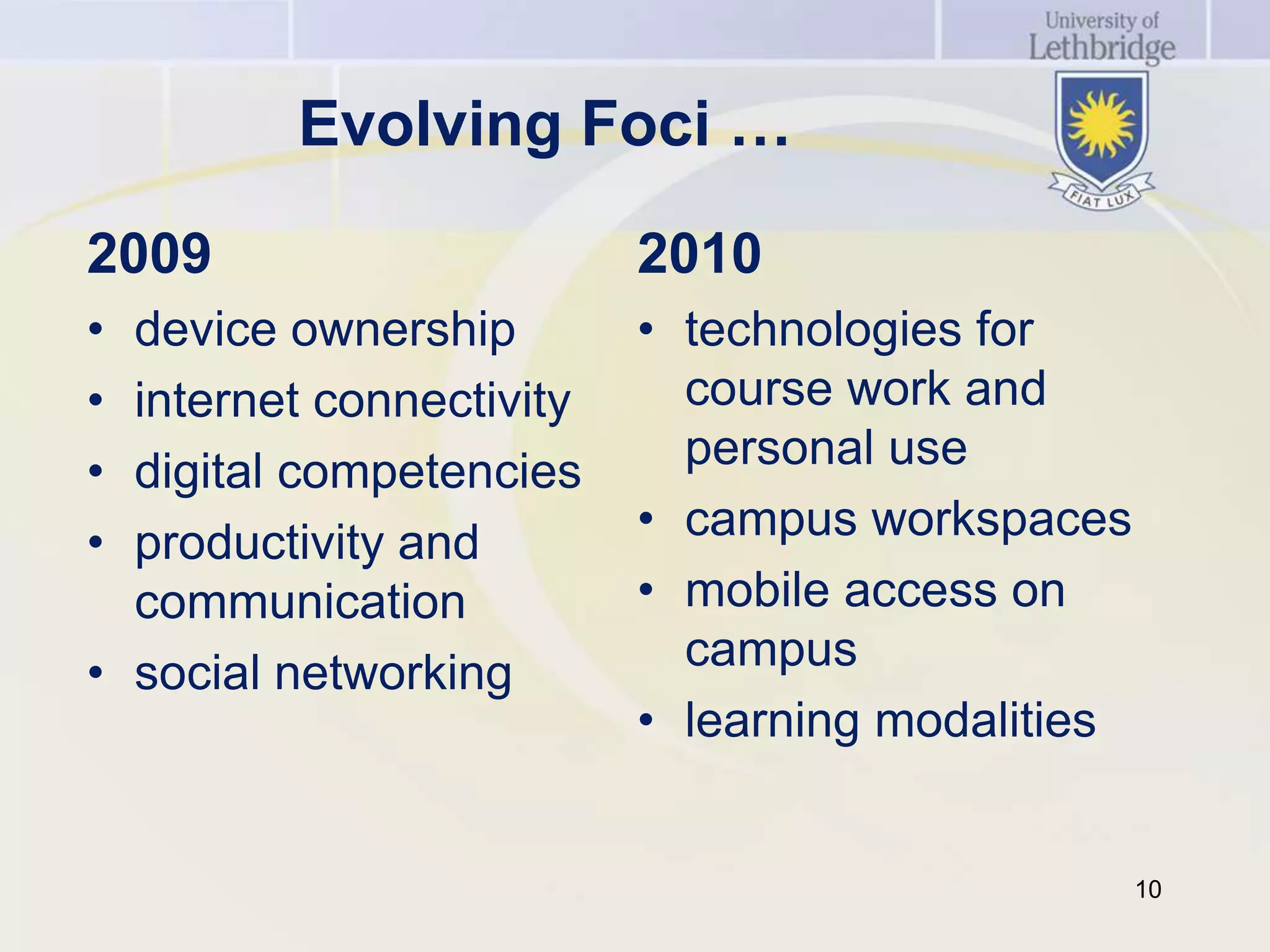
• device ownership        • technologies for
• internet connectivity     course work and
• digital competencies      personal use
• productivity and        • campus workspaces
  communication           • mobile access on
• social networking         campus
                          • learning modalities


                                                  10
Evolving Foci …

2011                     2012 (in progress)
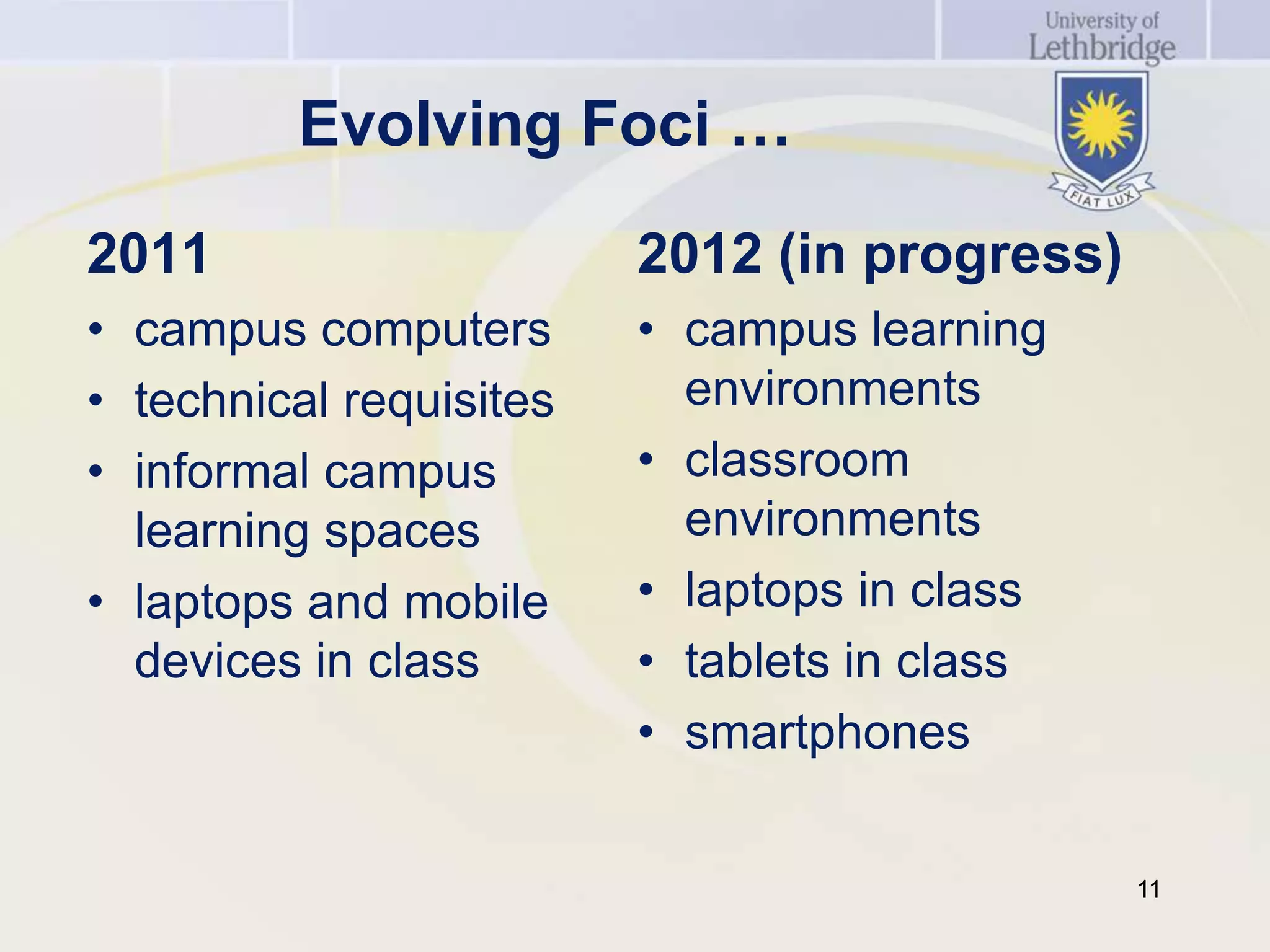
• campus computers       • campus learning
• technical requisites     environments
• informal campus        • classroom
  learning spaces          environments
• laptops and mobile     • laptops in class
  devices in class       • tablets in class
                         • smartphones


                                              11
2009, 2010, 2011


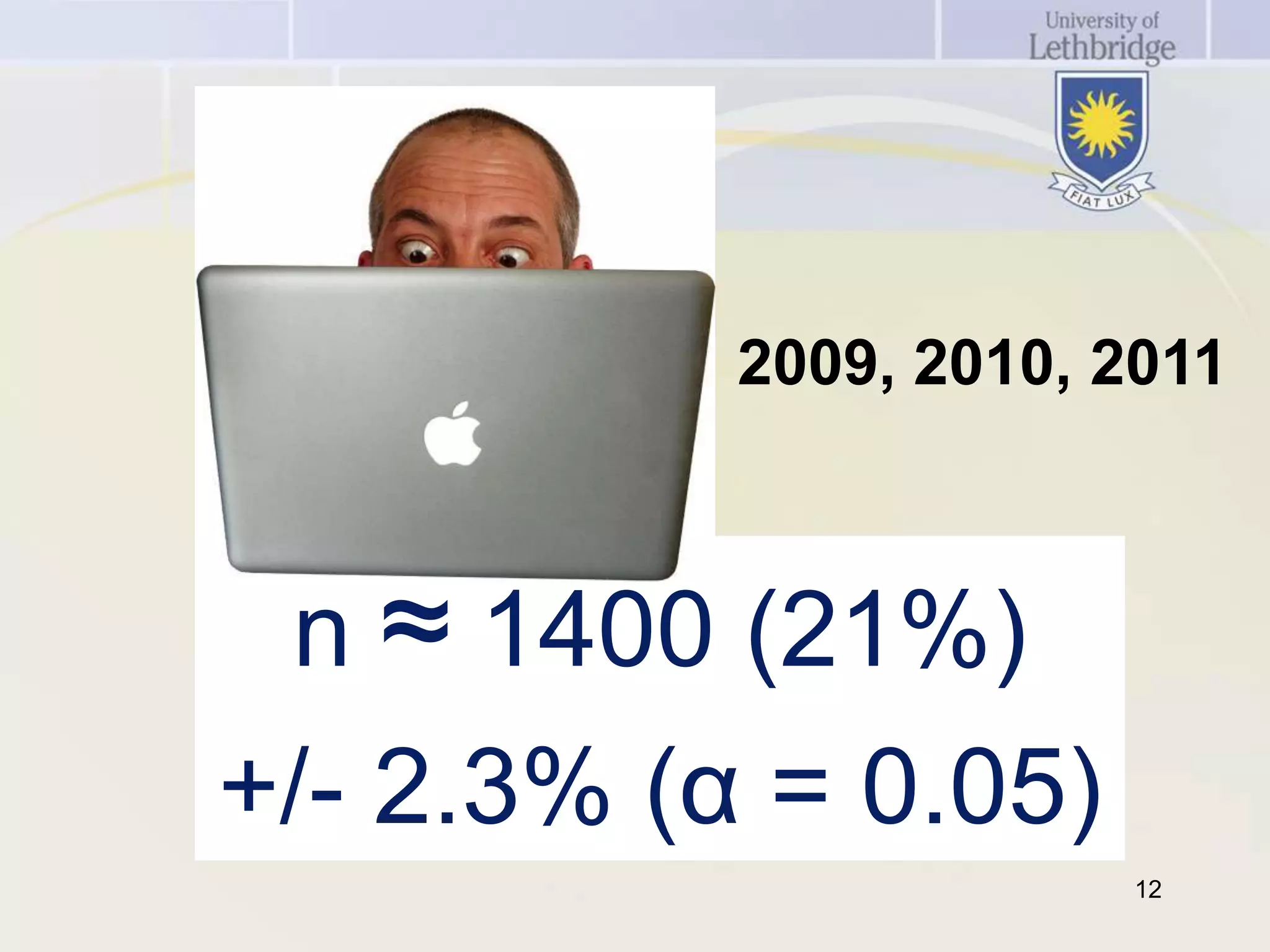
 n ≈ 1400 (21%)
+/- 2.3% (α = 0.05)
                       12
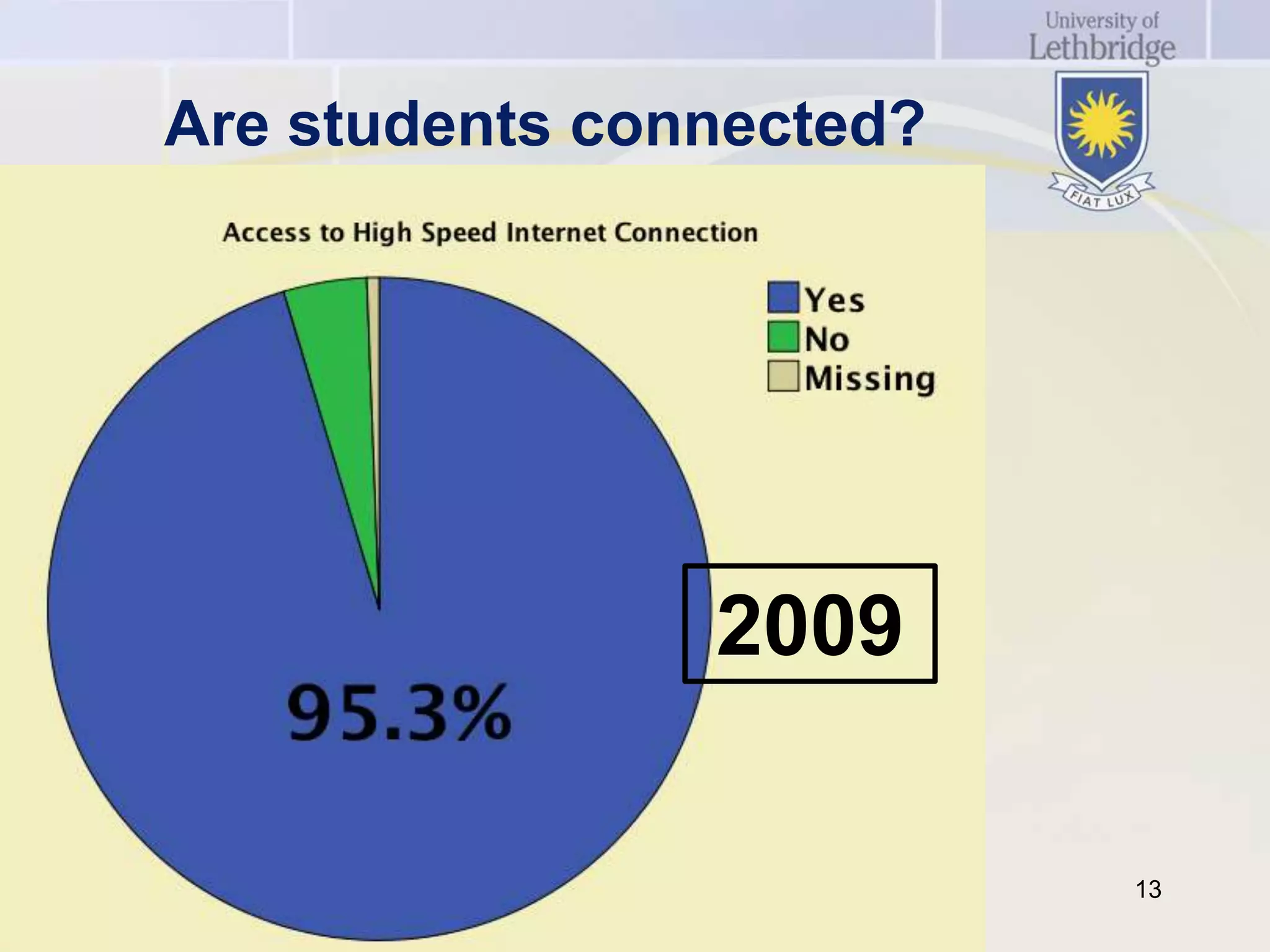
Are students connected?


                2009

                          13
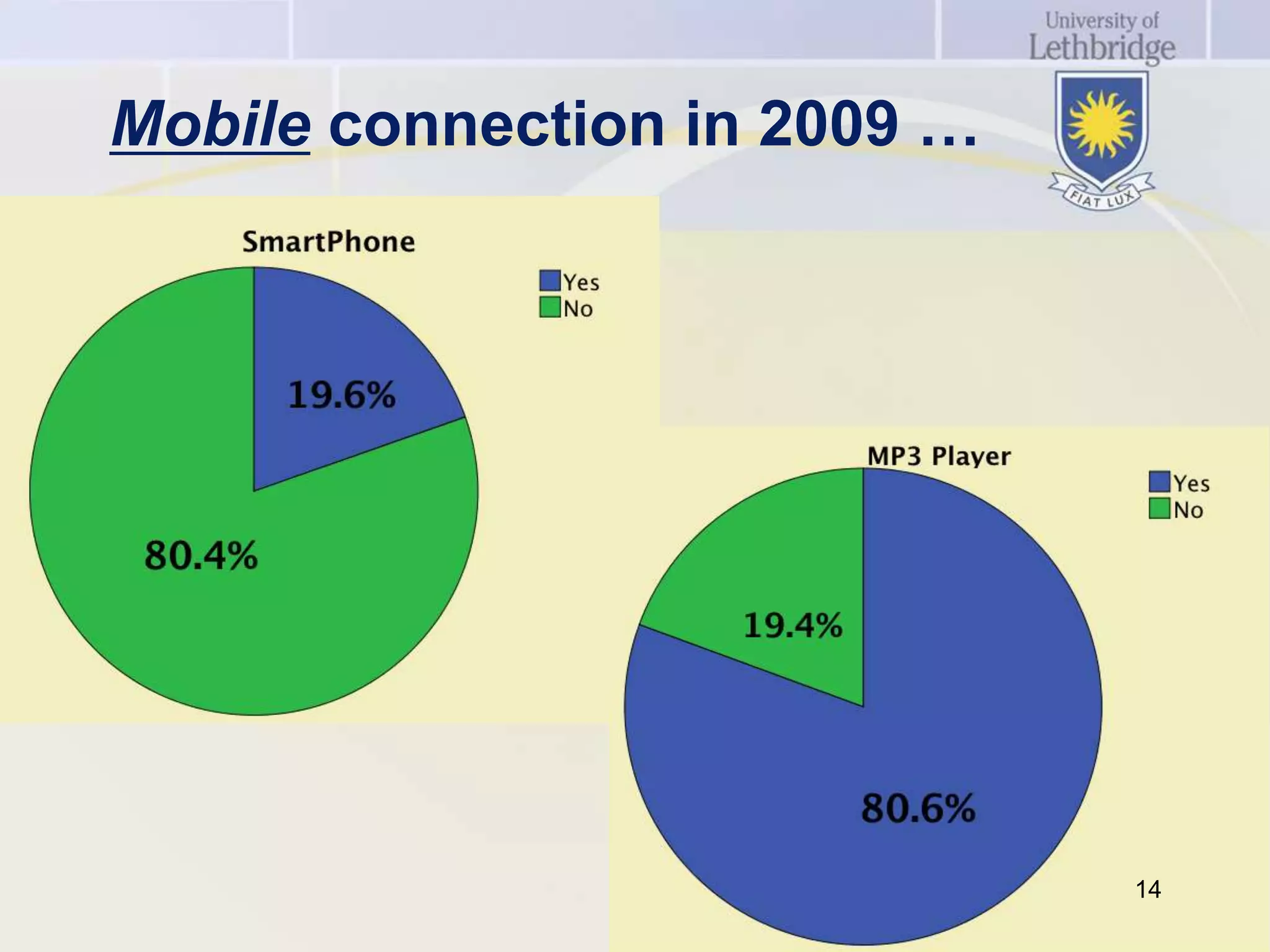
Mobile connection in 2009 …


                              14
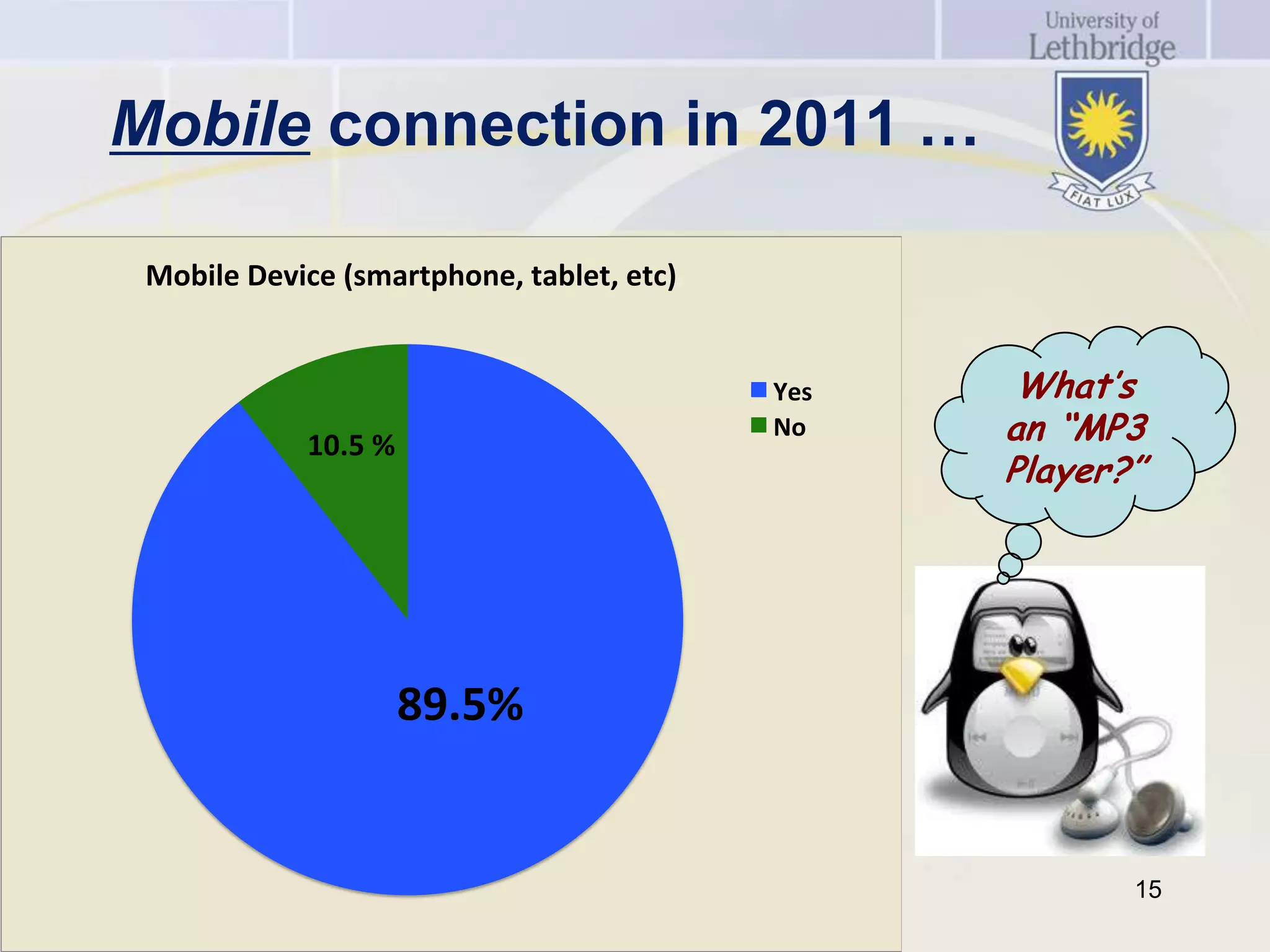
Mobile connection in 2011 …

 Mobile Device (smartphone, tablet, etc)


                                           Yes    What’s
            10.5 %
                                           No    an “MP3
                                                 Player?”


                     89.5%


                                                        15
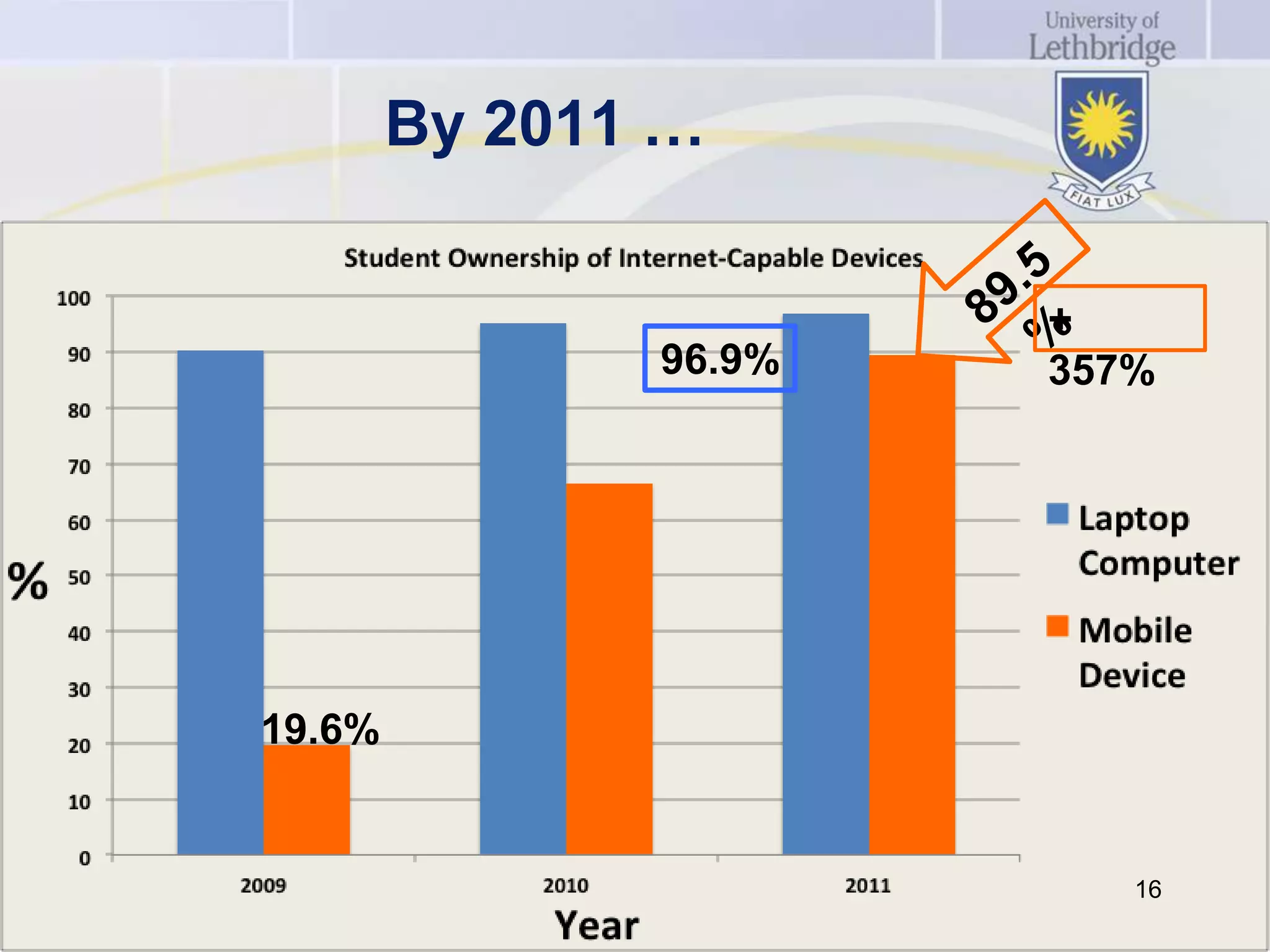
By 2011 …

                       +
               96.9%   357%


19.6%


                          16
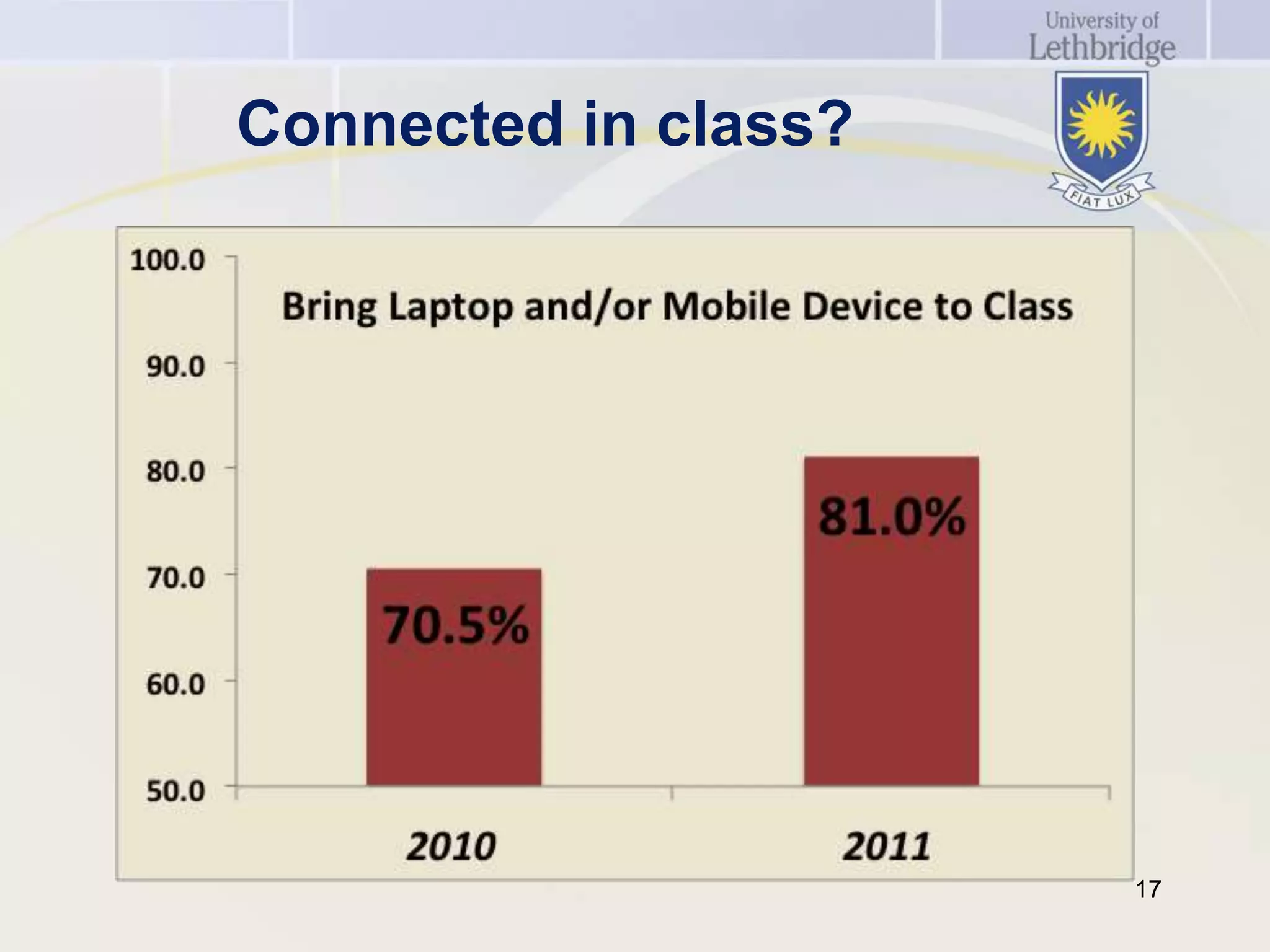
Connected in class?


                      17
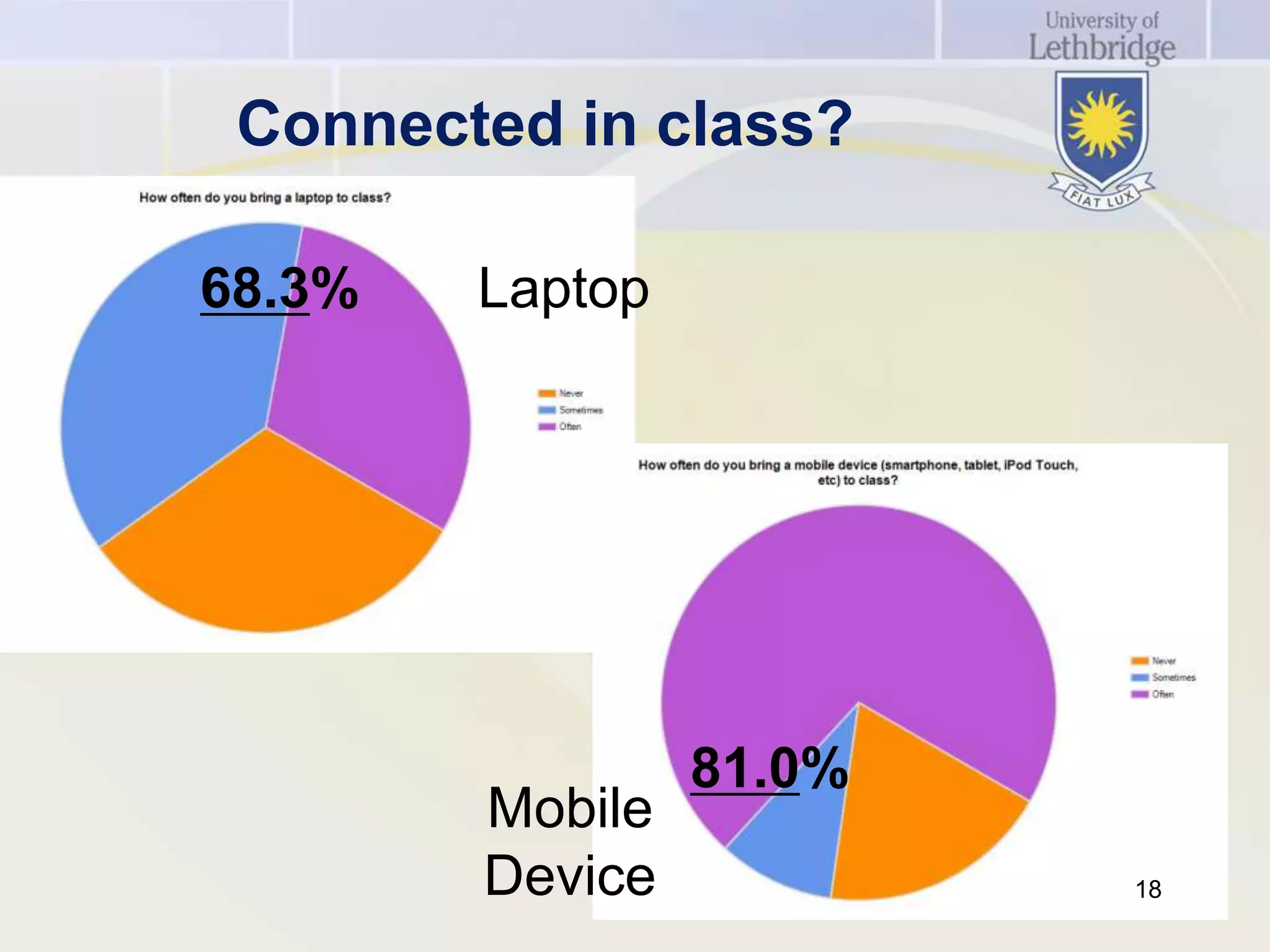
Connected in class?

68.3%   Laptop


                 81.0%
        Mobile
        Device           18
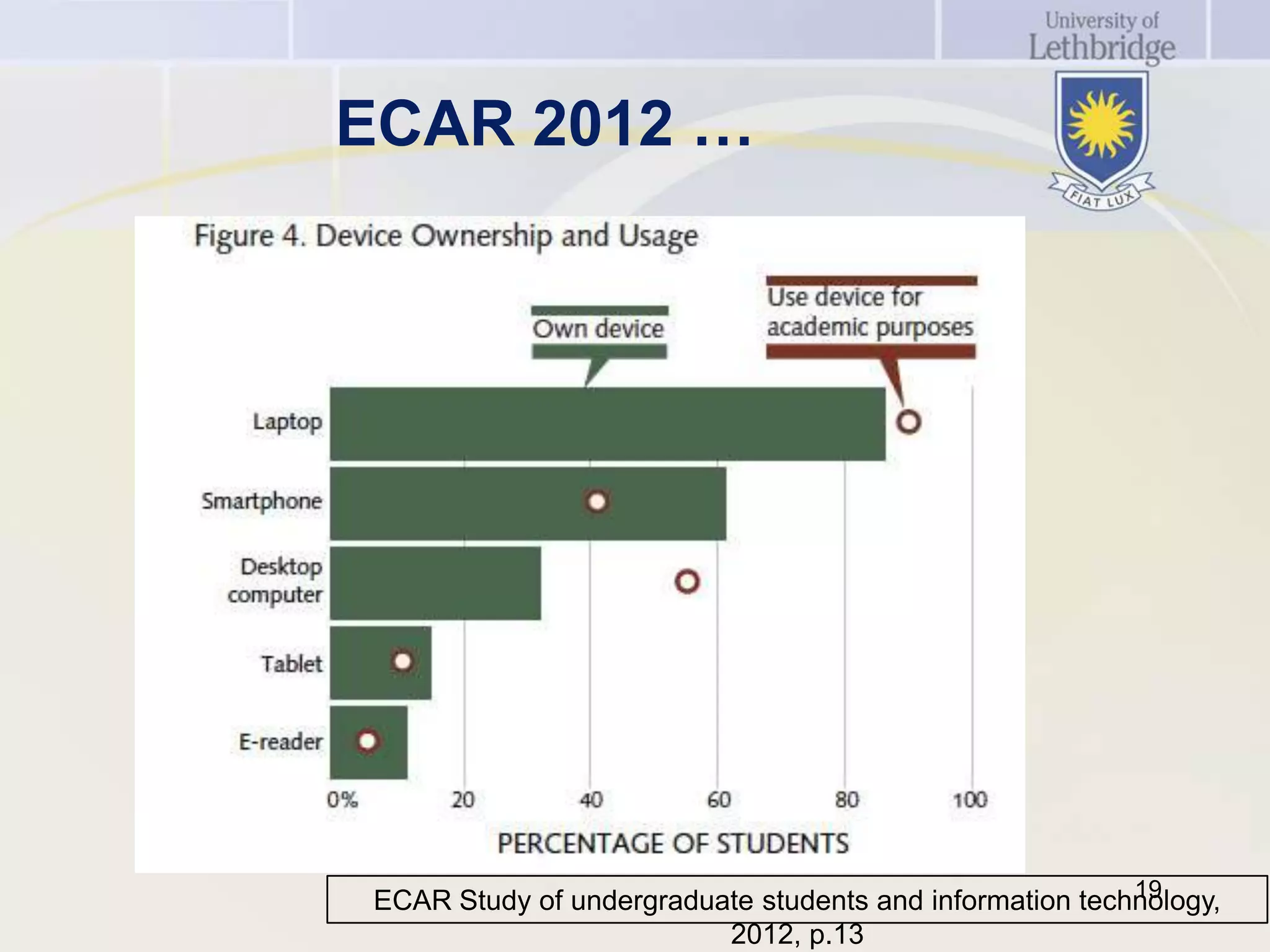
ECAR 2012 …


                                                          19
 ECAR Study of undergraduate students and information technology,
                          2012, p.13
And so …


           20
If not why not?
                                      Laptop      Mobile Device
             Reason                  (% of 442      (% of 263
                                   respondents)   respondents)
I do not own a laptop / mobile
                                     10.0%          55.9%
device
It is not applicable to my
                                     25.6%          41.8%
coursework
I do not find it useful in class     69.0%          46.8%
The instructor does not allow
                                      8.1%          11.8%
it’s use in class
Internet access (wifi) is
                                      9.0%           3.8%
inadequate                                                   21
If not why not?
                                       Laptop     Mobile Device
             Reason                   (% of all      (% of all
                                   respondents)   respondents)
I do not own a laptop / mobile
                                      3.2%          10.5%
device
It is not applicable to my
                                      8.1%           7.9%
coursework
I do not find it useful in class     21.8%           8.8%
The instructor does not allow
                                      2.6%           2.2%
it’s use in class
Internet access (wifi) is
                                      2.8%           0.7%
inadequate                                                   22
Class connection …


                     23
Class connection …

             > 50% of all classes 


                                      24
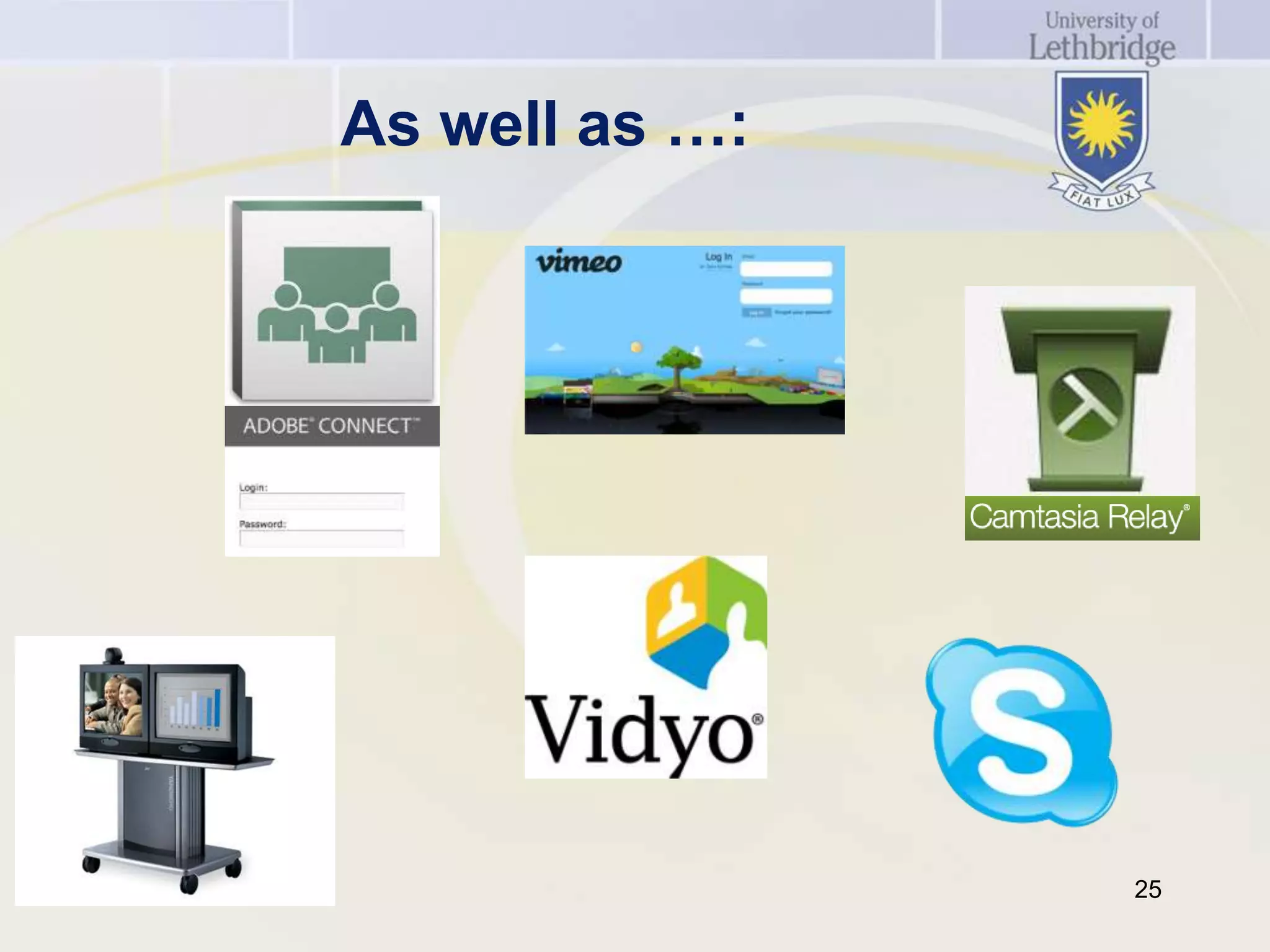
As well as …:


                25
SLES-Related Research
        Projects …
• Faculty Level-of-Adoption Survey

• Course Capture Research

• Online-Testing Centre Survey

• Learning Environment Evaluation
  Project
                                 26
For discussion …

Who are the digital navigators and digital
passengers?
When is connectivity engagement? Why?
When is it not? Why not?
What does a 21st century learning
environment really look like? Why?
What needs to change? What doesn’t?
                                             27
References
Bennett, S., Maton, K, & Kervin, L. (2008). The ‘digital natives’ debate:
        A critical review of the evidence. British Journal of Educational
        Technology, 39(5), 775-786.
Churches, A. Bloom’s Digital Taxonomy. Retrieved 01/04/20090 from
       http://edorigami.wikispaces.com
EDUCAUSE. (2012). ECAR Study of undergraduate students and
      information technology, 2012. Author. Retrieved 25/09/2012
      from http://www.educause.edu/library/resources/ecar-study-
  undergraduate-students-and-information-technology-2012
Jones, C. et al. (2010). Net generation or Digital natives: Is there a
        distinct new generation entering university? Computers &
        Education (54), 722-733.


                                                                         28
References
Oblinger, D. and Oblinger, J. (Ed.) (2005). Educating the Net
       Generation. EDUCAUSE. Available electronically at
       www.educause.edu/educatingthenetgen/
Prensky, M. (2006). Listen to the natives. Educational Leadership, 63
       (4), 8-13.
Prensky, M. (2009). H. Sapiens Digital: From digital immigrants and
       digital natives to digital wisdom. Innovate: Journal of Online
       Education, 5(3).


                                                                        29
SLES Team:
Doug Orr – University of Lethbridge
Dave Hinger – University of Lethbridge
Tyler Heaton – University of Lethbridge
Bernie Wirzba – University of Lethbridge
Anirban Kar – University of Victoria
                          Contact:
                                  Doug Orr
                          (doug.orr@uleth.ca)
                                  403-332-4063
                                                 30

A 21st century learning environment

  • 1.
    COHERE 2012 A 21st Century Learning Environment? - Digital Engagement for the “New” Millennials? 1
  • 2.
    Net Generation? Millenial? Digital Native? Grown Up Digital? 21st Century Learner? 2
  • 3.
    Questioning the cliché… Are students “connected”? Are they “connected” to their learning? Are their classes “connected” to them? 3
  • 4.
    Evolution … The “Student Learning Environment Survey” Genesis: ECAR (Educause Center for Applied Research) Annual Survey of Undergrads (since 2004) Students and Information Technology http://www.educause.edu/ecar 4
  • 5.
    Evolution … The “Student Learning Environment Survey” Adaptation: University of Lethbridge (Curriculum Re-Development Centre) Annual Survey of Undergrads (since 2009) … about the “Learning” not the “Technology” 5
  • 6.
    Evolution … Contingency Context Convergence 6
  • 7.
  • 8.
  • 9.
  • 10.
    Evolving Foci … 2009 2010 • device ownership • technologies for • internet connectivity course work and • digital competencies personal use • productivity and • campus workspaces communication • mobile access on • social networking campus • learning modalities 10
  • 11.
    Evolving Foci … 2011 2012 (in progress) • campus computers • campus learning • technical requisites environments • informal campus • classroom learning spaces environments • laptops and mobile • laptops in class devices in class • tablets in class • smartphones 11
  • 12.
    2009, 2010, 2011 n ≈ 1400 (21%) +/- 2.3% (α = 0.05) 12
  • 13.
  • 14.
  • 15.
    Mobile connection in2011 … Mobile Device (smartphone, tablet, etc) Yes What’s 10.5 % No an “MP3 Player?” 89.5% 15
  • 16.
    By 2011 … + 96.9% 357% 19.6% 16
  • 17.
  • 18.
    Connected in class? 68.3% Laptop 81.0% Mobile Device 18
  • 19.
    ECAR 2012 … 19 ECAR Study of undergraduate students and information technology, 2012, p.13
  • 20.
  • 21.
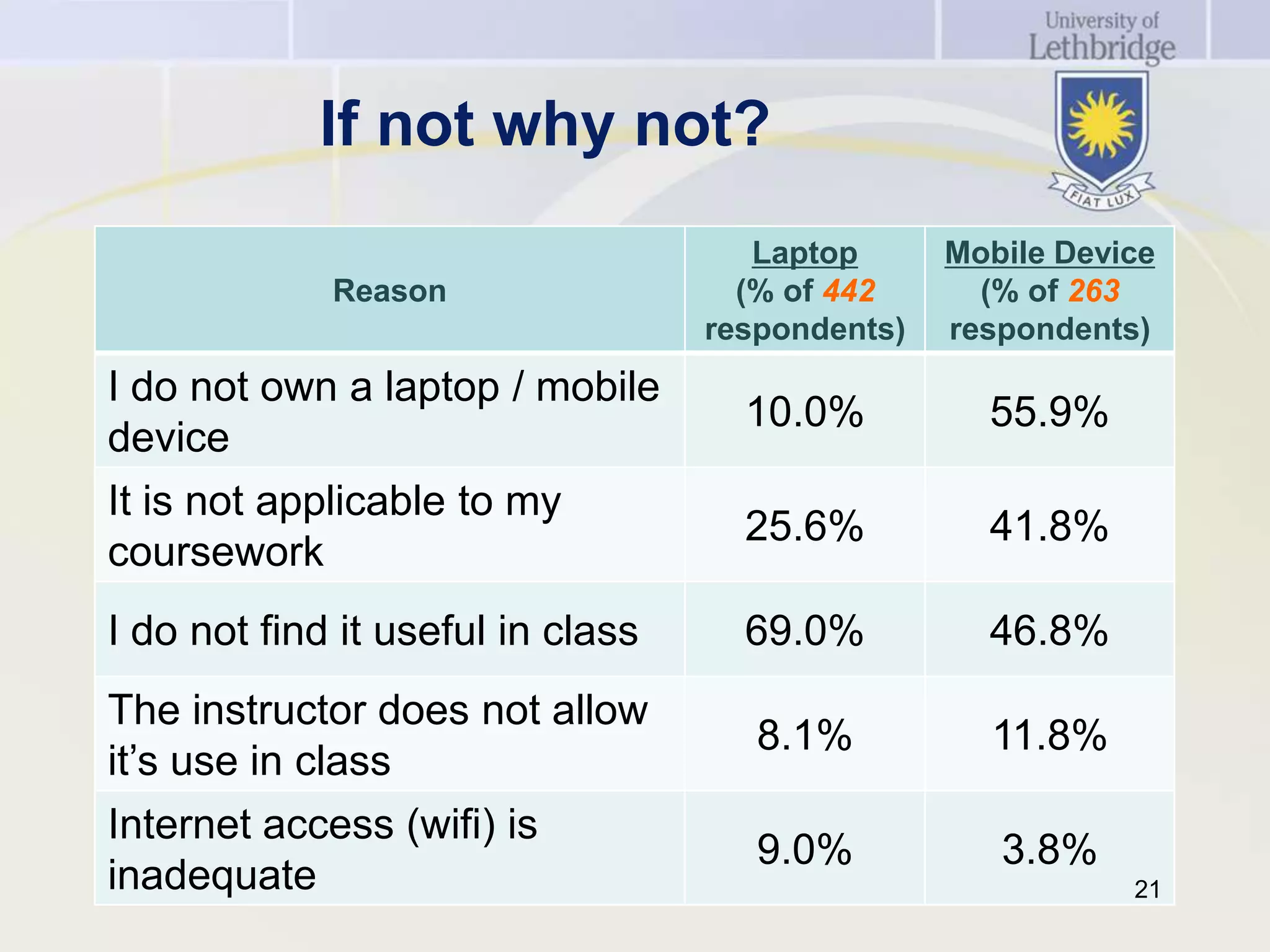
    If not whynot? Laptop Mobile Device Reason (% of 442 (% of 263 respondents) respondents) I do not own a laptop / mobile 10.0% 55.9% device It is not applicable to my 25.6% 41.8% coursework I do not find it useful in class 69.0% 46.8% The instructor does not allow 8.1% 11.8% it’s use in class Internet access (wifi) is 9.0% 3.8% inadequate 21
  • 22.
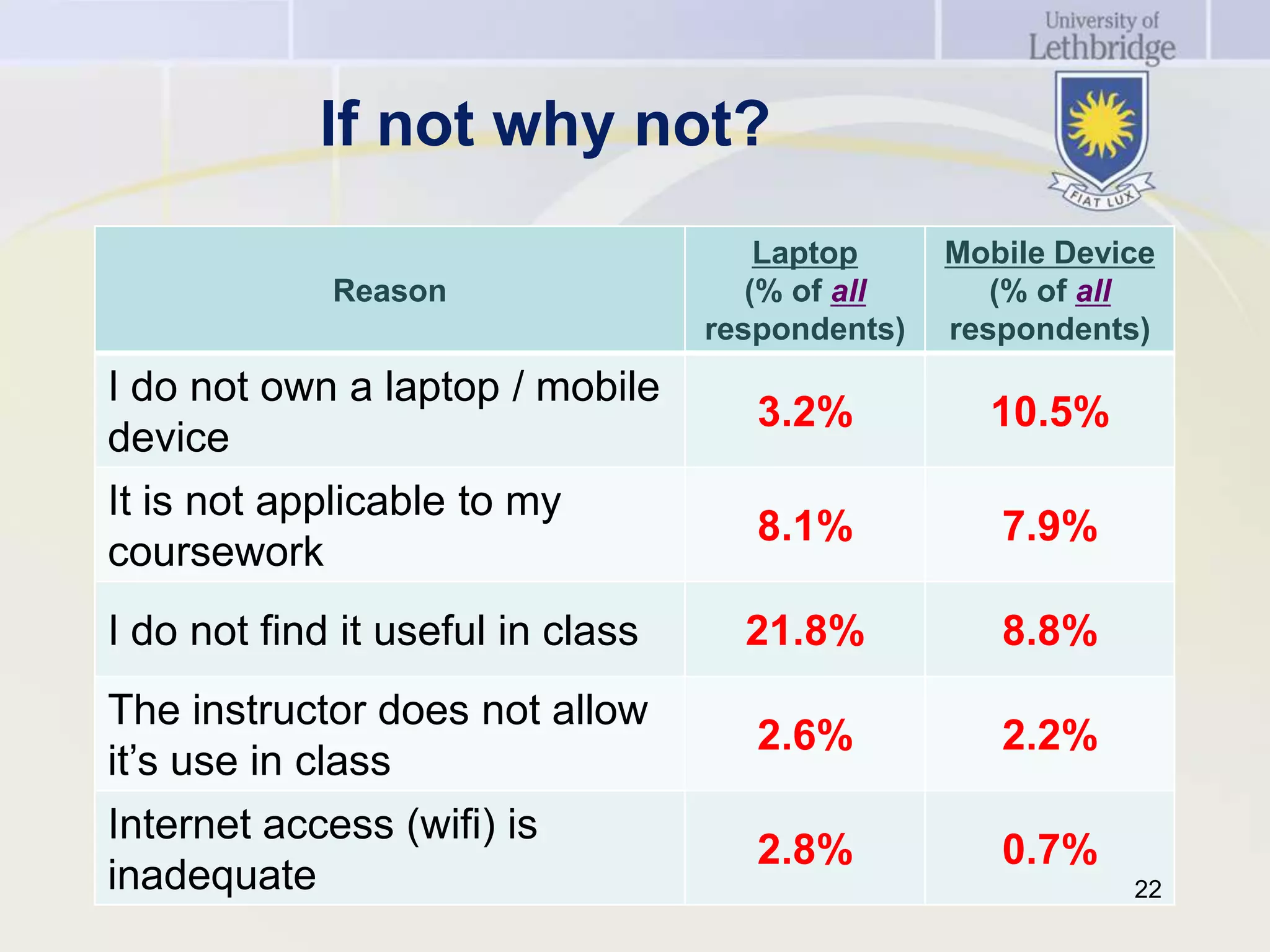
    If not whynot? Laptop Mobile Device Reason (% of all (% of all respondents) respondents) I do not own a laptop / mobile 3.2% 10.5% device It is not applicable to my 8.1% 7.9% coursework I do not find it useful in class 21.8% 8.8% The instructor does not allow 2.6% 2.2% it’s use in class Internet access (wifi) is 2.8% 0.7% inadequate 22
  • 23.
  • 24.
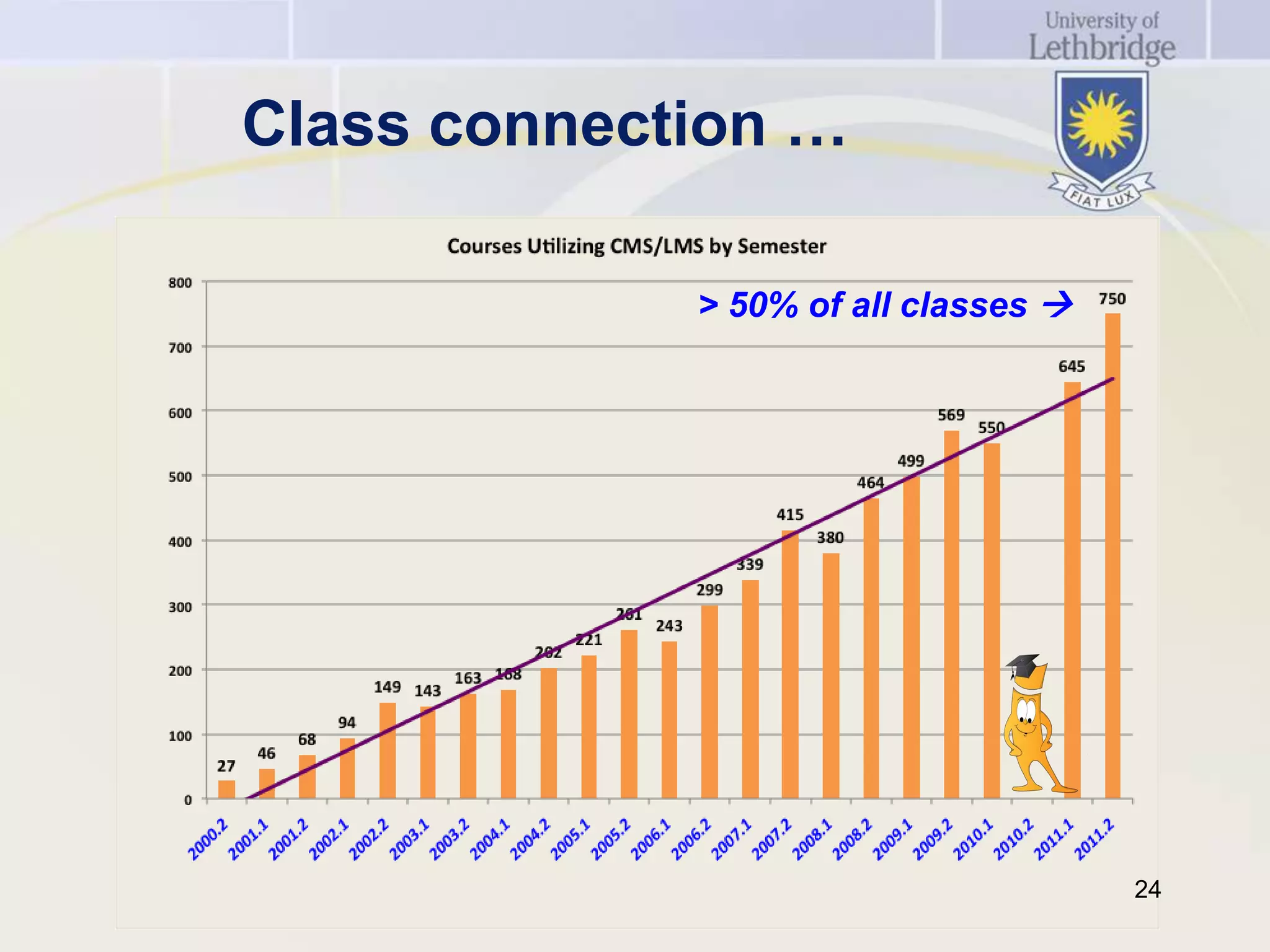
    Class connection … > 50% of all classes  24
  • 25.
    As well as…: 25
  • 26.
    SLES-Related Research Projects … • Faculty Level-of-Adoption Survey • Course Capture Research • Online-Testing Centre Survey • Learning Environment Evaluation Project 26
  • 27.
    For discussion … Whoare the digital navigators and digital passengers? When is connectivity engagement? Why? When is it not? Why not? What does a 21st century learning environment really look like? Why? What needs to change? What doesn’t? 27
  • 28.
    References Bennett, S., Maton,K, & Kervin, L. (2008). The ‘digital natives’ debate: A critical review of the evidence. British Journal of Educational Technology, 39(5), 775-786. Churches, A. Bloom’s Digital Taxonomy. Retrieved 01/04/20090 from http://edorigami.wikispaces.com EDUCAUSE. (2012). ECAR Study of undergraduate students and information technology, 2012. Author. Retrieved 25/09/2012 from http://www.educause.edu/library/resources/ecar-study- undergraduate-students-and-information-technology-2012 Jones, C. et al. (2010). Net generation or Digital natives: Is there a distinct new generation entering university? Computers & Education (54), 722-733. 28
  • 29.
    References Oblinger, D. andOblinger, J. (Ed.) (2005). Educating the Net Generation. EDUCAUSE. Available electronically at www.educause.edu/educatingthenetgen/ Prensky, M. (2006). Listen to the natives. Educational Leadership, 63 (4), 8-13. Prensky, M. (2009). H. Sapiens Digital: From digital immigrants and digital natives to digital wisdom. Innovate: Journal of Online Education, 5(3). 29
  • 30.
    SLES Team: Doug Orr– University of Lethbridge Dave Hinger – University of Lethbridge Tyler Heaton – University of Lethbridge Bernie Wirzba – University of Lethbridge Anirban Kar – University of Victoria Contact: Doug Orr (doug.orr@uleth.ca) 403-332-4063 30

Editor's Notes

  • #2 Introduction
  • #3 The 21st Century Cliché:net generation, millennial, digital native, grown-up digital, 21st century learner, etc, etc
  • #4 Questioning the cliché …Are students connected?Are they connected to their learning?Are their classes connected to them?
  • #5 Evolution of the Student Learning Environment Survey (SLES)ECAR (Educause Center for Applied Research)since 2004 – focus on information technologiessignificant longitudinal data
  • #6 Evolution of the Student Learning Environment Survey (SLES)U of L SLESannual since 2009focus on the “Learning Environment” not the “Learning Technologies”all undergraduate students (main and satellite campuses)
  • #7 Evolution of the Student Learning Environment Survey (SLES)Evolving/Adaptive/Responsive
  • #8 Evolving/Adaptive/Responsive“contingency”institutional prioritiesfinancial exigencieslearning spaces
  • #9 Evolving/Adaptive/Responsive“context”traditional, contemporary, innovative delivery modalitiesemergent learning technologies and environmentsstudent capabilities, capacities, and expectationssynchronicity and asynchronicity
  • #10 Evolving/Adaptive/Responsive“convergence”text, discussion, engagement mobility, accessibility, temporality
  • #11 SLES Foci: 2009/2010/2011/20122009device ownership, connectivity, capabilities, competenciesproductivity, communication, social networking2010technologies for course work and personal usecampus workspacesmobile accesslearning modalities
  • #12 SLES Foci: 2009/2010/2011/20122011use of campus vs personal devicestechnical requisites for learninginformal campus learning spaceslaptops and mobile devices in class2012 (currently in progress)campus learning environmentsclassroom environments laptops, tablets, and smartphones in class
  • #13 Confidence n= 1300-1400/a (~ 20% return) at α = 0.05; +/- 2%Some Results …
  • #14 “Are students connected?”in 200995% with “high-speed” internet at “home”
  • #15 “Are students connected?”in 2009only 20% own a “smartphone” but 80% have a “mp3 player”
  • #16 “Are students connected?”by 201190% own an internet capable “mobile device” (smartphone, tablet, etc) – a 350% increase since 2011
  • #17 “Are students connected?”by 201190% own an internet capable “mobile device” (smartphone, tablet, etc) – a 350% increase since 201197% own a laptop computer (90% in 2011)
  • #18 “Are students connected?”by 201181% bring a laptop and/or other internet-capable mobile device to class
  • #19 “Are students connected?”by 201181% bring a laptop and/or other internet-capable mobile device to classlaptops = 68.3 % but mobile devices = 81.0%
  • #20 “Are students connected?”ref: ECAR 2012 (p. 13) - device ownership and use for course work
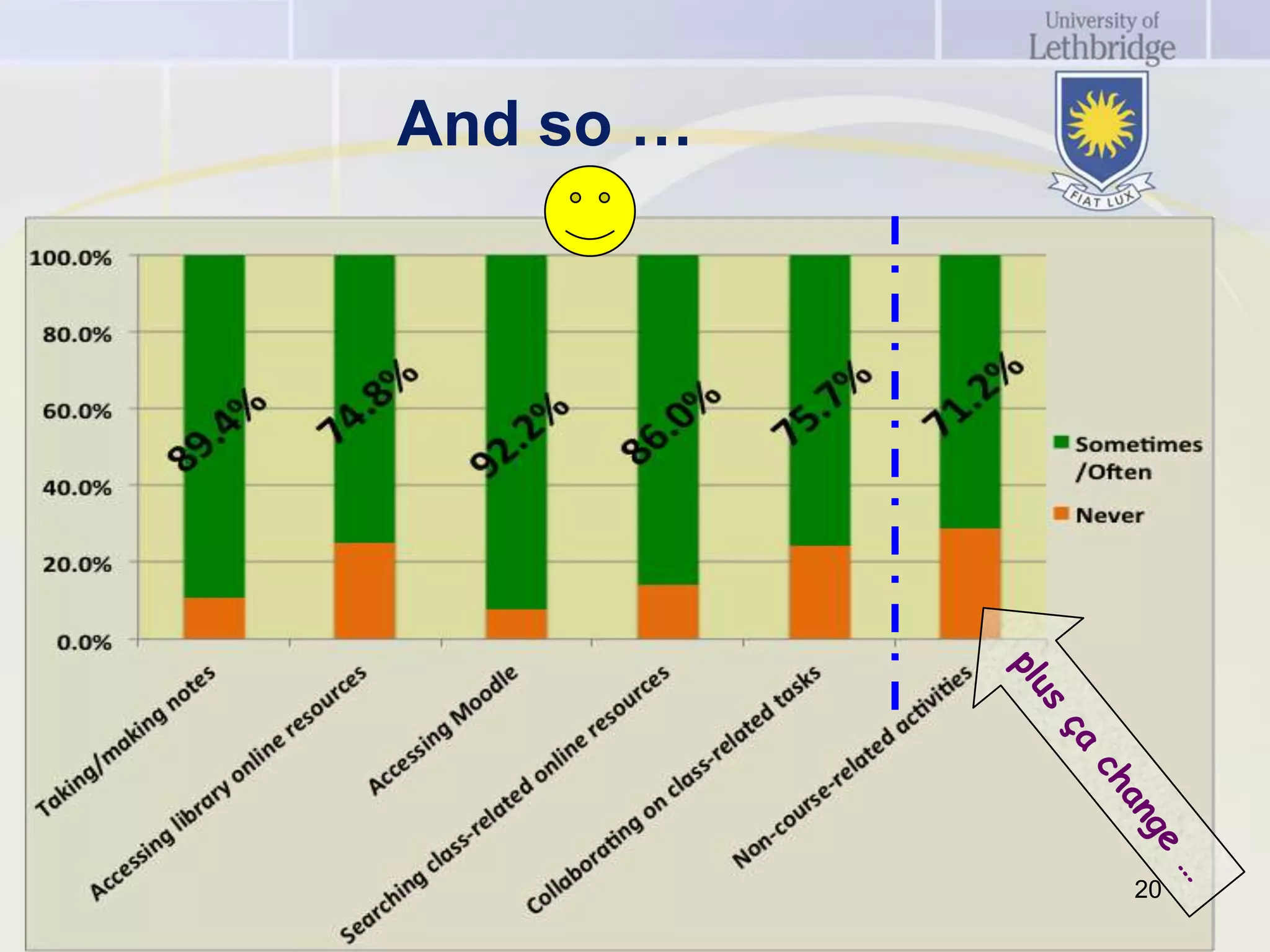
  • #21 “Are students connected to their learning?”Laptop / Mobile Device use in classtaking notes, accessing resources, accessing the LMS, collaborating (75-90%)… and “other” activities (70%)
  • #22 “Are students connected to their learning?”Students who are not connecteddon’t own devicesdon’t find them usefulBut …
  • #23 “Are students connected to their learning?”Students who are not connecteddon’t own devicesdon’t find them usefulnote: diff btwn laptops & mobile devices“myth buster”  not because faculty do not allow their use!! < 3%
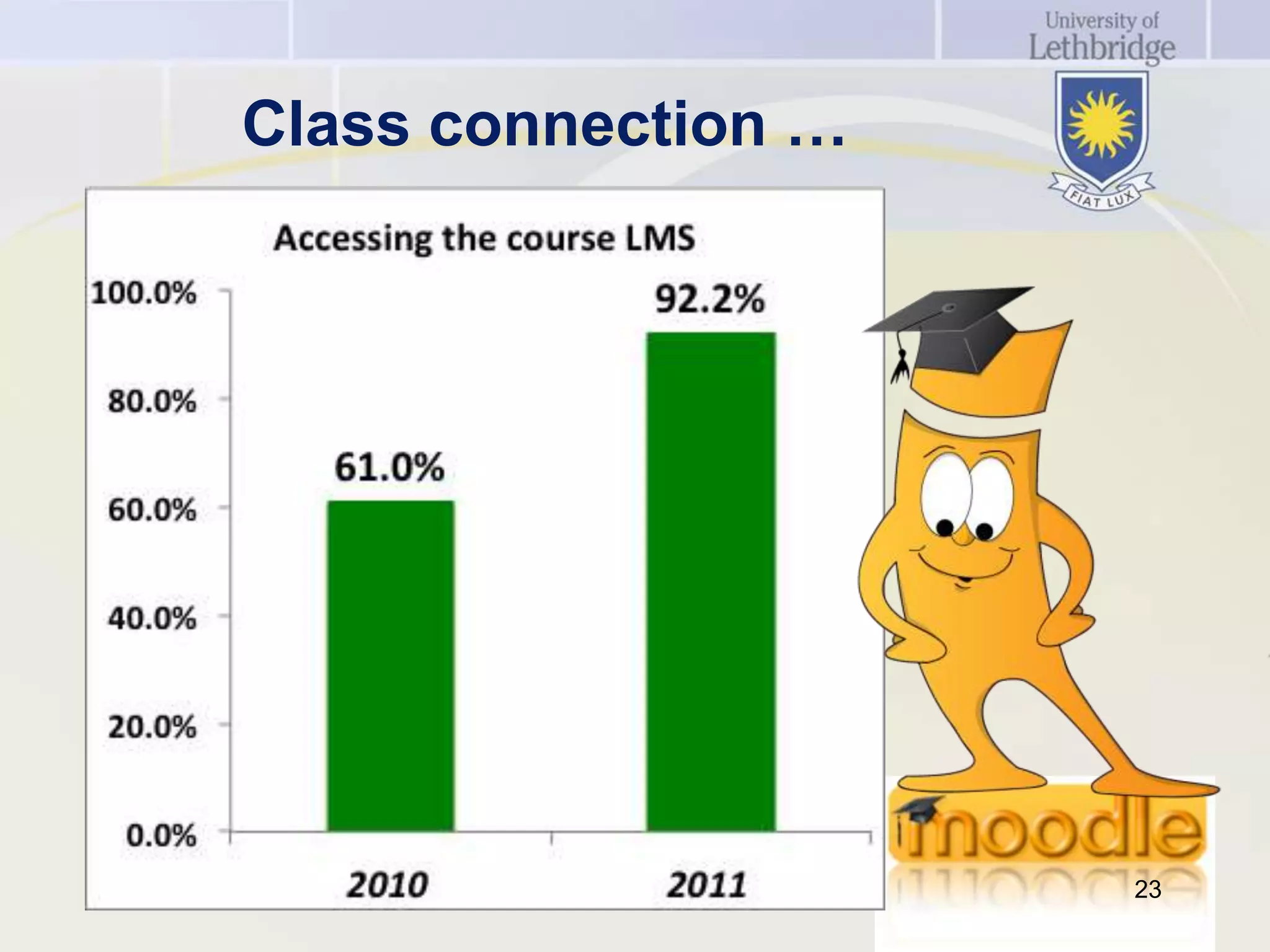
  • #24 “Are their classes connecting to them?”student accessing LMS Moodle migration  increasing faculty use of Moodle to support f2f, blended, and online delivery
  • #25 “Are their classes connecting to them?”student accessing LMS Moodle migration  increasing faculty use of Moodle to support f2f, blended, and online delivery
  • #26 “Are their classes connecting to them?”other BL/OL modalities and technologies
  • #27 Related Research:LoACourse CaptureOnline Testing CentreLearning Environment Evaluation
  • #28 Discussion:Who are the digital navigators and digital passengers?When is connectivity engagement? Why? When is it not? Why not?What does a 21st century learning environment really look like? Why?What needs to change? What doesn’t?
  • #29 Conclusion: References
  • #30 Conclusion: References
  • #31 Conclusion: Research Team & Contact