Social Media for Foundations

Editor's Notes

  • #2 Be sure to ask who is in the audience, then quickly introduce yourself.
  • #3 I’m a shabby presenter today if I talk about what I want to, and not what you want. So, as an Education Foundation director or board member, what do you want? I’ve got a few guesses.
  • #4 A few of you said these, and these were my thoughts too. You need money, in the form of donations, volunteers and much-needed help, ideas from other foundations and fundraising groups, a few like-minded friends and colleagues to bounce ideas off of, etc. But what does all this really lead to?
  • #5 Yeah, that’s the ticket. We really want tools to help us build and maintain relationships. It’s what I do in my PR job - build and maintain relationships with parents, staff, media, and community leaders. It’s really my Number One job!
  • #6 It’s okay, you’re going to feel uncomfortable at first. Hang around and you’ll get the flow.
  • #7 What is social media? Sometimes also referred to as social networking? What is it? Let’s look at the definition, and not specific products.
  • #8 Read quote, then “we are going to reflect on this.”
  • #9 What are Li and Bernoff referring to as traditional institutions? Mainstream media(TV,newspaper), also from organizations like corporate web sites and advertising. This is a major shift.
  • #10 Pay attention to highlighted text. Theme is really about “unlocking” potential and knowledge of the crowd. Theme of empowerment throughout books. Rohit Bhargava, who we’ll get to in a minute, refers to “accidental spokespeople.” Speaking of Rohit...
  • #11 Notice any special words here. Rohit italicized them, but I will help you.
  • #12 Rohit talks about the importance of not being a “faceless” organization. This simply does not work anymore. The style of “command and control” information, i.e. I will tell you what I want, when I want, doesn’t work.
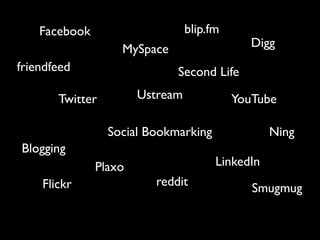
  • #13 First- “What social media tools do you know of?” If they already did, refer back. See how many tools there are? We are going to focus on just a few for today’s pres.
  • #14 These four are some of the most powerful for your organization.
  • #15 Let’s talk about linkedin.com. Free to join. Easy to setup. All you need is an email address. If you met me today before the presentation, what would you learn?
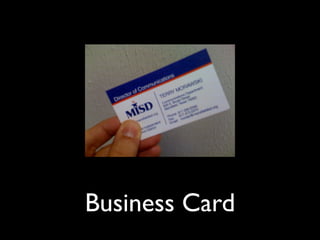
  • #16 Ooh, ahh. You got my business card. Now you’ve got my title, address, phone, email and fax number. Now you can get in touch with me 10 ways, all day long. So, you know me, but did you know that I have...
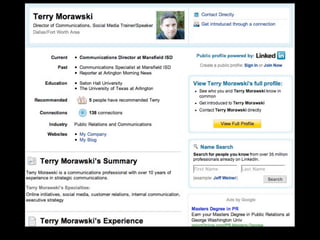
  • #17 138 business contacts available for you to view through LinkedIn. Also, I can introduce you to my friends. And...you can even recommend each other’s work.
  • #18 That’s great, right! Did we mention it’s free and easy to sign up? It’s also not tough to maintain. Let’s get started. You will need an email address.
  • #19 Just go to LinkedIn.com and it will ask you this information. Enter it all in and VOILA...
  • #20 You have a profile and are ready to make connections.
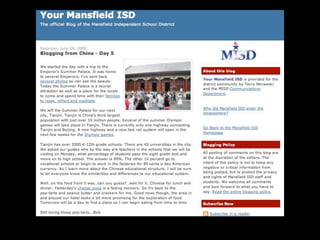
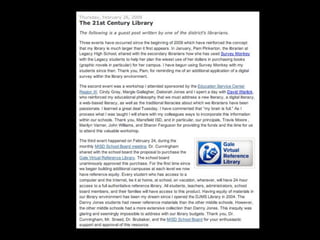
  • #21 Think of a blog like a Web site, but with more interactivity. Blogs are about two-way communication. They’re also about authentic communication. Primary points to cover in this section are about embracing resistance, dealing with rumors and sharing quality stories.(Use Bob’s China example.)
  • #22 One of the most powerful concepts behind blogging is in embracing resistance through listening. This does not mean becoming reactive. Maybe something stinks about what you’re doing.
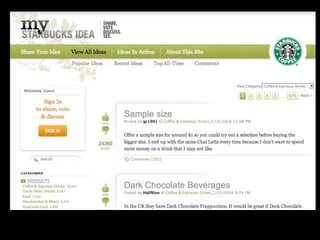
  • #23 Powerful features included commenting, voting and Starbucks responding back. MISD has done this related to issues. So much better to respond to the group than to one person on the phone, or during a meeting, or in a newsletter even.
  • #24 One other fantastic usage of blogs is to tell stories, personally and informally. In the words of those who lived it. Chip & Dan Heath tell us...
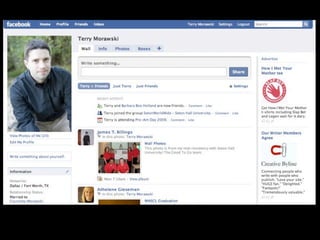
  • #27 Just for personal? Not so. Your status line, your friend groups, your connections - you would be surprised. As an organization, you can create a fan page or create an account just for the organization. I would recommend you use your personal profile. The users are already there.
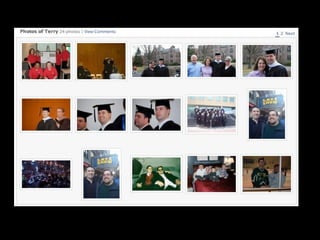
  • #29 Photos and videos are extremely powerful. This is all of my personal stuff, but imagine sharing photos of grant awards, special events, etc., that were easily shared, downloaded and promoted by others.
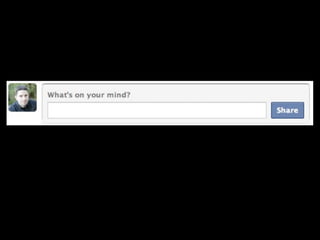
  • #30 Probably the most important, and least obvious tool is your status bar. You can include hyperlinks and lots of other great info. Link, link, link.
  • #31 The key to interaction on FB is your personal interaction. This is not stilted marketing-speak. This is just you having a conversation. Some of the best ways to share information are via a fan page, by sharing photos, share videos, using links and Event Invitations. Most importantly...
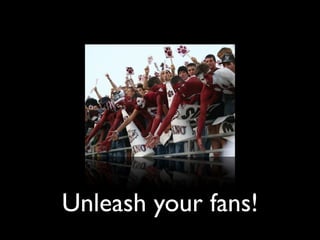
  • #32 Facebook is a great place to let your friends and fans connect for a common cause.
  • #33 Twitter is 140 characters at a time. It can be used for broadcast, personal insights, networking, or anything else you would like to use it for. It is NOT private or personal. Be Smart using Twitter.(Include @armano example.)
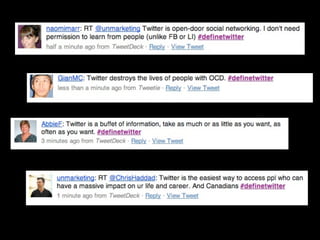
  • #34 Why should I define the uses of Twitter? Users recently did that for me.