Social Implications &
Ethics
Kelsey Breslin
Jason Spiegel
Jimmy Zelinske
Lan Nguyen
Increase capability of the
individual
Internet
Social networking
Jobs
Dating (eHarmony)
Merchandising
Increase capability of the
individual
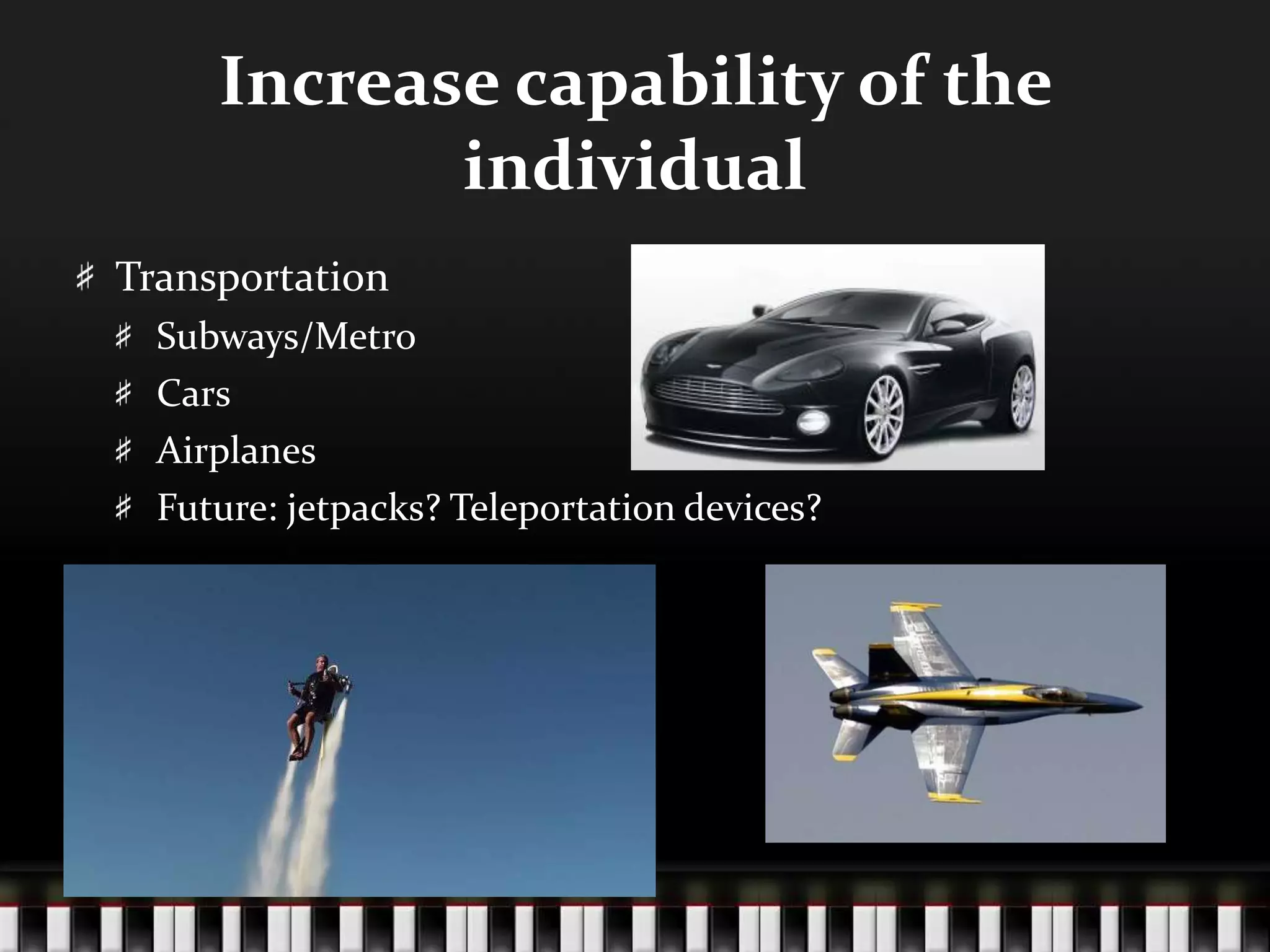
Transportation
Subways/Metro
Cars
Airplanes
Future: jetpacks? Teleportation devices?
Increase capability of the
individual
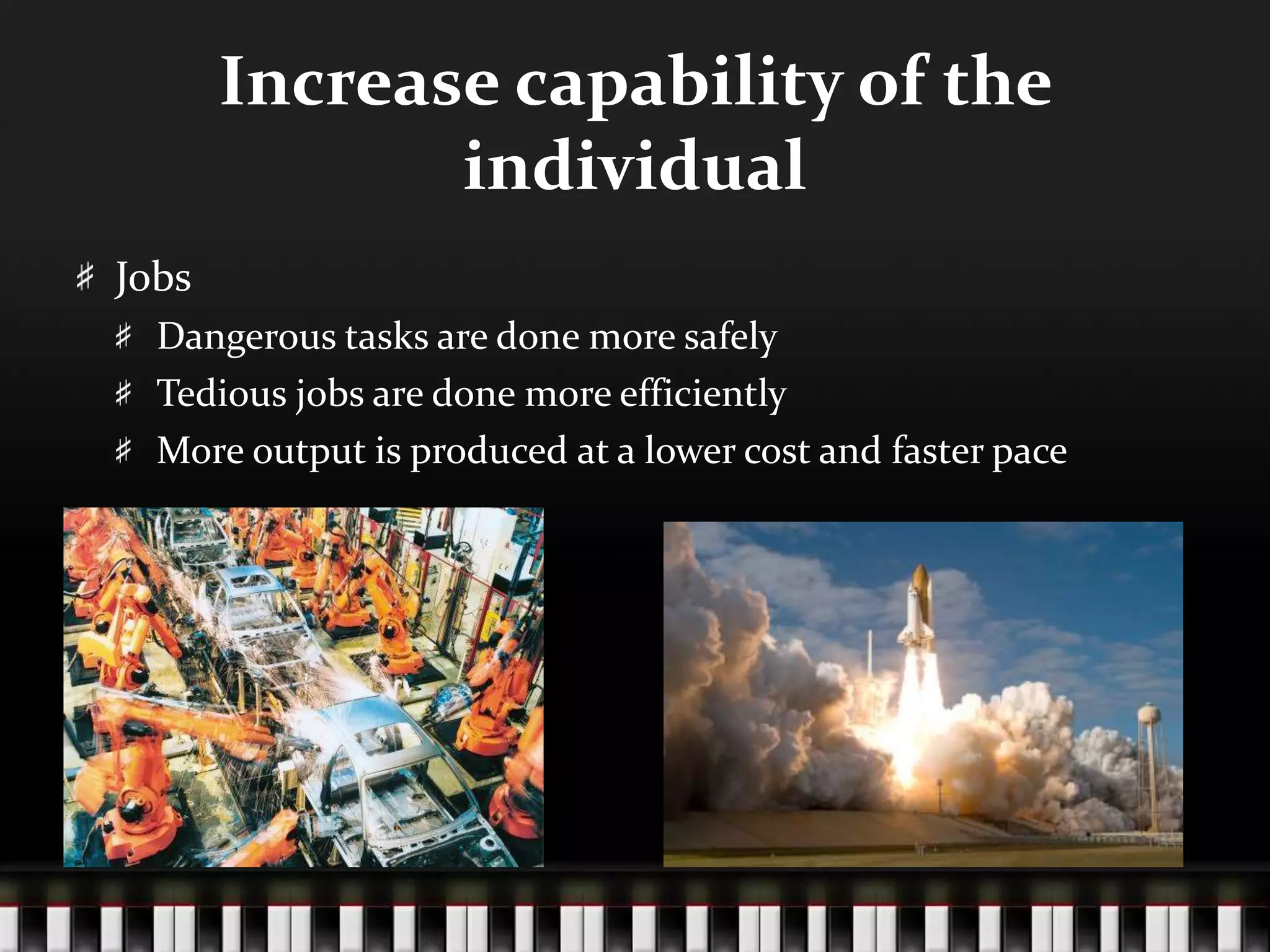
Jobs
Dangerous tasks are done more safely
Tedious jobs are done more efficiently
More output is produced at a lower cost and faster pace
Increase capability of the
individual
Medicine
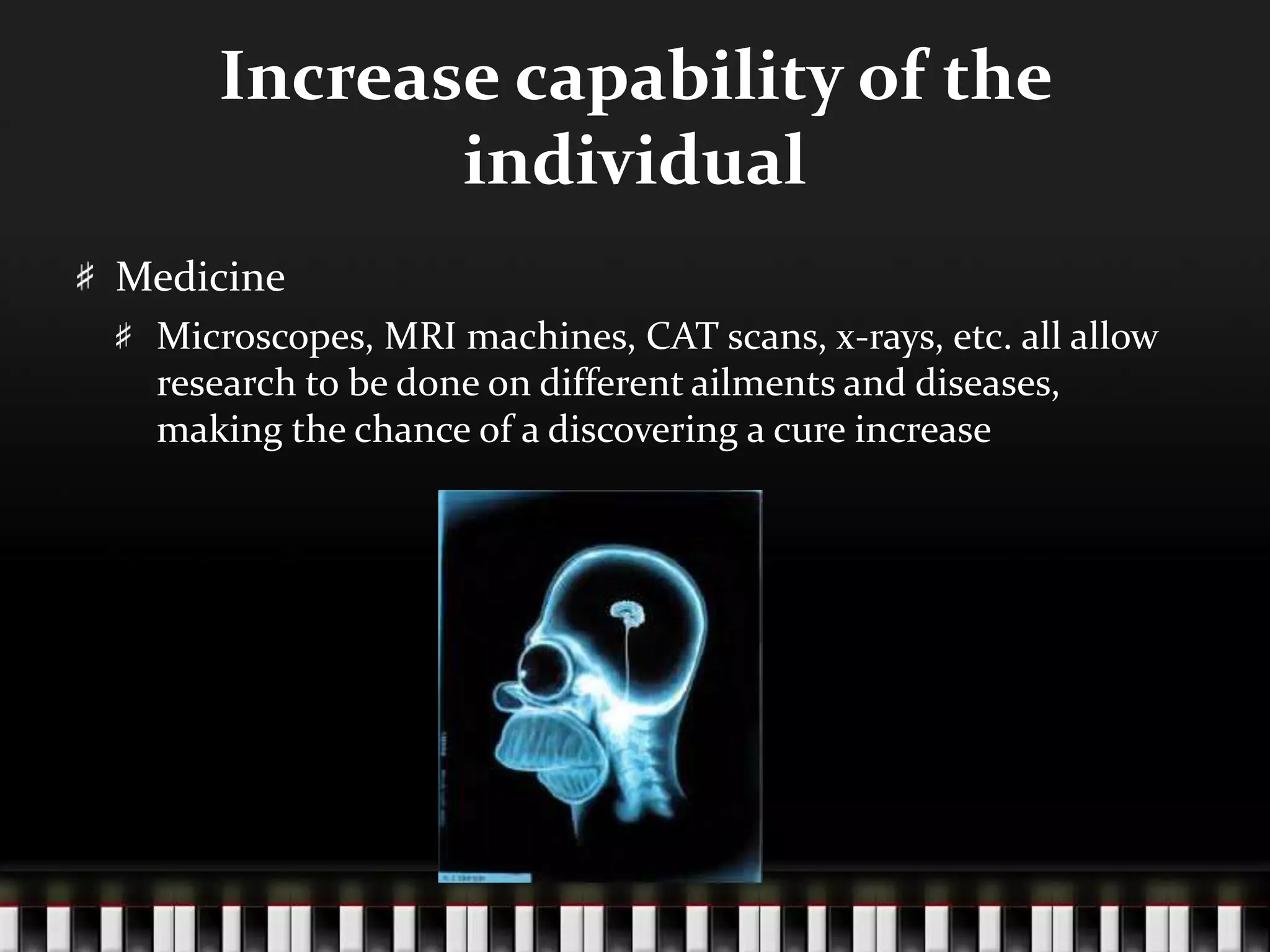
Microscopes, MRI machines, CAT scans, x-rays, etc. all allow
research to be done on different ailments and diseases,
making the chance of a discovering a cure increase
Increase vulnerability of the user
Computer Literacy
Understanding the capabilities of computer’s
Ability to use computers adequately
I.D. theft
Computers are the first resource for Identity thieves
Targets
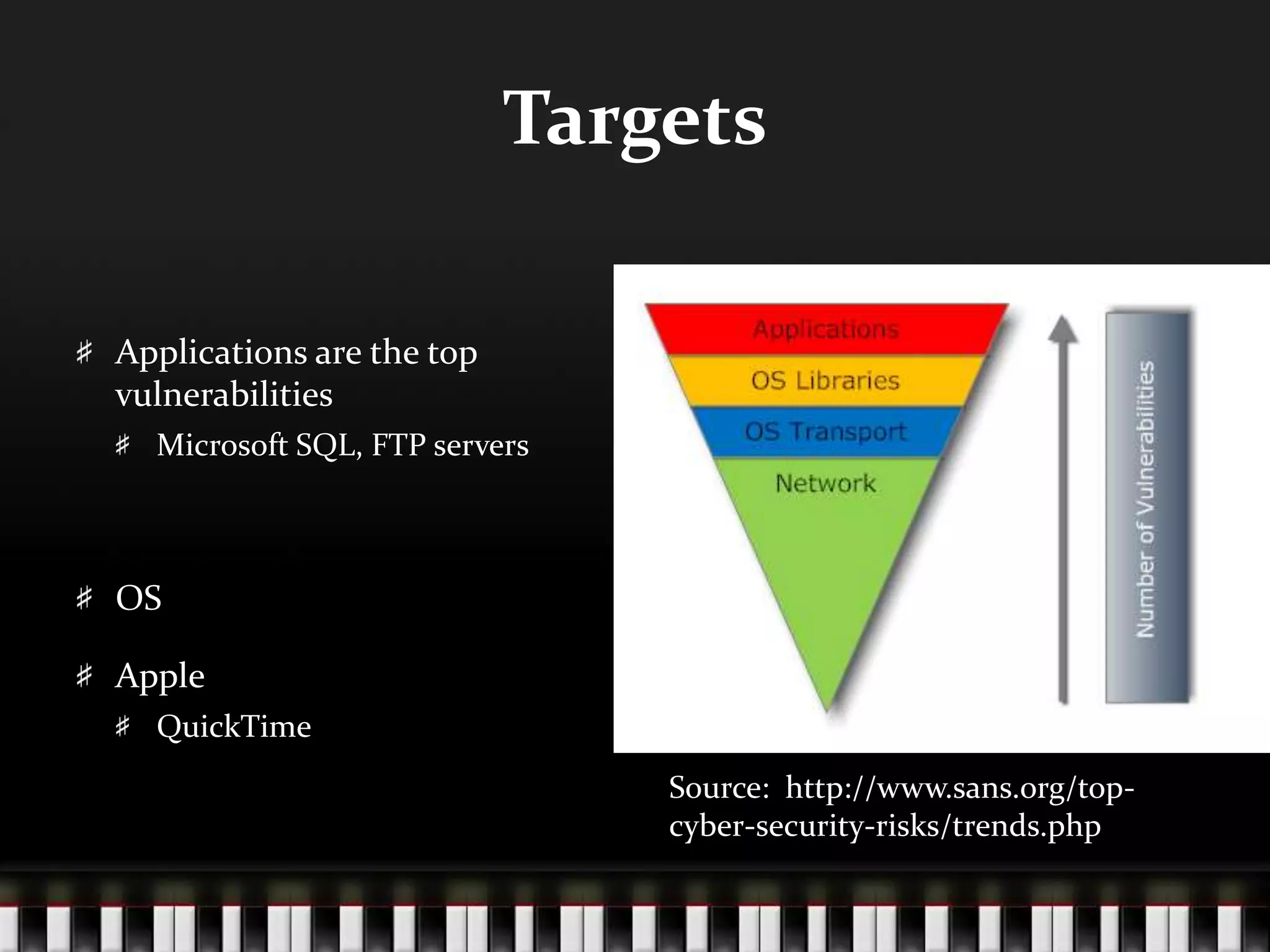
Applications are the top
vulnerabilities
Microsoft SQL, FTP servers
OS
Apple
QuickTime
Source: http://www.sans.org/top-
cyber-security-risks/trends.php
Solutions to Vulnerability
Updates (patches)
Use secure sites
Protect passwords
Ethics of internet users
Ethics on the internet
Acceptance that internet is not a free zone
The internet is a free place, but there should be restrictions on
contents allowed to be on the web.
Off-line world laws to on-line world
Laws should be involved in some cases, such as copyright
Global cultures
Put some sensitivity on the contents
Internet Development
1960: Used to share information in the military
1969: used in some universities for research
1970’s-1990’s: Developments in speed and connections
1996-present: internet connection speed increasing, Wi-Fi
connection.
Internet Development
From 80’s with the development of Windows, more and
more people use the internet
Estimate to around 25-30 billions web pages
Unlike before, where the internet only can be use in a small
area, now it can be used anywhere.
Ethics of internet providers (US-
like countries)
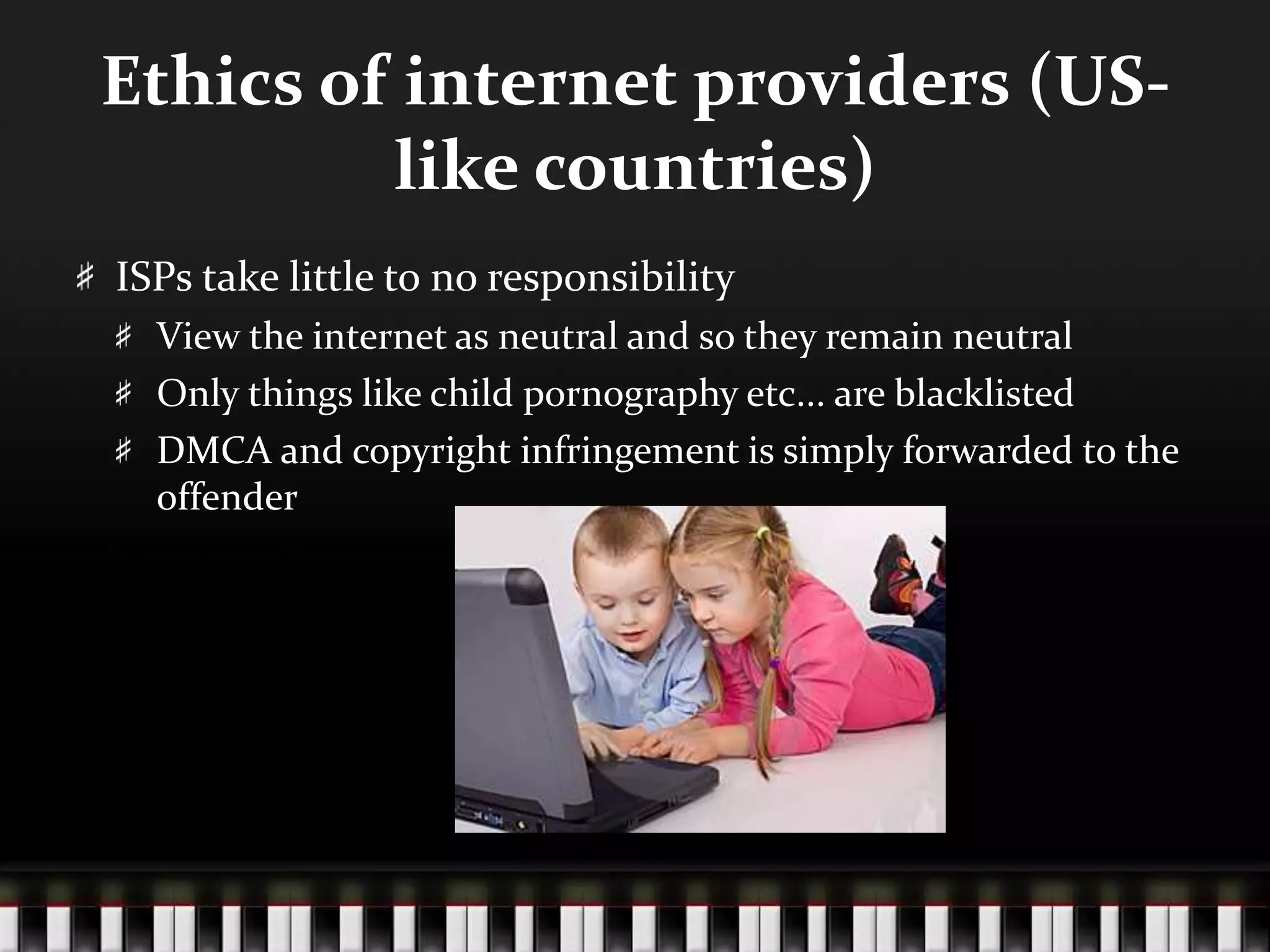
ISPs take little to no responsibility
View the internet as neutral and so they remain neutral
Only things like child pornography etc... are blacklisted
DMCA and copyright infringement is simply forwarded to the
offender
Ethics of internet providers (US-
like countries)
There is almost no filtering
Fairly frequently censorship bills are introduced
Protest groups like DemandProgress.org attempt to shoot it
down
Ethics of internet providers
China-like countries)
ISPs take things into their own hands
View the internet as something they own
ISPs won't hesitate to take something offline
ISPs heavily filter traffic based on politics
Countries like China and Australia have long blacklists of
websites their citizens cannot visit due to political interests
Sources
http://www.techfluency.org/computer-literacy.htm
http://www.sans.org/top-cyber-security-risks/trends.php
http://www.cert.org/blogs/vuls/2009/02/internet_explorer_vulnerabilit.html
Howe, Walt. "A Brief History of the Internet." Walt Howe's Internet Learning Tree. 24 Mar.
2010. Web. 14 Nov. 2010. <http://www.walthowe.com/navnet/history.html>.
"Internet Ethics." Roger Darlington's World. Web. 14 Nov. 2010.
<http://www.rogerdarlington.co.uk/Internetethics.html>.
Kristula, Dave. "The History of the Internet." Dave's Site / Davesite.com. Web. 14 Nov. 2010.
<http://www.davesite.com/webstation/net-history.shtml>.
"WWW FAQs: How Many Websites Are There?" Welcome to Boutell.Com, Inc.! Web. 14 Nov.
2010. <http://www.boutell.com/newfaq/misc/sizeofweb.html>.

Social and ethic.ppt

  • 1.
    Social Implications & Ethics KelseyBreslin Jason Spiegel Jimmy Zelinske Lan Nguyen
  • 2.
    Increase capability ofthe individual Internet Social networking Jobs Dating (eHarmony) Merchandising
  • 3.
    Increase capability ofthe individual Transportation Subways/Metro Cars Airplanes Future: jetpacks? Teleportation devices?
  • 4.
    Increase capability ofthe individual Jobs Dangerous tasks are done more safely Tedious jobs are done more efficiently More output is produced at a lower cost and faster pace
  • 5.
    Increase capability ofthe individual Medicine Microscopes, MRI machines, CAT scans, x-rays, etc. all allow research to be done on different ailments and diseases, making the chance of a discovering a cure increase
  • 6.
    Increase vulnerability ofthe user Computer Literacy Understanding the capabilities of computer’s Ability to use computers adequately I.D. theft Computers are the first resource for Identity thieves
  • 7.
    Targets Applications are thetop vulnerabilities Microsoft SQL, FTP servers OS Apple QuickTime Source: http://www.sans.org/top- cyber-security-risks/trends.php
  • 8.
    Solutions to Vulnerability Updates(patches) Use secure sites Protect passwords
  • 9.
    Ethics of internetusers Ethics on the internet Acceptance that internet is not a free zone The internet is a free place, but there should be restrictions on contents allowed to be on the web. Off-line world laws to on-line world Laws should be involved in some cases, such as copyright Global cultures Put some sensitivity on the contents
  • 10.
    Internet Development 1960: Usedto share information in the military 1969: used in some universities for research 1970’s-1990’s: Developments in speed and connections 1996-present: internet connection speed increasing, Wi-Fi connection.
  • 11.
    Internet Development From 80’swith the development of Windows, more and more people use the internet Estimate to around 25-30 billions web pages Unlike before, where the internet only can be use in a small area, now it can be used anywhere.
  • 12.
    Ethics of internetproviders (US- like countries) ISPs take little to no responsibility View the internet as neutral and so they remain neutral Only things like child pornography etc... are blacklisted DMCA and copyright infringement is simply forwarded to the offender
  • 13.
    Ethics of internetproviders (US- like countries) There is almost no filtering Fairly frequently censorship bills are introduced Protest groups like DemandProgress.org attempt to shoot it down
  • 14.
    Ethics of internetproviders China-like countries) ISPs take things into their own hands View the internet as something they own ISPs won't hesitate to take something offline ISPs heavily filter traffic based on politics Countries like China and Australia have long blacklists of websites their citizens cannot visit due to political interests
  • 15.
    Sources http://www.techfluency.org/computer-literacy.htm http://www.sans.org/top-cyber-security-risks/trends.php http://www.cert.org/blogs/vuls/2009/02/internet_explorer_vulnerabilit.html Howe, Walt. "ABrief History of the Internet." Walt Howe's Internet Learning Tree. 24 Mar. 2010. Web. 14 Nov. 2010. <http://www.walthowe.com/navnet/history.html>. "Internet Ethics." Roger Darlington's World. Web. 14 Nov. 2010. <http://www.rogerdarlington.co.uk/Internetethics.html>. Kristula, Dave. "The History of the Internet." Dave's Site / Davesite.com. Web. 14 Nov. 2010. <http://www.davesite.com/webstation/net-history.shtml>. "WWW FAQs: How Many Websites Are There?" Welcome to Boutell.Com, Inc.! Web. 14 Nov. 2010. <http://www.boutell.com/newfaq/misc/sizeofweb.html>.