SHERIN P MATHEW
    MACFAST
   One of the fastest growing sector in early 1980’s till
    1990’s.
   The dream of every creative man, any investor,
    advertising agency, or B-school graduate to work in or
    for FMCG company.
   After 1990’s,
    o FMCG started losing their sheen due to introduction
       of other product types
    o Total lack of imagination on the part of FMCG
       companies.
   During 2010, Consumers willingness to upgrade to
    better, value added products helped FMCG.
   FMCG industry, alternatively called as CPG
    (Consumer Packaged Goods).

      Those consumables which are normally
    consumed by the consumers at a marketing,
    financing, purchasing,etc is called FMCG.
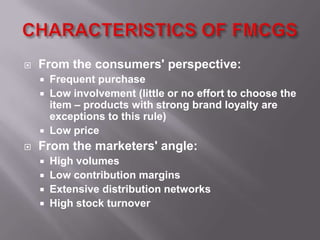
   From the consumers' perspective:
       Frequent purchase
       Low involvement (little or no effort to choose the
        item – products with strong brand loyalty are
        exceptions to this rule)
       Low price
   From the marketers' angle:
       High volumes
       Low contribution margins
       Extensive distribution networks
       High stock turnover
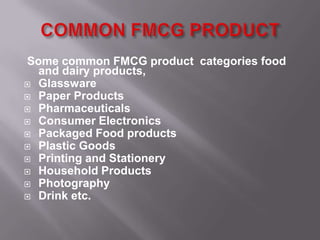
Some common FMCG product categories food
  and dairy products,
 Glassware
 Paper Products
 Pharmaceuticals
 Consumer Electronics
 Packaged Food products
 Plastic Goods
 Printing and Stationery
 Household Products
 Photography
 Drink etc.
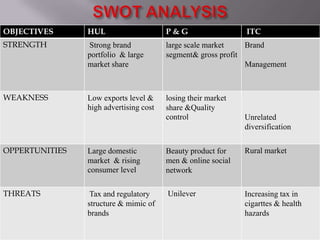
OBJECTIVES      HUL                     P&G                   ITC
STRENGTH        Strong brand            large scale market    Brand
                portfolio & large       segment& gross profit
                market share                                  Management


WEAKNESS        Low exports level &     losing their market
                high advertising cost   share &Quality
                                        control               Unrelated
                                                              diversification

OPPERTUNITIES   Large domestic          Beauty product for    Rural market
                market & rising         men & online social
                consumer level          network

THREATS          Tax and regulatory     Unilever              Increasing tax in
                structure & mimic of                          cigarttes & health
                brands                                        hazards
MAIN THREE
   FMCG
COMPANIES
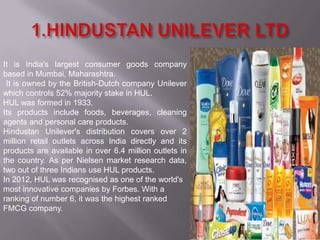
It is India's largest consumer goods company
based in Mumbai, Maharashtra.
 It is owned by the British-Dutch company Unilever
which controls 52% majority stake in HUL.
HUL was formed in 1933.
Its products include foods, beverages, cleaning
agents and personal care products.
Hindustan Unilever's distribution covers over 2
million retail outlets across India directly and its
products are available in over 6.4 million outlets in
the country. As per Nielsen market research data,
two out of three Indians use HUL products.
In 2012, HUL was recognised as one of the world's
most innovative companies by Forbes. With a
ranking of number 6, it was the highest ranked
FMCG company.
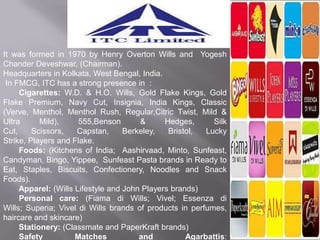
It was formed in 1970 by Henry Overton Wills and Yogesh
Chander Deveshwar, (Chairman).
Headquarters in Kolkata, West Bengal, India.
 In FMCG, ITC has a strong presence in :
     Cigarettes: W.D. & H.O. Wills, Gold Flake Kings, Gold
Flake Premium, Navy Cut, Insignia, India Kings, Classic
(Verve, Menthol, Menthol Rush, Regular,Citric Twist, Mild &
Ultra      Mild),     555,Benson       &      Hedges,      Silk
Cut,     Scissors,   Capstan,      Berkeley,   Bristol,  Lucky
Strike, Players and Flake.
     Foods: (Kitchens of India; Aashirvaad, Minto, Sunfeast,
Candyman, Bingo, Yippee, Sunfeast Pasta brands in Ready to
Eat, Staples, Biscuits, Confectionery, Noodles and Snack
Foods).
     Apparel: (Wills Lifestyle and John Players brands)
     Personal care: (Fiama di Wills; Vivel; Essenza di
Wills; Superia; Vivel di Wills brands of products in perfumes,
haircare and skincare)
     Stationery: (Classmate and PaperKraft brands)
     Safety          Matches           and          Agarbattis:
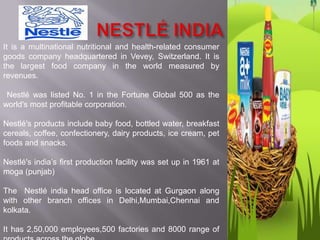
It is a multinational nutritional and health-related consumer
goods company headquartered in Vevey, Switzerland. It is
the largest food company in the world measured by
revenues.

 Nestlé was listed No. 1 in the Fortune Global 500 as the
world's most profitable corporation.

Nestlé's products include baby food, bottled water, breakfast
cereals, coffee, confectionery, dairy products, ice cream, pet
foods and snacks.

Nestlé's india’s first production facility was set up in 1961 at
moga (punjab)

The Nestlé india head office is located at Gurgaon along
with other branch offices in Delhi,Mumbai,Chennai and
kolkata.

It has 2,50,000 employees,500 factories and 8000 range of
   More and more people these days have started
    involving themselves in this field as; it creates
    tremendous job opportunities for them. It is a
    steady, diverse and a highly profitable industry
    where a person can do a lot of work.
    The jobs in this field range from sales and
    supply chain, investment, promotion, H.R
    development, and general management. It also
    allows you to trade directly with the various
    traders online.

Fast moving consumer goods

  • 1.
  • 2.
    One of the fastest growing sector in early 1980’s till 1990’s.  The dream of every creative man, any investor, advertising agency, or B-school graduate to work in or for FMCG company.  After 1990’s, o FMCG started losing their sheen due to introduction of other product types o Total lack of imagination on the part of FMCG companies.  During 2010, Consumers willingness to upgrade to better, value added products helped FMCG.
  • 3.
    FMCG industry, alternatively called as CPG (Consumer Packaged Goods).  Those consumables which are normally consumed by the consumers at a marketing, financing, purchasing,etc is called FMCG.
  • 4.
    From the consumers' perspective:  Frequent purchase  Low involvement (little or no effort to choose the item – products with strong brand loyalty are exceptions to this rule)  Low price  From the marketers' angle:  High volumes  Low contribution margins  Extensive distribution networks  High stock turnover
  • 5.
    Some common FMCGproduct categories food and dairy products,  Glassware  Paper Products  Pharmaceuticals  Consumer Electronics  Packaged Food products  Plastic Goods  Printing and Stationery  Household Products  Photography  Drink etc.
  • 7.
    OBJECTIVES HUL P&G ITC STRENGTH Strong brand large scale market Brand portfolio & large segment& gross profit market share Management WEAKNESS Low exports level & losing their market high advertising cost share &Quality control Unrelated diversification OPPERTUNITIES Large domestic Beauty product for Rural market market & rising men & online social consumer level network THREATS Tax and regulatory Unilever Increasing tax in structure & mimic of cigarttes & health brands hazards
  • 8.
    MAIN THREE FMCG COMPANIES
  • 9.
    It is India'slargest consumer goods company based in Mumbai, Maharashtra. It is owned by the British-Dutch company Unilever which controls 52% majority stake in HUL. HUL was formed in 1933. Its products include foods, beverages, cleaning agents and personal care products. Hindustan Unilever's distribution covers over 2 million retail outlets across India directly and its products are available in over 6.4 million outlets in the country. As per Nielsen market research data, two out of three Indians use HUL products. In 2012, HUL was recognised as one of the world's most innovative companies by Forbes. With a ranking of number 6, it was the highest ranked FMCG company.
  • 10.
    It was formedin 1970 by Henry Overton Wills and Yogesh Chander Deveshwar, (Chairman). Headquarters in Kolkata, West Bengal, India. In FMCG, ITC has a strong presence in : Cigarettes: W.D. & H.O. Wills, Gold Flake Kings, Gold Flake Premium, Navy Cut, Insignia, India Kings, Classic (Verve, Menthol, Menthol Rush, Regular,Citric Twist, Mild & Ultra Mild), 555,Benson & Hedges, Silk Cut, Scissors, Capstan, Berkeley, Bristol, Lucky Strike, Players and Flake. Foods: (Kitchens of India; Aashirvaad, Minto, Sunfeast, Candyman, Bingo, Yippee, Sunfeast Pasta brands in Ready to Eat, Staples, Biscuits, Confectionery, Noodles and Snack Foods). Apparel: (Wills Lifestyle and John Players brands) Personal care: (Fiama di Wills; Vivel; Essenza di Wills; Superia; Vivel di Wills brands of products in perfumes, haircare and skincare) Stationery: (Classmate and PaperKraft brands) Safety Matches and Agarbattis:
  • 11.
    It is amultinational nutritional and health-related consumer goods company headquartered in Vevey, Switzerland. It is the largest food company in the world measured by revenues. Nestlé was listed No. 1 in the Fortune Global 500 as the world's most profitable corporation. Nestlé's products include baby food, bottled water, breakfast cereals, coffee, confectionery, dairy products, ice cream, pet foods and snacks. Nestlé's india’s first production facility was set up in 1961 at moga (punjab) The Nestlé india head office is located at Gurgaon along with other branch offices in Delhi,Mumbai,Chennai and kolkata. It has 2,50,000 employees,500 factories and 8000 range of
  • 12.
    More and more people these days have started involving themselves in this field as; it creates tremendous job opportunities for them. It is a steady, diverse and a highly profitable industry where a person can do a lot of work.  The jobs in this field range from sales and supply chain, investment, promotion, H.R development, and general management. It also allows you to trade directly with the various traders online.