Smoking and breast feeding
By
Dr. Ahmed Mohamed Nasef
Assistant lecturer in obstetrics & gynecology
Benha University
There are more than 7,000 chemicals in
tobacco smoke, including hundreds of
chemicals that are toxic and about 70 that
can cause cancer
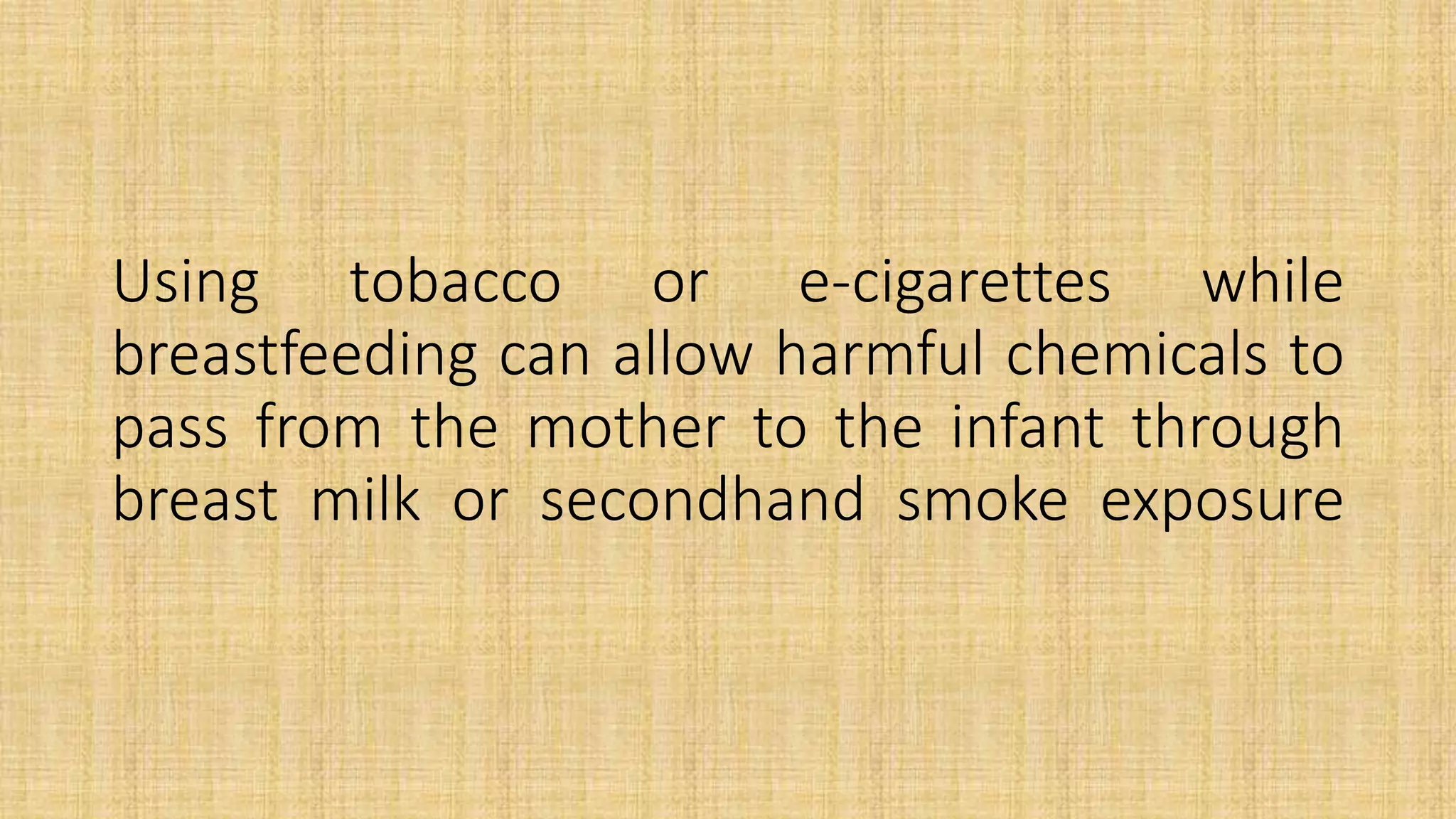
Nicotine and other harmful chemicals are found in
cigarettes, cigars, pipe tobacco, and chewing
tobacco
Electronic smoking
E-cigarette aerosol can contain harmful and potentially harmful
chemicals including nicotine and other toxicants, flavorings, and
solvents
CDC recommendations
Using tobacco or e-cigarettes while
breastfeeding can allow harmful chemicals to
pass from the mother to the infant through
breast milk or secondhand smoke exposure
Mothers who use tobacco or e-cigarettes
should be encouraged to quit; regardless,
breastfeeding provides numerous health
benefits and breast milk remains the
recommended food for an infant
What effects can tobacco or e-cigarette exposure have on infants?
Regardless of feeding method (breastfeeding or infant formula), maternal smoking is
a risk factor for
sudden infant death syndrome (SIDS)
lower respiratory illnesses (such as bronchitis and pneumonia)
ear infections
impaired lung function in infants and children
the chemicals found in tobacco, including nicotine, can be passed from a
breastfeeding mother who uses tobacco to her infant through breast milk
Smoking also decreases maternal milk supply, likely through the effect of nicotine,
which lowers serum prolactin levels.
E-cigarettes, and other vaping devices, are battery-powered devices that typically
deliver nicotine, flavorings, and other additives through an inhaled aerosol. Little is
known about the effects of e-cigarette use by the mother on the infant’s health
Can mothers who use tobacco or e-cigarettes
breastfeed their infant?
Yes. Mothers who use tobacco or e-cigarettes should be
encouraged to quit; regardless, breastfeeding provides
numerous health benefits and breast milk remains the
recommended food for an infant
To minimize exposure to the infant, mothers
and others who smoke should:
Don't smoke near the infant
Smoke outside
Have smoke-free rules for the car and home
Change clothes and wash hands after
smoking and prior to handling the infant
Secondhand smoke
Also called passive smoking
Smoke from burning tobacco products, like
cigarettes, cigars or pipes
Secondhand smoke also is smoke that has
been exhaled, or breathed out, by the person
smoking
Who is Harmed by Secondhand Smoke?
Anyone who is exposed to it, even for a short
time
Secondhand smoke can cause health
problems in children and adults, and can even
be deadly
Since 1964, about 2,500,000 people who do
not smoke have died from health problems
caused by secondhand smoke exposure
Effects of second hand smoking on breast fed infant
Babies who breathe secondhand smoke are more likely to die unexpectedly from
sudden infant death syndrome (SIDS), also called crib death, than babies who are not
exposed to smoke from burning tobacco products
Babies exposed to secondhand smoke in the womb or after birth are born and grow
up with weaker lungs than babies that are not exposed to secondhand smoke
Babies and children who breathe secondhand smoke are sick more often with
bronchitis, pneumonia, and ear infections than those that are not exposed to
secondhand smoke
For children with asthma, breathing secondhand smoke can trigger an asthma attack
ACOG recommendations
Tobacco use is a modifiable risk factor for a
host of adverse pregnancy outcomes and
longer-term health outcomes
The American College of Obstetricians and
Gynecologists and the American Academy of
Pediatrics recognize pregnancy and lactation
as two ideal times to promote tobacco and
smoking cessation as there are many motives
Tobacco Cessation
Non pregnant adult smokers should be offered smoking cessation
support through
Behavioral intervention (lifestyle measures, sports practice, Yoga…)
U.S. Food and Drug Administration-approved pharmacotherapy
(NRT)
In the interpregnancy period
All women should be routinely asked about
their use of alcohol and drugs, including
prescription opioids, marijuana, and other
medications used for nonmedical reasons and
referred as indicated
Substance use disorder and relapse
prevention programs also should be made
available
For lactating women
Nicotine replacement therapy (NRT) is compatible
with breastfeeding because the amounts of
nicotine transferred with breast milk are generally
the same or lower using replacement therapy
compared with smoking
Health care providers should reassess tobacco use
(smoked, chewed, electronic nicotine delivery
systems, vaped) at the postpartum visit and
continue to provide, or refer to, assistance with
ongoing efforts at cessation
ACOG, American academy of pediatrics& NHS
recommendations
Mothers who smoke tobacco (though they
should be encouraged to quit)
NHS recommendations
By stopping smoking before or as soon as pregnancy, this can aid
passing pregnancy safely and having a healthier baby
Stopping smoking soon after delivery will still help protect
infants against:
Sudden infant death syndrome
Breathing problems
Ear disease and deafness
Behavioral problems
If its hard for the woman to quit smoking, it's important not to stop
breastfeeding, Breastfeeding will still protect your baby from infections
and provide nutrients they can't get from formula milk
If woman or her partner can't stop smoking, still have a solution by
making home completely smoke free will help protect baby's health.
They may need to ask friends and family not to smoke near baby, too
It's important not to share a bed with baby (co-sleep). This is known to
reduce the risk of SIDS
Nicotine replacement therapy (NRT) and breastfeeding
Licensed NRT products are safe to use while breastfeeding. They
increase chances of quitting smoking
it is present in a wide range of forms, including patches, gum, lozenges,
nasal spray and inhalators.
Marijuana use during breast feeding
According to ACOG
Effects of Marijuana Use on Lactation
• There are insufficient data to evaluate the effects of marijuana use on
infants during lactation and breastfeeding
• and in the absence of such data, marijuana use is discouraged
• Breastfeeding women should be informed that the potential risks of
exposure to marijuana metabolites are unknown and should be
encouraged to discontinue marijuana use.
Breast feeding benefits
for infant
Infants who are breastfed have reduced risks of:
Asthma
Obesity
Type 1 diabetes
Severe lower respiratory disease
Acute otitis media (ear infections)
Sudden infant death syndrome (SIDS)
Gastrointestinal infections (diarrhea/vomiting)
Necrotizing enterocolitis (NEC) for preterm infants
Benefits for mother
Breastfeeding can help lower a mother’s risk
of:
High blood pressure
Type 2 diabetes
Ovarian cancer
Breast cancer
smoking& breast feeding.pptx

smoking& breast feeding.pptx

  • 1.
    Smoking and breastfeeding By Dr. Ahmed Mohamed Nasef Assistant lecturer in obstetrics & gynecology Benha University
  • 2.
    There are morethan 7,000 chemicals in tobacco smoke, including hundreds of chemicals that are toxic and about 70 that can cause cancer
  • 3.
    Nicotine and otherharmful chemicals are found in cigarettes, cigars, pipe tobacco, and chewing tobacco
  • 4.
    Electronic smoking E-cigarette aerosolcan contain harmful and potentially harmful chemicals including nicotine and other toxicants, flavorings, and solvents
  • 5.
  • 6.
    Using tobacco ore-cigarettes while breastfeeding can allow harmful chemicals to pass from the mother to the infant through breast milk or secondhand smoke exposure
  • 7.
    Mothers who usetobacco or e-cigarettes should be encouraged to quit; regardless, breastfeeding provides numerous health benefits and breast milk remains the recommended food for an infant
  • 8.
    What effects cantobacco or e-cigarette exposure have on infants? Regardless of feeding method (breastfeeding or infant formula), maternal smoking is a risk factor for sudden infant death syndrome (SIDS) lower respiratory illnesses (such as bronchitis and pneumonia) ear infections impaired lung function in infants and children the chemicals found in tobacco, including nicotine, can be passed from a breastfeeding mother who uses tobacco to her infant through breast milk Smoking also decreases maternal milk supply, likely through the effect of nicotine, which lowers serum prolactin levels. E-cigarettes, and other vaping devices, are battery-powered devices that typically deliver nicotine, flavorings, and other additives through an inhaled aerosol. Little is known about the effects of e-cigarette use by the mother on the infant’s health
  • 9.
    Can mothers whouse tobacco or e-cigarettes breastfeed their infant? Yes. Mothers who use tobacco or e-cigarettes should be encouraged to quit; regardless, breastfeeding provides numerous health benefits and breast milk remains the recommended food for an infant
  • 10.
    To minimize exposureto the infant, mothers and others who smoke should: Don't smoke near the infant Smoke outside Have smoke-free rules for the car and home Change clothes and wash hands after smoking and prior to handling the infant
  • 11.
    Secondhand smoke Also calledpassive smoking Smoke from burning tobacco products, like cigarettes, cigars or pipes Secondhand smoke also is smoke that has been exhaled, or breathed out, by the person smoking
  • 12.
    Who is Harmedby Secondhand Smoke? Anyone who is exposed to it, even for a short time Secondhand smoke can cause health problems in children and adults, and can even be deadly Since 1964, about 2,500,000 people who do not smoke have died from health problems caused by secondhand smoke exposure
  • 13.
    Effects of secondhand smoking on breast fed infant Babies who breathe secondhand smoke are more likely to die unexpectedly from sudden infant death syndrome (SIDS), also called crib death, than babies who are not exposed to smoke from burning tobacco products Babies exposed to secondhand smoke in the womb or after birth are born and grow up with weaker lungs than babies that are not exposed to secondhand smoke Babies and children who breathe secondhand smoke are sick more often with bronchitis, pneumonia, and ear infections than those that are not exposed to secondhand smoke For children with asthma, breathing secondhand smoke can trigger an asthma attack
  • 14.
  • 15.
    Tobacco use isa modifiable risk factor for a host of adverse pregnancy outcomes and longer-term health outcomes
  • 16.
    The American Collegeof Obstetricians and Gynecologists and the American Academy of Pediatrics recognize pregnancy and lactation as two ideal times to promote tobacco and smoking cessation as there are many motives
  • 17.
    Tobacco Cessation Non pregnantadult smokers should be offered smoking cessation support through Behavioral intervention (lifestyle measures, sports practice, Yoga…) U.S. Food and Drug Administration-approved pharmacotherapy (NRT)
  • 18.
    In the interpregnancyperiod All women should be routinely asked about their use of alcohol and drugs, including prescription opioids, marijuana, and other medications used for nonmedical reasons and referred as indicated Substance use disorder and relapse prevention programs also should be made available
  • 19.
    For lactating women Nicotinereplacement therapy (NRT) is compatible with breastfeeding because the amounts of nicotine transferred with breast milk are generally the same or lower using replacement therapy compared with smoking Health care providers should reassess tobacco use (smoked, chewed, electronic nicotine delivery systems, vaped) at the postpartum visit and continue to provide, or refer to, assistance with ongoing efforts at cessation
  • 20.
    ACOG, American academyof pediatrics& NHS recommendations
  • 21.
    Mothers who smoketobacco (though they should be encouraged to quit)
  • 22.
  • 23.
    By stopping smokingbefore or as soon as pregnancy, this can aid passing pregnancy safely and having a healthier baby Stopping smoking soon after delivery will still help protect infants against: Sudden infant death syndrome Breathing problems Ear disease and deafness Behavioral problems
  • 24.
    If its hardfor the woman to quit smoking, it's important not to stop breastfeeding, Breastfeeding will still protect your baby from infections and provide nutrients they can't get from formula milk If woman or her partner can't stop smoking, still have a solution by making home completely smoke free will help protect baby's health. They may need to ask friends and family not to smoke near baby, too It's important not to share a bed with baby (co-sleep). This is known to reduce the risk of SIDS
  • 26.
    Nicotine replacement therapy(NRT) and breastfeeding Licensed NRT products are safe to use while breastfeeding. They increase chances of quitting smoking it is present in a wide range of forms, including patches, gum, lozenges, nasal spray and inhalators.
  • 27.
    Marijuana use duringbreast feeding According to ACOG Effects of Marijuana Use on Lactation • There are insufficient data to evaluate the effects of marijuana use on infants during lactation and breastfeeding • and in the absence of such data, marijuana use is discouraged • Breastfeeding women should be informed that the potential risks of exposure to marijuana metabolites are unknown and should be encouraged to discontinue marijuana use.
  • 28.
    Breast feeding benefits forinfant Infants who are breastfed have reduced risks of: Asthma Obesity Type 1 diabetes Severe lower respiratory disease Acute otitis media (ear infections) Sudden infant death syndrome (SIDS) Gastrointestinal infections (diarrhea/vomiting) Necrotizing enterocolitis (NEC) for preterm infants
  • 29.
    Benefits for mother Breastfeedingcan help lower a mother’s risk of: High blood pressure Type 2 diabetes Ovarian cancer Breast cancer