Smart Mobility for Resilience
OntheCuspofChange
Professor Samer Bagaeen FRICS MRTPI
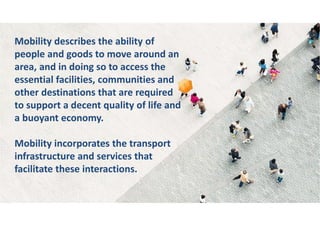
Mobility describes the ability of
people and goods to move around an
area, and in doing so to access the
essential facilities, communities and
other destinations that are required
to support a decent quality of life and
a buoyant economy.
Mobility incorporates the transport
infrastructure and services that
facilitate these interactions.
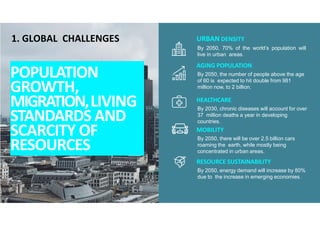
1. GLOBAL CHALLENGES
3
POPULATION
GROWTH,
MIGRATION,LIVING
STANDARDS AND
SCARCITY OF
RESOURCES
AGING POPULATION
By 2050, the number of people above the age
of 60 is expected to hit double from 981
million now, to 2 billion.
HEALTHCARE
By 2030, chronic diseases will account for over
37 million deaths a year in developing
countries.
MOBILITY
By 2050, there will be over 2.5 billion cars
roaming the earth, while mostly being
concentrated in urban areas.
RESOURCE SUSTAINABILITY
By 2050, energy demand will increase by 80%
due to the increase in emerging economies.
URBAN DENSITY
By 2050, 70% of the world’s population will
live in urban areas.
Copyright © 2018 Accenture All rights reserved.
2. Change is coming….
Urban mobility has evolved substantially over the past fifty
years, from an early interest in catering for growing car
ownership and use through major road expansion, to the
current emphasis on reducing car use and cutting back on
road provision, encouraging sustainable travel and
promoting liveable cities with a high quality of life.
5
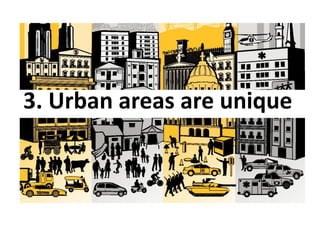
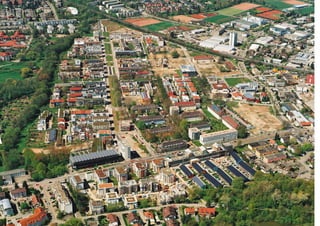
3. Urban areas are unique
4. Urban Resilience as a response
“the capacity of individuals, communities, institutions, businesses, and systems within a city to survive, adapt, and grow no
matter what kinds of chronic stresses and acute shocks they experience.”
‘The capacity of individuals, communities, institutions, businesses,
and systems within a city to survive, adapt, and grow no matter
what kinds of chronic stresses and acute shocks they experience’
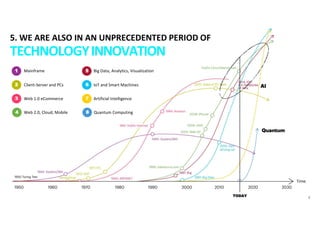
2TODAY
1 Mainframe 5 Big Data, Analytics, Visualization
2 Client‐Server and PCs 6 IoT and Smart Machines
3 Web 1.0 eCommerce 7 Artificial Intelligence
4 Web 2.0, Cloud, Mobile 8 Quantum Computing
5. WE ARE ALSO IN AN UNPRECEDENTED PERIOD OF
TECHNOLOGYINNOVATION
Landsec – 6
“If we try to focus
on everything, we
focus on nothing”
John Doerr
Legendary venture capitalist
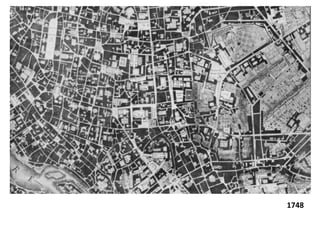
1748
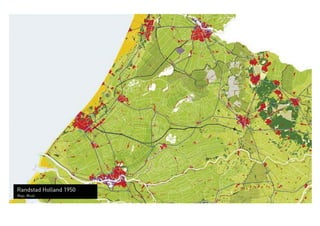
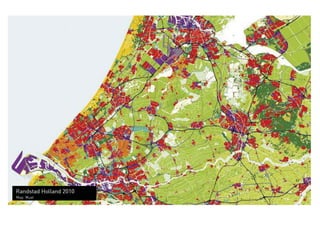
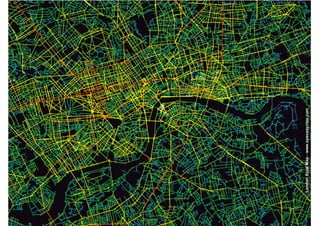
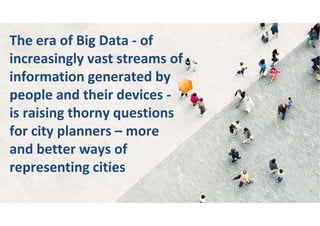
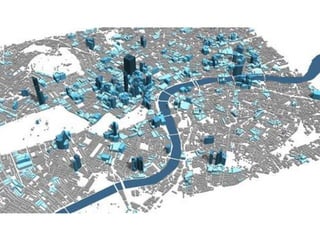
The era of Big Data - of
increasingly vast streams of
information generated by
people and their devices -
is raising thorny questions
for city planners – more
and better ways of
representing cities
A smart city is an efficient city, a liveable city, as
well as an economically, socially and
environmentally sustainable city
• This vision can be realised today, using
innovative operational and information
technology, and leveraging meaningful and
reliable real-time data generated by citizens and
city infrastructure
• This change will require a new paradigm, which
looks at the planning fabric of cities in a totally
new way
• This, in turn, requires a breakthrough in how
cities, businesses, citizens and academia think
and work together
This kind of infrastructure delivery
is not possible everywhere…
Basic infrastructure and service
provision shortfalls faced by many
southern cities present a
challenging context for ‘smart’
solutions
Global south challenge: Are
smart cities relevant?
We've all heard the claims:
Sensors will eliminate traffic congestion
New mapping technologies will identify,
and help to correct, urban problems no
one could see before.
Social media and crowdsourcing will
target big and little problems, down to
which potholes to fix
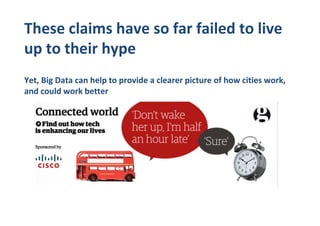
These claims have so far failed to live
up to their hype
Yet, Big Data can help to provide a clearer picture of how cities work,
and could work better
The transition towards smarter
cities is about reinventing our
cities such that:
citizens are no longer considered as users, but as
key stakeholders;
technology is no longer looked at as a static asset,
but as a dynamic enabler;
business is no longer viewed as a provider, but as
a partner;
Challenges
▪Data quality is still poor / lack of
infrastructure
▪Difficult to engage citizens
▪Delegation to technologists may not
achieve optimal outcomes
Opportunities
▪Get the basics right
▪Appropriate collaboration
▪Technology
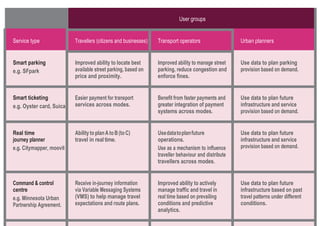
User groups
Service type Travellers (citizens and businesses) Transport operators Urban planners
Smart parking
e.g. SFpark
Improved ability to locate best
available street parking, based on
price and proximity.
Improved ability to manage street
parking, reduce congestion and
enforce fines.
Use data to plan parking
provision based on demand.
Smart ticketing
e.g. Oyster card, Suica
Easier payment for transport
services across modes.
Benefit from faster payments and
greater integration of payment
systems across modes.
Use data to plan future
infrastructure and service
provision based on demand.
Real time
journey planner
e.g. Citymapper, moovit
Ability toplanAtoB(toC)
travel in real time.
Usedatatoplanfuture
operations.
Use as a mechanism to influence
traveller behaviour and distribute
travellers across modes.
Use data to plan future
infrastructure and service
provision based on demand.
Command & control
centre
e.g. Minnesota Urban
Partnership Agreement.
Receive in-journey information
via Variable Messaging Systems
(VMS) to help manage travel
expectations and route plans.
Improved ability to actively
manage traffic and travel in
real time based on prevailing
conditions and predictive
analytics.
Use data to plan future
infrastructure based on past
travel patterns under different
conditions.
There is an economic case for smart cities
Important to identify the economic impact of smart
cities and align ‘smart’ solutions as an enabler for
these impacts (rather than technology being the
starting point)
Needs driven approach to ‘smartness’ crucial in the
global south, where immediate needs are vastly
different to those cities where many ‘smart’
solutions have traditionally originated
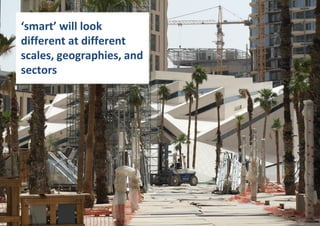
‘smart’ will look
different at different
scales, geographies, and
sectors
Different actors have
different roles to play for
smart solutions to be
effective
Enabled governments,
private sector innovation,
civil society participation,
academic research and
upskilling the workforce
will all underpin the
effectiveness of ‘smart’
solutions
THE
More needs to be done to better understand the role of ‘smart cities’ in
the global south, and the role of donors in this space
Global megatrends in digital technology will be critical in shaping cities in
the coming decades, including…..
FUTUREIS
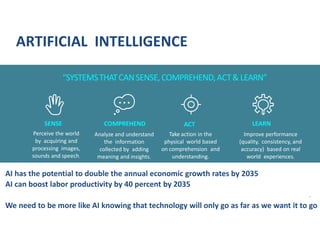
“SYSTEMSTHATCANSENSE,COMPREHEND,ACT& LEARN”
LEARN
Improve performance
(quality, consistency, and
accuracy) based on real
world experiences.
SENSE
Perceive the world
by acquiring and
processing images,
sounds and speech.
COMPREHEND
Analyze and understand
the information
collected by adding
meaning and insights.
ACT
Take action in the
physical world based
on comprehension and
understanding.
ARTIFICIAL INTELLIGENCE
AI has the potential to double the annual economic growth rates by 2035
AI can boost labor productivity by 40 percent by 2035
We need to be more like AI knowing that technology will only go as far as we want it to go
Thank you
www.samerbagaeen.com

Smart Mobility for Resilience- Smart Cities Summit 2018 - Algiers

  • 1.
    Smart Mobility forResilience OntheCuspofChange Professor Samer Bagaeen FRICS MRTPI
  • 2.
    Mobility describes theability of people and goods to move around an area, and in doing so to access the essential facilities, communities and other destinations that are required to support a decent quality of life and a buoyant economy. Mobility incorporates the transport infrastructure and services that facilitate these interactions.
  • 3.
    1. GLOBAL CHALLENGES 3 POPULATION GROWTH, MIGRATION,LIVING STANDARDSAND SCARCITY OF RESOURCES AGING POPULATION By 2050, the number of people above the age of 60 is expected to hit double from 981 million now, to 2 billion. HEALTHCARE By 2030, chronic diseases will account for over 37 million deaths a year in developing countries. MOBILITY By 2050, there will be over 2.5 billion cars roaming the earth, while mostly being concentrated in urban areas. RESOURCE SUSTAINABILITY By 2050, energy demand will increase by 80% due to the increase in emerging economies. URBAN DENSITY By 2050, 70% of the world’s population will live in urban areas. Copyright © 2018 Accenture All rights reserved.
  • 4.
    2. Change iscoming…. Urban mobility has evolved substantially over the past fifty years, from an early interest in catering for growing car ownership and use through major road expansion, to the current emphasis on reducing car use and cutting back on road provision, encouraging sustainable travel and promoting liveable cities with a high quality of life.
  • 5.
    5 3. Urban areasare unique
  • 6.
    4. Urban Resilienceas a response “the capacity of individuals, communities, institutions, businesses, and systems within a city to survive, adapt, and grow no matter what kinds of chronic stresses and acute shocks they experience.” ‘The capacity of individuals, communities, institutions, businesses, and systems within a city to survive, adapt, and grow no matter what kinds of chronic stresses and acute shocks they experience’
  • 7.
    2TODAY 1 Mainframe 5Big Data, Analytics, Visualization 2 Client‐Server and PCs 6 IoT and Smart Machines 3 Web 1.0 eCommerce 7 Artificial Intelligence 4 Web 2.0, Cloud, Mobile 8 Quantum Computing 5. WE ARE ALSO IN AN UNPRECEDENTED PERIOD OF TECHNOLOGYINNOVATION
  • 8.
    Landsec – 6 “Ifwe try to focus on everything, we focus on nothing” John Doerr Legendary venture capitalist
  • 9.
  • 13.
    The era ofBig Data - of increasingly vast streams of information generated by people and their devices - is raising thorny questions for city planners – more and better ways of representing cities
  • 14.
    A smart cityis an efficient city, a liveable city, as well as an economically, socially and environmentally sustainable city • This vision can be realised today, using innovative operational and information technology, and leveraging meaningful and reliable real-time data generated by citizens and city infrastructure • This change will require a new paradigm, which looks at the planning fabric of cities in a totally new way • This, in turn, requires a breakthrough in how cities, businesses, citizens and academia think and work together
  • 21.
    This kind ofinfrastructure delivery is not possible everywhere… Basic infrastructure and service provision shortfalls faced by many southern cities present a challenging context for ‘smart’ solutions Global south challenge: Are smart cities relevant?
  • 22.
    We've all heardthe claims: Sensors will eliminate traffic congestion New mapping technologies will identify, and help to correct, urban problems no one could see before. Social media and crowdsourcing will target big and little problems, down to which potholes to fix
  • 23.
    These claims haveso far failed to live up to their hype Yet, Big Data can help to provide a clearer picture of how cities work, and could work better
  • 24.
    The transition towardssmarter cities is about reinventing our cities such that: citizens are no longer considered as users, but as key stakeholders; technology is no longer looked at as a static asset, but as a dynamic enabler; business is no longer viewed as a provider, but as a partner;
  • 25.
    Challenges ▪Data quality isstill poor / lack of infrastructure ▪Difficult to engage citizens ▪Delegation to technologists may not achieve optimal outcomes Opportunities ▪Get the basics right ▪Appropriate collaboration ▪Technology
  • 26.
    User groups Service typeTravellers (citizens and businesses) Transport operators Urban planners Smart parking e.g. SFpark Improved ability to locate best available street parking, based on price and proximity. Improved ability to manage street parking, reduce congestion and enforce fines. Use data to plan parking provision based on demand. Smart ticketing e.g. Oyster card, Suica Easier payment for transport services across modes. Benefit from faster payments and greater integration of payment systems across modes. Use data to plan future infrastructure and service provision based on demand. Real time journey planner e.g. Citymapper, moovit Ability toplanAtoB(toC) travel in real time. Usedatatoplanfuture operations. Use as a mechanism to influence traveller behaviour and distribute travellers across modes. Use data to plan future infrastructure and service provision based on demand. Command & control centre e.g. Minnesota Urban Partnership Agreement. Receive in-journey information via Variable Messaging Systems (VMS) to help manage travel expectations and route plans. Improved ability to actively manage traffic and travel in real time based on prevailing conditions and predictive analytics. Use data to plan future infrastructure based on past travel patterns under different conditions.
  • 27.
    There is aneconomic case for smart cities Important to identify the economic impact of smart cities and align ‘smart’ solutions as an enabler for these impacts (rather than technology being the starting point) Needs driven approach to ‘smartness’ crucial in the global south, where immediate needs are vastly different to those cities where many ‘smart’ solutions have traditionally originated
  • 29.
    ‘smart’ will look differentat different scales, geographies, and sectors
  • 30.
    Different actors have differentroles to play for smart solutions to be effective Enabled governments, private sector innovation, civil society participation, academic research and upskilling the workforce will all underpin the effectiveness of ‘smart’ solutions
  • 31.
    THE More needs tobe done to better understand the role of ‘smart cities’ in the global south, and the role of donors in this space Global megatrends in digital technology will be critical in shaping cities in the coming decades, including….. FUTUREIS
  • 32.
    “SYSTEMSTHATCANSENSE,COMPREHEND,ACT& LEARN” LEARN Improve performance (quality,consistency, and accuracy) based on real world experiences. SENSE Perceive the world by acquiring and processing images, sounds and speech. COMPREHEND Analyze and understand the information collected by adding meaning and insights. ACT Take action in the physical world based on comprehension and understanding. ARTIFICIAL INTELLIGENCE AI has the potential to double the annual economic growth rates by 2035 AI can boost labor productivity by 40 percent by 2035 We need to be more like AI knowing that technology will only go as far as we want it to go
  • 33.