Smart Dustbin for Smart
city
presented by-
SANJIB MITRA(150403074)
SANTANU SINGHA(150403076)
SHRUTI KULSRESHTHA(150403085)
SUBHAM KUMAR MAHATY(150403101)
Content
 Introduction
 Problem
 Population growth and impact on overall waste
 What We need?
 How It Actually Works
 System Architecture
 Iplementation & Real life example
 Advantages&Disadvantages
 Technical Challenges
 Future scope
Introduction
 City administration needs to understanding of the
generating report control over pricing.
 District administration are inserted in controlling
the project of waste collection ,checking quility of
service
 waste truck drive need navigation system and
reporting problem system
 Citizens want to have better service,lower cost and
easy accessibile cost
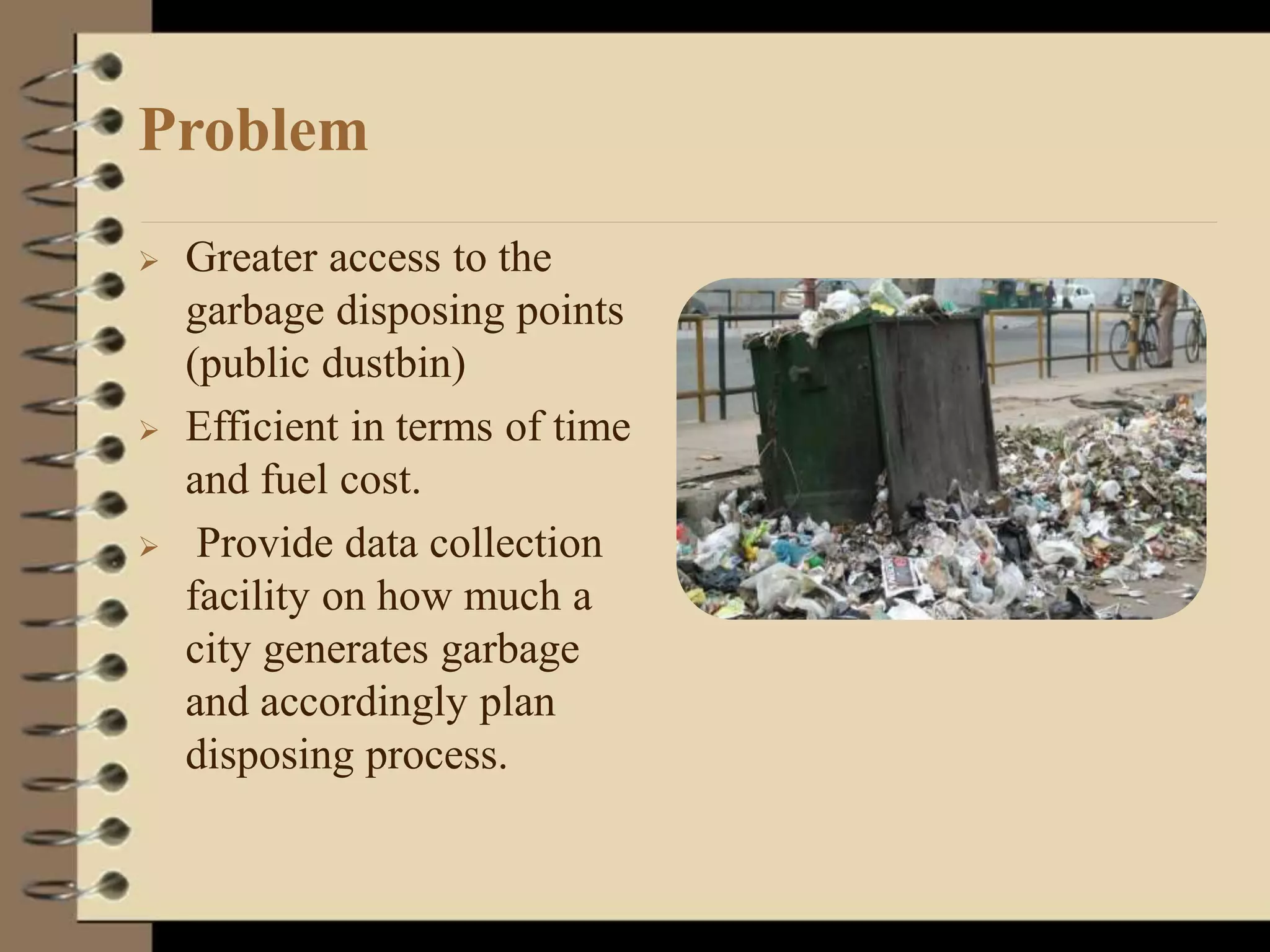
Problem
 Greater access to the
garbage disposing points
(public dustbin)
 Efficient in terms of time
and fuel cost.
 Provide data collection
facility on how much a
city generates garbage
and accordingly plan
disposing process.
Population growth and impact on overall
urban waste generation
Population
(millions)
Per capita-342.8
Total
waste (tons)
generates-71.15
Population
(millions)
Per capita-451.8
Total
waste (tons)
generates-107.01
Population
(millions)
Per capita-595.4
Total
waste (tons)
generates-160.96
Population
(millions)
Per capita-260.1
Total
waste (tons)
generates-47.30
20212011 2031 2041
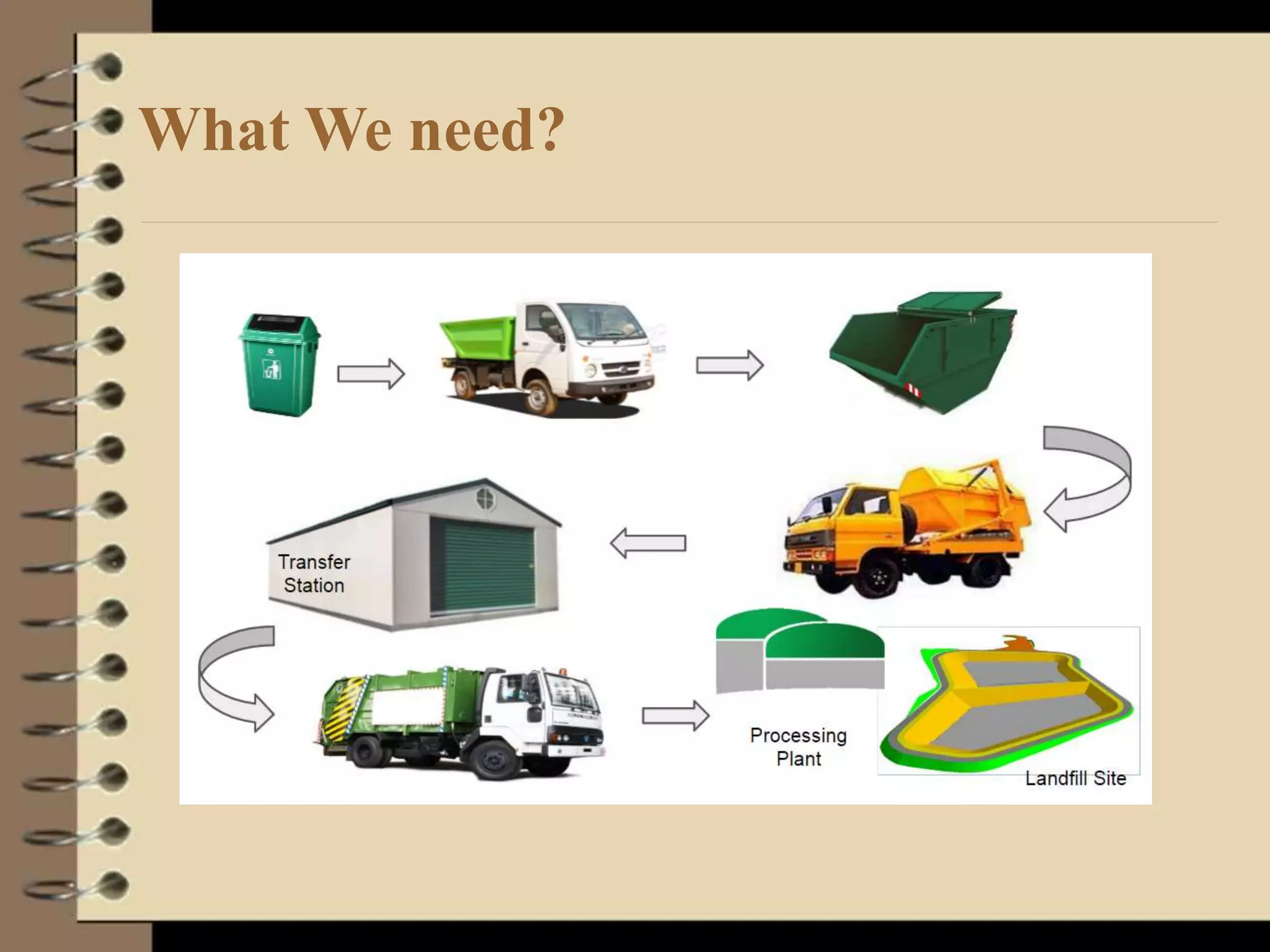
What We need?
How It Actually Works
start
check
dustbin
full=?
send message to
control room
send cleaning
vechicle
update status of
dustbin
repeat
repeat
No
Yes
System Architecture
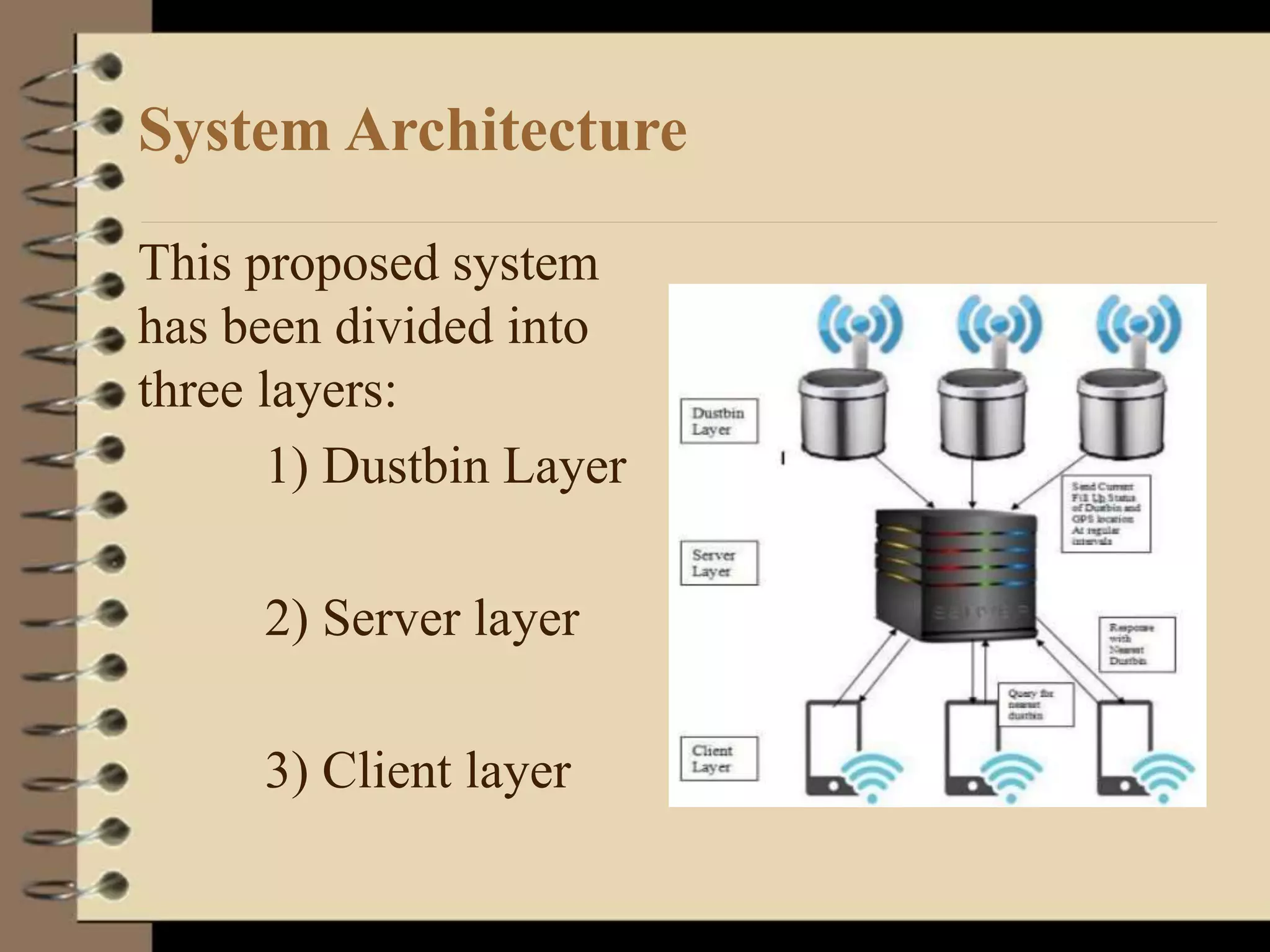
This proposed system
has been divided into
three layers:
1) Dustbin Layer
2) Server layer
3) Client layer
Iplementation
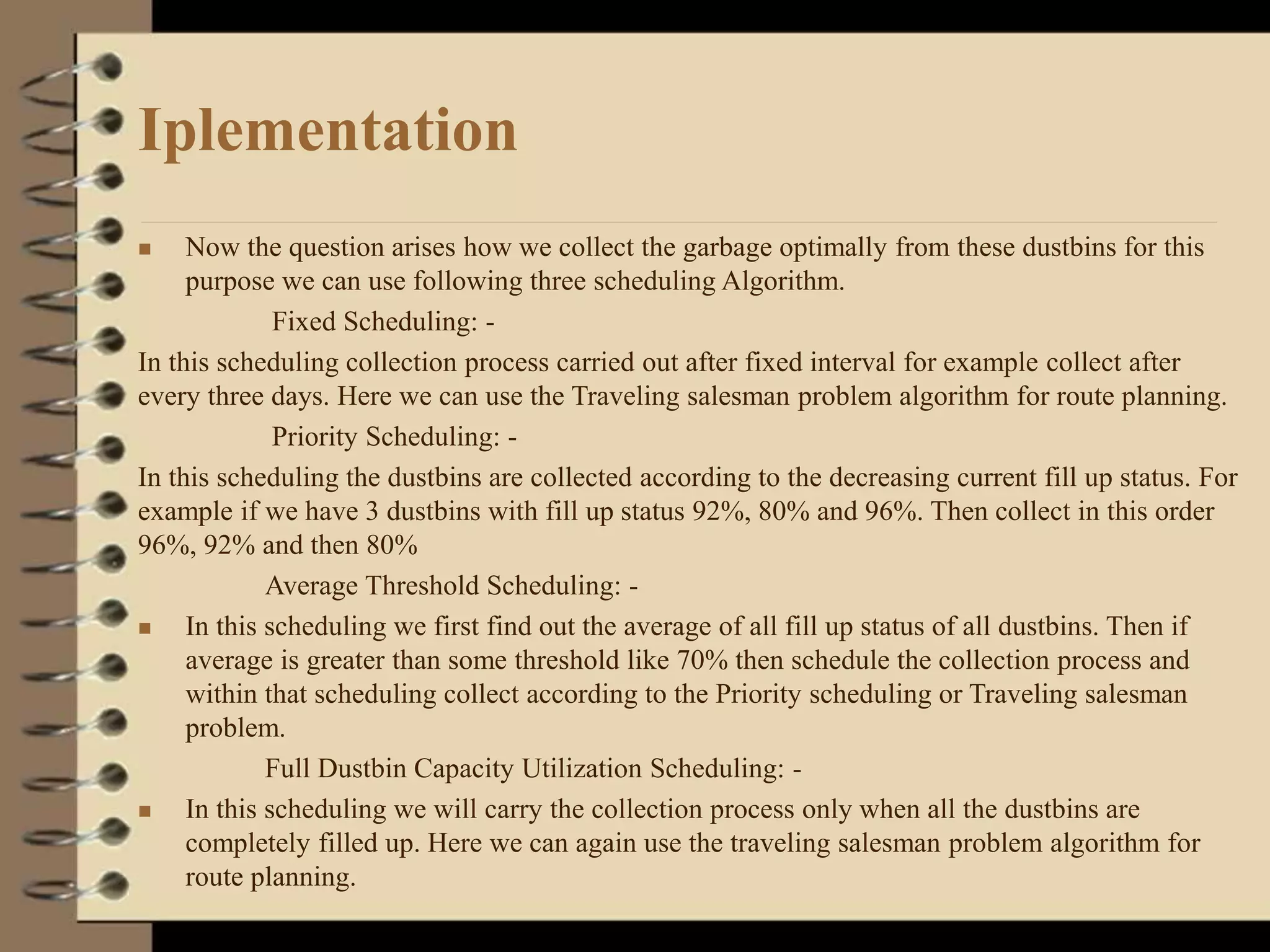
 Now the question arises how we collect the garbage optimally from these dustbins for this
purpose we can use following three scheduling Algorithm.
Fixed Scheduling: -
In this scheduling collection process carried out after fixed interval for example collect after
every three days. Here we can use the Traveling salesman problem algorithm for route planning.
Priority Scheduling: -
In this scheduling the dustbins are collected according to the decreasing current fill up status. For
example if we have 3 dustbins with fill up status 92%, 80% and 96%. Then collect in this order
96%, 92% and then 80%
Average Threshold Scheduling: -
 In this scheduling we first find out the average of all fill up status of all dustbins. Then if
average is greater than some threshold like 70% then schedule the collection process and
within that scheduling collect according to the Priority scheduling or Traveling salesman
problem.
Full Dustbin Capacity Utilization Scheduling: -
 In this scheduling we will carry the collection process only when all the dustbins are
completely filled up. Here we can again use the traveling salesman problem algorithm for
route planning.
Real life example
 Our system provides greater accessibility to the dustbin.
 In our system if dustbin is relocated to another location it will
automatically registered with the server with the new GPS
location.
 It will save fuel and time using appropriate route planning. Here
we can use traveling salesman problem for route planning.
 It will generate less pollution as we are saving fuel here which
is mostly diesel and petrol.
 We can plan and design the collection process as here we can
estimate the current garbage disposing levels on monthly basis
using the data provided by IT enabled dustbin.
 The process is not alaways cost-effective
 The resultant process has a short life
 Garbage segregation is very dificult
 The sites are often dengerous
Technical Challenges
 Huge data emitted by the sensor
 Data is closely tried to location
 Need algoritham to process raw data
meaningful data
 store data to generatesreports
 The UI has to be simple and intuitive
 The application has to accessible
Two bins can be placed
to collect wet and
dry waste separately
It can be made durable by
macking it compact and cost
effective .
Wet waste can be decoposd
and used for making biogas
Future
Scope
Thank you!

Smart dustbin for smart city

  • 1.
    Smart Dustbin forSmart city presented by- SANJIB MITRA(150403074) SANTANU SINGHA(150403076) SHRUTI KULSRESHTHA(150403085) SUBHAM KUMAR MAHATY(150403101)
  • 2.
    Content  Introduction  Problem Population growth and impact on overall waste  What We need?  How It Actually Works  System Architecture  Iplementation & Real life example  Advantages&Disadvantages  Technical Challenges  Future scope
  • 3.
    Introduction  City administrationneeds to understanding of the generating report control over pricing.  District administration are inserted in controlling the project of waste collection ,checking quility of service  waste truck drive need navigation system and reporting problem system  Citizens want to have better service,lower cost and easy accessibile cost
  • 4.
    Problem  Greater accessto the garbage disposing points (public dustbin)  Efficient in terms of time and fuel cost.  Provide data collection facility on how much a city generates garbage and accordingly plan disposing process.
  • 5.
    Population growth andimpact on overall urban waste generation Population (millions) Per capita-342.8 Total waste (tons) generates-71.15 Population (millions) Per capita-451.8 Total waste (tons) generates-107.01 Population (millions) Per capita-595.4 Total waste (tons) generates-160.96 Population (millions) Per capita-260.1 Total waste (tons) generates-47.30 20212011 2031 2041
  • 6.
  • 7.
    How It ActuallyWorks start check dustbin full=? send message to control room send cleaning vechicle update status of dustbin repeat repeat No Yes
  • 8.
    System Architecture This proposedsystem has been divided into three layers: 1) Dustbin Layer 2) Server layer 3) Client layer
  • 9.
    Iplementation  Now thequestion arises how we collect the garbage optimally from these dustbins for this purpose we can use following three scheduling Algorithm. Fixed Scheduling: - In this scheduling collection process carried out after fixed interval for example collect after every three days. Here we can use the Traveling salesman problem algorithm for route planning. Priority Scheduling: - In this scheduling the dustbins are collected according to the decreasing current fill up status. For example if we have 3 dustbins with fill up status 92%, 80% and 96%. Then collect in this order 96%, 92% and then 80% Average Threshold Scheduling: -  In this scheduling we first find out the average of all fill up status of all dustbins. Then if average is greater than some threshold like 70% then schedule the collection process and within that scheduling collect according to the Priority scheduling or Traveling salesman problem. Full Dustbin Capacity Utilization Scheduling: -  In this scheduling we will carry the collection process only when all the dustbins are completely filled up. Here we can again use the traveling salesman problem algorithm for route planning.
  • 11.
  • 12.
     Our systemprovides greater accessibility to the dustbin.  In our system if dustbin is relocated to another location it will automatically registered with the server with the new GPS location.  It will save fuel and time using appropriate route planning. Here we can use traveling salesman problem for route planning.  It will generate less pollution as we are saving fuel here which is mostly diesel and petrol.  We can plan and design the collection process as here we can estimate the current garbage disposing levels on monthly basis using the data provided by IT enabled dustbin.
  • 13.
     The processis not alaways cost-effective  The resultant process has a short life  Garbage segregation is very dificult  The sites are often dengerous
  • 14.
    Technical Challenges  Hugedata emitted by the sensor  Data is closely tried to location  Need algoritham to process raw data meaningful data  store data to generatesreports  The UI has to be simple and intuitive  The application has to accessible
  • 15.
    Two bins canbe placed to collect wet and dry waste separately It can be made durable by macking it compact and cost effective . Wet waste can be decoposd and used for making biogas Future Scope
  • 16.