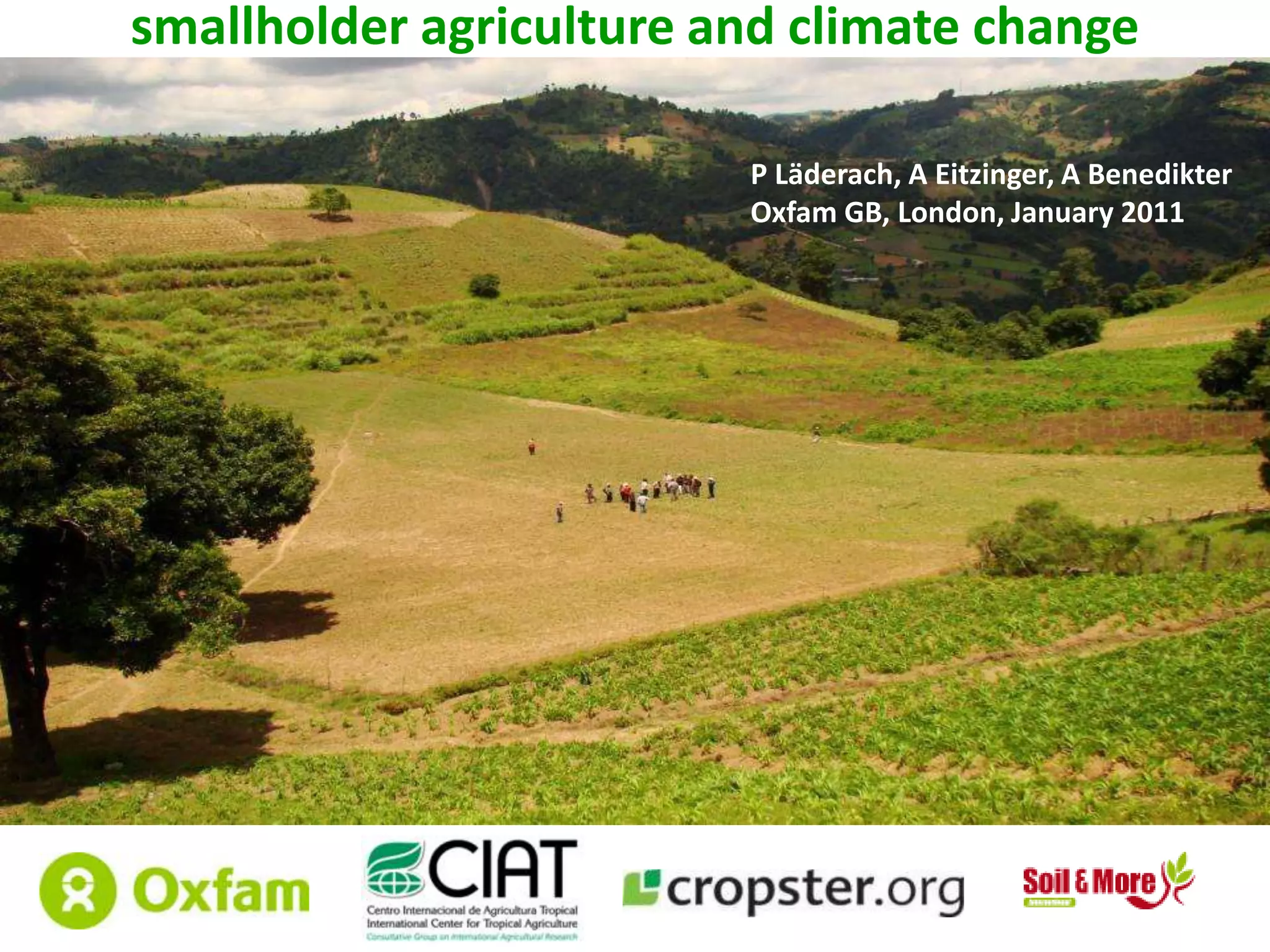
smallholder agriculture and climate changeP Läderach, A Eitzinger, A BenedikterOxfam GB, London, January 2011
Objectives
Methodology
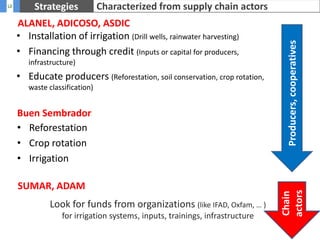
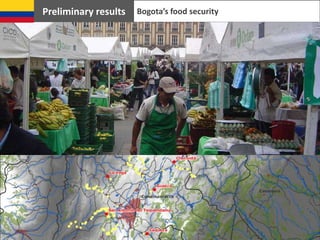
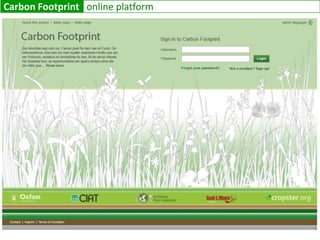
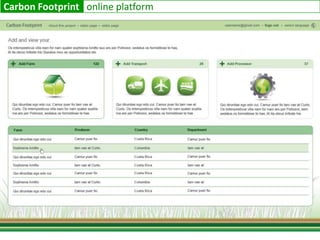
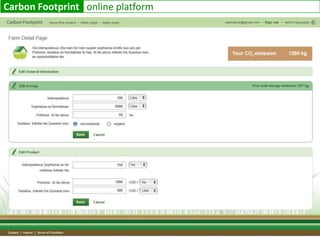
Preliminary resultsGuatemalaBogotáJamaicaCarbon Footprint online platform
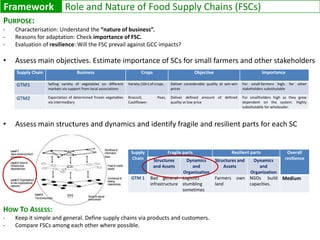
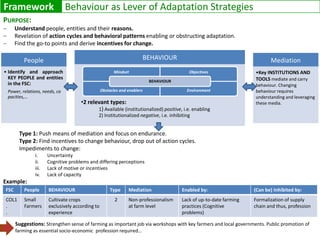
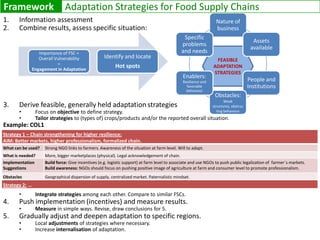
A Framework to adapt
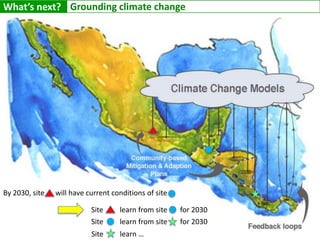
What’s next?
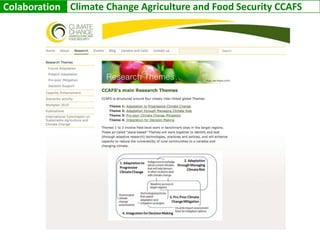
CCAFSOutline
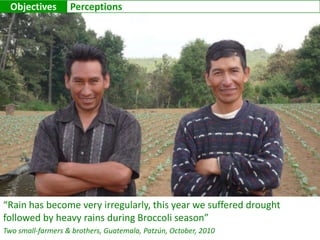
ObjectivesPerceptions“Rain has become very irregularly, this year we suffered drought followed by heavy rains during Broccoli season”Two small-farmers & brothers, Guatemala, Patzún, October, 2010
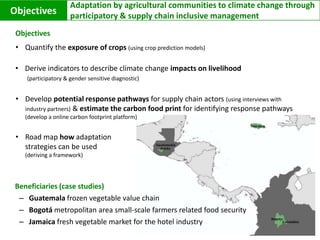
ObjectivesAdaptation by agricultural communities to climate change through participatory & supply chain inclusive managementObjectivesQuantify the exposure of crops (using crop prediction models)
Derive indicators to describe climate change impacts on livelihood(participatory & gender sensitive diagnostic)
Develop potential response pathways for supply chain actors (using interviews with industry partners) & estimate the carbon food print for identifying response pathways (develop a online carbon footprint platform)
Road map how adaptationstrategiescan be used(deriving a framework)Beneficiaries (case studies)Guatemala frozen vegetable value chain
Bogotá metropolitan area small-scale farmers related food security
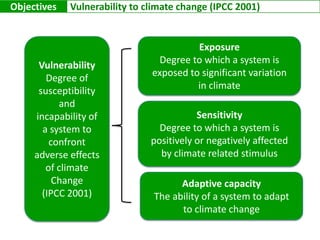
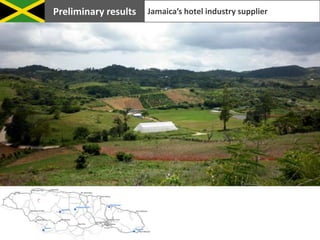
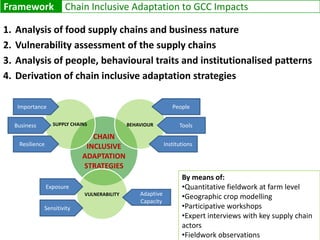
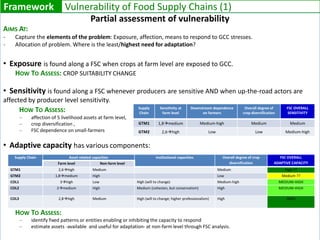
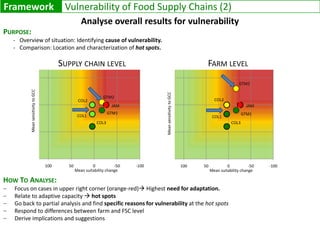
Jamaica fresh vegetable market for the hotel industryObjectivesVulnerability to climate change (IPCC 2001)VulnerabilityDegree ofsusceptibility andincapability ofa system to confrontadverse effectsof climateChange(IPCC 2001)ExposureDegree to which a system isexposed to significant variationin climateSensitivityDegree to which a system ispositively or negatively affectedby climate related stimulusAdaptive capacityThe ability of a system to adaptto climate change
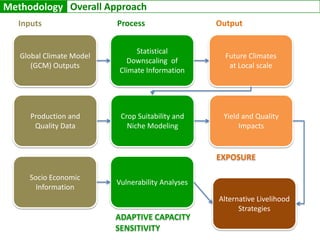
MethodologyOverall ApproachOutputProcessInputsStatistical Downscaling  of Climate InformationFuture Climatesat Local scaleGlobal Climate Model (GCM) OutputsCrop Suitability and Niche ModelingYield and Quality ImpactsProduction and Quality DataEXPOSUREVulnerability AnalysesSocio Economic InformationADAPTIVE CAPACITYAlternative Livelihood StrategiesSENSITIVITY
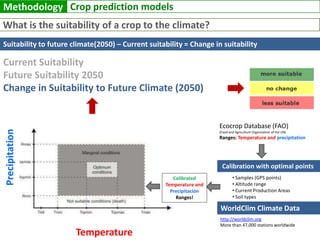
MethodologyCrop prediction modelsWhat is the suitability of a crop to the climate?Suitability to future climate(2050) – Current suitability = Change in suitability Current SuitabilityFuture Suitability 2050Change in Suitability to Future Climate (2050)Ecocrop Database (FAO)(Food and Agriculture Organization of the UN)Ranges: Temperature and precipitationPrecipitation Calibration with optimal points Samples (GPS points)
 Altitude range
 Current Production Areas
 Soil typesCalibratedTemperature andPrecipitaciónRanges!WorldClim Climate Data http://worldclim.orgMore than 47,000 stations worldwideTemperature
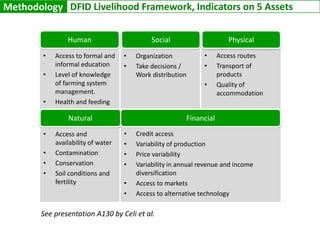
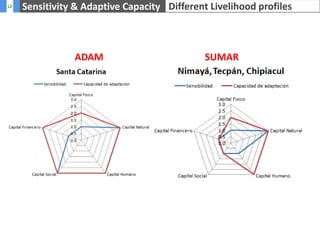
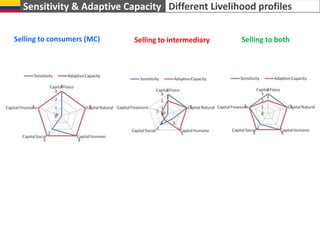
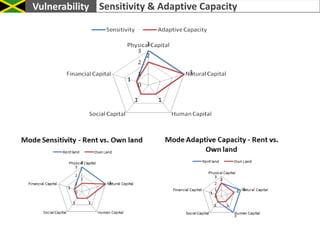
MethodologyDFID Livelihood Framework, Indicators on 5 AssetsHumanSocialPhysicalAccess routes
Transport of products
Quality of accommodation
Access to formal and informal education
Level of knowledge of farming system management.
Health and feeding
Organization
Take decisions / Work distributionNaturalFinancialCredit access
Variability of production
Price variability
Variability in annual revenue and income diversification
Access to markets
Access to alternative technology
Access and availability of water
Contamination
Conservation
Soil conditions and fertilitySee presentation A130 by Celi et al.
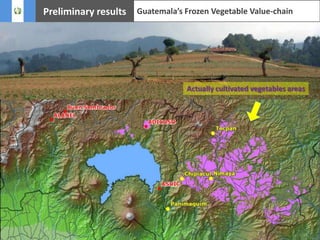
Preliminary resultsGuatemala’s Frozen Vegetable Value-chainActually cultivated vegetables areas
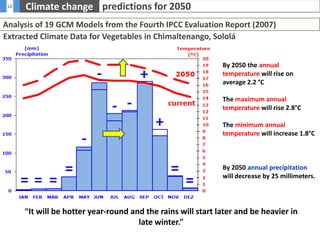
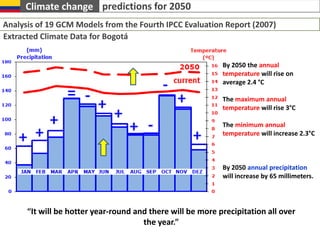
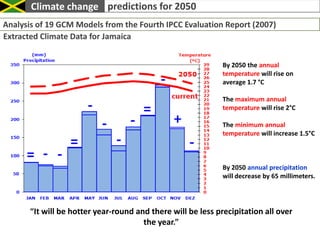
Climate changepredictions for 2050Analysis of 19 GCM Models from the Fourth IPCC Evaluation Report (2007) ExtractedClimateData for Vegetables in Chimaltenango, SololáBy 2050 the annual temperature will rise on average 2.2 °CThe maximum annual temperature will rise 2.8°C The minimum annual temperature will increase 1.8°C 	By 2050 annual precipitation will decrease by 25 millimeters.	“It will be hotter year-round and the rains will start later and be heavier in late winter.”
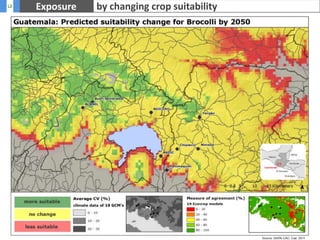
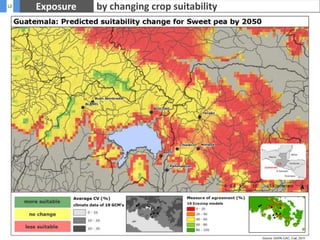
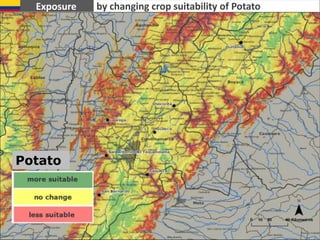
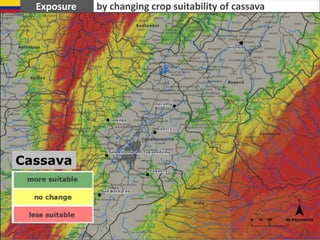
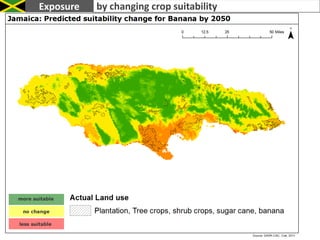
Exposureby changing crop suitability
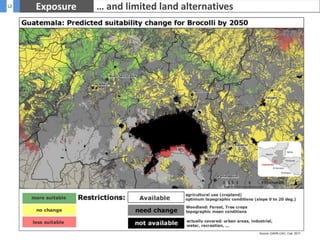
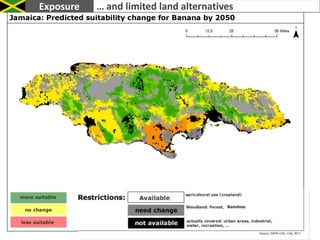
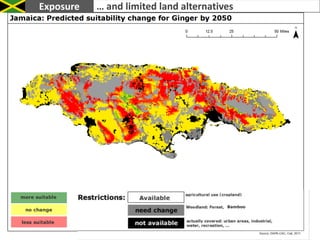
Exposure… and limited land alternatives
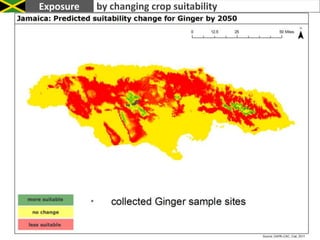
Exposureby changing crop suitability
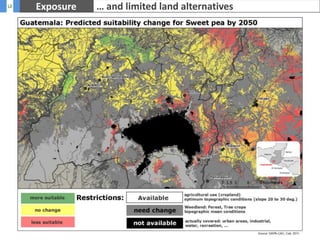
Exposure… and limited land alternatives

Smallholder agriculture & climate change