Fergus Sinclair
Co-convenor of the Transformative Partnership Platform on Agroecology
Chief Scientist, CIFOR-ICRAF (Centre for International Forest Research – World Agroforesrtry)
Leader, Livelihood Systems Flagship, CGIAR Research Program on Forests, Trees and Agroforestry
School of Natural Sciences, Bangor University, Wales, UK
Development of holistic metrics of
agricultural and food system performance
https://glfx.globallandscapesforum.org/topics/21467/page/TPP-home
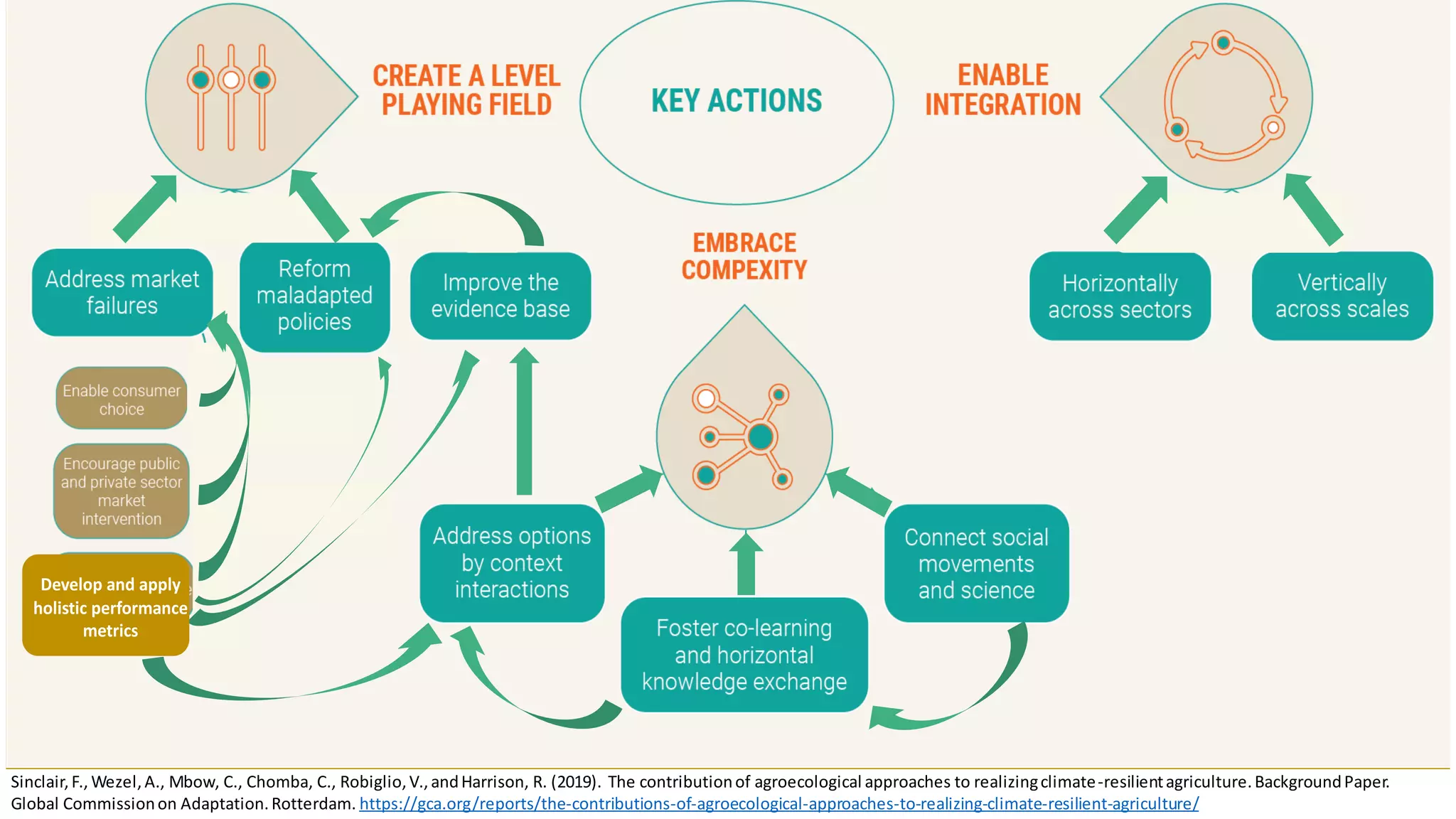
Develop and apply
holistic performance
metrics
Sinclair,F., Wezel,A., Mbow, C., Chomba, C., Robiglio,V.,andHarrison, R. (2019). The contributionof agroecological approaches to realizingclimate-resilientagriculture.BackgroundPaper.
Global Commissionon Adaptation.Rotterdam. https://gca.org/reports/the-contributions-of-agroecological-approaches-to-realizing-climate-resilient-agriculture/
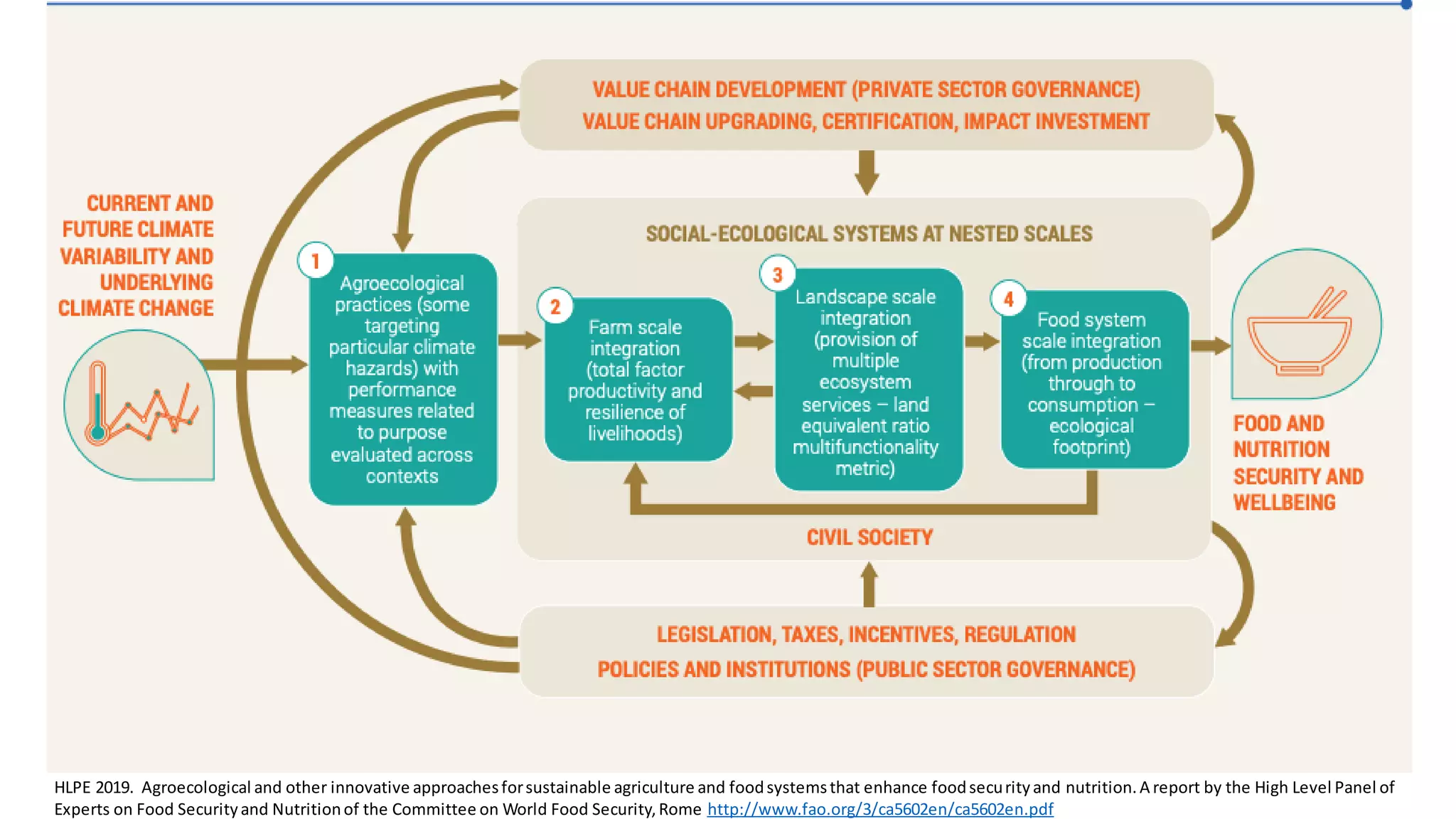
HLPE 2019. Agroecological and other innovative approachesforsustainable agriculture and foodsystemsthat enhance foodsecurityand nutrition.A report by the High Level Panel of
Experts on Food Securityand Nutritionof the Committee on World Food Security,Rome http://www.fao.org/3/ca5602en/ca5602en.pdf
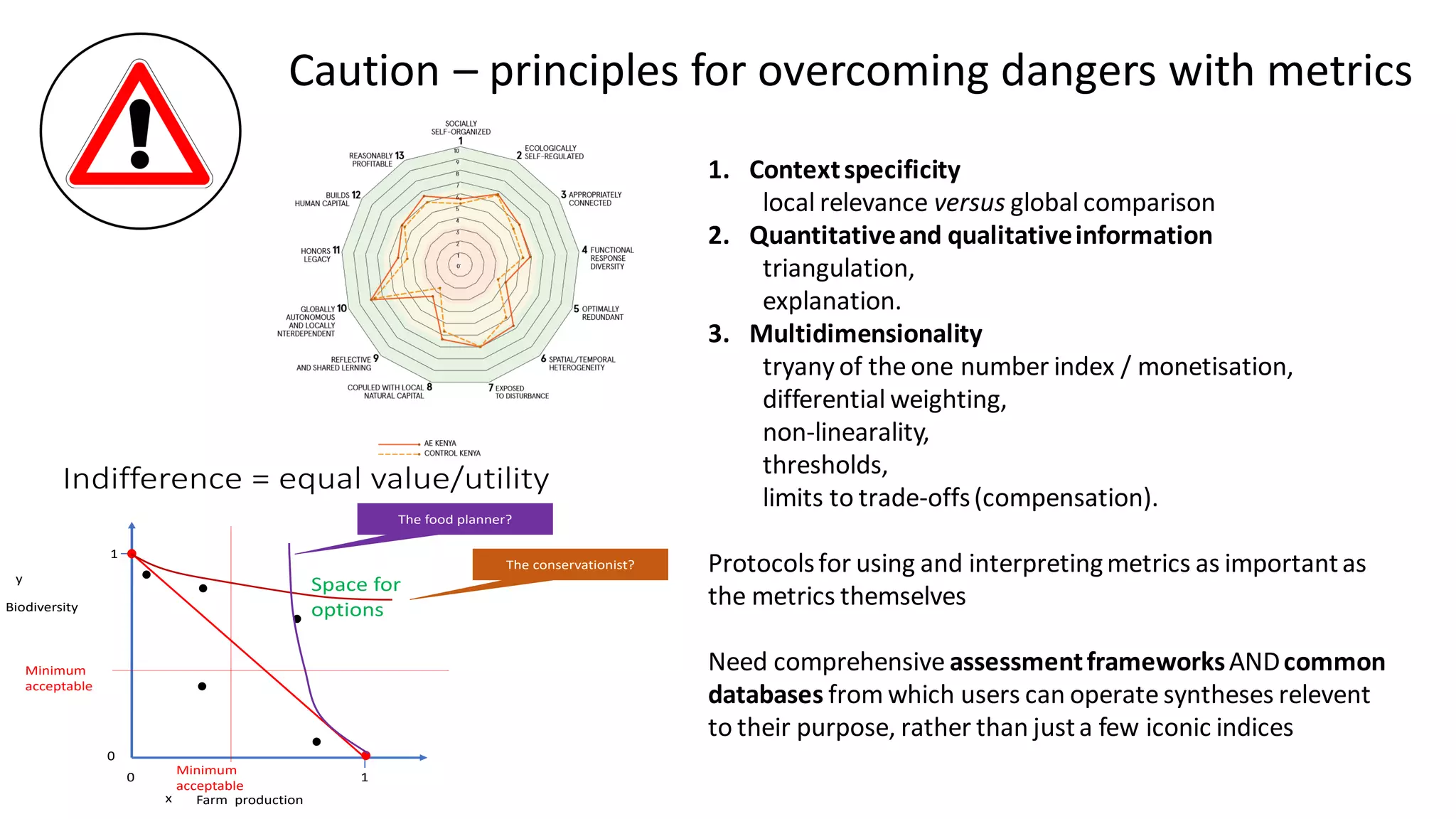
Indifference = equal value/utility
y
x
Biodiversity
1
1
0
0
The food planner?
Minimum
acceptable
Farm production
Minimum
acceptable
Space for
options
The conservationist?
Caution – principles for overcoming dangers with metrics
1. Contextspecificity
local relevance versus global comparison
2. Quantitativeand qualitativeinformation
triangulation,
explanation.
3. Multidimensionality
tryany of the one number index / monetisation,
differential weighting,
non-linearality,
thresholds,
limits to trade-offs(compensation).
Protocolsfor using and interpretingmetrics as importantas
the metrics themselves
Need comprehensive assessmentframeworksANDcommon
databases from which users can operate syntheses relevent
to their purpose, rather than justa few iconic indices
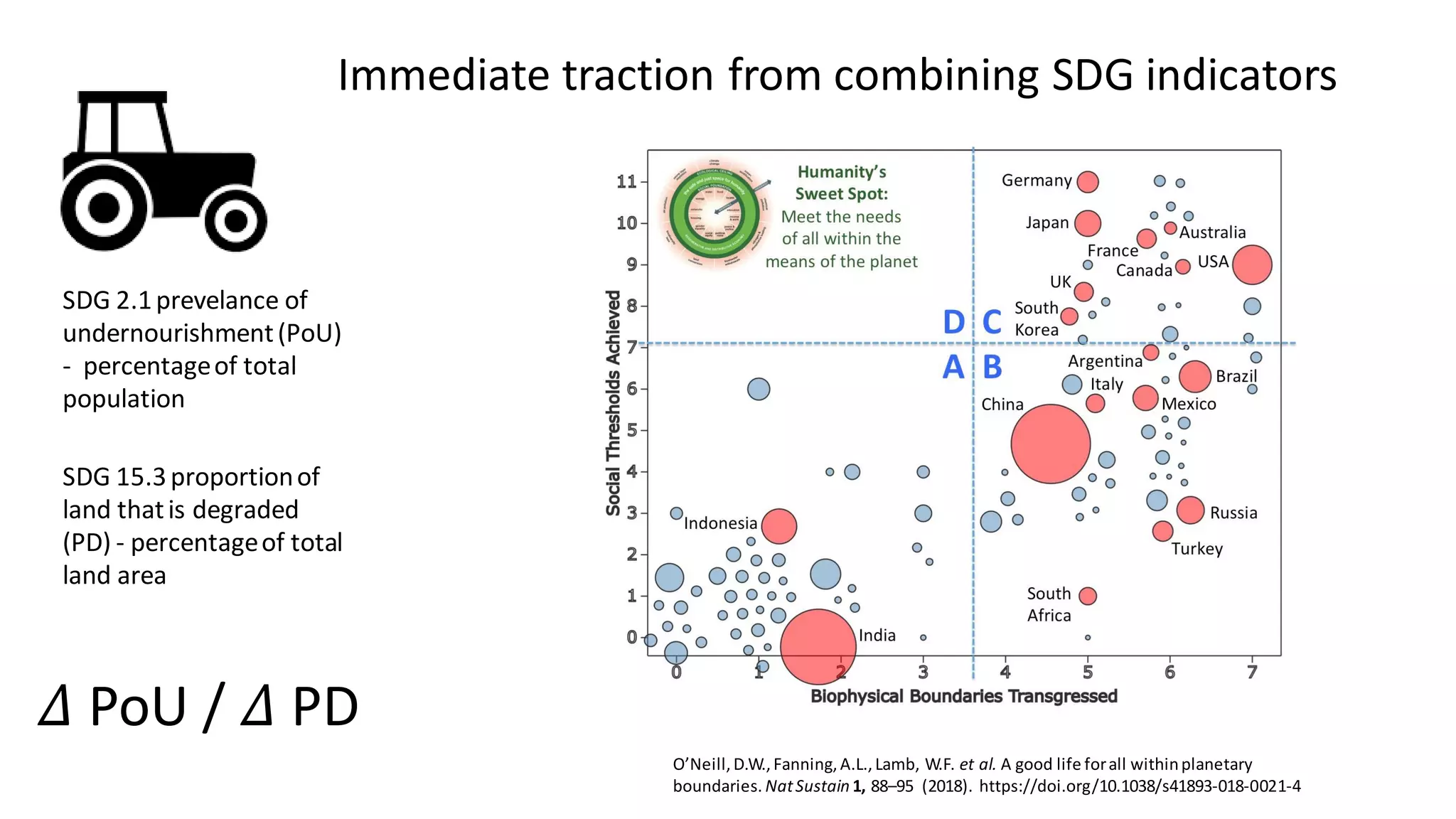
Immediate traction from combining SDG indicators
SDG 2.1prevelance of
undernourishment(PoU)
- percentageof total
population
SDG 15.3proportionof
land thatis degraded
(PD) - percentageof total
land area
𝛥 PoU / 𝛥 PD
O’Neill,D.W.,Fanning,A.L.,Lamb, W.F. et al. A good life forall withinplanetary
boundaries. NatSustain 1, 88–95 (2018). https://doi.org/10.1038/s41893-018-0021-4
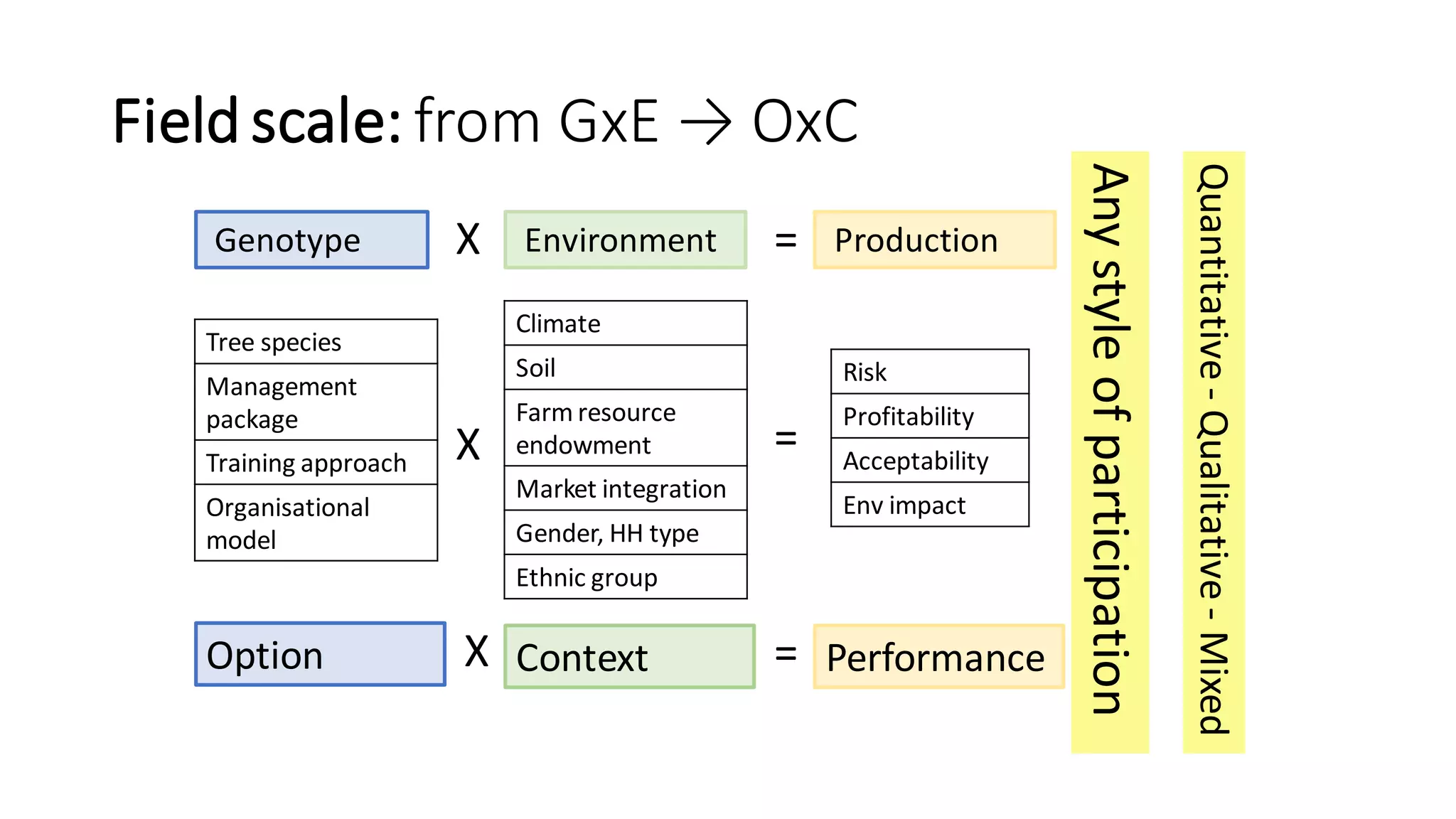
Field scale: from GxE → OxC
Tree species
Management
package
Training approach
Organisational
model
Genotype
Climate
Soil
Farm resource
endowment
Market integration
Gender, HH type
Ethnic group
Environment Production
Risk
Profitability
Acceptability
Env impact
X =
X
Option Context Performance
X =
=
Any
style
of
participation
Quantitative
-
Qualitative
-
Mixed
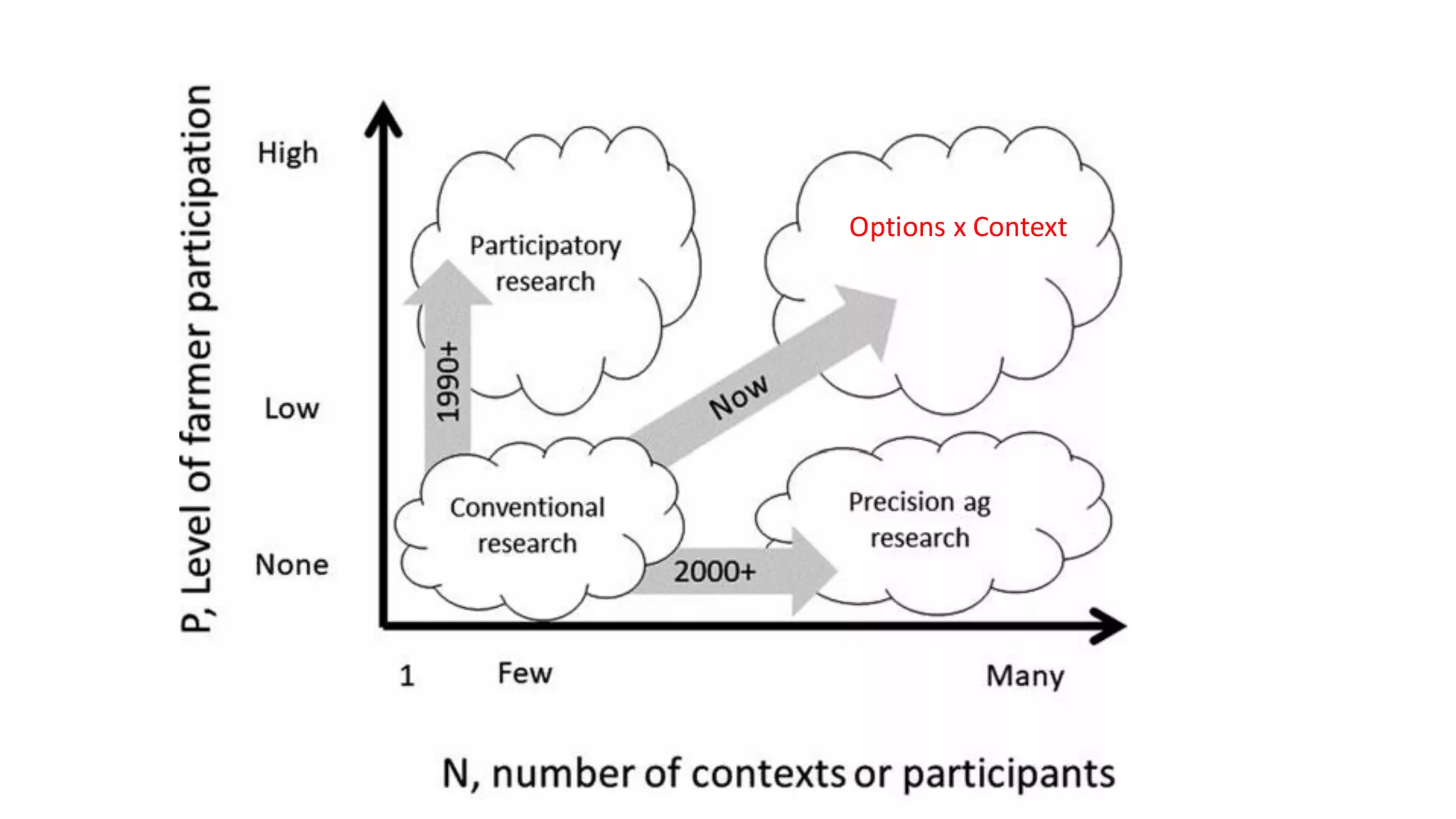
Options x Context
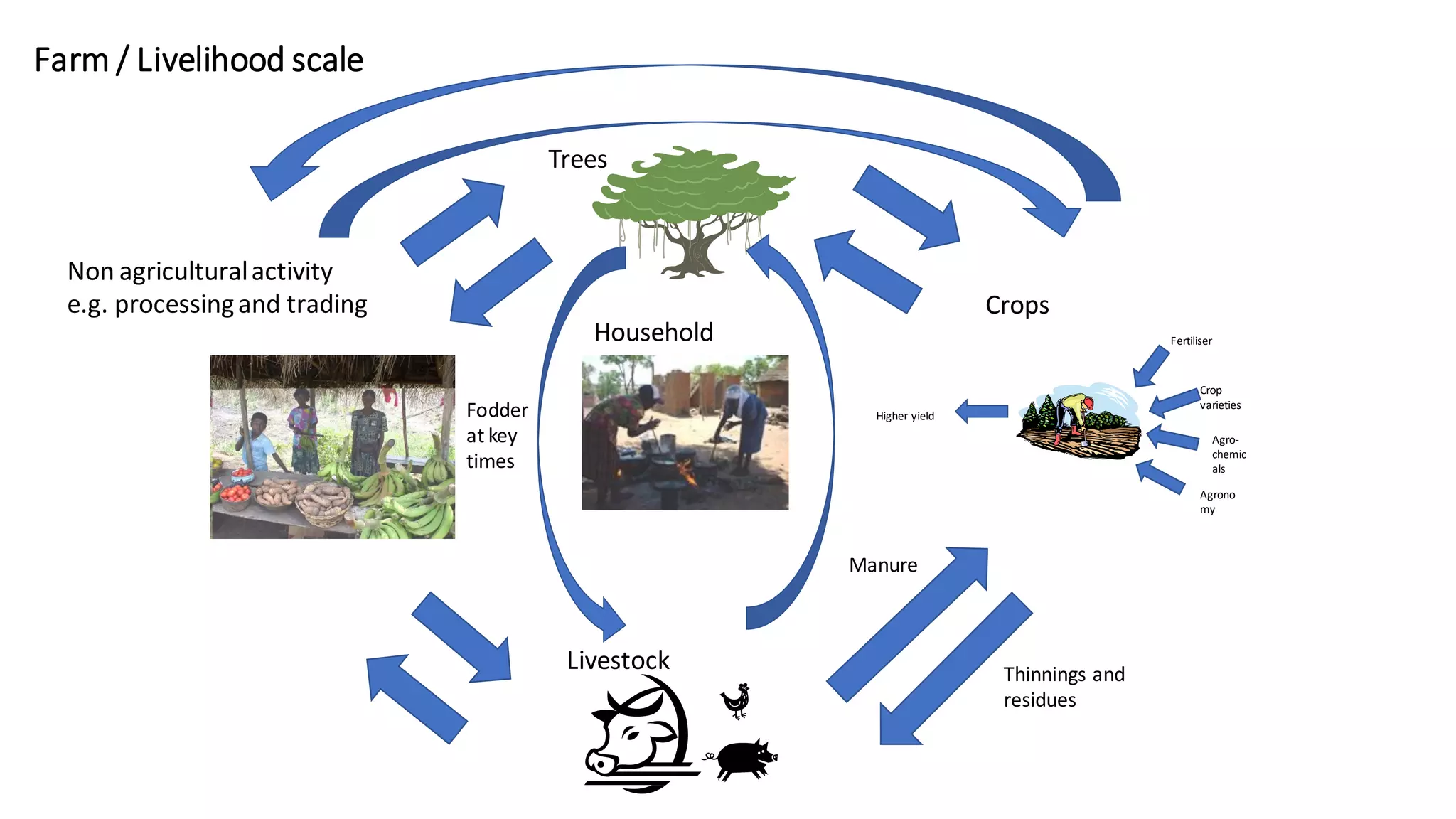
Farm / Livelihood scale
Fertiliser
Crop
varieties
Agro-
chemic
als
Higher yield
Agrono
my
Thinnings and
residues
Manure
Fodder
at key
times
Livestock
Non agriculturalactivity
e.g. processingand trading
Trees
Crops
Household
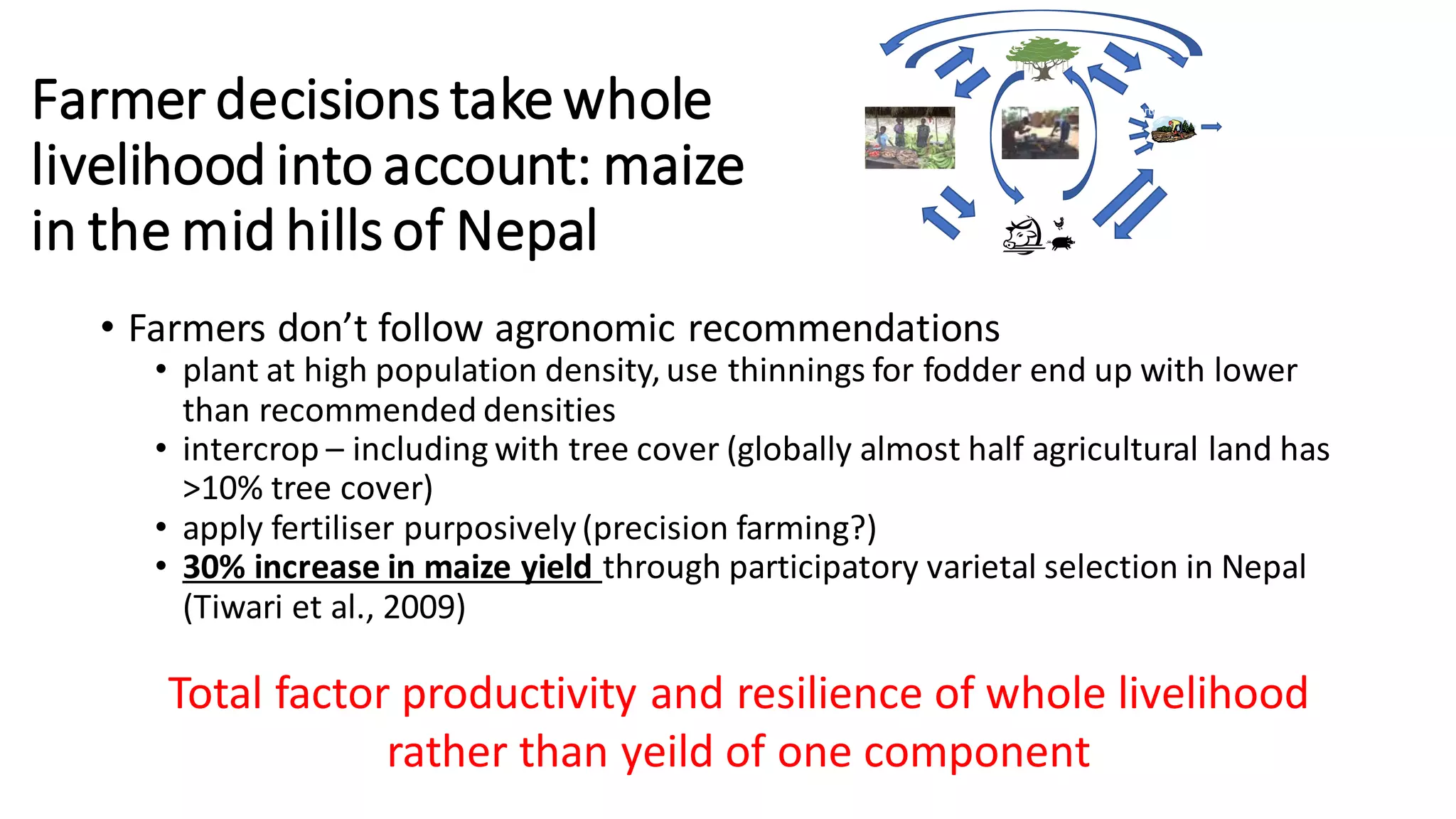
Farmer decisions takewhole
livelihood into account: maize
in the mid hillsof Nepal
• Farmers don’t follow agronomic recommendations
• plant at high population density,use thinnings for fodder end up with lower
than recommended densities
• intercrop – including with tree cover (globally almost half agricultural land has
>10% tree cover)
• apply fertiliser purposively(precision farming?)
• 30% increase in maize yield through participatory varietal selection in Nepal
(Tiwari et al., 2009)
Fertiliser
A
g
r
o
-
c
h
e
m
i
c
a
l
s
Higher yield
A
g
r
o
n
o
m
y
Thinni
ngs
and
residu
es
Fo
dd
er
at
ke
y
ti
m
es
Livestock
Non
Trees
Total factor productivity and resilience of whole livelihood
rather than yeild of one component
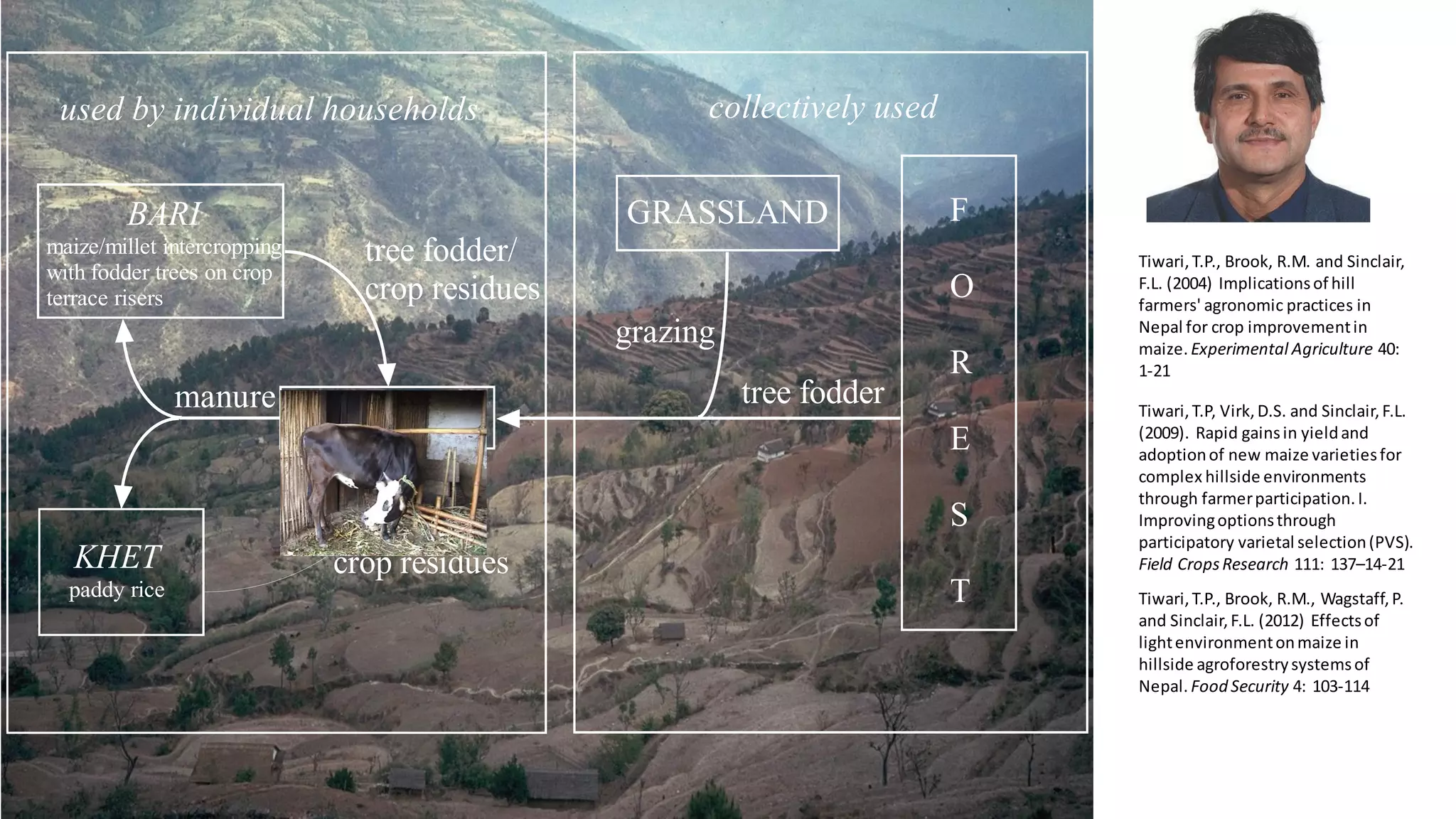
used by individual households collectively used
BARI
maize/millet intercropping
with fodder trees on crop
terrace risers
GRASSLAND F
O
R
E
S
T
KHET
paddy rice
LIVESTOCK
grazing
tree fodder
tree fodder/
crop residues
manure
crop residues
Tiwari,T.P., Brook, R.M. and Sinclair,
F.L. (2004) Implicationsof hill
farmers' agronomic practices in
Nepal for crop improvementin
maize. Experimental Agriculture 40:
1-21
Tiwari,T.P, Virk,D.S. and Sinclair,F.L.
(2009). Rapid gainsin yieldand
adoptionof new maize varietiesfor
complex hillside environments
through farmerparticipation.I.
Improvingoptionsthrough
participatory varietal selection(PVS).
Field CropsResearch 111: 137–14-21
Tiwari,T.P., Brook, R.M., Wagstaff,P.
and Sinclair,F.L. (2012) Effectsof
lightenvironmentonmaize in
hillside agroforestrysystemsof
Nepal. Food Security 4: 103-114
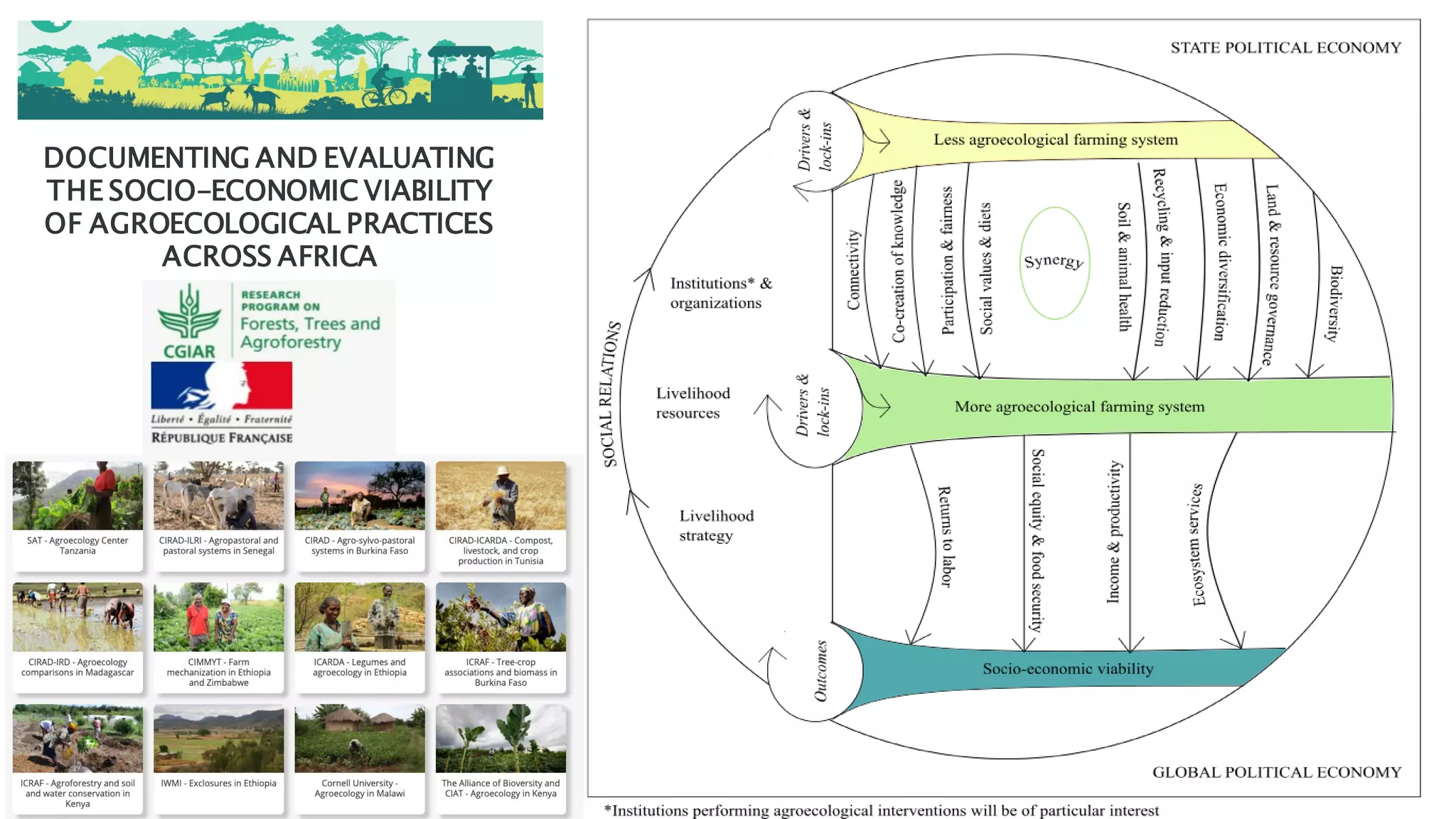
DOCUMENTING AND EVALUATING
THE SOCIO-ECONOMIC VIABILITY
OF AGROECOLOGICAL PRACTICES
ACROSS AFRICA
Development of holistic metrics of  agricultural and food system performance

Development of holistic metrics of agricultural and food system performance

  • 1.
    Fergus Sinclair Co-convenor ofthe Transformative Partnership Platform on Agroecology Chief Scientist, CIFOR-ICRAF (Centre for International Forest Research – World Agroforesrtry) Leader, Livelihood Systems Flagship, CGIAR Research Program on Forests, Trees and Agroforestry School of Natural Sciences, Bangor University, Wales, UK Development of holistic metrics of agricultural and food system performance https://glfx.globallandscapesforum.org/topics/21467/page/TPP-home
  • 2.
    Develop and apply holisticperformance metrics Sinclair,F., Wezel,A., Mbow, C., Chomba, C., Robiglio,V.,andHarrison, R. (2019). The contributionof agroecological approaches to realizingclimate-resilientagriculture.BackgroundPaper. Global Commissionon Adaptation.Rotterdam. https://gca.org/reports/the-contributions-of-agroecological-approaches-to-realizing-climate-resilient-agriculture/
  • 3.
    HLPE 2019. Agroecologicaland other innovative approachesforsustainable agriculture and foodsystemsthat enhance foodsecurityand nutrition.A report by the High Level Panel of Experts on Food Securityand Nutritionof the Committee on World Food Security,Rome http://www.fao.org/3/ca5602en/ca5602en.pdf
  • 4.
    Indifference = equalvalue/utility y x Biodiversity 1 1 0 0 The food planner? Minimum acceptable Farm production Minimum acceptable Space for options The conservationist? Caution – principles for overcoming dangers with metrics 1. Contextspecificity local relevance versus global comparison 2. Quantitativeand qualitativeinformation triangulation, explanation. 3. Multidimensionality tryany of the one number index / monetisation, differential weighting, non-linearality, thresholds, limits to trade-offs(compensation). Protocolsfor using and interpretingmetrics as importantas the metrics themselves Need comprehensive assessmentframeworksANDcommon databases from which users can operate syntheses relevent to their purpose, rather than justa few iconic indices
  • 5.
    Immediate traction fromcombining SDG indicators SDG 2.1prevelance of undernourishment(PoU) - percentageof total population SDG 15.3proportionof land thatis degraded (PD) - percentageof total land area 𝛥 PoU / 𝛥 PD O’Neill,D.W.,Fanning,A.L.,Lamb, W.F. et al. A good life forall withinplanetary boundaries. NatSustain 1, 88–95 (2018). https://doi.org/10.1038/s41893-018-0021-4
  • 6.
    Field scale: fromGxE → OxC Tree species Management package Training approach Organisational model Genotype Climate Soil Farm resource endowment Market integration Gender, HH type Ethnic group Environment Production Risk Profitability Acceptability Env impact X = X Option Context Performance X = = Any style of participation Quantitative - Qualitative - Mixed
  • 7.
  • 8.
    Farm / Livelihoodscale Fertiliser Crop varieties Agro- chemic als Higher yield Agrono my Thinnings and residues Manure Fodder at key times Livestock Non agriculturalactivity e.g. processingand trading Trees Crops Household
  • 9.
    Farmer decisions takewhole livelihoodinto account: maize in the mid hillsof Nepal • Farmers don’t follow agronomic recommendations • plant at high population density,use thinnings for fodder end up with lower than recommended densities • intercrop – including with tree cover (globally almost half agricultural land has >10% tree cover) • apply fertiliser purposively(precision farming?) • 30% increase in maize yield through participatory varietal selection in Nepal (Tiwari et al., 2009) Fertiliser A g r o - c h e m i c a l s Higher yield A g r o n o m y Thinni ngs and residu es Fo dd er at ke y ti m es Livestock Non Trees Total factor productivity and resilience of whole livelihood rather than yeild of one component
  • 10.
    used by individualhouseholds collectively used BARI maize/millet intercropping with fodder trees on crop terrace risers GRASSLAND F O R E S T KHET paddy rice LIVESTOCK grazing tree fodder tree fodder/ crop residues manure crop residues Tiwari,T.P., Brook, R.M. and Sinclair, F.L. (2004) Implicationsof hill farmers' agronomic practices in Nepal for crop improvementin maize. Experimental Agriculture 40: 1-21 Tiwari,T.P, Virk,D.S. and Sinclair,F.L. (2009). Rapid gainsin yieldand adoptionof new maize varietiesfor complex hillside environments through farmerparticipation.I. Improvingoptionsthrough participatory varietal selection(PVS). Field CropsResearch 111: 137–14-21 Tiwari,T.P., Brook, R.M., Wagstaff,P. and Sinclair,F.L. (2012) Effectsof lightenvironmentonmaize in hillside agroforestrysystemsof Nepal. Food Security 4: 103-114
  • 11.
    DOCUMENTING AND EVALUATING THESOCIO-ECONOMIC VIABILITY OF AGROECOLOGICAL PRACTICES ACROSS AFRICA