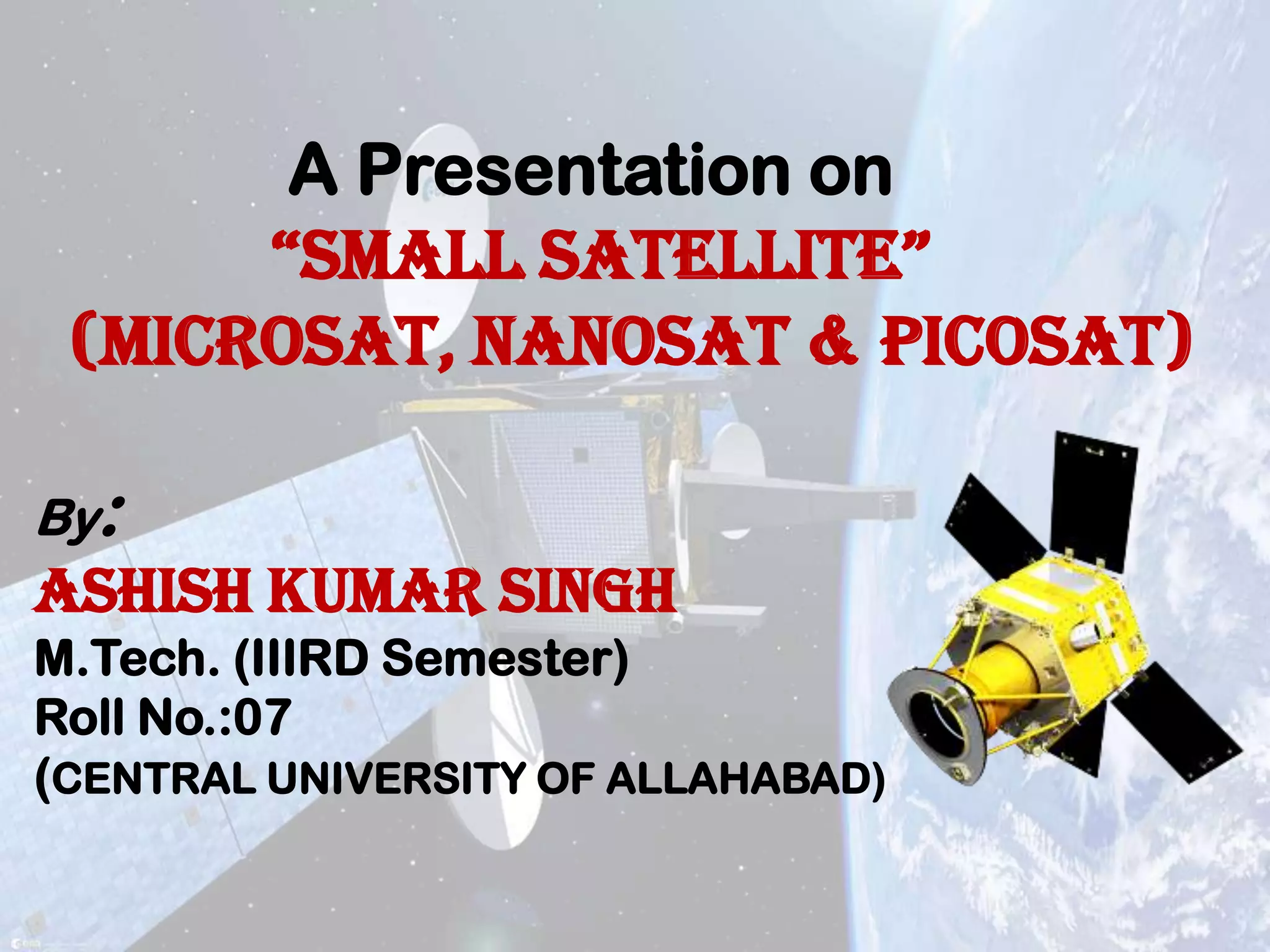
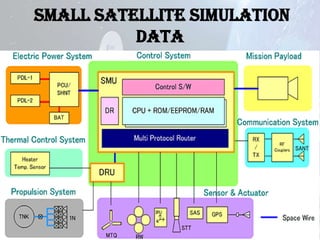
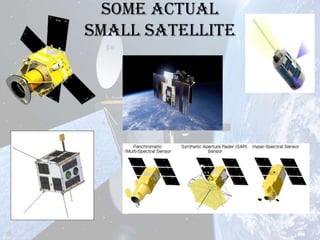
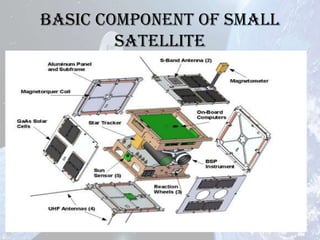
This presentation provides an overview of small satellites, including microsatellites, nanosatellites, and picosatellites. It discusses the history and increasing use of small satellites worldwide. Key points include:
- Small satellites are less than 100kg and have smaller electronic components, making them more cost-effective for certain space missions.
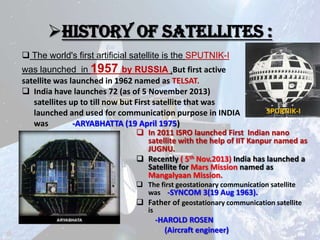
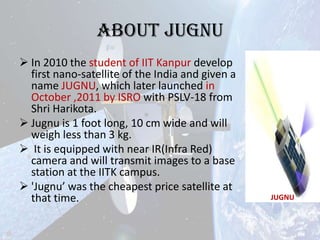
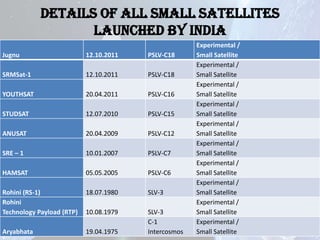
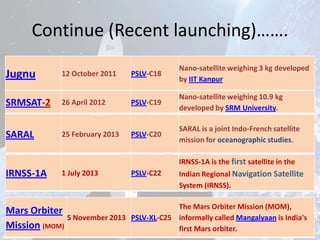
- India has launched several small satellites in recent years including Jugnu in 2011, the first Indian nanosatellite developed by IIT Kanpur.
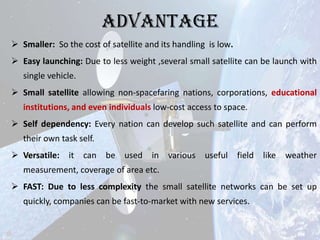
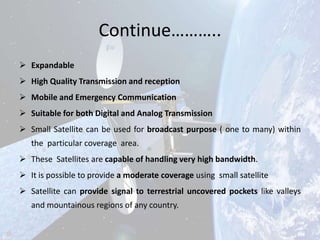
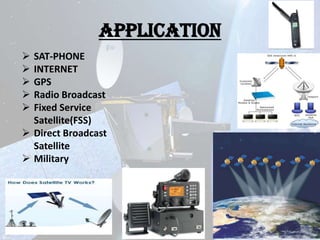
- Small satellites have applications in areas like weather measurement, communication, and earth observation and can provide efficient access to space for educational institutions and corporations.
- Advantages of small satellites include lower cost, easier launch




![Getting Started with Apache Spark: Big Data Made Simple [Free Meetup]](https://cdn.slidesharecdn.com/ss_thumbnails/apachesparkgettingstarted-260203175547-8361bcc3-thumbnail.jpg?width=640&height=640&fit=bounds)


