How to change the negative messages
that get in the way
of what you want to do
and who you want to be
By Peggy Haymes, LPC
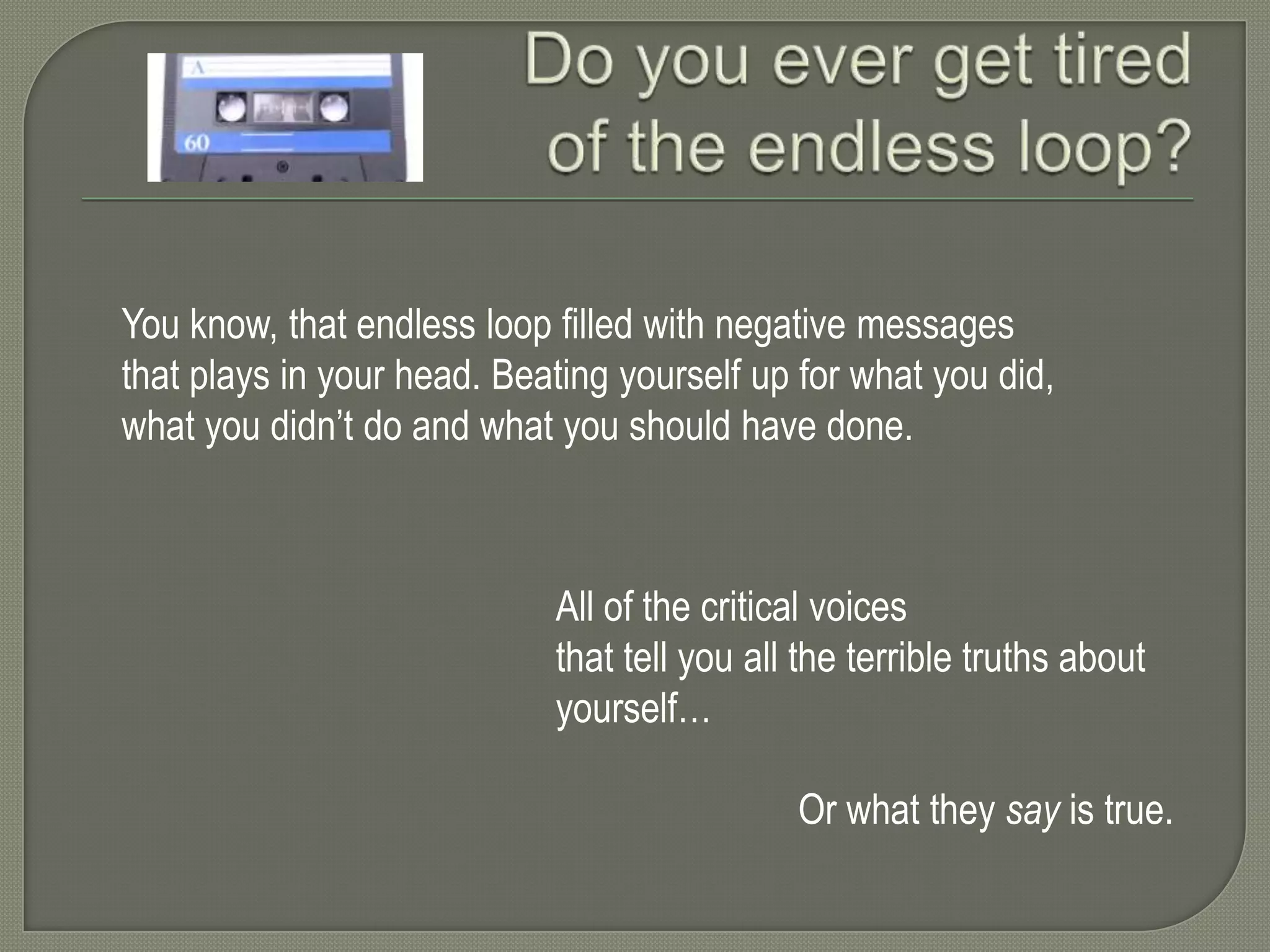
You know, that endless loop filled with negative messages
that plays in your head. Beating yourself up for what you did,
what you didn’t do and what you should have done.

All of the critical voices
that tell you all the terrible truths about
yourself…
Or what they say is true.
 The

time we spend
beating ourselves up…






is time and energy taken away from our dreams
keeps us from achieving our goals
punishes us without helping us become better
is a distraction from our real issues
keeps us from enjoying our lives
Here are ways
to disarm the critic …


The critical voices in our heads are often the
internalized voices of important people in our
lives; for example a parent, a teacher or a
coach.



In your experience, has this person ever been
wrong about anything? If so, then perhaps
they are wrong about you.



Even if it has been marginally true in the past
you get to decide if it will be true in the future.
The internalized critic doesn’t get to have a
say in who you are and are becoming.
Does this person deserve to live rent free in your head?
You may have worked hard to get away from this person or
decrease their presence in your life. Why are you allowing them to
hang out in your head?

Evict them.
Tell them they are not allowed to stay in your head, that you will no
longer give them time and energy that allows them to stay there.
Keep telling them as many times as you need. Write out an
eviction notice in your journal if it helps.
You may not be able to prevent them from stopping by in your
mind but you don’t have to make up a guest room for them.
We call these words “absolutes.”
Here’s the magic in dealing with them:
If you can find just one example
where this statement isn’t true
then by definition the statement of always
or never doesn’t apply.
If the critic says, “You never do anything right,” that cannot be true. Over the
course of your lifetime you have done something right.
You moved on from First Grade. You learned to read and write. You may have
even gotten up and gotten dressed today. Or yesterday.
Those are all examples of doing something right.
Therefore, it isn’t true that you have never done anything right.
Use this to dismiss the negative message as inaccurate and not applying to
you.
Turning the voice into a cartoon disarms it
and robs it of its power over us.
Is the message that things never go right for
you (there’s that word again) or good things
will never happen? Tell Eeyore to hush.
Is the voice frantic with anxiety or telling you
to hurry up, get busy and do something? Tell
the Tasmanian Devil to chill.
Is the voice full of bluster? Think of Foghorn
Leghorn and just laugh.
Now, doesn’t that feel better?


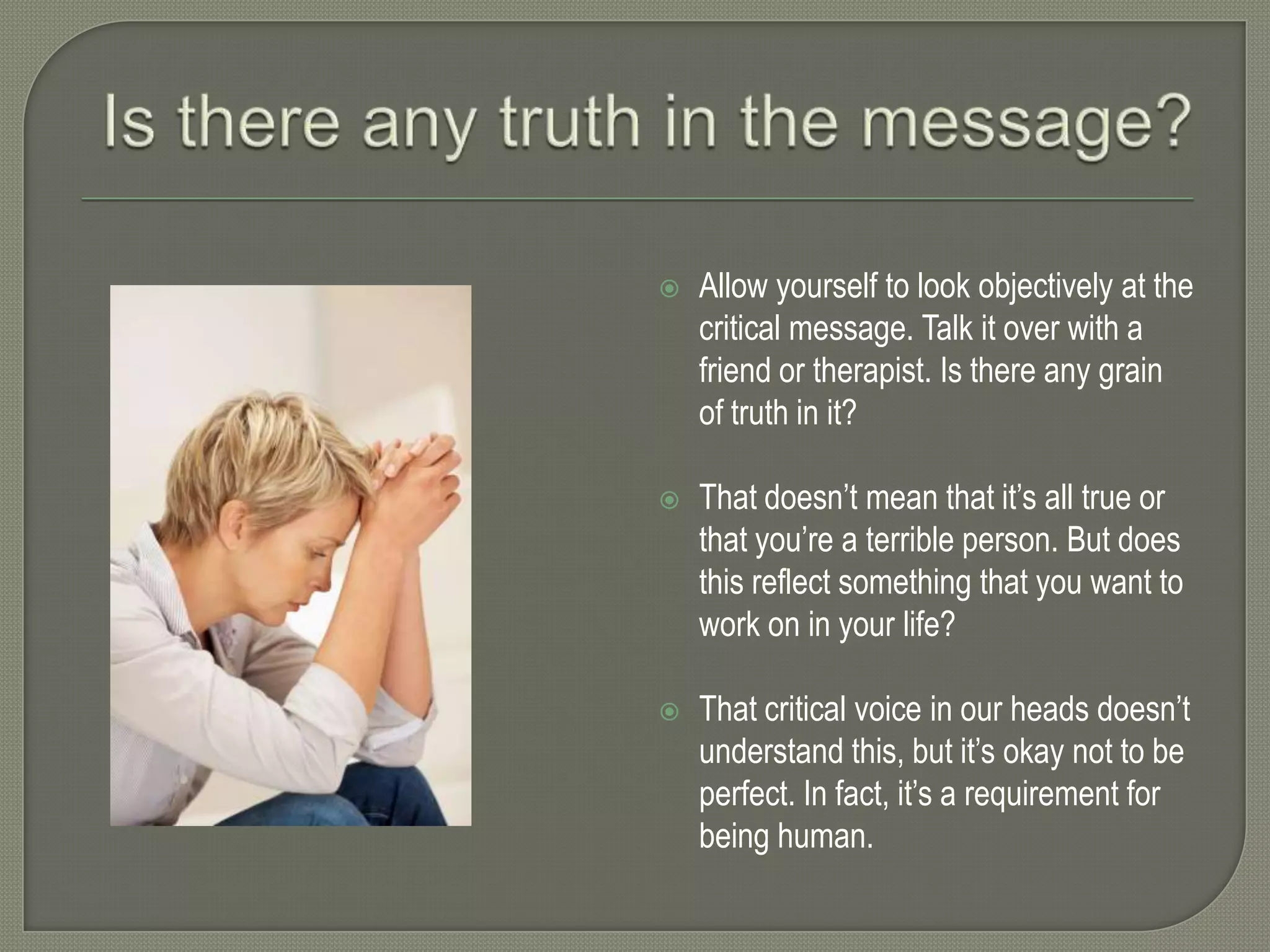
Allow yourself to look objectively at the
critical message. Talk it over with a
friend or therapist. Is there any grain
of truth in it?



That doesn’t mean that it’s all true or
that you’re a terrible person. But does
this reflect something that you want to
work on in your life?



That critical voice in our heads doesn’t
understand this, but it’s okay not to be
perfect. In fact, it’s a requirement for
being human.
The voice
of the critic tells you
that you never
accomplish anything.



We’ve already established that never
usually doesn’t hold true.



But do you have habits that keep you
from reaching the goals you really
want to reach? What do you want to
do differently?



When we internalize these negative
beliefs we often act in ways to
reinforce them. Identifying such faulty
beliefs and changing so that we do not
live down to them is another way of
disarming the critic.


When we listen to negative messages, it’s like setting the GPS for New York when
you want to go to Chicago. We can’t get there (our goals and dreams) from here
(beating ourselves up.)



Ask yourself if the thoughts you’re focusing on are helping you live the life you want.
If not, then choose to focus on something else. Something that makes you feel
empowered, or, at the very least, not beaten down. As many times as you have to
stop and choose to refocus, do it. (It gets easier and quicker over time.)
This presentation is meant to introduce you to tools but not to take the
place of therapy or counseling. If you decide that you want to work more
on these issues, here’s how to find a therapist.

Interested in learning more about how to use the power of your mind
with regard to achieving your fitness goals?
Go to www.MindRightBodyFit.com to learn more about how to receive a
weekly dose of inspiration, information and tools to help keep your head
from getting in the way of your feet.


My passion is finding as many avenues as
possible to help people clear out the things that
keep their lives too small and too hard and to
embrace the things that help them live joyfully
and well.



You can follow my blog @http:SpiritScraps.com
Visit my websites:
www.PeggyHaymes.com
www.MindRightBodyfit.com





I’m Peggy Haymes, and I’m a
Licensed Professional Counselor,
writer, minister, runner and triathlete
(if you use those last two words
generously.)




Contact me
peggy@peggyhaymes.com

Freeing yourself from the critic in your head

  • 1.
    How to changethe negative messages that get in the way of what you want to do and who you want to be By Peggy Haymes, LPC
  • 2.
    You know, thatendless loop filled with negative messages that plays in your head. Beating yourself up for what you did, what you didn’t do and what you should have done. All of the critical voices that tell you all the terrible truths about yourself… Or what they say is true.
  • 3.
     The time wespend beating ourselves up…      is time and energy taken away from our dreams keeps us from achieving our goals punishes us without helping us become better is a distraction from our real issues keeps us from enjoying our lives
  • 4.
    Here are ways todisarm the critic …
  • 5.
     The critical voicesin our heads are often the internalized voices of important people in our lives; for example a parent, a teacher or a coach.  In your experience, has this person ever been wrong about anything? If so, then perhaps they are wrong about you.  Even if it has been marginally true in the past you get to decide if it will be true in the future. The internalized critic doesn’t get to have a say in who you are and are becoming.
  • 6.
    Does this persondeserve to live rent free in your head? You may have worked hard to get away from this person or decrease their presence in your life. Why are you allowing them to hang out in your head? Evict them. Tell them they are not allowed to stay in your head, that you will no longer give them time and energy that allows them to stay there. Keep telling them as many times as you need. Write out an eviction notice in your journal if it helps. You may not be able to prevent them from stopping by in your mind but you don’t have to make up a guest room for them.
  • 7.
    We call thesewords “absolutes.” Here’s the magic in dealing with them: If you can find just one example where this statement isn’t true then by definition the statement of always or never doesn’t apply.
  • 8.
    If the criticsays, “You never do anything right,” that cannot be true. Over the course of your lifetime you have done something right. You moved on from First Grade. You learned to read and write. You may have even gotten up and gotten dressed today. Or yesterday. Those are all examples of doing something right. Therefore, it isn’t true that you have never done anything right. Use this to dismiss the negative message as inaccurate and not applying to you.
  • 9.
    Turning the voiceinto a cartoon disarms it and robs it of its power over us. Is the message that things never go right for you (there’s that word again) or good things will never happen? Tell Eeyore to hush. Is the voice frantic with anxiety or telling you to hurry up, get busy and do something? Tell the Tasmanian Devil to chill. Is the voice full of bluster? Think of Foghorn Leghorn and just laugh. Now, doesn’t that feel better?
  • 10.
     Allow yourself tolook objectively at the critical message. Talk it over with a friend or therapist. Is there any grain of truth in it?  That doesn’t mean that it’s all true or that you’re a terrible person. But does this reflect something that you want to work on in your life?  That critical voice in our heads doesn’t understand this, but it’s okay not to be perfect. In fact, it’s a requirement for being human.
  • 11.
    The voice of thecritic tells you that you never accomplish anything.  We’ve already established that never usually doesn’t hold true.  But do you have habits that keep you from reaching the goals you really want to reach? What do you want to do differently?  When we internalize these negative beliefs we often act in ways to reinforce them. Identifying such faulty beliefs and changing so that we do not live down to them is another way of disarming the critic.
  • 12.
     When we listento negative messages, it’s like setting the GPS for New York when you want to go to Chicago. We can’t get there (our goals and dreams) from here (beating ourselves up.)  Ask yourself if the thoughts you’re focusing on are helping you live the life you want. If not, then choose to focus on something else. Something that makes you feel empowered, or, at the very least, not beaten down. As many times as you have to stop and choose to refocus, do it. (It gets easier and quicker over time.)
  • 13.
    This presentation ismeant to introduce you to tools but not to take the place of therapy or counseling. If you decide that you want to work more on these issues, here’s how to find a therapist. Interested in learning more about how to use the power of your mind with regard to achieving your fitness goals? Go to www.MindRightBodyFit.com to learn more about how to receive a weekly dose of inspiration, information and tools to help keep your head from getting in the way of your feet.
  • 14.
     My passion isfinding as many avenues as possible to help people clear out the things that keep their lives too small and too hard and to embrace the things that help them live joyfully and well.  You can follow my blog @http:SpiritScraps.com Visit my websites: www.PeggyHaymes.com www.MindRightBodyfit.com    I’m Peggy Haymes, and I’m a Licensed Professional Counselor, writer, minister, runner and triathlete (if you use those last two words generously.)   Contact me peggy@peggyhaymes.com