Networking in Education Networking in Education Patty Odom Lamar University M.Ed. Educational Technology Leadership EDLD 5362—Informational Systems Management Sheryl R. Abshire,Ph.D April 24, 2011  EDLD 5362-ET8011-Patty Odom-4/24/11
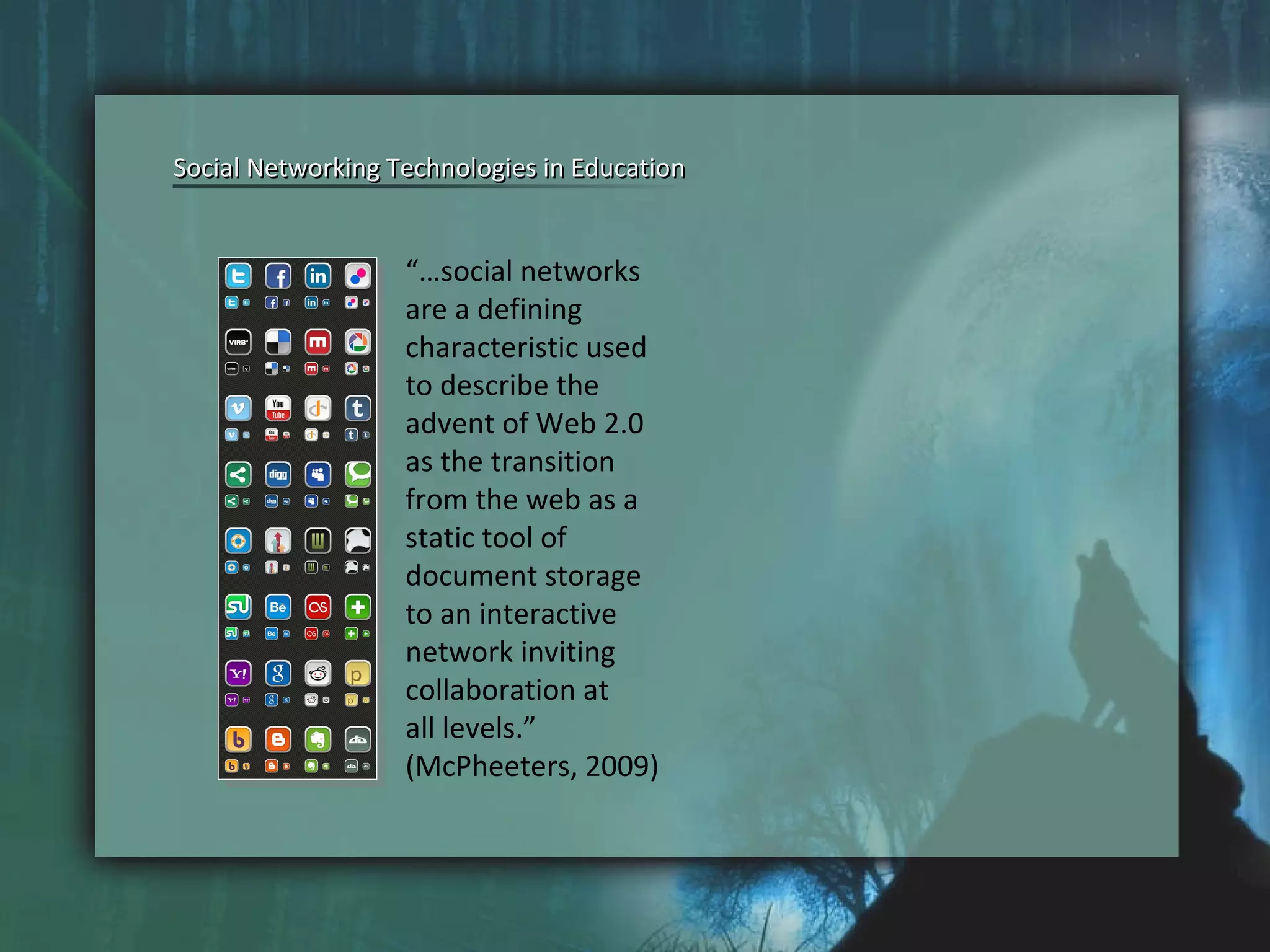
“… social networks  are a defining  characteristic used  to describe the  advent of Web 2.0  as the transition  from the web as a  static tool of  document storage  to an interactive  network inviting  collaboration at  all levels.”  (McPheeters, 2009) Social Networking Technologies in Education Social Networking Technologies in Education
Social Networking Technologies in Education Social Networking Technologies in Education Increase a sense of belonging Build bonds between classmates Increase bond between students and instructors Available app for mobile devices Blogging using My Notes Share only basic information “ The Facebook platform, and perhaps others as they open up, shows promise to educators to connect and share information with students and other educators in new and better ways.” (Facebook)
Social Networking Technologies in Education Social Networking Technologies in Education Create groups to manage: Memberships Photos (use mobile phones) Videos Links Add courses Instructor & course management functionality Courses used without “Friending” students Make announcements Post documents Host discussions Post assignments Manage an assignment bank (Staton, M., 2008)
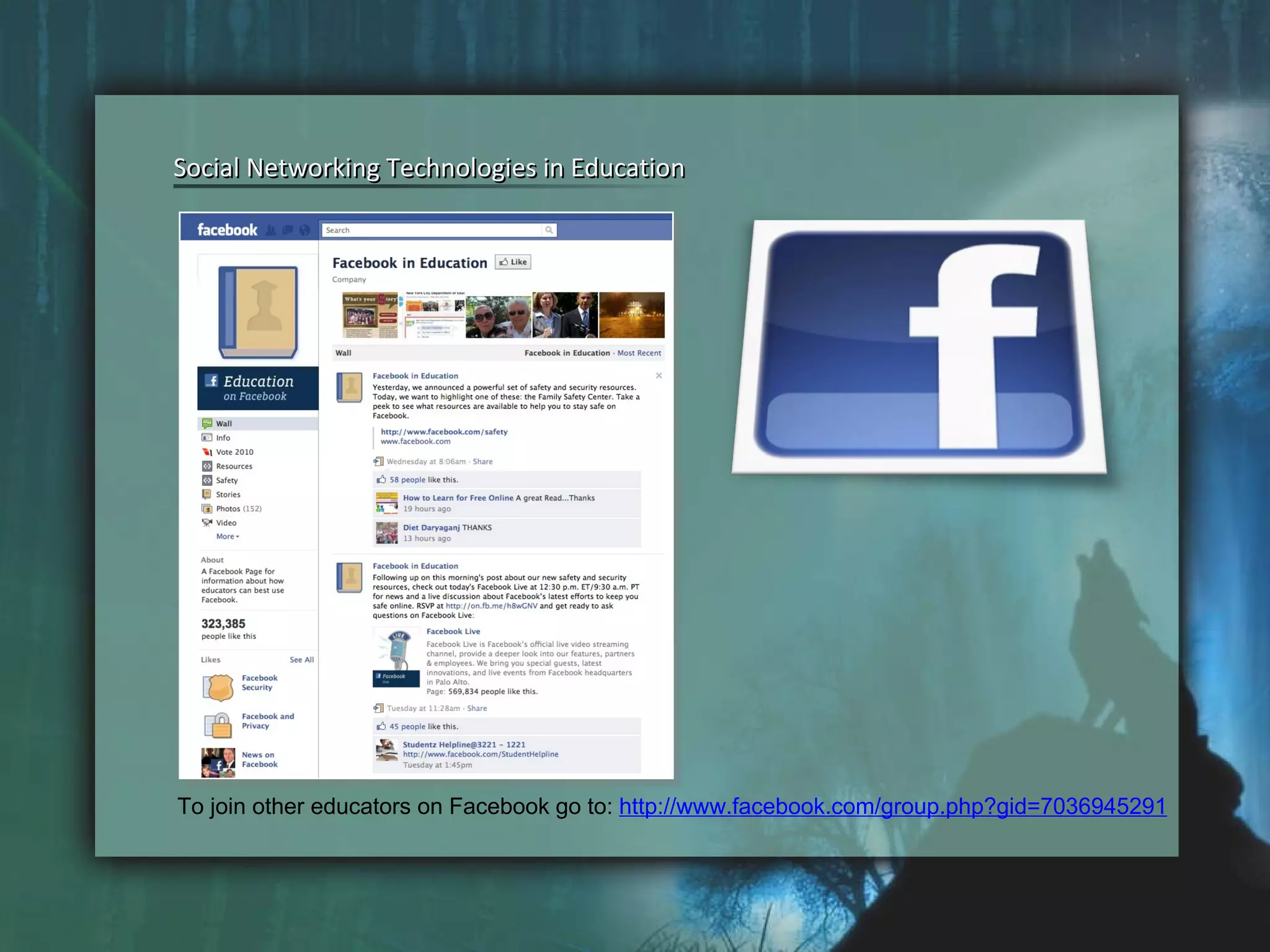
Social Networking Technologies in Education Social Networking Technologies in Education To join other educators on Facebook go to:  http://www.facebook.com/group.php?gid=7036945291
Social Bookmarking tool Save websites in a public or private library Share with friends Highlight information on sites Add sticky notes  Tag sites for easy retrieval later Social Networking Technologies in Education Social Networking Technologies in Education http://www.diigo.com/   How we can use diigo:
Social Networking Technologies in Education Social Networking Technologies in Education Create student accounts –no emails required Can be kept private Create student groups to share resources  Build resources that are available year to year Information available from anywhere  (Hertz, M.B. 2010) http://www.diigo.com/education   Free teacher accounts
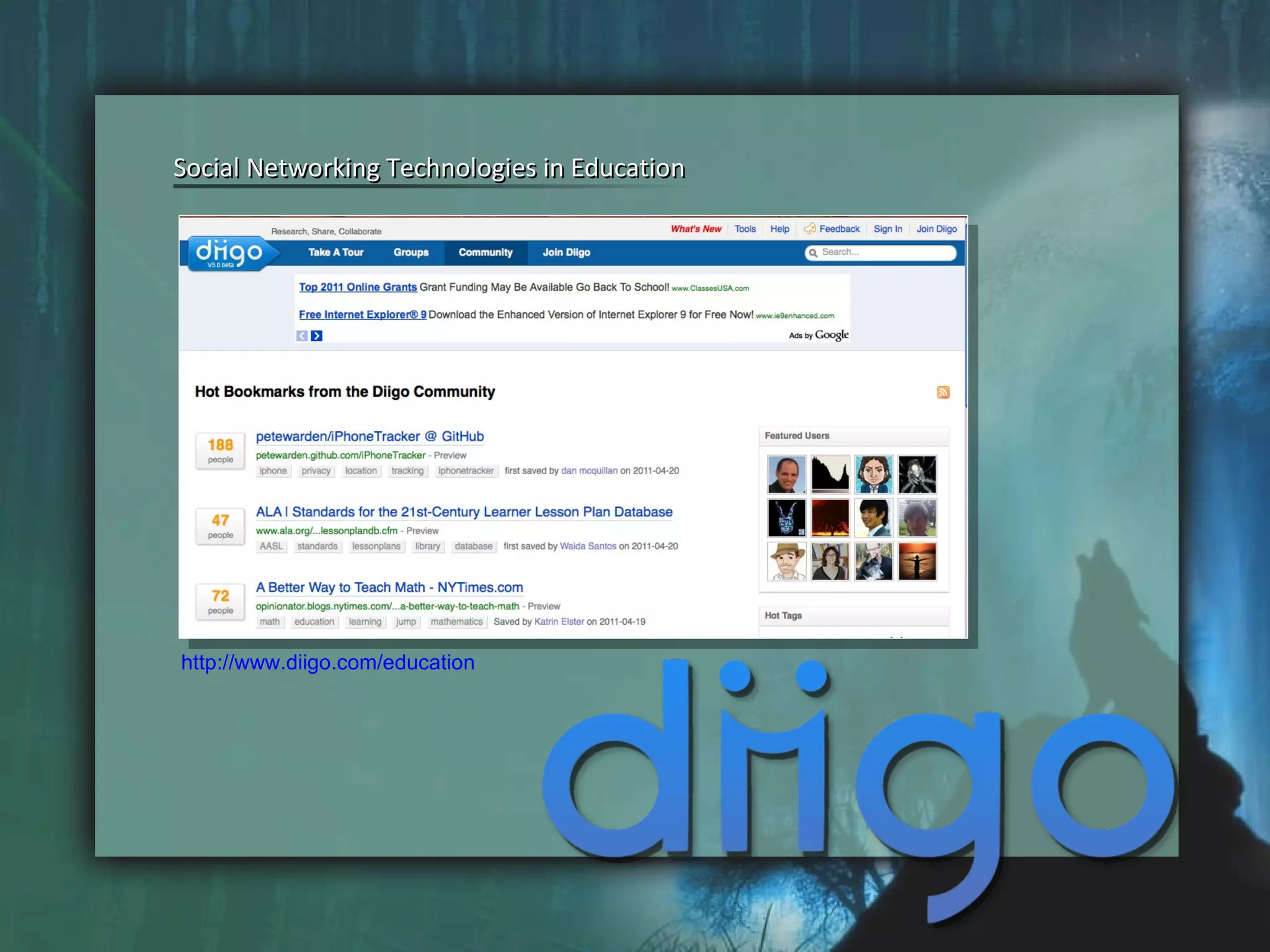
Social Networking Technologies in Education Social Networking Technologies in Education http://www.diigo.com/education
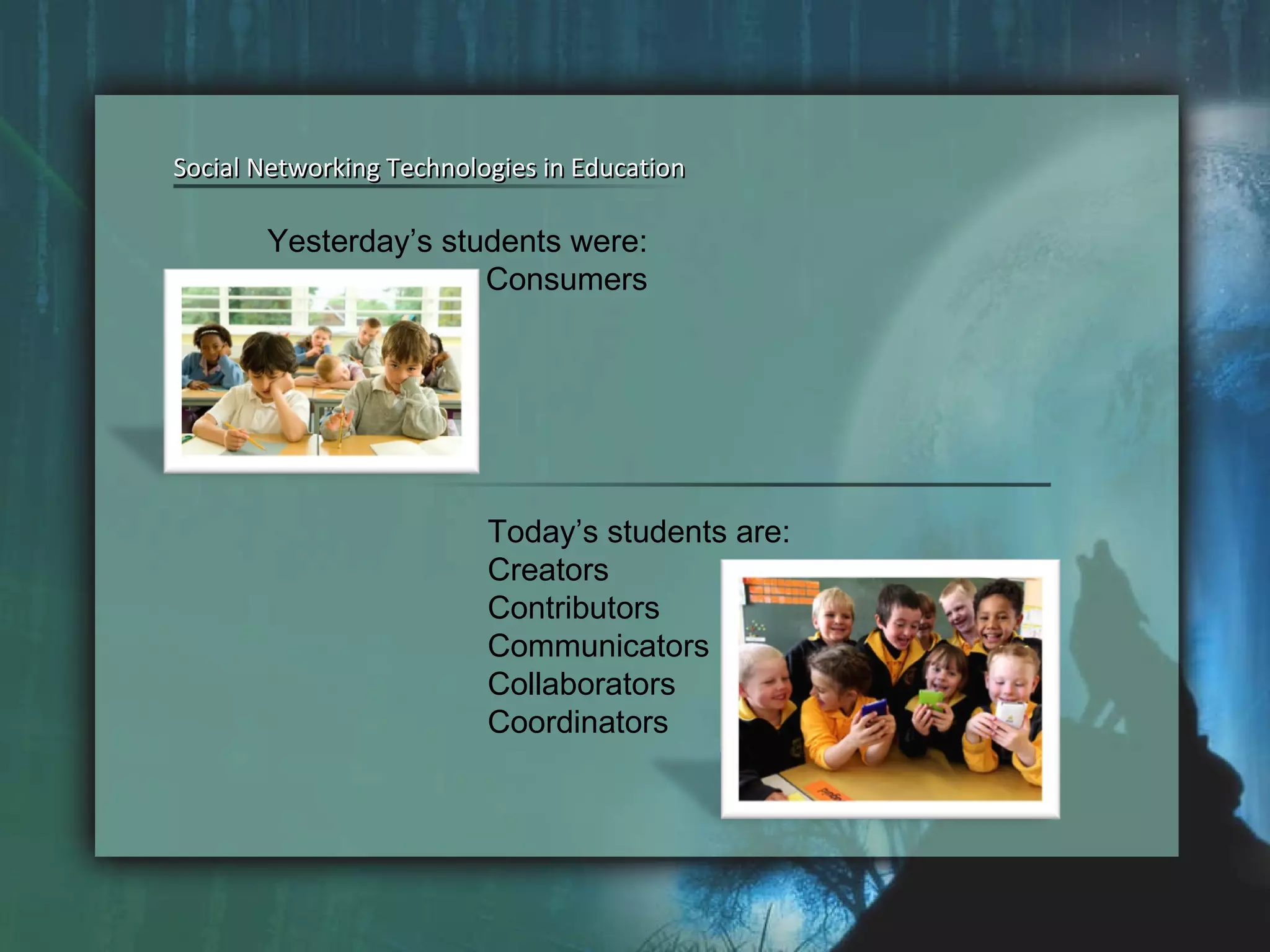
Social Networking Technologies in Education Social Networking Technologies in Education Today’s students are: Creators Contributors Communicators Collaborators Coordinators Yesterday’s students were: Consumers
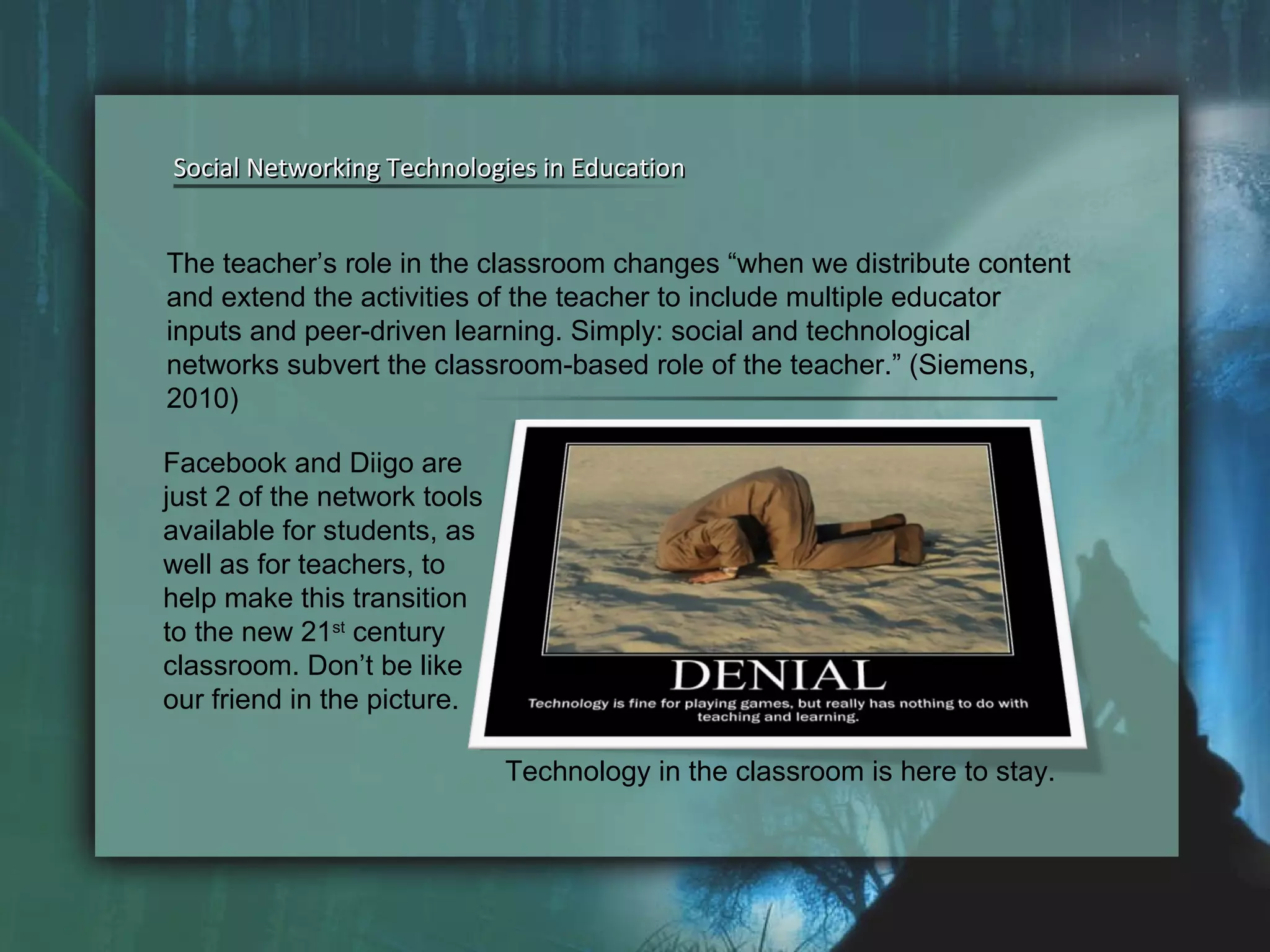
Social Networking Technologies in Education Social Networking Technologies in Education The teacher’s role in the classroom changes “when we distribute content and extend the activities of the teacher to include multiple educator inputs and peer-driven learning. Simply: social and technological networks subvert the classroom-based role of the teacher.” (Siemens, 2010)  Facebook and Diigo are just 2 of the network tools available for students, as well as for teachers, to help make this transition to the new 21 st  century classroom. Don’t be like our friend in the picture.  Technology in the classroom is here to stay.
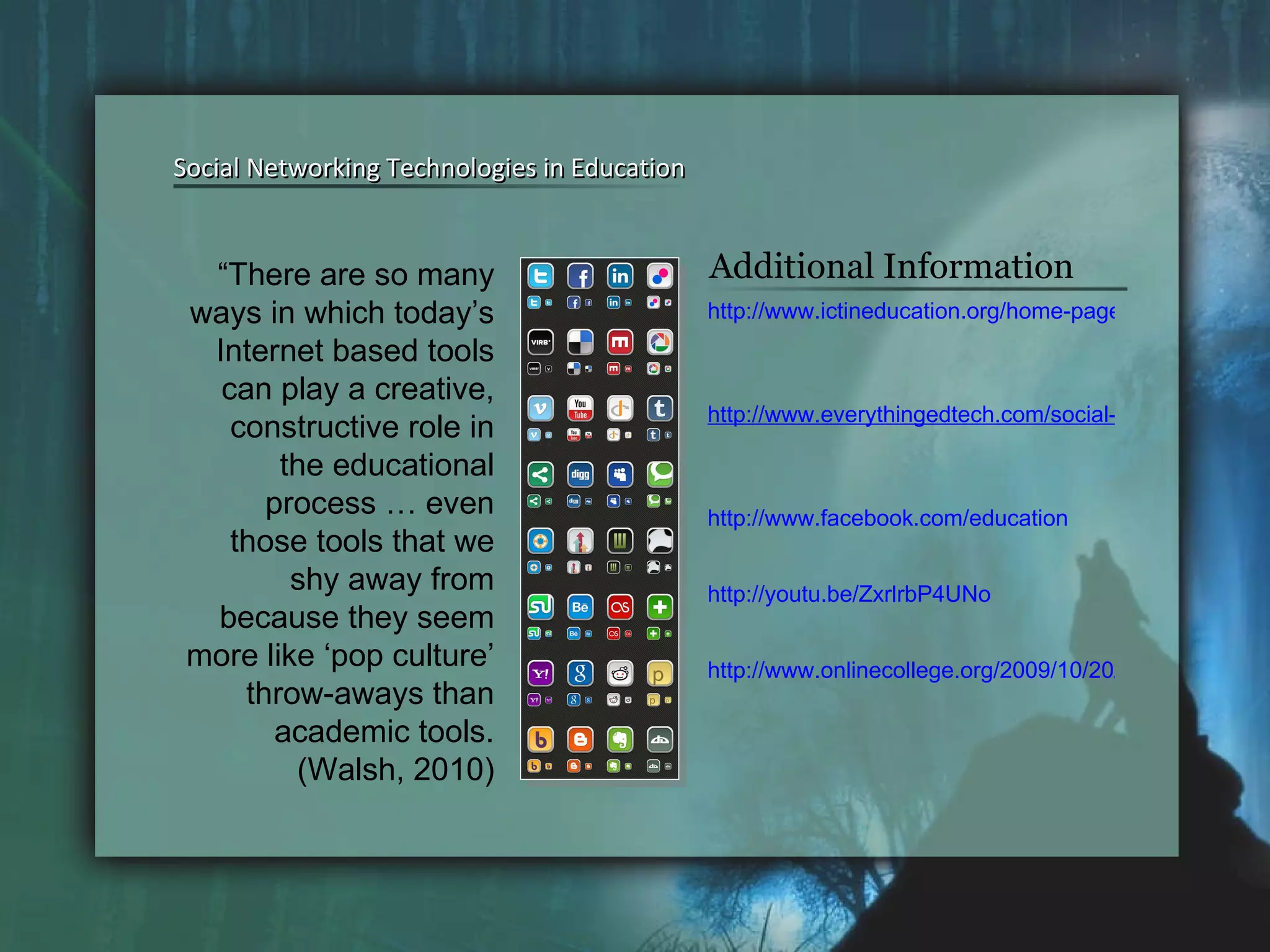
Social Networking Technologies in Education Social Networking Technologies in Education “ There are so many ways in which today’s Internet based tools can play a creative, constructive role in the educational process … even those tools that we shy away from because they seem more like ‘pop culture’ throw-aways than academic tools. (Walsh, 2010) http://www.ictineducation.org/home-page/2009/11/2/10-reasons-to-use-diigo.html   http://www.everythingedtech.com/social-bookmarking/teaching-tagging-diigo-educators/   http://www.facebook.com/education   http://youtu.be/ZxrlrbP4UNo   http://www.onlinecollege.org/2009/10/20/100-ways-you-should-be-using-facebook-in-your-classroom/   Additional Information
Social Networking Technologies in Education Social Networking Technologies in Education McPheeters, D. (2009, March). Social networking technologies in education . Tech and Learning . Retrieved on January 22, 2011 from  http://www.techlearning.com/article/16250 Facebook. Retrieved on April 22, 2011 from  http://www.facebook.com/group.php?gid=7036945291   Staton, M. (2008). Drive Belonging and Engagement in the Classroom. Using Facebook. Retrieved on April 22, 2011 from  http://www.edumorphology.com/2008/02/best-practices-for-educators-using-facebook/   Hertz, M. B. (February 17, 2010).  Diigo Teacher Accounts. Retrieved on April 22, 2011 from  http://www.freetech4teachers.com/2010/02/diigo-teacher-accounts.html   Walsh, K. (August 11, 2010). Facebook as an instructional technology tool. Retrieved on April 22, 2011 from  http://www.emergingedtech.com/2010/08/facebook-as-an-instructional-technology-tool/   Siemens, G. (February 16, 2010). Teaching in Social and Technological Networks. Retrieved on April 22, 2011 from  http://www.connectivism.ca/?cat=3   References

Edld5362 wk2presentation

  • 1.
    Networking in EducationNetworking in Education Patty Odom Lamar University M.Ed. Educational Technology Leadership EDLD 5362—Informational Systems Management Sheryl R. Abshire,Ph.D April 24, 2011 EDLD 5362-ET8011-Patty Odom-4/24/11
  • 2.
    “… social networks are a defining characteristic used to describe the advent of Web 2.0 as the transition from the web as a static tool of document storage to an interactive network inviting collaboration at all levels.” (McPheeters, 2009) Social Networking Technologies in Education Social Networking Technologies in Education
  • 3.
    Social Networking Technologiesin Education Social Networking Technologies in Education Increase a sense of belonging Build bonds between classmates Increase bond between students and instructors Available app for mobile devices Blogging using My Notes Share only basic information “ The Facebook platform, and perhaps others as they open up, shows promise to educators to connect and share information with students and other educators in new and better ways.” (Facebook)
  • 4.
    Social Networking Technologiesin Education Social Networking Technologies in Education Create groups to manage: Memberships Photos (use mobile phones) Videos Links Add courses Instructor & course management functionality Courses used without “Friending” students Make announcements Post documents Host discussions Post assignments Manage an assignment bank (Staton, M., 2008)
  • 5.
    Social Networking Technologiesin Education Social Networking Technologies in Education To join other educators on Facebook go to: http://www.facebook.com/group.php?gid=7036945291
  • 6.
    Social Bookmarking toolSave websites in a public or private library Share with friends Highlight information on sites Add sticky notes Tag sites for easy retrieval later Social Networking Technologies in Education Social Networking Technologies in Education http://www.diigo.com/ How we can use diigo:
  • 7.
    Social Networking Technologiesin Education Social Networking Technologies in Education Create student accounts –no emails required Can be kept private Create student groups to share resources Build resources that are available year to year Information available from anywhere (Hertz, M.B. 2010) http://www.diigo.com/education Free teacher accounts
  • 8.
    Social Networking Technologiesin Education Social Networking Technologies in Education http://www.diigo.com/education
  • 9.
    Social Networking Technologiesin Education Social Networking Technologies in Education Today’s students are: Creators Contributors Communicators Collaborators Coordinators Yesterday’s students were: Consumers
  • 10.
    Social Networking Technologiesin Education Social Networking Technologies in Education The teacher’s role in the classroom changes “when we distribute content and extend the activities of the teacher to include multiple educator inputs and peer-driven learning. Simply: social and technological networks subvert the classroom-based role of the teacher.” (Siemens, 2010) Facebook and Diigo are just 2 of the network tools available for students, as well as for teachers, to help make this transition to the new 21 st century classroom. Don’t be like our friend in the picture. Technology in the classroom is here to stay.
  • 11.
    Social Networking Technologiesin Education Social Networking Technologies in Education “ There are so many ways in which today’s Internet based tools can play a creative, constructive role in the educational process … even those tools that we shy away from because they seem more like ‘pop culture’ throw-aways than academic tools. (Walsh, 2010) http://www.ictineducation.org/home-page/2009/11/2/10-reasons-to-use-diigo.html http://www.everythingedtech.com/social-bookmarking/teaching-tagging-diigo-educators/ http://www.facebook.com/education http://youtu.be/ZxrlrbP4UNo http://www.onlinecollege.org/2009/10/20/100-ways-you-should-be-using-facebook-in-your-classroom/ Additional Information
  • 12.
    Social Networking Technologiesin Education Social Networking Technologies in Education McPheeters, D. (2009, March). Social networking technologies in education . Tech and Learning . Retrieved on January 22, 2011 from http://www.techlearning.com/article/16250 Facebook. Retrieved on April 22, 2011 from http://www.facebook.com/group.php?gid=7036945291 Staton, M. (2008). Drive Belonging and Engagement in the Classroom. Using Facebook. Retrieved on April 22, 2011 from http://www.edumorphology.com/2008/02/best-practices-for-educators-using-facebook/ Hertz, M. B. (February 17, 2010). Diigo Teacher Accounts. Retrieved on April 22, 2011 from http://www.freetech4teachers.com/2010/02/diigo-teacher-accounts.html Walsh, K. (August 11, 2010). Facebook as an instructional technology tool. Retrieved on April 22, 2011 from http://www.emergingedtech.com/2010/08/facebook-as-an-instructional-technology-tool/ Siemens, G. (February 16, 2010). Teaching in Social and Technological Networks. Retrieved on April 22, 2011 from http://www.connectivism.ca/?cat=3 References