Dermatology
Acne Vulgaris Chronic disease of sebaceous follicle, primarily affecting face, chest, and back Occurs at puberty with sebum production triggered by increased androgen levels Inflammation is due in part to over-proliferation of  Propionibacterium acnes , an anaerobic Gram-positive organism
Topical Retinoids:  tretinoin (Retin A), adapalene (Differin), Tazarotene (Tazorac) Foundation of treatment Only agents that affect follicular epitheliuim Benzoyl Peroxide Antibacterial and comedolytic effects Topical Antibacterials Eliminate P. acnes from the sebaceous gland and thereby suppress inflammation in patients with papular and inflammatory acne Azelaic Acid (Azelex), clindamycin, erythromycin, metronidazole Acne Treatment
Acne Treatment  (Cont’d) Oral Antibiotics Inhibit P. acnes Tetracyclines have a direct anti-inflammatory effect Tetracyclines, Doxycycline, Minocycline, Erythromycin, Trimethoprim-Sulfa, Clindamycin Antibiotic resistance increasing problem Treatment courses should be short 4-6 months Concomitant Benzoyl Peroxide may decrease resistance Oral Istotretinoin (Accutane) Useful for severe acne – nodulocystic scarring Hormonal – OCP in women
Acne Treatment  (Cont’d) It takes 8 weeks for a microcomedo to mature.  Thus any therapy effectiveness should be assessed after 8 weeks of therapy. Water-based cosmetics are less comedogenic than oil based. Soaps, detergents, and astringenets have little impact on acne and vigorous “cleansing” can worsen inflammation.
Acne Treatment  (Cont’d) Recommendations Mainly comedones with occasional inflamed papule or pustule (Type 1) Topical Retinoid Consider benzoyl peroxide, azelaic acid Comedones, papules and pustules (Type 2) Topical Retinoids plus benzoyl peroxide, azelaic, or topical antibiotic Worsening Type 2 – spread to shoulders, back, chest, occasional cysts/nodules Systemic antibiotic plus topical Retinoid, benzoyl peroxide, or azelaic acid Add OCP or antiandrogen for women
Acne Treatment  (Cont’d) Recommendations  (cont’d) Numerous cyst, scarring Systemic antibiotics plus topical Retinoid plus benzoyl peroxide Oral isotretinoin (Accutane)
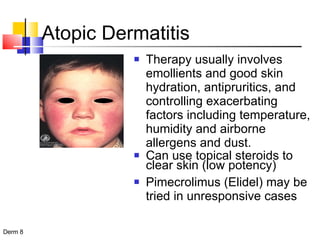
Atopic Dermatitis Therapy usually involves emollients and good skin hydration, antipruritics, and controlling exacerbating factors including temperature, humidity and airborne allergens and dust. Can use topical steroids to clear skin (low potency) Pimecrolimus (Elidel) may be tried in unresponsive cases
Atopic Dermatitis  (Cont’d) Eczematous eruption genetically determined Characterized by lichenification, excoriation and crusting Classically involves face, neck and flexual surfaces of arms and legs Picture can vary with age of patient, usually seen in early childhood
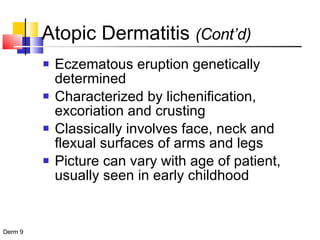
Eczema Characterized by scaly, occasionally fissured patches of dermatitis overlying dry skin Also called Xerosis  Treated with lubricants and hydration, such as Eucerin, Alpha-Keri, etc.  If severe may use low- potency topical steroids (level V or less)
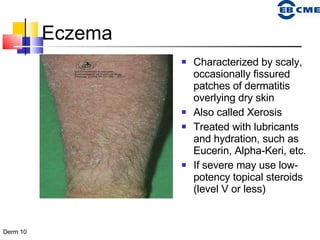
Psoriasis
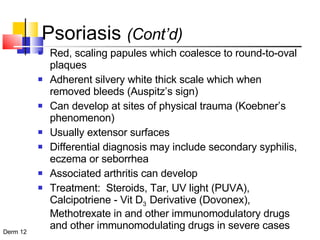
Psoriasis  (Cont’d) Red, scaling papules which coalesce to round-to-oval plaques Adherent silvery white thick scale which when removed bleeds (Auspitz’s sign) Can develop at sites of physical trauma (Koebner’s phenomenon) Usually extensor surfaces Differential diagnosis may include secondary syphilis, eczema or seborrhea Associated arthritis can develop Treatment:  Steroids, Tar, UV light (PUVA), Calcipotriene - Vit D 3  Derivative (Dovonex), Methotrexate in and other immunomodulatory drugs and other immunomodulating drugs in severe cases
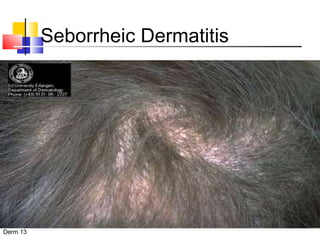
Seborrheic Dermatitis
Seborrheic Dermatitis  (Cont’d) Etiology Unknown Relationships Hormone levels – infancy (cradle cap) and reappears at puberty Fungal infections (Malassezia furfur) response to antifungal agents Nutritional (common in AIDS) Presentation Cradle cap Treatments Topical steroids – low potency Topical calcineurun inhibitors (Protopic, Elidel) Keratolytics (salicyclic and shampoo) Antifungals (Nizoral shampoo 3x/week, Selsun  2-3x/week) and others Dandruff Greasy scales
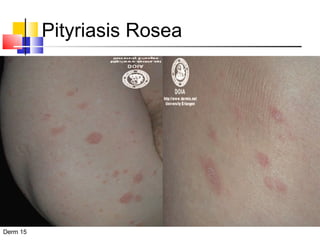
Pityriasis Rosea
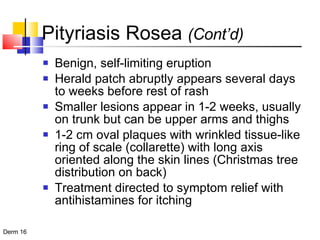
Pityriasis Rosea  (Cont’d) Benign, self-limiting eruption Herald patch abruptly appears several days to weeks before rest of rash Smaller lesions appear in 1-2 weeks, usually on trunk but can be upper arms and thighs 1-2 cm oval plaques with wrinkled tissue-like ring of scale (collarette) with long axis oriented along the skin lines (Christmas tree distribution on back) Treatment directed to symptom relief with antihistamines for itching
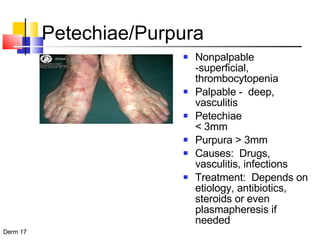
Petechiae/Purpura Nonpalpable -superficial, thrombocytopenia Palpable -  deep, vasculitis Petechiae  < 3mm Purpura > 3mm Causes:  Drugs, vasculitis, infections Treatment:  Depends on etiology, antibiotics, steroids or even plasmapheresis if needed
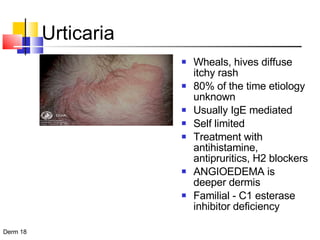
Urticaria Wheals, hives diffuse itchy rash 80% of the time etiology unknown Usually IgE mediated Self limited  Treatment with antihistamine, antipruritics, H2 blockers  ANGIOEDEMA is deeper dermis Familial - C1 esterase inhibitor deficiency
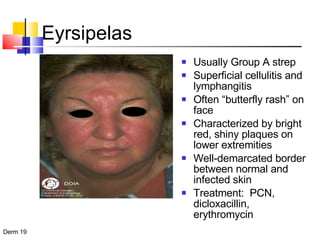
Eyrsipelas Usually Group A strep Superficial cellulitis and lymphangitis Often “butterfly rash” on face Characterized by bright red, shiny plaques on lower extremities Well-demarcated border between normal and infected skin Treatment:  PCN, dicloxacillin, erythromycin
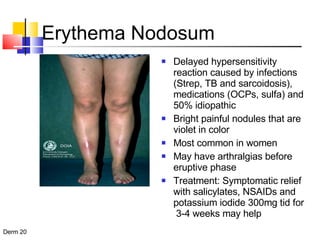
Erythema Nodosum Delayed hypersensitivity reaction caused by infections (Strep, TB and sarcoidosis), medications (OCPs, sulfa) and 50% idiopathic Bright painful nodules that are violet in color Most common in women  May have arthralgias before eruptive phase Treatment: Symptomatic relief with salicylates, NSAIDs and potassium iodide 300mg tid for  3-4 weeks may help
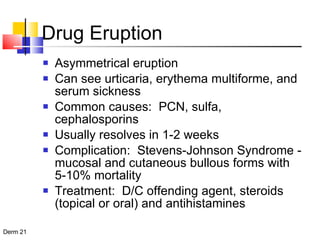
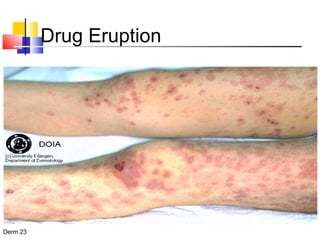
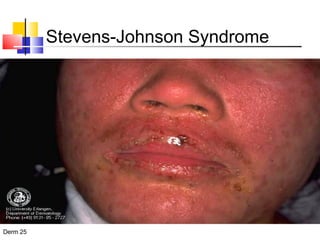
Drug Eruption Asymmetrical eruption Can see urticaria, erythema multiforme, and serum sickness  Common causes:  PCN, sulfa, cephalosporins Usually resolves in 1-2 weeks  Complication:  Stevens-Johnson Syndrome -  mucosal and cutaneous bullous forms with 5-10% mortality Treatment:  D/C offending agent, steroids (topical or oral) and antihistamines
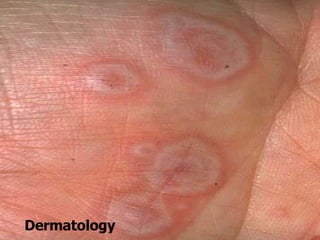
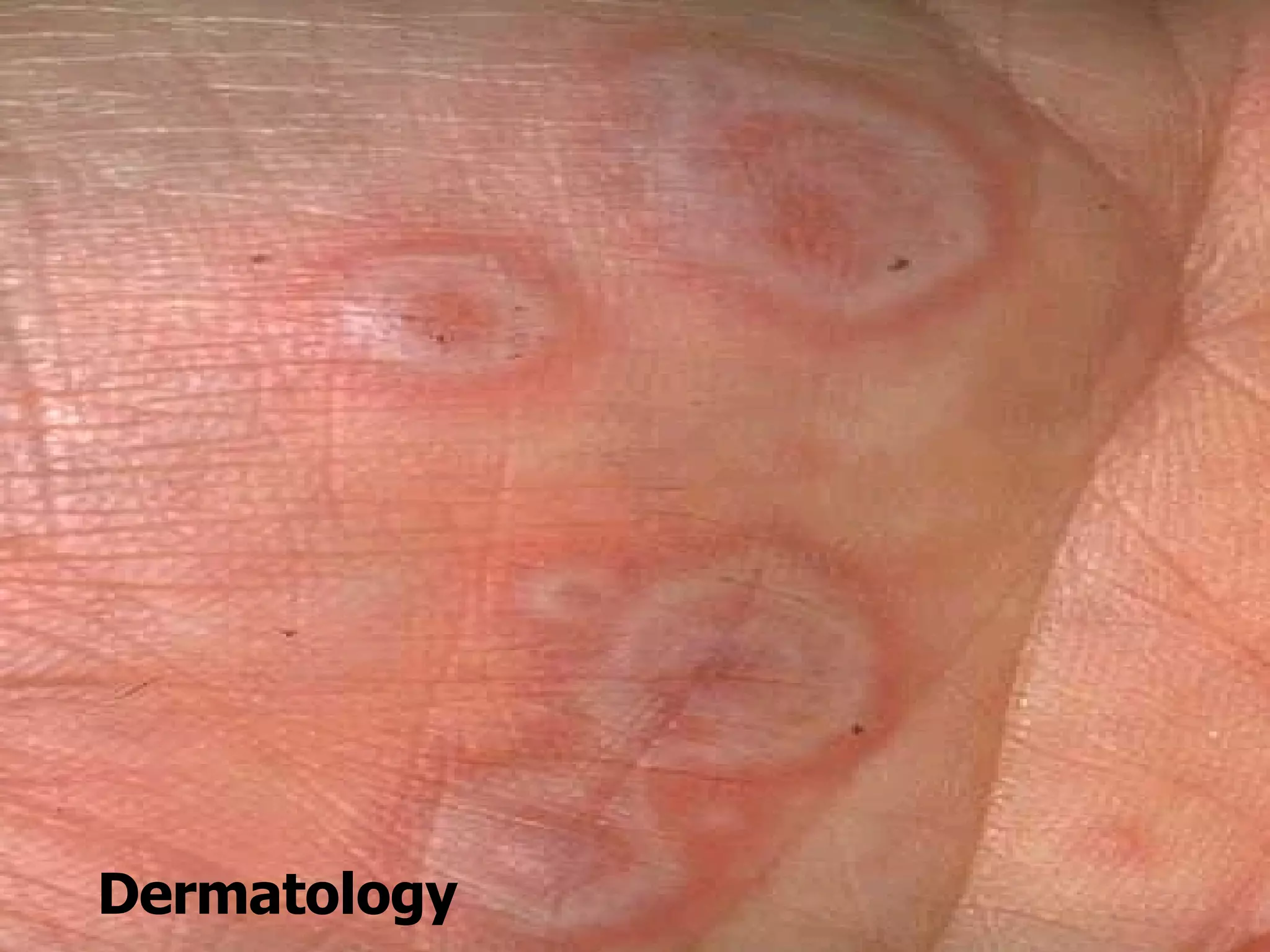
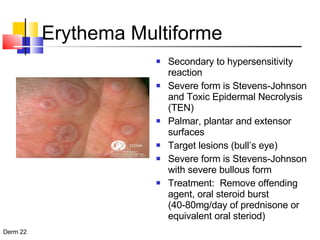
Erythema Multiforme Secondary to hypersensitivity reaction Severe form is Stevens-Johnson and Toxic Epidermal Necrolysis (TEN) Palmar, plantar and extensor surfaces Target lesions (bull’s eye) Severe form is Stevens-Johnson with severe bullous form Treatment:  Remove offending agent, oral steroid burst (40-80mg/day of prednisone or equivalent oral steriod)
Drug Eruption
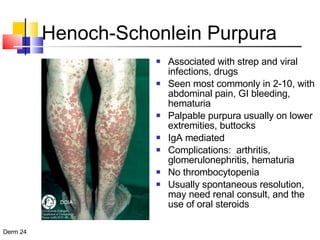
Henoch-Schonlein Purpura Associated with strep and viral infections, drugs Seen most commonly in 2-10, with abdominal pain, GI bleeding, hematuria Palpable purpura usually on lower extremities, buttocks IgA mediated Complications:  arthritis, glomerulonephritis, hematuria No thrombocytopenia Usually spontaneous resolution, may need renal consult, and the use of oral steroids
Stevens-Johnson Syndrome
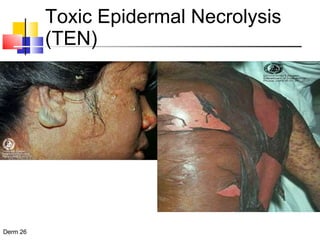
Toxic Epidermal Necrolysis (TEN)
Toxic Epidermal Necrolysis (TEN)  (Cont’d) Considered severe form of erythema multiforme with more than 30% of epidermal detachment Patient toxic and in the elderly mortality approaches 50% Nikolsky’s sign:  with slight thumb pressure, skin wrinkles, slides laterally and separates from the epidermal-dermis junction Treatment:  Admit, IV fluids, steroids are controversial, antibiotics if infection-related
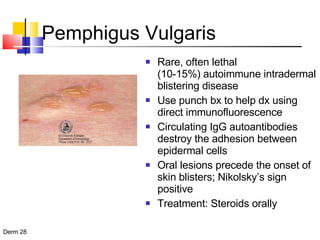
Pemphigus Vulgaris Rare, often lethal  (10-15%) autoimmune intradermal blistering disease  Use punch bx to help dx using direct immunofluorescence Circulating IgG autoantibodies destroy the adhesion between epidermal cells Oral lesions precede the onset of skin blisters; Nikolsky’s sign positive Treatment: Steroids orally
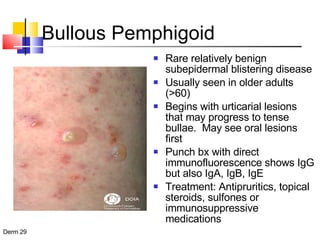
Bullous Pemphigoid Rare relatively benign subepidermal blistering disease Usually seen in older adults (>60) Begins with urticarial lesions that may progress to tense bullae.  May see oral lesions first Punch bx with direct immunofluorescence shows IgG but also IgA, IgB, IgE  Treatment: Antipruritics, topical steroids, sulfones or immunosuppressive medications
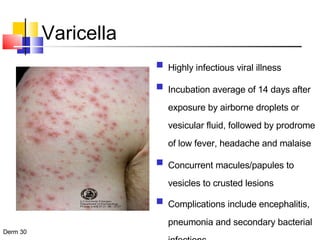
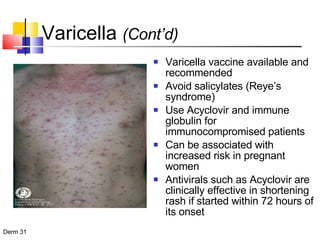
Varicella Highly infectious viral illness  Incubation average of 14 days after exposure by airborne droplets or vesicular fluid, followed by prodrome of low fever, headache and malaise Concurrent macules/papules to vesicles to crusted lesions Complications include encephalitis, pneumonia and secondary bacterial infections
Varicella  (Cont’d) Varicella vaccine available and recommended Avoid salicylates (Reye’s syndrome) Use Acyclovir and immune globulin for immunocompromised patients Can be associated with increased risk in pregnant women Antivirals such as Acyclovir are clinically effective in shortening rash if started within 72 hours of its onset
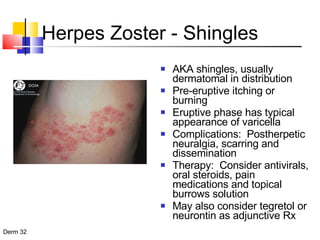
Herpes Zoster - Shingles AKA shingles, usually dermatomal in distribution Pre-eruptive itching or burning Eruptive phase has typical appearance of varicella Complications:  Postherpetic neuralgia, scarring and dissemination Therapy:  Consider antivirals, oral steroids, pain medications and topical burrows solution May also consider tegretol or neurontin as adjunctive Rx
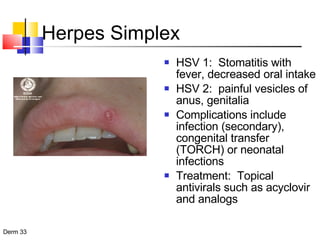
Herpes Simplex HSV 1:  Stomatitis with fever, decreased oral intake HSV 2:  painful vesicles of anus, genitalia Complications include infection (secondary), congenital transfer (TORCH) or neonatal infections Treatment:  Topical antivirals such as acyclovir and analogs
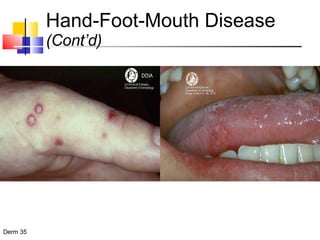
Hand-Foot-Mouth Disease Coxsackie Virus A16 most common Seen in outbreaks Oval vesicles on the hands and feet, especially on the plantar and palmar surfaces common Fecal-oral transmission Oral lesions are aphthous-like in character Treatment is symptomatic relief of itching and painful mouth symptoms
Hand-Foot-Mouth Disease  (Cont’d)
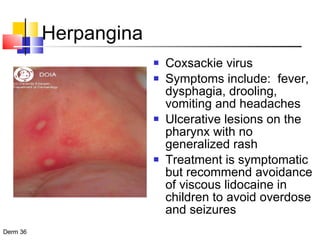
Herpangina Coxsackie virus Symptoms include:  fever, dysphagia, drooling, vomiting and headaches Ulcerative lesions on the pharynx with no generalized rash Treatment is symptomatic but recommend avoidance of viscous lidocaine in children to avoid overdose and seizures
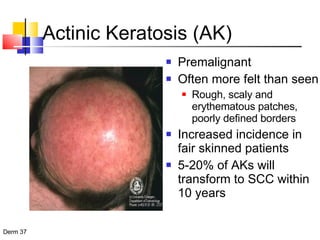
Actinic Keratosis (AK) Premalignant Often more felt than seen Rough, scaly and erythematous patches, poorly defined borders Increased incidence in fair skinned patients 5-20% of AKs will transform to SCC within 10 years
Actinic Keratosis (AK)  (Cont’d) Risk factors are fair skin and cumulative sun exposure Diagnosis:  Red, scaling papule that is rough to feel. Can be red to yellowish or even keratinized to form a horn Prevention by use of sun blocks
Actinic Keratosis (AK) Treatment Treatment:  Cyrosurgery with Liquid N 2  for limited number of lesions - some pain and risk of scarring Curettage:  Scrap away lesion with curette and follow with electro or radio frequency to “feather” and stop bleeding, but need to use local anesthetic and best for limited numbers of lesions
Actinic Keratosis (AK) Treatment  (Cont’d) Topical 5-Fluorouricil (5-FU):  Is a cytostatic agent which inhibits enzymes in tumor cells Apply locally and repeat daily until the lesion erodes and reddens (usually 2-3 weeks) Advantage is ability to treat larger areas and numbers of lesions Disadvantage is the pain and redness associated with treatment
Sunscreens Most do good job filtering UVB-Rays that cause sunburn; don’t defend as well against UVA that causes skin cancer and wrinkles. Best protection against UVA includes zinc oxide, titanium dioxide or avobenzone. SPF (Sun Protection Factor) refers to UVB protection.
Sunscreens  (Cont’d) Use of sunscreen recommendations SPF of 30 or better (SPF 15 blocks 93% and SPF 50 blocks 98% of UVB Rays) Water resistant Apply every 2 hours and after swimming or sweating 30-35ml per body application – usually “too little” for an average adult
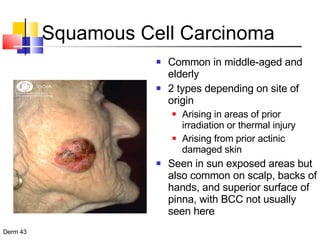
Squamous Cell Carcinoma Common in middle-aged and elderly 2 types depending on site of origin Arising in areas of prior irradiation or thermal injury Arising from prior actinic damaged skin Seen in sun exposed areas but also common on scalp, backs of hands, and superior surface of pinna, with BCC not usually seen here
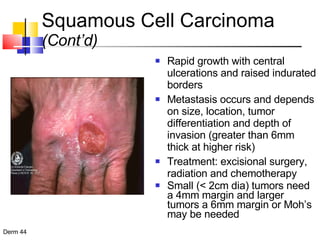
Rapid growth with central ulcerations and raised indurated borders Metastasis occurs and depends on size, location, tumor differentiation and depth of invasion (greater than 6mm thick at higher risk) Treatment: excisional surgery, radiation and chemotherapy Small (< 2cm dia) tumors need a 4mm margin and larger tumors a 6mm margin or Moh’s may be needed Squamous Cell Carcinoma  (Cont’d)
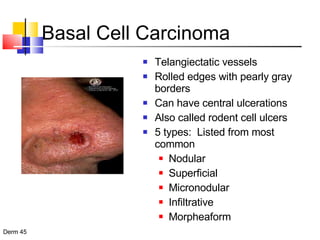
Basal Cell Carcinoma Telangiectatic vessels Rolled edges with pearly gray borders Can have central ulcerations Also called rodent cell ulcers 5 types:  Listed from most common Nodular Superficial Micronodular Infiltrative Morpheaform
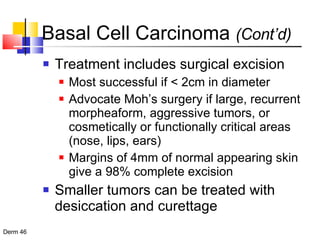
Treatment includes surgical excision Most successful if < 2cm in diameter Advocate Moh’s surgery if large, recurrent morpheaform, aggressive tumors, or cosmetically or functionally critical areas (nose, lips, ears) Margins of 4mm of normal appearing skin give a 98% complete excision Smaller tumors can be treated with desiccation and curettage  Basal Cell Carcinoma  (Cont’d)
Pyogenic Granuloma
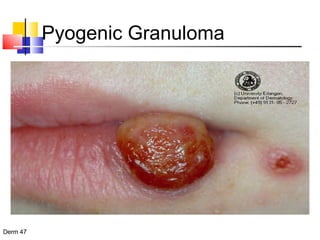
Pyogenic Granuloma  (Cont’d) Benign, acquired vascular lesion Small, but rapidly growing, yellow to red, dome shaped fragile protrusions Seen most often on head, neck and extremities (fingers) Minimal trauma causes brisk bleeding Treatment:  Firm, thorough curettage to completely eradicate If any abnormal tissue remains, will recur
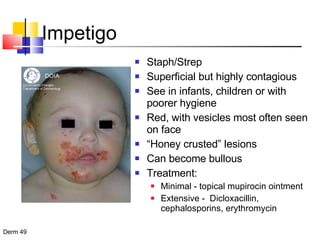
Impetigo Staph/Strep Superficial but highly contagious See in infants, children or with poorer hygiene Red, with vesicles most often seen on face “ Honey crusted” lesions Can become bullous Treatment:  Minimal - topical mupirocin ointment Extensive -  Dicloxacillin, cephalosporins, erythromycin
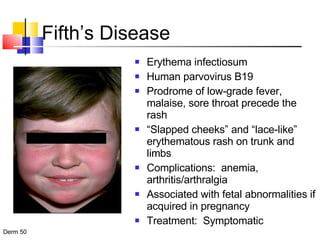
Fifth’s Disease Erythema infectiosum  Human parvovirus B19 Prodrome of low-grade fever, malaise, sore throat precede the rash “ Slapped cheeks” and “lace-like” erythematous rash on trunk and limbs Complications:  anemia, arthritis/arthralgia Associated with fetal abnormalities if acquired in pregnancy Treatment:  Symptomatic
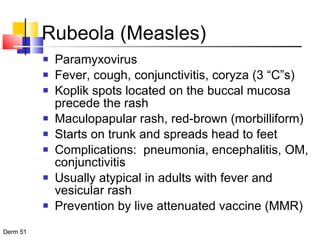
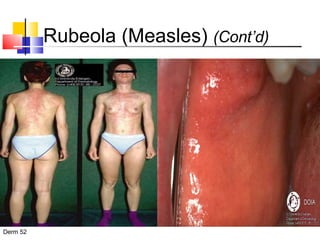
Rubeola (Measles) Paramyxovirus Fever, cough, conjunctivitis, coryza (3 “C”s) Koplik spots located on the buccal mucosa precede the rash Maculopapular rash, red-brown (morbilliform) Starts on trunk and spreads head to feet Complications:  pneumonia, encephalitis, OM, conjunctivitis Usually atypical in adults with fever and vesicular rash Prevention by live attenuated vaccine (MMR)
Rubeola (Measles)  (Cont’d)
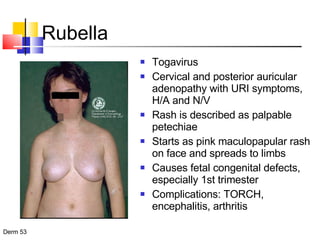
Rubella Togavirus Cervical and posterior auricular adenopathy with URI symptoms, H/A and N/V Rash is described as palpable petechiae Starts as pink maculopapular rash on face and spreads to limbs Causes fetal congenital defects, especially 1st trimester Complications: TORCH, encephalitis, arthritis
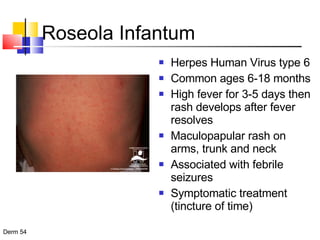
Roseola Infantum Herpes Human Virus type 6 Common ages 6-18 months High fever for 3-5 days then rash develops after fever resolves Maculopapular rash on arms, trunk and neck Associated with febrile seizures Symptomatic treatment (tincture of time)
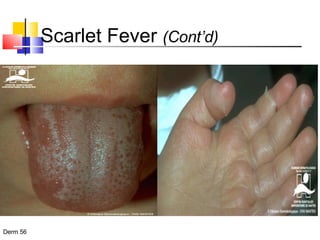
Scarlet Fever Group A strep. Rash caused by toxin Rapid onset, with sore throat, fever, H/A and sometimes vomiting Rash is a “sandpaper” type – starts on trunk and moves to limbs, with circumoral sparing Strawberry tongue Pastia’s lines on groin, limbs and antecubital areas May see post-strep skin peeling on palms/soles Dx:  Rapid strep test or culture Treatment:  PCN, erythromycin
Scarlet Fever  (Cont’d)
Staphylcoccal Scalded Skin Syndrome (SSSS)
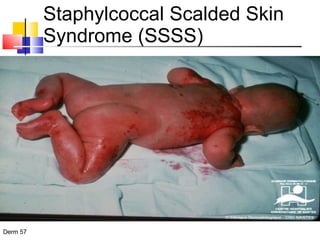
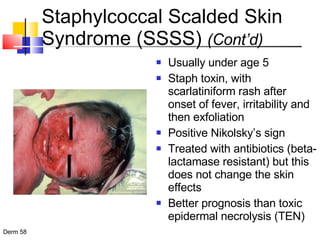
Staphylcoccal Scalded Skin Syndrome (SSSS)  (Cont’d) Usually under age 5 Staph toxin, with scarlatiniform rash after onset of fever, irritability and then exfoliation  Positive Nikolsky’s sign Treated with antibiotics (beta-lactamase resistant) but this does not change the skin effects Better prognosis than toxic epidermal necrolysis (TEN)
Kawasaki’s Disease
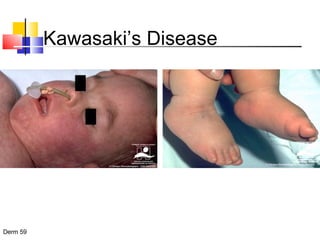
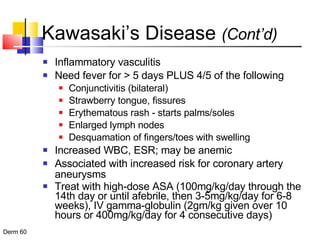
Kawasaki’s Disease  (Cont’d) Inflammatory vasculitis Need fever for > 5 days PLUS 4/5 of the following Conjunctivitis (bilateral) Strawberry tongue, fissures Erythematous rash - starts palms/soles Enlarged lymph nodes Desquamation of fingers/toes with swelling Increased WBC, ESR; may be anemic Associated with increased risk for coronary artery aneurysms Treat with high-dose ASA (100mg/kg/day through the 14th day or until afebrile, then 3-5mg/kg/day for 6-8 weeks), IV gamma-globulin (2gm/kg given over 10 hours or 400mg/kg/day for 4 consecutive days)
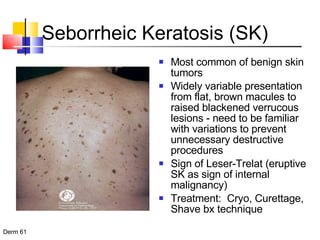
Seborrheic Keratosis (SK) Most common of benign skin tumors Widely variable presentation from flat, brown macules to raised blackened verrucous lesions - need to be familiar with variations to prevent unnecessary destructive procedures Sign of Leser-Trelat (eruptive SK as sign of internal malignancy) Treatment:  Cryo, Curettage, Shave bx technique
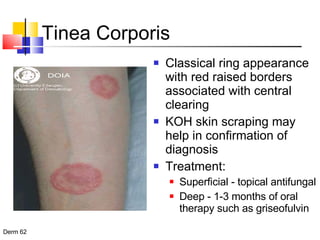
Tinea Corporis Classical ring appearance with red raised borders associated with central clearing KOH skin scraping may help in confirmation of diagnosis Treatment:  Superficial - topical antifungal Deep - 1-3 months of oral therapy such as griseofulvin
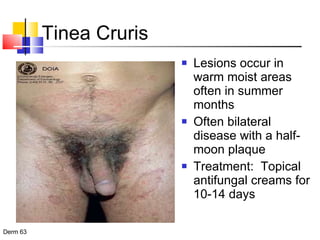
Tinea Cruris Lesions occur in warm moist areas often in summer months Often bilateral disease with a half-moon plaque Treatment:  Topical antifungal creams for 10-14 days
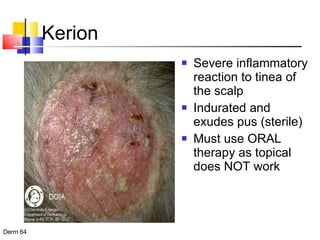
Kerion Severe inflammatory reaction to tinea of the scalp Indurated and exudes pus (sterile) Must use ORAL therapy as topical does NOT work
Kerion  (Cont’d) Treatment: Griseofulvin - 15mg/kg for 6-12 weeks Terbinafine - 3-6 mg/kg/day for 6 weeks Itraconazole - 2-5 mg/kg/day for 6 weeks
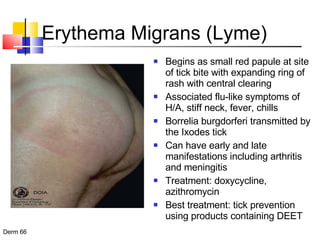
Erythema Migrans (Lyme) Begins as small red papule at site of tick bite with expanding ring of rash with central clearing Associated flu-like symptoms of H/A, stiff neck, fever, chills Borrelia burgdorferi transmitted by the Ixodes tick Can have early and late manifestations including arthritis and meningitis  Treatment: doxycycline, azithromycin Best treatment: tick prevention using products containing DEET
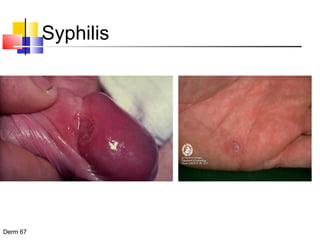
Syphilis
Syphilis  (Cont’d) Treponema pallidum (spirochete) Primary = painless chancre Secondary = rash (palm/sole), lymphadenopathy, condyloma lata Tertiary = CNS or cardiovascular effects Diagnosis:  RPR followed by FTA-ABS Treatment:  PCN, ceftriaxone, erythromycin Jarisch-Herxheimer Rxn: limited reaction due to release of antigens following antibiotics - chills, fever, H/A, myalgias
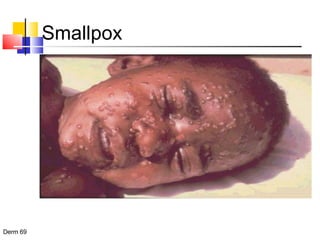
Smallpox
Smallpox  (Cont’d) Orthopox virus - Variola Was officially eradicated by WHO 1980 Still stockpiled in US and Russia Theoretically produced by genetic manipulation of cowpox and monkeypox One of most contagious diseases known
Smallpox  (Cont’d) 3-17 day incubation ACUTE onset of fever, malaise, vomiting, headache, backache, delirium and erythematous rash 2-3 days after onset, a varicella-like rash begins on face (forehead), upper arms, forearms, hands and legs and spreads centrally
Smallpox  (Cont’d) Medical Management:  There is NO treatment, although Cidofovir may have some utility Need to provide airborne droplet precautions for at least 17 days after exposure, quarantine recommended Immediate post-exposure vaccination Supportive care
References  Evidence Based Medicine  Practice Points
SLIDE 10 Low-potency corticosteroids are recommended for maintenance therapy, whereas intermediate-and high-potency corticosteroids should be used for the treatment of clinical exacerbation and applied to affected areas of skin over short periods of time. Name of AAFP-approved source of systematic evidence review:   National Guideline Clearinghouse Specific web site of supporting evidence from the approved source identified immediately above:  http://www.guideline.gov/summary/summary.aspx?doc_id=6872&nbr=004210&string=atopic+AND+dermatitis Strength of evidence (description and/or grade as provided by the approved source):   Strength of recommendation A – Directly based on category I evidence Category of evidence Ia Evidence from meta-analysis of randomized controlled trials Ib Evidence from at least 1 randomized controlled trial

12 Dermatology2008

  • 1.
  • 2.
    Acne Vulgaris Chronicdisease of sebaceous follicle, primarily affecting face, chest, and back Occurs at puberty with sebum production triggered by increased androgen levels Inflammation is due in part to over-proliferation of Propionibacterium acnes , an anaerobic Gram-positive organism
  • 3.
    Topical Retinoids: tretinoin (Retin A), adapalene (Differin), Tazarotene (Tazorac) Foundation of treatment Only agents that affect follicular epitheliuim Benzoyl Peroxide Antibacterial and comedolytic effects Topical Antibacterials Eliminate P. acnes from the sebaceous gland and thereby suppress inflammation in patients with papular and inflammatory acne Azelaic Acid (Azelex), clindamycin, erythromycin, metronidazole Acne Treatment
  • 4.
    Acne Treatment (Cont’d) Oral Antibiotics Inhibit P. acnes Tetracyclines have a direct anti-inflammatory effect Tetracyclines, Doxycycline, Minocycline, Erythromycin, Trimethoprim-Sulfa, Clindamycin Antibiotic resistance increasing problem Treatment courses should be short 4-6 months Concomitant Benzoyl Peroxide may decrease resistance Oral Istotretinoin (Accutane) Useful for severe acne – nodulocystic scarring Hormonal – OCP in women
  • 5.
    Acne Treatment (Cont’d) It takes 8 weeks for a microcomedo to mature. Thus any therapy effectiveness should be assessed after 8 weeks of therapy. Water-based cosmetics are less comedogenic than oil based. Soaps, detergents, and astringenets have little impact on acne and vigorous “cleansing” can worsen inflammation.
  • 6.
    Acne Treatment (Cont’d) Recommendations Mainly comedones with occasional inflamed papule or pustule (Type 1) Topical Retinoid Consider benzoyl peroxide, azelaic acid Comedones, papules and pustules (Type 2) Topical Retinoids plus benzoyl peroxide, azelaic, or topical antibiotic Worsening Type 2 – spread to shoulders, back, chest, occasional cysts/nodules Systemic antibiotic plus topical Retinoid, benzoyl peroxide, or azelaic acid Add OCP or antiandrogen for women
  • 7.
    Acne Treatment (Cont’d) Recommendations (cont’d) Numerous cyst, scarring Systemic antibiotics plus topical Retinoid plus benzoyl peroxide Oral isotretinoin (Accutane)
  • 8.
    Atopic Dermatitis Therapyusually involves emollients and good skin hydration, antipruritics, and controlling exacerbating factors including temperature, humidity and airborne allergens and dust. Can use topical steroids to clear skin (low potency) Pimecrolimus (Elidel) may be tried in unresponsive cases
  • 9.
    Atopic Dermatitis (Cont’d) Eczematous eruption genetically determined Characterized by lichenification, excoriation and crusting Classically involves face, neck and flexual surfaces of arms and legs Picture can vary with age of patient, usually seen in early childhood
  • 10.
    Eczema Characterized byscaly, occasionally fissured patches of dermatitis overlying dry skin Also called Xerosis Treated with lubricants and hydration, such as Eucerin, Alpha-Keri, etc. If severe may use low- potency topical steroids (level V or less)
  • 11.
  • 12.
    Psoriasis (Cont’d)Red, scaling papules which coalesce to round-to-oval plaques Adherent silvery white thick scale which when removed bleeds (Auspitz’s sign) Can develop at sites of physical trauma (Koebner’s phenomenon) Usually extensor surfaces Differential diagnosis may include secondary syphilis, eczema or seborrhea Associated arthritis can develop Treatment: Steroids, Tar, UV light (PUVA), Calcipotriene - Vit D 3 Derivative (Dovonex), Methotrexate in and other immunomodulatory drugs and other immunomodulating drugs in severe cases
  • 13.
  • 14.
    Seborrheic Dermatitis (Cont’d) Etiology Unknown Relationships Hormone levels – infancy (cradle cap) and reappears at puberty Fungal infections (Malassezia furfur) response to antifungal agents Nutritional (common in AIDS) Presentation Cradle cap Treatments Topical steroids – low potency Topical calcineurun inhibitors (Protopic, Elidel) Keratolytics (salicyclic and shampoo) Antifungals (Nizoral shampoo 3x/week, Selsun 2-3x/week) and others Dandruff Greasy scales
  • 15.
  • 16.
    Pityriasis Rosea (Cont’d) Benign, self-limiting eruption Herald patch abruptly appears several days to weeks before rest of rash Smaller lesions appear in 1-2 weeks, usually on trunk but can be upper arms and thighs 1-2 cm oval plaques with wrinkled tissue-like ring of scale (collarette) with long axis oriented along the skin lines (Christmas tree distribution on back) Treatment directed to symptom relief with antihistamines for itching
  • 17.
    Petechiae/Purpura Nonpalpable -superficial,thrombocytopenia Palpable - deep, vasculitis Petechiae < 3mm Purpura > 3mm Causes: Drugs, vasculitis, infections Treatment: Depends on etiology, antibiotics, steroids or even plasmapheresis if needed
  • 18.
    Urticaria Wheals, hivesdiffuse itchy rash 80% of the time etiology unknown Usually IgE mediated Self limited Treatment with antihistamine, antipruritics, H2 blockers ANGIOEDEMA is deeper dermis Familial - C1 esterase inhibitor deficiency
  • 19.
    Eyrsipelas Usually GroupA strep Superficial cellulitis and lymphangitis Often “butterfly rash” on face Characterized by bright red, shiny plaques on lower extremities Well-demarcated border between normal and infected skin Treatment: PCN, dicloxacillin, erythromycin
  • 20.
    Erythema Nodosum Delayedhypersensitivity reaction caused by infections (Strep, TB and sarcoidosis), medications (OCPs, sulfa) and 50% idiopathic Bright painful nodules that are violet in color Most common in women May have arthralgias before eruptive phase Treatment: Symptomatic relief with salicylates, NSAIDs and potassium iodide 300mg tid for 3-4 weeks may help
  • 21.
    Drug Eruption Asymmetricaleruption Can see urticaria, erythema multiforme, and serum sickness Common causes: PCN, sulfa, cephalosporins Usually resolves in 1-2 weeks Complication: Stevens-Johnson Syndrome - mucosal and cutaneous bullous forms with 5-10% mortality Treatment: D/C offending agent, steroids (topical or oral) and antihistamines
  • 22.
    Erythema Multiforme Secondaryto hypersensitivity reaction Severe form is Stevens-Johnson and Toxic Epidermal Necrolysis (TEN) Palmar, plantar and extensor surfaces Target lesions (bull’s eye) Severe form is Stevens-Johnson with severe bullous form Treatment: Remove offending agent, oral steroid burst (40-80mg/day of prednisone or equivalent oral steriod)
  • 23.
  • 24.
    Henoch-Schonlein Purpura Associatedwith strep and viral infections, drugs Seen most commonly in 2-10, with abdominal pain, GI bleeding, hematuria Palpable purpura usually on lower extremities, buttocks IgA mediated Complications: arthritis, glomerulonephritis, hematuria No thrombocytopenia Usually spontaneous resolution, may need renal consult, and the use of oral steroids
  • 25.
  • 26.
  • 27.
    Toxic Epidermal Necrolysis(TEN) (Cont’d) Considered severe form of erythema multiforme with more than 30% of epidermal detachment Patient toxic and in the elderly mortality approaches 50% Nikolsky’s sign: with slight thumb pressure, skin wrinkles, slides laterally and separates from the epidermal-dermis junction Treatment: Admit, IV fluids, steroids are controversial, antibiotics if infection-related
  • 28.
    Pemphigus Vulgaris Rare,often lethal (10-15%) autoimmune intradermal blistering disease Use punch bx to help dx using direct immunofluorescence Circulating IgG autoantibodies destroy the adhesion between epidermal cells Oral lesions precede the onset of skin blisters; Nikolsky’s sign positive Treatment: Steroids orally
  • 29.
    Bullous Pemphigoid Rarerelatively benign subepidermal blistering disease Usually seen in older adults (>60) Begins with urticarial lesions that may progress to tense bullae. May see oral lesions first Punch bx with direct immunofluorescence shows IgG but also IgA, IgB, IgE Treatment: Antipruritics, topical steroids, sulfones or immunosuppressive medications
  • 30.
    Varicella Highly infectiousviral illness Incubation average of 14 days after exposure by airborne droplets or vesicular fluid, followed by prodrome of low fever, headache and malaise Concurrent macules/papules to vesicles to crusted lesions Complications include encephalitis, pneumonia and secondary bacterial infections
  • 31.
    Varicella (Cont’d)Varicella vaccine available and recommended Avoid salicylates (Reye’s syndrome) Use Acyclovir and immune globulin for immunocompromised patients Can be associated with increased risk in pregnant women Antivirals such as Acyclovir are clinically effective in shortening rash if started within 72 hours of its onset
  • 32.
    Herpes Zoster -Shingles AKA shingles, usually dermatomal in distribution Pre-eruptive itching or burning Eruptive phase has typical appearance of varicella Complications: Postherpetic neuralgia, scarring and dissemination Therapy: Consider antivirals, oral steroids, pain medications and topical burrows solution May also consider tegretol or neurontin as adjunctive Rx
  • 33.
    Herpes Simplex HSV1: Stomatitis with fever, decreased oral intake HSV 2: painful vesicles of anus, genitalia Complications include infection (secondary), congenital transfer (TORCH) or neonatal infections Treatment: Topical antivirals such as acyclovir and analogs
  • 34.
    Hand-Foot-Mouth Disease CoxsackieVirus A16 most common Seen in outbreaks Oval vesicles on the hands and feet, especially on the plantar and palmar surfaces common Fecal-oral transmission Oral lesions are aphthous-like in character Treatment is symptomatic relief of itching and painful mouth symptoms
  • 35.
  • 36.
    Herpangina Coxsackie virusSymptoms include: fever, dysphagia, drooling, vomiting and headaches Ulcerative lesions on the pharynx with no generalized rash Treatment is symptomatic but recommend avoidance of viscous lidocaine in children to avoid overdose and seizures
  • 37.
    Actinic Keratosis (AK)Premalignant Often more felt than seen Rough, scaly and erythematous patches, poorly defined borders Increased incidence in fair skinned patients 5-20% of AKs will transform to SCC within 10 years
  • 38.
    Actinic Keratosis (AK) (Cont’d) Risk factors are fair skin and cumulative sun exposure Diagnosis: Red, scaling papule that is rough to feel. Can be red to yellowish or even keratinized to form a horn Prevention by use of sun blocks
  • 39.
    Actinic Keratosis (AK)Treatment Treatment: Cyrosurgery with Liquid N 2 for limited number of lesions - some pain and risk of scarring Curettage: Scrap away lesion with curette and follow with electro or radio frequency to “feather” and stop bleeding, but need to use local anesthetic and best for limited numbers of lesions
  • 40.
    Actinic Keratosis (AK)Treatment (Cont’d) Topical 5-Fluorouricil (5-FU): Is a cytostatic agent which inhibits enzymes in tumor cells Apply locally and repeat daily until the lesion erodes and reddens (usually 2-3 weeks) Advantage is ability to treat larger areas and numbers of lesions Disadvantage is the pain and redness associated with treatment
  • 41.
    Sunscreens Most dogood job filtering UVB-Rays that cause sunburn; don’t defend as well against UVA that causes skin cancer and wrinkles. Best protection against UVA includes zinc oxide, titanium dioxide or avobenzone. SPF (Sun Protection Factor) refers to UVB protection.
  • 42.
    Sunscreens (Cont’d)Use of sunscreen recommendations SPF of 30 or better (SPF 15 blocks 93% and SPF 50 blocks 98% of UVB Rays) Water resistant Apply every 2 hours and after swimming or sweating 30-35ml per body application – usually “too little” for an average adult
  • 43.
    Squamous Cell CarcinomaCommon in middle-aged and elderly 2 types depending on site of origin Arising in areas of prior irradiation or thermal injury Arising from prior actinic damaged skin Seen in sun exposed areas but also common on scalp, backs of hands, and superior surface of pinna, with BCC not usually seen here
  • 44.
    Rapid growth withcentral ulcerations and raised indurated borders Metastasis occurs and depends on size, location, tumor differentiation and depth of invasion (greater than 6mm thick at higher risk) Treatment: excisional surgery, radiation and chemotherapy Small (< 2cm dia) tumors need a 4mm margin and larger tumors a 6mm margin or Moh’s may be needed Squamous Cell Carcinoma (Cont’d)
  • 45.
    Basal Cell CarcinomaTelangiectatic vessels Rolled edges with pearly gray borders Can have central ulcerations Also called rodent cell ulcers 5 types: Listed from most common Nodular Superficial Micronodular Infiltrative Morpheaform
  • 46.
    Treatment includes surgicalexcision Most successful if < 2cm in diameter Advocate Moh’s surgery if large, recurrent morpheaform, aggressive tumors, or cosmetically or functionally critical areas (nose, lips, ears) Margins of 4mm of normal appearing skin give a 98% complete excision Smaller tumors can be treated with desiccation and curettage Basal Cell Carcinoma (Cont’d)
  • 47.
  • 48.
    Pyogenic Granuloma (Cont’d) Benign, acquired vascular lesion Small, but rapidly growing, yellow to red, dome shaped fragile protrusions Seen most often on head, neck and extremities (fingers) Minimal trauma causes brisk bleeding Treatment: Firm, thorough curettage to completely eradicate If any abnormal tissue remains, will recur
  • 49.
    Impetigo Staph/Strep Superficialbut highly contagious See in infants, children or with poorer hygiene Red, with vesicles most often seen on face “ Honey crusted” lesions Can become bullous Treatment: Minimal - topical mupirocin ointment Extensive - Dicloxacillin, cephalosporins, erythromycin
  • 50.
    Fifth’s Disease Erythemainfectiosum Human parvovirus B19 Prodrome of low-grade fever, malaise, sore throat precede the rash “ Slapped cheeks” and “lace-like” erythematous rash on trunk and limbs Complications: anemia, arthritis/arthralgia Associated with fetal abnormalities if acquired in pregnancy Treatment: Symptomatic
  • 51.
    Rubeola (Measles) ParamyxovirusFever, cough, conjunctivitis, coryza (3 “C”s) Koplik spots located on the buccal mucosa precede the rash Maculopapular rash, red-brown (morbilliform) Starts on trunk and spreads head to feet Complications: pneumonia, encephalitis, OM, conjunctivitis Usually atypical in adults with fever and vesicular rash Prevention by live attenuated vaccine (MMR)
  • 52.
  • 53.
    Rubella Togavirus Cervicaland posterior auricular adenopathy with URI symptoms, H/A and N/V Rash is described as palpable petechiae Starts as pink maculopapular rash on face and spreads to limbs Causes fetal congenital defects, especially 1st trimester Complications: TORCH, encephalitis, arthritis
  • 54.
    Roseola Infantum HerpesHuman Virus type 6 Common ages 6-18 months High fever for 3-5 days then rash develops after fever resolves Maculopapular rash on arms, trunk and neck Associated with febrile seizures Symptomatic treatment (tincture of time)
  • 55.
    Scarlet Fever GroupA strep. Rash caused by toxin Rapid onset, with sore throat, fever, H/A and sometimes vomiting Rash is a “sandpaper” type – starts on trunk and moves to limbs, with circumoral sparing Strawberry tongue Pastia’s lines on groin, limbs and antecubital areas May see post-strep skin peeling on palms/soles Dx: Rapid strep test or culture Treatment: PCN, erythromycin
  • 56.
    Scarlet Fever (Cont’d)
  • 57.
  • 58.
    Staphylcoccal Scalded SkinSyndrome (SSSS) (Cont’d) Usually under age 5 Staph toxin, with scarlatiniform rash after onset of fever, irritability and then exfoliation Positive Nikolsky’s sign Treated with antibiotics (beta-lactamase resistant) but this does not change the skin effects Better prognosis than toxic epidermal necrolysis (TEN)
  • 59.
  • 60.
    Kawasaki’s Disease (Cont’d) Inflammatory vasculitis Need fever for > 5 days PLUS 4/5 of the following Conjunctivitis (bilateral) Strawberry tongue, fissures Erythematous rash - starts palms/soles Enlarged lymph nodes Desquamation of fingers/toes with swelling Increased WBC, ESR; may be anemic Associated with increased risk for coronary artery aneurysms Treat with high-dose ASA (100mg/kg/day through the 14th day or until afebrile, then 3-5mg/kg/day for 6-8 weeks), IV gamma-globulin (2gm/kg given over 10 hours or 400mg/kg/day for 4 consecutive days)
  • 61.
    Seborrheic Keratosis (SK)Most common of benign skin tumors Widely variable presentation from flat, brown macules to raised blackened verrucous lesions - need to be familiar with variations to prevent unnecessary destructive procedures Sign of Leser-Trelat (eruptive SK as sign of internal malignancy) Treatment: Cryo, Curettage, Shave bx technique
  • 62.
    Tinea Corporis Classicalring appearance with red raised borders associated with central clearing KOH skin scraping may help in confirmation of diagnosis Treatment: Superficial - topical antifungal Deep - 1-3 months of oral therapy such as griseofulvin
  • 63.
    Tinea Cruris Lesionsoccur in warm moist areas often in summer months Often bilateral disease with a half-moon plaque Treatment: Topical antifungal creams for 10-14 days
  • 64.
    Kerion Severe inflammatoryreaction to tinea of the scalp Indurated and exudes pus (sterile) Must use ORAL therapy as topical does NOT work
  • 65.
    Kerion (Cont’d)Treatment: Griseofulvin - 15mg/kg for 6-12 weeks Terbinafine - 3-6 mg/kg/day for 6 weeks Itraconazole - 2-5 mg/kg/day for 6 weeks
  • 66.
    Erythema Migrans (Lyme)Begins as small red papule at site of tick bite with expanding ring of rash with central clearing Associated flu-like symptoms of H/A, stiff neck, fever, chills Borrelia burgdorferi transmitted by the Ixodes tick Can have early and late manifestations including arthritis and meningitis Treatment: doxycycline, azithromycin Best treatment: tick prevention using products containing DEET
  • 67.
  • 68.
    Syphilis (Cont’d)Treponema pallidum (spirochete) Primary = painless chancre Secondary = rash (palm/sole), lymphadenopathy, condyloma lata Tertiary = CNS or cardiovascular effects Diagnosis: RPR followed by FTA-ABS Treatment: PCN, ceftriaxone, erythromycin Jarisch-Herxheimer Rxn: limited reaction due to release of antigens following antibiotics - chills, fever, H/A, myalgias
  • 69.
  • 70.
    Smallpox (Cont’d)Orthopox virus - Variola Was officially eradicated by WHO 1980 Still stockpiled in US and Russia Theoretically produced by genetic manipulation of cowpox and monkeypox One of most contagious diseases known
  • 71.
    Smallpox (Cont’d)3-17 day incubation ACUTE onset of fever, malaise, vomiting, headache, backache, delirium and erythematous rash 2-3 days after onset, a varicella-like rash begins on face (forehead), upper arms, forearms, hands and legs and spreads centrally
  • 72.
    Smallpox (Cont’d)Medical Management: There is NO treatment, although Cidofovir may have some utility Need to provide airborne droplet precautions for at least 17 days after exposure, quarantine recommended Immediate post-exposure vaccination Supportive care
  • 73.
    References EvidenceBased Medicine Practice Points
  • 74.
    SLIDE 10 Low-potencycorticosteroids are recommended for maintenance therapy, whereas intermediate-and high-potency corticosteroids should be used for the treatment of clinical exacerbation and applied to affected areas of skin over short periods of time. Name of AAFP-approved source of systematic evidence review: National Guideline Clearinghouse Specific web site of supporting evidence from the approved source identified immediately above: http://www.guideline.gov/summary/summary.aspx?doc_id=6872&nbr=004210&string=atopic+AND+dermatitis Strength of evidence (description and/or grade as provided by the approved source): Strength of recommendation A – Directly based on category I evidence Category of evidence Ia Evidence from meta-analysis of randomized controlled trials Ib Evidence from at least 1 randomized controlled trial