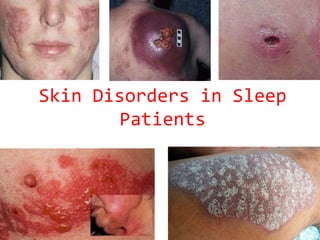
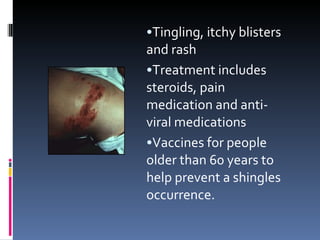
Skin is made up of three main layers: the epidermis, dermis, and hypodermis. The epidermis is the top layer and contains cells that produce melanin, which determines skin color. The dermis contains blood vessels, hair follicles, and sweat and oil glands. The hypodermis is a subcutaneous fat layer. Common skin disorders discussed include bacterial infections like MRSA and cellulitis, fungal infections, viral infections like chickenpox, and inflammatory conditions like eczema, psoriasis, and rosacea. Special considerations are discussed for assessing and treating skin of elderly patients and those with diabetes or other conditions.






![Questions,Concerns,Feedback Should you have any questions or feedback regarding this presentation please feel free to contact our program director, Jennifer Brickner-York, at [email_address] . Thank You.](https://image.slidesharecdn.com/skindisorderspp-110817124636-phpapp01/85/Skin-disorders-pp-69-320.jpg)


