SKILL DEVELOPMENT PROGRAMME
Presented By
Dr. Seema Jain
Principal
R.G.(P.G.) College, Meerut
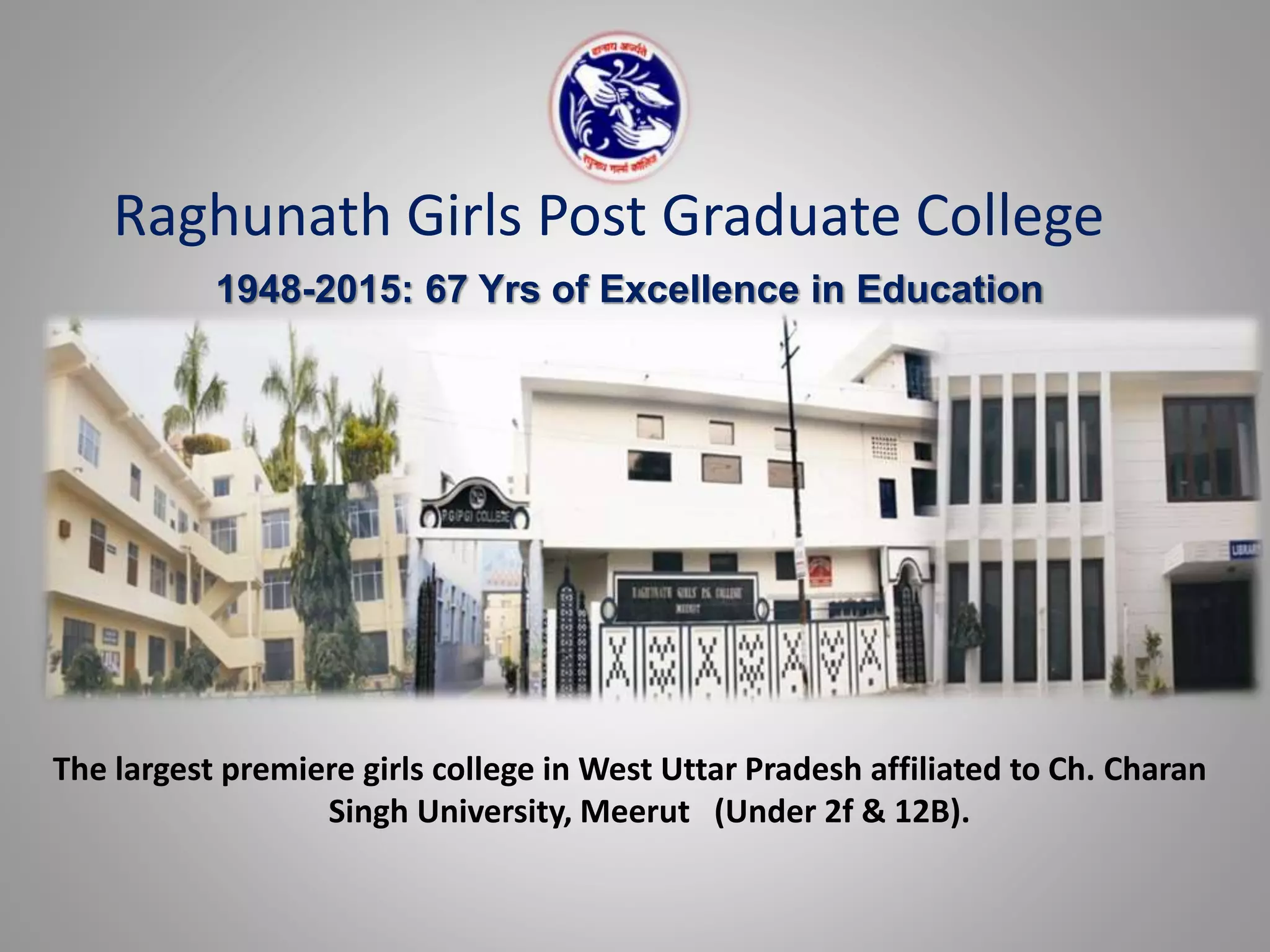
Raghunath Girls Post Graduate College
1948-2015: 67 Yrs of Excellence in Education
The largest premiere girls college in West Uttar Pradesh affiliated to Ch. Charan
Singh University, Meerut (Under 2f & 12B).
What is Skill Development
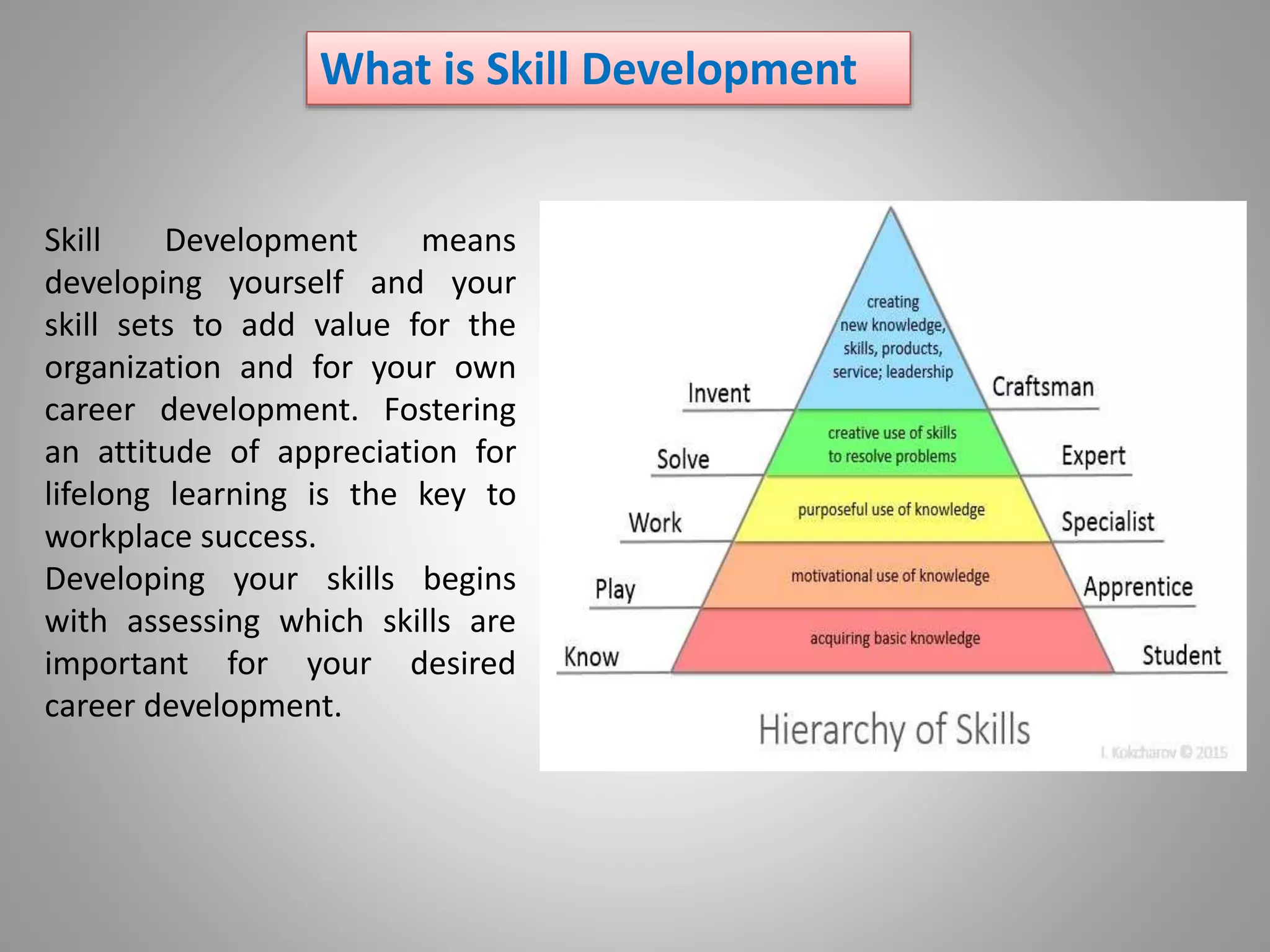
Skill Development means
developing yourself and your
skill sets to add value for the
organization and for your own
career development. Fostering
an attitude of appreciation for
lifelong learning is the key to
workplace success.
Developing your skills begins
with assessing which skills are
important for your desired
career development.
Why Skill Development ?
Core Skills:
Personal development, Analyzing; Problem solving
Writing, Speaking, Presentation
Project management,People skills
time management ,teamwork
 leadership, self-motivation
Secondary Skills:
Networking
Graphic design
HTML, CSS, Programming
Skills Required
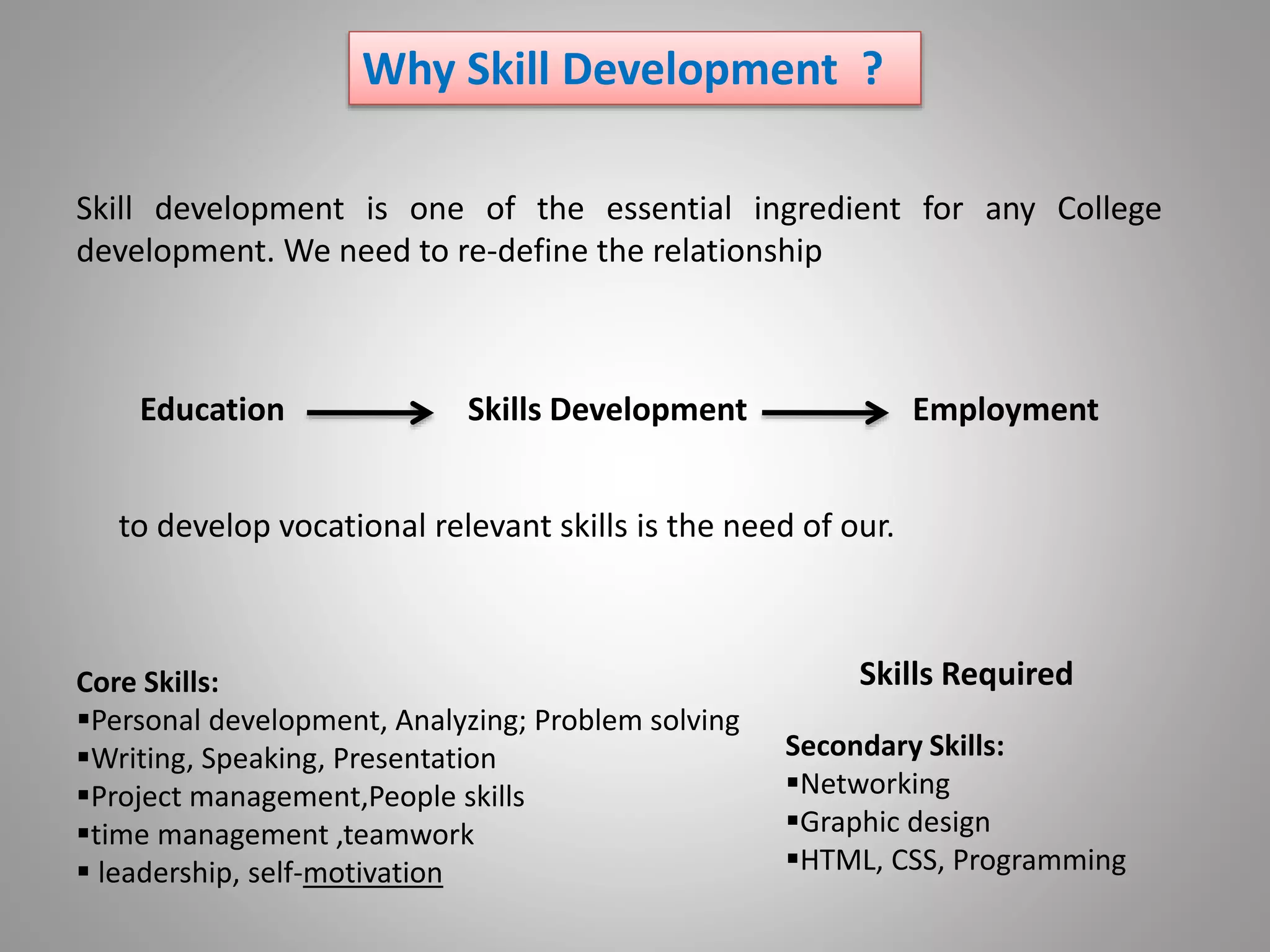
Skill development is one of the essential ingredient for any College
development. We need to re-define the relationship
Education EmploymentSkills Development
to develop vocational relevant skills is the need of our.
Importance of Skill Development
India is among the “young” countries in the world, with
the proportion of the work force in the age group of 15-59
years, growing steadily. However, present status shows
only 2% of the total employees in India have undergone
skills development training; India can become the
worldwide sourcing hub for the skilled employees.
Skills and knowledge are the motivating force of the
financial growth and community development of any
country. They have become even more important given
the increasing pace of globalisation and technological
changes provide both challenges that are taking place in
the world.
Skill building can be viewed as a device to improve the
efficacy and contribution of labour to overall production.
It is an important ingredient to push the production
possibility front line outward and to take growth rate of
the economy to a higher route. Skill building could also be
seen as an instrument to empower the individual and
improve their social acceptance.
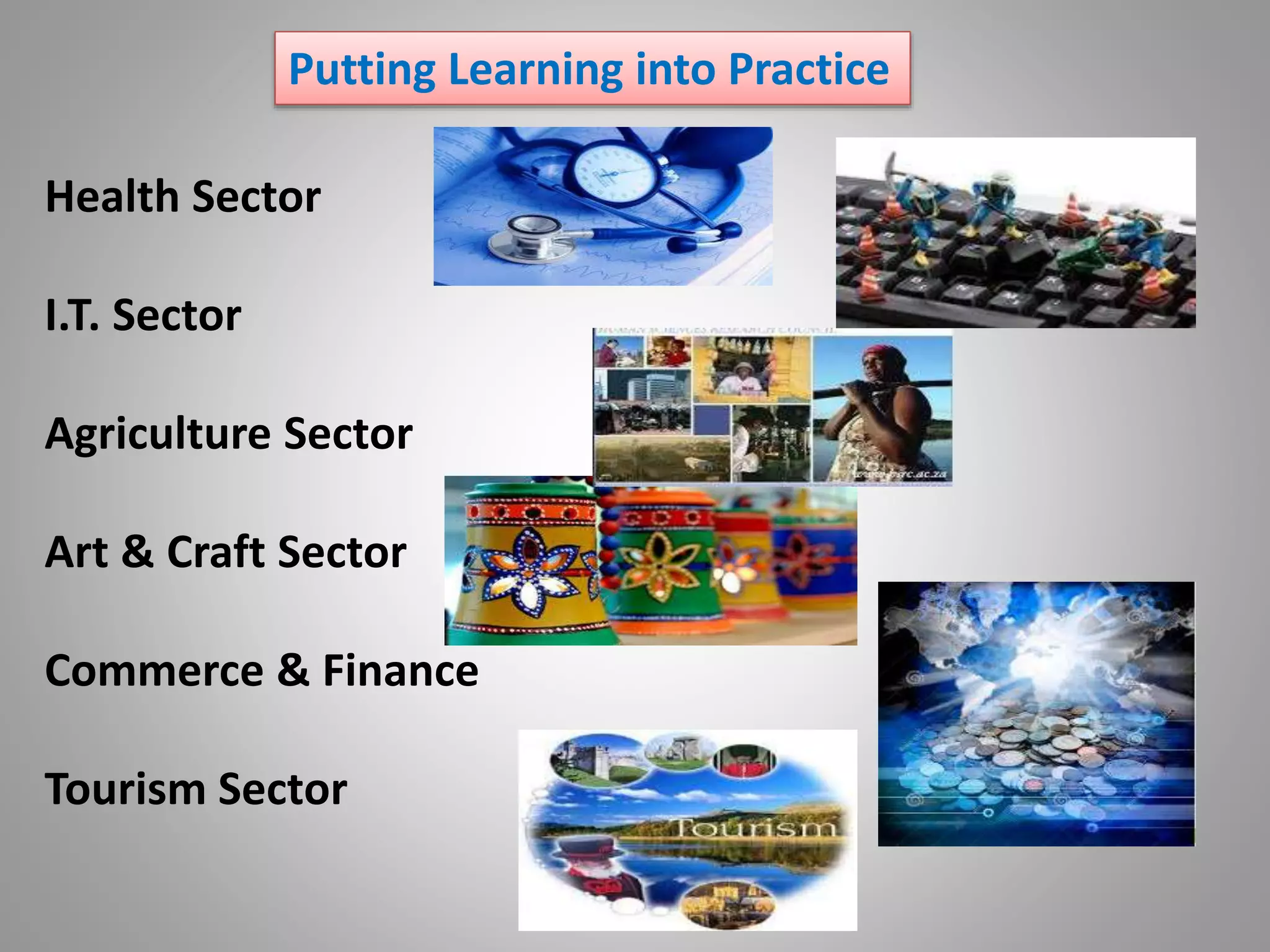
Putting Learning into Practice
Health Sector
I.T. Sector
Agriculture Sector
Art & Craft Sector
Commerce & Finance
Tourism Sector
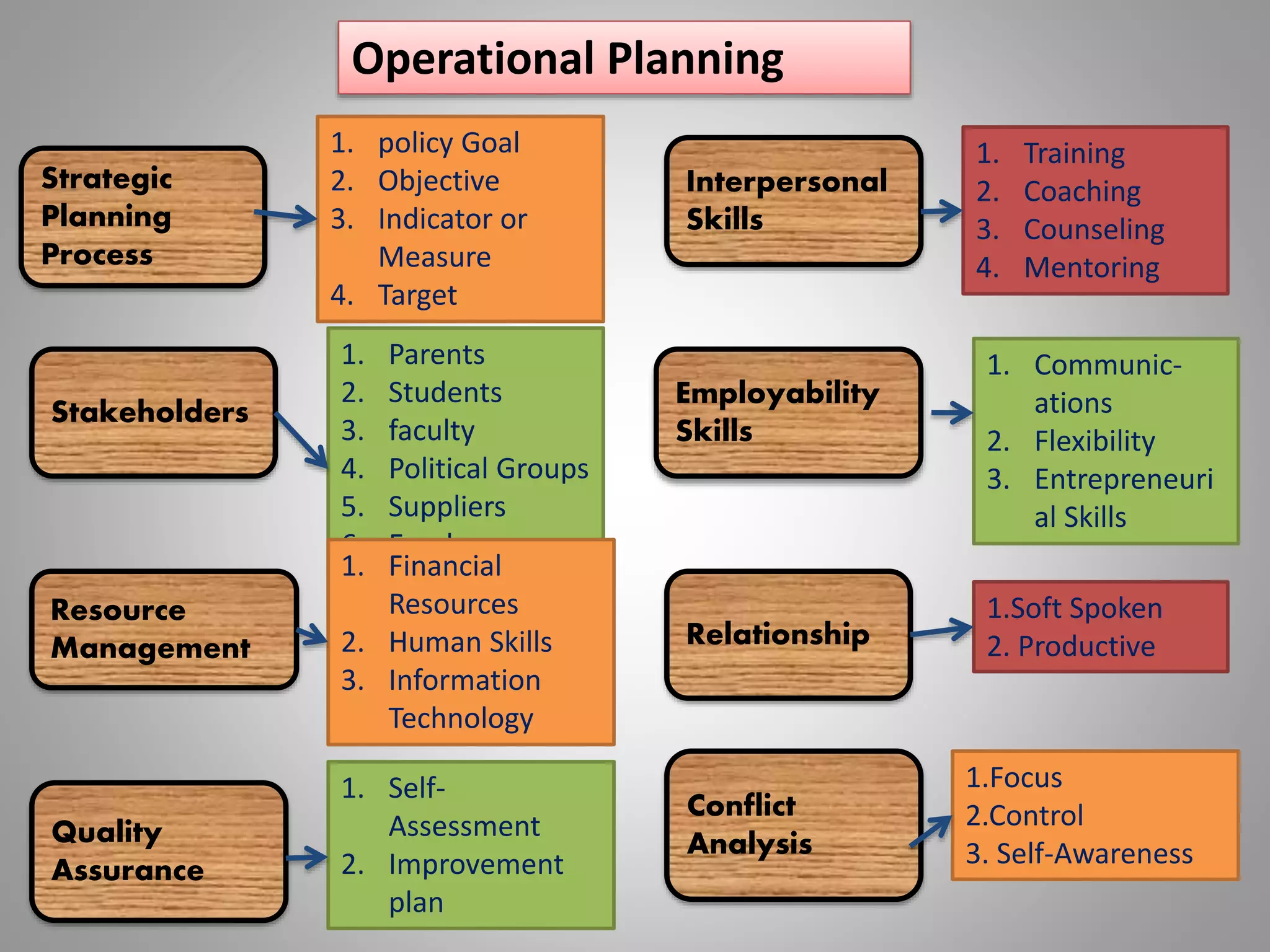
1. policy Goal
2. Objective
3. Indicator or
Measure
4. Target
1. Parents
2. Students
3. faculty
4. Political Groups
5. Suppliers
6. Employees
7. Financiers
1. Training
2. Coaching
3. Counseling
4. Mentoring
1.Focus
2.Control
3. Self-Awareness
1. Financial
Resources
2. Human Skills
3. Information
Technology
1. Communic-
ations
2. Flexibility
3. Entrepreneuri
al Skills
1. Self-
Assessment
2. Improvement
plan
Strategic
Planning
Process
Stakeholders
Interpersonal
Skills
Resource
Management
Conflict
Analysis
Employability
Skills
Quality
Assurance
Relationship
1.Soft Spoken
2. Productive
Operational Planning
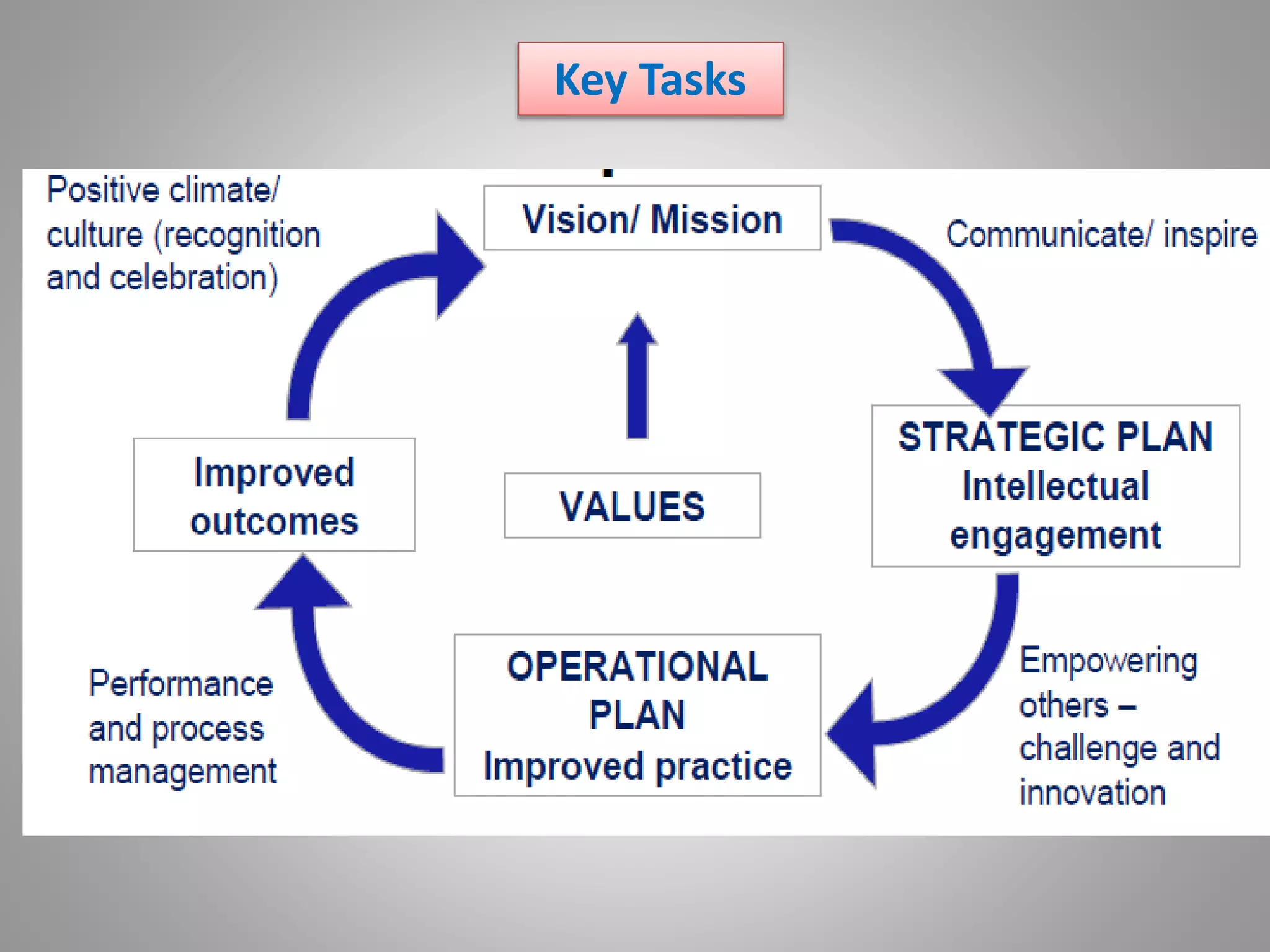
Key Tasks
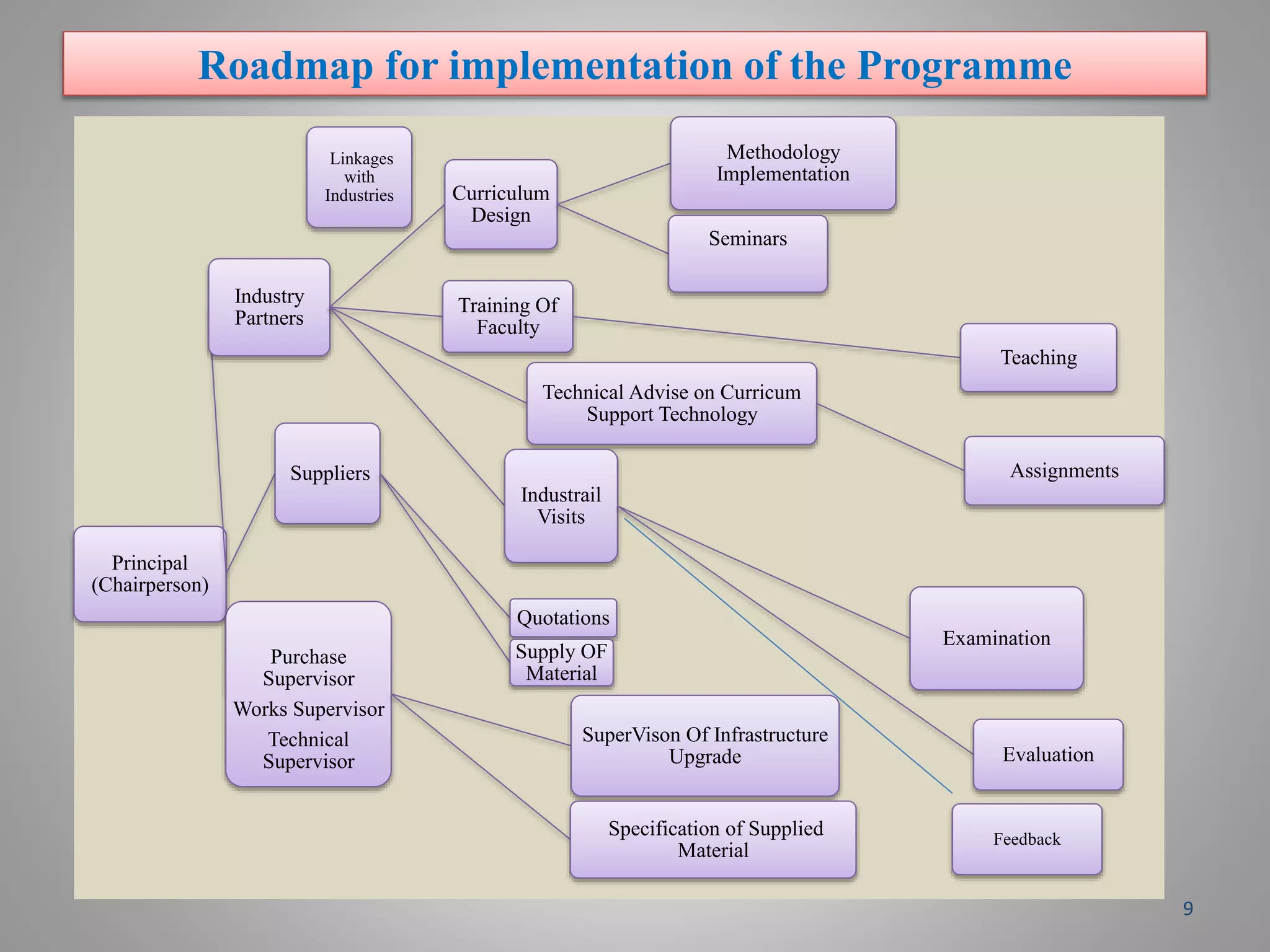
Roadmap for implementation of the Programme
9
Principal
(Chairperson)
Industry
Partners
Curriculum
Design
Methodology
Implementation
Seminars
Training Of
Faculty
Teaching
Technical Advise on Curricum
Support Technology
Assignments
Industrail
Visits
Examination
Evaluation
Suppliers
Quotations
Supply OF
Material
Purchase
Supervisor
Works Supervisor
Technical
Supervisor
SuperVison Of Infrastructure
Upgrade
Specification of Supplied
Material
Feedback
Linkages
with
Industries
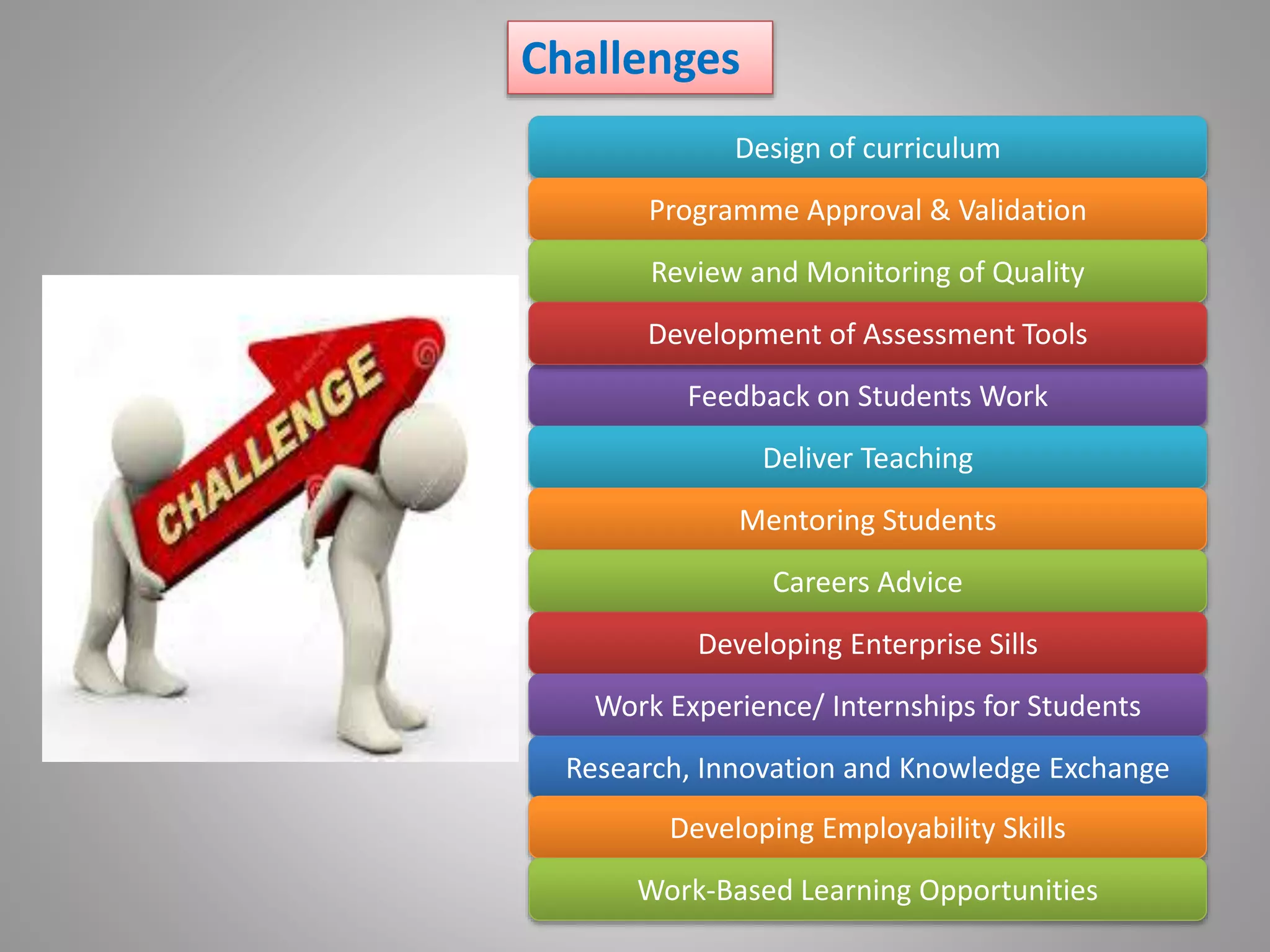
Challenges
Design of curriculum
Programme Approval & Validation
Review and Monitoring of Quality
Feedback on Students Work
Development of Assessment Tools
Deliver Teaching
Mentoring Students
Careers Advice
Developing Enterprise Sills
Work Experience/ Internships for Students
Research, Innovation and Knowledge Exchange
Developing Employability Skills
Work-Based Learning Opportunities
Benefits of Skill Development Programme
The enhancement of student employability skills through the
opportunity to gain industry/ work- relevant skills, experience and
knowledge.
The creation of ‘work-ready’ graduates for employers, equipped
with the skills, knowledge and experience required for the
workplace.
Workforce development, providing the current and potential
workforce with opportunities for developing their skills through a
variety of high-quality flexible study opportunities.
The opportunity for research, collaboration and consultancy,
and access to services and facilities, as part of income generation
and knowledge transfer.
Additional benefits afforded by such as fruitful engagement
between employers and higher education providers.
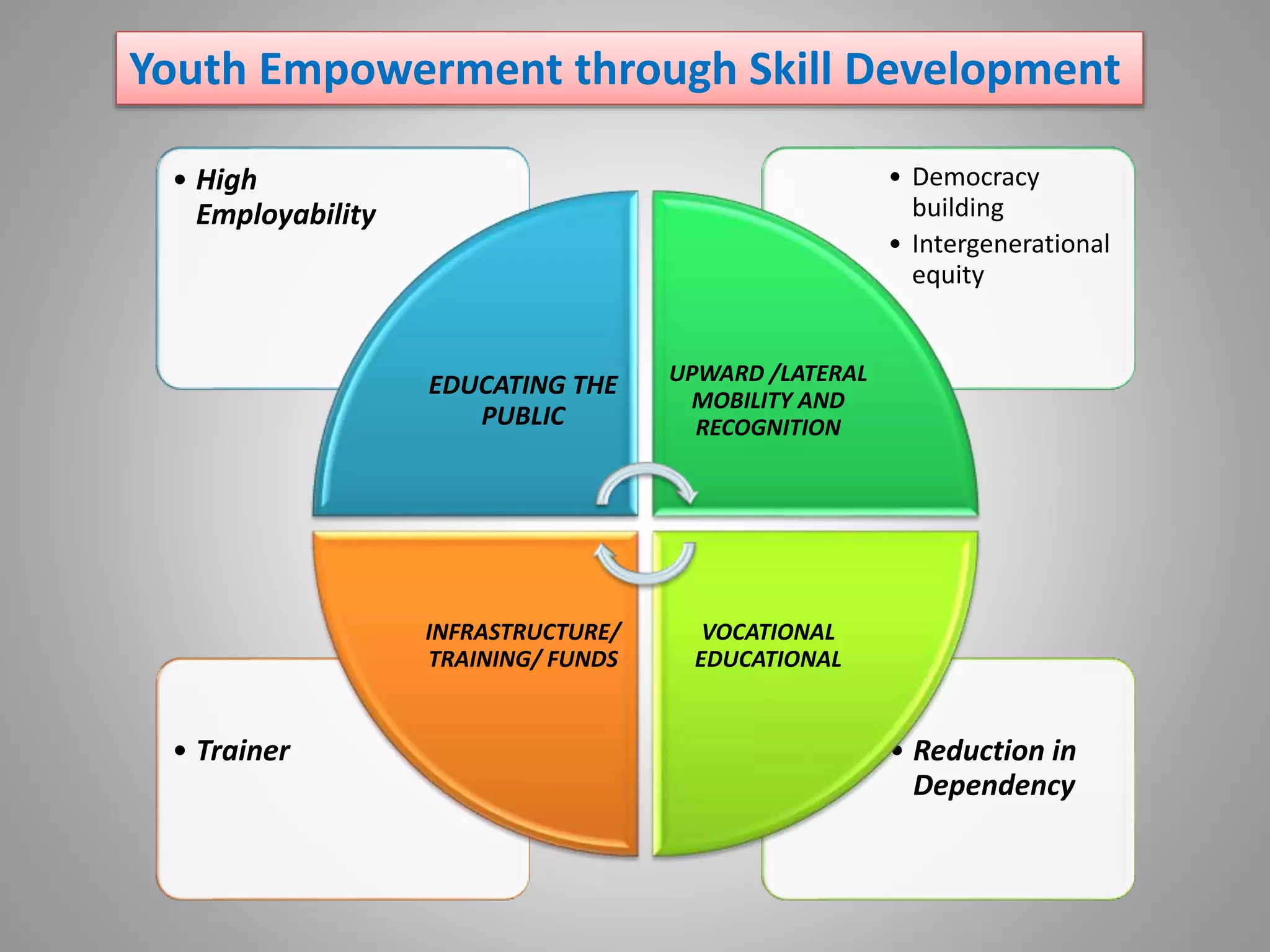
Youth Empowerment through Skill Development
• Reduction in
Dependency
• Trainer
• Democracy
building
• Intergenerational
equity
• High
Employability
EDUCATING THE
PUBLIC
UPWARD /LATERAL
MOBILITY AND
RECOGNITION
VOCATIONAL
EDUCATIONAL
INFRASTRUCTURE/
TRAINING/ FUNDS
• Office Automation & E-Governance
• Business Process Outsourcing(B.P.O.)
• Information Technology
• Yoga
• Clinical Psychology
Skill Development Programme running in My College
Curriculum
• Curriculum will be developed after
consultation with the partner industry
and SSC.
• Skill component has 60% of credits and
General Component has 40% credits.
• The general education component will
focus on language & communication
skills.
• Skill component & general component
will lead to a comprehensive
specialization In one or two domains.
14
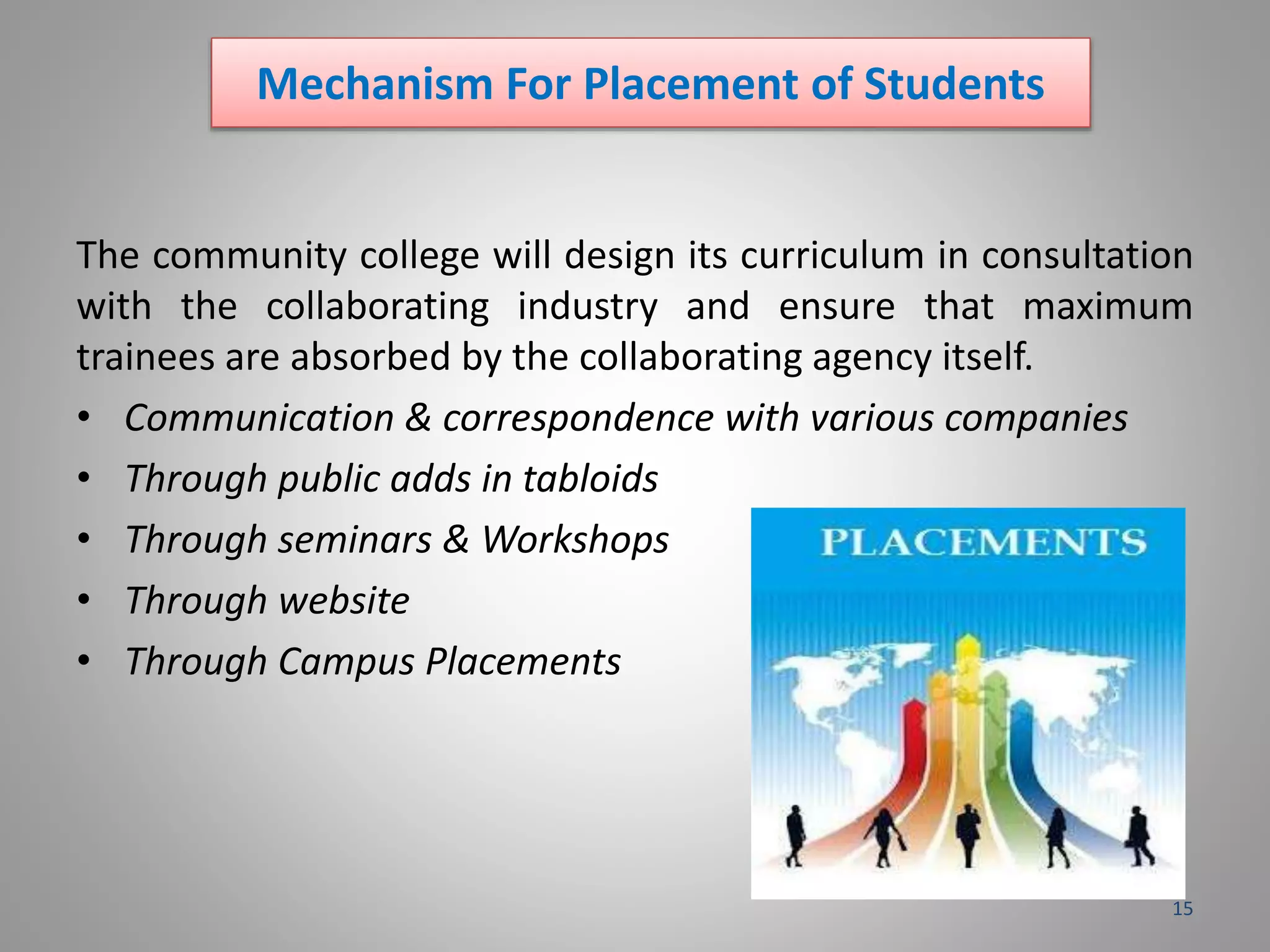
Mechanism For Placement of Students
The community college will design its curriculum in consultation
with the collaborating industry and ensure that maximum
trainees are absorbed by the collaborating agency itself.
• Communication & correspondence with various companies
• Through public adds in tabloids
• Through seminars & Workshops
• Through website
• Through Campus Placements
15
Skill development programme

Skill development programme

  • 1.
    SKILL DEVELOPMENT PROGRAMME PresentedBy Dr. Seema Jain Principal R.G.(P.G.) College, Meerut
  • 2.
    Raghunath Girls PostGraduate College 1948-2015: 67 Yrs of Excellence in Education The largest premiere girls college in West Uttar Pradesh affiliated to Ch. Charan Singh University, Meerut (Under 2f & 12B).
  • 3.
    What is SkillDevelopment Skill Development means developing yourself and your skill sets to add value for the organization and for your own career development. Fostering an attitude of appreciation for lifelong learning is the key to workplace success. Developing your skills begins with assessing which skills are important for your desired career development.
  • 4.
    Why Skill Development? Core Skills: Personal development, Analyzing; Problem solving Writing, Speaking, Presentation Project management,People skills time management ,teamwork  leadership, self-motivation Secondary Skills: Networking Graphic design HTML, CSS, Programming Skills Required Skill development is one of the essential ingredient for any College development. We need to re-define the relationship Education EmploymentSkills Development to develop vocational relevant skills is the need of our.
  • 5.
    Importance of SkillDevelopment India is among the “young” countries in the world, with the proportion of the work force in the age group of 15-59 years, growing steadily. However, present status shows only 2% of the total employees in India have undergone skills development training; India can become the worldwide sourcing hub for the skilled employees. Skills and knowledge are the motivating force of the financial growth and community development of any country. They have become even more important given the increasing pace of globalisation and technological changes provide both challenges that are taking place in the world. Skill building can be viewed as a device to improve the efficacy and contribution of labour to overall production. It is an important ingredient to push the production possibility front line outward and to take growth rate of the economy to a higher route. Skill building could also be seen as an instrument to empower the individual and improve their social acceptance.
  • 6.
    Putting Learning intoPractice Health Sector I.T. Sector Agriculture Sector Art & Craft Sector Commerce & Finance Tourism Sector
  • 7.
    1. policy Goal 2.Objective 3. Indicator or Measure 4. Target 1. Parents 2. Students 3. faculty 4. Political Groups 5. Suppliers 6. Employees 7. Financiers 1. Training 2. Coaching 3. Counseling 4. Mentoring 1.Focus 2.Control 3. Self-Awareness 1. Financial Resources 2. Human Skills 3. Information Technology 1. Communic- ations 2. Flexibility 3. Entrepreneuri al Skills 1. Self- Assessment 2. Improvement plan Strategic Planning Process Stakeholders Interpersonal Skills Resource Management Conflict Analysis Employability Skills Quality Assurance Relationship 1.Soft Spoken 2. Productive Operational Planning
  • 8.
  • 9.
    Roadmap for implementationof the Programme 9 Principal (Chairperson) Industry Partners Curriculum Design Methodology Implementation Seminars Training Of Faculty Teaching Technical Advise on Curricum Support Technology Assignments Industrail Visits Examination Evaluation Suppliers Quotations Supply OF Material Purchase Supervisor Works Supervisor Technical Supervisor SuperVison Of Infrastructure Upgrade Specification of Supplied Material Feedback Linkages with Industries
  • 10.
    Challenges Design of curriculum ProgrammeApproval & Validation Review and Monitoring of Quality Feedback on Students Work Development of Assessment Tools Deliver Teaching Mentoring Students Careers Advice Developing Enterprise Sills Work Experience/ Internships for Students Research, Innovation and Knowledge Exchange Developing Employability Skills Work-Based Learning Opportunities
  • 11.
    Benefits of SkillDevelopment Programme The enhancement of student employability skills through the opportunity to gain industry/ work- relevant skills, experience and knowledge. The creation of ‘work-ready’ graduates for employers, equipped with the skills, knowledge and experience required for the workplace. Workforce development, providing the current and potential workforce with opportunities for developing their skills through a variety of high-quality flexible study opportunities. The opportunity for research, collaboration and consultancy, and access to services and facilities, as part of income generation and knowledge transfer. Additional benefits afforded by such as fruitful engagement between employers and higher education providers.
  • 12.
    Youth Empowerment throughSkill Development • Reduction in Dependency • Trainer • Democracy building • Intergenerational equity • High Employability EDUCATING THE PUBLIC UPWARD /LATERAL MOBILITY AND RECOGNITION VOCATIONAL EDUCATIONAL INFRASTRUCTURE/ TRAINING/ FUNDS
  • 13.
    • Office Automation& E-Governance • Business Process Outsourcing(B.P.O.) • Information Technology • Yoga • Clinical Psychology Skill Development Programme running in My College
  • 14.
    Curriculum • Curriculum willbe developed after consultation with the partner industry and SSC. • Skill component has 60% of credits and General Component has 40% credits. • The general education component will focus on language & communication skills. • Skill component & general component will lead to a comprehensive specialization In one or two domains. 14
  • 15.
    Mechanism For Placementof Students The community college will design its curriculum in consultation with the collaborating industry and ensure that maximum trainees are absorbed by the collaborating agency itself. • Communication & correspondence with various companies • Through public adds in tabloids • Through seminars & Workshops • Through website • Through Campus Placements 15