
Sketching User Experiences Bill Buxton Part 2: Stories of Methods and Madness
From Thinking On to Acting On
The work, the working methods of good designers The important functions of his approach; -To   illuminate what he perceives as best practices - To help those who work with the design team to understand these practices and outputs To foster a shared literacy  To show exemplary student work side by side with that of those who pioneered the field  -To give a sense of some of the basic competencies that he would expect in  an interaction/experience design team, and in the educational programs that train them.
 
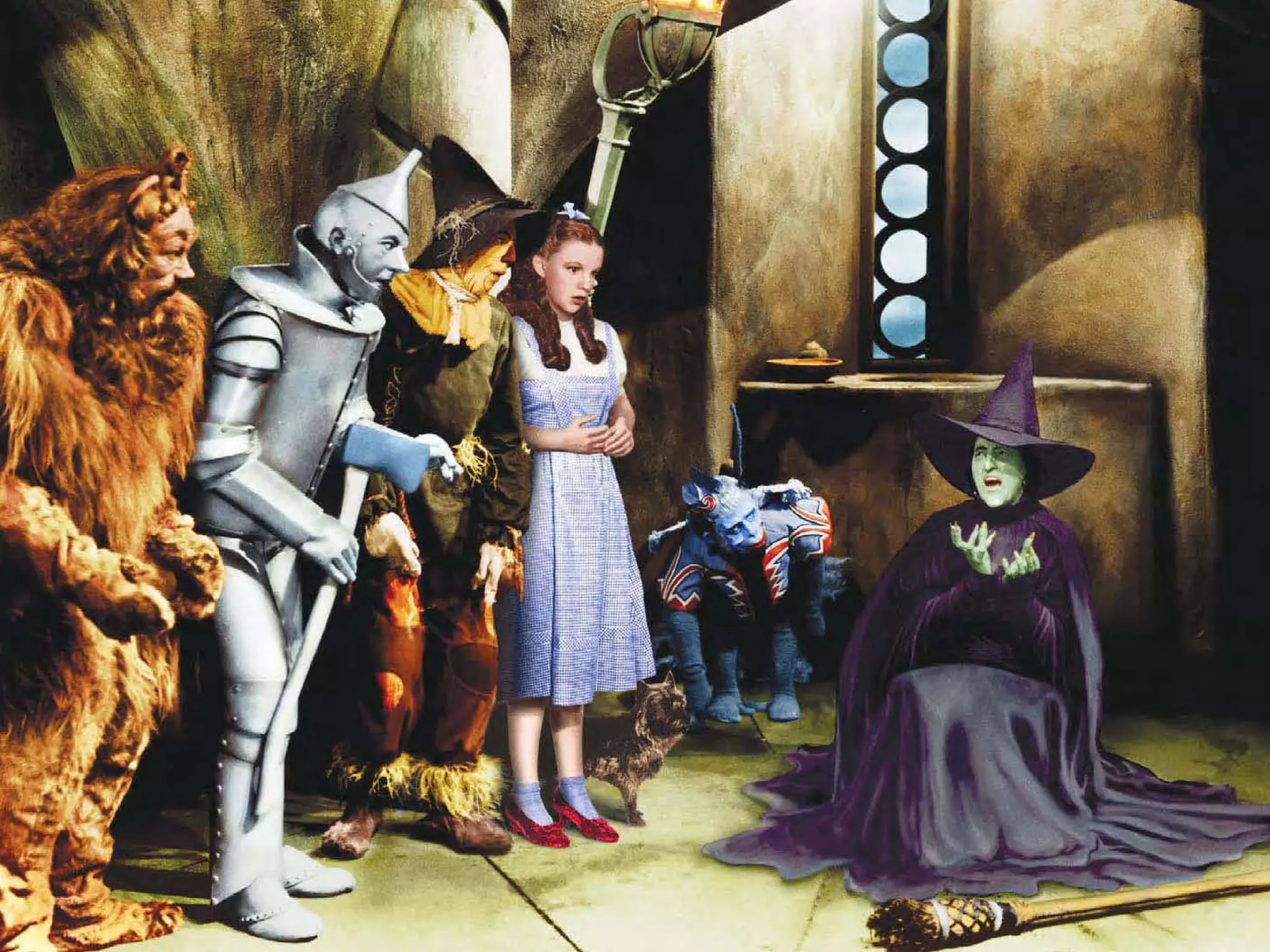
The Wonderful Wizard of Oz
 
“ Wizard of Oz Technique”  -----------  Fake it before you build it.   The aim is to experience interactive systems, before they are real, even before we have  arrived  at their final design . With the example of the Wizard, we see that we can conjure up systems that will let users  have real and valid experiences, before the system exists in any normal sense  of the word. The  Wizard of Oz Technique  involves making a working system, where the person using  it is unaware that some or all of the system’s functions are actually being performed by  a human operator, hidden somewhere “behind the screen.” ’ Generally the last thing that you should do when beginning to design an  interactive system is write code’
Examples, following the Wizard A self-service  Airline Ticket Kiosk  concept;  field-tested at Chicagos O’Hare Airport
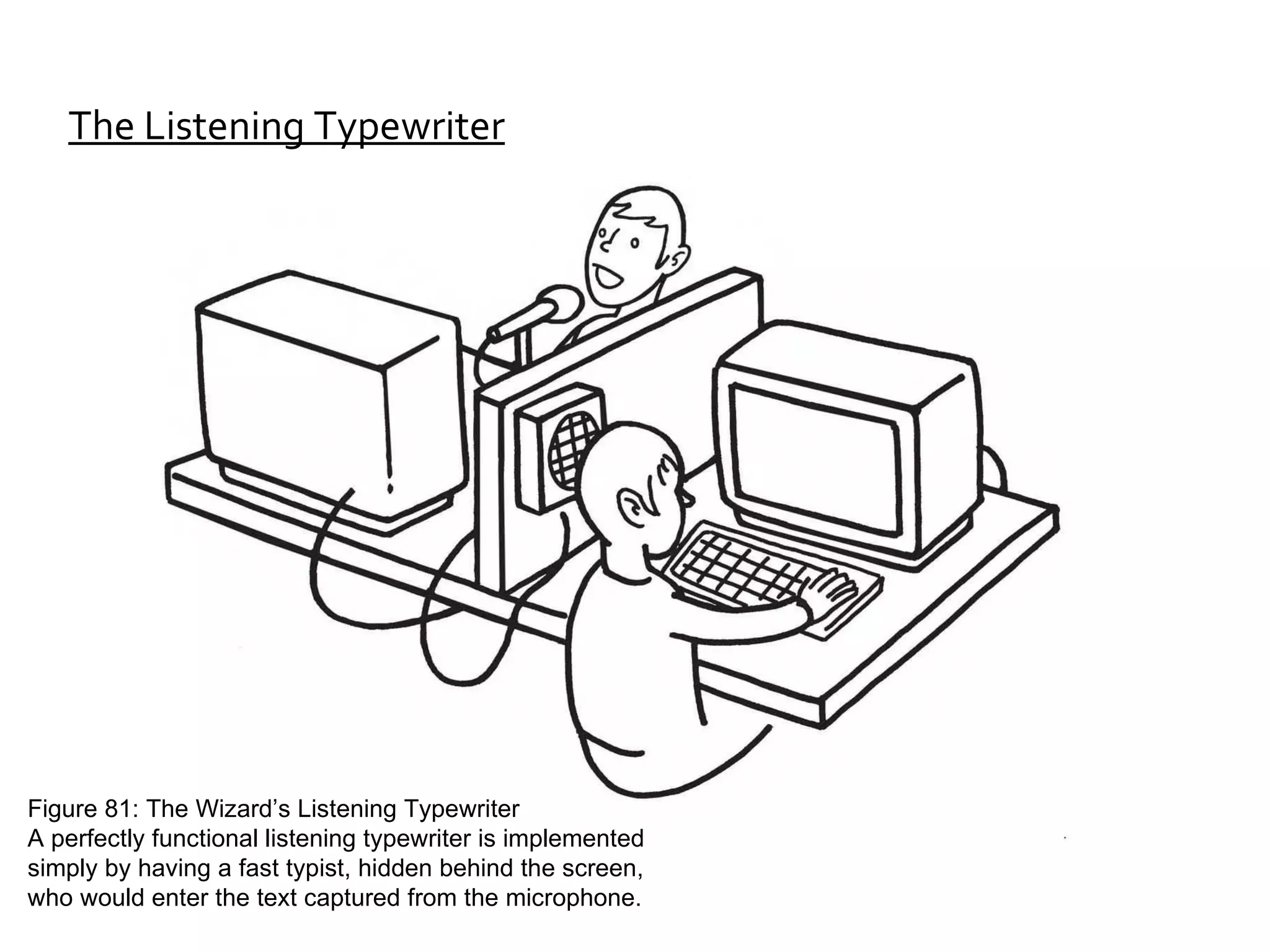
The Listening Typewriter Figure 81: The Wizard’s Listening Typewriter A perfectly functional listening typewriter is implemented simply by having a fast typist, hidden behind the screen, who would enter the text captured from the microphone.
Chameleon: From Wizardy to Smoke-and-Mirrors
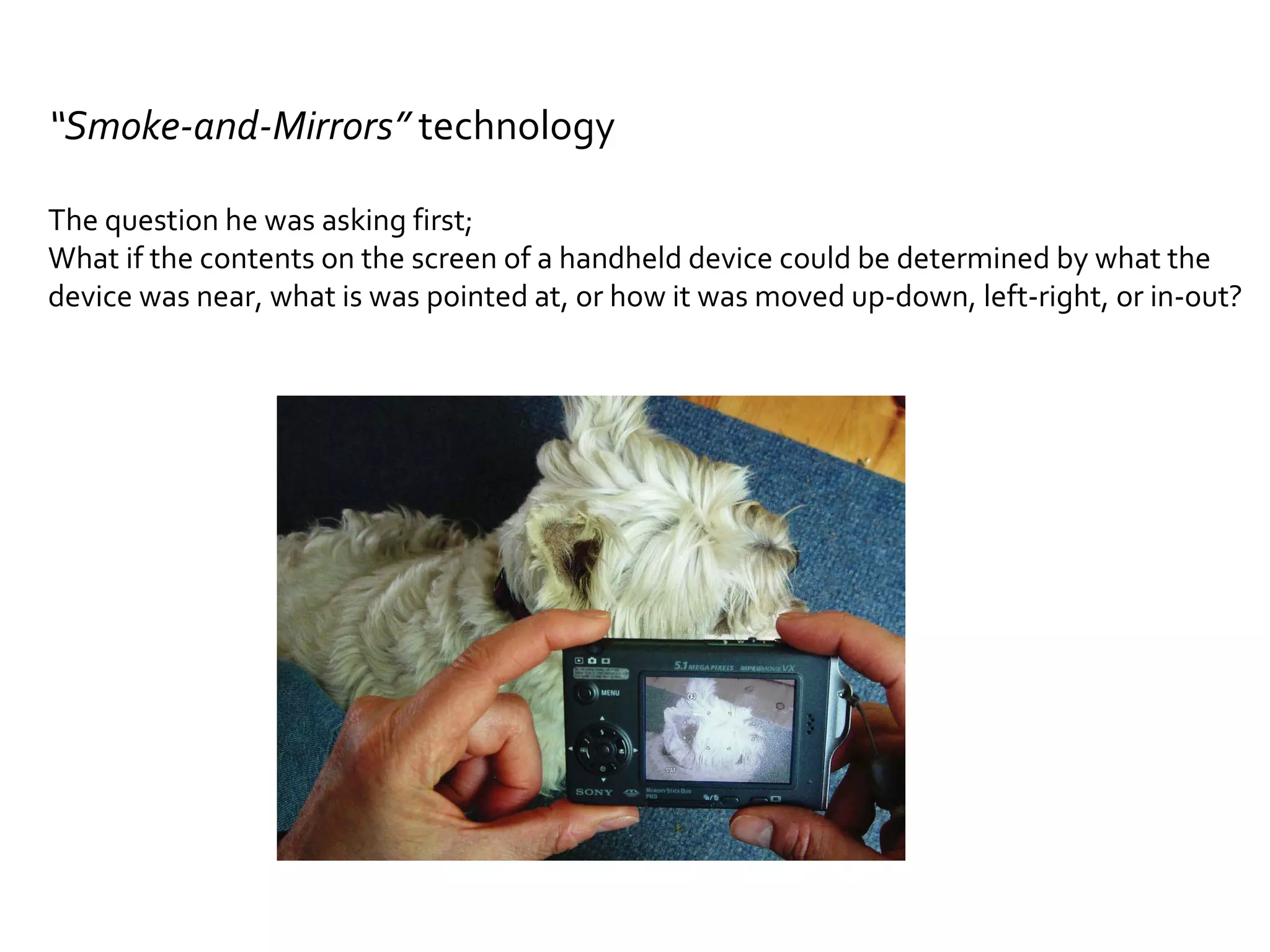
“ Smoke-and-Mirrors”  technology The question he was asking first; What if the contents on the screen of a handheld device could be determined by what the  device was near, what is was pointed at, or how it was moved up-down, left-right, or in-out?
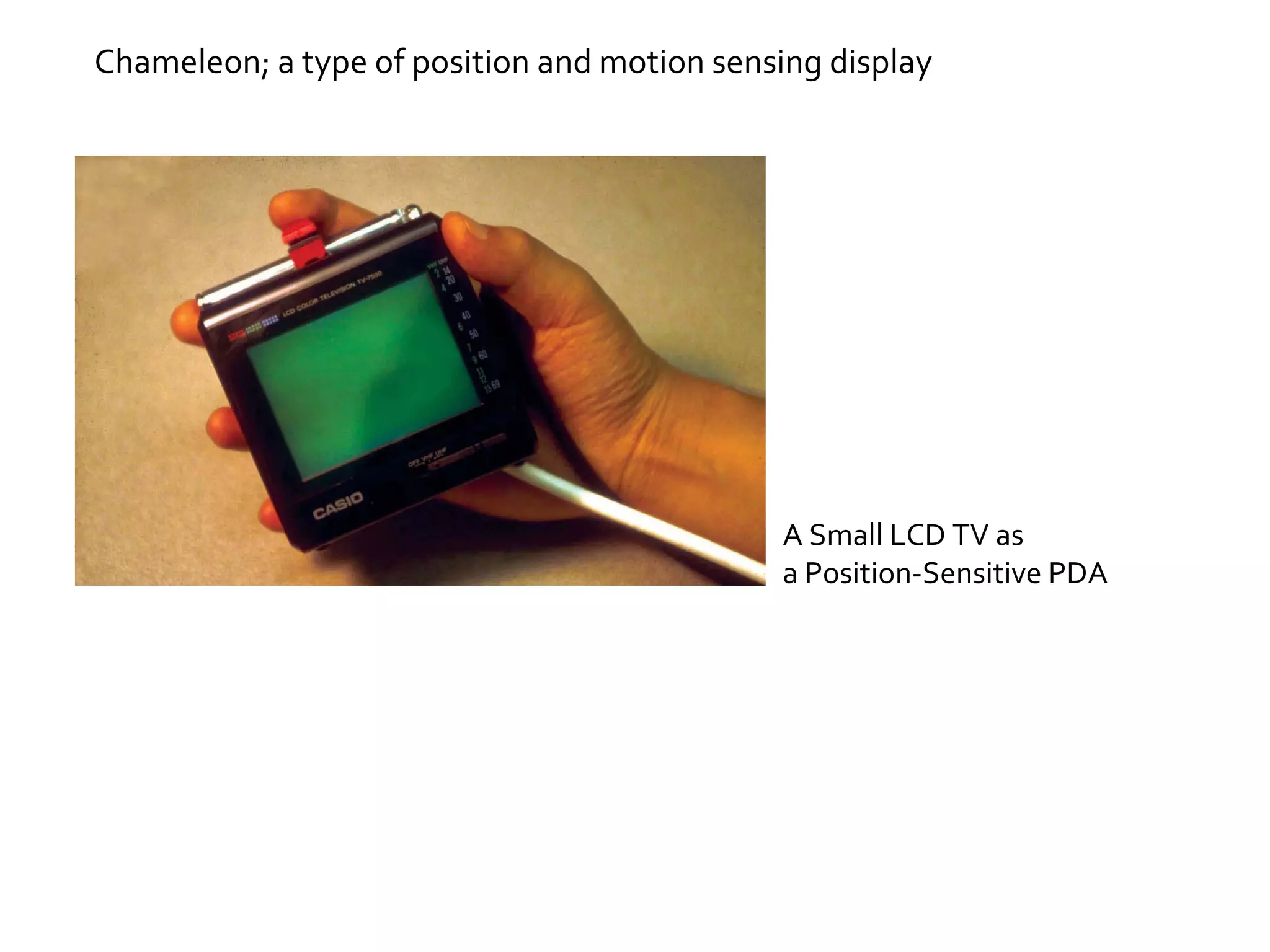
A Small LCD TV as  a Position-Sensitive PDA Chameleon; a type of position and motion sensing display
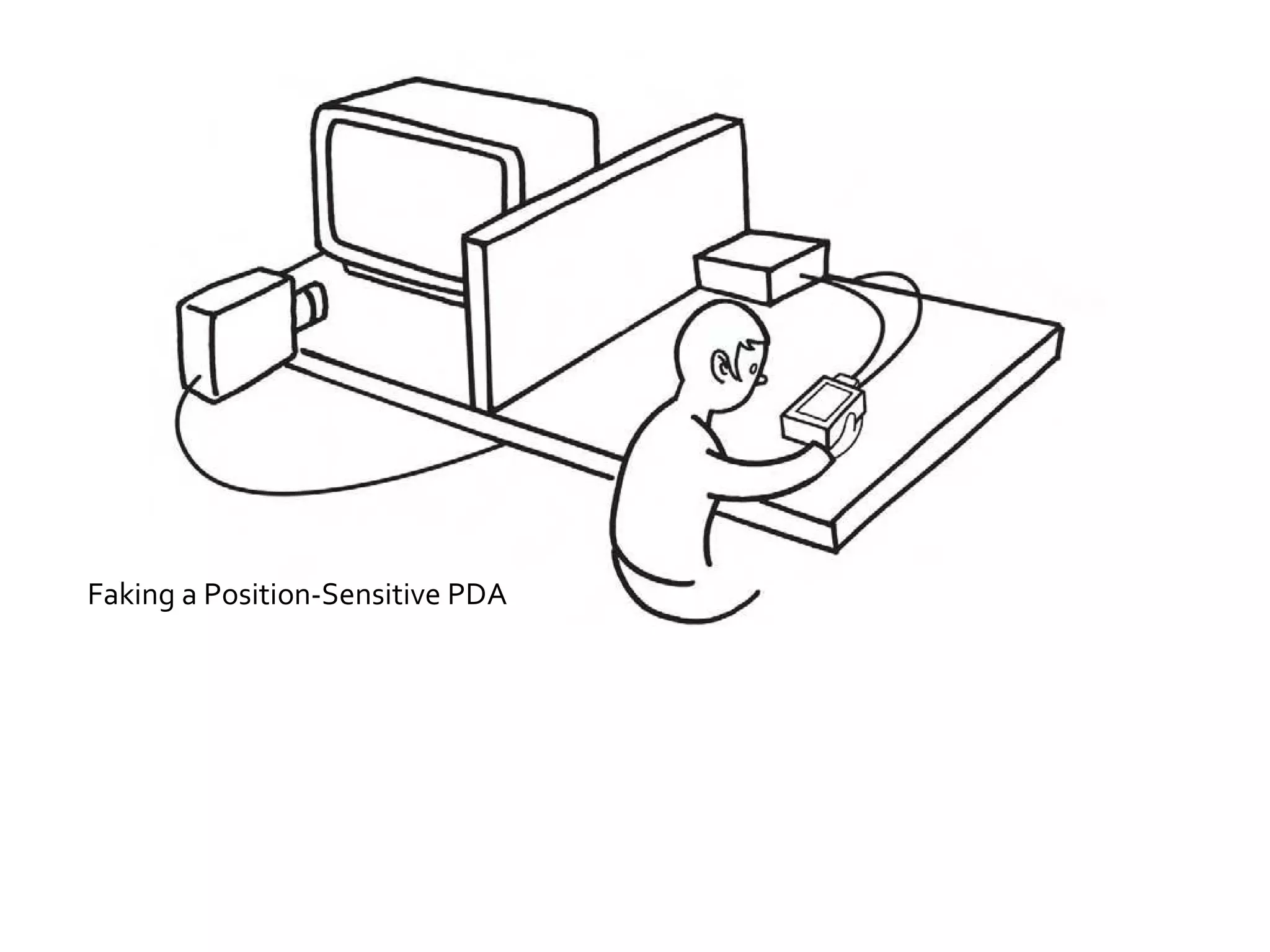
Faking a Position-Sensitive PDA
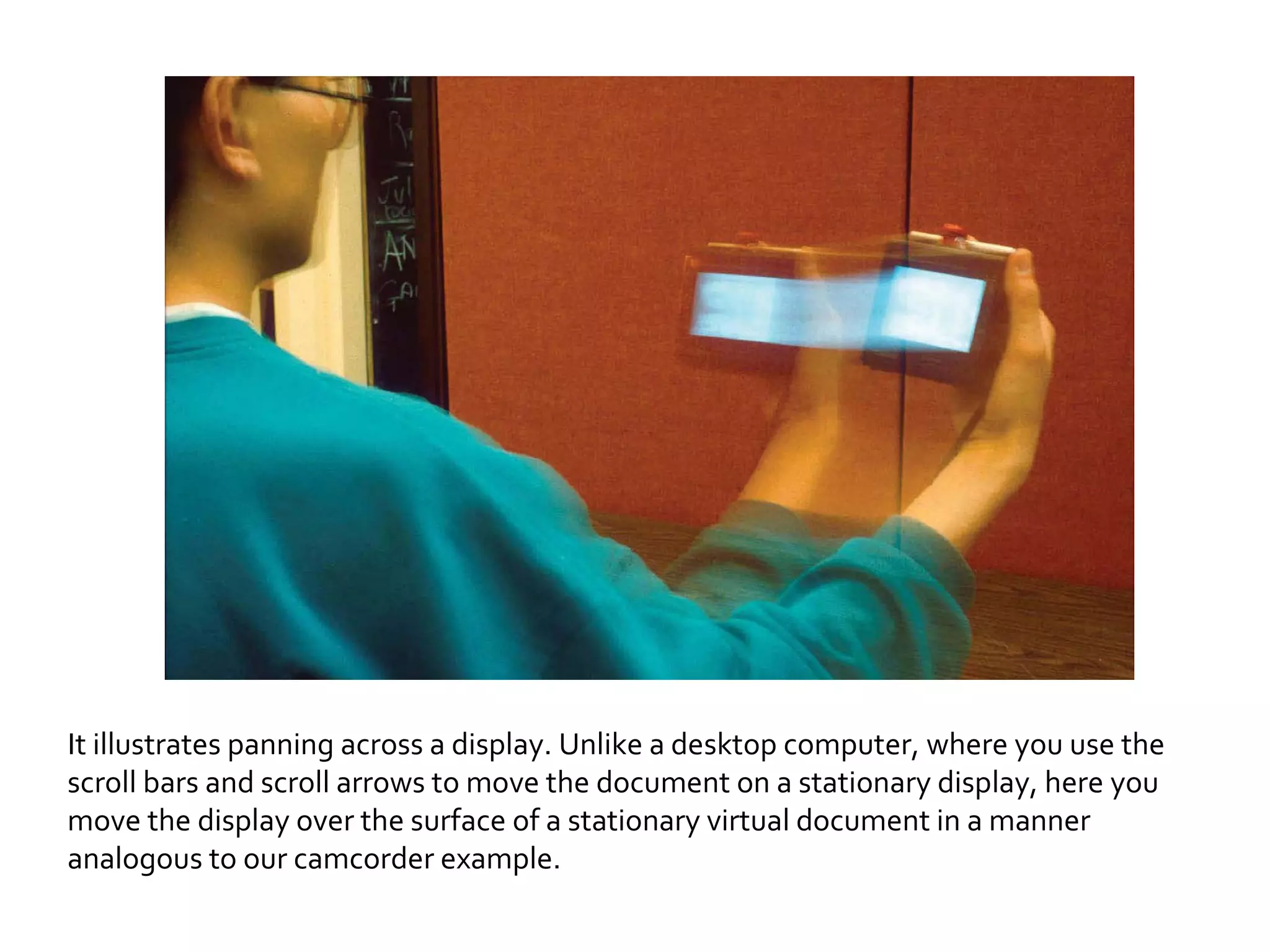
It illustrates panning across a display. Unlike a desktop computer, where you use the scroll bars and scroll arrows to move the document on a stationary display, here you move the display over the surface of a stationary virtual document in a manner analogous to our camcorder example.
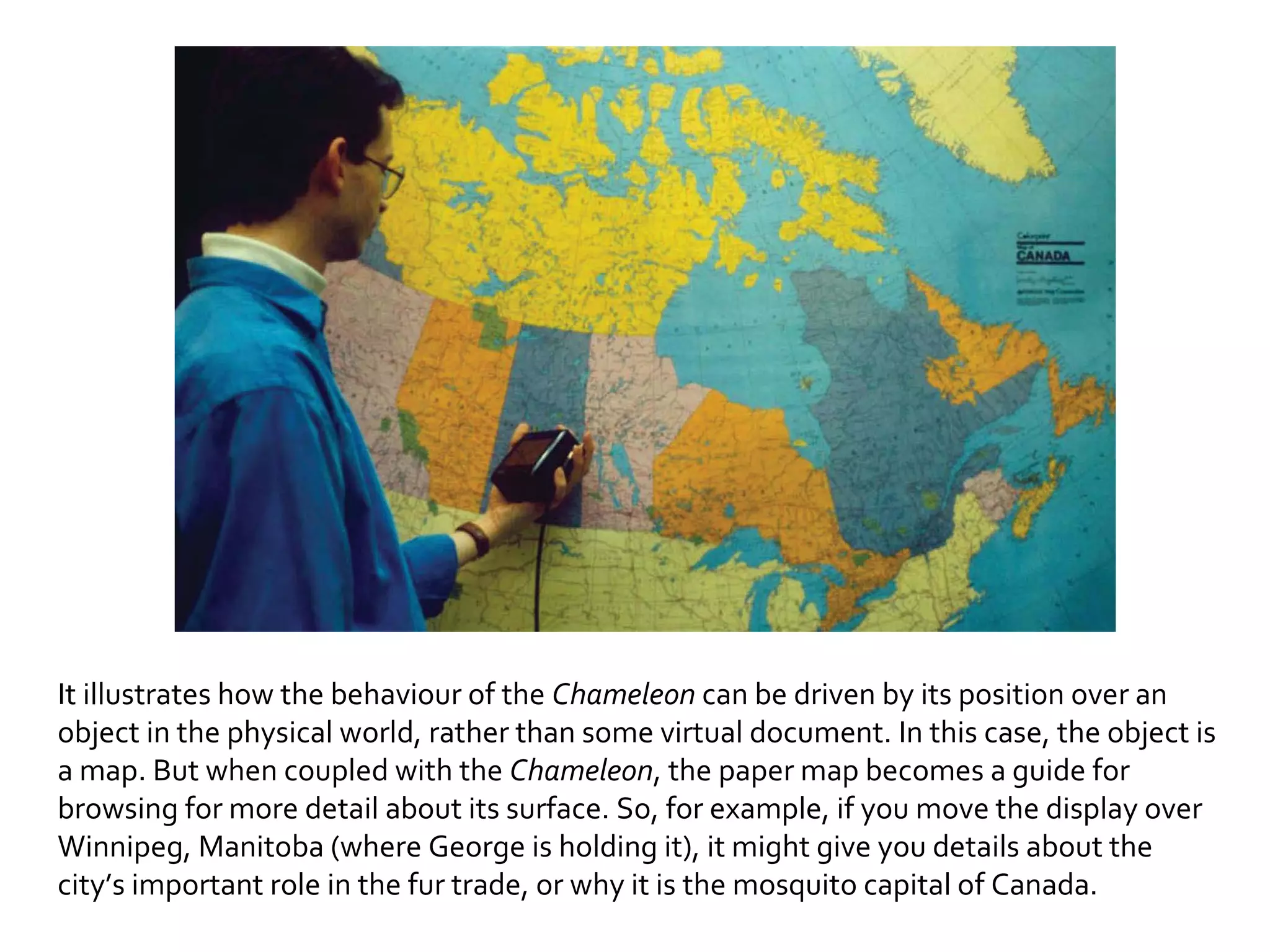
It illustrates how the behaviour of the  Chameleon  can be driven by its position over an object in the physical world, rather than some virtual document. In this case, the object is a map. But when coupled with the  Chameleon , the paper map becomes a guide for browsing for more detail about its surface. So, for example, if you move the display over Winnipeg, Manitoba (where George is holding it), it might give you details about the city’s important role in the fur trade, or why it is the mosquito capital of Canada.
 
Le Bricolage: Cobbling Things Together
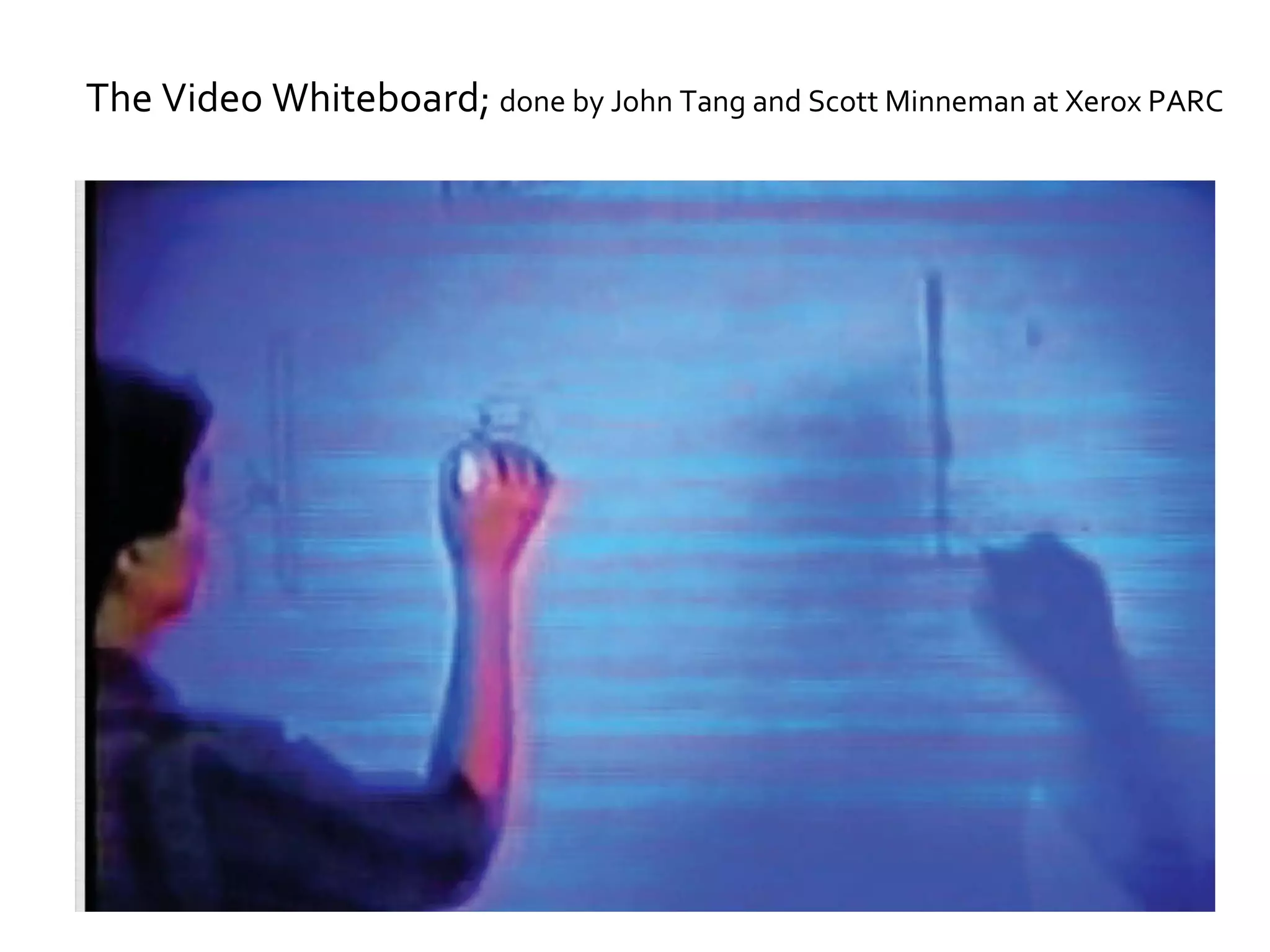
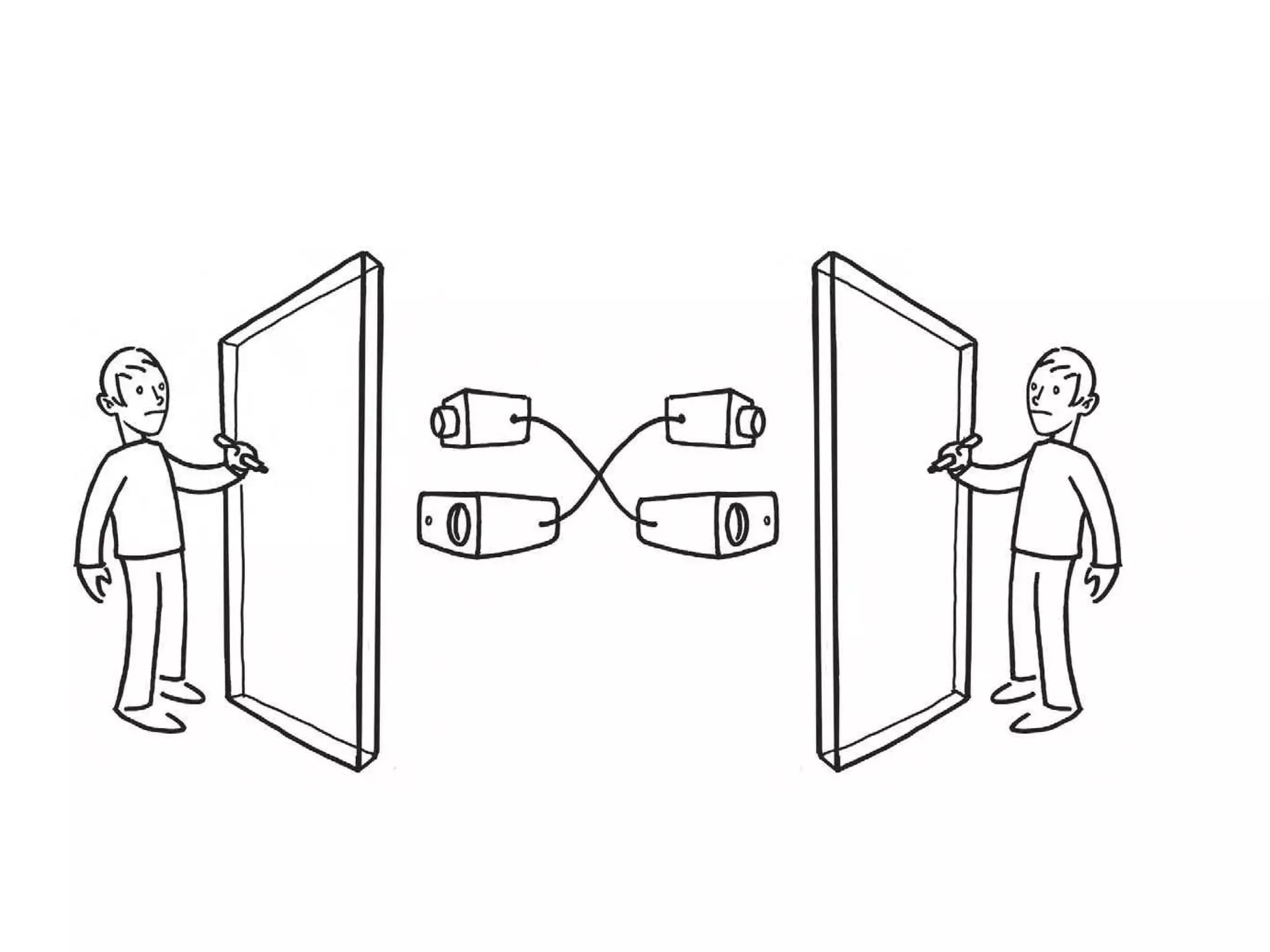
The Video Whiteboard;  done by John Tang and Scott Minneman at Xerox PARC
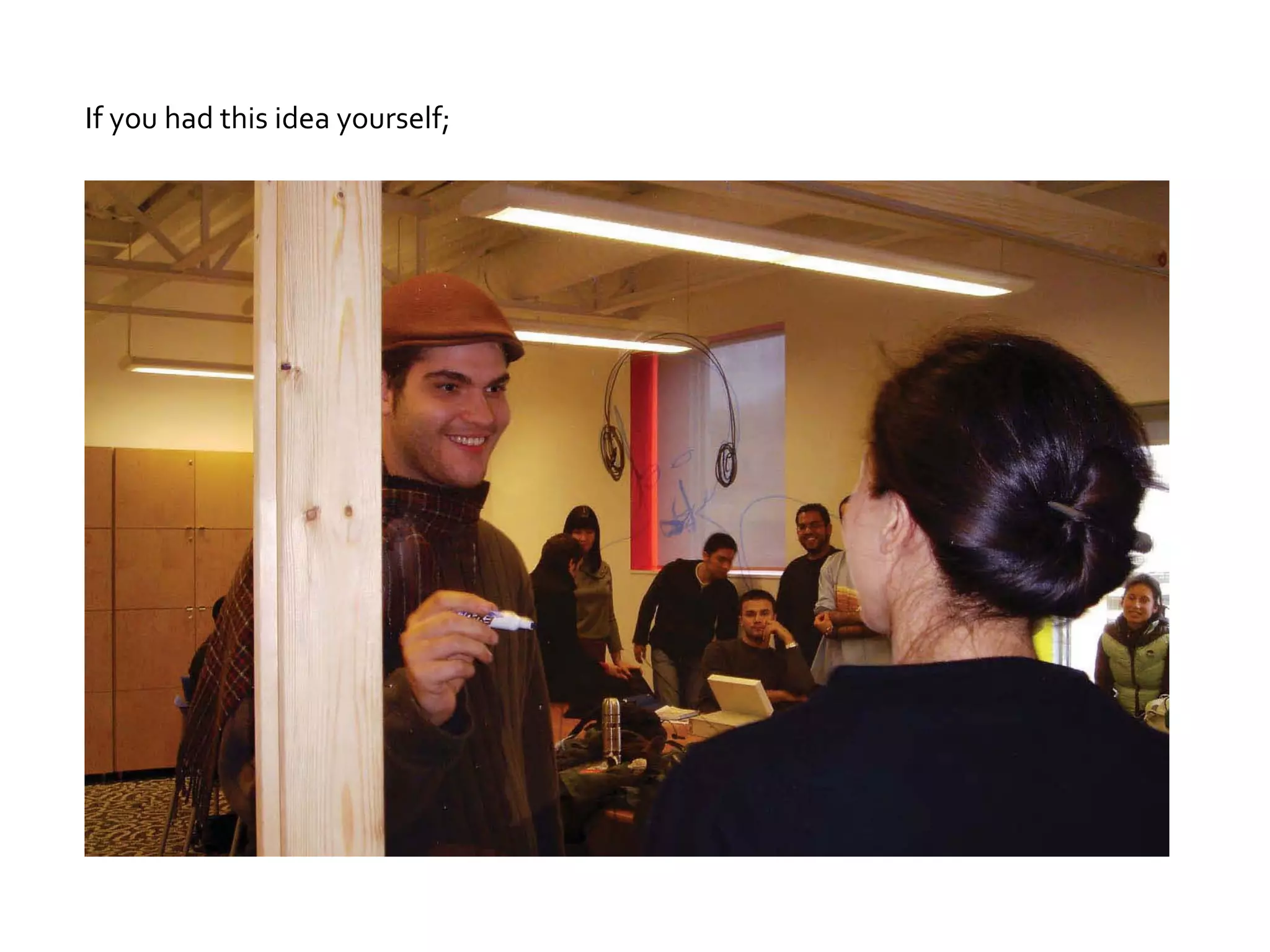
If you had this idea yourself;
 
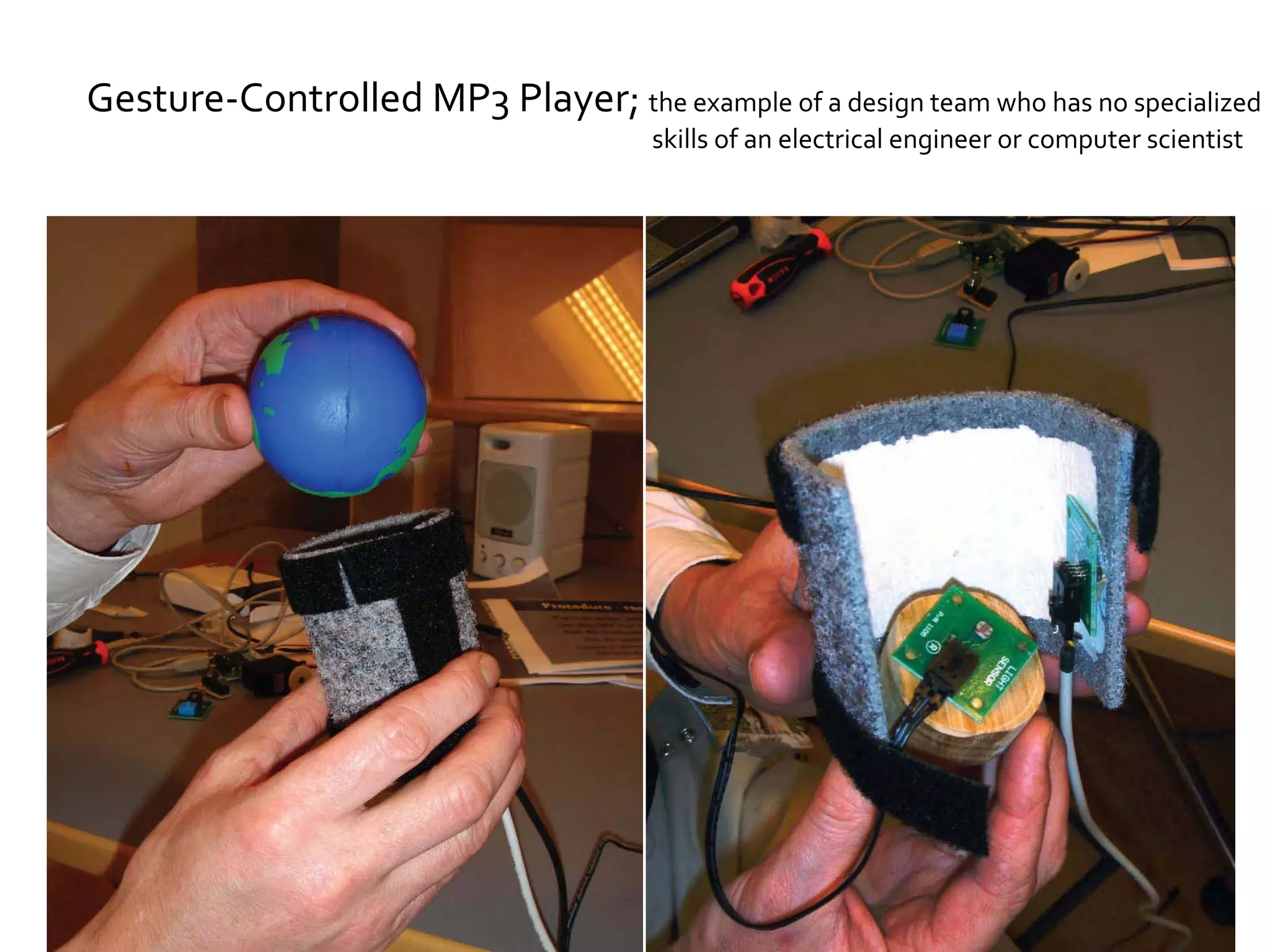
Gesture-Controlled MP3 Player;  the example of a design team who has no specialized skills of an electrical engineer or computer scientist

Sketching user experiences

  • 1.
    Sketching User ExperiencesBill Buxton Part 2: Stories of Methods and Madness
  • 2.
    From Thinking Onto Acting On
  • 3.
    The work, theworking methods of good designers The important functions of his approach; -To illuminate what he perceives as best practices - To help those who work with the design team to understand these practices and outputs To foster a shared literacy To show exemplary student work side by side with that of those who pioneered the field -To give a sense of some of the basic competencies that he would expect in an interaction/experience design team, and in the educational programs that train them.
  • 4.
  • 5.
  • 6.
  • 7.
    “ Wizard ofOz Technique” ----------- Fake it before you build it. The aim is to experience interactive systems, before they are real, even before we have arrived at their final design . With the example of the Wizard, we see that we can conjure up systems that will let users have real and valid experiences, before the system exists in any normal sense of the word. The Wizard of Oz Technique involves making a working system, where the person using it is unaware that some or all of the system’s functions are actually being performed by a human operator, hidden somewhere “behind the screen.” ’ Generally the last thing that you should do when beginning to design an interactive system is write code’
  • 8.
    Examples, following theWizard A self-service Airline Ticket Kiosk concept; field-tested at Chicagos O’Hare Airport
  • 9.
    The Listening TypewriterFigure 81: The Wizard’s Listening Typewriter A perfectly functional listening typewriter is implemented simply by having a fast typist, hidden behind the screen, who would enter the text captured from the microphone.
  • 10.
    Chameleon: From Wizardyto Smoke-and-Mirrors
  • 11.
    “ Smoke-and-Mirrors” technology The question he was asking first; What if the contents on the screen of a handheld device could be determined by what the device was near, what is was pointed at, or how it was moved up-down, left-right, or in-out?
  • 12.
    A Small LCDTV as a Position-Sensitive PDA Chameleon; a type of position and motion sensing display
  • 13.
  • 14.
    It illustrates panningacross a display. Unlike a desktop computer, where you use the scroll bars and scroll arrows to move the document on a stationary display, here you move the display over the surface of a stationary virtual document in a manner analogous to our camcorder example.
  • 15.
    It illustrates howthe behaviour of the Chameleon can be driven by its position over an object in the physical world, rather than some virtual document. In this case, the object is a map. But when coupled with the Chameleon , the paper map becomes a guide for browsing for more detail about its surface. So, for example, if you move the display over Winnipeg, Manitoba (where George is holding it), it might give you details about the city’s important role in the fur trade, or why it is the mosquito capital of Canada.
  • 16.
  • 17.
    Le Bricolage: CobblingThings Together
  • 18.
    The Video Whiteboard; done by John Tang and Scott Minneman at Xerox PARC
  • 19.
    If you hadthis idea yourself;
  • 20.
  • 21.
    Gesture-Controlled MP3 Player; the example of a design team who has no specialized skills of an electrical engineer or computer scientist