The Skeletal System
Skeletal System
 Part 1: What is the skeletal system?
 Part 2: Proper bone care and fractures.
Part 1: What is the skeletal system?
Skeletal System
 Functions
 Structure - 2 main parts:
 Axial & Appendicular
 Basic Types - 4 kinds
 Cartilage
 Joints
 Ligaments & Tendons
Functions of the Skeletal System
 Provides a strong, steady frame for the
body’s muscle to move.
 Supports and protects internal organs.
Structure of the Skeletal System
 Axial Skeleton- the 80 bones that make up
the skull, spine, ribs, or sternum
(breastbone).
 Functions include the vertebrae which protect
the spinal cord. Also, the ribs which connect
around to attach to the sternum and protects
the heart and lungs.
Examples of Axial Bones
 Pictures of ribs and sternum
Structure of the Skeletal System
 Appendicular skeleton- the 126 bones of
the shoulder, arms, hands, hips, legs, and
feet.
 Function allowing the body to perform a wide
range of motions.
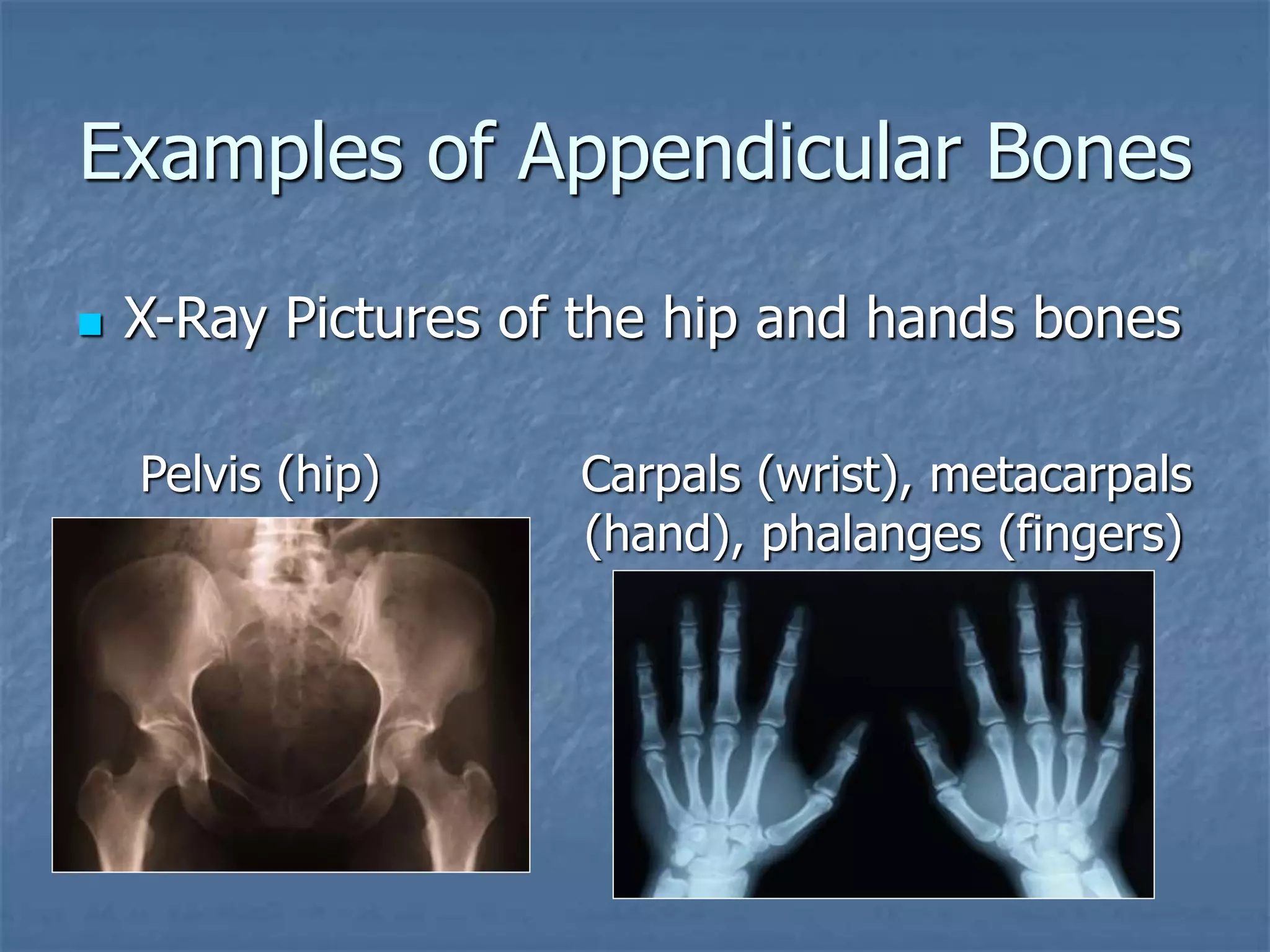
Examples of Appendicular Bones
 X-Ray Pictures of the hip and hands bones
Pelvis (hip) Carpals (wrist), metacarpals
(hand), phalanges (fingers)
Basic Types of Bones
 Long- found in the arms and legs. These
bones are very strong. For example, the
femur bone in the leg.
 Short- Short bones are as broad as they
are long. For example, carpal bones in
the wrist.
Basic Types of Bones
 Flat- have a thin, flat shape. Flat bones
are generally used to protect the body’s
vital organs. For example, the ribs and
skull.
 Irregular- any bone shape that does not
fall into the previous 3 categories. For
example, the vertebrae is a irregular bone.
Cartilage
 Cartilage- A strong, flexible connective
tissue.
 Different types of cartilage line the surface of
bones at joints allowing smooth movement.
 Other functions include cushioning the
vertebrae and supporting the ear and nose.
Fat into Cartilage?
 Podcast: A Duke University Study
 Might be possible to turn fat to cartilage
 Very beneficial, as cartilage can’t repair itself
Cartilage
 A baby’s skeletal system is mostly made
up of cartilage.
 As the baby grows, the cartilage is
replaced with bone minerals and cells
through ossification.
 Ossification- the process by which bone is
formed, renewed, and repaired.
Joints
 Joint- the point at while 2 bones meet.
 Some joints provide a small range of motion
and are considered immovable (ex.-skull).
Most are mobile and provide a range of
movement.
Types of Mobile Joints
 There are 4 types:
 Ball and Socket- allows the widest range of
motion; forward, backwards, sideways,
circular. Examples- shoulder and hip.
Pivot Joint- allows rotation. Between the
skull and the first two vertebrae is an
example of a pivot joint.
Types of Joints
 Ellipsoidal Joint- oval shaped part in a
curved space like the wrist. Allows all
movements except pivot.
 Hinge Joint- allows bending and
straightening. Examples include, fingers,
knee, and elbow.
Ligaments
 Ligaments-tough bands of fibrous, slightly
elastic tissue that binds the bone ends at
the joint.
 Also prevents excess movement of the joint.
Tendons
 Tendons- Fibrous cords that join muscle to
bone or to other muscles.
 Example of tendons that are visible to the eye
are when you use your fingers you see the
tendons moving on the back of your hand.
Part 2: Proper Bone Care and
Fractures
Part 2: Proper Bone Care and
Fractures
 Importance of bone function
 Proper diet for good bone care
 Physical Exercise
 Fractures
Importance of Bone Function
 Bones act as a storage center for the
body’s essential minerals like calcium and
phosphorus.
 Bones also produce blood cells. This takes
place in the red bone marrow.
Proper Diet for Good Bone Care
 Calcium is an essential mineral in order to
build up the strength of the bones.
 Food sources include milk, cheese, most dairy
products.
Race & Osteoporosis
Proper diet
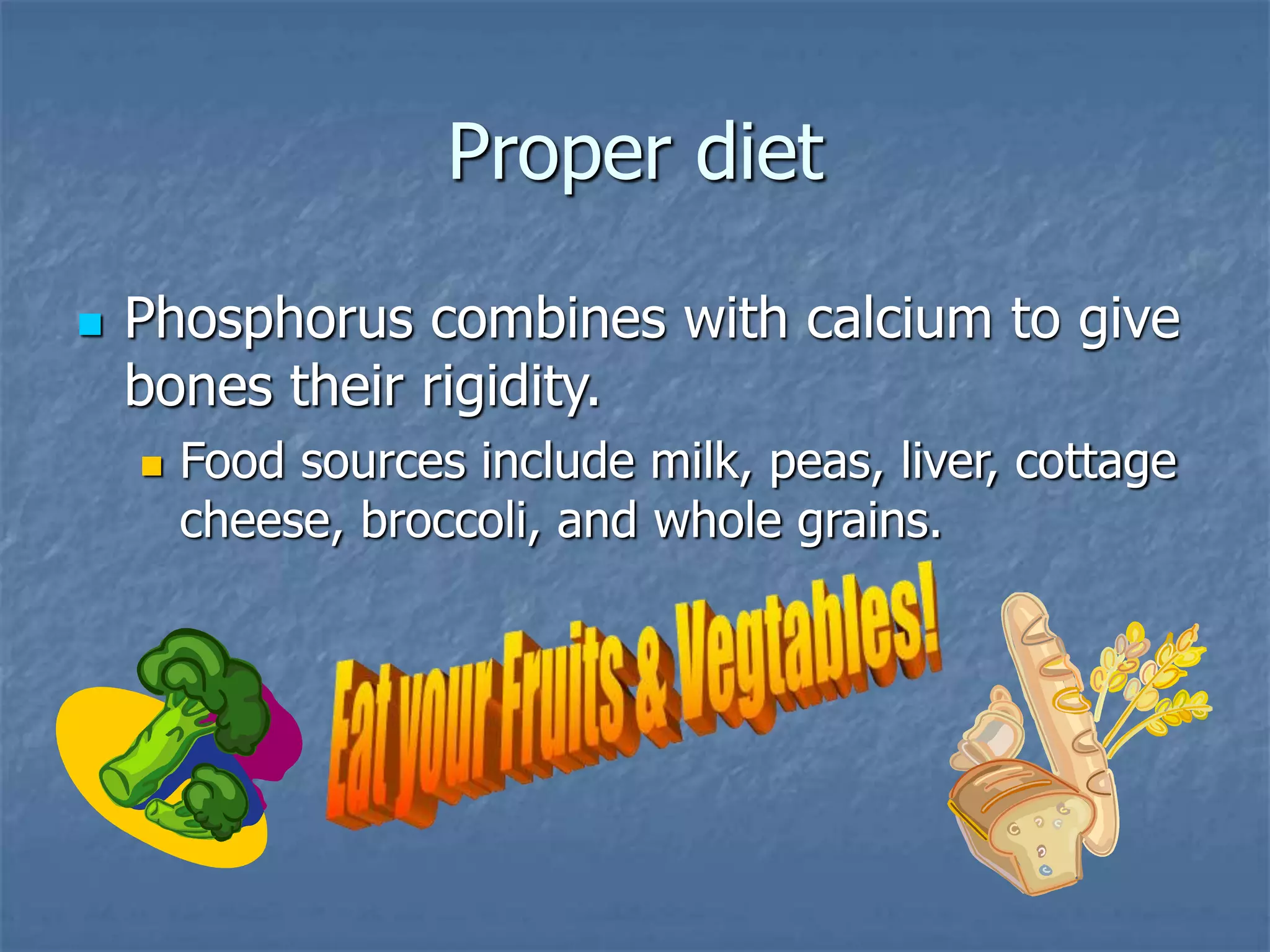
 Phosphorus combines with calcium to give
bones their rigidity.
 Food sources include milk, peas, liver, cottage
cheese, broccoli, and whole grains.
Physical Exercise
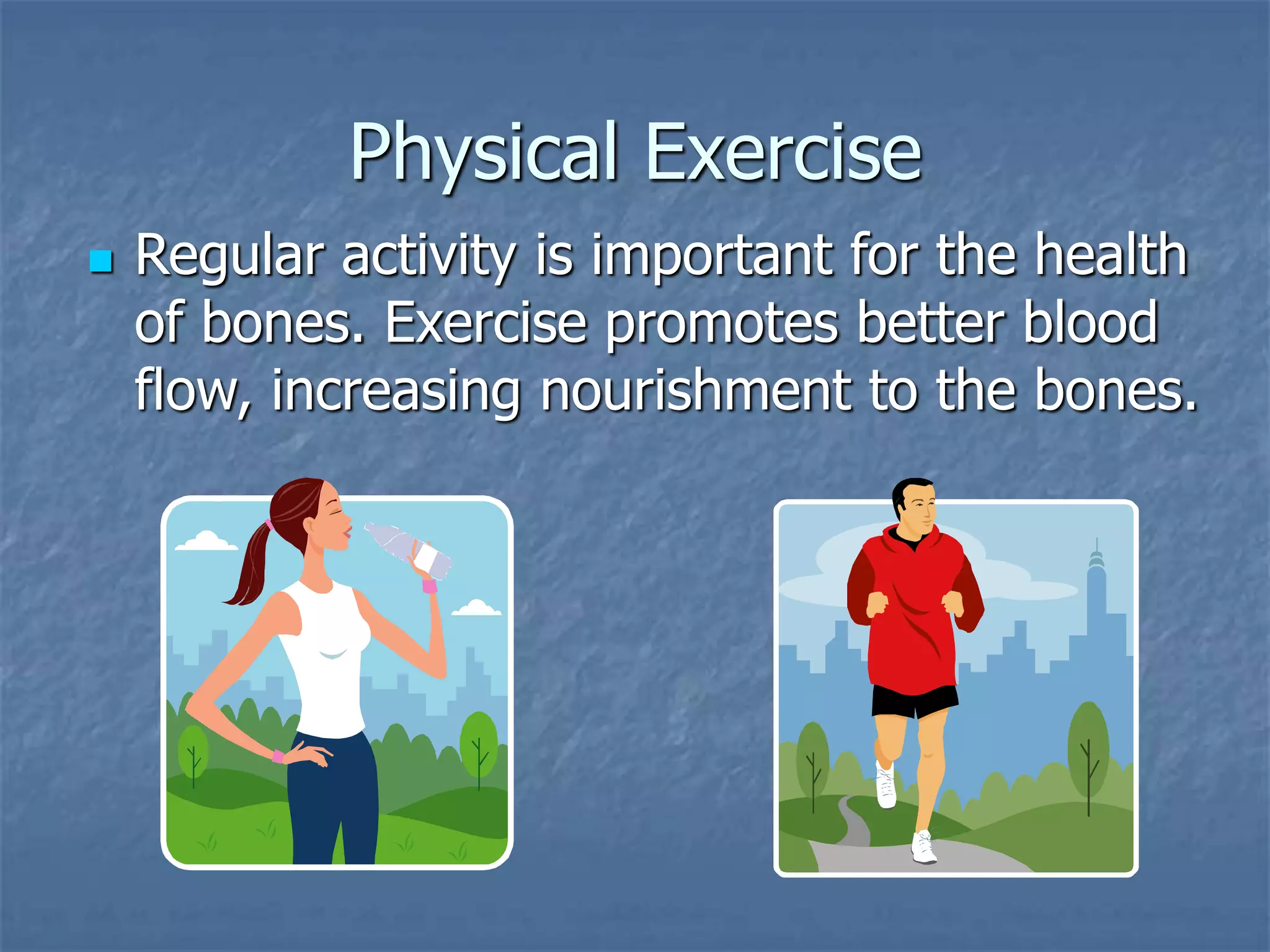
 Regular activity is important for the health
of bones. Exercise promotes better blood
flow, increasing nourishment to the bones.
Physical Exercise
 Also important is weight bearing exercise
which increases the bone mass.
 Weight bearing activities include walking,
lifting weights, any exercise with direct weight
pressure to the ground.
 Not included are swimming, biking, etc.
Fractures
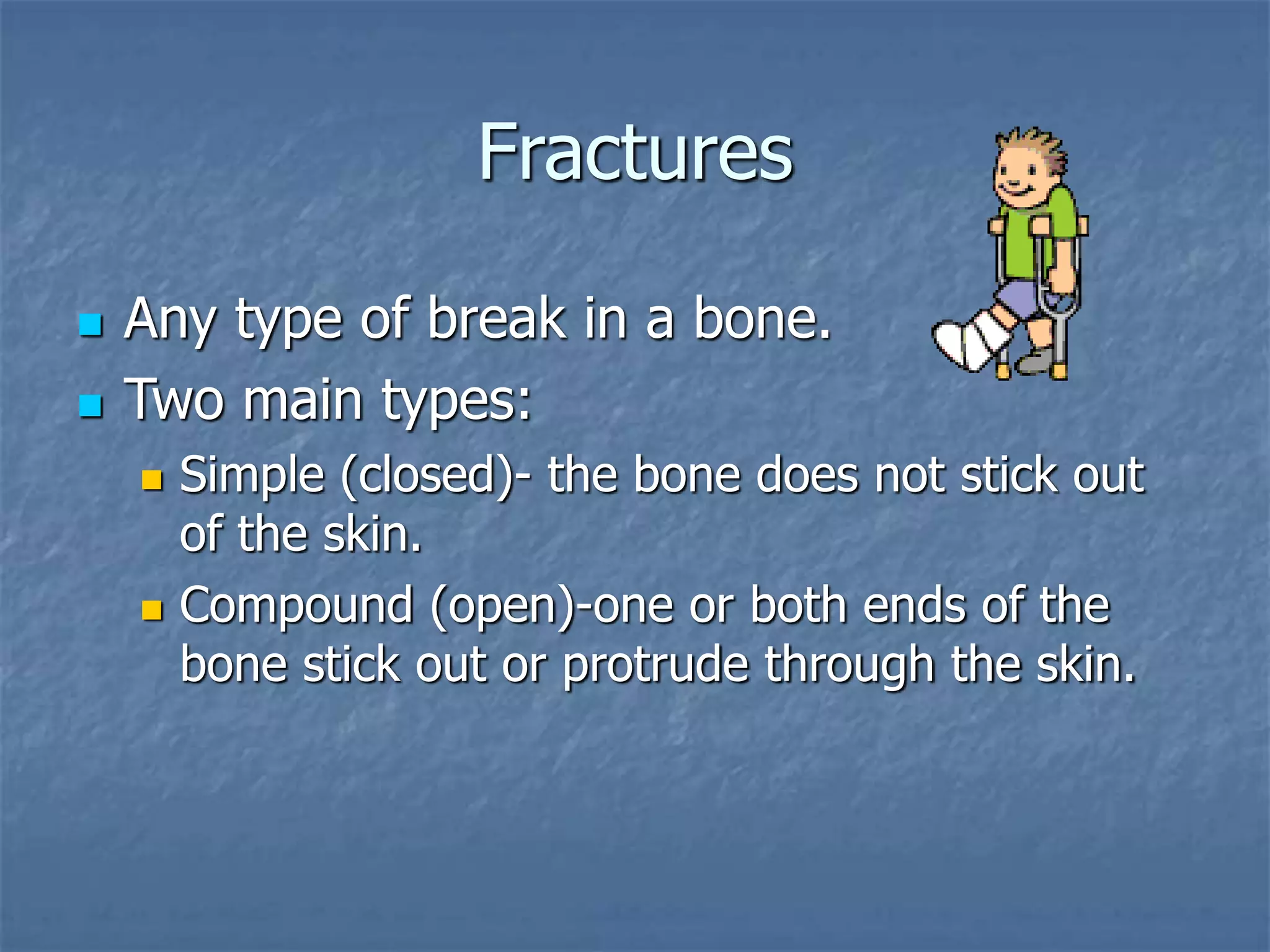
 Any type of break in a bone.
 Two main types:
 Simple (closed)- the bone does not stick out
of the skin.
 Compound (open)-one or both ends of the
bone stick out or protrude through the skin.

Skeletal System.pptx

  • 1.
  • 2.
    Skeletal System  Part1: What is the skeletal system?  Part 2: Proper bone care and fractures.
  • 3.
    Part 1: Whatis the skeletal system?
  • 4.
    Skeletal System  Functions Structure - 2 main parts:  Axial & Appendicular  Basic Types - 4 kinds  Cartilage  Joints  Ligaments & Tendons
  • 5.
    Functions of theSkeletal System  Provides a strong, steady frame for the body’s muscle to move.  Supports and protects internal organs.
  • 6.
    Structure of theSkeletal System  Axial Skeleton- the 80 bones that make up the skull, spine, ribs, or sternum (breastbone).  Functions include the vertebrae which protect the spinal cord. Also, the ribs which connect around to attach to the sternum and protects the heart and lungs.
  • 7.
    Examples of AxialBones  Pictures of ribs and sternum
  • 8.
    Structure of theSkeletal System  Appendicular skeleton- the 126 bones of the shoulder, arms, hands, hips, legs, and feet.  Function allowing the body to perform a wide range of motions.
  • 9.
    Examples of AppendicularBones  X-Ray Pictures of the hip and hands bones Pelvis (hip) Carpals (wrist), metacarpals (hand), phalanges (fingers)
  • 10.
    Basic Types ofBones  Long- found in the arms and legs. These bones are very strong. For example, the femur bone in the leg.  Short- Short bones are as broad as they are long. For example, carpal bones in the wrist.
  • 11.
    Basic Types ofBones  Flat- have a thin, flat shape. Flat bones are generally used to protect the body’s vital organs. For example, the ribs and skull.  Irregular- any bone shape that does not fall into the previous 3 categories. For example, the vertebrae is a irregular bone.
  • 12.
    Cartilage  Cartilage- Astrong, flexible connective tissue.  Different types of cartilage line the surface of bones at joints allowing smooth movement.  Other functions include cushioning the vertebrae and supporting the ear and nose.
  • 13.
    Fat into Cartilage? Podcast: A Duke University Study  Might be possible to turn fat to cartilage  Very beneficial, as cartilage can’t repair itself
  • 14.
    Cartilage  A baby’sskeletal system is mostly made up of cartilage.  As the baby grows, the cartilage is replaced with bone minerals and cells through ossification.  Ossification- the process by which bone is formed, renewed, and repaired.
  • 15.
    Joints  Joint- thepoint at while 2 bones meet.  Some joints provide a small range of motion and are considered immovable (ex.-skull). Most are mobile and provide a range of movement.
  • 16.
    Types of MobileJoints  There are 4 types:  Ball and Socket- allows the widest range of motion; forward, backwards, sideways, circular. Examples- shoulder and hip. Pivot Joint- allows rotation. Between the skull and the first two vertebrae is an example of a pivot joint.
  • 17.
    Types of Joints Ellipsoidal Joint- oval shaped part in a curved space like the wrist. Allows all movements except pivot.  Hinge Joint- allows bending and straightening. Examples include, fingers, knee, and elbow.
  • 18.
    Ligaments  Ligaments-tough bandsof fibrous, slightly elastic tissue that binds the bone ends at the joint.  Also prevents excess movement of the joint.
  • 19.
    Tendons  Tendons- Fibrouscords that join muscle to bone or to other muscles.  Example of tendons that are visible to the eye are when you use your fingers you see the tendons moving on the back of your hand.
  • 20.
    Part 2: ProperBone Care and Fractures
  • 21.
    Part 2: ProperBone Care and Fractures  Importance of bone function  Proper diet for good bone care  Physical Exercise  Fractures
  • 22.
    Importance of BoneFunction  Bones act as a storage center for the body’s essential minerals like calcium and phosphorus.  Bones also produce blood cells. This takes place in the red bone marrow.
  • 23.
    Proper Diet forGood Bone Care  Calcium is an essential mineral in order to build up the strength of the bones.  Food sources include milk, cheese, most dairy products.
  • 24.
  • 25.
    Proper diet  Phosphoruscombines with calcium to give bones their rigidity.  Food sources include milk, peas, liver, cottage cheese, broccoli, and whole grains.
  • 26.
    Physical Exercise  Regularactivity is important for the health of bones. Exercise promotes better blood flow, increasing nourishment to the bones.
  • 27.
    Physical Exercise  Alsoimportant is weight bearing exercise which increases the bone mass.  Weight bearing activities include walking, lifting weights, any exercise with direct weight pressure to the ground.  Not included are swimming, biking, etc.
  • 28.
    Fractures  Any typeof break in a bone.  Two main types:  Simple (closed)- the bone does not stick out of the skin.  Compound (open)-one or both ends of the bone stick out or protrude through the skin.