Skeletal Muscle
Relaxants
KRVS Chaitanya
Skeletal muscle relaxants are drugs that act peripherally at
neuromuscular junction/muscle fibre itself or centrally in the
cerebrospinal axis to reduce muscle tone and/or cause
paralysis.
• The neuromuscular blocking agents are used
primarily in conjunction with general anaesthetics to
provide muscle relaxation for surgery, while centrally
acting muscle relaxants are used mainly for painful
muscle spasms and spastic neurological conditions.
Peripherally Acting Muscle
Relaxants
I. Neuromuscular blocking agents
A. Nondepolarizing (Competitive) blockers
1. Long acting: d-Tubocurarine, Pancuronium, Doxacurium,
Pipecuronium
2. Intermediate acting: Vecuronium, Atracurium, Cisatracurium,
Rocuronium, Rapacuronium
3. Short acting: Mivacurium
B. Depolarizing blockers :
Succinylcholine (SCh., Suxamethonium), Decamethonium
II. Directly acting agents
Dantrolene sodium , Quinine
Note: 1. Decamethonium is not used clinically.
2. Aminoglycoside, tetracycline, polypeptide
– Antibiotics interfere with neuromuscular transmission at
high doses, but are not employed as muscle relaxants.
NEUROMUSCULAR BLOCKING
AGENTS
• Curare It is the generic name for certain plant extracts used by
south American tribals as arrow poison for game hunting.
• The animals got paralysed even if not killed by the arrow.
• Natural sources of curare are Strychnos toxifera,
Chondrodendrontomentosum and related plants.
• Muscle paralysing active principles of these are tubocurarine,
toxiferins, etc.
• Tubocurarine was first clinically used in 1930s; many
synthetic compounds including Succinylcholine were
introduced subsequently.
• Search has continued for neuromuscular blockers to provide
greater cardiovascular stability during surgery and for drugs
with differing onset and duration of action to suit specific
requirements.
• The latest additions are doxacurium, pipecuronium,
rocuronium, mivacurium, rapacuronium and cisatracurium.
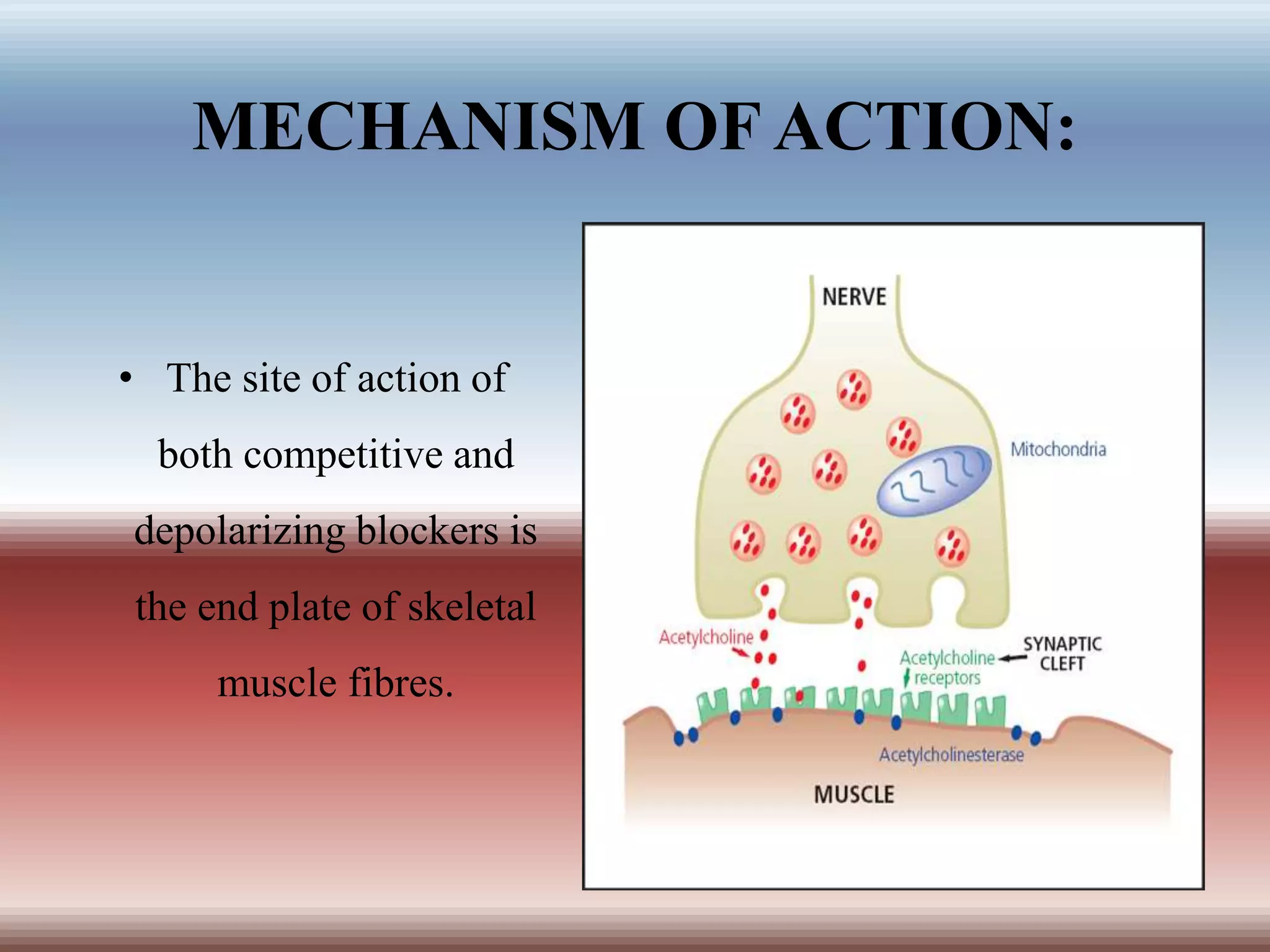
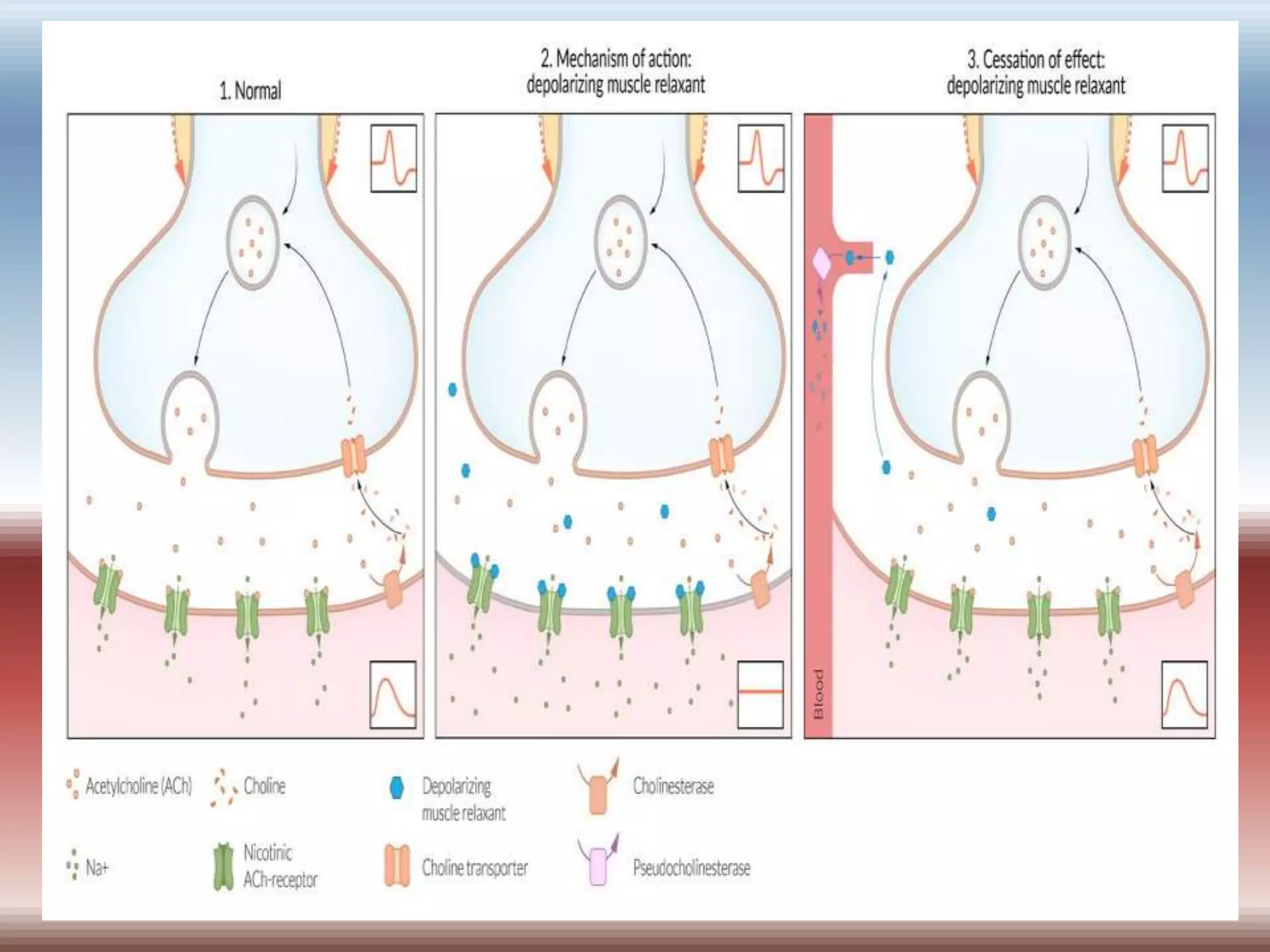
MECHANISM OF ACTION:
• The site of action of
both competitive and
depolarizing blockers is
the end plate of skeletal
muscle fibres.
Phase I block
• It is rapid in onset, results from persistent depolarization of
muscle end plate and has features of classical depolarization
blockade.
• This depolarization declines shortly afterwards and
repolarization occurs gradually despite continued presence of
the drug at the receptor, but neuromuscular transmission is not
restored and phase II block supervenes.
Phase II block
• It is slow in onset and results from desensitization of the
receptor to ACh. It, therefore, superficially resembles block
produced by d-TC.
• The muscle membrane is nearly repolarized, recovery is slow,
contraction is not sustained during tetanic stimulation
(‘fade’occurs) and the block is partially reversed by
anticholinesterases.
• In man and fast contracting muscle (tibialis anterior) of cat,
normally only phase I block is seen.
• Phase II block may be seen in man when SCh is
injected in high dose or infused continuously,
particularly, if fluorinated anaesthetics have been
used.
• SCh readily produces phase II block in patients with
atypical or deficient pseudocholinesterase.
Actions
1. Skeletal muscles Intravenous injection of Nondepolarizing blockers
rapidly produces muscle weakness followed by flaccid paralysis.
• Small fast response muscles (fingers, extra ocular)are affected first;
paralysis spreads to hands, feet—arm, leg, neck, face—trunk—intercostal
muscles—finally diaphragm: respiration stops.
• The rate of attainment of peak effect and the duration for which it is
maintained depends on the drug its dose, anaesthetic used, hemodynamic,
renal and hepatic status of the patient and several other factors.
• Depolarizing blockers typically produce fasciculation lasting a
few seconds before inducing flaccid paralysis, but
fasciculation are not prominent in well-anaesthetized patients.
• Though the sequence in which muscles are involved is
somewhat different from the competitive blockers the action of
SCh develops with such rapidity that this is not appreciated.
• Apnoea generally occurs within 45–90 sec, but lasts only 2–5
min; recovery is rapid.
2. Autonomic ganglia Because the cholinergic receptors in
autonomic ganglia are nicotinic(though of a different subclass
NN), competitive neuromuscular blockers produce some
degree of ganglionic blockade; d-TC has the maximum
propensity in this regard, while the newer drugs(vecuronium,
etc.) are practically devoid of it.
• SCh may cause ganglionic stimulation by its agonistic action
on nicotinic receptors.
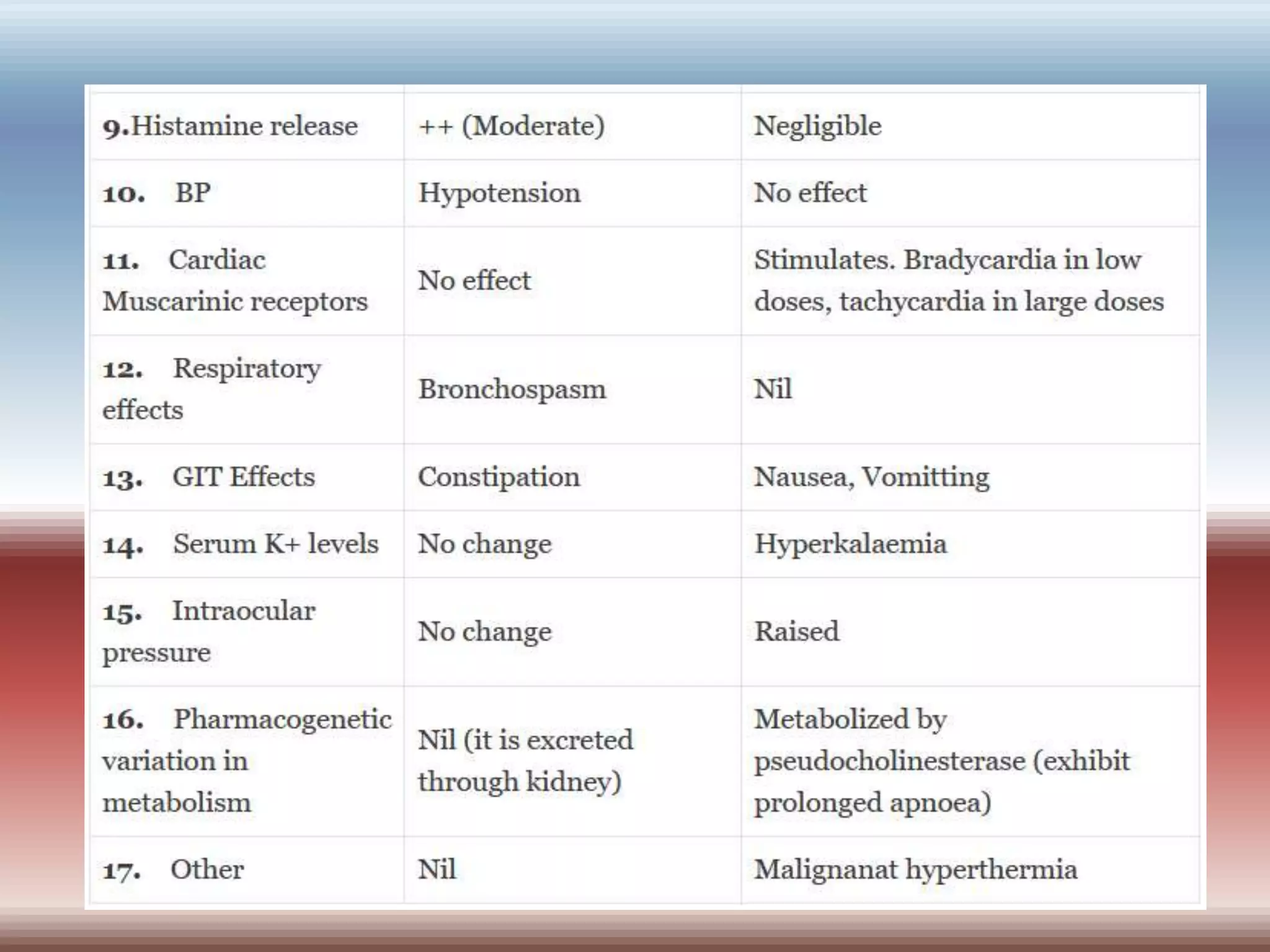
3. Histamine release d-TC releases histamine from mast cells.
• This does not involve immune system and is due to the bulky
cationic nature of the molecule.
• Histamine release contributes to the hypotension produced by d-
TC.
• Flushing, bronchospasm and increased respiratory secretions are
other effects.
• Intradermal injection of d-TC produces a wheal similar to that
produced by injecting histamine.
• Heparin may also be simultaneously released from mast cells
4. C.V.S.
– d-Tubocurarine produces significant fall in BP.
– This is due to—
a) Ganglionic blockade
b) Histamine release
c) Reduced venous return—a result of paralysis of limb
and respiratory muscles.
– Heart rate may increase due to vagal ganglionic blockade.
– Pancuronium and vecuronium also tend to cause
tachycardia.
– All newer Nondepolarizing drugs have negligible effects on
BP and HR.
5. G.I.T.
• The ganglion blocking activity of competitive blockers may
enhance postoperative paralytic ileus after abdominal operations.
6. C.N.S.
• All neuromuscular blockers are quaternary compounds—do not
cross blood-brain barrier. Thus, on i.v. administration no central
effects follow.
• However, d-TC applied to brain cortex or injected in the cerebral
ventricles produces strychnine like effects.
PHARMACOKINETICS
• All neuromuscular blockers are polar quaternary compounds—
not absorbed orally, do not cross cell membranes, have low
volumes of distribution and do not penetrate placental or blood
brain barrier.
• They are practically always given i.v., though i.m.
administration is possible.
• Muscles with higher blood flow receive more drug and are
affected earlier.
• Redistribution to non-muscular tissues plays a significant role in the
termination of surgical grade muscle relaxation, but residual block may
persist for a longer time depending on the elimination t½.
• The duration of action of competitive blockers is directly dependent on the
elimination t½.
• Drugs that are primarily metabolized in the plasma/liver, e.g. vecuronium,
atracurium, cisatracurium, rocuronium, and especially mivacurium have
relatively shorter t½ and duration of action (20–40 min), while those
largely excreted by the kidney, e.g. Pancuronium,d-Tc, doxacurium and
pipecuronium have longert½ and duration of action (>60 min).
INTERACTIONS
• Thiopentone Sod And Sch
• General Anaesthetics
• Anticholinesterases
• Aminoglycoside Antibiotics
• Reduce Ach Release
• Calcium Channel Blockers
• Diuretics
• Diazepam,
• Propranolol
• Quinidine
TOXICITY
1. Respiratory paralysis and prolonged apnoea.
2. Flushing is common with d-TC.
3. Fall in BP and cardiovascular collapse can occur,
especially in hypovolemic patients.
4. Hepatic and renal disease.
5. Cardiac arrhythmias and even arrest have occurred,
especially with SCh.
6. Precipitation of asthma by histamine releasing neuromuscular
blockers.
7. Postoperative muscle soreness and myalgia may be
complained after SCh.
8. Malignant hyperthermia can be triggered by SCh in patients
anaesthetized with fluorinated anaesthetics.
USES
1. The most important use of neuromuscular blockers is as adjuvant to
general anaesthesia; adequate muscle relaxation can be achieved at
lighter planes.
– Many surgical procedures are performed more safely and rapidly by
employing muscle relaxants.
– Muscle relaxants also reduce reflex muscle contraction in the region under
going surgery, and assist maintenance of controlled ventilation during
anaesthesia.
– They are particularly helpful in abdominal and thoracic surgery, intubation
and endoscopies, orthopaedic manipulations, etc
2. Assisted ventilation:
– Critically ill patients in intensive care units often need ventilator
support.
– This can be facilitated by continuous infusion of sub anaesthetic doses
of a competitive neuromuscular blocker which reduces the chest wall
resistance to inflation.
– Vecuronium is most commonly used, but after prolonged infusion it can
cause blockade lasting 1–3 days due to accumulation of an active
metabolite and/or development of neuropathy.
3. Convulsions
– Convulsions and trauma from lectroconvulsive therapy
can be avoided by the use of muscle relaxants without
decreasing the therapeutic benefit.
– SCh is most commonly used for this purpose. The
short acting competitive blocker mivacurium is an
alternative
4. Tetanus And Status Epilepticus
– Severe cases of tetanus and status epilepticus, who are not
controlled by diazepam or other drugs, may be paralysed
by a neuromuscular blocker (repeated doses of a
competitive blocker) and maintained on intermittent
positive pressure respiration till the disease subsides.
Centrally Acting
Muscle
Relaxants
• These are drugs which reduce skeletal muscle tone by a
selective action in the cerebrospinal axis, without altering
consciousness.
• They selectively depress spinal and supraspinal polysynaptic
reflexes involved in the regulation of muscle tone without
significantly affecting monosynaptically mediated stretch
reflex.
• Polysynaptic path ways in the ascending reticular formation
which are involved in the maintenance of wakefulness are also
depressed, though to a lesser extent.
• All centrally acting muscle relaxants do have some sedative
property.
• They have no effect on neuromuscular transmission and on
muscle fibres, but reduce decerebrate rigidity, upper motor
neurone spasticity and hyperreflexia.
Classification
1. Mephenesin congeners
– Mephenesin,
– Carisoprodol,
– Chlorzoxazone,
– Chlormezanone,
– Methocarbamol.
2. Benzodiazepines
– Diazepam and others.
3. GABA mimetic
– Baclofen,
– Thiocolchicoside
4. Central α2 agonist
– Tizanidine
1. Mephenesin
• It was the first drug found to cause muscle relaxation in animals without
producing unconsciousness and was called internuncial neurone blocking
agent because its primary site of action is the spinal internuncial neurone
hitch modulates reflexes maintaining muscle tone.
• It is not used clinically because orally it causes marked gastric irritation,
and injected i.v., it causes thrombophlebitis, haemolysis and fall in BP.
• It has been included in counterirritant ointments (MEDICREME,
RELAXYL) where its irritant rather than muscle relaxant property could be
affording relief.
2. Carisoprodol
• It has a favourable muscle relaxant: sedative
activity ratio with weak analgesic, antipyretic and
anticholinergic properties.
• It is used in musculoskeletal disorders associated with
muscle spasm.
3. Chlorzoxazone
• It is pharmacologically similar to Mephenesin, but
has a longer duration of action and is better tolerated
orally.
4. Chlormezanone
• It has antianxiety and hypnotic actions as well, and
has been used for tension states associated with
increased muscle tone.
5. Methocarbamol
• It is less sedative and longer acting than Mephenesin.
• Orally it has been used in reflex muscle spasms and chronic
neurological diseases.
• It can be injected i.v. Without producing thrombophlebitis and
haemolysis— used for orthopaedic procedures and tetanus.
6. Diazepam
• It is the prototype of benzodiazepines (BZDs) which act in the brain on
specific receptors enhancing GABAergic transmission.
• Muscle tone is reduced by supraspinal rather than spinal action; muscle
relaxant : sedative activity ratio is low.
• No gastric irritation occurs and it is very well tolerated, though sedation
limits the dose which can be used for reducing muscle tone.
• It is particularly valuable in spinal injuries and tetanus. Combined with
analgesics, it is popular for rheumatic disorders associated with muscle
spasm.
• Dose: 5 mg TDS orally, 10–40 mg i.v. (in tetanus).
7. Baclofen
• This analogue of the inhibitory transmitter GABA acts as a
selective GABAB receptor agonist.
• The GABA receptors have been divided into:
1. GABAA receptor Intrinsic ion channel receptor
• which increases Cl¯ conductance; blocked by
bicuculline; facilitated by BZDs.
2. GABAB receptor G-protein coupled receptor;
• hyperpolarizes neurones by increasing K+
conductance and altering Ca2+ flux; bicuculline
insensitive, but blocked by saclofen.
Uses
1. Acute muscle spasms Over stretching of a muscle, sprain,
tearing of ligaments and tendons, dislocation, fibrositis,
bursitis, rheumatic disorders, etc. cause painful spasm of
muscles.
2. Torticollis, lumbago, backache, neuralgias These are other
conditions in which painful spasm of certain muscles is a
prominent feature; respond in the same way as acute muscle
spasms.
3. Anxiety and tension Increased tone of muscles often attends these states.
Diazepam group of drugs and Chlormezanone benefit by their antianxiety
as well as muscle relaxant actions.
• Spastic neurological diseases Impairment of descending pathways in the
cerebrospinal axis and withdrawal of inhibitory influence over the stretch
reflex causes chronic increase in muscle tone or spasticity.
• Hemiplegic, paraplegia, spinal injuries, multiple sclerosis, ALS and
cerebral palsy fall in this category.
• These conditions are benefited by Baclofen, diazepam, tizanidine and
dantrolene but not by Mephenesin group of drugs.
5. Tetanus Most commonly diazepam is infused i.v. and the
dose is titrated by the response.
6. Electroconvulsive therapy Diazepam decreases the
intensity of convulsions resulting from ECT, without
diminishing its therapeutic effect.
7. Orthopaedic manipulations These procedures may be
performed under the influence of diazepam or
Methocarbamol given i.v.
Thank You

Skeletal muscle relaxants

  • 1.
  • 2.
    Skeletal muscle relaxantsare drugs that act peripherally at neuromuscular junction/muscle fibre itself or centrally in the cerebrospinal axis to reduce muscle tone and/or cause paralysis.
  • 3.
    • The neuromuscularblocking agents are used primarily in conjunction with general anaesthetics to provide muscle relaxation for surgery, while centrally acting muscle relaxants are used mainly for painful muscle spasms and spastic neurological conditions.
  • 4.
    Peripherally Acting Muscle Relaxants I.Neuromuscular blocking agents A. Nondepolarizing (Competitive) blockers 1. Long acting: d-Tubocurarine, Pancuronium, Doxacurium, Pipecuronium 2. Intermediate acting: Vecuronium, Atracurium, Cisatracurium, Rocuronium, Rapacuronium 3. Short acting: Mivacurium B. Depolarizing blockers : Succinylcholine (SCh., Suxamethonium), Decamethonium
  • 5.
    II. Directly actingagents Dantrolene sodium , Quinine Note: 1. Decamethonium is not used clinically. 2. Aminoglycoside, tetracycline, polypeptide – Antibiotics interfere with neuromuscular transmission at high doses, but are not employed as muscle relaxants.
  • 6.
    NEUROMUSCULAR BLOCKING AGENTS • CurareIt is the generic name for certain plant extracts used by south American tribals as arrow poison for game hunting. • The animals got paralysed even if not killed by the arrow. • Natural sources of curare are Strychnos toxifera, Chondrodendrontomentosum and related plants. • Muscle paralysing active principles of these are tubocurarine, toxiferins, etc.
  • 7.
    • Tubocurarine wasfirst clinically used in 1930s; many synthetic compounds including Succinylcholine were introduced subsequently. • Search has continued for neuromuscular blockers to provide greater cardiovascular stability during surgery and for drugs with differing onset and duration of action to suit specific requirements. • The latest additions are doxacurium, pipecuronium, rocuronium, mivacurium, rapacuronium and cisatracurium.
  • 8.
    MECHANISM OF ACTION: •The site of action of both competitive and depolarizing blockers is the end plate of skeletal muscle fibres.
  • 12.
    Phase I block •It is rapid in onset, results from persistent depolarization of muscle end plate and has features of classical depolarization blockade. • This depolarization declines shortly afterwards and repolarization occurs gradually despite continued presence of the drug at the receptor, but neuromuscular transmission is not restored and phase II block supervenes.
  • 13.
    Phase II block •It is slow in onset and results from desensitization of the receptor to ACh. It, therefore, superficially resembles block produced by d-TC. • The muscle membrane is nearly repolarized, recovery is slow, contraction is not sustained during tetanic stimulation (‘fade’occurs) and the block is partially reversed by anticholinesterases. • In man and fast contracting muscle (tibialis anterior) of cat, normally only phase I block is seen.
  • 15.
    • Phase IIblock may be seen in man when SCh is injected in high dose or infused continuously, particularly, if fluorinated anaesthetics have been used. • SCh readily produces phase II block in patients with atypical or deficient pseudocholinesterase.
  • 16.
    Actions 1. Skeletal musclesIntravenous injection of Nondepolarizing blockers rapidly produces muscle weakness followed by flaccid paralysis. • Small fast response muscles (fingers, extra ocular)are affected first; paralysis spreads to hands, feet—arm, leg, neck, face—trunk—intercostal muscles—finally diaphragm: respiration stops. • The rate of attainment of peak effect and the duration for which it is maintained depends on the drug its dose, anaesthetic used, hemodynamic, renal and hepatic status of the patient and several other factors.
  • 17.
    • Depolarizing blockerstypically produce fasciculation lasting a few seconds before inducing flaccid paralysis, but fasciculation are not prominent in well-anaesthetized patients. • Though the sequence in which muscles are involved is somewhat different from the competitive blockers the action of SCh develops with such rapidity that this is not appreciated. • Apnoea generally occurs within 45–90 sec, but lasts only 2–5 min; recovery is rapid.
  • 22.
    2. Autonomic gangliaBecause the cholinergic receptors in autonomic ganglia are nicotinic(though of a different subclass NN), competitive neuromuscular blockers produce some degree of ganglionic blockade; d-TC has the maximum propensity in this regard, while the newer drugs(vecuronium, etc.) are practically devoid of it. • SCh may cause ganglionic stimulation by its agonistic action on nicotinic receptors.
  • 23.
    3. Histamine released-TC releases histamine from mast cells. • This does not involve immune system and is due to the bulky cationic nature of the molecule. • Histamine release contributes to the hypotension produced by d- TC. • Flushing, bronchospasm and increased respiratory secretions are other effects. • Intradermal injection of d-TC produces a wheal similar to that produced by injecting histamine. • Heparin may also be simultaneously released from mast cells
  • 24.
    4. C.V.S. – d-Tubocurarineproduces significant fall in BP. – This is due to— a) Ganglionic blockade b) Histamine release c) Reduced venous return—a result of paralysis of limb and respiratory muscles. – Heart rate may increase due to vagal ganglionic blockade. – Pancuronium and vecuronium also tend to cause tachycardia. – All newer Nondepolarizing drugs have negligible effects on BP and HR.
  • 25.
    5. G.I.T. • Theganglion blocking activity of competitive blockers may enhance postoperative paralytic ileus after abdominal operations. 6. C.N.S. • All neuromuscular blockers are quaternary compounds—do not cross blood-brain barrier. Thus, on i.v. administration no central effects follow. • However, d-TC applied to brain cortex or injected in the cerebral ventricles produces strychnine like effects.
  • 26.
    PHARMACOKINETICS • All neuromuscularblockers are polar quaternary compounds— not absorbed orally, do not cross cell membranes, have low volumes of distribution and do not penetrate placental or blood brain barrier. • They are practically always given i.v., though i.m. administration is possible. • Muscles with higher blood flow receive more drug and are affected earlier.
  • 27.
    • Redistribution tonon-muscular tissues plays a significant role in the termination of surgical grade muscle relaxation, but residual block may persist for a longer time depending on the elimination t½. • The duration of action of competitive blockers is directly dependent on the elimination t½. • Drugs that are primarily metabolized in the plasma/liver, e.g. vecuronium, atracurium, cisatracurium, rocuronium, and especially mivacurium have relatively shorter t½ and duration of action (20–40 min), while those largely excreted by the kidney, e.g. Pancuronium,d-Tc, doxacurium and pipecuronium have longert½ and duration of action (>60 min).
  • 28.
    INTERACTIONS • Thiopentone SodAnd Sch • General Anaesthetics • Anticholinesterases • Aminoglycoside Antibiotics • Reduce Ach Release • Calcium Channel Blockers • Diuretics • Diazepam, • Propranolol • Quinidine
  • 29.
    TOXICITY 1. Respiratory paralysisand prolonged apnoea. 2. Flushing is common with d-TC. 3. Fall in BP and cardiovascular collapse can occur, especially in hypovolemic patients. 4. Hepatic and renal disease.
  • 30.
    5. Cardiac arrhythmiasand even arrest have occurred, especially with SCh. 6. Precipitation of asthma by histamine releasing neuromuscular blockers. 7. Postoperative muscle soreness and myalgia may be complained after SCh. 8. Malignant hyperthermia can be triggered by SCh in patients anaesthetized with fluorinated anaesthetics.
  • 31.
    USES 1. The mostimportant use of neuromuscular blockers is as adjuvant to general anaesthesia; adequate muscle relaxation can be achieved at lighter planes. – Many surgical procedures are performed more safely and rapidly by employing muscle relaxants. – Muscle relaxants also reduce reflex muscle contraction in the region under going surgery, and assist maintenance of controlled ventilation during anaesthesia. – They are particularly helpful in abdominal and thoracic surgery, intubation and endoscopies, orthopaedic manipulations, etc
  • 32.
    2. Assisted ventilation: –Critically ill patients in intensive care units often need ventilator support. – This can be facilitated by continuous infusion of sub anaesthetic doses of a competitive neuromuscular blocker which reduces the chest wall resistance to inflation. – Vecuronium is most commonly used, but after prolonged infusion it can cause blockade lasting 1–3 days due to accumulation of an active metabolite and/or development of neuropathy.
  • 33.
    3. Convulsions – Convulsionsand trauma from lectroconvulsive therapy can be avoided by the use of muscle relaxants without decreasing the therapeutic benefit. – SCh is most commonly used for this purpose. The short acting competitive blocker mivacurium is an alternative
  • 34.
    4. Tetanus AndStatus Epilepticus – Severe cases of tetanus and status epilepticus, who are not controlled by diazepam or other drugs, may be paralysed by a neuromuscular blocker (repeated doses of a competitive blocker) and maintained on intermittent positive pressure respiration till the disease subsides.
  • 36.
  • 37.
    • These aredrugs which reduce skeletal muscle tone by a selective action in the cerebrospinal axis, without altering consciousness. • They selectively depress spinal and supraspinal polysynaptic reflexes involved in the regulation of muscle tone without significantly affecting monosynaptically mediated stretch reflex. • Polysynaptic path ways in the ascending reticular formation which are involved in the maintenance of wakefulness are also depressed, though to a lesser extent.
  • 38.
    • All centrallyacting muscle relaxants do have some sedative property. • They have no effect on neuromuscular transmission and on muscle fibres, but reduce decerebrate rigidity, upper motor neurone spasticity and hyperreflexia.
  • 40.
    Classification 1. Mephenesin congeners –Mephenesin, – Carisoprodol, – Chlorzoxazone, – Chlormezanone, – Methocarbamol. 2. Benzodiazepines – Diazepam and others. 3. GABA mimetic – Baclofen, – Thiocolchicoside 4. Central α2 agonist – Tizanidine
  • 41.
    1. Mephenesin • Itwas the first drug found to cause muscle relaxation in animals without producing unconsciousness and was called internuncial neurone blocking agent because its primary site of action is the spinal internuncial neurone hitch modulates reflexes maintaining muscle tone. • It is not used clinically because orally it causes marked gastric irritation, and injected i.v., it causes thrombophlebitis, haemolysis and fall in BP. • It has been included in counterirritant ointments (MEDICREME, RELAXYL) where its irritant rather than muscle relaxant property could be affording relief.
  • 42.
    2. Carisoprodol • Ithas a favourable muscle relaxant: sedative activity ratio with weak analgesic, antipyretic and anticholinergic properties. • It is used in musculoskeletal disorders associated with muscle spasm.
  • 43.
    3. Chlorzoxazone • Itis pharmacologically similar to Mephenesin, but has a longer duration of action and is better tolerated orally.
  • 44.
    4. Chlormezanone • Ithas antianxiety and hypnotic actions as well, and has been used for tension states associated with increased muscle tone.
  • 45.
    5. Methocarbamol • Itis less sedative and longer acting than Mephenesin. • Orally it has been used in reflex muscle spasms and chronic neurological diseases. • It can be injected i.v. Without producing thrombophlebitis and haemolysis— used for orthopaedic procedures and tetanus.
  • 46.
    6. Diazepam • Itis the prototype of benzodiazepines (BZDs) which act in the brain on specific receptors enhancing GABAergic transmission. • Muscle tone is reduced by supraspinal rather than spinal action; muscle relaxant : sedative activity ratio is low. • No gastric irritation occurs and it is very well tolerated, though sedation limits the dose which can be used for reducing muscle tone. • It is particularly valuable in spinal injuries and tetanus. Combined with analgesics, it is popular for rheumatic disorders associated with muscle spasm. • Dose: 5 mg TDS orally, 10–40 mg i.v. (in tetanus).
  • 47.
    7. Baclofen • Thisanalogue of the inhibitory transmitter GABA acts as a selective GABAB receptor agonist. • The GABA receptors have been divided into: 1. GABAA receptor Intrinsic ion channel receptor • which increases Cl¯ conductance; blocked by bicuculline; facilitated by BZDs. 2. GABAB receptor G-protein coupled receptor; • hyperpolarizes neurones by increasing K+ conductance and altering Ca2+ flux; bicuculline insensitive, but blocked by saclofen.
  • 48.
    Uses 1. Acute musclespasms Over stretching of a muscle, sprain, tearing of ligaments and tendons, dislocation, fibrositis, bursitis, rheumatic disorders, etc. cause painful spasm of muscles. 2. Torticollis, lumbago, backache, neuralgias These are other conditions in which painful spasm of certain muscles is a prominent feature; respond in the same way as acute muscle spasms.
  • 49.
    3. Anxiety andtension Increased tone of muscles often attends these states. Diazepam group of drugs and Chlormezanone benefit by their antianxiety as well as muscle relaxant actions. • Spastic neurological diseases Impairment of descending pathways in the cerebrospinal axis and withdrawal of inhibitory influence over the stretch reflex causes chronic increase in muscle tone or spasticity. • Hemiplegic, paraplegia, spinal injuries, multiple sclerosis, ALS and cerebral palsy fall in this category. • These conditions are benefited by Baclofen, diazepam, tizanidine and dantrolene but not by Mephenesin group of drugs.
  • 50.
    5. Tetanus Mostcommonly diazepam is infused i.v. and the dose is titrated by the response. 6. Electroconvulsive therapy Diazepam decreases the intensity of convulsions resulting from ECT, without diminishing its therapeutic effect. 7. Orthopaedic manipulations These procedures may be performed under the influence of diazepam or Methocarbamol given i.v.
  • 51.