S I T E B A N A L Y S I
SPREPARED BY: GROUP B
P L A N S
PREPARED BY: JAMES TAY & CO.
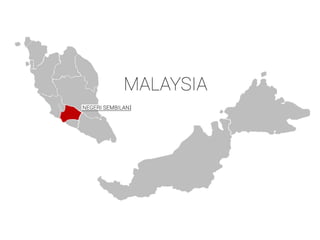
LOCATION PLAN
KEY PLAN
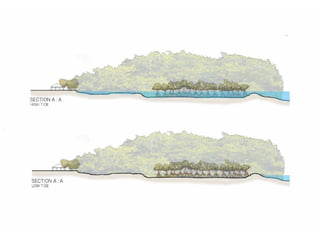
SECTION A : A
AA
B
B
SECTIONB:B
SITE PLAN (HIGH TIDE)
SITE PLAN (LOW TIDE)
SITE PLAN (CONTOUR MAP)
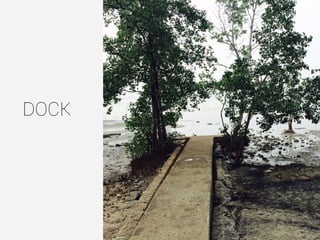
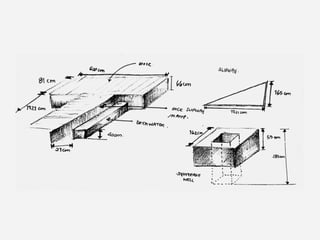
E X I S T I N G
S T R U C T U R E SPREPARED BY: MIN JUNN & CO.
L A N D S C A P E
PREPARED BY: JACK TOO & CO.
S W
O
TVast and spacious
Has both open spaces
and dense mangrove
Has limitless amount of
water (cleanliness in
question)
S W
O
TExtremely disgusting
smell
Small diversity of flora
and fauna
Barren
S W
O
TClear view of the Straits
of Malacca
Mangrove forms a
natural barricade, good
for development
Calm shores, aids in
development
S W
O
T High and low tide might
affect buildings
High chance of affecting
the habitat if heavy
development is
undertaken
C L I M A T E
S T U D I E SPREPARED BY: YEN MIN & CO.
SUN PATH
ADJUSTING TO SUN
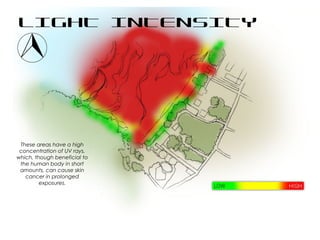
LIGHT INTENSITY
These areas have a high
concentration of UV rays,
which, though beneficial to
the human body in short
amounts, can cause skin
cancer in prolonged
exposures.
SHADED AREAS
These shaded areas provide a
refuge from the sunlight, and
thus are shown to have a
noticeably lower temperature
than its surroundings; around
2-3 degrees Celsius difference.
SHADOW CASTING
(7AM)
SHADOW CASTING
(2PM)
SHADOW CASTING
(7PM)
ANNUAL WIND
DISTRIBUTION
MONSOON WINDS
SEA BREEZE
LAND BREEZE
TIDES (4:15PM)
The tides wax and wane due
to the pull of the moon’s
gravity. The speed of both
incoming and outgoing tides
are the same: 0.023m/s.
This can be dangerous for
those trapped by the rising
tide. Currents brought in by
the tide have been known
to pull unsuspecting victims
into the sea.
Drownings have occurred in
this area.
TIDES (4:47PM)
The tides wax and wane due
to the pull of the moon’s
gravity. The speed of both
incoming and outgoing tides
are the same: 0.023m/s.
This can be dangerous for
those trapped by the rising
tide. Currents brought in by
the tide have been known
to pull unsuspecting victims
into the sea.
Drownings have occurred in
this area.
TIDES (5:27PM)
TIDES (6:40PM)
TIDES (8:15PM)
Tides come and go every 6
hours, starting at 12AM
midnight.
At the start of each 6 hour
cycle, the tide rises at a rate
of 0.023m/s, engulfing the
cape. It then maintains its
present depth until the end
of its 6-hour cycle, when it
then recedes at the same
rate: 0.02m/s
RAINFALL
HUMIDITY
At 100% humidity, the air has
reached its saturation point
and could no longer hold
any more moisture.
The air will feel heavier, and
people will sweat more.
Generally it is an unpleasant
experience.
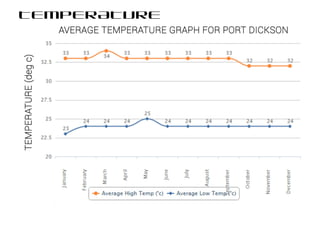
TEMPERATURE
TEMPERATURE
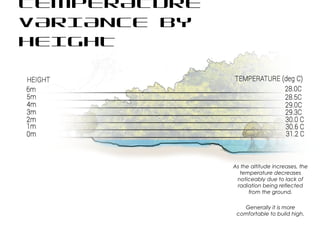
VARIANCE BY
HEIGHT
As the altitude increases, the
temperature decreases
noticeably due to lack of
radiation being reflected
from the ground.
Generally it is more
comfortable to build high.
SOIL CONDITION
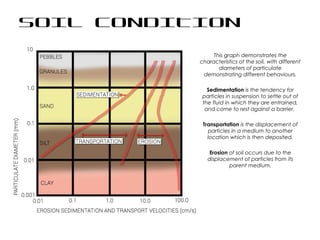
SOIL CONDITION
This graph demonstrates the
characteristics of the soil, with different
diameters of particulate
demonstrating different behaviours.
Sedimentation is the tendency for
particles in suspension to settle out of
the fluid in which they are entrained,
and come to rest against a barrier.
Transportation is the displacement of
particles in a medium to another
location which is then deposited.
Erosion of soil occurs due to the
displacement of particles from its
parent medium.
S W
O
TSea breeze makes it
cooling during the day.
Safe site due to weak
tides and waves.
S W
O
THigh exposure of UV rays
due to sunlight.
Insulation difficulties due
to temperature
differences.
Soft and weak soil
condition.
S W
O
TPotential for solar energy
exploitation.
Potential for beach
activities.
S W
O
T Haze due to wind
blowing from Indonesia
during the South-west
Monsoon.
Contamination and
pollution from littering
and poor drainage.
Building corrosion due to
high salt content in air.
Erosion and major
settlement issues due to
soil condition.
C I R C U L A T I O NPREPARED BY: SCHANI BHARAT & CO.
M A C R O
HAZARDS
SOLUTION:
Hire security guard and
lifeguard services
Maintain cleanliness of
beach
Impose fines on
litterbugs.
Erect a notice board.
AVERAGE DAILY
HUMAN DENSITY
Tends to stay near the
beach.
Most of the visitors gather
under the shaded trees.
More crowded to the
North-east, as that side
has more complete
facilities.
South-west is commonly
occupied by snail
hunters.
PARKING SITUATIONSTRENGTHS:
Avoids congestion on
main roads and
driveways.
WEAKNESSES:
Insufficient parking bays
during public holidays.
THREATS:
The size of the parking
bays are too small.
OPPORTUNITY:
Increase size and
quantity of bays.
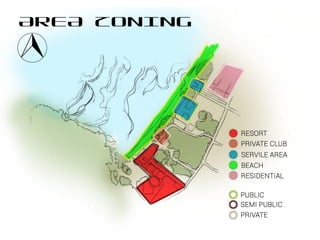
AREA ZONING
ANNUAL FREQUENCY OF
VISITORS
TIDE-DEPENDENT
ACTIVITY/CIRCULATIO
N
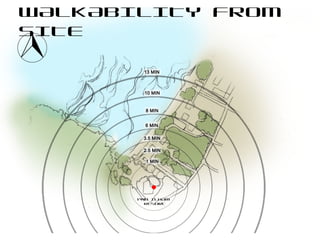
WALKABILITY FROM
SITE
PNB ILHAM
RESORT
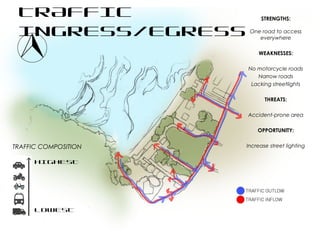
TRAFFIC
INGRESS/EGRESS
STRENGTHS:
One road to access
everywhere
WEAKNESSES:
No motorcycle roads
Narrow roads
Lacking streetlights
THREATS:
Accident-prone area
OPPORTUNITY:
Increase street lighting
HIGHEST
LOWEST
TRAFFIC COMPOSITION
BOAT LOADING
ZONES
ROAD TYPES
M I C R O
HUMAN CIRCULATION
TO BEACH
(FROM RESORT)
STRENGTHS:
Various access points.
WEAKNESSES:
Poor security.
THREATS:
Not wide enough
doors/entrance to way
to beach.
OPPORTUNITY:
Indication of direction to
beach and which beach
(sign boards)
SNAILHUNTER
CIRCULATION SPEED
They are move active on
the mangrove area.
Access through open car
park.
Slowest speed.
GROUP CIRCULATION
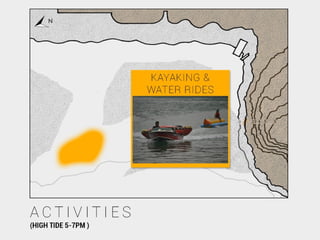
SPEED Team building activities
on the South-west side.
Water sports on North-
east side.
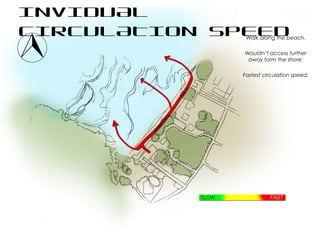
INVIDUAL
CIRCULATION SPEEDWalk along the beach.
Wouldn’t access further
away form the shore.
Fastest circulation speed.
BOAT
EGRESS/INGRESS
STRENGTHS:
Boats are congested
during docking and
egress.
THREATS:
Ramp is not well
maintained, boat
docking stations poorly
indicated.
OPPORTUNITY:
Maintain external beach
interfaces, specific to the
public or private sector.
PROPOSED
CIRCULATION PATH
IMPROVEMENT
STRENGTHS:
Amazing ambiance,
views and experience
Interaction with wildlife
WEAKNESSES:
Path is unsafe due to
forest and rubbish
Divergent pathways
No clear indications
OPPORTUNITY:
Create a “natural” deck
leading to main zone
A proper pathway
leading to entrance from
hotel.
Creates sense of
adventure.
BIRD MIGRATION
PATTERN
Birds migrate once a year towards the north, from early March to early April.
V I E W S &
V I S T A SPREPARED BY: EE SHIUNG & CO.
S W
O
TBoth swamp and beach
available for
comparisons and
ecological studies
Wide view area
A large area of shallow
waters and sand
available during low tide
Different stages of
mangrove growth can
be observed and
appreciated.
S W
O
TSwamp area hardly
accessible due to
muddy waters
Rubbish can be found on
the beach
Broken drainage
structures which leads to
the beach
The difference between
the water level and
during high tide and low
tide is very large
S W
O
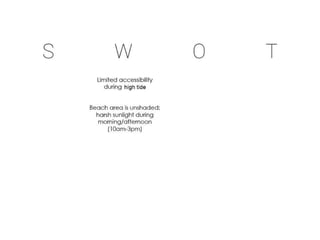
TWater activities
Animal spotting
(mudskippers, fish, birds)
Trees on the side can be
subjected to further
landscaping and
beautifying the site
S W
O
T Waves may erode
structures over time
Small but deep holes in
muddy soil near swamp
area
Rubbish accumulated on
beach may bring
unwanted diseases
A C T I V I T I E SPREPARED BY: ADAM TAN & CO.
C A S E S T U D Y
PINOHUACHO OBSERVATION DECK
PREPARED BY: LEE CZEN SHING & CO.
END
PREPARED BY: GROUP B

Site analysis proper

  • 1.
    S I TE B A N A L Y S I SPREPARED BY: GROUP B
  • 2.
    P L AN S PREPARED BY: JAMES TAY & CO.
  • 4.
  • 5.
  • 6.
    SECTION A :A AA B B SECTIONB:B SITE PLAN (HIGH TIDE)
  • 7.
  • 8.
  • 11.
    E X IS T I N G S T R U C T U R E SPREPARED BY: MIN JUNN & CO.
  • 33.
    L A ND S C A P E PREPARED BY: JACK TOO & CO.
  • 43.
    S W O TVast andspacious Has both open spaces and dense mangrove Has limitless amount of water (cleanliness in question)
  • 44.
    S W O TExtremely disgusting smell Smalldiversity of flora and fauna Barren
  • 45.
    S W O TClear viewof the Straits of Malacca Mangrove forms a natural barricade, good for development Calm shores, aids in development
  • 46.
    S W O T Highand low tide might affect buildings High chance of affecting the habitat if heavy development is undertaken
  • 47.
    C L IM A T E S T U D I E SPREPARED BY: YEN MIN & CO.
  • 48.
  • 49.
  • 50.
    LIGHT INTENSITY These areashave a high concentration of UV rays, which, though beneficial to the human body in short amounts, can cause skin cancer in prolonged exposures.
  • 51.
    SHADED AREAS These shadedareas provide a refuge from the sunlight, and thus are shown to have a noticeably lower temperature than its surroundings; around 2-3 degrees Celsius difference.
  • 52.
  • 53.
  • 54.
  • 55.
  • 56.
  • 57.
  • 58.
  • 59.
    TIDES (4:15PM) The tideswax and wane due to the pull of the moon’s gravity. The speed of both incoming and outgoing tides are the same: 0.023m/s. This can be dangerous for those trapped by the rising tide. Currents brought in by the tide have been known to pull unsuspecting victims into the sea. Drownings have occurred in this area.
  • 60.
    TIDES (4:47PM) The tideswax and wane due to the pull of the moon’s gravity. The speed of both incoming and outgoing tides are the same: 0.023m/s. This can be dangerous for those trapped by the rising tide. Currents brought in by the tide have been known to pull unsuspecting victims into the sea. Drownings have occurred in this area.
  • 61.
  • 62.
  • 63.
    TIDES (8:15PM) Tides comeand go every 6 hours, starting at 12AM midnight. At the start of each 6 hour cycle, the tide rises at a rate of 0.023m/s, engulfing the cape. It then maintains its present depth until the end of its 6-hour cycle, when it then recedes at the same rate: 0.02m/s
  • 64.
  • 65.
    HUMIDITY At 100% humidity,the air has reached its saturation point and could no longer hold any more moisture. The air will feel heavier, and people will sweat more. Generally it is an unpleasant experience.
  • 66.
  • 67.
    TEMPERATURE VARIANCE BY HEIGHT As thealtitude increases, the temperature decreases noticeably due to lack of radiation being reflected from the ground. Generally it is more comfortable to build high.
  • 68.
  • 69.
    SOIL CONDITION This graphdemonstrates the characteristics of the soil, with different diameters of particulate demonstrating different behaviours. Sedimentation is the tendency for particles in suspension to settle out of the fluid in which they are entrained, and come to rest against a barrier. Transportation is the displacement of particles in a medium to another location which is then deposited. Erosion of soil occurs due to the displacement of particles from its parent medium.
  • 70.
    S W O TSea breezemakes it cooling during the day. Safe site due to weak tides and waves.
  • 71.
    S W O THigh exposureof UV rays due to sunlight. Insulation difficulties due to temperature differences. Soft and weak soil condition.
  • 72.
    S W O TPotential forsolar energy exploitation. Potential for beach activities.
  • 73.
    S W O T Hazedue to wind blowing from Indonesia during the South-west Monsoon. Contamination and pollution from littering and poor drainage. Building corrosion due to high salt content in air. Erosion and major settlement issues due to soil condition.
  • 74.
    C I RC U L A T I O NPREPARED BY: SCHANI BHARAT & CO.
  • 75.
    M A CR O
  • 76.
    HAZARDS SOLUTION: Hire security guardand lifeguard services Maintain cleanliness of beach Impose fines on litterbugs. Erect a notice board.
  • 77.
    AVERAGE DAILY HUMAN DENSITY Tendsto stay near the beach. Most of the visitors gather under the shaded trees. More crowded to the North-east, as that side has more complete facilities. South-west is commonly occupied by snail hunters.
  • 78.
    PARKING SITUATIONSTRENGTHS: Avoids congestionon main roads and driveways. WEAKNESSES: Insufficient parking bays during public holidays. THREATS: The size of the parking bays are too small. OPPORTUNITY: Increase size and quantity of bays.
  • 79.
  • 80.
  • 81.
  • 82.
  • 83.
    TRAFFIC INGRESS/EGRESS STRENGTHS: One road toaccess everywhere WEAKNESSES: No motorcycle roads Narrow roads Lacking streetlights THREATS: Accident-prone area OPPORTUNITY: Increase street lighting HIGHEST LOWEST TRAFFIC COMPOSITION
  • 84.
  • 85.
  • 86.
    M I CR O
  • 87.
    HUMAN CIRCULATION TO BEACH (FROMRESORT) STRENGTHS: Various access points. WEAKNESSES: Poor security. THREATS: Not wide enough doors/entrance to way to beach. OPPORTUNITY: Indication of direction to beach and which beach (sign boards)
  • 88.
    SNAILHUNTER CIRCULATION SPEED They aremove active on the mangrove area. Access through open car park. Slowest speed.
  • 89.
    GROUP CIRCULATION SPEED Teambuilding activities on the South-west side. Water sports on North- east side.
  • 90.
    INVIDUAL CIRCULATION SPEEDWalk alongthe beach. Wouldn’t access further away form the shore. Fastest circulation speed.
  • 91.
    BOAT EGRESS/INGRESS STRENGTHS: Boats are congested duringdocking and egress. THREATS: Ramp is not well maintained, boat docking stations poorly indicated. OPPORTUNITY: Maintain external beach interfaces, specific to the public or private sector.
  • 92.
    PROPOSED CIRCULATION PATH IMPROVEMENT STRENGTHS: Amazing ambiance, viewsand experience Interaction with wildlife WEAKNESSES: Path is unsafe due to forest and rubbish Divergent pathways No clear indications OPPORTUNITY: Create a “natural” deck leading to main zone A proper pathway leading to entrance from hotel. Creates sense of adventure.
  • 93.
    BIRD MIGRATION PATTERN Birds migrateonce a year towards the north, from early March to early April.
  • 94.
    V I EW S & V I S T A SPREPARED BY: EE SHIUNG & CO.
  • 147.
    S W O TBoth swampand beach available for comparisons and ecological studies Wide view area A large area of shallow waters and sand available during low tide Different stages of mangrove growth can be observed and appreciated.
  • 148.
    S W O TSwamp areahardly accessible due to muddy waters Rubbish can be found on the beach Broken drainage structures which leads to the beach The difference between the water level and during high tide and low tide is very large
  • 149.
    S W O TWater activities Animalspotting (mudskippers, fish, birds) Trees on the side can be subjected to further landscaping and beautifying the site
  • 150.
    S W O T Wavesmay erode structures over time Small but deep holes in muddy soil near swamp area Rubbish accumulated on beach may bring unwanted diseases
  • 151.
    A C TI V I T I E SPREPARED BY: ADAM TAN & CO.
  • 166.
    C A SE S T U D Y PINOHUACHO OBSERVATION DECK PREPARED BY: LEE CZEN SHING & CO.
  • 184.