Download to read offline


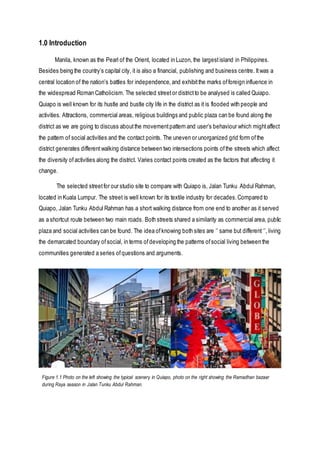
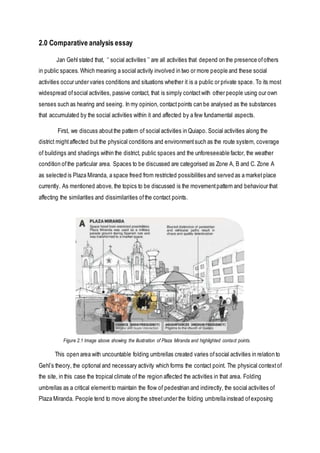
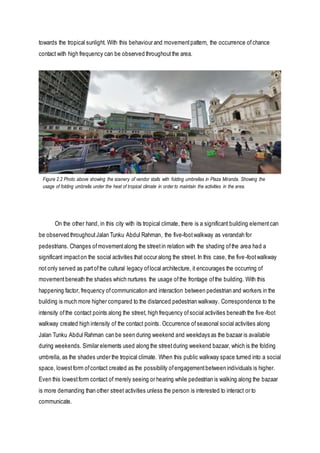
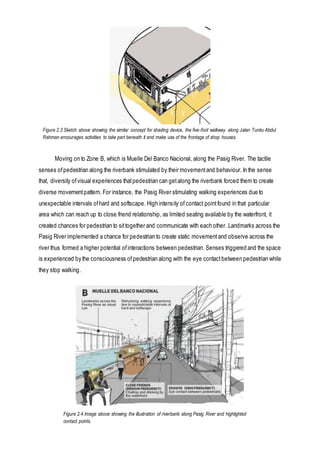
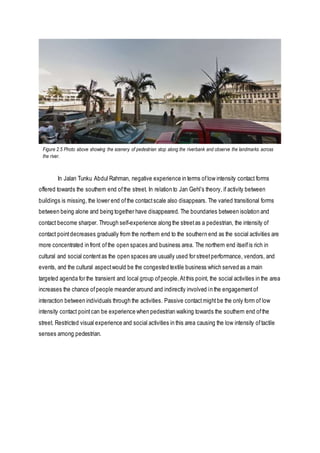
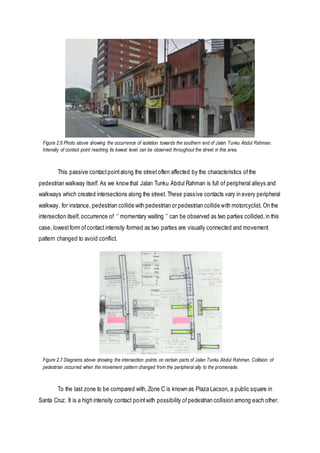
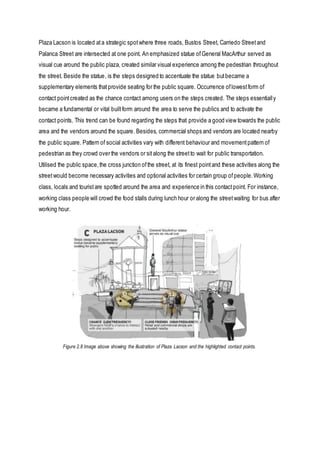
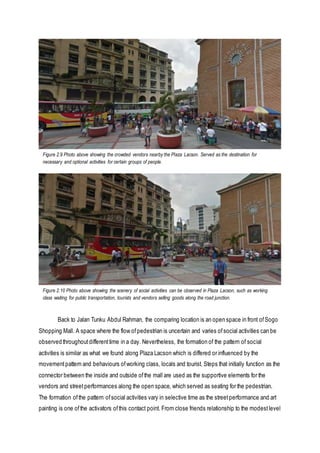

This document provides a comparative analysis of social contact points between Quiapo district in Manila and Jalan Tunku Abdul Rahman in Kuala Lumpur. It analyzes how physical environments and human movement patterns affect social activities and interactions. Key contact points like plazas, streets, and riverbanks in both areas are examined based on Jan Gehl's theories of optional, necessary, and passive social activities. The document concludes that human movement and behaviors shaped by local culture heavily influence the formation of social patterns and intensity of contact between people in urban spaces.


![[Arc 61303] Comparitive Analysis Essay](https://cdn.slidesharecdn.com/ss_thumbnails/arc61303-171220125416-thumbnail.jpg?width=640&height=640&fit=bounds)


