The document discusses the simple present tense, including:
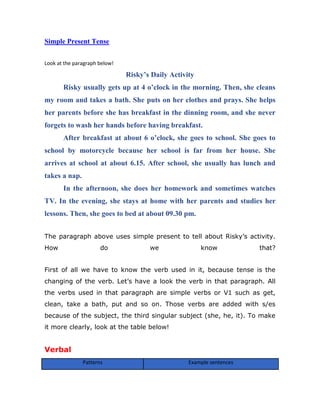
- How to identify it based on use of regular verb forms like "get" and "clean" rather than past or past participle forms.
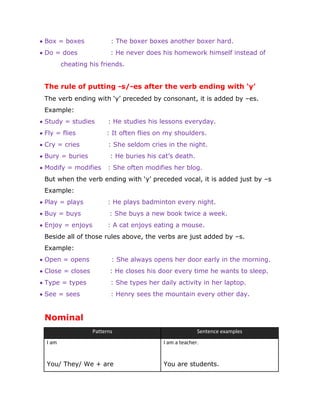
- Rules for adding "-s" or "-es" to verbs based on subject ("she" gets an "-s").
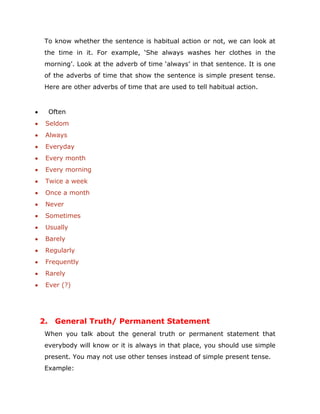
- Uses of the simple present tense including habitual actions, general truths, and timetables.
- Nominal patterns involving forms of "to be" like "is", "am", and "are" connecting subjects to complements.