
Simple Past Tense and Simple
Present Tense
Name of Group :
1. Angga Budi Laksono
2. Dwi Wulansari
3. Mahaputra Adipradana
4. Niken Ayu Istifani
5. Rafi Hidayat
6. Zainurrahmah Tasya

( 03)
( 12 )
( 17 )
( 21 )
( 25 )
( 36 )

XI IPS 1
SMA N 1 Pemalang
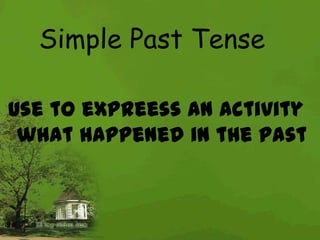
Simple Past Tense
Use to expreess an activity
what happened in the past
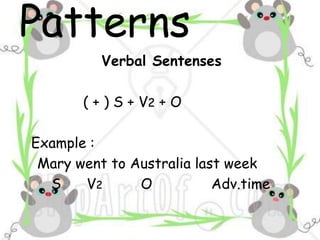
Patterns
Verbal Sentenses
( + ) S + V2 + O

Example :
Mary went to Australia last week
S
V2
O
Adv.time
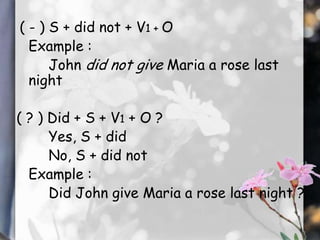
( - ) S + did not + V1 + O
Example :
John did not give Maria a rose last
night
( ? ) Did + S + V1 + O ?
Yes, S + did
No, S + did not
Example :
Did John give Maria a rose last night ?
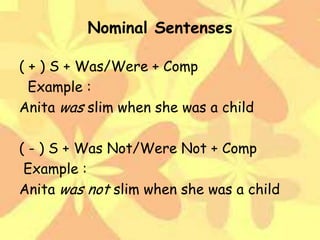
Nominal Sentenses
( + ) S + Was/Were + Comp
Example :
Anita was slim when she was a child
( - ) S + Was Not/Were Not + Comp
Example :
Anita was not slim when she was a child
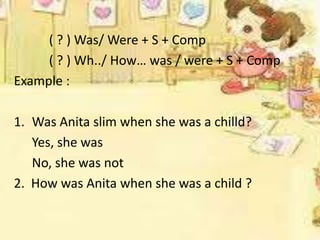
( ? ) Was/ Were + S + Comp
( ? ) Wh../ How… was / were + S + Comp
Example :
1. Was Anita slim when she was a chilld?
Yes, she was
No, she was not
2. How was Anita when she was a child ?
Simple Present Tense
General Truths
Actions which are done often,
usually, sometimes or
everyday
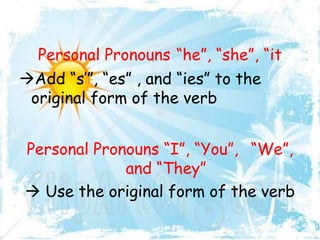
Personal Pronouns “he”, “she”, “it
Add “s‟”, “es” , and “ies” to the
original form of the verb
Personal Pronouns “I”, “You”, “We”,
and “They”
 Use the original form of the verb
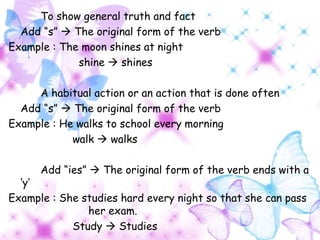
To show general truth and fact
Add “s”  The original form of the verb
Example : The moon shines at night
shine  shines
A habitual action or an action that is done often
Add “s”  The original form of the verb
Example : He walks to school every morning
walk  walks
Add “ies”  The original form of the verb ends with a

„y‟
Example : She studies hard every night so that she can pass
her exam.
Study  Studies
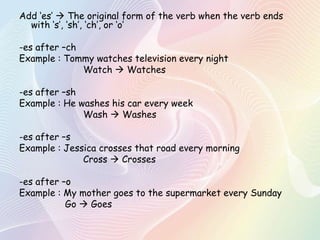
Add „es‟  The original form of the verb when the verb ends
with „s‟, „sh‟, „ch‟, or „o‟
-es after –ch
Example : Tommy watches television every night
Watch  Watches
-es after –sh
Example : He washes his car every week
Wash  Washes

-es after –s
Example : Jessica crosses that road every morning
Cross  Crosses
-es after –o
Example : My mother goes to the supermarket every Sunday
Go  Goes
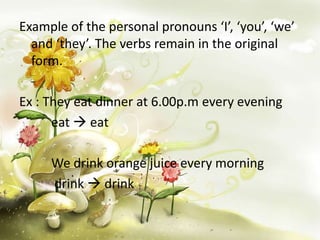
Example of the personal pronouns ‘I’, ‘you’, ‘we’
and ‘they’. The verbs remain in the original
form.
Ex : They eat dinner at 6.00p.m every evening
eat  eat
We drink orange juice every morning
drink  drink
Ok see you next
time
On the next lesson
Good Luck !

Simple past tense and simple present tense

  • 1.
    Simple Past Tenseand Simple Present Tense Name of Group : 1. Angga Budi Laksono 2. Dwi Wulansari 3. Mahaputra Adipradana 4. Niken Ayu Istifani 5. Rafi Hidayat 6. Zainurrahmah Tasya ( 03) ( 12 ) ( 17 ) ( 21 ) ( 25 ) ( 36 ) XI IPS 1 SMA N 1 Pemalang
  • 2.
    Simple Past Tense Useto expreess an activity what happened in the past
  • 3.
    Patterns Verbal Sentenses ( +) S + V2 + O Example : Mary went to Australia last week S V2 O Adv.time
  • 4.
    ( - )S + did not + V1 + O Example : John did not give Maria a rose last night ( ? ) Did + S + V1 + O ? Yes, S + did No, S + did not Example : Did John give Maria a rose last night ?
  • 5.
    Nominal Sentenses ( +) S + Was/Were + Comp Example : Anita was slim when she was a child ( - ) S + Was Not/Were Not + Comp Example : Anita was not slim when she was a child
  • 6.
    ( ? )Was/ Were + S + Comp ( ? ) Wh../ How… was / were + S + Comp Example : 1. Was Anita slim when she was a chilld? Yes, she was No, she was not 2. How was Anita when she was a child ?
  • 7.
    Simple Present Tense GeneralTruths Actions which are done often, usually, sometimes or everyday
  • 8.
    Personal Pronouns “he”,“she”, “it Add “s‟”, “es” , and “ies” to the original form of the verb Personal Pronouns “I”, “You”, “We”, and “They”  Use the original form of the verb
  • 9.
    To show generaltruth and fact Add “s”  The original form of the verb Example : The moon shines at night shine  shines A habitual action or an action that is done often Add “s”  The original form of the verb Example : He walks to school every morning walk  walks Add “ies”  The original form of the verb ends with a „y‟ Example : She studies hard every night so that she can pass her exam. Study  Studies
  • 10.
    Add „es‟ The original form of the verb when the verb ends with „s‟, „sh‟, „ch‟, or „o‟ -es after –ch Example : Tommy watches television every night Watch  Watches -es after –sh Example : He washes his car every week Wash  Washes -es after –s Example : Jessica crosses that road every morning Cross  Crosses -es after –o Example : My mother goes to the supermarket every Sunday Go  Goes
  • 11.
    Example of thepersonal pronouns ‘I’, ‘you’, ‘we’ and ‘they’. The verbs remain in the original form. Ex : They eat dinner at 6.00p.m every evening eat  eat We drink orange juice every morning drink  drink
  • 12.
    Ok see younext time On the next lesson Good Luck !