Downloaded 19 times

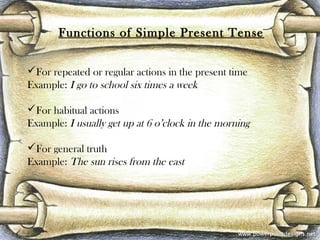
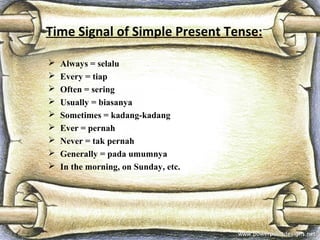
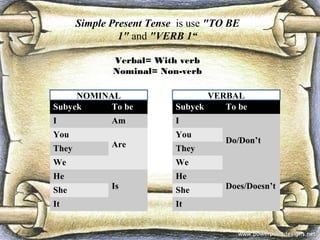
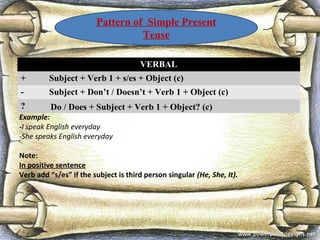
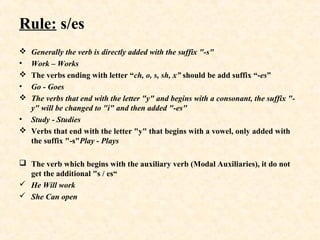
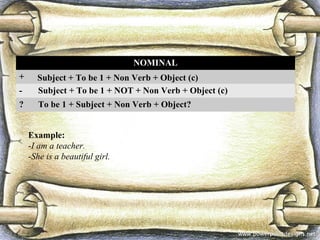




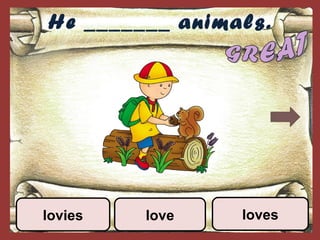

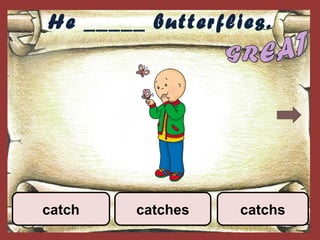

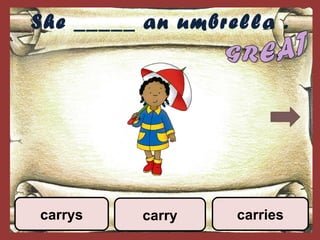




The document provides information about the simple present tense in English, including its functions, time signals, formation, and examples. It discusses how the simple present tense is used to describe repeated or habitual actions, general truths, and actions happening now. It also covers the rules for adding "-s" or "-es" to verbs in the third person singular. Examples are given of positive and negative sentences using the simple present tense. Finally, there are practice questions for students to test their understanding of using verbs correctly in the third person singular.


