Signal and Systems
REAL-TIME APPLICATIONS – GENERAL CONSIDERATIONS
SUMMER SCHOOL
Objectives
Signal and spectrum definitions
Analog vs Digital
Time Sampling
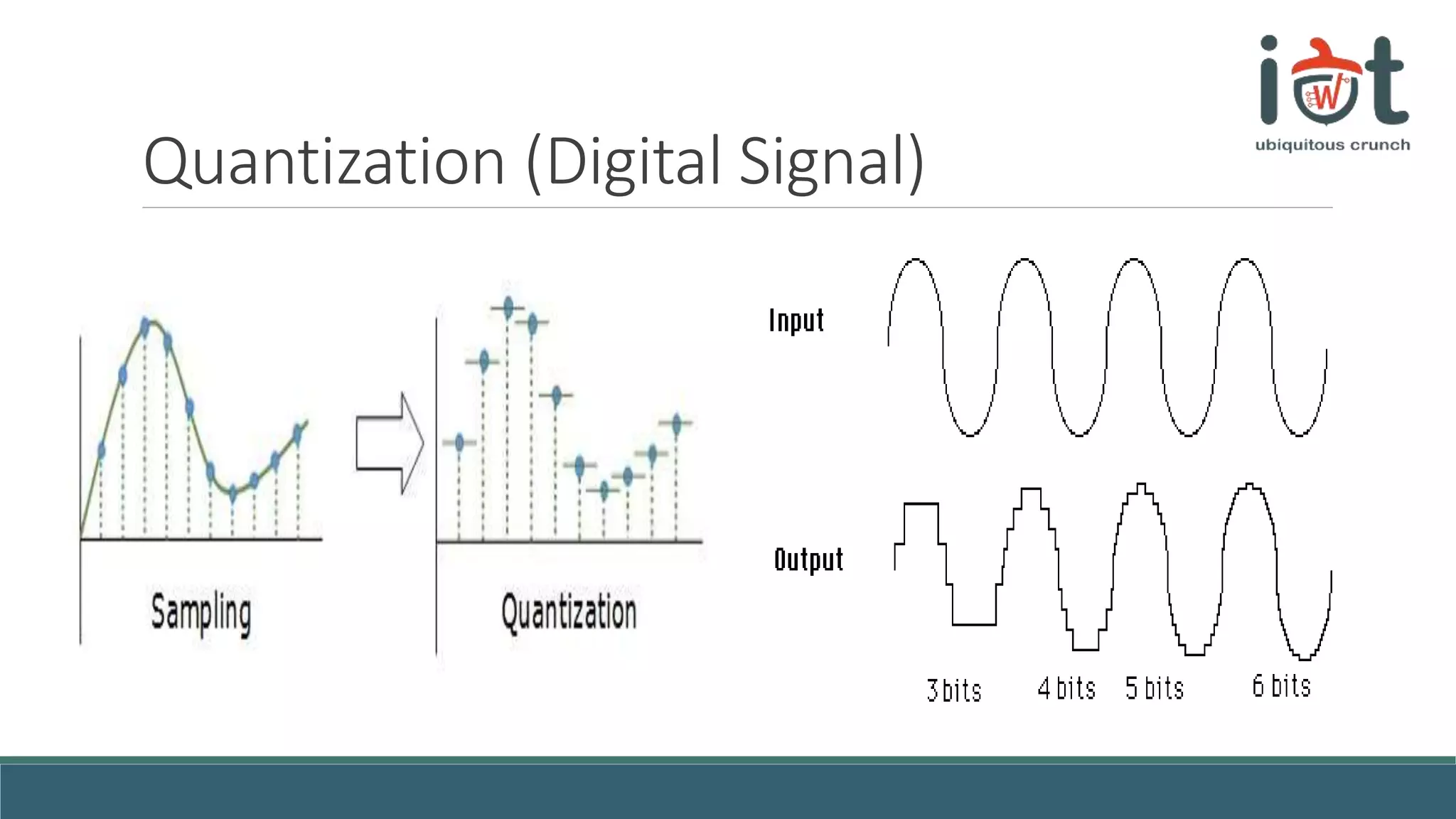
Quantization
Systems definition and properties
Real-Time Constrains
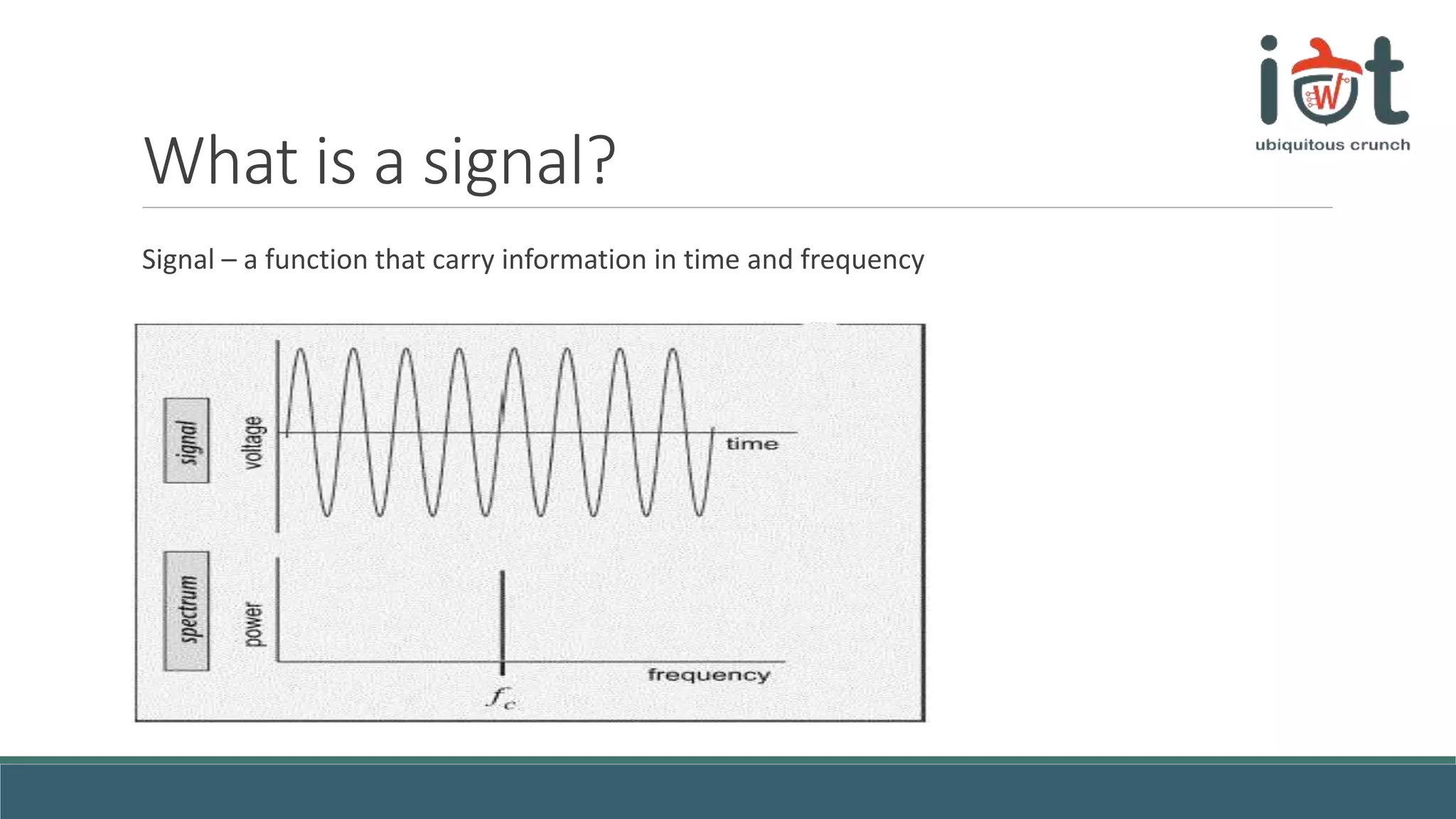
What is a signal?
Signal – a function that carry information in time and frequency
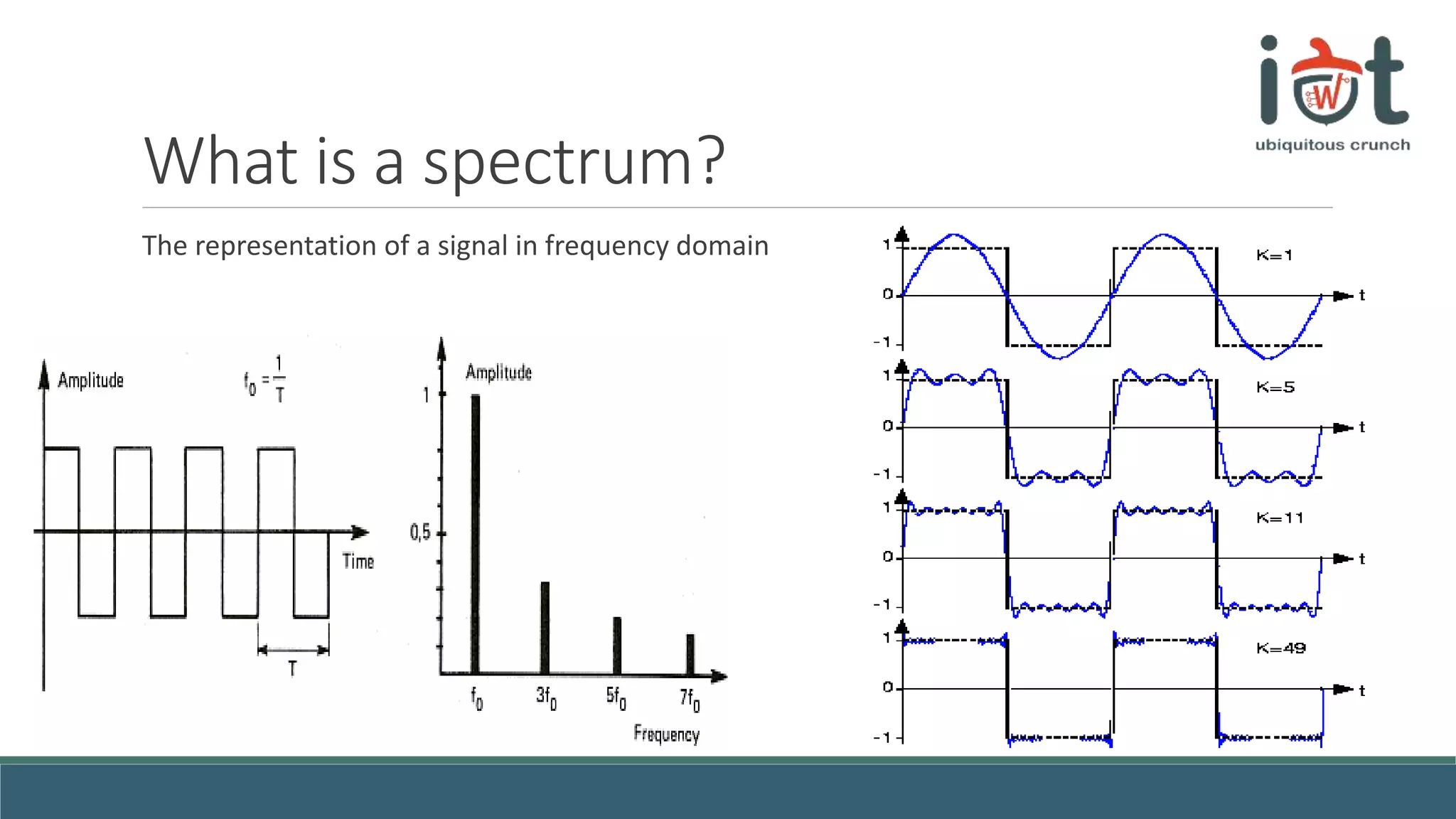
What is a spectrum?
The representation of a signal in frequency domain
Example
Example
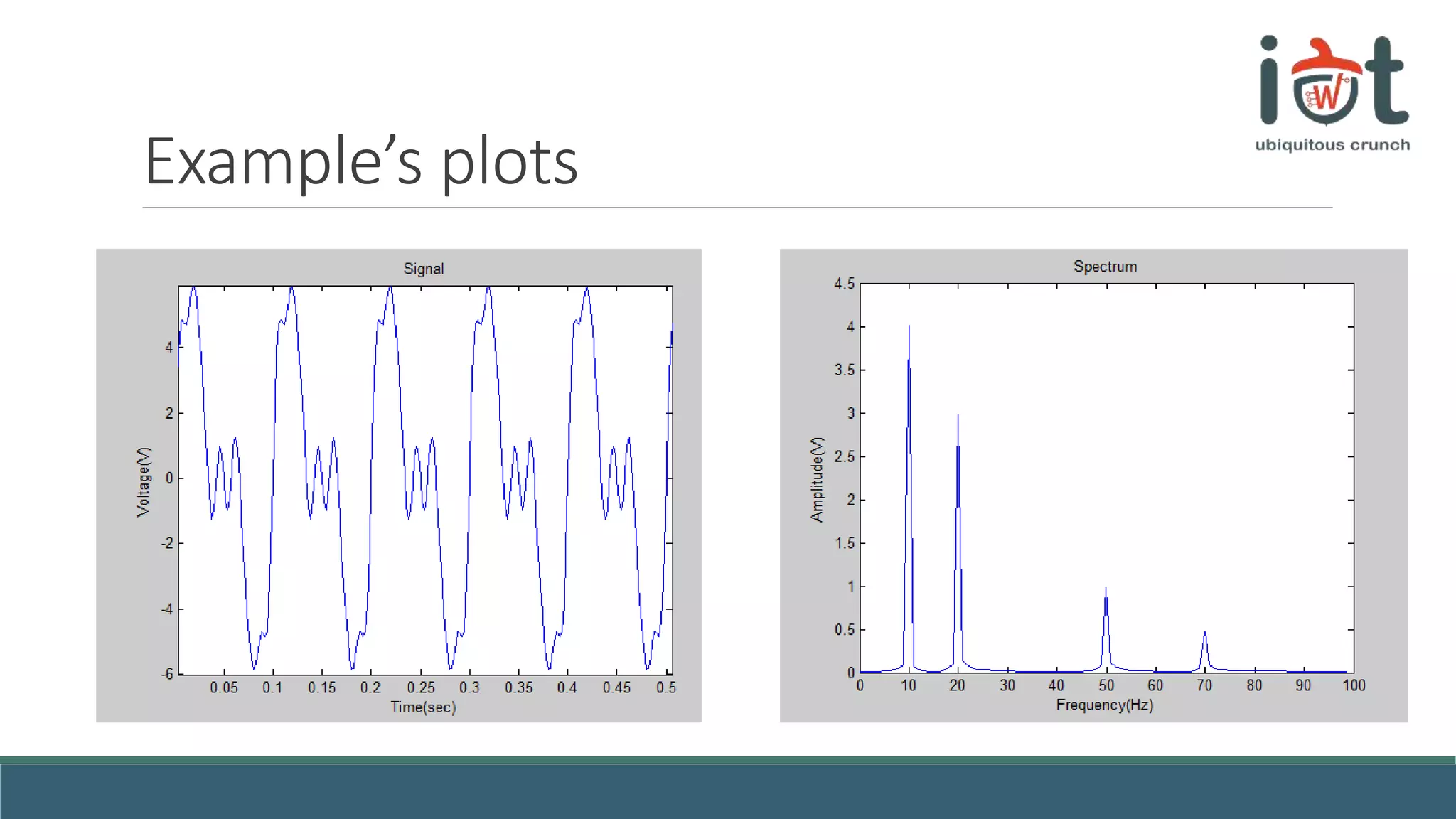
We have a signal f(t) = 4*sin(10*t) + 3*sin(20*t) + sin(50*t) + 0.5*sin(70*t)
What is the representation of the signal in time domain?
What is the representation of the signal in frequency domain?
Example’s plots
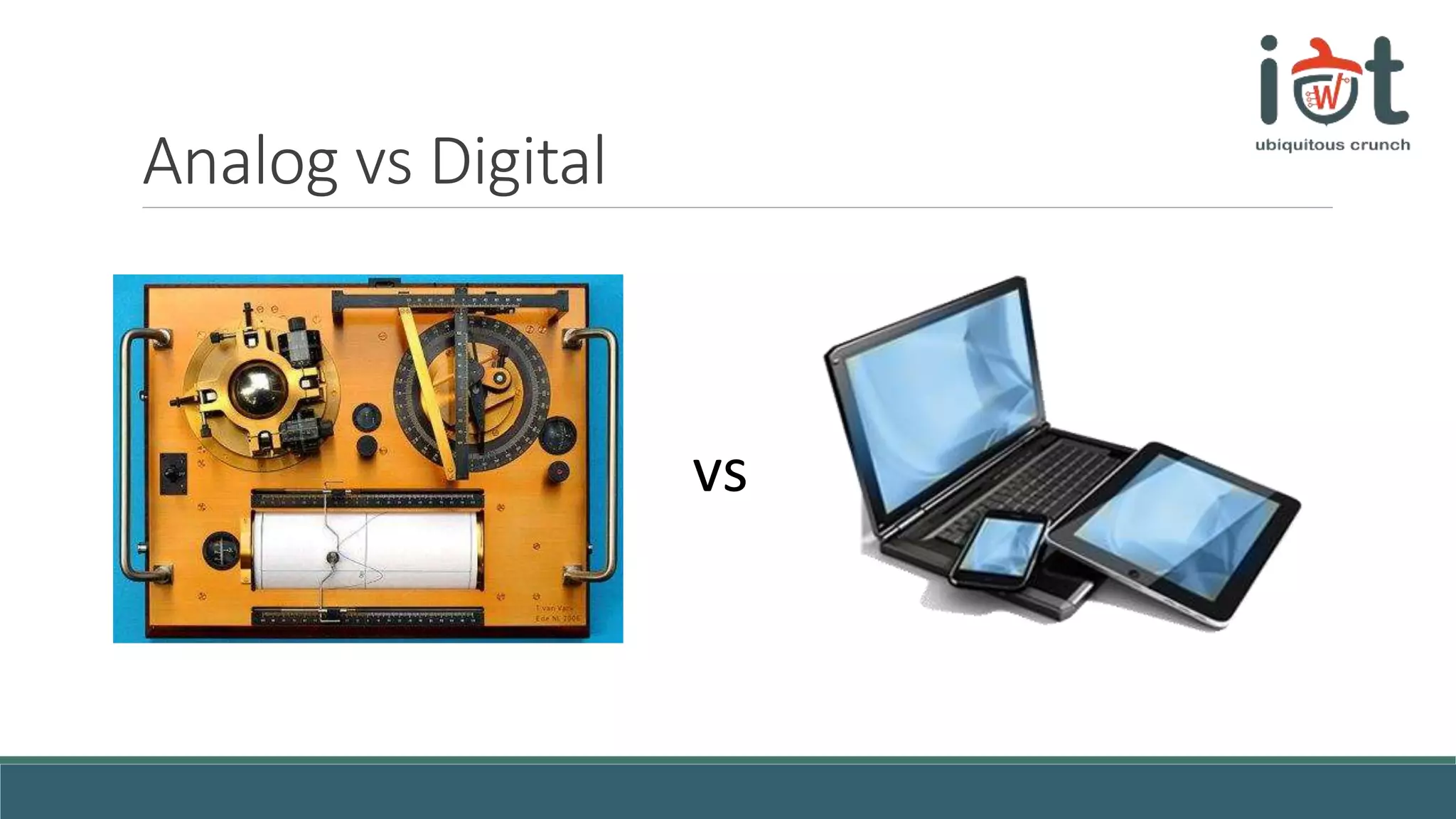
Analog vs Digital
vs
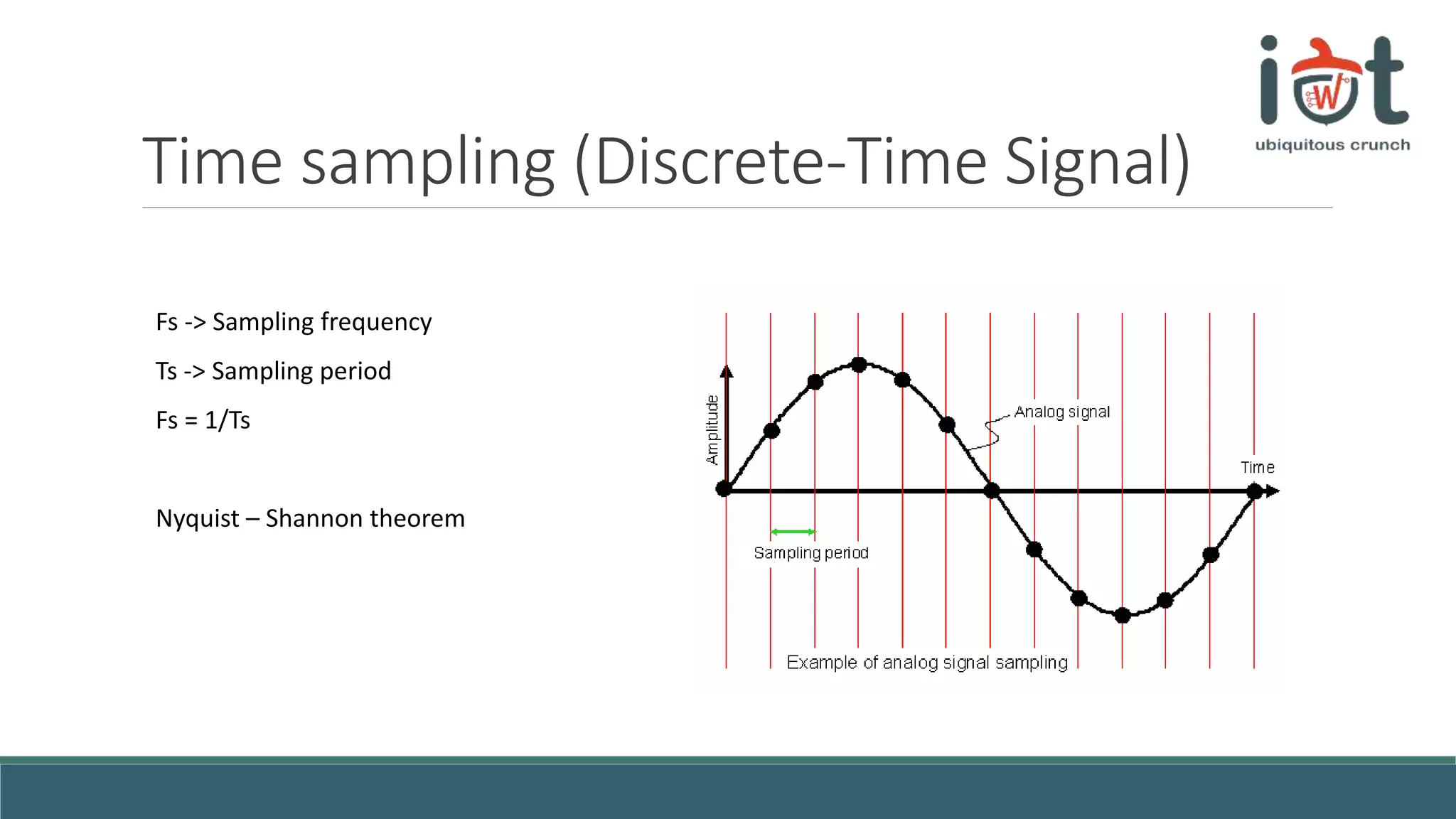
Time sampling (Discrete-Time Signal)
Fs -> Sampling frequency
Ts -> Sampling period
Fs = 1/Ts
Nyquist – Shannon theorem
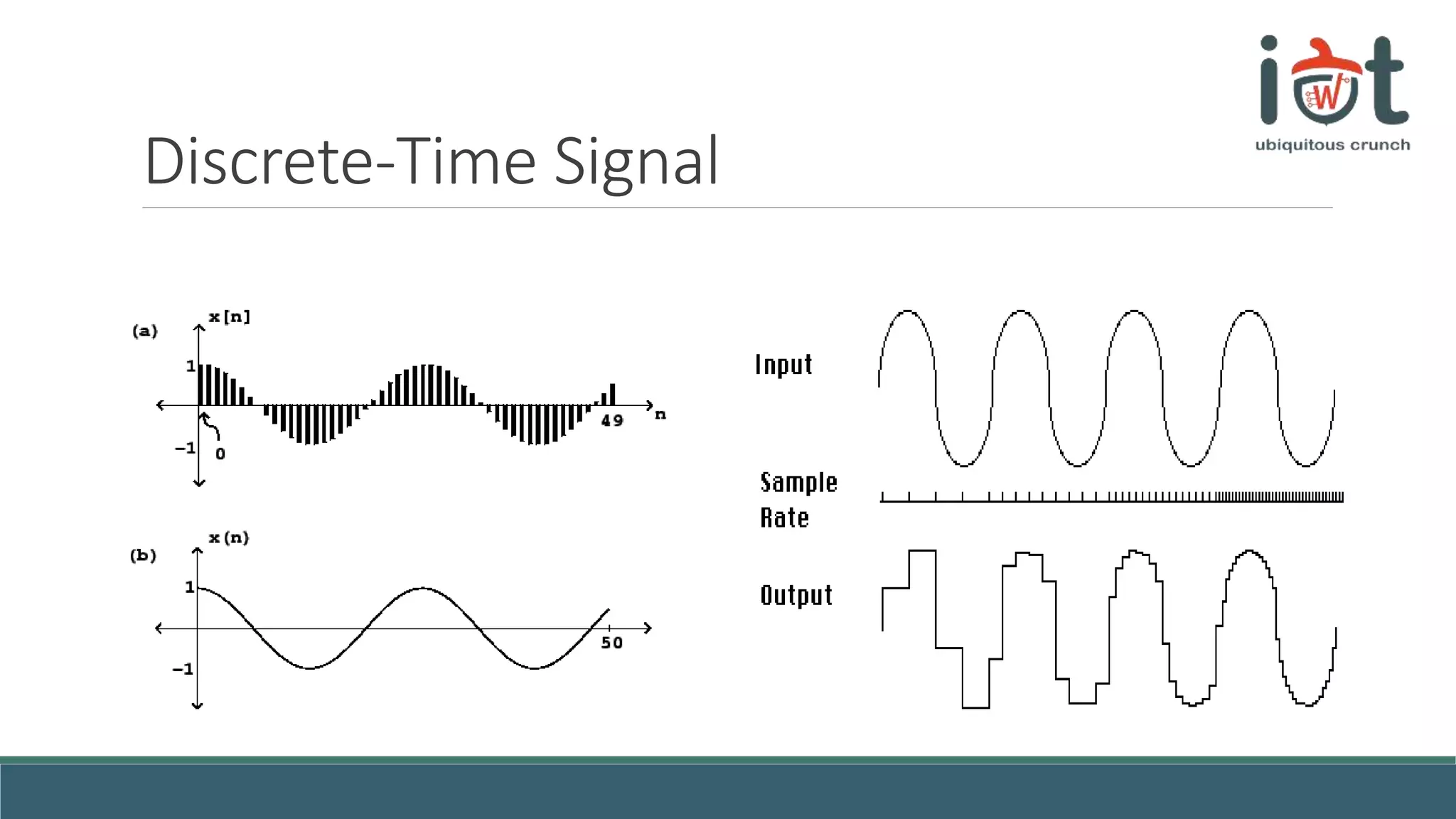
Discrete-Time Signal
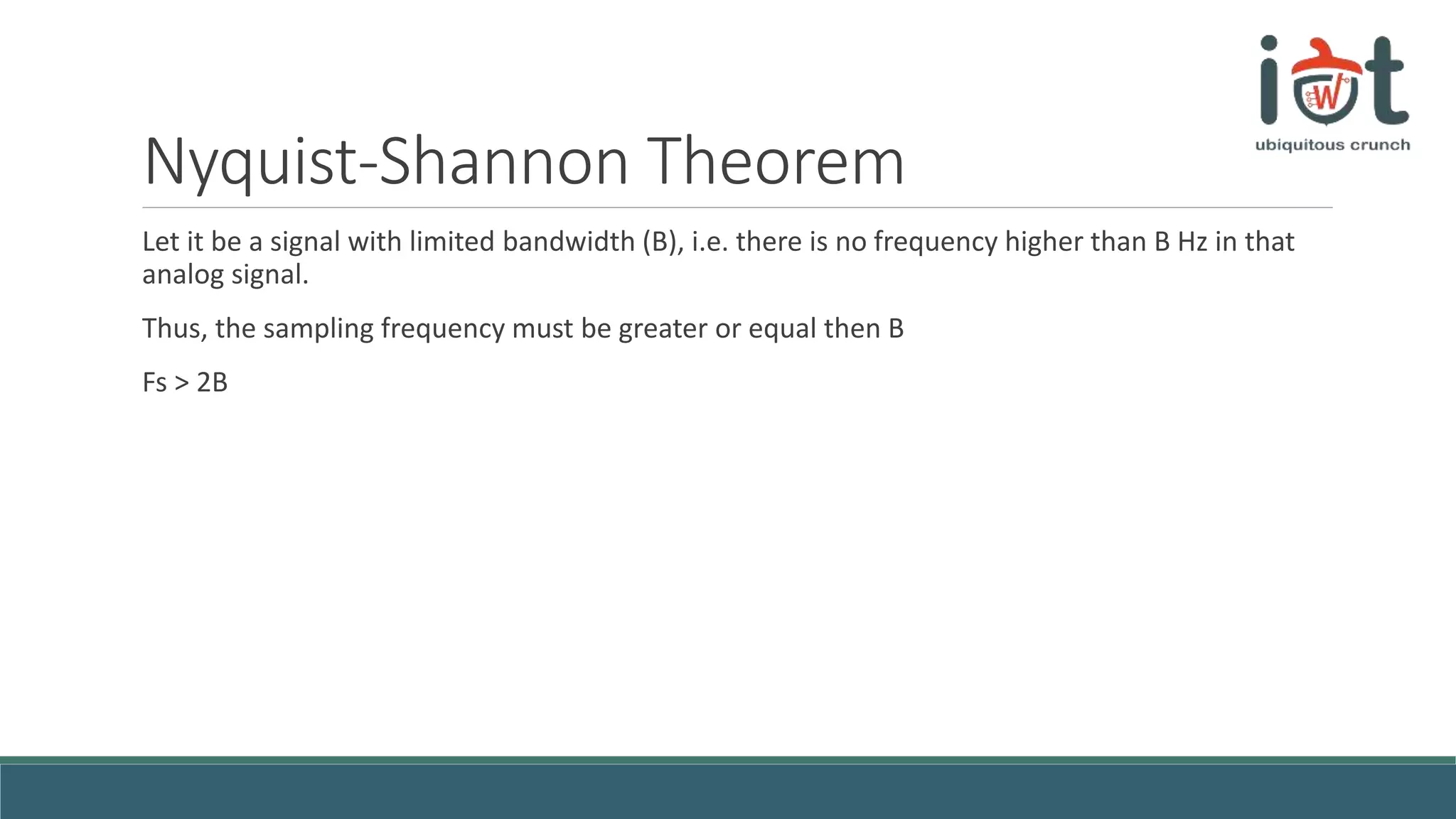
Nyquist-Shannon Theorem
Let it be a signal with limited bandwidth (B), i.e. there is no frequency higher than B Hz in that
analog signal.
Thus, the sampling frequency must be greater or equal then B
Fs > 2B
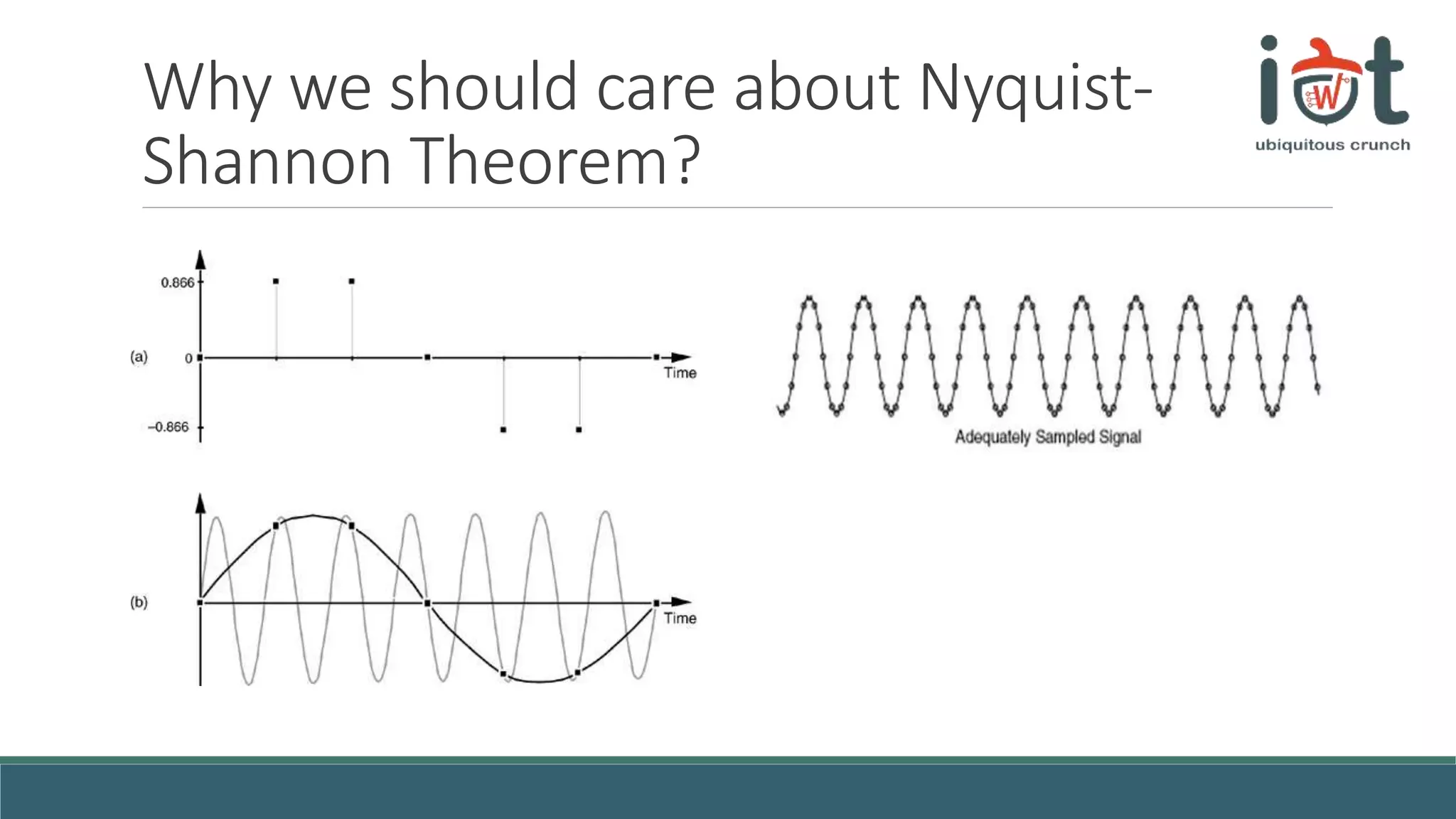
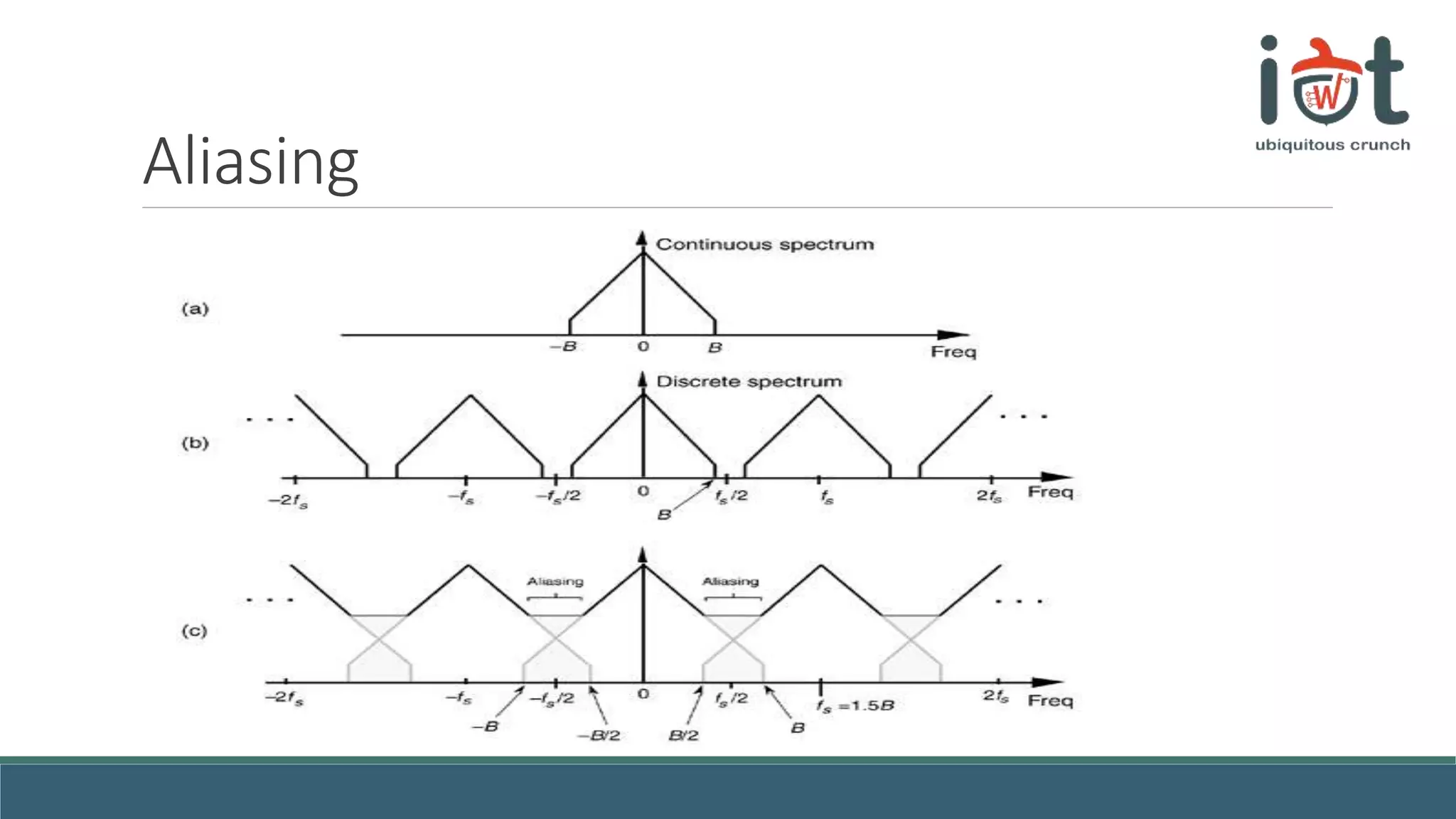
Why we should care about Nyquist-
Shannon Theorem?
Aliasing
Quantization (Digital Signal)
Systems
Definition
Properties:
â—¦ Time-Invariant
â—¦ Causal
â—¦ Linear
Real-Time Applications
Objectives
Real-Time Application Diagram
â—¦ Process -> Sensor -> Signal Processing -> Command -> Process
Specifications
â—¦ Systems performances
â—¦ Energy constrains
â—¦ Dimension Requirements
â—¦ Economical Factors
Hardware components
Trade-off
Trade-off
Sampling period
Time vs Energy
Energy vs Performance
Acquisition vs Processing
Communication
Questions?

Signals and Systems