Presenter : Esther Mary
Mathew
Preceptor : Mr. L
 Physiologist Johannes Müller described fibrin, the
substance forming thrombus serving as the first
milestone for anti coagulants.
 Arthus discovered in 1890 that calcium was essential
in coagulation.
 First anti coagulant preservative was used by Rous &
Turner in 1916 contained of citrate-glucose solution
and was used to store human blood during first world
war in 1987.
 Heparin is one of the oldest drugs currently in
widespread clinical use. It was originally isolated
from canine liver cells, hence its name Heparin.
 Heparin's discovery can be attributed to the
research activities of two men: Jay McLean and
William Henry Howell.
 1950’s Mark Rubin at Georgetown University
demonstrated that EDTA would chelate plasma
calcium.
A substance that prevents coagulation or clotting
of blood but doesn’t dissolve an already formed
clot.
Uses
• Storage of blood for blood transfusion or
hematological testing
• Therapeutic
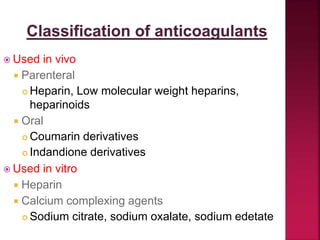
 Used in vivo
 Parenteral
 Heparin, Low molecular weight heparins,
heparinoids
 Oral
 Coumarin derivatives
 Indandione derivatives
 Used in vitro
 Heparin
 Calcium complexing agents
 Sodium citrate, sodium oxalate, sodium edetate
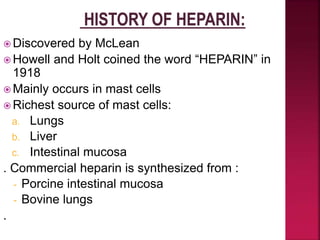
 Discovered by McLean
 Howell and Holt coined the word “HEPARIN” in
1918
 Mainly occurs in mast cells
 Richest source of mast cells:
a. Lungs
b. Liver
c. Intestinal mucosa
. Commercial heparin is synthesized from :
- Porcine intestinal mucosa
- Bovine lungs
.
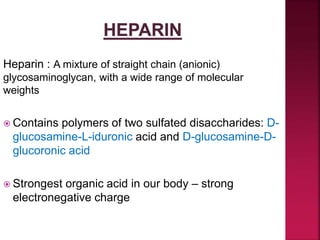
Heparin : A mixture of straight chain (anionic)
glycosaminoglycan, with a wide range of molecular
weights
 Contains polymers of two sulfated disaccharides: D-
glucosamine-L-iduronic acid and D-glucosamine-D-
glucoronic acid
 Strongest organic acid in our body – strong
electronegative charge
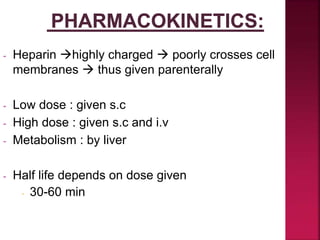
- Heparin highly charged  poorly crosses cell
membranes  thus given parenterally
- Low dose : given s.c
- High dose : given s.c and i.v
- Metabolism : by liver
- Half life depends on dose given
- 30-60 min
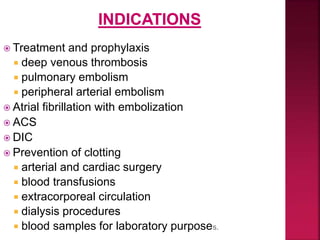
 Treatment and prophylaxis
 deep venous thrombosis
 pulmonary embolism
 peripheral arterial embolism
 Atrial fibrillation with embolization
 ACS
 DIC
 Prevention of clotting
 arterial and cardiac surgery
 blood transfusions
 extracorporeal circulation
 dialysis procedures
 blood samples for laboratory purposes.
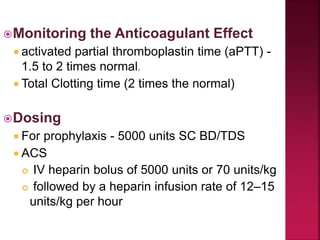
Monitoring the Anticoagulant Effect
 activated partial thromboplastin time (aPTT) -
1.5 to 2 times normal.
 Total Clotting time (2 times the normal)
Dosing
 For prophylaxis - 5000 units SC BD/TDS
 ACS
 IV heparin bolus of 5000 units or 70 units/kg
 followed by a heparin infusion rate of 12–15
units/kg per hour
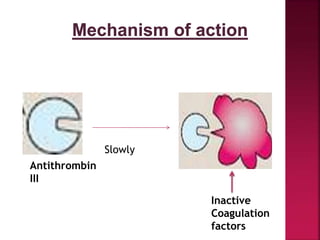
Antithrombin
III
Slowly
Inactive
Coagulation
factors
+
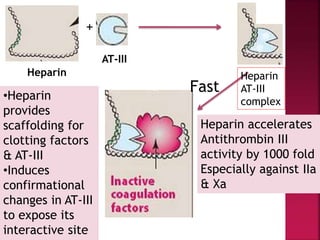
Heparin accelerates
Antithrombin III
activity by 1000 fold
Especially against IIa
& Xa
Fast
Heparin
AT-III
complex
AT-III
Heparin
•Heparin
provides
scaffolding for
clotting factors
& AT-III
•Induces
confirmational
changes in AT-III
to expose its
interactive site
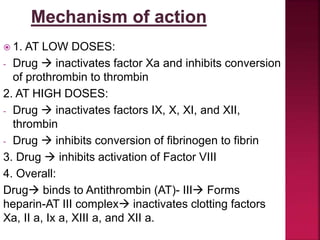
 1. AT LOW DOSES:
- Drug  inactivates factor Xa and inhibits conversion
of prothrombin to thrombin
2. AT HIGH DOSES:
- Drug  inactivates factors IX, X, XI, and XII,
thrombin
- Drug  inhibits conversion of fibrinogen to fibrin
3. Drug  inhibits activation of Factor VIII
4. Overall:
Drug binds to Antithrombin (AT)- III Forms
heparin-AT III complex inactivates clotting factors
Xa, II a, Ix a, XIII a, and XII a.
 ANTIPLATELET
 At high doses inhibits platelet aggregration, &
prolongs bleeding time.
 LIPAEMIA CLEARANCE:
 Inj. of low dose of heparin , releases a lipoprotein
lipase from the vessel wall or tissue , which
hydrolyzes the triglycerides of VLDL to free fatty
acids. Clears the turbid post-prandial lipaemic
plasma. Facilitates the transport of fatty acid.
HEPARIN – ADVERSE
EFFECTS
1. Bleeding due to overdose
2. Long term osteoporosis  spontaneous fractures
3. Hypersensitivity (Anaphylaxis)
4. Transient alopecia
5. Thrombocytopenia
-Once thrombocytopenia is detected  stop
heparin given direct thrombin inhibitor
-Do not give platelets platelets react with antibody
already being produced by them  increased chance
of thrombosis
 Bleeding disorders
 Heparin induced thrombocytopenia
 Severe hypertension
 Threatened abortion, piles
 SABE
 Occular , neurosurgery , lumbar puncture
 Chronic alcoholics, cirrhosis
 Aspirin other antiplatelet drugs use cautiously
- Drug  does not cross placenta  should be
used instead of warfarin in pregnancy
- Warfarin  crosses placenta  causes changes
in fetus to cause fetal warfarin syndrome  not
good……………….
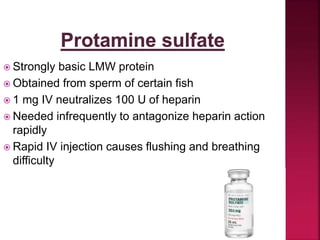
 Strongly basic LMW protein
 Obtained from sperm of certain fish
 1 mg IV neutralizes 100 U of heparin
 Needed infrequently to antagonize heparin action
rapidly
 Rapid IV injection causes flushing and breathing
difficulty
 Barbiturate derivative:
 Decrease the effect of heparin by incresing the
metabolism – use alternatives
 Antithrombin iii
 Increases the effect of heparin
 Azithromycin:
 Increases effects of heparin by decreasing
metabolism.
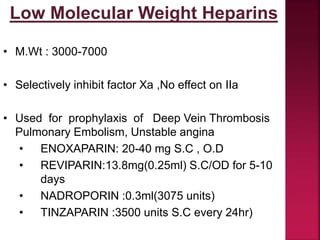
Low Molecular Weight Heparins
• M.Wt : 3000-7000
• Selectively inhibit factor Xa ,No effect on IIa
• Used for prophylaxis of Deep Vein Thrombosis
Pulmonary Embolism, Unstable angina
• ENOXAPARIN: 20-40 mg S.C , O.D
• REVIPARIN:13.8mg(0.25ml) S.C/OD for 5-10
days
• NADROPORIN :0.3ml(3075 units)
• TINZAPARIN :3500 units S.C every 24hr)
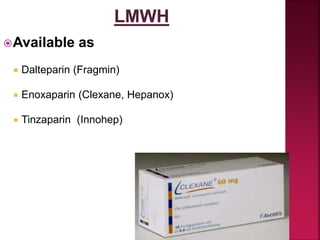
Available as
 Dalteparin (Fragmin)
 Enoxaparin (Clexane, Hepanox)
 Tinzaparin (Innohep)
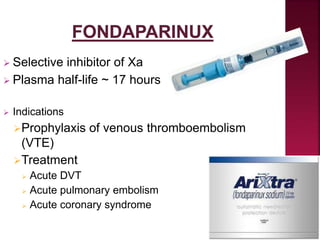
 Selective inhibitor of Xa
 Plasma half-life ~ 17 hours
 Indications
Prophylaxis of venous thromboembolism
(VTE)
Treatment
 Acute DVT
 Acute pulmonary embolism
 Acute coronary syndrome
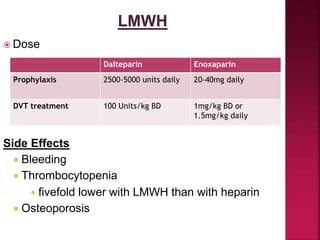
 Dose
Side Effects
 Bleeding
 Thrombocytopenia
 fivefold lower with LMWH than with heparin
 Osteoporosis
Dalteparin Enoxaparin
Prophylaxis 2500-5000 units daily 20-40mg daily
DVT treatment 100 Units/kg BD 1mg/kg BD or
1.5mg/kg daily
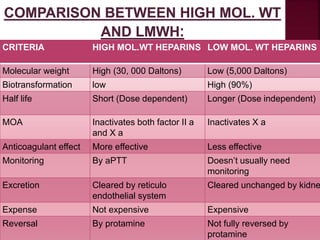
CRITERIA HIGH MOL.WT HEPARINS LOW MOL. WT HEPARINS
Molecular weight High (30, 000 Daltons) Low (5,000 Daltons)
Biotransformation low High (90%)
Half life Short (Dose dependent) Longer (Dose independent)
MOA Inactivates both factor II a
and X a
Inactivates X a
Anticoagulant effect More effective Less effective
Monitoring By aPTT Doesn’t usually need
monitoring
Excretion Cleared by reticulo
endothelial system
Cleared unchanged by kidne
Expense Not expensive Expensive
Reversal By protamine Not fully reversed by
protamine
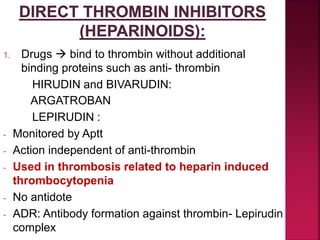
1. Drugs  bind to thrombin without additional
binding proteins such as anti- thrombin
HIRUDIN and BIVARUDIN:
ARGATROBAN
LEPIRUDIN :
- Monitored by Aptt
- Action independent of anti-thrombin
- Used in thrombosis related to heparin induced
thrombocytopenia
- No antidote
- ADR: Antibody formation against thrombin- Lepirudin
complex
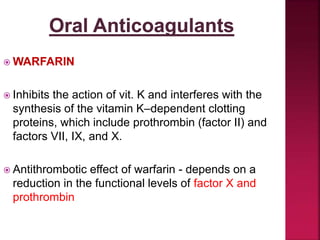
 WARFARIN
 Inhibits the action of vit. K and interferes with the
synthesis of the vitamin K–dependent clotting
proteins, which include prothrombin (factor II) and
factors VII, IX, and X.
 Antithrombotic effect of warfarin - depends on a
reduction in the functional levels of factor X and
prothrombin
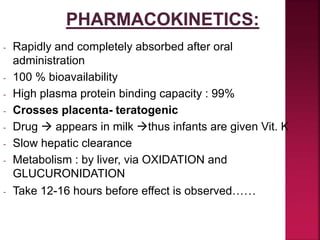
- Rapidly and completely absorbed after oral
administration
- 100 % bioavailability
- High plasma protein binding capacity : 99%
- Crosses placenta- teratogenic
- Drug  appears in milk thus infants are given Vit. K
- Slow hepatic clearance
- Metabolism : by liver, via OXIDATION and
GLUCURONIDATION
- Take 12-16 hours before effect is observed……
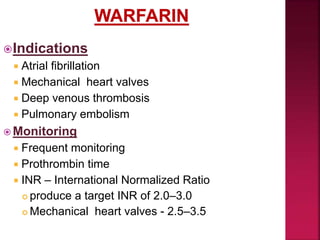
Indications
 Atrial fibrillation
 Mechanical heart valves
 Deep venous thrombosis
 Pulmonary embolism
 Monitoring
 Frequent monitoring
 Prothrombin time
 INR – International Normalized Ratio
 produce a target INR of 2.0–3.0
 Mechanical heart valves - 2.5–3.5
 usually started at a dose of ≥5 mg
 titrated to achieve the desired target INR
 concomitant treatment with a rapidly acting
parenteral anticoagulant - 5-day course
 Side Effects
 Bleeding
 Skin Necrosis
 2–5 days after initiation of therapy
 erythematous lesions form on the thighs,
buttocks, breasts, or toes
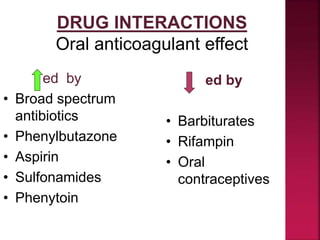
DRUG INTERACTIONS
Oral anticoagulant effect
ed by
• Broad spectrum
antibiotics
• Phenylbutazone
• Aspirin
• Sulfonamides
• Phenytoin
ed by
• Barbiturates
• Rifampin
• Oral
contraceptives
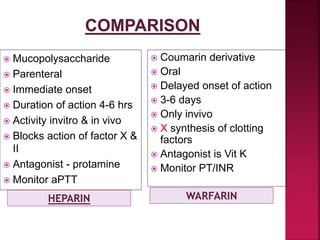
HEPARIN
 Mucopolysaccharide
 Parenteral
 Immediate onset
 Duration of action 4-6 hrs
 Activity invitro & in vivo
 Blocks action of factor X &
II
 Antagonist - protamine
 Monitor aPTT
WARFARIN
 Coumarin derivative
 Oral
 Delayed onset of action
 3-6 days
 Only invivo
 X synthesis of clotting
factors
 Antagonist is Vit K
 Monitor PT/INR
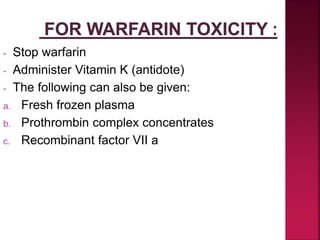
- Stop warfarin
- Administer Vitamin K (antidote)
- The following can also be given:
a. Fresh frozen plasma
b. Prothrombin complex concentrates
c. Recombinant factor VII a
 Prior to administration:
 Obtain a complete health history including recent
surgeries or trauma,
 allergies, drug history, and possible drug
interactions.
 Obtain vital signs and assess in context of client’s
baseline values.
 Observe for skin necrosis
 Monitor for signs of bleeding: excessive bruising,
pallor, epistaxis,, hematemesis, menorrhagia,
hematuria, melena
 Monitor laboratory values: aPTT , PT/INR for
therapeutic values.
 Administer :
 At the same time each day to maintain steady blood
levels
 Do not aspirate/massage the area when giving S/C
 ADMINISTER antidotes for excessive bleeding
 Instruct client to:
 report sudden dyspnea, chest pain, temperature or
color change in the hands, arms, legs, or feet.
 Report blood coming from a cough, the nose,
mouth, or rectum; menstrual “flooding”; “coffee
grounds” vomit; tarry stools; excessive bruising
 report palpitations, fatigue, or feeling faint
 Use a soft toothbrush and an electric shaver.
 keep a “pad count” during menstrual periods to
estimate blood losses.
 Avoid wearing constrictive clothing
 Avoid sitting and standing in one position for long
periods of time
 Avoid crossing legs and lying or sitting with pillows under
knees
 Elevate legs periodically, especially when sitting
 Maintain recommended weight for age, height, and body
frame.
 Inform client that smoking and the use of estrogen or
oral contraceptives can increase the risk for recurrent
thrombus formation.
 Provide information regarding exercise programs and
support groups that can assist the client to stop smoking
and/or lose weight.
THANK YOU…!!! 
 

Anticoagulants Nursing esther

  • 1.
    Presenter : EstherMary Mathew Preceptor : Mr. L
  • 2.
     Physiologist JohannesMüller described fibrin, the substance forming thrombus serving as the first milestone for anti coagulants.  Arthus discovered in 1890 that calcium was essential in coagulation.  First anti coagulant preservative was used by Rous & Turner in 1916 contained of citrate-glucose solution and was used to store human blood during first world war in 1987.
  • 3.
     Heparin isone of the oldest drugs currently in widespread clinical use. It was originally isolated from canine liver cells, hence its name Heparin.  Heparin's discovery can be attributed to the research activities of two men: Jay McLean and William Henry Howell.  1950’s Mark Rubin at Georgetown University demonstrated that EDTA would chelate plasma calcium.
  • 4.
    A substance thatprevents coagulation or clotting of blood but doesn’t dissolve an already formed clot. Uses • Storage of blood for blood transfusion or hematological testing • Therapeutic
  • 5.
     Used invivo  Parenteral  Heparin, Low molecular weight heparins, heparinoids  Oral  Coumarin derivatives  Indandione derivatives  Used in vitro  Heparin  Calcium complexing agents  Sodium citrate, sodium oxalate, sodium edetate
  • 6.
     Discovered byMcLean  Howell and Holt coined the word “HEPARIN” in 1918  Mainly occurs in mast cells  Richest source of mast cells: a. Lungs b. Liver c. Intestinal mucosa . Commercial heparin is synthesized from : - Porcine intestinal mucosa - Bovine lungs .
  • 7.
    Heparin : Amixture of straight chain (anionic) glycosaminoglycan, with a wide range of molecular weights  Contains polymers of two sulfated disaccharides: D- glucosamine-L-iduronic acid and D-glucosamine-D- glucoronic acid  Strongest organic acid in our body – strong electronegative charge
  • 8.
    - Heparin highlycharged  poorly crosses cell membranes  thus given parenterally - Low dose : given s.c - High dose : given s.c and i.v - Metabolism : by liver - Half life depends on dose given - 30-60 min
  • 9.
     Treatment andprophylaxis  deep venous thrombosis  pulmonary embolism  peripheral arterial embolism  Atrial fibrillation with embolization  ACS  DIC  Prevention of clotting  arterial and cardiac surgery  blood transfusions  extracorporeal circulation  dialysis procedures  blood samples for laboratory purposes.
  • 10.
    Monitoring the AnticoagulantEffect  activated partial thromboplastin time (aPTT) - 1.5 to 2 times normal.  Total Clotting time (2 times the normal) Dosing  For prophylaxis - 5000 units SC BD/TDS  ACS  IV heparin bolus of 5000 units or 70 units/kg  followed by a heparin infusion rate of 12–15 units/kg per hour
  • 12.
  • 13.
    + Heparin accelerates Antithrombin III activityby 1000 fold Especially against IIa & Xa Fast Heparin AT-III complex AT-III Heparin •Heparin provides scaffolding for clotting factors & AT-III •Induces confirmational changes in AT-III to expose its interactive site
  • 14.
     1. ATLOW DOSES: - Drug  inactivates factor Xa and inhibits conversion of prothrombin to thrombin 2. AT HIGH DOSES: - Drug  inactivates factors IX, X, XI, and XII, thrombin - Drug  inhibits conversion of fibrinogen to fibrin 3. Drug  inhibits activation of Factor VIII 4. Overall: Drug binds to Antithrombin (AT)- III Forms heparin-AT III complex inactivates clotting factors Xa, II a, Ix a, XIII a, and XII a.
  • 15.
     ANTIPLATELET  Athigh doses inhibits platelet aggregration, & prolongs bleeding time.  LIPAEMIA CLEARANCE:  Inj. of low dose of heparin , releases a lipoprotein lipase from the vessel wall or tissue , which hydrolyzes the triglycerides of VLDL to free fatty acids. Clears the turbid post-prandial lipaemic plasma. Facilitates the transport of fatty acid.
  • 16.
    HEPARIN – ADVERSE EFFECTS 1.Bleeding due to overdose 2. Long term osteoporosis  spontaneous fractures 3. Hypersensitivity (Anaphylaxis) 4. Transient alopecia 5. Thrombocytopenia -Once thrombocytopenia is detected  stop heparin given direct thrombin inhibitor -Do not give platelets platelets react with antibody already being produced by them  increased chance of thrombosis
  • 17.
     Bleeding disorders Heparin induced thrombocytopenia  Severe hypertension  Threatened abortion, piles  SABE  Occular , neurosurgery , lumbar puncture  Chronic alcoholics, cirrhosis  Aspirin other antiplatelet drugs use cautiously
  • 18.
    - Drug does not cross placenta  should be used instead of warfarin in pregnancy - Warfarin  crosses placenta  causes changes in fetus to cause fetal warfarin syndrome  not good……………….
  • 19.
     Strongly basicLMW protein  Obtained from sperm of certain fish  1 mg IV neutralizes 100 U of heparin  Needed infrequently to antagonize heparin action rapidly  Rapid IV injection causes flushing and breathing difficulty
  • 20.
     Barbiturate derivative: Decrease the effect of heparin by incresing the metabolism – use alternatives  Antithrombin iii  Increases the effect of heparin  Azithromycin:  Increases effects of heparin by decreasing metabolism.
  • 21.
    Low Molecular WeightHeparins • M.Wt : 3000-7000 • Selectively inhibit factor Xa ,No effect on IIa • Used for prophylaxis of Deep Vein Thrombosis Pulmonary Embolism, Unstable angina • ENOXAPARIN: 20-40 mg S.C , O.D • REVIPARIN:13.8mg(0.25ml) S.C/OD for 5-10 days • NADROPORIN :0.3ml(3075 units) • TINZAPARIN :3500 units S.C every 24hr)
  • 22.
    Available as  Dalteparin(Fragmin)  Enoxaparin (Clexane, Hepanox)  Tinzaparin (Innohep)
  • 23.
     Selective inhibitorof Xa  Plasma half-life ~ 17 hours  Indications Prophylaxis of venous thromboembolism (VTE) Treatment  Acute DVT  Acute pulmonary embolism  Acute coronary syndrome
  • 24.
     Dose Side Effects Bleeding  Thrombocytopenia  fivefold lower with LMWH than with heparin  Osteoporosis Dalteparin Enoxaparin Prophylaxis 2500-5000 units daily 20-40mg daily DVT treatment 100 Units/kg BD 1mg/kg BD or 1.5mg/kg daily
  • 25.
    CRITERIA HIGH MOL.WTHEPARINS LOW MOL. WT HEPARINS Molecular weight High (30, 000 Daltons) Low (5,000 Daltons) Biotransformation low High (90%) Half life Short (Dose dependent) Longer (Dose independent) MOA Inactivates both factor II a and X a Inactivates X a Anticoagulant effect More effective Less effective Monitoring By aPTT Doesn’t usually need monitoring Excretion Cleared by reticulo endothelial system Cleared unchanged by kidne Expense Not expensive Expensive Reversal By protamine Not fully reversed by protamine
  • 26.
    1. Drugs bind to thrombin without additional binding proteins such as anti- thrombin HIRUDIN and BIVARUDIN: ARGATROBAN LEPIRUDIN : - Monitored by Aptt - Action independent of anti-thrombin - Used in thrombosis related to heparin induced thrombocytopenia - No antidote - ADR: Antibody formation against thrombin- Lepirudin complex
  • 27.
     WARFARIN  Inhibitsthe action of vit. K and interferes with the synthesis of the vitamin K–dependent clotting proteins, which include prothrombin (factor II) and factors VII, IX, and X.  Antithrombotic effect of warfarin - depends on a reduction in the functional levels of factor X and prothrombin
  • 28.
    - Rapidly andcompletely absorbed after oral administration - 100 % bioavailability - High plasma protein binding capacity : 99% - Crosses placenta- teratogenic - Drug  appears in milk thus infants are given Vit. K - Slow hepatic clearance - Metabolism : by liver, via OXIDATION and GLUCURONIDATION - Take 12-16 hours before effect is observed……
  • 29.
    Indications  Atrial fibrillation Mechanical heart valves  Deep venous thrombosis  Pulmonary embolism  Monitoring  Frequent monitoring  Prothrombin time  INR – International Normalized Ratio  produce a target INR of 2.0–3.0  Mechanical heart valves - 2.5–3.5
  • 30.
     usually startedat a dose of ≥5 mg  titrated to achieve the desired target INR  concomitant treatment with a rapidly acting parenteral anticoagulant - 5-day course  Side Effects  Bleeding  Skin Necrosis  2–5 days after initiation of therapy  erythematous lesions form on the thighs, buttocks, breasts, or toes
  • 31.
    DRUG INTERACTIONS Oral anticoagulanteffect ed by • Broad spectrum antibiotics • Phenylbutazone • Aspirin • Sulfonamides • Phenytoin ed by • Barbiturates • Rifampin • Oral contraceptives
  • 32.
    HEPARIN  Mucopolysaccharide  Parenteral Immediate onset  Duration of action 4-6 hrs  Activity invitro & in vivo  Blocks action of factor X & II  Antagonist - protamine  Monitor aPTT WARFARIN  Coumarin derivative  Oral  Delayed onset of action  3-6 days  Only invivo  X synthesis of clotting factors  Antagonist is Vit K  Monitor PT/INR
  • 33.
    - Stop warfarin -Administer Vitamin K (antidote) - The following can also be given: a. Fresh frozen plasma b. Prothrombin complex concentrates c. Recombinant factor VII a
  • 34.
     Prior toadministration:  Obtain a complete health history including recent surgeries or trauma,  allergies, drug history, and possible drug interactions.  Obtain vital signs and assess in context of client’s baseline values.  Observe for skin necrosis  Monitor for signs of bleeding: excessive bruising, pallor, epistaxis,, hematemesis, menorrhagia, hematuria, melena  Monitor laboratory values: aPTT , PT/INR for therapeutic values.
  • 35.
     Administer : At the same time each day to maintain steady blood levels  Do not aspirate/massage the area when giving S/C  ADMINISTER antidotes for excessive bleeding  Instruct client to:  report sudden dyspnea, chest pain, temperature or color change in the hands, arms, legs, or feet.  Report blood coming from a cough, the nose, mouth, or rectum; menstrual “flooding”; “coffee grounds” vomit; tarry stools; excessive bruising  report palpitations, fatigue, or feeling faint  Use a soft toothbrush and an electric shaver.  keep a “pad count” during menstrual periods to estimate blood losses.
  • 36.
     Avoid wearingconstrictive clothing  Avoid sitting and standing in one position for long periods of time  Avoid crossing legs and lying or sitting with pillows under knees  Elevate legs periodically, especially when sitting  Maintain recommended weight for age, height, and body frame.  Inform client that smoking and the use of estrogen or oral contraceptives can increase the risk for recurrent thrombus formation.  Provide information regarding exercise programs and support groups that can assist the client to stop smoking and/or lose weight.
  • 37.

Editor's Notes

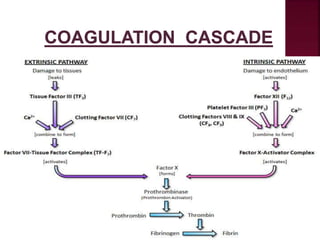
  • #12 The extrinsic pathway is initiated upon vascular injury which leads to exposure of tissue factor, TF The contact activation pathway begins with formation of the primary complex on collagen
  • #13 Antithrombin 3 plays a crucial role as natural endogenous anticoagulant by blocking the activity of activated factors 2,9,10,11,12. under physiological setting these interactions are slow and work on demand and supply basis
  • #14 Heparin is a powerful and instantaneous acting anticoagulant, effective both inVivo & invitro , it acts indirectly by activating plasma antithrombin III, this complex binds to clotting factors of intrinsic as well as common pathways and inactivates them but not factor VIIa operative in extrinsic pathway. At low concentration selectively effects Xa. Main Mech of action: The anticoagulant action is mediated by inhibition of factor Xa as well as Thrombin (IIa) mediated conversion of fibrinogen to fibrin. Low concentration of heparin prolong aPTT without significantly prolonging PT. high conc prolong both aPTT and PT, thus low conc interfere selectively with intrinsic pathway. While high conc affect the common pathway as well.
  • #17 Bleeding due to overdosage is most serious adverse effect of heparin therapy, hematuria is the first clinical sign generally, with proper monitoring serious bleeding is reported in 1-3% of the patients Thrombocytopenia (Platelet count less than 1.5 lac or reduction by 50 % of pretreatmrnt value) is another common problem. Occurs in about 0.5 % of the patients 5 to 10 days after initiation of therapy. Incidence of thrombocytopenia is low with LMWH.IgG antibodies against complexes of heparin with platelet factor 4.or other chemokines. These complexes activate platelets by binding to Fc/Iia receptors which results in platelet aggregation, release of more platelet factor and thrombin generation, heparin should be discontinued immediately if unexplained thrombocytopenia occurs an alternative anticoagulant such as lepirudin, argatroban, or danaparoid (see below) should be administered to patients with heparin-induced thrombocytopenia. Low-molecular-weight heparins should be avoided, because these drugs often cross-react with standard heparin in heparin-dependent antibody assays. Warfarin may precipitate venous limb gangrene or multicentric skin necrosis in patients with heparin-induced thrombocytopenia and should not be used until the thrombocytopenia has resolved and the patient is adequately anticoagulated with another agent. Osteoporosis can occur on long term use of relatively high doses Heparin can inhibit the synthesis of aldosterone by the adrenal glands and occasionally causes hyperkalemia, even when low doses are given. Transient and reversible alopecia is infrequent . Serum transaminase levels may rise Hypersensitivity reactions are rare- urticaria, rigor, fever, and anaphylaxis
  • #20 For treatment of heparin induced bleeding due consideration should be given to amount of heparin that may have been degraded by patients body in mean time. However it is needed infrequently because the action of heparin disappears by itself in few hour, and whole blood transfusion is indicated to replinishthe loss when bleeding occurs. Protamine is more commonly used when heparin action needs to be terminated rapidly. E.g agter cardiac or vascular surgery. Being basic in nature it can release histamine in body . Hypersensitivity reactions have occurred .

  • #22 Enoxaparin = clexane pre-filled syringe
  • #32 DEBILITY, MALNUTRITION, MALABSORPTION, PROLONGED ANTIBIOTIC THERAPY,