SHIP MEASUREMENTS
By Kevin Joseph
MBA (Energy Trading)
Tonnage
A commonly defined measurement system is important; since a ship’s
registration fee, harbour dues, safety and manning rules etc., are based on
its gross tonnage, GT, or net tonnage, NT.

 Tonnage is a measure of the size or cargo carrying
capacity of a ship.
 “Tonnage" specifically refers to a calculation of
the volume or cargo volume of a ship.
 Tonnage should not be confused with
Displacement which refers to the loaded or empty
weight of the vessel itself.
Tonnage measurements :
There are five kinds of tonnage in use in the shipping business.
They are:

 Deadweight
 Cargo,
 Gross,
 Net and
 Displacement
Tonnages
Dead weight tonnage
 It is a measure of how much weight a

ship can safely carry.
 It is the sum of the weight of

cargo, fuel, fresh water, ballast
water, provisions, passengers and
crew.
 Cargo : it is the goods or produce

transported for commercial gain by
the ship
 Gross tonnage (GT) is a function of

the volume of all ship's enclosed
spaces (from keel to funnel)
measured to the outside of the hull
framing.
 Net tonnage (NT) is based on a calculation of

the volume of all cargo spaces of the ship.
 It indicates a vessel’s earning space and is a

function of the molded volume of all cargo
spaces of the ship.

 It represents the volume of the ship available

for transporting freight or passengers.
 Displacement : it is the unit for the

total weight of the ship and her
contents, equivalent to the weight of
water displaced under any particular
condition of loading given in terms of
the defined weight system i.e metric
or long tons
 The Panama Canal/Universal Measurement System

(PC/UMS) is based on net tonnage, modified for Panama
Canal purposes. PC/UMS is based on a mathematical
formula to calculate a vessel's total volume; a PC/UMS
net ton is equivalent to 100 cubic feet of capacity.[3]

 The Suez Canal Net Tonnage (SCNT) is derived with a

number of modifications from the former net register
tonnage of the Moorsom System and was established by
the International Commission of Constantinople in its
Protocol of 18 December 1873. It is still in use, as
amended by the Rules of Navigation of the Suez Canal
Authority, and is registered in the Suez Canal Tonnage
Certificate.

 Thames measurement tonnage is another volumetric

system, generally used for small vessels such as yachts; it
uses a formula based on the vessel's length and beam.
Bunker
 Bunker is simply the name given

to the Fuel that is used to
operate ships.

 Bunker fuel is technically any

type of fuel oil used aboard
ships. It gets its name from the
containers on ships and in ports
that it is stored in; in the days of
steam they were coal bunkers
but now they are bunker fuel
tanks.

 The Australian Customs and the

Australian Tax Office define a
bunker fuel as the fuel that
powers the engine of a ship or
aircraft.

Bunkering Ship =>
 Bunker oil is literally the bottom of the barrel; the only

things more dense than bunker fuel are carbon
black feedstock and bituminous residue.

 In the context of shipping, the labeling of bunkers as

previously described is rarely used in modern practice.
 Deadweight cargo

capacity(DWCC) or net capacity
is a measure of the deadweight
of a ship in terms of the cargo
she can transport, excluding
fuel, water, crew and everything
else that is not part of the ship.

 DWCC- it is the most important

for the Charterers i.e whose
cargo has to be shipped. it gives
the weight of the cargo that the
vessel can carry.

 The more fuel the vessel needs

the lower the DWCC. this also
depends on the water
temperature and
water(salt, brackish) in summer
vessels have high DWCC
 Dead weight all told(DWAT) is a term that states
the total amount of weight that a ship may carry

before it passes the waterline, including the weight
of: cargo, water, crew, fuel, food and anything else
that is not part of the ship and is not counted in its'
light displacement.
 (Dead weight all told) = (Loaded displacement)(light displacement)
Water line
 It is the line where the
hull of a ship meets the
surface of the water in

concept or reality.
 It is also used as the
international loadline
to keep a watch on the
loaded cargo.

 It indicates the draft of
the ship
Lightering
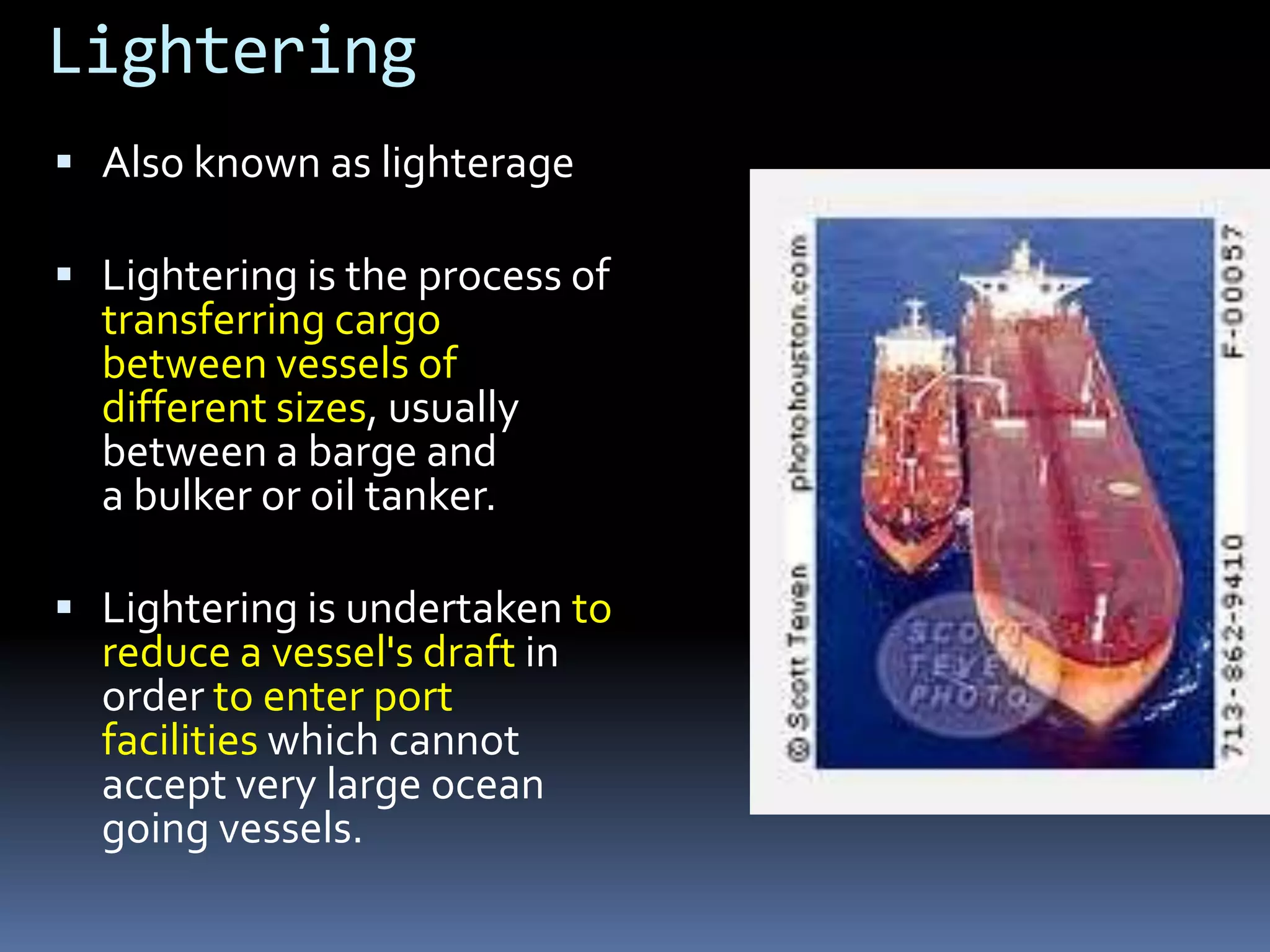
 Also known as lighterage
 Lightering is the process of

transferring cargo
between vessels of
different sizes, usually
between a barge and
a bulker or oil tanker.

 Lightering is undertaken to

reduce a vessel's draft in
order to enter port
facilities which cannot
accept very large ocean
going vessels.
Steve Dore
 The primary role of a

stevedore is the loading
and unloading of freight on
an off ships while they are
in port

Other responsibilities
includes 1-mooring and unmooring
ships
 2- cleaning and preparing
container
 3-stacking and securing
cargo's
 4-adminitravtives process
associated with the
transfer of cargo
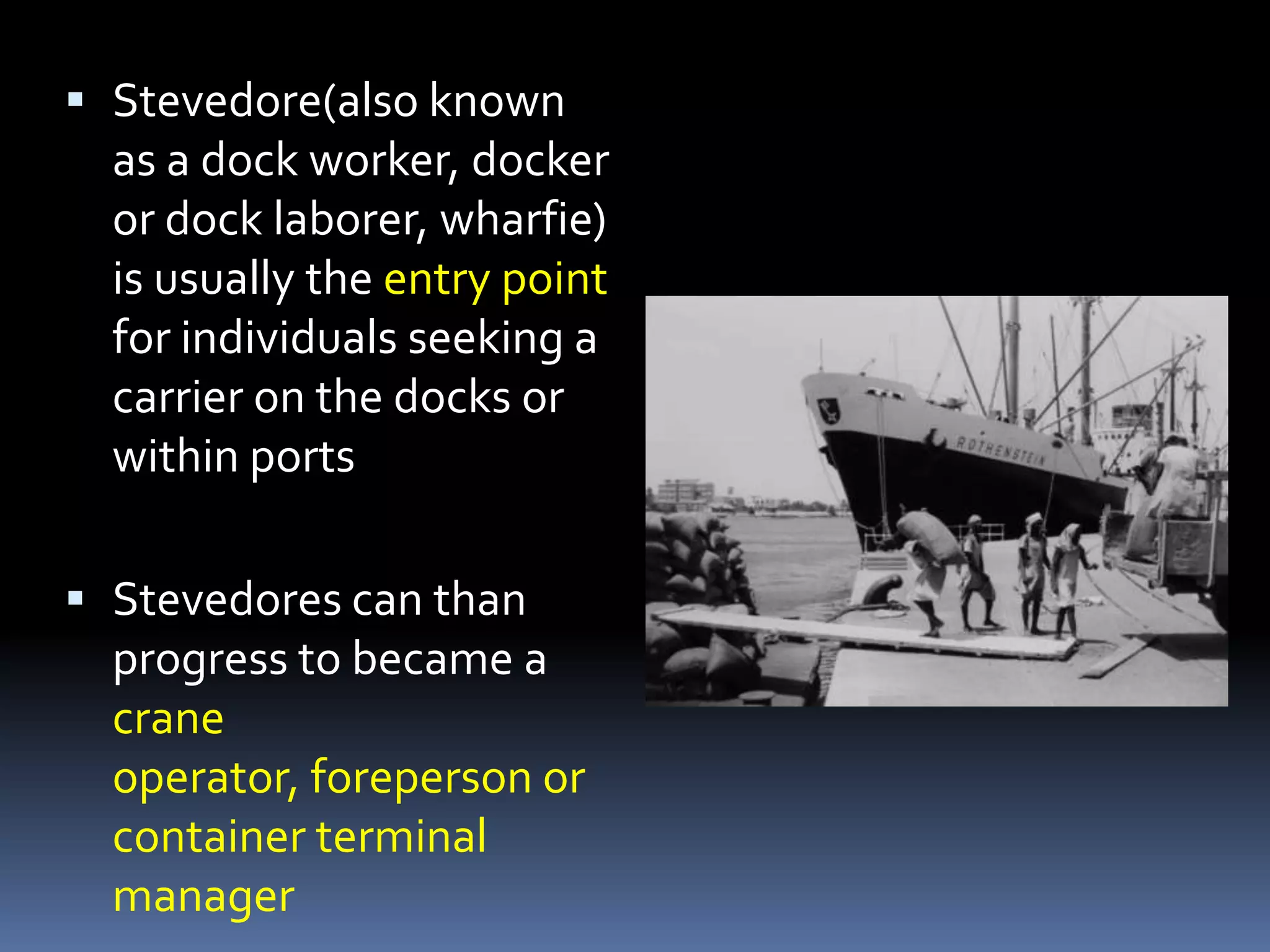
 Stevedore(also known
as a dock worker, docker
or dock laborer, wharfie)
is usually the entry point
for individuals seeking a
carrier on the docks or
within ports
 Stevedores can than
progress to became a
crane

operator, foreperson or
container terminal
manager
THANK YOU

Shipping terminologies

  • 1.
    SHIP MEASUREMENTS By KevinJoseph MBA (Energy Trading)
  • 2.
    Tonnage A commonly definedmeasurement system is important; since a ship’s registration fee, harbour dues, safety and manning rules etc., are based on its gross tonnage, GT, or net tonnage, NT.  Tonnage is a measure of the size or cargo carrying capacity of a ship.  “Tonnage" specifically refers to a calculation of the volume or cargo volume of a ship.  Tonnage should not be confused with Displacement which refers to the loaded or empty weight of the vessel itself.
  • 3.
    Tonnage measurements : Thereare five kinds of tonnage in use in the shipping business. They are:  Deadweight  Cargo,  Gross,  Net and  Displacement Tonnages
  • 4.
    Dead weight tonnage It is a measure of how much weight a ship can safely carry.  It is the sum of the weight of cargo, fuel, fresh water, ballast water, provisions, passengers and crew.
  • 5.
     Cargo :it is the goods or produce transported for commercial gain by the ship  Gross tonnage (GT) is a function of the volume of all ship's enclosed spaces (from keel to funnel) measured to the outside of the hull framing.
  • 6.
     Net tonnage(NT) is based on a calculation of the volume of all cargo spaces of the ship.  It indicates a vessel’s earning space and is a function of the molded volume of all cargo spaces of the ship.  It represents the volume of the ship available for transporting freight or passengers.
  • 7.
     Displacement :it is the unit for the total weight of the ship and her contents, equivalent to the weight of water displaced under any particular condition of loading given in terms of the defined weight system i.e metric or long tons
  • 8.
     The PanamaCanal/Universal Measurement System (PC/UMS) is based on net tonnage, modified for Panama Canal purposes. PC/UMS is based on a mathematical formula to calculate a vessel's total volume; a PC/UMS net ton is equivalent to 100 cubic feet of capacity.[3]  The Suez Canal Net Tonnage (SCNT) is derived with a number of modifications from the former net register tonnage of the Moorsom System and was established by the International Commission of Constantinople in its Protocol of 18 December 1873. It is still in use, as amended by the Rules of Navigation of the Suez Canal Authority, and is registered in the Suez Canal Tonnage Certificate.  Thames measurement tonnage is another volumetric system, generally used for small vessels such as yachts; it uses a formula based on the vessel's length and beam.
  • 9.
    Bunker  Bunker issimply the name given to the Fuel that is used to operate ships.  Bunker fuel is technically any type of fuel oil used aboard ships. It gets its name from the containers on ships and in ports that it is stored in; in the days of steam they were coal bunkers but now they are bunker fuel tanks.  The Australian Customs and the Australian Tax Office define a bunker fuel as the fuel that powers the engine of a ship or aircraft. Bunkering Ship =>
  • 10.
     Bunker oilis literally the bottom of the barrel; the only things more dense than bunker fuel are carbon black feedstock and bituminous residue.  In the context of shipping, the labeling of bunkers as previously described is rarely used in modern practice.
  • 11.
     Deadweight cargo capacity(DWCC)or net capacity is a measure of the deadweight of a ship in terms of the cargo she can transport, excluding fuel, water, crew and everything else that is not part of the ship.  DWCC- it is the most important for the Charterers i.e whose cargo has to be shipped. it gives the weight of the cargo that the vessel can carry.  The more fuel the vessel needs the lower the DWCC. this also depends on the water temperature and water(salt, brackish) in summer vessels have high DWCC
  • 12.
     Dead weightall told(DWAT) is a term that states the total amount of weight that a ship may carry before it passes the waterline, including the weight of: cargo, water, crew, fuel, food and anything else that is not part of the ship and is not counted in its' light displacement.  (Dead weight all told) = (Loaded displacement)(light displacement)
  • 13.
    Water line  Itis the line where the hull of a ship meets the surface of the water in concept or reality.  It is also used as the international loadline to keep a watch on the loaded cargo.  It indicates the draft of the ship
  • 14.
    Lightering  Also knownas lighterage  Lightering is the process of transferring cargo between vessels of different sizes, usually between a barge and a bulker or oil tanker.  Lightering is undertaken to reduce a vessel's draft in order to enter port facilities which cannot accept very large ocean going vessels.
  • 15.
    Steve Dore  Theprimary role of a stevedore is the loading and unloading of freight on an off ships while they are in port Other responsibilities includes 1-mooring and unmooring ships  2- cleaning and preparing container  3-stacking and securing cargo's  4-adminitravtives process associated with the transfer of cargo
  • 16.
     Stevedore(also known asa dock worker, docker or dock laborer, wharfie) is usually the entry point for individuals seeking a carrier on the docks or within ports  Stevedores can than progress to became a crane operator, foreperson or container terminal manager
  • 17.