Good morning!
Welcome to SMAW
Class :)
Good morning!
Welcome to SMAW
Class :)
REVIEW
MODULE 3: EVALUATE AND
CONTROL HAZARD AND
RISKS
Objectives:
a. differentiate hazard from risk;
b. evaluate hazard and risk in the workplace;
c. use Personal Protective Equipment [PPE]
properly; and
d. observe safety procedures while at work.
LESSON 7: Hazards and Risks
What is hazard?
A hazard is any object,
situation, or behavior that has
the potential to cause danger,
damage, harm, or threat to
anyone, property or the
environment.
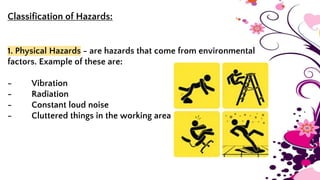
Classification of Hazards:
1. Physical Hazards - are hazards that come from environmental
factors. Example of these are:
- Vibration
- Radiation
- Constant loud noise
- Cluttered things in the working area
2. Chemical hazards- are hazards that come from solid,
liquid, or gas element compounds or mixtures that could
cause health problems or pollution.
Example:
Mists – from grinding and cutting operations, spray painting
operation
Fumes- soldering operation, welding
Dusts – produced by physical processes such as handling,
grinding, drilling, and crushing operations.
3. Biological hazards
These are caused by living organisms
that may pose threat to human health.
Examples are bacteria, viruses, molds,
fungi, insects, parasites, plants, and
animals.
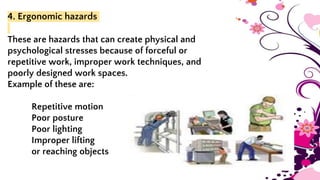
4. Ergonomic hazards
These are hazards that can create physical and
psychological stresses because of forceful or
repetitive work, improper work techniques, and
poorly designed work spaces.
Example of these are:
Repetitive motion
Poor posture
Poor lighting
Improper lifting
or reaching objects
LESSON 8:
Use of Personal
Protective Equipment (PPE)
1. Head protection – This is
used to protect the head
from falling objects and
electrocution. The safety hat
or welding helmet is used
for this purpose.
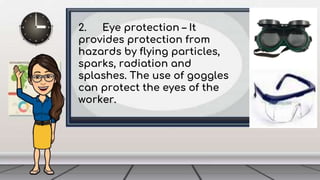
2. Eye protection – It
provides protection from
hazards by flying particles,
sparks, radiation and
splashes. The use of goggles
can protect the eyes of the
worker.
Face shields – This can also be
used to protect the eye and
face from splashes or dusts.
3. Ear protection – It gives
protection to the ear from
excessive noise. Examples of
this are ear muffs and ear
plugs.
4. Hand and Arm protection –
is needed to protect the hand
and arm from harmful
substances that can be
absorbed by the skin, severe
cuts, burns and extreme
temperature.
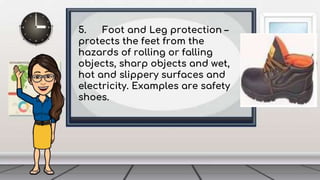
5. Foot and Leg protection –
protects the feet from the
hazards of rolling or falling
objects, sharp objects and wet,
hot and slippery surfaces and
electricity. Examples are safety
shoes.
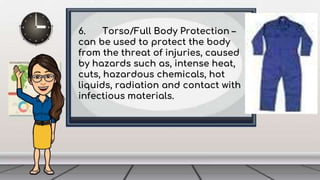
6. Torso/Full Body Protection –
can be used to protect the body
from the threat of injuries, caused
by hazards such as, intense heat,
cuts, hazardous chemicals, hot
liquids, radiation and contact with
infectious materials.
7. Respiratory Protection – is
required when risk cannot be
controlled or eliminated by
administrative or engineering
controls. Hazards for the
respiratory include mists, vapors,
smoke, gases, fumes or dust.
I hope you learned
something new
today! See you next
meeting! :)

Shielded Metal Arc Welding - Lesson: Hazards and Risks

  • 1.
  • 3.
  • 5.
  • 6.
    MODULE 3: EVALUATEAND CONTROL HAZARD AND RISKS
  • 8.
    Objectives: a. differentiate hazardfrom risk; b. evaluate hazard and risk in the workplace; c. use Personal Protective Equipment [PPE] properly; and d. observe safety procedures while at work.
  • 9.
  • 10.
    What is hazard? Ahazard is any object, situation, or behavior that has the potential to cause danger, damage, harm, or threat to anyone, property or the environment.
  • 11.
    Classification of Hazards: 1.Physical Hazards - are hazards that come from environmental factors. Example of these are: - Vibration - Radiation - Constant loud noise - Cluttered things in the working area
  • 12.
    2. Chemical hazards-are hazards that come from solid, liquid, or gas element compounds or mixtures that could cause health problems or pollution. Example: Mists – from grinding and cutting operations, spray painting operation Fumes- soldering operation, welding Dusts – produced by physical processes such as handling, grinding, drilling, and crushing operations.
  • 13.
    3. Biological hazards Theseare caused by living organisms that may pose threat to human health. Examples are bacteria, viruses, molds, fungi, insects, parasites, plants, and animals.
  • 14.
    4. Ergonomic hazards Theseare hazards that can create physical and psychological stresses because of forceful or repetitive work, improper work techniques, and poorly designed work spaces. Example of these are: Repetitive motion Poor posture Poor lighting Improper lifting or reaching objects
  • 15.
    LESSON 8: Use ofPersonal Protective Equipment (PPE)
  • 16.
    1. Head protection– This is used to protect the head from falling objects and electrocution. The safety hat or welding helmet is used for this purpose.
  • 17.
    2. Eye protection– It provides protection from hazards by flying particles, sparks, radiation and splashes. The use of goggles can protect the eyes of the worker.
  • 18.
    Face shields –This can also be used to protect the eye and face from splashes or dusts.
  • 19.
    3. Ear protection– It gives protection to the ear from excessive noise. Examples of this are ear muffs and ear plugs.
  • 20.
    4. Hand andArm protection – is needed to protect the hand and arm from harmful substances that can be absorbed by the skin, severe cuts, burns and extreme temperature.
  • 21.
    5. Foot andLeg protection – protects the feet from the hazards of rolling or falling objects, sharp objects and wet, hot and slippery surfaces and electricity. Examples are safety shoes.
  • 22.
    6. Torso/Full BodyProtection – can be used to protect the body from the threat of injuries, caused by hazards such as, intense heat, cuts, hazardous chemicals, hot liquids, radiation and contact with infectious materials.
  • 23.
    7. Respiratory Protection– is required when risk cannot be controlled or eliminated by administrative or engineering controls. Hazards for the respiratory include mists, vapors, smoke, gases, fumes or dust.
  • 25.
    I hope youlearned something new today! See you next meeting! :)