KENDRIYA VIDYALAYA, IIT .CHENNAI-36
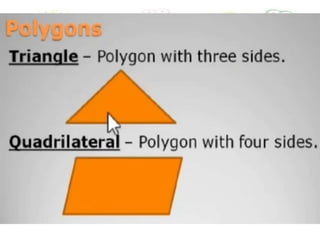
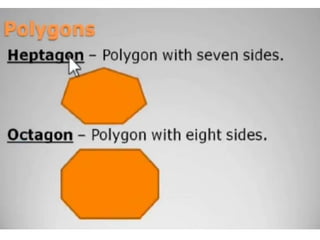
Polygons
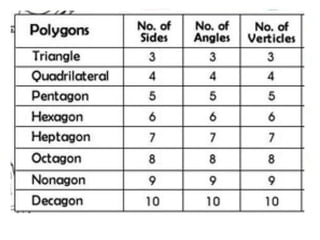
Types of polygons
Angles
Types of angles
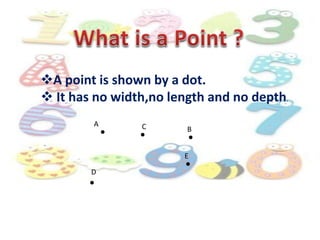
A point is shown by a dot.
 It has no width,no length and no depth.
A C
D
B
E
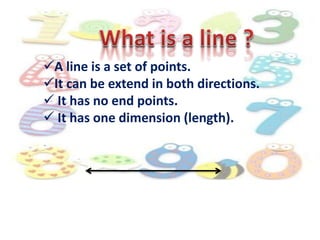
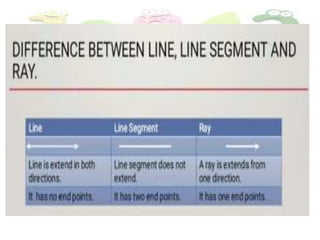
A line is a set of points.
It can be extend in both directions.
 It has no end points.
 It has one dimension (length).
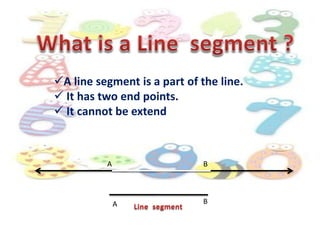
A line segment is a part of the line.
 It has two end points.
 It cannot be extend
A B
A B
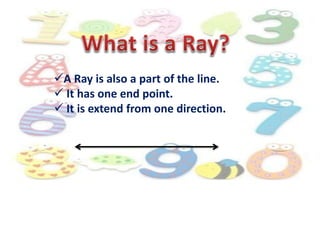
A Ray is also a part of the line.
 It has one end point.
 It is extend from one direction.
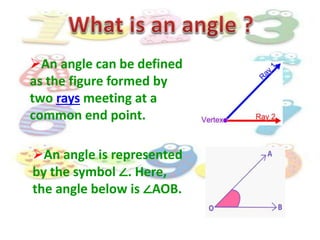
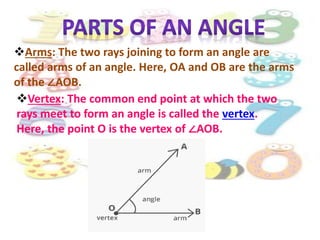
An angle can be defined
as the figure formed by
two rays meeting at a
common end point.
An angle is represented
by the symbol ∠. Here,
the angle below is ∠AOB.
Arms: The two rays joining to form an angle are
called arms of an angle. Here, OA and OB are the arms
of the ∠AOB.
Vertex: The common end point at which the two
rays meet to form an angle is called the vertex.
Here, the point O is the vertex of ∠AOB.
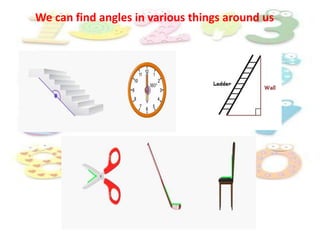
We can find angles in various things around us
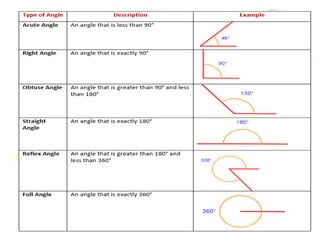
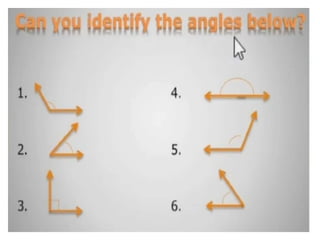
Angles can be classified on the basis of their measurements as
Acute Angle
Right Angle
Obtuse Angle
Straight Angle
Reflex Angle
Complete Angle
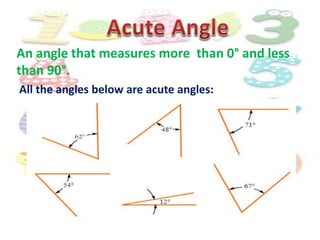
An angle that measures more than 0° and less
than 90°.
All the angles below are acute angles:
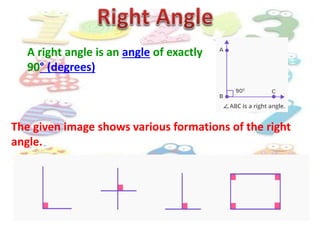
A right angle is an angle of exactly
90° (degrees)
The given image shows various formations of the right
angle.
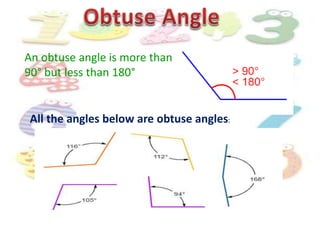
An obtuse angle is more than
90° but less than 180°
All the angles below are obtuse angles:
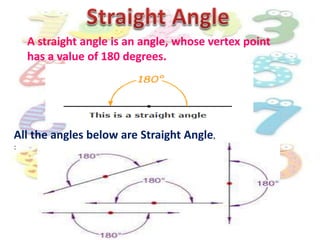
A straight angle is an angle, whose vertex point
has a value of 180 degrees.
All the angles below are Straight Angle.
:
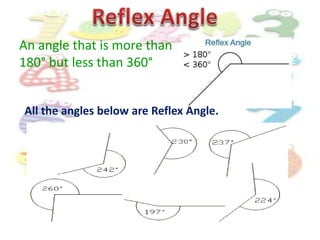
An angle that is more than
180° but less than 360°
All the angles below are Reflex Angle.
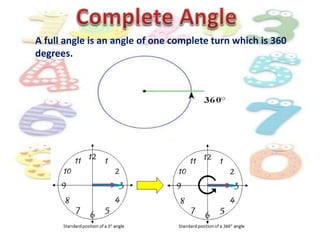
A full angle is an angle of one complete turn which is 360
degrees.
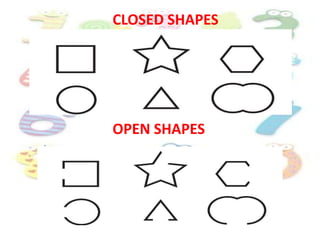
OPEN SHAPES
CLOSED SHAPES
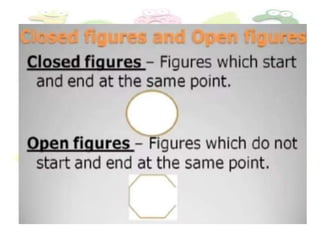
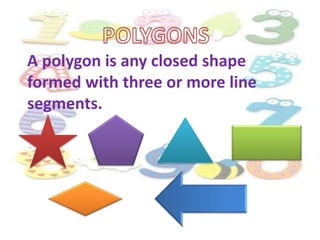
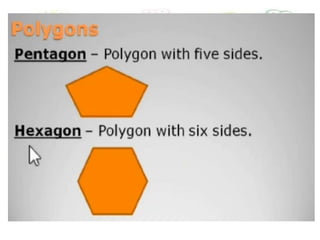
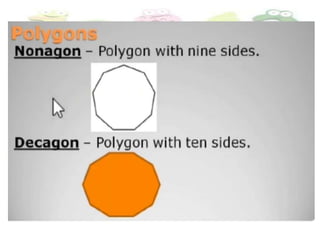
A polygon is any closed shape
formed with three or more line
segments.
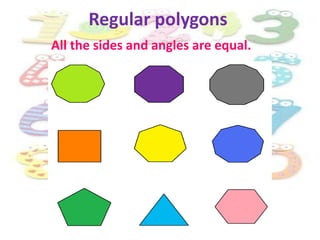
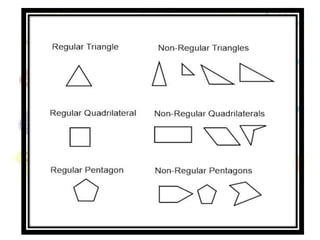
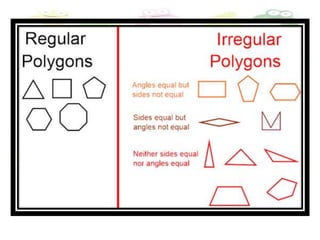
Regular polygons
All the sides and angles are equal.
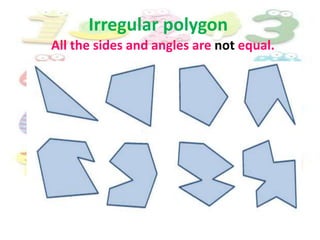
Irregular polygon
All the sides and angles are not equal.
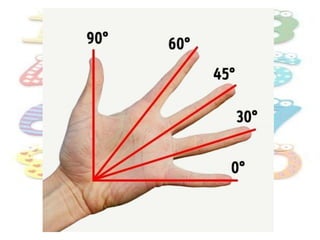
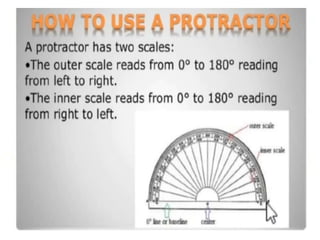
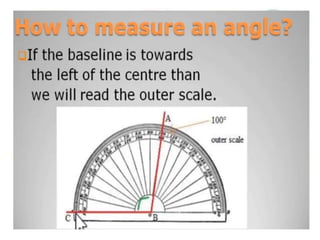
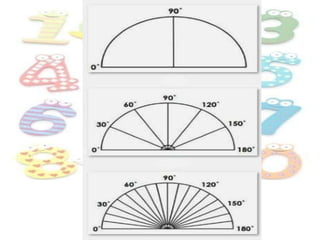
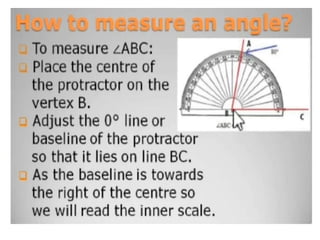
How to Measure an angle ?
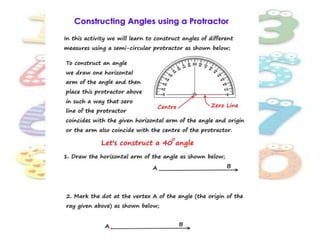
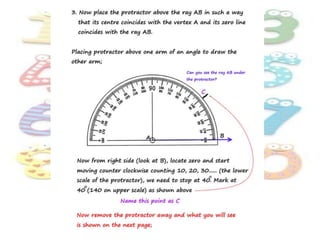
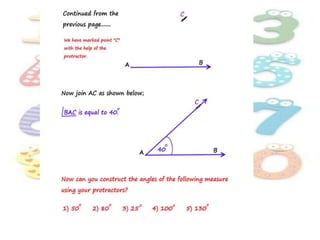
How to construct an angle ?
Shapes and angle
Shapes and angle
Shapes and angle
Shapes and angle
Shapes and angle
Shapes and angle
Shapes and angle
Shapes and angle
Shapes and angle
Shapes and angle

Shapes and angle

  • 1.
  • 3.
  • 4.
    A point isshown by a dot.  It has no width,no length and no depth. A C D B E
  • 5.
    A line isa set of points. It can be extend in both directions.  It has no end points.  It has one dimension (length).
  • 6.
    A line segmentis a part of the line.  It has two end points.  It cannot be extend A B A B
  • 7.
    A Ray isalso a part of the line.  It has one end point.  It is extend from one direction.
  • 9.
    An angle canbe defined as the figure formed by two rays meeting at a common end point. An angle is represented by the symbol ∠. Here, the angle below is ∠AOB.
  • 10.
    Arms: The tworays joining to form an angle are called arms of an angle. Here, OA and OB are the arms of the ∠AOB. Vertex: The common end point at which the two rays meet to form an angle is called the vertex. Here, the point O is the vertex of ∠AOB.
  • 11.
    We can findangles in various things around us
  • 12.
    Angles can beclassified on the basis of their measurements as Acute Angle Right Angle Obtuse Angle Straight Angle Reflex Angle Complete Angle
  • 13.
    An angle thatmeasures more than 0° and less than 90°. All the angles below are acute angles:
  • 15.
    A right angleis an angle of exactly 90° (degrees) The given image shows various formations of the right angle.
  • 16.
    An obtuse angleis more than 90° but less than 180° All the angles below are obtuse angles:
  • 17.
    A straight angleis an angle, whose vertex point has a value of 180 degrees. All the angles below are Straight Angle. :
  • 18.
    An angle thatis more than 180° but less than 360° All the angles below are Reflex Angle.
  • 19.
    A full angleis an angle of one complete turn which is 360 degrees.
  • 25.
  • 26.
    A polygon isany closed shape formed with three or more line segments.
  • 27.
    Regular polygons All thesides and angles are equal.
  • 28.
    Irregular polygon All thesides and angles are not equal.
  • 36.
    How to Measurean angle ?
  • 40.
    How to constructan angle ?