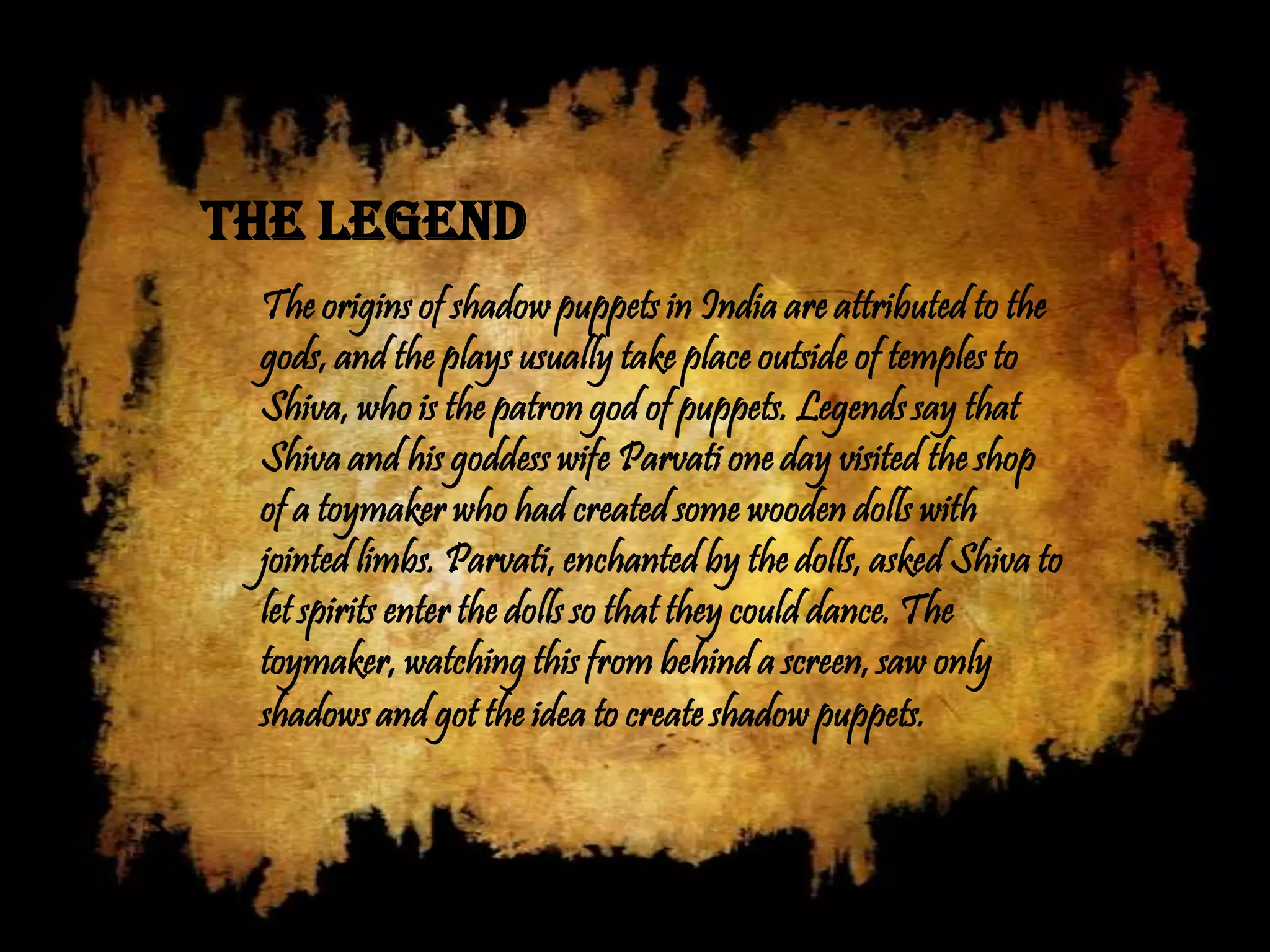
Shadow puppetry
of andra pradesh
The Legend
 The origins of shadow puppets in India are attributed to the
 gods, and the plays usually take place outside of temples to
 Shiva, who is the patron god of puppets. Legends say that
 Shiva and his goddess wife Parvati one day visited the shop
 of a toymaker who had created some wooden dolls with
 jointed limbs. Parvati, enchanted by the dolls, asked Shiva to
 let spirits enter the dolls so that they could dance. The
 toymaker, watching this from behind a screen, saw only
 shadows and got the idea to create shadow puppets.
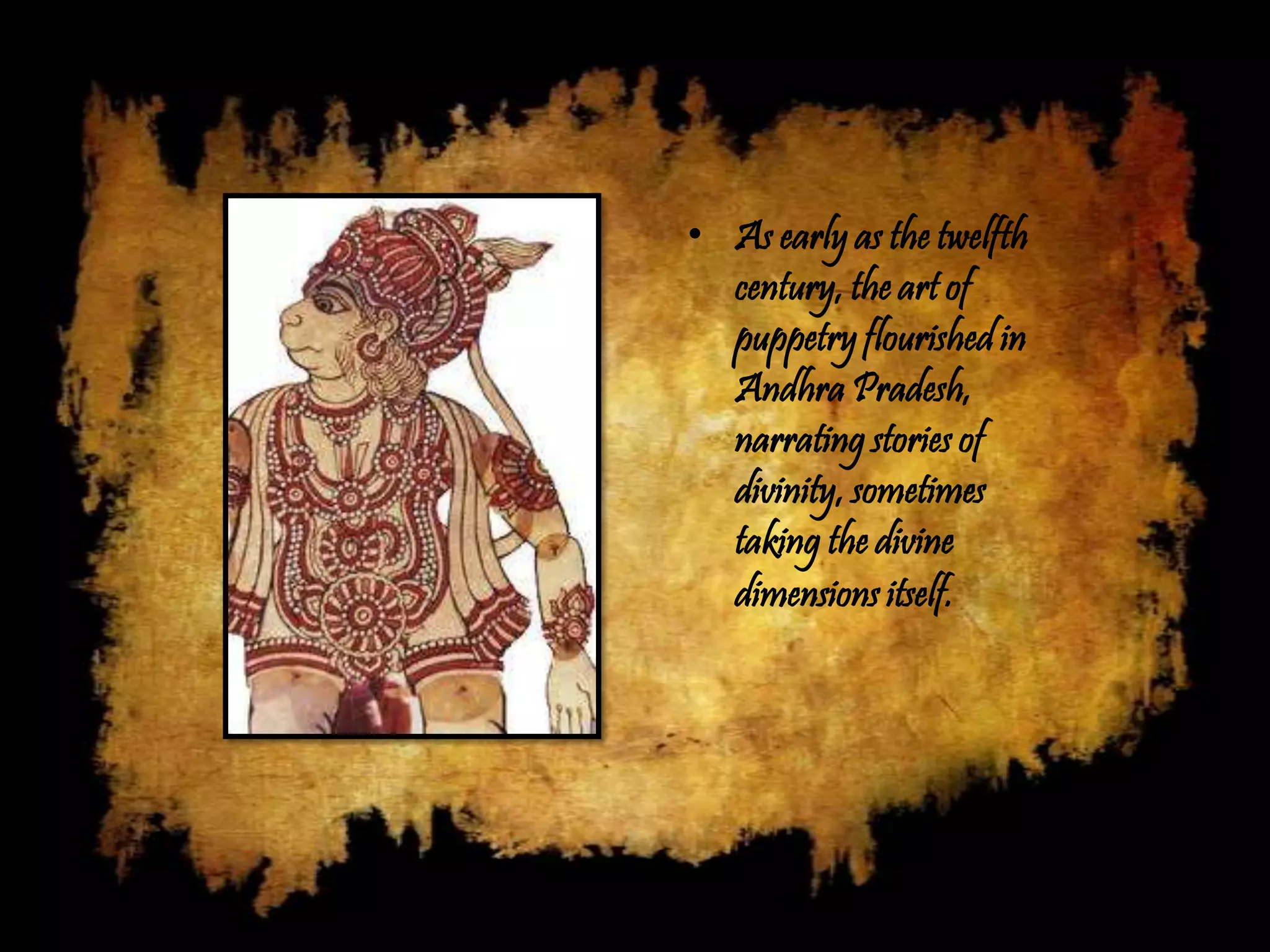
• As early as the twelfth
  century, the art of
  puppetry flourished in
  Andhra Pradesh,
  narrating stories of
  divinity, sometimes
  taking the divine
  dimensions itself.
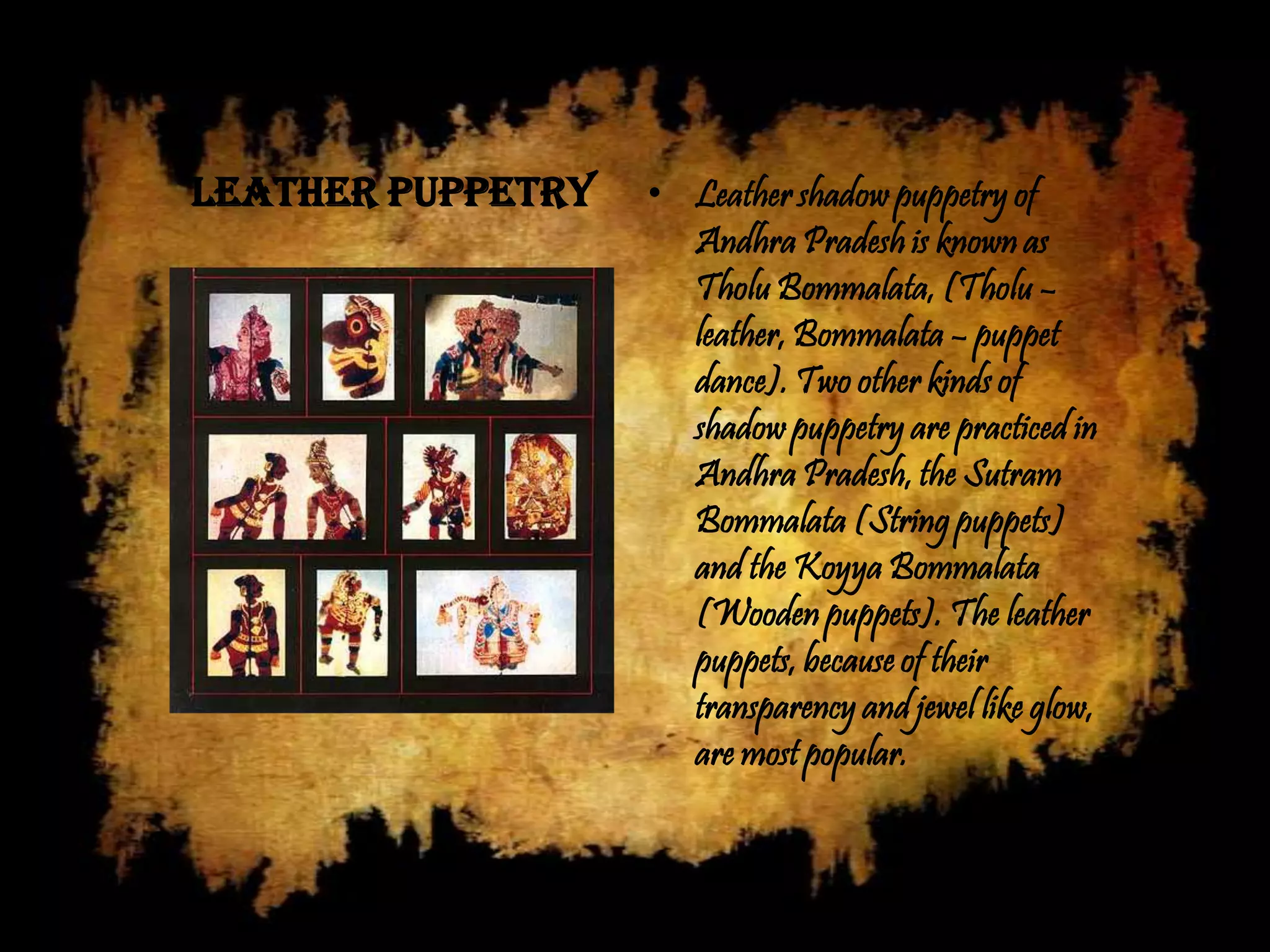
Leather Puppetry   • Leather shadow puppetry of
                     Andhra Pradesh is known as
                     Tholu Bommalata, (Tholu –
                     leather, Bommalata – puppet
                     dance). Two other kinds of
                     shadow puppetry are practiced in
                     Andhra Pradesh, the Sutram
                     Bommalata (String puppets)
                     and the Koyya Bommalata
                     (Wooden puppets). The leather
                     puppets, because of their
                     transparency and jewel like glow,
                     are most popular.
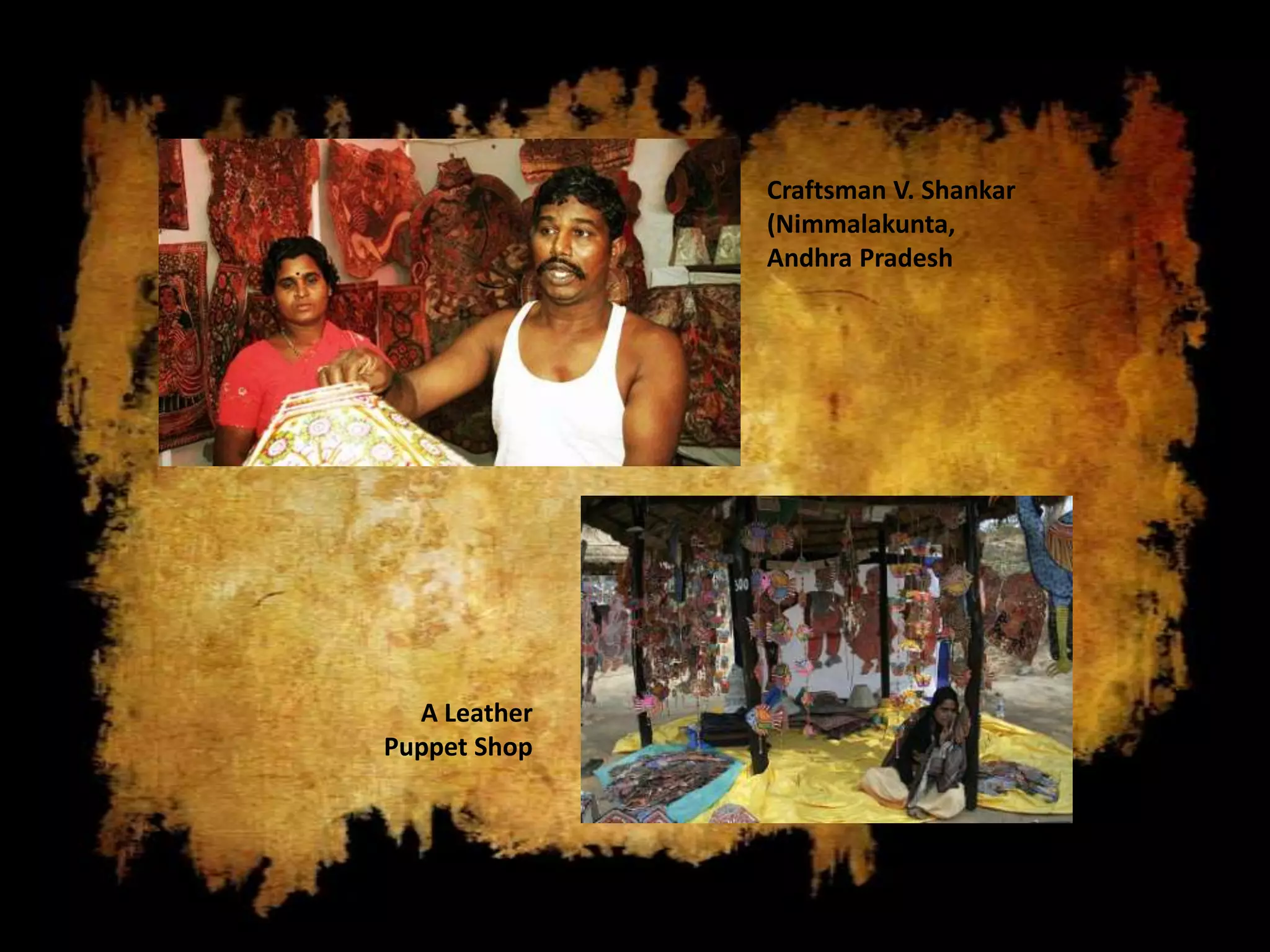
Craftsman V. Shankar
              (Nimmalakunta,
              Andhra Pradesh


  A Leather
Puppet Shop
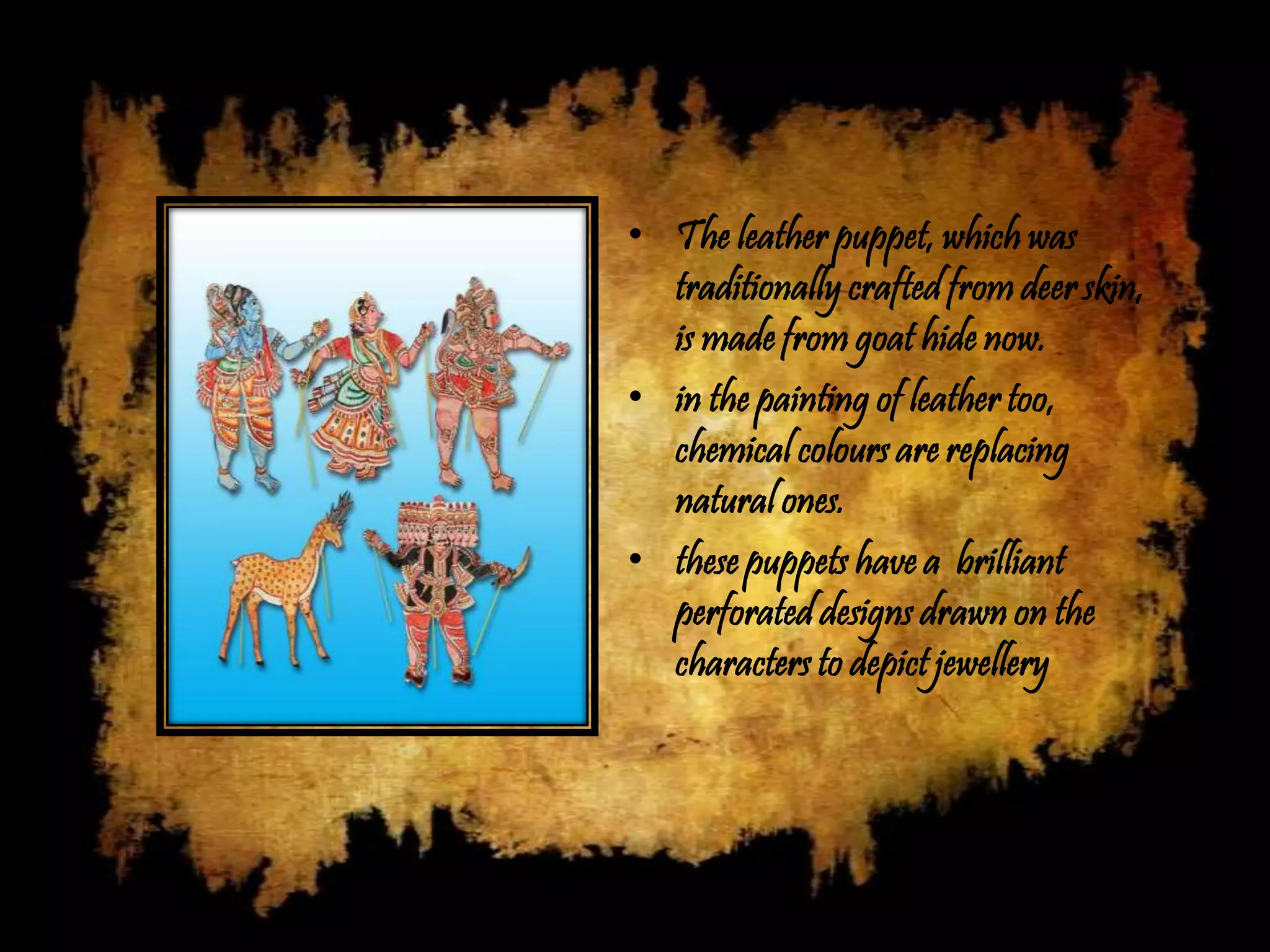
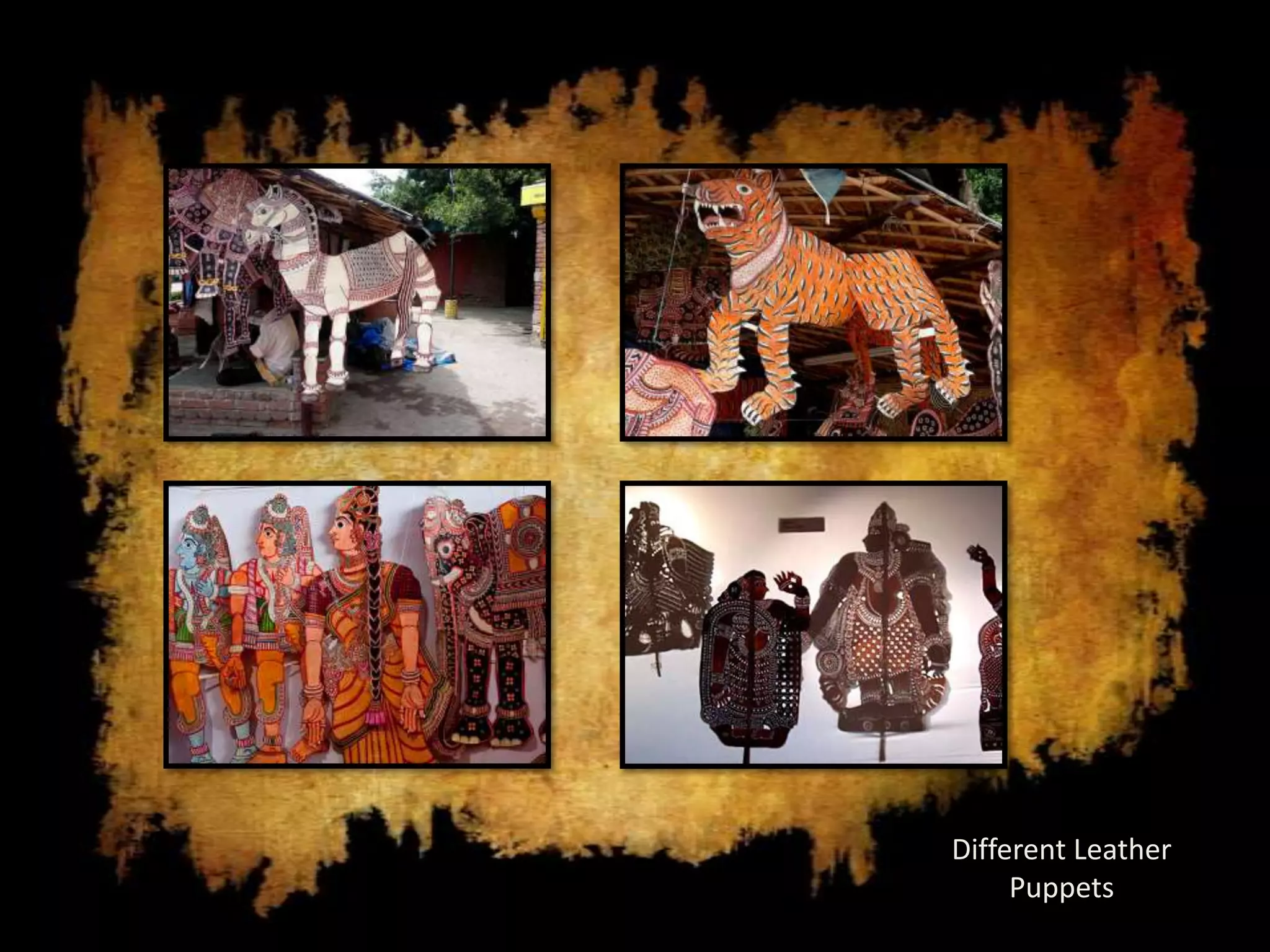
• The leather puppet, which was
  traditionally crafted from deer skin,
  is made from goat hide now.
• in the painting of leather too,
  chemical colours are replacing
  natural ones.
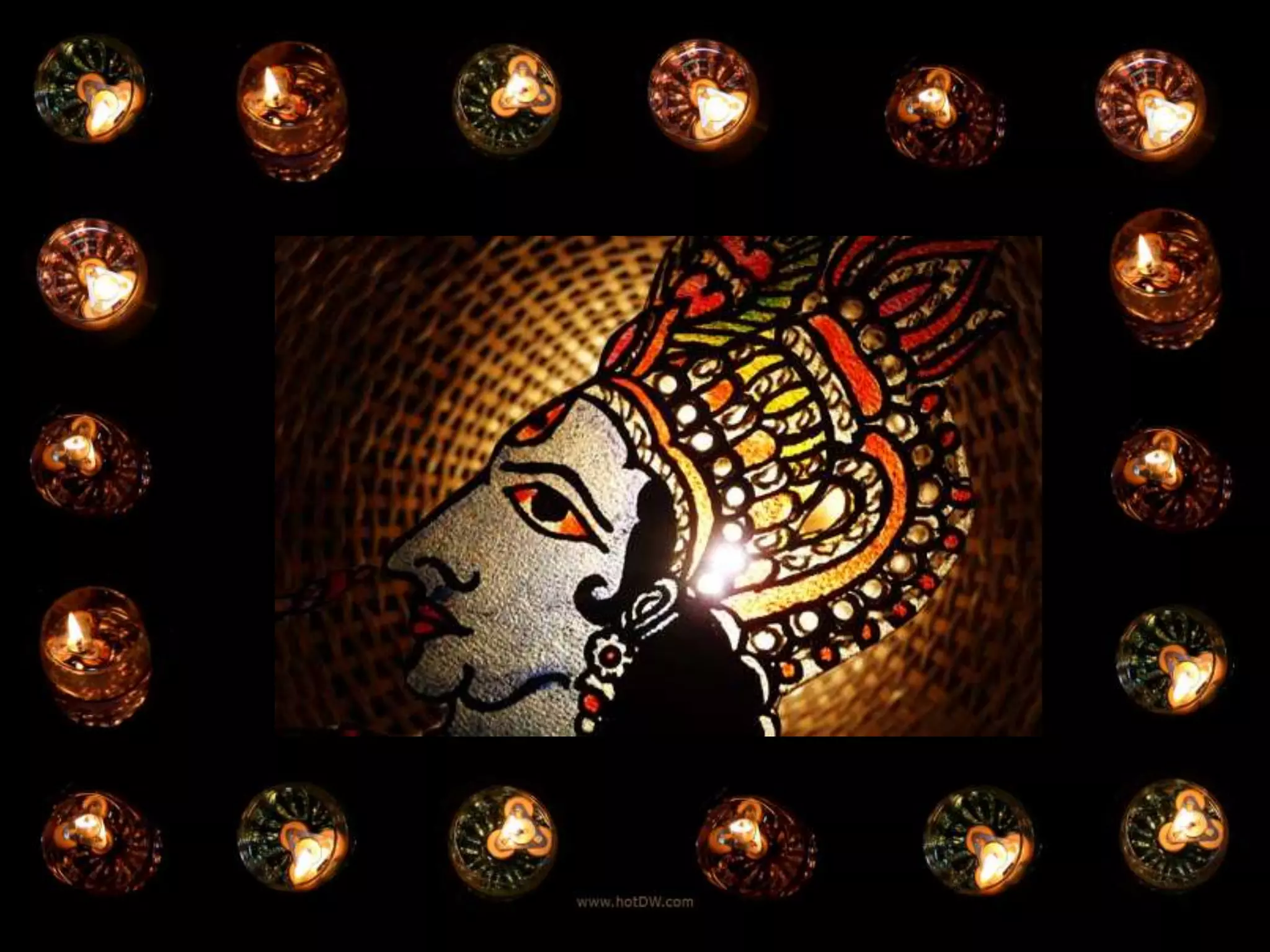
• these puppets have a brilliant
  perforated designs drawn on the
  characters to depict jewellery
Main characteristics:
  • The sizes of the main characters range from 4’ x 1½’ to 6’ x
    2½’.
  • Bright electrical lighting has replaced mild earthen lamps but
    the magical glow of the characters and their phantasmagorical
    narratives still transport the audience to the surreal world of
    divine sagas.
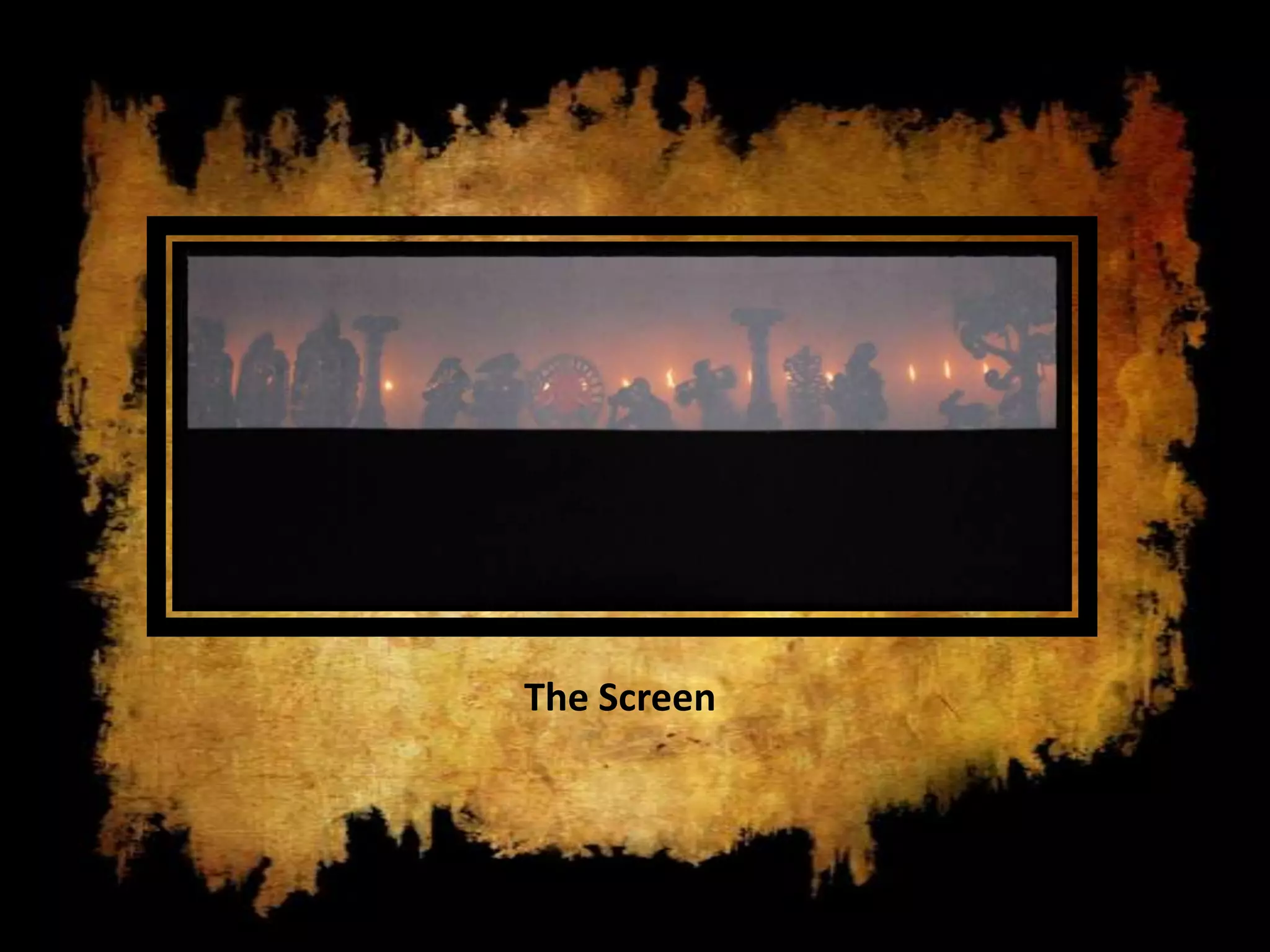
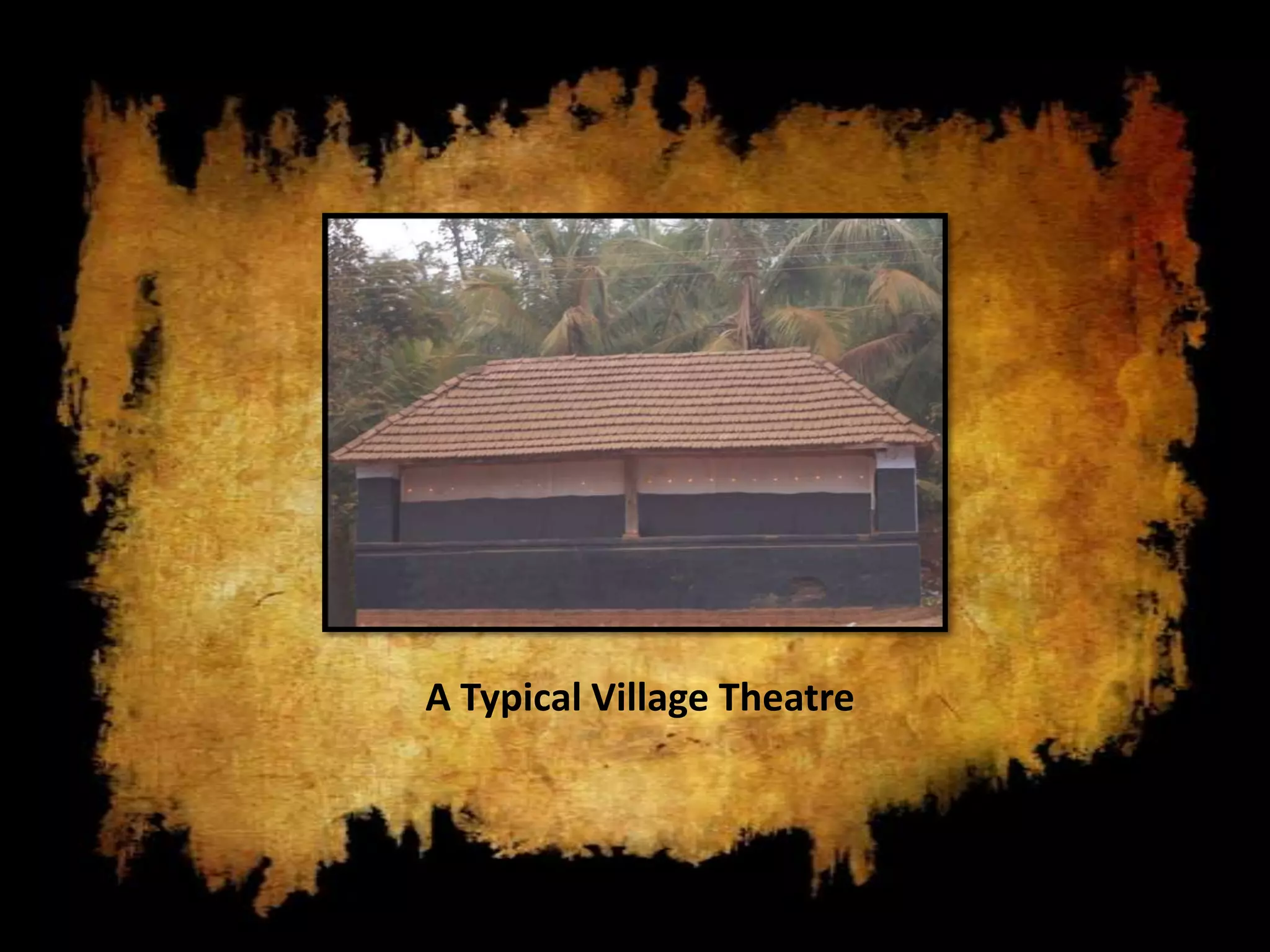
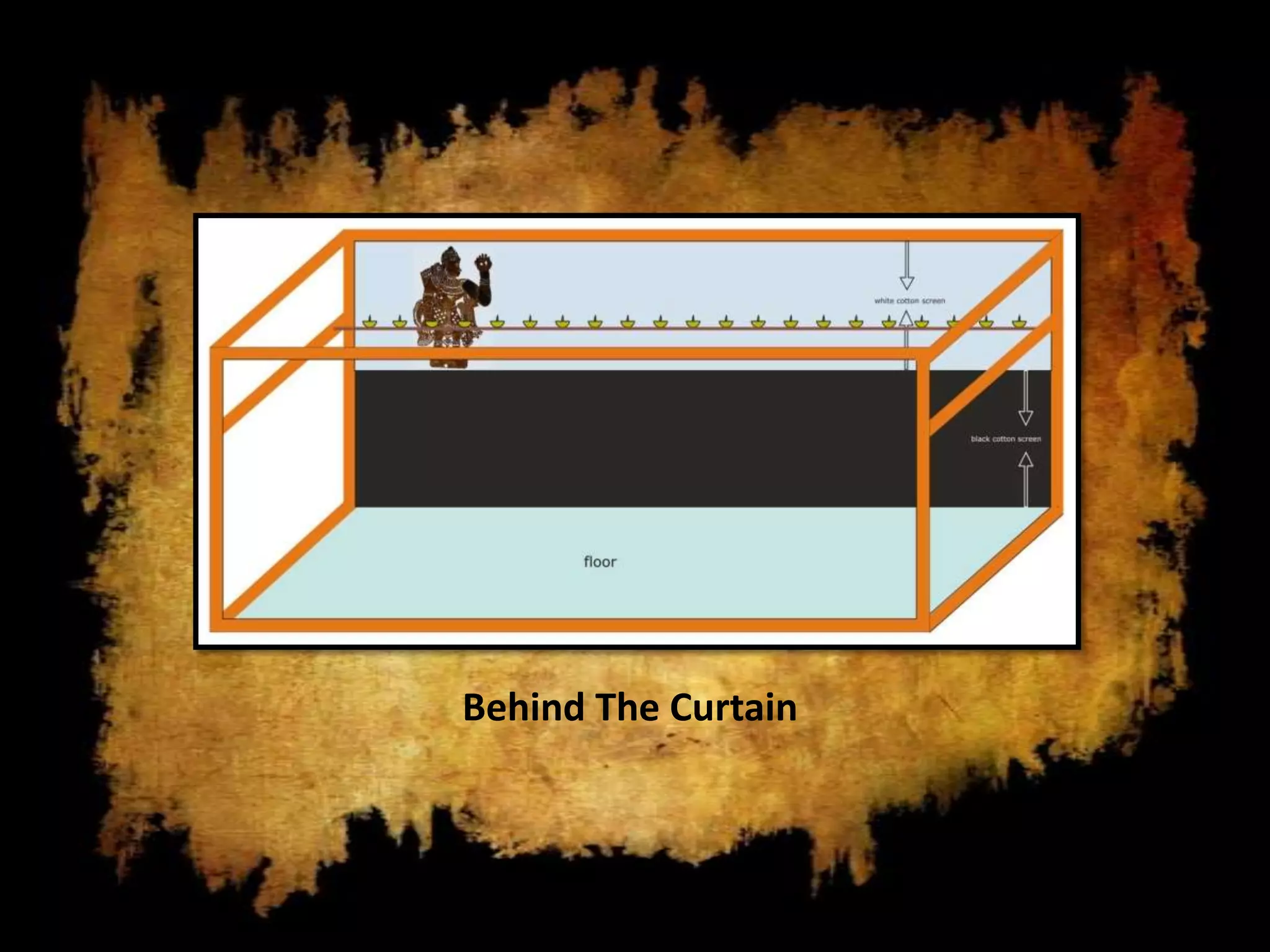
The Screen
A Typical Village Theatre
Behind The Curtain
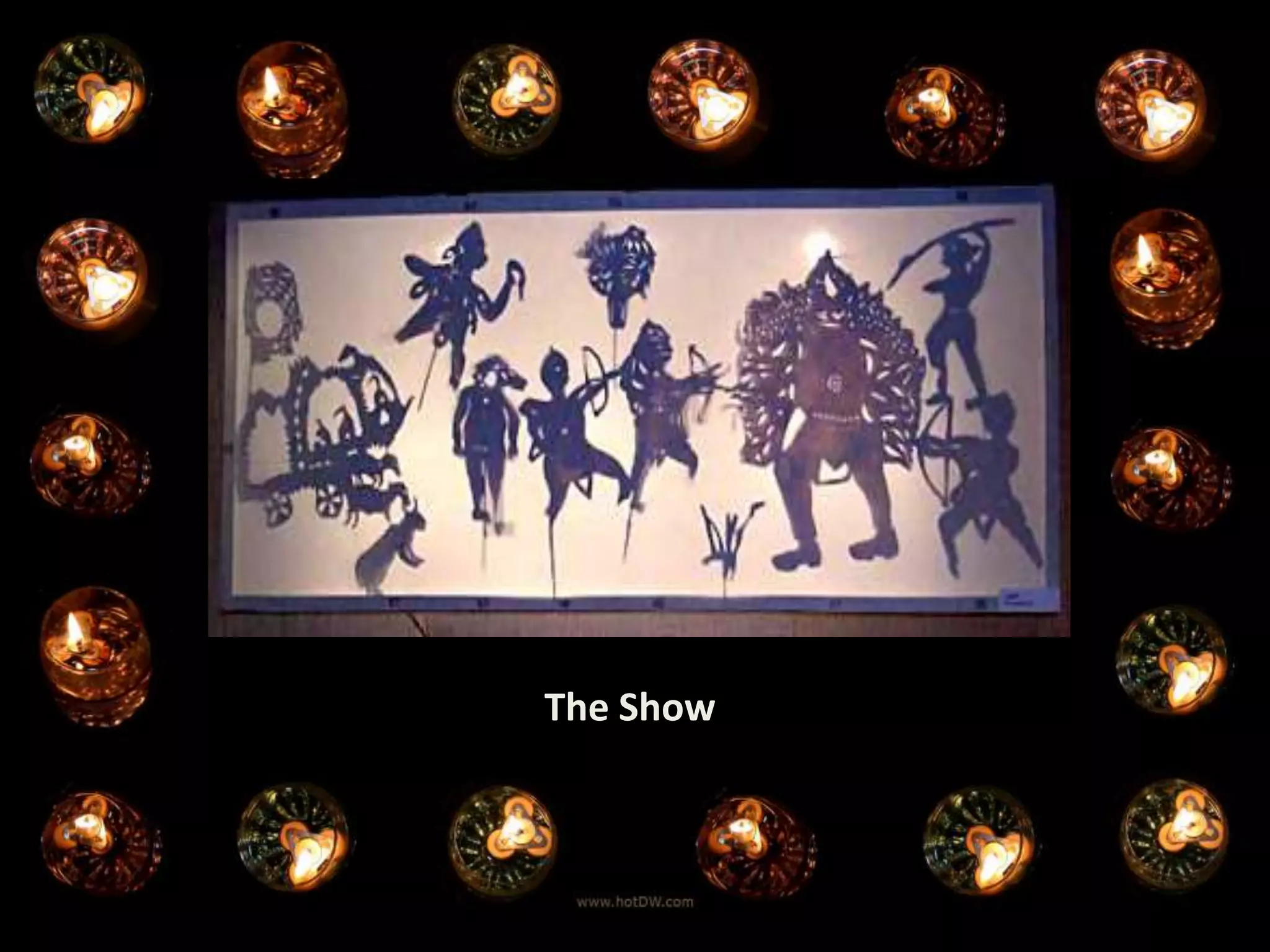
The Show
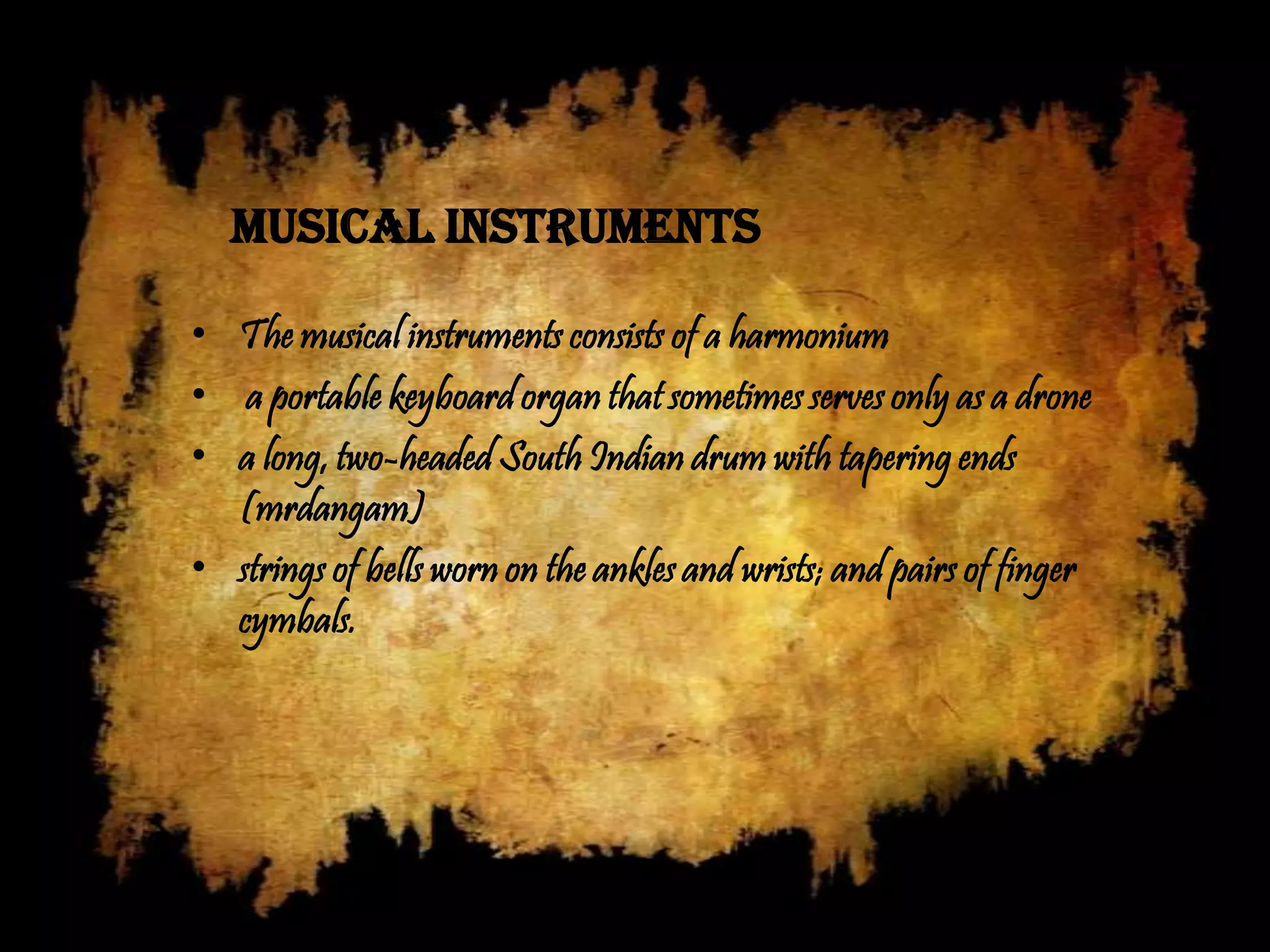
Musical instruments

• The musical instruments consists of a harmonium
• a portable keyboard organ that sometimes serves only as a drone
• a long, two-headed South Indian drum with tapering ends
  (mrdangam)
• strings of bells worn on the ankles and wrists; and pairs of finger
  cymbals.
Different Leather
     Puppets
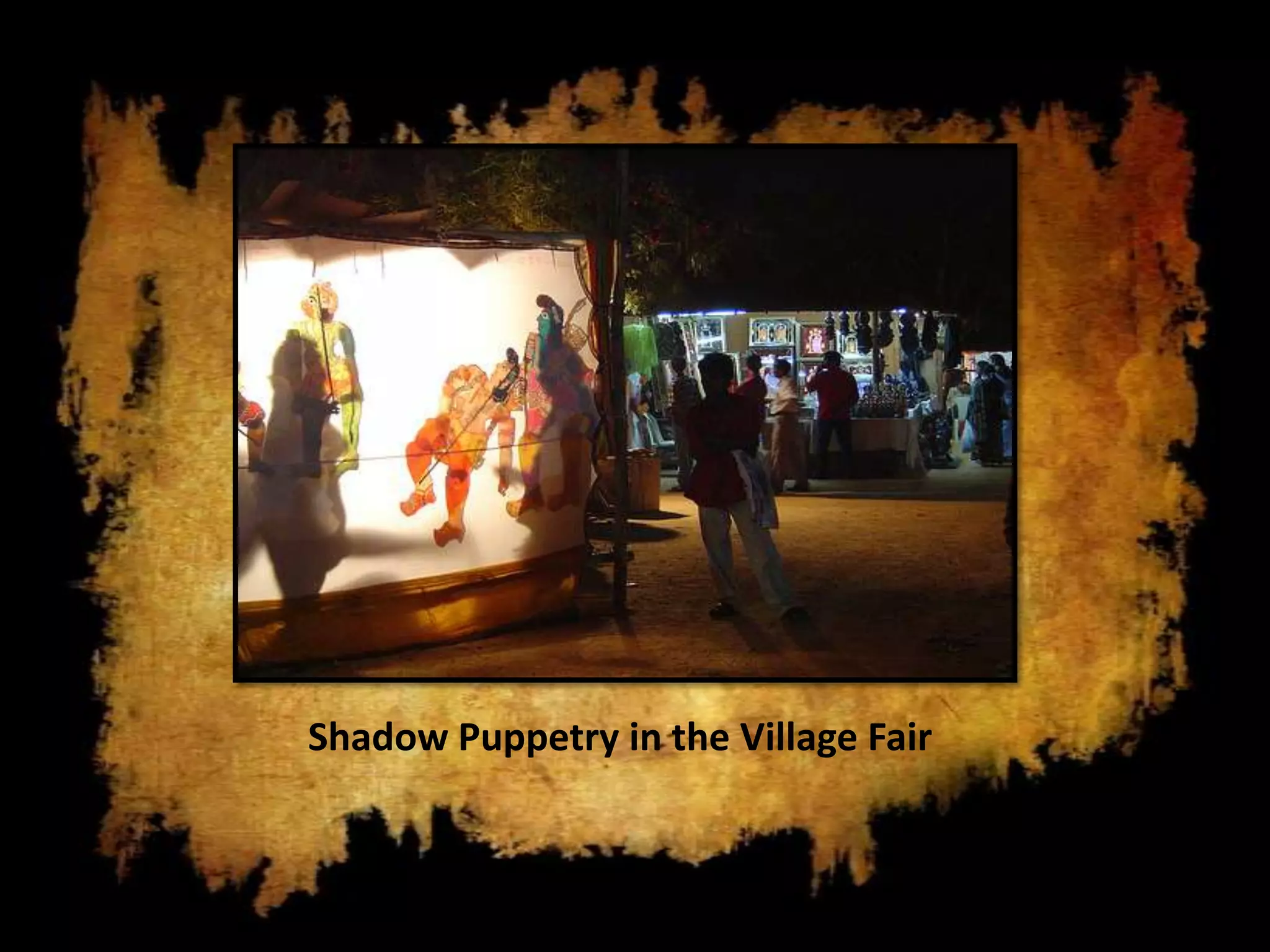
Shadow Puppetry in the Village Fair
AESTHETICS OF SHADOW PUPPETRY

• The art form has its own unique style – intricate design details, holes
  made to let the light pass and give a glowing jewelry effect.
• The shadow looks very aesthetically appealing through the translucent
  background.
• The epics shown this way is fascinating to see and enjoy for all age
  groups.

Shadow puppetry final

  • 1.
  • 2.
    The Legend Theorigins of shadow puppets in India are attributed to the gods, and the plays usually take place outside of temples to Shiva, who is the patron god of puppets. Legends say that Shiva and his goddess wife Parvati one day visited the shop of a toymaker who had created some wooden dolls with jointed limbs. Parvati, enchanted by the dolls, asked Shiva to let spirits enter the dolls so that they could dance. The toymaker, watching this from behind a screen, saw only shadows and got the idea to create shadow puppets.
  • 3.
    • As earlyas the twelfth century, the art of puppetry flourished in Andhra Pradesh, narrating stories of divinity, sometimes taking the divine dimensions itself.
  • 4.
    Leather Puppetry • Leather shadow puppetry of Andhra Pradesh is known as Tholu Bommalata, (Tholu – leather, Bommalata – puppet dance). Two other kinds of shadow puppetry are practiced in Andhra Pradesh, the Sutram Bommalata (String puppets) and the Koyya Bommalata (Wooden puppets). The leather puppets, because of their transparency and jewel like glow, are most popular.
  • 5.
    Craftsman V. Shankar (Nimmalakunta, Andhra Pradesh A Leather Puppet Shop
  • 6.
    • The leatherpuppet, which was traditionally crafted from deer skin, is made from goat hide now. • in the painting of leather too, chemical colours are replacing natural ones. • these puppets have a brilliant perforated designs drawn on the characters to depict jewellery
  • 7.
    Main characteristics: • The sizes of the main characters range from 4’ x 1½’ to 6’ x 2½’. • Bright electrical lighting has replaced mild earthen lamps but the magical glow of the characters and their phantasmagorical narratives still transport the audience to the surreal world of divine sagas.
  • 8.
  • 9.
  • 10.
  • 11.
  • 13.
    Musical instruments • Themusical instruments consists of a harmonium • a portable keyboard organ that sometimes serves only as a drone • a long, two-headed South Indian drum with tapering ends (mrdangam) • strings of bells worn on the ankles and wrists; and pairs of finger cymbals.
  • 14.
  • 15.
    Shadow Puppetry inthe Village Fair
  • 16.
    AESTHETICS OF SHADOWPUPPETRY • The art form has its own unique style – intricate design details, holes made to let the light pass and give a glowing jewelry effect. • The shadow looks very aesthetically appealing through the translucent background. • The epics shown this way is fascinating to see and enjoy for all age groups.

Editor's Notes

  • #4 Stories from the great epics Ramayana and Mahabharata were performed and went on for several nights.
  • #6 The leather puppet, which was traditionally crafted from deer skin, is made from goat hide now. After a two week long process of cleaning, the skin becomes translucent and ready for the artwork. As with most crafts, in the painting of leather too, chemical colours are replacing natural ones. Different characters have their designated colours, for example, blue for Rama and Krishna, green Anjaneya, yellow for rishis and so on.
  • #7 The leather puppet, which was traditionally crafted from deer skin, is made from goat hide now. After a two week long process of cleaning, the skin becomes translucent and ready for the artwork. As with most crafts, in the painting of leather too, chemical colours are replacing natural ones. Different characters have their designated colours, for example, blue for Rama and Krishna, green for Anjaneya, yellow for rishis and so on.
  • #8 Once surrounded by colour and viewed against the light, they look like glowing jewels. Each puppet is controlled by one person with the help of a bamboo stick attached to the back and the performer also sings for the character he manipulates. The movements of the puppets are very intricate, with the larger puppets having up to 13 different movable body joints. Fight scenes make the most of such complex movements and also keep up the tempo of the performance.
  • #14 The singing style and the conventions of vocal delivery for the play closely resembles the form of singing in an old-fashioned drama genre known as 'Satyabhamakalapam'. Accompanied only by the drum and finger cymbals, the player sings raising his hand up to one ear, as if to listen to what he is listening.