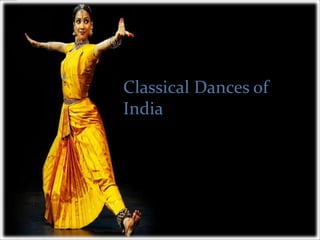
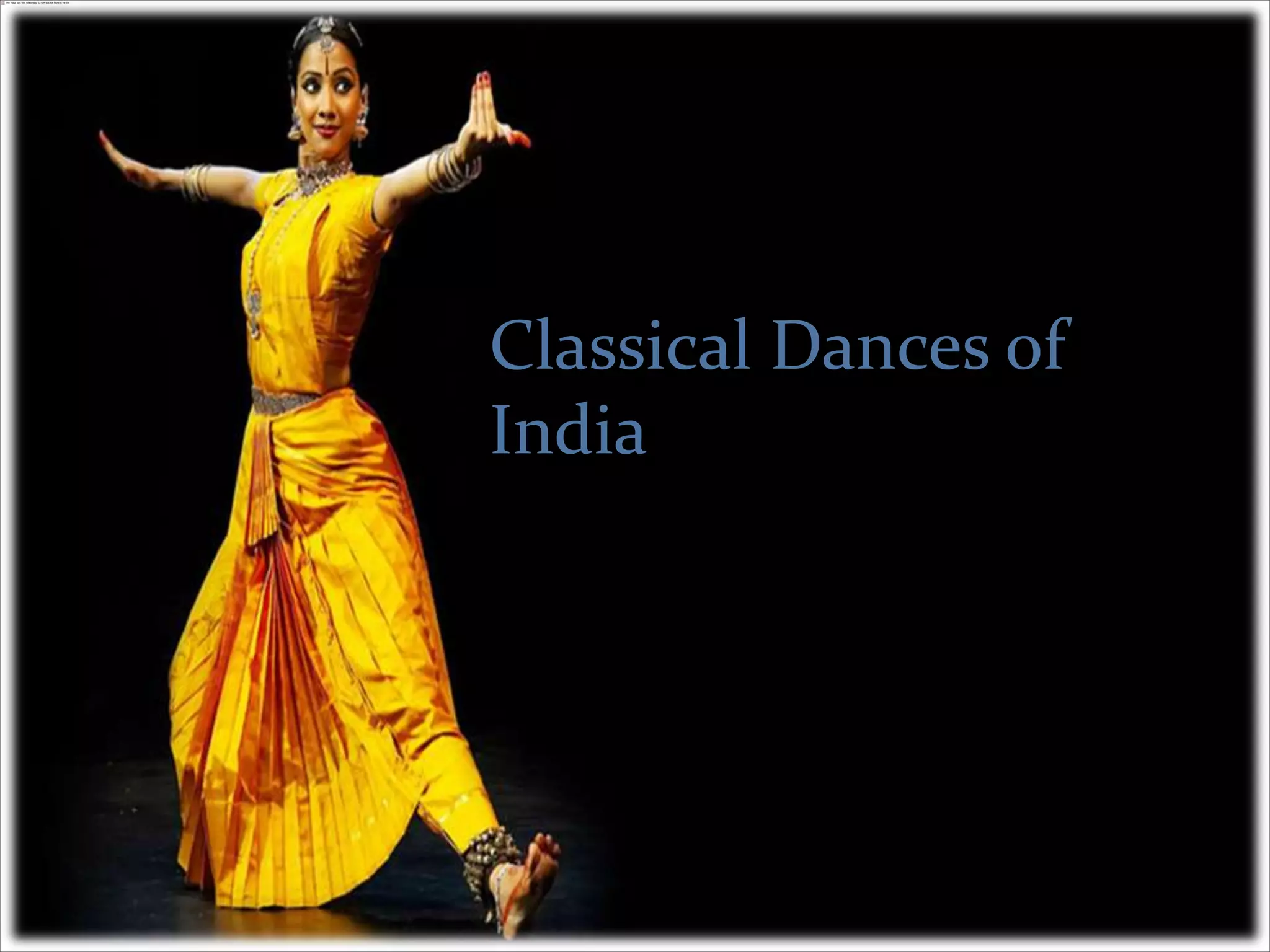
Classical Dances of
India
Types of Classical Dances
•Bharatanatyam
•Kathak
•Kathakali
•Odissi
•Kuchipudi
•Manipuri
•Mohiniattam
•Sattriya
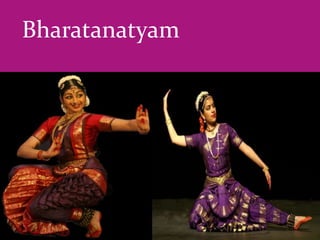
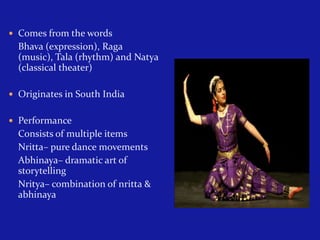
Bharatanatyam
 Comes from the words

Bhava (expression), Raga
(music), Tala (rhythm) and Natya
(classical theater)
 Originates in South India
 Performance

Consists of multiple items
Nritta– pure dance movements
Abhinaya– dramatic art of
storytelling
Nritya– combination of nritta &
abhinaya
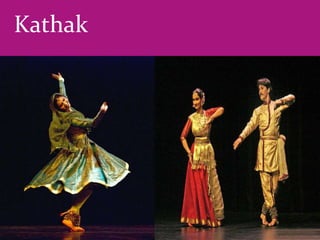
Kathak
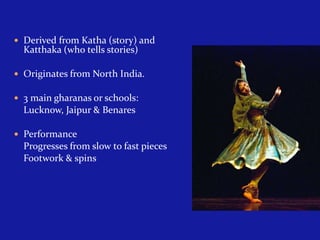
 Derived from Katha (story) and

Katthaka (who tells stories)

 Originates from North India.
 3 main gharanas or schools:

Lucknow, Jaipur & Benares
 Performance

Progresses from slow to fast pieces
Footwork & spins
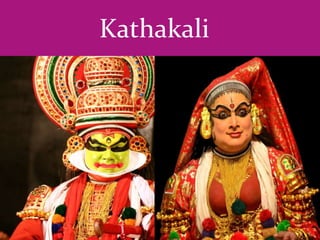
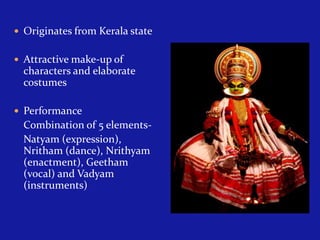
Kathakali
 Originates from Kerala state
 Attractive make-up of

characters and elaborate
costumes
 Performance

Combination of 5 elementsNatyam (expression),
Nritham (dance), Nrithyam
(enactment), Geetham
(vocal) and Vadyam
(instruments)
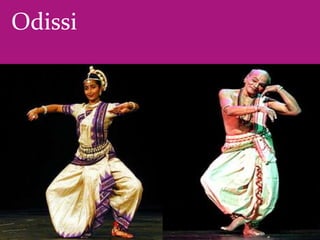
Odissi


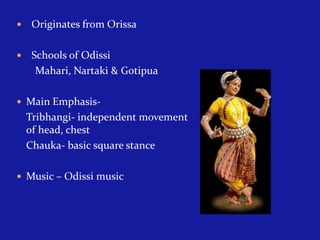
Originates from Orissa



Schools of Odissi
Mahari, Nartaki & Gotipua

 Main Emphasis-

Tribhangi- independent movement
of head, chest
Chauka- basic square stance
 Music – Odissi music
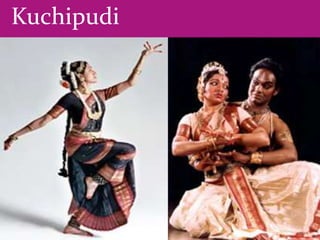
Kuchipudi
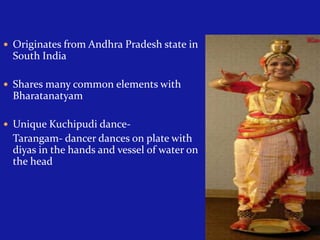
 Originates from Andhra Pradesh state in

South India
 Shares many common elements with

Bharatanatyam
 Unique Kuchipudi dance-

Tarangam- dancer dances on plate with
diyas in the hands and vessel of water on
the head
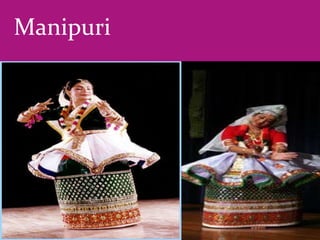
Manipuri
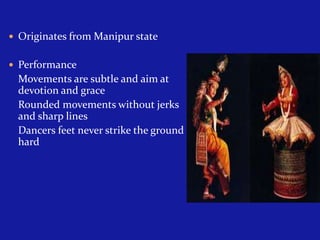
 Originates from Manipur state
 Performance

Movements are subtle and aim at
devotion and grace
Rounded movements without jerks
and sharp lines
Dancers feet never strike the ground
hard
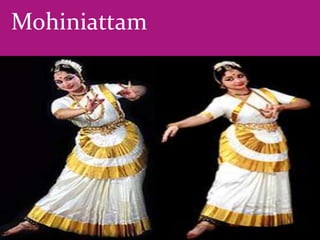
Mohiniattam


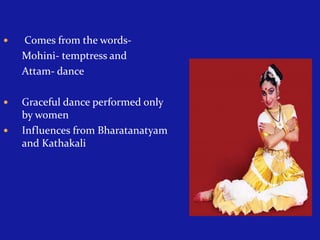
Comes from the wordsMohini- temptress and
Attam- dance



Graceful dance performed only
by women
Influences from Bharatanatyam
and Kathakali


Sattriya
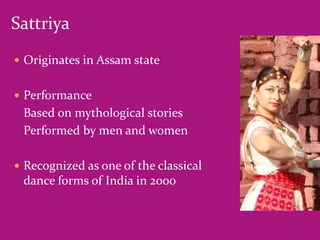
 Originates in Assam state
 Performance

Based on mythological stories
Performed by men and women
 Recognized as one of the classical

dance forms of India in 2000
Thank You

Classical dance of india

  • 1.
  • 2.
    Types of ClassicalDances •Bharatanatyam •Kathak •Kathakali •Odissi •Kuchipudi •Manipuri •Mohiniattam •Sattriya
  • 3.
  • 4.
     Comes fromthe words Bhava (expression), Raga (music), Tala (rhythm) and Natya (classical theater)  Originates in South India  Performance Consists of multiple items Nritta– pure dance movements Abhinaya– dramatic art of storytelling Nritya– combination of nritta & abhinaya
  • 5.
  • 6.
     Derived fromKatha (story) and Katthaka (who tells stories)  Originates from North India.  3 main gharanas or schools: Lucknow, Jaipur & Benares  Performance Progresses from slow to fast pieces Footwork & spins
  • 7.
  • 8.
     Originates fromKerala state  Attractive make-up of characters and elaborate costumes  Performance Combination of 5 elementsNatyam (expression), Nritham (dance), Nrithyam (enactment), Geetham (vocal) and Vadyam (instruments)
  • 9.
  • 10.
     Originates from Orissa  Schoolsof Odissi Mahari, Nartaki & Gotipua  Main Emphasis- Tribhangi- independent movement of head, chest Chauka- basic square stance  Music – Odissi music
  • 11.
  • 12.
     Originates fromAndhra Pradesh state in South India  Shares many common elements with Bharatanatyam  Unique Kuchipudi dance- Tarangam- dancer dances on plate with diyas in the hands and vessel of water on the head
  • 13.
  • 14.
     Originates fromManipur state  Performance Movements are subtle and aim at devotion and grace Rounded movements without jerks and sharp lines Dancers feet never strike the ground hard
  • 15.
  • 16.
     Comes from thewordsMohini- temptress and Attam- dance  Graceful dance performed only by women Influences from Bharatanatyam and Kathakali 
  • 17.
    Sattriya  Originates inAssam state  Performance Based on mythological stories Performed by men and women  Recognized as one of the classical dance forms of India in 2000
  • 18.