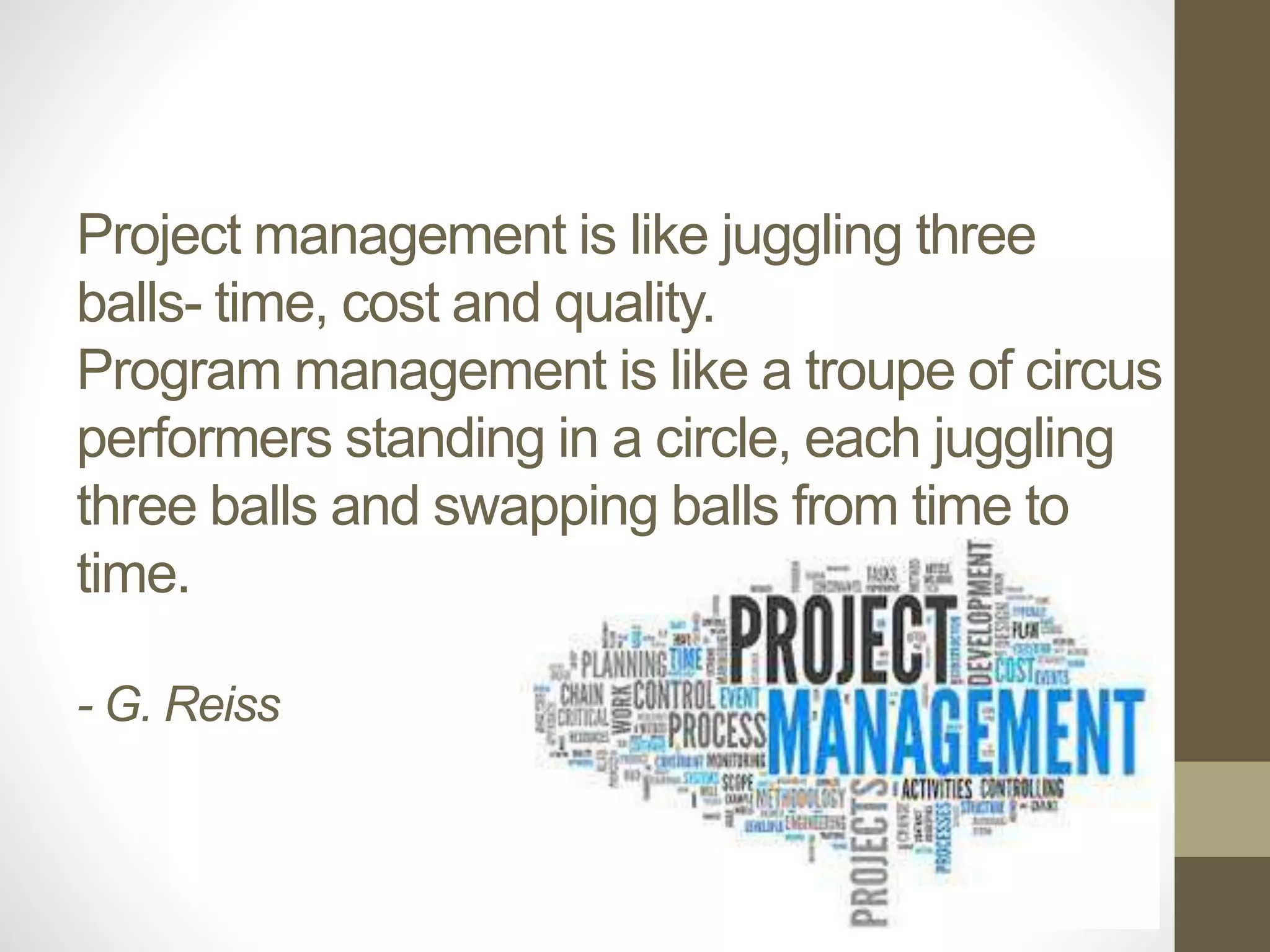
Project management is like juggling three 
balls- time, cost and quality. 
Program management is like a troupe of circus 
performers standing in a circle, each juggling 
three balls and swapping balls from time to 
time. 
- G. Reiss
SHADOW PRICING IN PROJECT 
MANAGEMENT 
A tool used in Project Appraisal
TABLE OF CONTENTS 
• Introduction 
• Why only in 
developing countries? 
• Factors affecting 
shadow pricing 
• Basic issue of shadow 
pricing 
• Benefits of shadow 
pricing 
• Limitations of shadow 
pricing 
• Conclusion
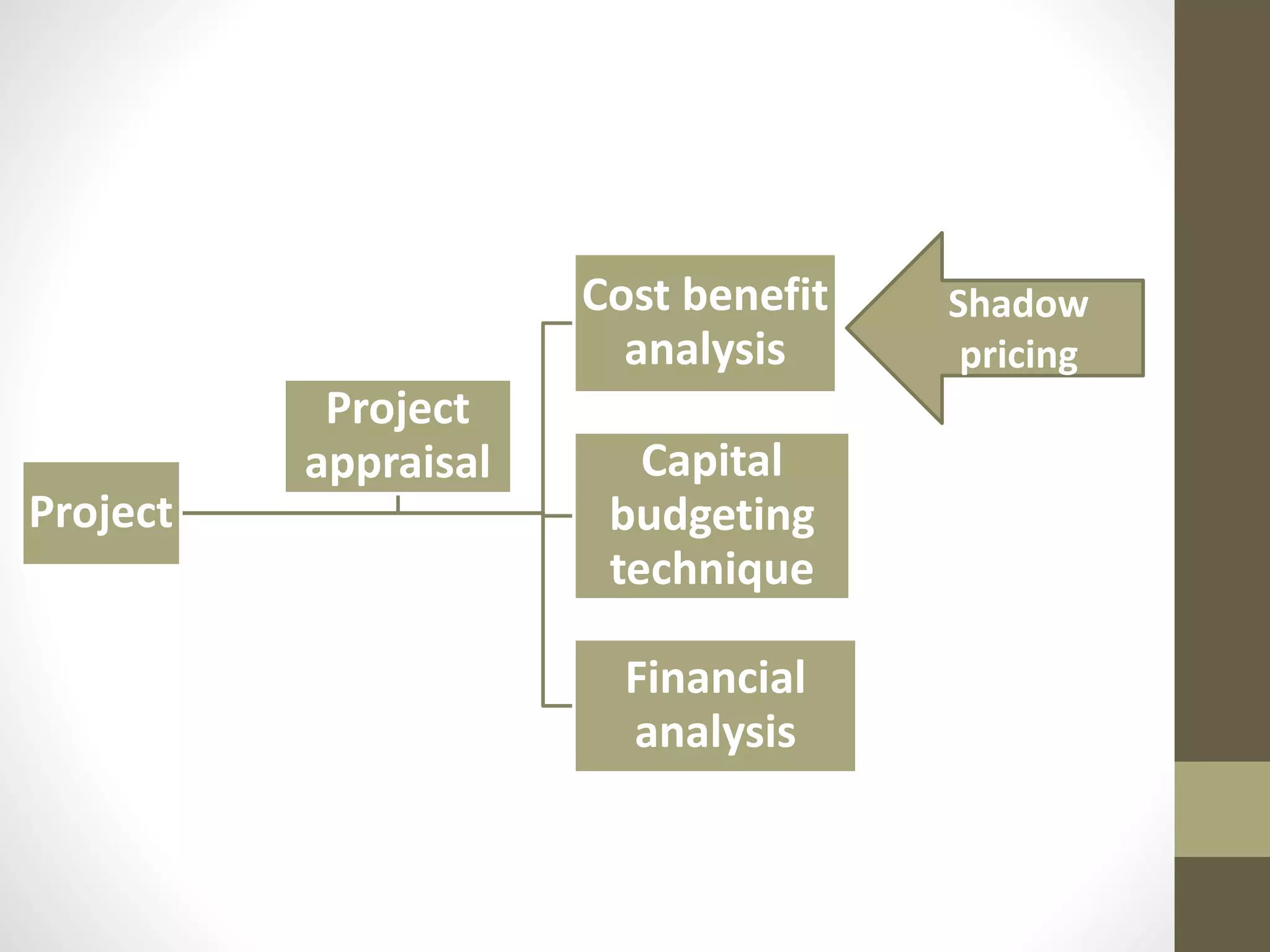
Project 
Cost benefit 
analysis 
Capital 
budgeting 
technique 
Financial 
analysis 
Project 
appraisal 
Shadow 
pricing
INTRODUCTION 
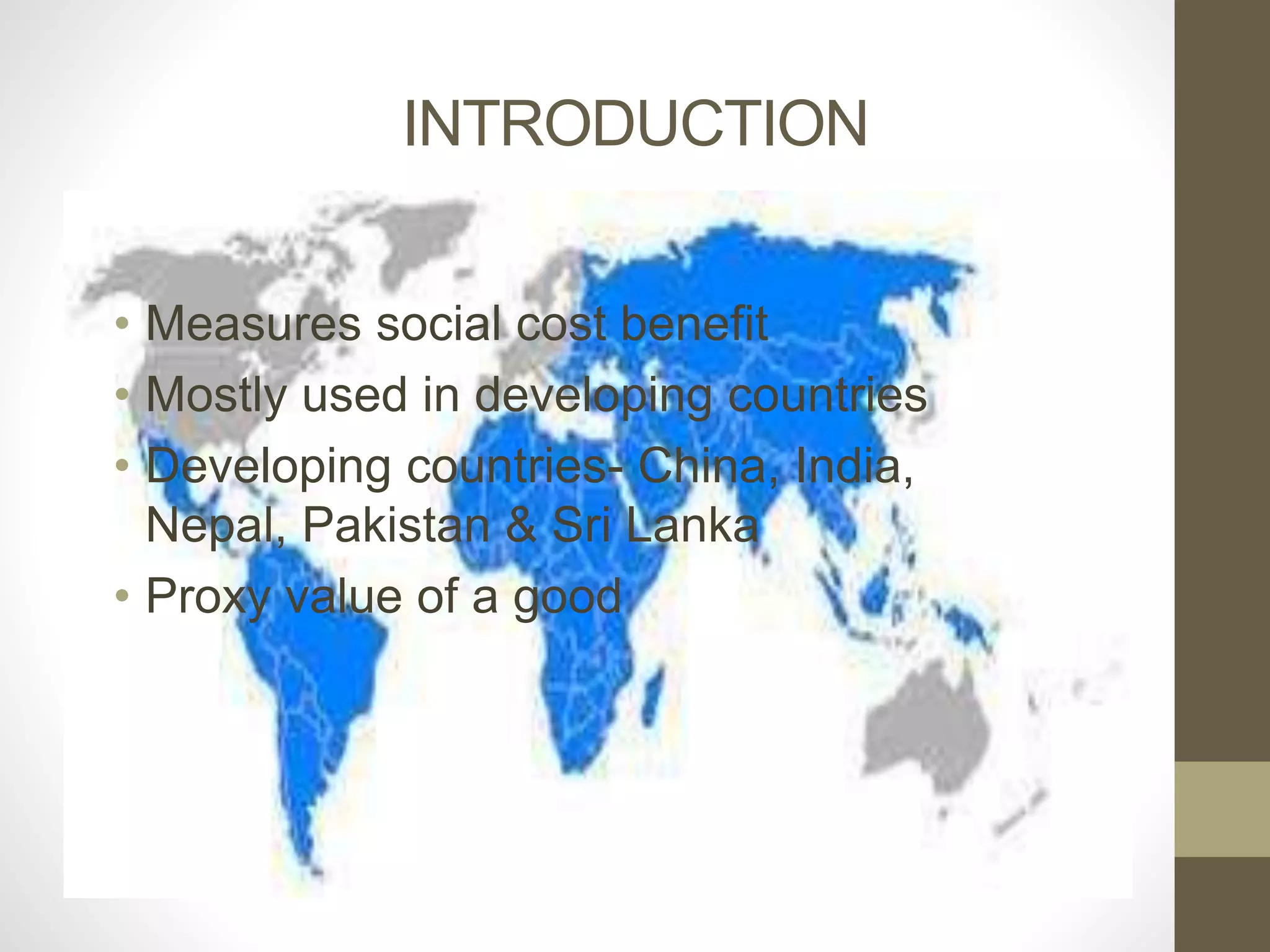
• Measures social cost benefit 
• Mostly used in developing countries 
• Developing countries- China, India, 
Nepal, Pakistan & Sri Lanka 
• Proxy value of a good
WHY ONLY IN DEVELOPING 
COUNTRIES? 
• Price determination in imperfect competition 
• Underemployment at existing wage rate 
• Exists deficiency of fund at existing rate 
• Foreign exchange at prevailing exchange 
rate
FACTORS AFFECTING SHADOW PRICING 
• Rationing of commodity 
• Minimum wages 
• Foreign exchange restriction
BASIC ISSUES OF SHADOW 
PRICING 
• Choice of nume’raire 
• Concept of tradability 
• Sources of shadow price 
• Taxes 
• Consumer willingness to pay
BENEFITS OF SHADOW PRICING 
• Best and convenient tool 
• Optimal allocation of resources 
• Considers economic opportunity cost 
• Avoids underpricing
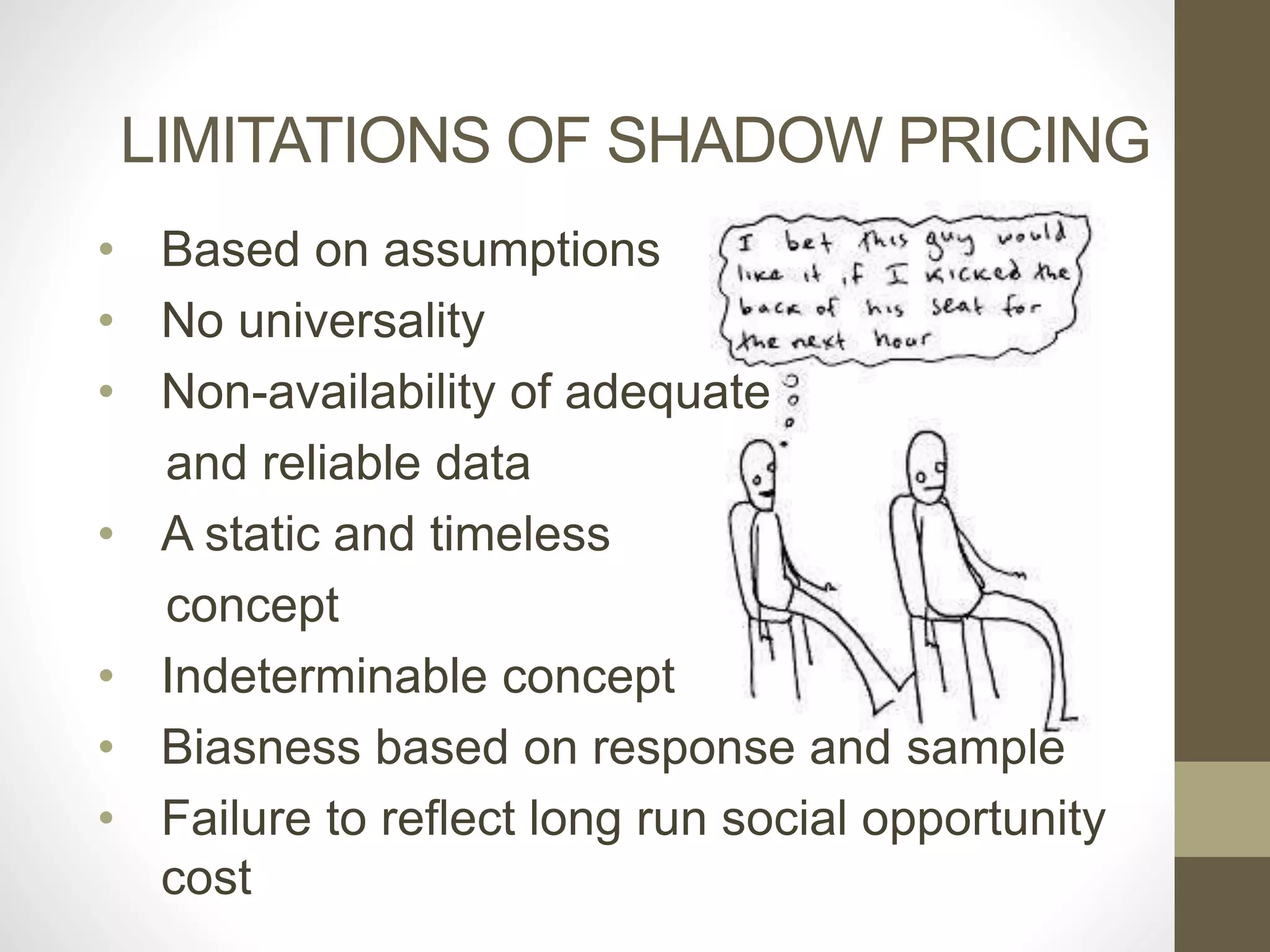
LIMITATIONS OF SHADOW PRICING 
• Based on assumptions 
• No universality 
• Non-availability of adequate 
and reliable data 
• A static and timeless 
concept 
• Indeterminable concept 
• Biasness based on response and sample 
• Failure to reflect long run social opportunity 
cost
CONCLUSION 
• Social cost-benefit analysis 
• Used in developing countries 
• Basic issues of tradability and source of 
shadow price 
• Convenient tool for project 
• Considers economic opportunity cost 
• Based on assumption 
• Lack of adequate reliable data
THANK YOU FOR THE PATIENCE. 
The Team 
Anup Kujur 
Bijesh Timilsina 
Koshica Tamang 
Nikesh Maharjan 
Reetu Gochhen

shadow pricing

  • 1.
    Project management islike juggling three balls- time, cost and quality. Program management is like a troupe of circus performers standing in a circle, each juggling three balls and swapping balls from time to time. - G. Reiss
  • 2.
    SHADOW PRICING INPROJECT MANAGEMENT A tool used in Project Appraisal
  • 3.
    TABLE OF CONTENTS • Introduction • Why only in developing countries? • Factors affecting shadow pricing • Basic issue of shadow pricing • Benefits of shadow pricing • Limitations of shadow pricing • Conclusion
  • 4.
    Project Cost benefit analysis Capital budgeting technique Financial analysis Project appraisal Shadow pricing
  • 5.
    INTRODUCTION • Measuressocial cost benefit • Mostly used in developing countries • Developing countries- China, India, Nepal, Pakistan & Sri Lanka • Proxy value of a good
  • 6.
    WHY ONLY INDEVELOPING COUNTRIES? • Price determination in imperfect competition • Underemployment at existing wage rate • Exists deficiency of fund at existing rate • Foreign exchange at prevailing exchange rate
  • 7.
    FACTORS AFFECTING SHADOWPRICING • Rationing of commodity • Minimum wages • Foreign exchange restriction
  • 8.
    BASIC ISSUES OFSHADOW PRICING • Choice of nume’raire • Concept of tradability • Sources of shadow price • Taxes • Consumer willingness to pay
  • 9.
    BENEFITS OF SHADOWPRICING • Best and convenient tool • Optimal allocation of resources • Considers economic opportunity cost • Avoids underpricing
  • 10.
    LIMITATIONS OF SHADOWPRICING • Based on assumptions • No universality • Non-availability of adequate and reliable data • A static and timeless concept • Indeterminable concept • Biasness based on response and sample • Failure to reflect long run social opportunity cost
  • 11.
    CONCLUSION • Socialcost-benefit analysis • Used in developing countries • Basic issues of tradability and source of shadow price • Convenient tool for project • Considers economic opportunity cost • Based on assumption • Lack of adequate reliable data
  • 12.
    THANK YOU FORTHE PATIENCE. The Team Anup Kujur Bijesh Timilsina Koshica Tamang Nikesh Maharjan Reetu Gochhen