V.SAKTHIPRIYA
II-MSC(IT)
NADAR SARASWATHI COLLEGE OF ARTS AND SCIENCE
 Alternative to log-based recovery
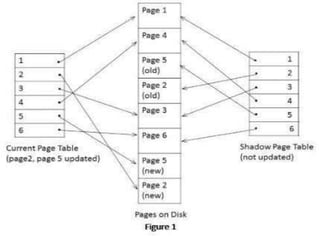
 Idea: maintain two page tables during the lifetime of a
transaction– the current page table, and the shadow
page table
 Store the shadow page table in nonvolatile storage,
such that state of the database prior to transaction
execution may be recovered. Shadow page table is
never modified during execution
 Advantages of shadow paging over log based schemes
no overhead of writing log records recovery is trivial
 Commit overhead is high (many pages need to be
flushed)
 Data gets fragmented (related pages get separated)
 After every transaction completion, the database pages
containing old versions of modified data need to be
garbage collected and put into the list of unused pages
 It is inconvienient to maintain logs of all transaction
from the purpose of recovery.this is where the database
is divided into pages that may be stored in any order on
the disk.
 In order to identify the location of any given page,we
use thing sometimes called page table.
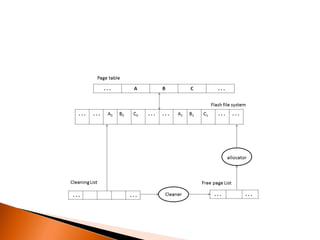
 During the life of a transaction two page table are
maintained,one called a shadow page table and current page
table.
 During the life time of a transaction the shadow page table
doesn’t change at all.
 However during the life of a transaction changes may be
made update values.etc..,
 Shadow paging document describes the design of a
replacement pager for SQLite. The objective is to
extend SQLite to use shadow paging to increase
performance and add ability to run read and write
transactions concurrently.
 This design provides the following:
• Read transactions are never blocked by any other
transactions.
• Write transactions are never blocked by Read
transactions.
 The cost of this new freedom for read transactions is
data duplication. Write transactions always write to free
disk pages, so the written data cannot interfere with
read transactions.
 The amount of data duplication is application
dependent, but is expected to be small in practice.
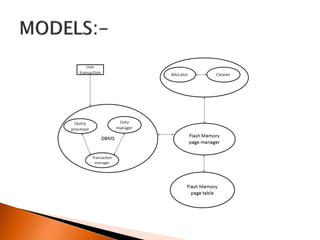
 USER TRANSACTION: It is the user interface through
which the user fires its query. This query is send to the
database management system(DBMS).
 DBMS: The DBMS consist of three parts. the query is
first transfer to the Query processor.
• Query processor: It parse the query and convert it
into tokens and check for the syntax and semantic errors.
• Transaction Manager: If the query parsed by query
processor is correct then,according to the query the
transactions are generated and executed.
• Data Manager: This unit manages the data of our
database. It interact with the memory unit of the
device.
 FLASH MEMORY PAGE MANAGER: The page
manager is the part where our new algorithm will
sit. It will manage the file structure of our database. It
manages the page table and control the allocator and
cleaner.
• Entity sets - an entity is a 'thing' or 'object' in the real
world that distinguishes from other objects. For
example John Smith - National Insurance #: 986654221
(unique to John Smith), or an account number at
natwest like: 1246646.
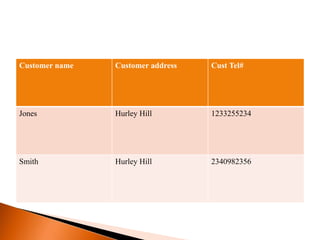
• Attributes - for each entity you must store a set of
attributes that fully defines them. For example:
Customer name Customer address Cust Tel#
Jones Hurley Hill 1233255234
Smith Hurley Hill 2340982356
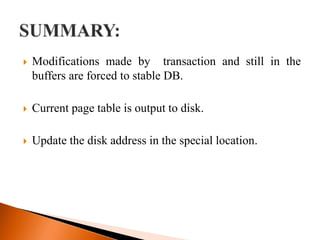
 Modifications made by transaction and still in the
buffers are forced to stable DB.
 Current page table is output to disk.
 Update the disk address in the special location.

Shadow paging

  • 1.
  • 2.
     Alternative tolog-based recovery  Idea: maintain two page tables during the lifetime of a transaction– the current page table, and the shadow page table  Store the shadow page table in nonvolatile storage, such that state of the database prior to transaction execution may be recovered. Shadow page table is never modified during execution
  • 3.
     Advantages ofshadow paging over log based schemes no overhead of writing log records recovery is trivial
  • 4.
     Commit overheadis high (many pages need to be flushed)  Data gets fragmented (related pages get separated)  After every transaction completion, the database pages containing old versions of modified data need to be garbage collected and put into the list of unused pages
  • 5.
     It isinconvienient to maintain logs of all transaction from the purpose of recovery.this is where the database is divided into pages that may be stored in any order on the disk.  In order to identify the location of any given page,we use thing sometimes called page table.
  • 7.
     During thelife of a transaction two page table are maintained,one called a shadow page table and current page table.  During the life time of a transaction the shadow page table doesn’t change at all.  However during the life of a transaction changes may be made update values.etc..,
  • 8.
     Shadow pagingdocument describes the design of a replacement pager for SQLite. The objective is to extend SQLite to use shadow paging to increase performance and add ability to run read and write transactions concurrently.  This design provides the following: • Read transactions are never blocked by any other transactions. • Write transactions are never blocked by Read transactions.
  • 9.
     The costof this new freedom for read transactions is data duplication. Write transactions always write to free disk pages, so the written data cannot interfere with read transactions.  The amount of data duplication is application dependent, but is expected to be small in practice.
  • 11.
     USER TRANSACTION:It is the user interface through which the user fires its query. This query is send to the database management system(DBMS).  DBMS: The DBMS consist of three parts. the query is first transfer to the Query processor. • Query processor: It parse the query and convert it into tokens and check for the syntax and semantic errors. • Transaction Manager: If the query parsed by query processor is correct then,according to the query the transactions are generated and executed.
  • 12.
    • Data Manager:This unit manages the data of our database. It interact with the memory unit of the device.  FLASH MEMORY PAGE MANAGER: The page manager is the part where our new algorithm will sit. It will manage the file structure of our database. It manages the page table and control the allocator and cleaner.
  • 14.
    • Entity sets- an entity is a 'thing' or 'object' in the real world that distinguishes from other objects. For example John Smith - National Insurance #: 986654221 (unique to John Smith), or an account number at natwest like: 1246646. • Attributes - for each entity you must store a set of attributes that fully defines them. For example:
  • 15.
    Customer name Customeraddress Cust Tel# Jones Hurley Hill 1233255234 Smith Hurley Hill 2340982356
  • 16.
     Modifications madeby transaction and still in the buffers are forced to stable DB.  Current page table is output to disk.  Update the disk address in the special location.