Seminar On
“Sf6 circuit breaker”
Under The Guidance Of :-
Mr. S.S Mohapatra,
Lecturer
cOntentS
• Introduction
• SF6 circuit breaker
• Why SF6??
• Types of SF6 CB
• Overview of an arc
• Working principle
• Principle of arc extinction
• Circuit breaker connected with bus bar
• Physical and chemical properties
• Advantages of SF6 CB
• Disadvantages of SF6 CB
• Limitation
• Conclusion
• References
 In modern times, high voltages are
used for
• Power system
• Industry
• Research laboratories
For safety and protection
We use one of the protection device is
SULPHUR HEXAFLUORIDE (SF6 ) gas
circuit breaker.
 They were first introduced in the mid
A circuit breaker isan equipment which can
 makeor break acircuit either manually or automatically under
normal conditions.
 break acircuit under abnormal, short circuit , overload
condition or any other fault.
 A circuit breaker in which thecurrent carrying contactsoperate
in sulphur hexafluoridegas(SF6) isknown asSF6 circuit
breaker.
 SF6 CBsmadefrom 72-800KV with interruption current is20 to
63KA and rated current of 1200 to 12000A.
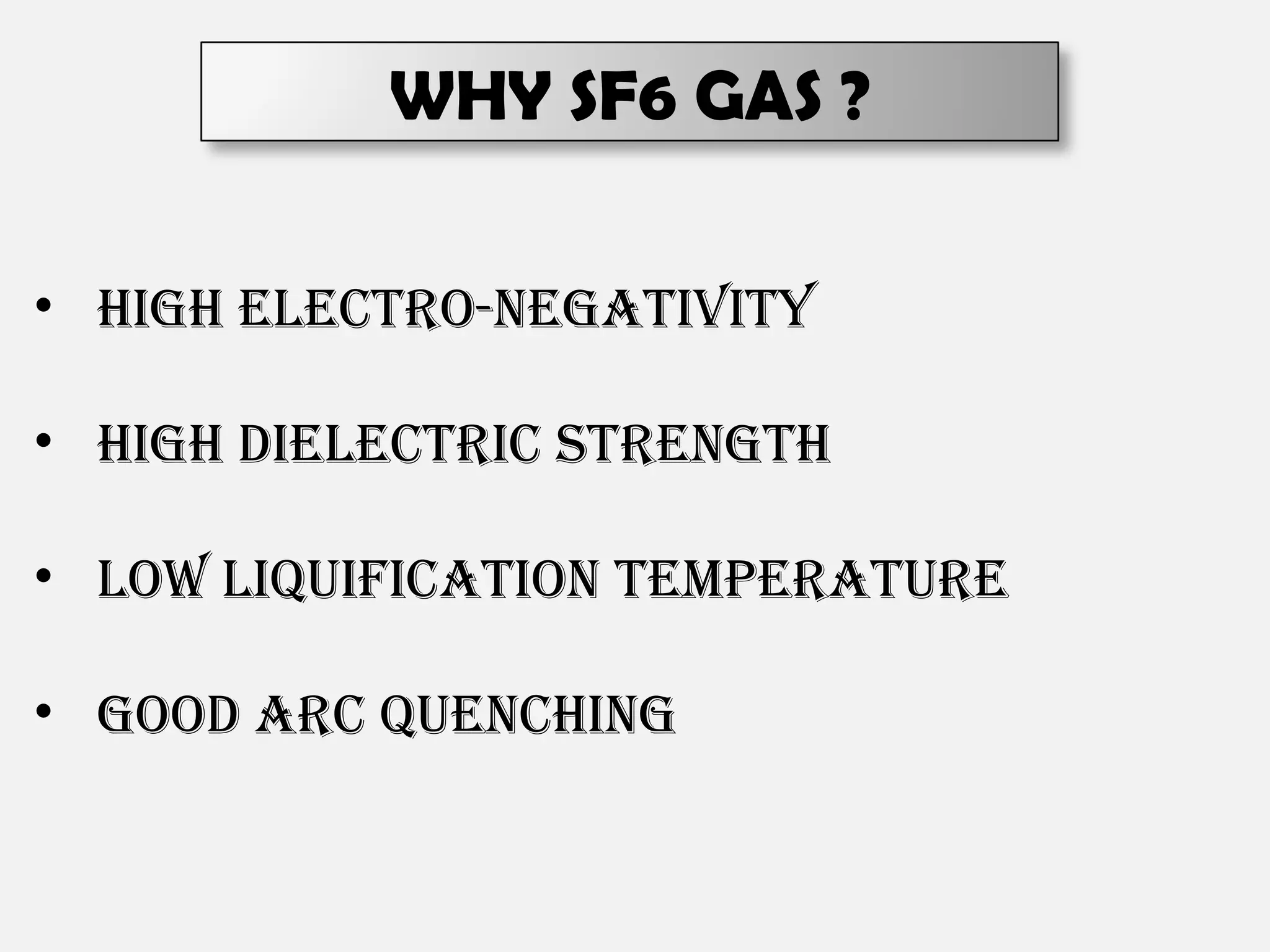
WHY SF6 GAS ?
• HiGH eLectrO-neGatiVitY
• HiGH DieLectric StrenGtH
• LOW LiQuificatiOn temPerature
• GOOD arc QuencHinG
Types of sf6 circuiT breaker
1. Single interrupter SF6 CB(upto 245kv)
2. Two interrupter SF6 CB(upto 420kv)
3. Three interrupter SF6 CB(upto 800kv)
Single interrupter Three interupter
 During the separation of
contacts, due to large fault
current and high current
density at the contact region
the surrounding medium
ionises and thus a
conducting medium is
formed. This is called he
ARC.
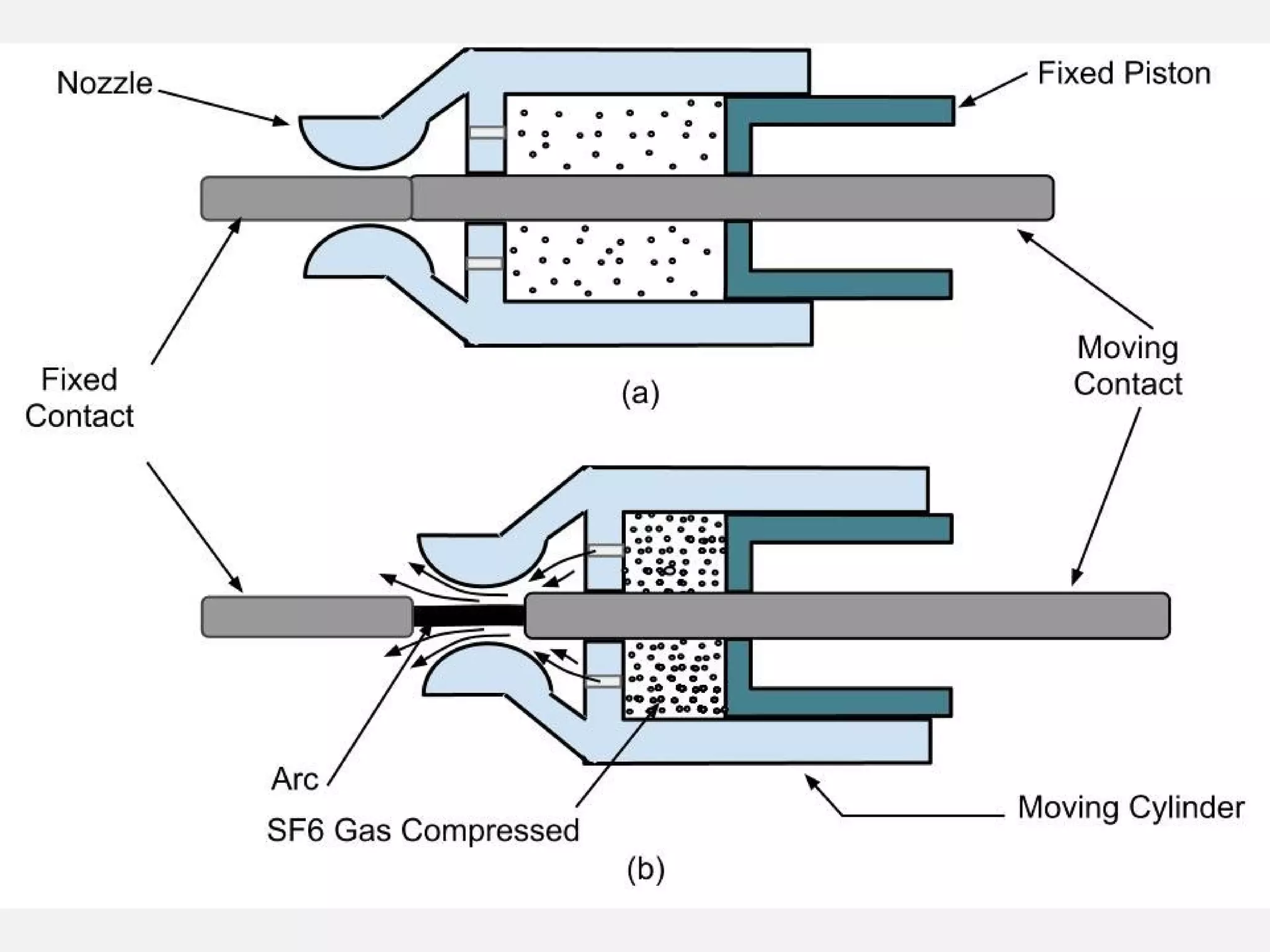
Fixed
contact
Moving
contact
ARC
Fixed
contact
Moving
contact
ARC
ARC IS
QUENCHED BY
SF6 GAS
IN A CIRCUIT BREAKER
OPERATING
PRINCIPLE OF
CIRCUIT BREAKER
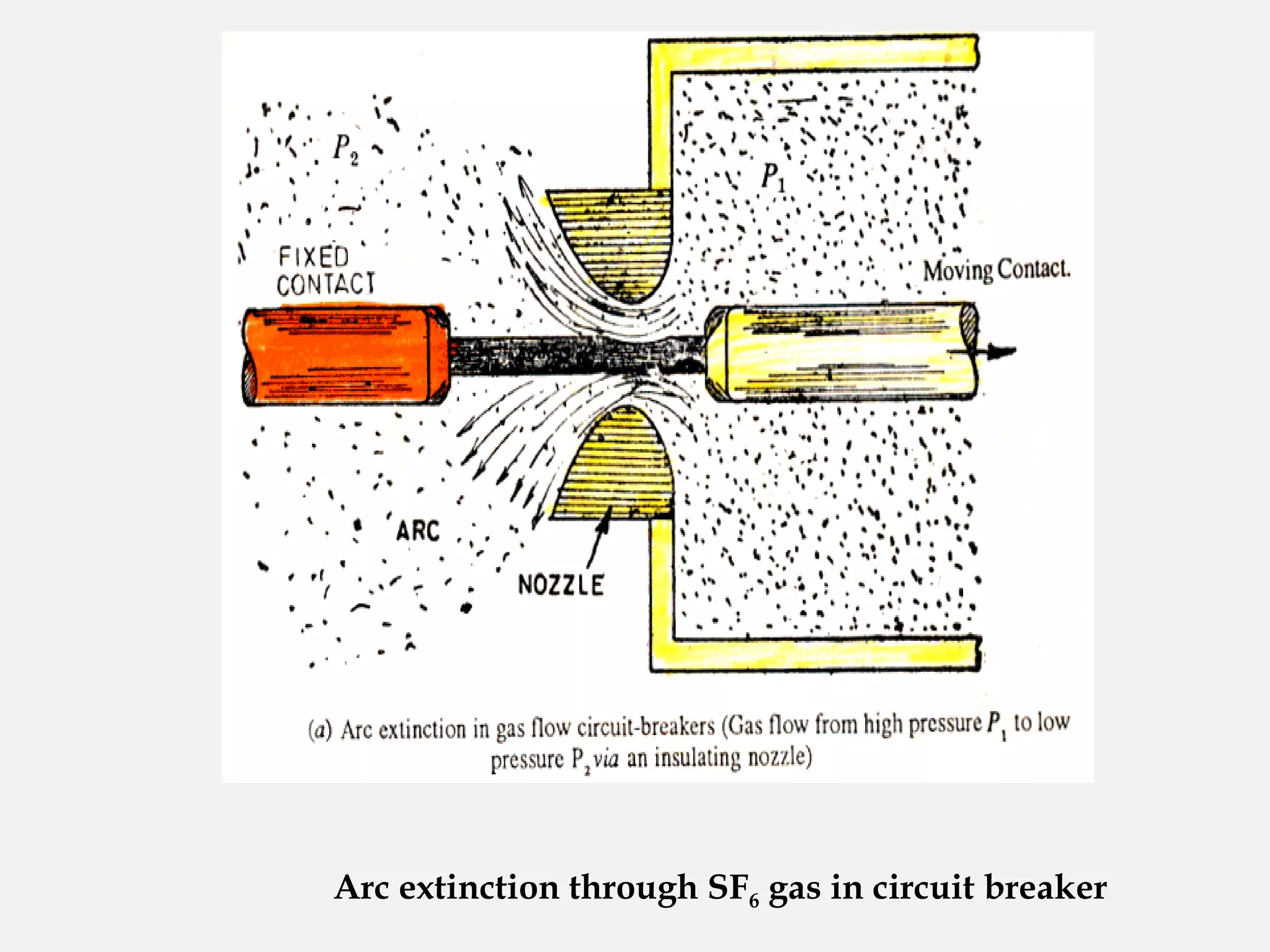
Factorsresponsiblefor arc:-
 Potential differencebetween thecontacts
 Ionised particlesbetween thecontacts
By removing any oneof thesethearc can be
quenched.
Arc extinction through SF6 gas in circuit breaker
Factor responsiblefor arc resistance:-
Degree of ionisation
Length of the arc
Cross section area of arc
Line Isolator
Circuit
Breaker
Bus Bar
#1
Bus Bar
#2
Bus Isolator
2
Bus Isolator
1
circuit breaker connected with bus bars
1. Chemically inert1. Chemically inert
2. Non-toxic2. Non-toxic
3. Non-corrosive3. Non-corrosive
4. Non-flammable4. Non-flammable
Physical & Chemical properties
5. Odourless5. Odourless
6.Electrical insulator6.Electrical insulator
•Arched SF6 gas is poisonous.
•Contribute to the manmade greenhouse
effect.
•Continuous monitoring devices are
required.
•Special facilities are required for
transportation of SF6 gas.
DISADVANTAGES OF SFDISADVANTAGES OF SF66 CBCB
 SF6 gas found to be greenhouse gas that causes
environmental hazards
• 100% SF6 is more hazardous.
• Experimentally suggest that 69%SF6 /
31%N2 gas mixtures is better in circuit
breaker and non-hazardous.
• Further research is going on to replace or
mixture of gases for better dielectric
strength without environmental problems.
LIMITATION
SF6 Circuit breakers are mostly employed for high
voltage applications. For protection and
reliability of an electrical substation of an
electricity generation, transmission and
distribution system where voltage is
transformed from high to low or the reverse
using transformers.
The countless advantages of this SF6 CB gas has
to offer will takeusto new heightsin theprevalent
power system.
reference
 HIGH VOLTAGE ENGINEERING -M.S
NAIDU,V.KAMARAJU –TheMCGraw-hillcompanies
4th
edition 2009 ISBN 97-80070669284, chapter-1,2
 PRINCIPLES OF POWER SYSTEM-V.K MEHTA
,ROHIT MEHTA-S.Chand &company pvt. Ltd, 1st
edition
2013 ISBN 81-219-2496-0,CHAPTER-19
 WWW.ijettjournal.org
ANY
QUER
Y
??

SF6 CIRCUIT BREAKER

  • 1.
    Seminar On “Sf6 circuitbreaker” Under The Guidance Of :- Mr. S.S Mohapatra, Lecturer
  • 2.
    cOntentS • Introduction • SF6circuit breaker • Why SF6?? • Types of SF6 CB • Overview of an arc • Working principle • Principle of arc extinction • Circuit breaker connected with bus bar • Physical and chemical properties • Advantages of SF6 CB • Disadvantages of SF6 CB • Limitation • Conclusion • References
  • 3.
     In moderntimes, high voltages are used for • Power system • Industry • Research laboratories For safety and protection We use one of the protection device is SULPHUR HEXAFLUORIDE (SF6 ) gas circuit breaker.  They were first introduced in the mid
  • 4.
    A circuit breakerisan equipment which can  makeor break acircuit either manually or automatically under normal conditions.  break acircuit under abnormal, short circuit , overload condition or any other fault.  A circuit breaker in which thecurrent carrying contactsoperate in sulphur hexafluoridegas(SF6) isknown asSF6 circuit breaker.  SF6 CBsmadefrom 72-800KV with interruption current is20 to 63KA and rated current of 1200 to 12000A.
  • 5.
    WHY SF6 GAS? • HiGH eLectrO-neGatiVitY • HiGH DieLectric StrenGtH • LOW LiQuificatiOn temPerature • GOOD arc QuencHinG
  • 6.
    Types of sf6circuiT breaker 1. Single interrupter SF6 CB(upto 245kv) 2. Two interrupter SF6 CB(upto 420kv) 3. Three interrupter SF6 CB(upto 800kv) Single interrupter Three interupter
  • 8.
     During theseparation of contacts, due to large fault current and high current density at the contact region the surrounding medium ionises and thus a conducting medium is formed. This is called he ARC.
  • 9.
    Fixed contact Moving contact ARC Fixed contact Moving contact ARC ARC IS QUENCHED BY SF6GAS IN A CIRCUIT BREAKER OPERATING PRINCIPLE OF CIRCUIT BREAKER
  • 10.
    Factorsresponsiblefor arc:-  Potentialdifferencebetween thecontacts  Ionised particlesbetween thecontacts By removing any oneof thesethearc can be quenched.
  • 11.
    Arc extinction throughSF6 gas in circuit breaker
  • 12.
    Factor responsiblefor arcresistance:- Degree of ionisation Length of the arc Cross section area of arc
  • 13.
    Line Isolator Circuit Breaker Bus Bar #1 BusBar #2 Bus Isolator 2 Bus Isolator 1 circuit breaker connected with bus bars
  • 14.
    1. Chemically inert1.Chemically inert 2. Non-toxic2. Non-toxic 3. Non-corrosive3. Non-corrosive 4. Non-flammable4. Non-flammable Physical & Chemical properties 5. Odourless5. Odourless 6.Electrical insulator6.Electrical insulator
  • 16.
    •Arched SF6 gasis poisonous. •Contribute to the manmade greenhouse effect. •Continuous monitoring devices are required. •Special facilities are required for transportation of SF6 gas. DISADVANTAGES OF SFDISADVANTAGES OF SF66 CBCB
  • 17.
     SF6 gasfound to be greenhouse gas that causes environmental hazards • 100% SF6 is more hazardous. • Experimentally suggest that 69%SF6 / 31%N2 gas mixtures is better in circuit breaker and non-hazardous. • Further research is going on to replace or mixture of gases for better dielectric strength without environmental problems. LIMITATION
  • 18.
    SF6 Circuit breakersare mostly employed for high voltage applications. For protection and reliability of an electrical substation of an electricity generation, transmission and distribution system where voltage is transformed from high to low or the reverse using transformers. The countless advantages of this SF6 CB gas has to offer will takeusto new heightsin theprevalent power system.
  • 19.
    reference  HIGH VOLTAGEENGINEERING -M.S NAIDU,V.KAMARAJU –TheMCGraw-hillcompanies 4th edition 2009 ISBN 97-80070669284, chapter-1,2  PRINCIPLES OF POWER SYSTEM-V.K MEHTA ,ROHIT MEHTA-S.Chand &company pvt. Ltd, 1st edition 2013 ISBN 81-219-2496-0,CHAPTER-19  WWW.ijettjournal.org
  • 21.