biosecurity built on science
Building collaborative biosecurity
innovation systems
Dr Cathy Robinson
CSIRO
Plant Biosecurity Cooperative Research Centre
biosecurity built on science
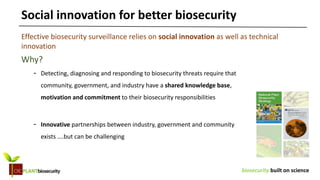
Why?
- Detecting, diagnosing and responding to biosecurity threats require that
community, government, and industry have a shared knowledge base,
motivation and commitment to their biosecurity responsibilities
- Innovative partnerships between industry, government and community
exists ….but can be challenging
Social innovation for better biosecurity
Effective biosecurity surveillance relies on social innovation as well as technical
innovation
biosecurity built on science
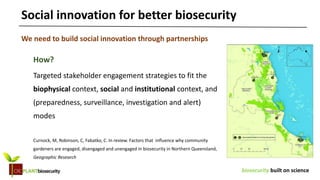
How?
Targeted stakeholder engagement strategies to fit the
biophysical context, social and institutional context, and
(preparedness, surveillance, investigation and alert)
modes
Curnock, M, Robinson, C, Fabatko, C. In review. Factors that influence why community
gardeners are engaged, disengaged and unengaged in biosecurity in Northern Queensland,
Geographic Research
Social innovation for better biosecurity
We need to build social innovation through partnerships
biosecurity built on science
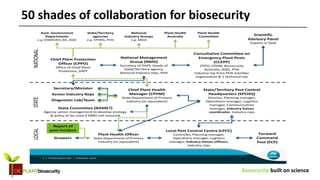
50 shades of collaboration for biosecurity
biosecurity built on science
Challenges of collaboration for biosecurity
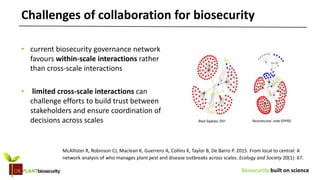
• current biosecurity governance network
favours within-scale interactions rather
than cross-scale interactions
• limited cross-scale interactions can
challenge efforts to build trust between
stakeholders and ensure coordination of
decisions across scales
McAllister R, Robinson CJ, Maclean K, Guerrero A, Collins K, Taylor B, De Barro P. 2015. From local to central: A
network analysis of who manages plant pest and disease outbreaks across scales. Ecology and Society 20(1): 67.
biosecurity built on science
Challenges of collaboration for biosecurity
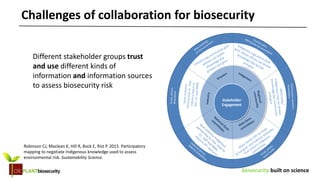
Different stakeholder groups trust
and use different kinds of
information and information sources
to assess biosecurity risk
Stakeholder
Engagement
Robinson CJ, Maclean K, Hill R, Bock E, Rist P. 2015. Participatory
mapping to negotiate Indigenous knowledge used to assess
environmental risk. Sustainability Science.
biosecurity built on science
Stakeholder engagement for surveillance
Stakeholder engagement
• drives collaborative partnerships
• key mechanism for assessing and managing biosecurity risks
• needs to occur across all decision-making levels
• needs to occur during all biosecurity operations
• requires time to build relationships, mutual learning and trust
biosecurity built on science
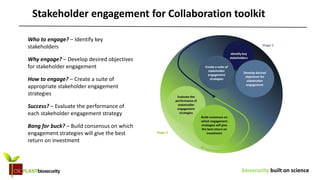
Stakeholder engagement for Collaboration toolkit
Stage 1
Stage 2
Evaluate the
performance of
stakeholder
engagement
strategies
Identify key
stakeholders
Develop desired
objectives for
stakeholder
engagement
Build consensus on
which engagement
strategies will give
the best return on
investment
Create a suite of
stakeholder
engagement
strategies
Who to engage? – Identify key
stakeholders
Why engage? – Develop desired objectives
for stakeholder engagement
How to engage? – Create a suite of
appropriate stakeholder engagement
strategies
Success? – Evaluate the performance of
each stakeholder engagement strategy
Bang for buck? – Build consensus on which
engagement strategies will give the best
return on investment
biosecurity built on science
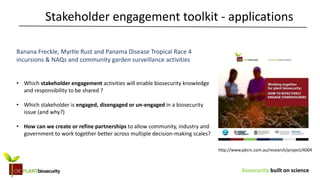
Stakeholder engagement toolkit - applications
http://www.pbcrc.com.au/research/project/4004
Banana Freckle, Myrtle Rust and Panama Disease Tropical Race 4
incursions & NAQs and community garden surveillance activities
• Which stakeholder engagement activities will enable biosecurity knowledge
and responsibility to be shared ?
• Which stakeholder is engaged, disengaged or un-engaged in a biosecurity
issue (and why?)
• How can we create or refine partnerships to allow community, industry and
government to work together better across multiple decision-making scales?
biosecurity built on science
Thank you
Dr Cathy Robinson
Principal Research Scientist
CSIRO

Session 6: Building collaboration in biosecurity innovation systems

  • 1.
    biosecurity built onscience Building collaborative biosecurity innovation systems Dr Cathy Robinson CSIRO Plant Biosecurity Cooperative Research Centre
  • 2.
    biosecurity built onscience Why? - Detecting, diagnosing and responding to biosecurity threats require that community, government, and industry have a shared knowledge base, motivation and commitment to their biosecurity responsibilities - Innovative partnerships between industry, government and community exists ….but can be challenging Social innovation for better biosecurity Effective biosecurity surveillance relies on social innovation as well as technical innovation
  • 3.
    biosecurity built onscience How? Targeted stakeholder engagement strategies to fit the biophysical context, social and institutional context, and (preparedness, surveillance, investigation and alert) modes Curnock, M, Robinson, C, Fabatko, C. In review. Factors that influence why community gardeners are engaged, disengaged and unengaged in biosecurity in Northern Queensland, Geographic Research Social innovation for better biosecurity We need to build social innovation through partnerships
  • 4.
    biosecurity built onscience 50 shades of collaboration for biosecurity
  • 5.
    biosecurity built onscience Challenges of collaboration for biosecurity • current biosecurity governance network favours within-scale interactions rather than cross-scale interactions • limited cross-scale interactions can challenge efforts to build trust between stakeholders and ensure coordination of decisions across scales McAllister R, Robinson CJ, Maclean K, Guerrero A, Collins K, Taylor B, De Barro P. 2015. From local to central: A network analysis of who manages plant pest and disease outbreaks across scales. Ecology and Society 20(1): 67.
  • 6.
    biosecurity built onscience Challenges of collaboration for biosecurity Different stakeholder groups trust and use different kinds of information and information sources to assess biosecurity risk Stakeholder Engagement Robinson CJ, Maclean K, Hill R, Bock E, Rist P. 2015. Participatory mapping to negotiate Indigenous knowledge used to assess environmental risk. Sustainability Science.
  • 7.
    biosecurity built onscience Stakeholder engagement for surveillance Stakeholder engagement • drives collaborative partnerships • key mechanism for assessing and managing biosecurity risks • needs to occur across all decision-making levels • needs to occur during all biosecurity operations • requires time to build relationships, mutual learning and trust
  • 8.
    biosecurity built onscience Stakeholder engagement for Collaboration toolkit Stage 1 Stage 2 Evaluate the performance of stakeholder engagement strategies Identify key stakeholders Develop desired objectives for stakeholder engagement Build consensus on which engagement strategies will give the best return on investment Create a suite of stakeholder engagement strategies Who to engage? – Identify key stakeholders Why engage? – Develop desired objectives for stakeholder engagement How to engage? – Create a suite of appropriate stakeholder engagement strategies Success? – Evaluate the performance of each stakeholder engagement strategy Bang for buck? – Build consensus on which engagement strategies will give the best return on investment
  • 9.
    biosecurity built onscience Stakeholder engagement toolkit - applications http://www.pbcrc.com.au/research/project/4004 Banana Freckle, Myrtle Rust and Panama Disease Tropical Race 4 incursions & NAQs and community garden surveillance activities • Which stakeholder engagement activities will enable biosecurity knowledge and responsibility to be shared ? • Which stakeholder is engaged, disengaged or un-engaged in a biosecurity issue (and why?) • How can we create or refine partnerships to allow community, industry and government to work together better across multiple decision-making scales?
  • 10.
    biosecurity built onscience Thank you Dr Cathy Robinson Principal Research Scientist CSIRO